
Reviewed · GION & GEISHA WALKS
Geisha at Dusk: A Stroll Through Old Kyoto
Kyoto’s geisha district is at its best when daylight fades. This two-hour walk takes you from the Ebisu Shrine coin ritual through Kennin-ji, Hanamikoji Street, and Gion Shirakawa, where wooden townhouses and the canal take on a softer, more mysterious look. I like the clear route and the focus on small cultural details, not just famous photo spots.
I also like that the English-speaking guide, Romi, keeps the tour personal and welcomes questions. The small-group setting can make a real difference here, since Gion’s customs and architecture are easy to miss when you only walk through with a camera. The main drawback is simple: you may not see a maiko or geiko, and the tour takes place outdoors, so hot weather and comfortable footwear matter.
In This Review
- Key points about the Gion evening walk
- Why dusk works so well in Gion
- Starting with Ebisu Shrine and its unusual coin ritual
- Kennin-ji brings a quieter pause
- Hanamikoji Street and the wooden townhouses
- Gion Shirakawa and the Shirakawa Canal
- What the $20 price really buys you
- Group size, guide style, and comfort
- Who will enjoy this Kyoto tour most
- Booking details worth knowing
- Should you book Geisha at Dusk?
- FAQ
- Where does the tour meet?
- How long does the experience last?
- What language is the tour offered in?
- What places does the walk include?
- What happens at Kyoto Ebisu Shrine?
- Is a maiko or geiko sighting guaranteed?
- Is food included?
- Is the tour wheelchair accessible?
- What should I bring?
Key points about the Gion evening walk
- A playful shrine ritual: Toss a coin into the box beneath Ebisu’s smiling face at Kyoto Ebisu Shrine.
- Four classic Kyoto settings: See Kennin-ji, Hanamikoji Street, Gion Shirakawa, and the Shirakawa Canal.
- Best light at dusk: The timing gives you both late-day views and after-dark scenes.
- A guide who explains details: Romi points out objects and customs that are easy to pass without context.
- Good value at $20: Two hours with a local English-speaking guide costs less than many short city tours.
- No guaranteed geisha sighting: Maiko and geiko may pass by, but the tour does not promise it.
Why dusk works so well in Gion
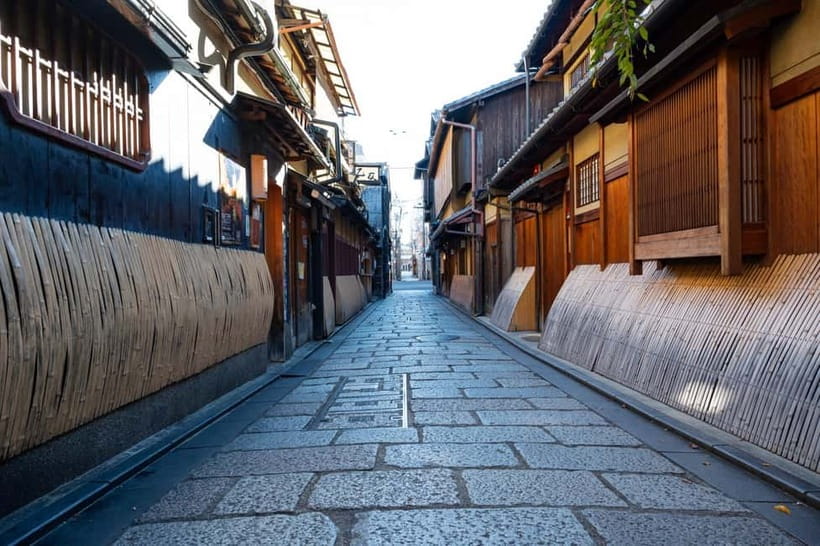
Gion can feel very different in the space of one evening. In daylight, Hanamikoji Street is a handsome historic road lined with traditional wooden townhouses. As the light drops, lanterns and doorways become more noticeable, and the district feels less like a daytime sightseeing stop and more like a working neighborhood with a long cultural tradition.
That change in mood is the main reason to choose this tour instead of a morning walk. You get a gradual shift from ordinary street scenes to the softer atmosphere of Gion after sunset. One booking began around sunset and continued into darkness, which gave the group two distinct views of the same area.
I would not treat this as a guaranteed geisha-spotting outing. A maiko or geiko may pass by, but there is no promise. That is useful to understand before booking. The value is in seeing the streets, learning how to read the architecture, and having a guide explain what you are looking at.
The meeting point is Donguri-bashi Park, at coordinates 35.0018215, 135.771567. Check your map before setting out, since a precise meeting point matters in central Kyoto, especially at dusk when you do not want to lose time finding the group.
A few more Kyoto tours and experiences worth a look

Starting with Ebisu Shrine and its unusual coin ritual
The tour begins with Kyoto Ebisu Shrine, dedicated to Ebisu, one of Japan’s Seven Lucky Gods. Ebisu is linked with prosperity, so the shrine gives the walk an immediate connection to everyday hopes for good fortune and success.
The memorable part is the shrine’s coin ritual. You toss a coin into a box beneath Ebisu’s smiling face. It is a small action, but it gives you something to do rather than simply stand in front of a gate and take a picture. The ritual is also a useful opening lesson in how Japanese religious sites often combine visual symbols, gestures, and personal wishes.
You should bring a camera, but take a moment to watch the process as well. Romi can help explain the meaning behind what you see, and that context makes the stop more worthwhile than a quick photograph.
This is one of the strongest parts of the tour for families and first-time visitors to Japan. It is easy to understand, lighthearted, and tied to a specific figure in Japanese belief. You do not need prior knowledge of Kyoto’s religious traditions to enjoy it.
Kennin-ji brings a quieter pause
From the shrine, the route continues through the grounds of Kennin-ji Temple. The main gate leads into a calmer setting, a useful contrast with the more active streets around Gion.
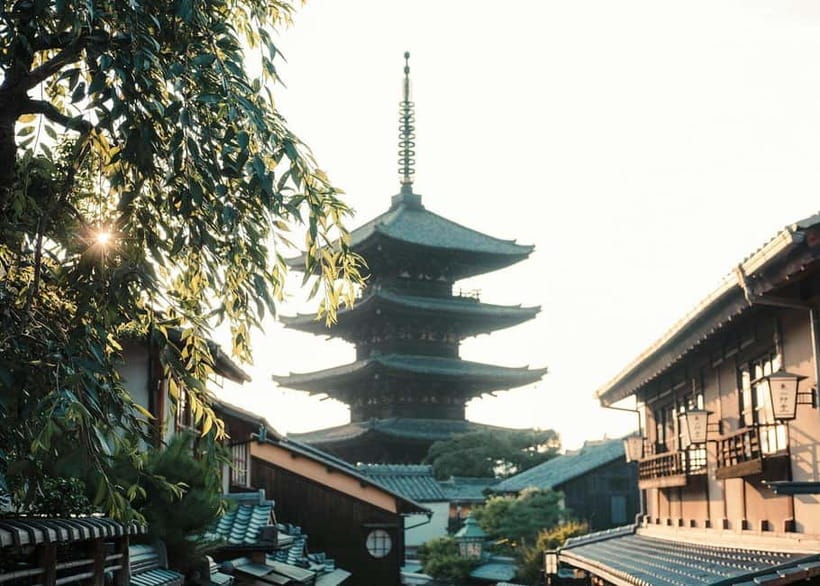
Kennin-ji is home to cultural treasures including the famous picture of the Wind and Thunder Gods. The tour does not present itself as a long temple art visit, so you should think of this stop as a guided look at the temple grounds and their place in Kyoto’s cultural life. The point is not to rush through a list of exhibits. It is to notice the change in sound, space, and pace as you leave the street behind.
I like this part because it adds balance to the outing. Gion is not only about geisha districts and photogenic lanes. The temple grounds show another side of old Kyoto, one shaped by religious practice, art, and quiet spaces.
The amount of time at each stop can vary with the group and the guide’s explanations. The listed route includes a 15-minute guided sightseeing stop, a five-minute photo stop, another 15-minute visit, and about 25 minutes walking by the Shirakawa Canal. Since the full activity lasts two hours, the remaining time is used for walking, transitions, and commentary.
Hanamikoji Street and the wooden townhouses
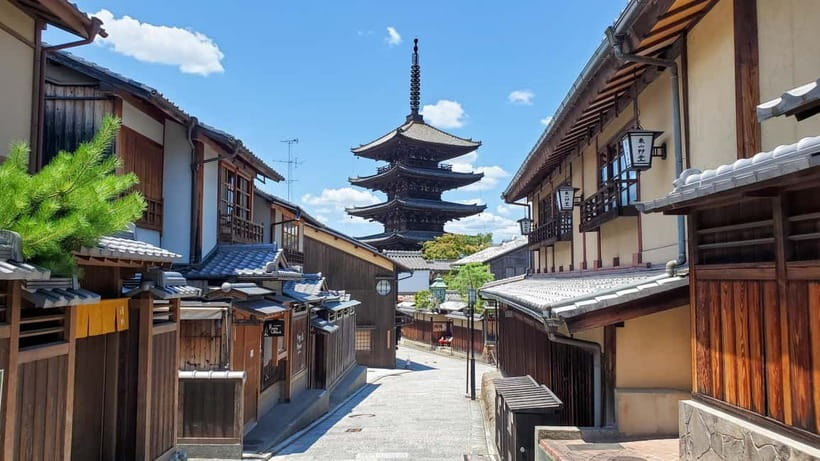
Hanamikoji Street is one of Kyoto’s most recognizable traditional streets. Its preserved wooden townhouses give the road a strong sense of place, but the real benefit of having a guide is learning to look beyond the overall picture.
Romi can point out details in the buildings and explain why the street feels different from an ordinary modern shopping road. Traditional wooden townhouses are not simply old facades. Their narrow fronts, tiled roofs, entrances, and restrained decoration help create the visual character associated with Kyoto’s historic districts.
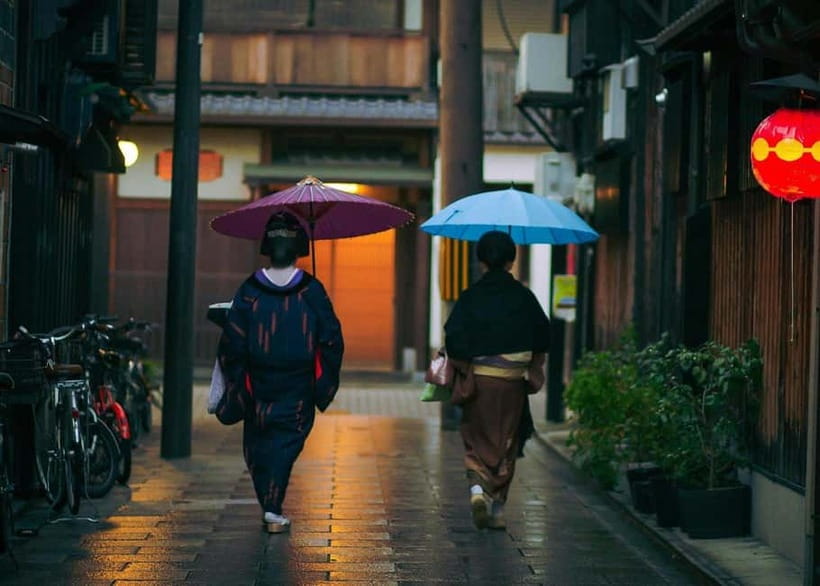
This is also where you may see a maiko or geiko. If that happens, give the person space and follow the guide’s lead. The possibility adds interest, but you should not crowd the street or treat someone going to work as a staged performance.
The street can be popular, so do not expect complete quiet. That is part of the trade-off. You get one of Kyoto’s most atmospheric areas, but you also share it with other people taking photographs and moving between restaurants, shops, and appointments.
The guide’s role matters here. One of the tour’s strongest features is the chance to ask questions, including odd or detailed ones about Japanese culture. Romi has been described as warm, friendly, and willing to explain many small points along the route. That kind of conversation can turn a familiar-looking street into a more meaningful stop.
Gion Shirakawa and the Shirakawa Canal
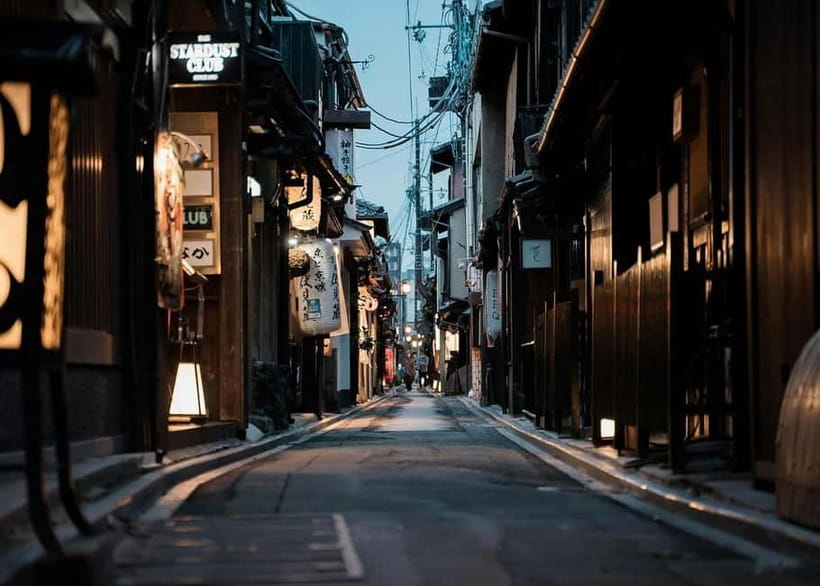
The final major section leads to Gion Shirakawa, along the Shirakawa Canal. Here, cobblestone paths run beside the clear canal, with traditional wooden townhouses lining the route.
This is the part most likely to reward the dusk timing. The water, old buildings, and changing light create a quieter scene than Hanamikoji Street. You will have time to walk and stop for photographs, with about 25 minutes assigned to the canal area in the route plan.
The canal walk is not a large attraction with a single entrance or viewpoint. Its appeal comes from the sequence of small scenes: the water beside the path, the wooden facades, the narrow lanes, and the evening atmosphere. A guide can help you notice how these elements fit together and explain why this area is so closely tied to Kyoto’s traditional image.
Bring a camera, but remember that low light can make sharp photographs harder. A phone may capture the mood, though it may not show every detail of the darker buildings. Comfortable shoes are more important than special equipment, since this is a walking tour over two hours.

What the $20 price really buys you
At $20 per person, this is a low-cost guided introduction to Gion and Higashiyama. You are paying for a local English-speaking guide and two hours of walking, not for a meal, private transportation, or entry to a special performance.
That distinction helps set the right expectations. If you want a formal geisha dinner, a tea ceremony, or a private cultural demonstration, this is not that kind of experience. If you want orientation and context in one of Kyoto’s most famous districts, the price is strong.
I think the best value comes from the guide’s explanations. You could walk around Hanamikoji Street and Shirakawa by yourself, but you might miss the meaning of Ebisu’s ritual, the role of Kennin-ji, or the details that make the wooden townhouses distinctive. At this price, having someone available to answer questions is useful.
The tour does not include a meal, so plan food separately. That is easy enough in Kyoto, but do not assume dinner is part of the booking. The two-hour duration also makes it simple to fit the walk before or after another evening plan.
Group size, guide style, and comfort
The available feedback points to a small-group experience, which suits this route well. Narrow streets and temple grounds are easier to manage when the group is not large, and a smaller party gives you more opportunity to ask questions.
Romi is the named guide associated with the experience. The comments about her repeatedly focus on warmth, clear explanations, kindness, and easy communication before the tour. One useful detail is that pre-tour contact through WhatsApp was straightforward, which can reduce stress when you are trying to confirm the meeting place.
The tour is offered in English. You should still expect some walking and standing, even though the activity is wheelchair accessible. Wear comfortable shoes, especially if you plan to stay out afterward. The route includes streets, temple grounds, cobblestone paths, and canal-side walking.
Weather is another practical concern. A September outing took place in hot conditions, but the walk still covered Kyoto’s history and cultural setting. In warm weather, carry water and dress lightly. In cooler months, dusk can feel chilly once you stop beside the canal.
Who will enjoy this Kyoto tour most
I would recommend this walk to first-time visitors who want a simple introduction to Gion without committing to a long, expensive evening program. It also suits anyone who likes architecture, local customs, photography, and short explanations about what they are seeing.
It is a good choice if you prefer a guide who can answer questions rather than deliver a fixed speech. The comments about Romi suggest a friendly style, and the small-group format should help if you want to ask about Japanese culture, shrine practices, or Kyoto’s traditional districts.
Families may enjoy the Ebisu coin ritual, though you should decide based on how comfortably your group handles two hours outdoors. Couples and photographers may especially like the sunset-to-dark timing, while solo visitors can benefit from having a clear route through an area that can feel confusing at night.
I would be more cautious if your main goal is to photograph a maiko or geiko. You might see one, but the experience cannot guarantee it. I would also choose another activity if you want extensive temple interiors, a meal, or a performance.
Booking details worth knowing
The activity lasts two hours, with starting times based on availability. Since the appeal depends partly on dusk, check the scheduled start time for your date rather than assuming every departure has the same light.
You can cancel up to 24 hours ahead for a full refund, and the reserve-now, pay-later option lets you hold a place without paying immediately. Those policies are useful if your Kyoto schedule is still shifting.
Meet the guide at Donguri-bashi Park. Keep the exact coordinates handy: 35.0018215, 135.771567. Bring comfortable shoes and a camera, and remember that food is not included.
Should you book Geisha at Dusk?
Book it if you want an affordable, well-paced walk through Gion with cultural explanation, a memorable shrine ritual, and attractive evening scenery. The strongest reasons are the sunset timing, the small-group feel, and Romi’s friendly approach to questions.
Skip it if you need a guaranteed maiko or geiko encounter, a formal geisha performance, or a full meal. For everyone else, $20 buys a useful introduction to Kyoto’s old streets and gives you enough context to explore Gion with sharper eyes afterward.
FAQ
Where does the tour meet?
The guide waits at Donguri-bashi Park. The listed meeting coordinates are 35.0018215, 135.771567.
How long does the experience last?
The tour lasts two hours.
What language is the tour offered in?
The live tour guide speaks English.
What places does the walk include?
The route includes Kyoto Ebisu Shrine, Kennin-ji Temple, Hanamikoji Street, Gion Shirakawa, and the Shirakawa Canal.
What happens at Kyoto Ebisu Shrine?
You can toss a coin into a box beneath Ebisu’s smiling face as part of a distinctive shrine ritual connected with prosperity.
Is a maiko or geiko sighting guaranteed?
No. You may see a maiko or geiko, but the experience does not guarantee an encounter.
Is food included?
No. Meals are not included.
Is the tour wheelchair accessible?
Yes, the activity is listed as wheelchair accessible.
What should I bring?
Bring comfortable shoes and a camera. Checking the weather is also sensible because the experience takes place outdoors, and one of the route’s memorable sections is along the canal.
More Gion & Geisha Walks in Kyoto
More tours in Kyoto we've reviewed




Gion & Geisha Walks, compared.
 ★ 4.7Kyoto Geisha Walking Tour: Gion District & Hidden GemsFrom $252 hours
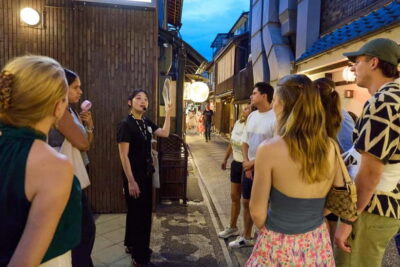 ★ 4.7Kyoto: Gion Geisha District Walking Tour – Stories of GeishaFrom $202 hours
 ★ 4.9Best of Kyoto: Gion, Geisha, Pagodas & CobblestonesFrom $242 hours
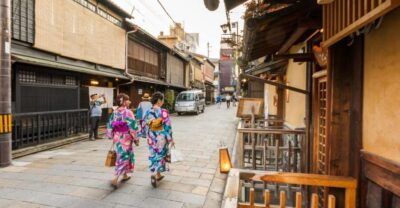 ★ 4.5Night Walk in Gion: Kyoto’s Geisha DistrictFrom $211h 40m
 ★ 5.0Kyoto Night Foodie Tour in Gion (9+ dishes + 6 Sake tastings)From $163
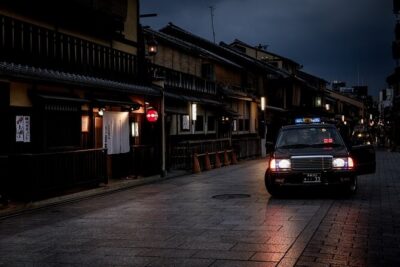 ★ 5.0Kyoto Gion Geisha District Walking Tour – The Stories of GeishaFrom $25