
Reviewed · CYCLING TOURS
GEMS of WEST KYOTO on a BIKE!
Kyoto’s famous sights can feel crowded and scattered, but this four-hour bike tour links three of the city’s best-known places without making you spend the day sorting out buses. You ride from Higashiyama into West Kyoto, visiting Kitano Tenmangu, Kinkakuji, and Ryoanji with a guide who adds context along the way.
I like the small maximum of eight people, which should make it easier to hear the guide and keep the group together. I also like the mix of major sights and ordinary Kyoto streets, where you get a look at local neighborhoods rather than only temple gates and ticket lines.
The main consideration is physical effort. You need a moderate fitness level, and cycling for about four hours can be tiring in warm, wet, or crowded conditions. The tour also depends on good weather, and lunch is not included.
In This Review
- Key points at a glance
- Why a bike makes this Kyoto route work
- Starting at Higashiyama Sanjo at 1:00 pm
- Kitano Tenmangu and the story of Sugawara no Michizane
- Kinkakuji, Kyoto’s Golden Pavilion
- Ryoanji and the famous rock garden
- The ride through West Kyoto
- Guides who shape the experience
- Is $106.52 a fair price?
- Who should book this ride?
- Weather, cancellation, and timing
- Should you book the West Kyoto bike tour?
- FAQ
- How long does the bike tour last?
- What time does the tour begin?
- Where does the tour meet?
- Where does the tour end?
- Which sights are included?
- Is bike rental included?
- Is lunch included?
- How many people can join the tour?
- What happens if the weather is poor?
Key points at a glance
- Three major West Kyoto sights: Visit Kitano Tenmangu, Kinkakuji, and Ryoanji in one afternoon.
- Small-group cycling: The group is limited to eight people, making guidance more personal than on a large bus tour.
- A useful route across Kyoto: The bike ride connects central Kyoto with the western temple district while adding local streets between the sights.
- History with a human touch: Guides including Craig, Philippe, and Niall have led tours that combine historical explanation with an easygoing ride.
- Admission is covered: Entrance to all three listed sites and use of a standard bike are included in the $106.52 price.
- Plan around the weather: The tour runs at 1:00 pm, lasts about four hours, and may be rescheduled or refunded if poor weather cancels it.
Why a bike makes this Kyoto route work
Kyoto is not difficult to explore, but its best sights do not sit in one compact cluster. Kitano Tenmangu, Kinkakuji, and Ryoanji are all in the western part of the city, and moving between them by public transportation can take time and planning.
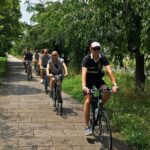
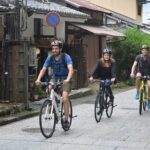
A bike gives you a more direct connection between those places. You are not sealed inside a vehicle. You pass through Kyoto streets, watch local life unfold, and reach each temple under your own power.
That does not mean you are racing from gate to gate. The planned visit gives roughly an hour at each main stop, with another hour allocated to cycling through West Kyoto. That balance matters. You get enough time to see the key features, while the ride itself becomes part of the experience rather than a simple transfer.
The group size also helps. With no more than eight people, you can expect a closer fit than on a large sightseeing coach. The guide can give directions, answer questions, and keep an eye on the pace without managing a crowd of dozens.
Other cycling tours in Kyoto
Starting at Higashiyama Sanjo at 1:00 pm
The meeting point is the McDonald’s at Higashiyama Sanjo, in Kyoto’s Higashiyama ward. The tour begins at 1:00 pm and finishes back at the same meeting point.
That starting point is near public transportation, but you should still allow time to find the exact storefront and arrive ready to ride. A mobile ticket is provided, and confirmation is sent within 48 hours of booking, subject to availability.
The afternoon start has a practical advantage. You can use the morning for another Kyoto sight, a relaxed breakfast, or a walk through Higashiyama before meeting the group. The trade-off is that you will be visiting some of Kyoto’s most popular sights during the afternoon, when they may feel busy.
You should wear comfortable clothing and shoes suitable for cycling. The tour supplies a standard bike, but the information does not specify specialist bikes, helmets, child seats, or electric bicycles. If any of those matter to you, ask before booking.
Kitano Tenmangu and the story of Sugawara no Michizane
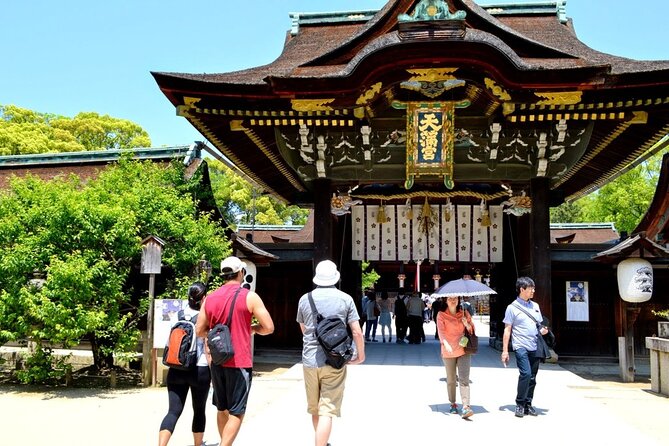
The first major stop is Kitano Tenmangu Shrine, where the tour introduces one of Kyoto’s more intriguing religious stories. The shrine was built to appease the spirit of an exiled scholar, and its connection with learning remains important today.
Students from across Japan come here to pray before national examinations. That gives the shrine a purpose you can feel beyond its architecture. It is not simply an old religious site preserved for sightseeing. It is also part of a living tradition tied to study, ambition, and uncertainty.
You get about an hour here, including admission. That should allow time to take in the shrine grounds and listen to the guide’s explanation without reducing the stop to a quick photograph.
This is a good opening stop because it brings a human story into the day. Kinkakuji will offer visual spectacle, while Kitano Tenmangu gives you a look at how belief and daily hopes continue to shape Japanese life.
The possible drawback is that shrine visits can be less immediately dramatic than the Golden Pavilion. If you are mainly seeking grand views, you may find the first stop more rewarding after hearing the historical explanation rather than at first glance.
Kinkakuji, Kyoto’s Golden Pavilion
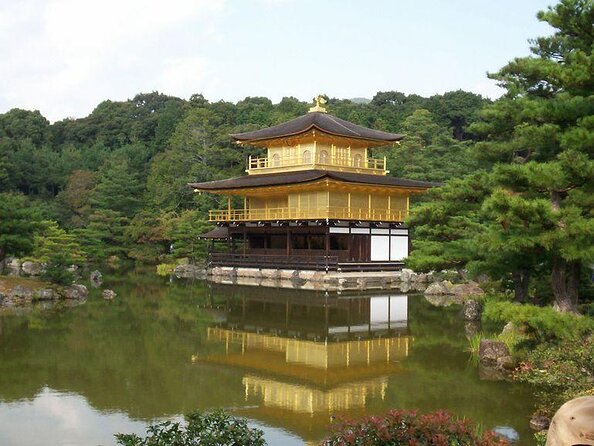
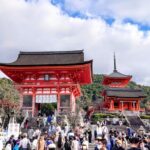
Next comes Kinkakuji, the Golden Pavilion and perhaps the most instantly recognizable sight on the route. The building began as the 14th-century villa of a shogun and is covered on two floors with gold leaf.
The famous view comes from the pavilion’s reflection in the pond. The building, water, trees, and surrounding garden create the scene that appears in countless Kyoto photographs. Seeing it in person is still worthwhile, but it helps to set realistic expectations: this is one of Kyoto’s most popular places, and you follow a set route through the grounds rather than wandering freely in every direction.
Admission is included, and you have about an hour to see the pavilion and garden. That is enough for the essential view and a walk through the grounds, though not for a slow, unhurried study of every detail.
I like the way this stop works in the middle of the tour. After the quieter story of Kitano Tenmangu, Kinkakuji offers a sharp change in mood and appearance. It is bright, polished, and highly theatrical, while the garden keeps the setting from feeling like a single building placed beside a pond.
You should also know that the tour cannot control crowd levels or the weather. On a clear day, the reflected gold may be the visual high point. On a gray or busy afternoon, you may appreciate the guide’s context more than the photograph.
Ryoanji and the famous rock garden
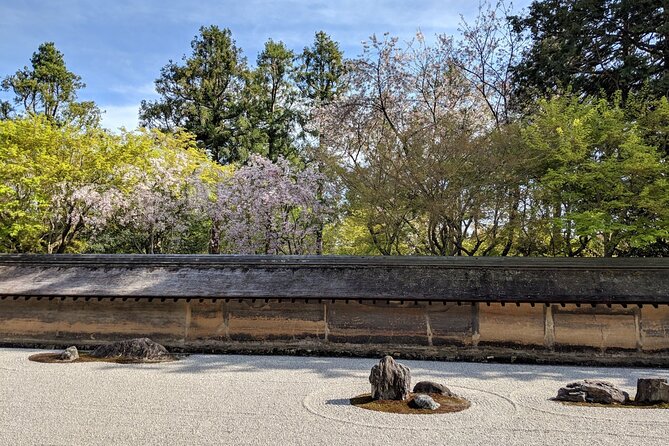
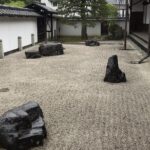
The final temple stop is Ryoanji, home to one of Japan’s best-known dry gardens. Its arrangement of rocks and raked sand is deliberately spare, leaving you with very little visual clutter and plenty of room for thought.
The traditional experience here is to sit on the veranda and look across the garden. You are not being asked to follow a complicated interpretation. The value comes from slowing down and deciding what the arrangement suggests to you.
You get about an hour at Ryoanji, including admission. That is useful because a rock garden is not a sight you need to rush through. The stop gives the afternoon a calmer finish after the shine and crowds of Kinkakuji.
I would not choose this tour if you dislike quiet temple visits or prefer constant activity. Ryoanji rewards patience. A person who wants to understand every symbol may also find the garden frustrating, since its meaning is not handed to you in a simple, final answer.
For many people, though, this is the most memorable part of the route. The bike ride gets you moving, Kitano Tenmangu gives you a story, Kinkakuji gives you the classic image, and Ryoanji gives you time to pause.
The ride through West Kyoto
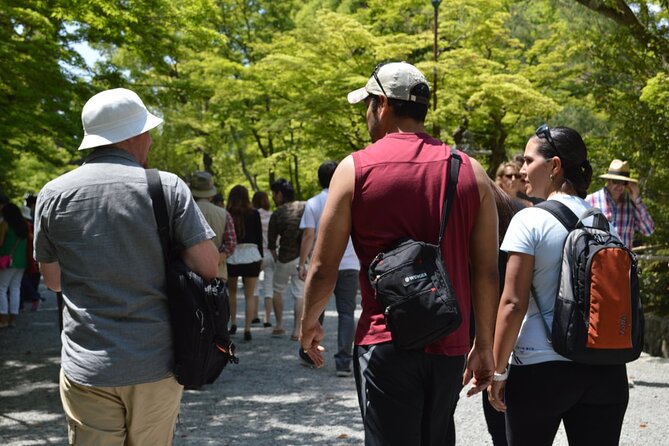
The cycling portion is more than a practical link between ticketed sites. You spend about an hour riding through the western side of Kyoto, stopping to look at quaint streets and observe residents going about their day.
The details here are deliberately less famous. You might pass residential areas and quieter roads that do not appear on a first-time sightseeing plan. This is where the tour offers a better sense of Kyoto as a working city rather than a collection of temples.
The cycling also changes your sense of distance. By moving under your own power, you see how the city’s neighborhoods connect. You are close enough to notice street details, but still covering more ground than you would comfortably manage on foot between these three sites.
Safety is an important part of the experience. The tour description emphasizes moving safely and without stress, but you are still cycling in a city. You need to follow the guide’s directions, stay aware of traffic, and feel comfortable on a standard bike.
The tour is not described as a strenuous athletic ride, yet the moderate fitness requirement should be taken seriously. Four hours includes riding, stopping, walking through temple grounds, and remaining active in the afternoon. If you rarely cycle, have mobility concerns, or dislike riding in urban areas, a walking or vehicle-based tour may suit you better.
Guides who shape the experience
The guide can make or break a tour like this. The route itself is strong, but the same temples feel very different when someone explains why they matter and helps you notice details you might otherwise pass by.
The guides named in the feedback include Craig, Philippe, and Niall. Craig is an English professor from Australia who has lived in Kyoto for 15 years. That background suggests a useful blend of language skill, teaching ability, and long-term local familiarity.
Philippe is praised for making the history interesting and fun for the whole group. That is especially useful at Kitano Tenmangu and Kinkakuji, where a guide can turn dates and names into stories rather than a string of facts.
Niall led a ride focused on Kyoto’s Zen gardens, with Ryoanji as a key part of the appeal. His approach was described as one of the highlights of a wider Japan trip, which points to the value of having someone help you slow down at the garden instead of treating it as another quick stop.
Guide assignments can change, so you should not book on the assumption that one specific person will lead your departure. Still, the range of guide backgrounds is a plus. The strongest part of this tour is likely to be the way the guide connects the temples, streets, and religious ideas into one afternoon.
Is $106.52 a fair price?
At $106.52 per person, this is not a bargain bike rental. It is a guided half-day experience that includes the standard bike, guide, facility and landing fees, and admission to three major sites.
The value depends on how you would otherwise arrange the day. If you rented a bike separately, paid admission at each temple, planned the route, and navigated between West Kyoto sights on your own, the price difference would include a lot of convenience. You are paying for the route, the local explanation, and the ability to focus on the city rather than directions.
The small group improves the calculation. A maximum of eight people is much more manageable than a large coach group, especially on a bike. You get a more personal format without paying for a private tour.
Lunch is not included. Since the tour begins at 1:00 pm and lasts about four hours, eat beforehand or plan to find food after returning to Higashiyama Sanjo. The supplied information mentions fine coffee as part of one memorable outing, but it does not say that coffee or any meal is included, so treat food as your own expense.
I would call the price reasonable for someone who wants three major sights, a guide, and a ready-to-use bike in one organized afternoon. It is less attractive if you already know Kyoto well, own a bike, or prefer to spend a long time at one temple.
Who should book this ride?
I would recommend it to first-time visitors who want an efficient introduction to West Kyoto without spending the day on buses. It also suits anyone who likes learning while moving and wants a little ordinary city life between famous temples.
The tour is a good match for:
- People comfortable cycling for several hours
- Couples or friends who prefer a small group
- Anyone interested in both Shinto and Zen traditions
- Visitors who want guided context at major sights
- People with only part of one day available for West Kyoto
I would think twice if you need an electric bike, child equipment, a fully accessible route, or a slow pace. Those details are not provided, and the moderate fitness requirement suggests you should confirm your needs before booking.
The 4.8 rating from six reviews is encouraging, especially because the strongest praise centers on the things that matter most here: the guides, the history, the local streets, and the chance to see Kyoto by bike. It is a small sample, so I would treat it as a positive signal rather than a guarantee of every departure.
Weather, cancellation, and timing
This activity requires good weather. If poor weather cancels the tour, you can choose another date or receive a full refund. The same applies if the minimum number of participants is not met.
For your own plans, the key rule is simple: cancel at least 24 hours before the 1:00 pm start time for a full refund. Cancellations or changes made within 24 hours are not accepted for a refund.
Because the tour starts in the afternoon, keep the morning flexible rather than scheduling something far across Kyoto. The experience ends back at the McDonald’s meeting point, which makes it easier to continue sightseeing or return to your accommodation from the same central area.
Should you book the West Kyoto bike tour?
Book this tour if you want a guided, active way to connect Kitano Tenmangu, Kinkakuji, and Ryoanji in one afternoon. The combination is well chosen: a shrine linked to scholarship, a brilliant former shogun’s villa, and a quiet Zen garden.
I especially like it for people who want more than a checklist of Kyoto photographs. You get the famous Golden Pavilion, but you also ride through residential streets and hear the stories that give the places meaning.
Skip it if cycling is uncomfortable for you, if you need a long time at each temple, or if rain is likely during your visit. For the right rider, though, $106.52 buys a practical route, three admissions, a standard bike, and a guide who can turn a busy Kyoto afternoon into a coherent experience.
FAQ
How long does the bike tour last?
The tour lasts approximately four hours.
What time does the tour begin?
It starts at 1:00 pm.
Where does the tour meet?
The meeting point is the McDonald’s at Higashiyama Sanjo, 46 Saikaicho, Higashiyama Ward, Kyoto, 605-0012, Japan.
Where does the tour end?
The activity ends back at the meeting point.
Which sights are included?
The tour visits Kitano Tenmangu Shrine, Kinkakuji Temple, and Ryoanji Temple.
Is bike rental included?
Yes. A standard bike rental is included, along with a guide, landing and facility fees, and admission tickets for the three main sights.
Is lunch included?
No. Lunch is not included in the tour price.
How many people can join the tour?
The tour has a maximum of eight participants.
What happens if the weather is poor?
If the tour is canceled because of poor weather, you will be offered a different date or a full refund.
More Cycling Tours in Kyoto

More tours in Kyoto we've reviewed


Cycling Tours, compared.
 ★ 5.0Hidden Kyoto E-Biking tourFrom $116
 ★ 5.0Bike Tour Exploring North Kyoto plus LunchFrom $106
 ★ 5.0Arashiyama Bamboo Forest & Hidden Gems Bike Tour (Early Bird)From $106
 ★ 5.05 Top Highlights of Kyoto Full Day Bike Tour (E-bike option)From $172
 ★ 5.0Full Day Biking Tour Exploring the Best of KyotoFrom $119
 ★ 5.0E-Bike Tours of the highlights of Kyoto!!!From $109