
Reviewed · ARASHIYAMA & BAMBOO TOURS
Half Day Kyoto Sagano Bamboo Grove & Arashiyama Walking Tour
Arashiyama’s famous bamboo grove is only the opening act here. This four-hour outing also takes you to Tenryu-ji’s garden, the forested Jojakko-ji Temple, and Togetsukyo Bridge, with a guide handling the train ride and temple admissions.
I like the way the tour links Kyoto’s major Arashiyama sights without making you plan the route yourself. I also like the boat ride, which gives your feet a break and lets you see the Hozu River and wooded hills from a different angle. The catch is that the group can reach 25 people, and busy trains, crowds, stairs, and pauses to round up the group can make the morning less peaceful than the setting suggests.
In This Review
- Key things to know before you book
- Why this Kyoto half-day works
- From Kyoto Station to Saga-Arashiyama
- Jojakko-ji and the view over Sagano
- Walking through Sagano’s bamboo grove
- Tenryu-ji’s garden and Zen setting
- Togetsukyo Bridge and the yakatabune ride
- Group size, pace, and the real atmosphere
- Returning to Kyoto Station, or staying in Arashiyama
- Who should book this Arashiyama tour?
- Should you book it?
- FAQ
- How long does the Kyoto Arashiyama walking tour last?
- How much walking is involved?
- Is transportation included?
- What is included in the price?
- Is the yakatabune boat ride included?
- Does the tour visit Jojakko-ji Temple all year?
- How large is the tour group?
- Can I cancel for a refund?
Key things to know before you book
- The bamboo grove is part of a longer walk: You cover about 3 kilometers, not just a quick photo stop.
- Tenryu-ji’s garden is the star at the temple: The visit focuses on the gardens and grounds, with limited time for the temple buildings.
- Jojakko-ji adds quiet hillside views: Its statue, pagoda, maple trees, and outlook over Sagano give you a calmer counterpoint to the bamboo path.
- Public transport is part of the experience: You ride from Kyoto Station in non-reserved seats, so standing may be necessary during busy periods.
- The boat ride is a welcome pause: At Togetsukyo Bridge, the yakatabune offers river views and a chance to rest.
- You can keep exploring after the tour: The tour ends at Kyoto Station, but some guides help you find your way back to Arashiyama attractions such as the monkey park.
Why this Kyoto half-day works
Arashiyama sits on Kyoto’s western edge, far enough from the central temples to feel like a change of scene. Here, bamboo, river views, wooded hills, and temple gardens come together in one compact district.
The practical benefit of this tour is simple: you do not have to work out the train, temple order, walking route, and return trip on your own. Your guide leads you from the JTB Sunrise Tours Desk in the basement of Kyoto Avanti to Kyoto Station, then onward by public transport to Saga-Arashiyama Station.
The tour costs $79.26 per person. That is not the cheapest way to reach Arashiyama, since you could make the train trip yourself, but the price includes an English-speaking, nationally licensed guide, transportation costs, and entrance fees listed for the tour. The value rises if you want cultural background and a fixed morning plan. It drops if you are comfortable navigating Kyoto and prefer to spend a full day wandering at your own speed.
The average booking time is 35 days ahead, which suggests you should not leave this for the final morning of a short Kyoto visit. Confirmation is subject to availability, and the tour can be canceled if the minimum of two adults is not reached by four days before departure.
A few more Kyoto tours and experiences worth a look
From Kyoto Station to Saga-Arashiyama
The day begins at the JTB Sunrise Tours Desk Kyoto, located at Kyoto Avanti near Kyoto Station. From there, you use public transport with non-reserved seats.
That detail matters. You may get a seat, but you may also stand, especially during a busy period. This is ordinary Japanese train travel, not a private coach transfer. It keeps the price reasonable and puts you into the same transport system used by local residents, but it gives the tour less control over timing.
The order of stops can change because of traffic, crowds, and local conditions. Keep your morning flexible rather than scheduling a tight lunch reservation immediately after the stated return time.
Once you reach Saga-Arashiyama, the tour becomes a walking experience. Comfortable shoes are essential. The distance is about 3 kilometers, but the effort is more than the number suggests because Jojakko-ji has stairs and hillside paths. Rain can also slow the group and make the stone surfaces more demanding.
Jojakko-ji and the view over Sagano
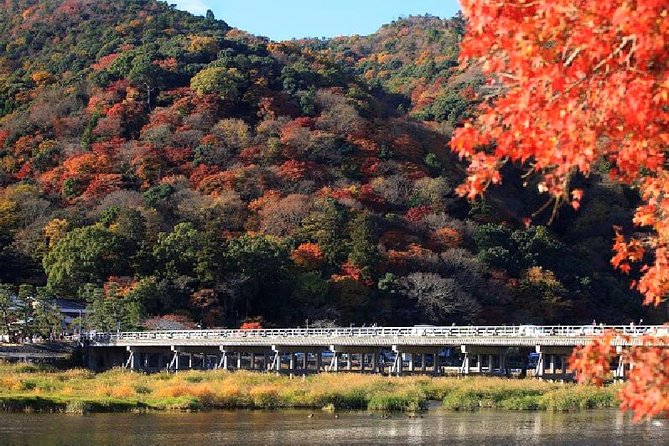
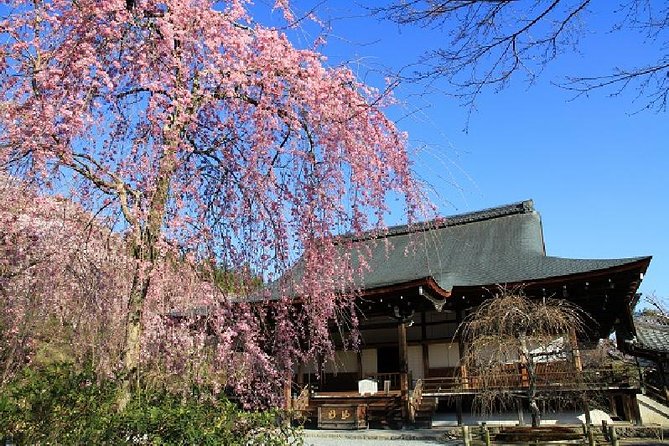
Jojakko-ji Temple gives the tour a more secluded feel than the main bamboo path. It sits on the wooded slope of Mount Ogura, and the grounds offer broad views across Sagano and toward Kyoto.
The temple is especially appealing during autumn, when maple and ginkgo trees fill the hillside with red, orange, and yellow. In summer, the greenery and shade make it a pleasant stop, though the tour uses a different summer plan from July through September 22. During that period, Okochi Sanso Villa Garden replaces Jojakko-ji, and the start time is moved earlier to avoid the strongest heat.
You have about 30 minutes here, enough to see the main features but not enough for a long, unhurried examination of every corner. Look for the Jizo statue and the pagoda tucked among the trees. The temple is also linked with the Tale of the Heike and the story of Empress Dowager Kenrei-mon-in, who is said to have lived at the site.
The description of Jojakko-ji includes a long historical span, but the useful point for you is how the stop feels: it is a hillside temple with views, trees, and a quieter pace. It balances the more famous sights that follow.
Admission is included except during July and September, when the summer schedule replaces this visit. Check the exact seasonal plan when booking so you know which garden or temple you will see.
Walking through Sagano’s bamboo grove
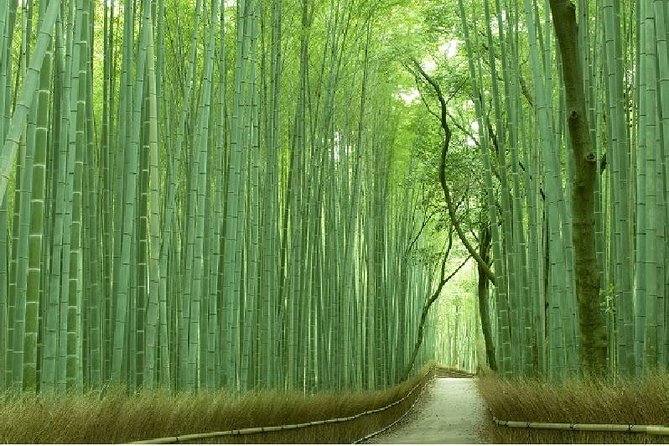
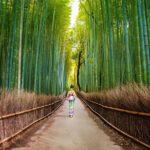
From Jojakko-ji, you walk toward Tenryu-ji through the Sagano Bamboo Grove. This is the image that draws many people to Arashiyama: tall bamboo rising on both sides of a narrow path, with glimpses of the surrounding hills between the stalks.
The tour covers roughly 2 miles, or 3 kilometers, across the wider walking route. The most famous bamboo section can pass quickly, particularly if the group is moving through a crowded stretch. If your main goal is quiet time among the bamboo, this may feel too brief.
Crowds are the main issue. Arashiyama is one of Kyoto’s leading sightseeing areas, and the bamboo path can be packed during cherry blossom season, autumn foliage, and other busy periods. Rain does not necessarily solve the problem. Wet weather can bring umbrellas, slower movement, and people losing sight of the group.
Still, the guide adds value in the spaces between the major sights. You can ask about the district, the temples, and Kyoto customs while walking instead of reading every explanation from a sign. Several guides have received praise for making the route easy to follow and adding personal stories. Names associated with past departures include Sachiko, Donna, June, and Michiharu, though the guide for your date is not guaranteed.
You should also expect some free time rather than constant commentary. That works well for anyone who wants to take photographs and look around without a lecture at every turn. It can disappoint you if you want detailed explanation throughout the entire morning.
Tenryu-ji’s garden and Zen setting
Tenryu-ji is a World Heritage site and one of Arashiyama’s major temples. It was established in 1339 by Takauji of the Ashikaga Shogunate as a principal temple of the Rinzai Zen school.
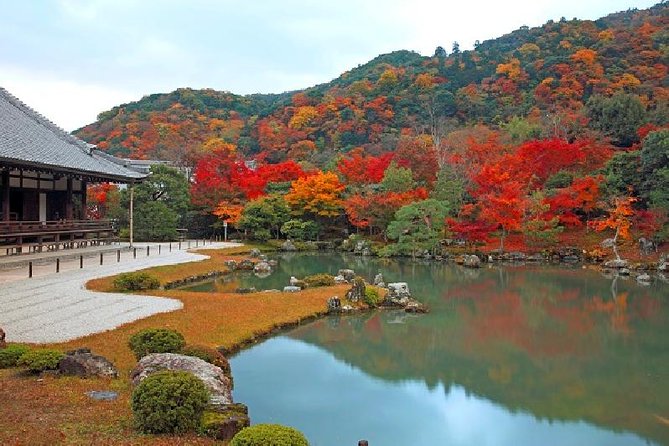
The garden is the main reason to visit. Its design survives from the original plan and uses a pond, carefully arranged plants, rocks, and the hills of Arashiyama beyond. This is where the temple setting feels most complete: the garden is not isolated from nature, but framed by it.
You have about 30 minutes at Tenryu-ji. That is enough to see the garden and absorb the view, but it is a short visit for a large religious complex. The tour concentrates on the gardens and grounds rather than giving you a long interior visit to the temple buildings. If painted screens, halls, and architectural details are your priority, plan to return on your own.
This is one of the tour’s strongest stops because the guide can explain why Zen gardens are arranged as they are and connect the temple to Kyoto’s wider religious culture. The garden also gives you a slower visual break after the busy bamboo road.
The admission fee is included, so you do not have to stop at each ticket window. That saves only a little money, but it saves time and keeps the group moving.
Other walking tours we've reviewed in Kyoto
Togetsukyo Bridge and the yakatabune ride
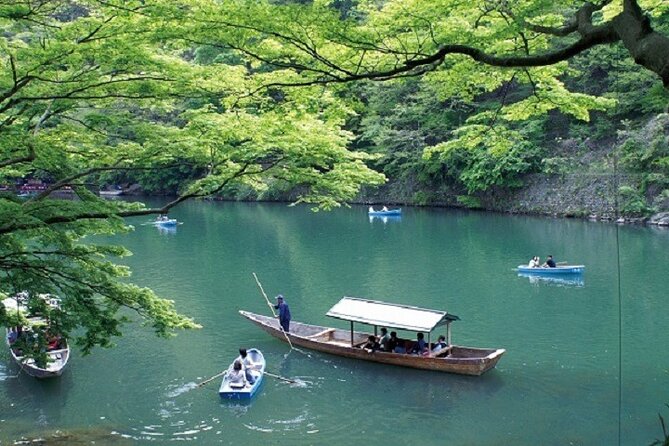
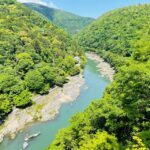
The final major stop is Togetsukyo Bridge, the 250-meter crossing over the Hozu River. Its name means Crossing Moon Bridge, and the views reach toward the forest-covered hills beyond the water.
The bridge itself is a reproduction of an earlier structure, rebuilt in 1934. It is a favorite place for cherry blossoms and autumn leaves, but the river and hills give it appeal in any season.
The tour includes time to enjoy the scenery from a yakatabune. This traditional-style pleasure boat provides a pleasant change from the walking route. After the stairs, temple paths, and train ride, sitting on the water lets you take in Arashiyama at a gentler pace.
The boat ride is also one of the features that makes this tour different from a basic bamboo grove walk. You see the district from ground level among the trees, then from the river with the hills rising around it.
The exact order and arrival time can change, and the boat portion may be affected by local conditions. Treat it as an included part of the experience, not as a private cruise with a fixed departure chosen just for your party.
Group size, pace, and the real atmosphere
The maximum group size is 25. Some departures have been much smaller, including groups of three or around 12, while other outings have included about 20 to 25 people.
That difference changes the feel of the morning. In a small group, you can hear the guide clearly, ask questions, and move at a relaxed pace. In a full group, the guide may need to use headsets, wait for people at crossings, and spend time keeping everyone together.
One important criticism is that a large walking group can undercut the peaceful mood you came to find. Another practical complaint is that the group may spend time waiting for people who fall behind or take a wrong turn. You should not expect the intimacy of a private tour.
On the positive side, the guides have often been friendly, clear, and attentive. One guide helped a guest find the monkey park and suggested lunch options after the formal tour. Another tailored recommendations to a guest’s interests, including directions to Kyoto’s Budo Centre. These details show where a good guide can add real value: not only explaining the places on the schedule, but helping you shape the rest of your day.
The stated walking pace is laid-back, but you still need moderate physical fitness. There are stairs at the hillside temple, and the route involves walking throughout. Wear shoes with good grip and clothing suitable for changing weather.
Returning to Kyoto Station, or staying in Arashiyama
The scheduled tour ends at Kyoto Station, where you continue to your next destination independently. The guide can accompany the group back by train, and some departures have provided a return ticket or train guidance.
You may also have the option to remain in Arashiyama instead of returning with the group. This is valuable because the area offers enough to fill a full day. The monkey park is a popular extension, and guides have provided directions for reaching it. You can also look for lunch and browse the town before making your own way back.
This flexibility is one of the smartest features of the tour. You get an organized introduction in the morning, then choose between a simple return to Kyoto or more time among the sights.
Do not assume the tour will provide a full afternoon in Arashiyama. The formal experience lasts about four hours, and the advertised finish is at Kyoto Station. If you want extra time, confirm the guide’s instructions on the day and keep your own train arrangements flexible.
Who should book this Arashiyama tour?
I would choose this tour if you want to see the main Arashiyama sights in one morning and prefer not to manage Kyoto’s transport system alone. It suits first-time visitors, people who want cultural context, and anyone who likes having an English-speaking guide nearby for questions.
It is also a good fit if you want a mix of scenery and history. The bamboo grove supplies the iconic setting, Jojakko-ji brings hillside views and literary connections, Tenryu-ji provides Zen garden design, and Togetsukyo adds the river and boat ride.
I would hesitate if you already know Arashiyama well, dislike group pacing, or want to linger in the bamboo grove. You can reach the area from Kyoto Station on your own, and independent exploration gives you more time for food, shops, the monkey park, or a slower temple visit.
The tour receives an overall rating of 4.3 from 81 ratings, with particularly strong praise for the guides, scenery, temple gardens, and easy organization. The lower scores center on crowds, large groups, limited commentary at times, and too much waiting. Those are not minor details, so factor them into your decision.
Should you book it?
Book this tour if structure and local explanation matter more to you than maximum freedom. For $79.26, you receive transport costs, entrance fees, and a licensed English guide, plus a route that combines four distinct Arashiyama experiences.
Skip it if you are confident using trains, want to photograph the bamboo at your own pace, or plan to spend all day in the district. The best compromise may be to join the morning tour, then stay in Arashiyama afterward for lunch, the monkey park, or another temple before returning to Kyoto independently.
Free cancellation is available up to 24 hours before the start time. Children aged 0 to 5 can join free if they do not occupy a separate seat. Participants under 18 need written parental permission, and anyone under 15 or not yet in middle school must be accompanied by a parent or guardian.
FAQ
How long does the Kyoto Arashiyama walking tour last?
The tour lasts approximately four hours and ends at Kyoto Station.
How much walking is involved?
The total walking distance is about 3 kilometers, or roughly 2 miles. You should also expect stairs, particularly at Jojakko-ji Temple, and wear suitable walking shoes.
Is transportation included?
Yes. Public transportation costs are included. The train uses non-reserved seating, so a seat is not guaranteed and you may need to stand during busy times.
What is included in the price?
The price includes the nationally licensed English guide interpreter fee, listed admission fees, and transportation costs included in the tour.
Is the yakatabune boat ride included?
The tour includes a yakatabune experience at Togetsukyo Bridge, where you can view the bridge, river, and hills from the water.
Does the tour visit Jojakko-ji Temple all year?
From July through September 22, the tour begins earlier and visits Okochi Sanso Villa Garden instead of Jojakko-ji. Jojakko-ji admission is also not included during July and September.
How large is the tour group?
The maximum group size is 25 people. Actual group sizes can be smaller, depending on the departure date.
Can I cancel for a refund?
You can cancel for a full refund at least 24 hours before the scheduled start time. Cancellations or changes made less than 24 hours before the start time are not accepted for a refund.
More Walking Tours in Kyoto
More Arashiyama & Bamboo Tours in Kyoto
More tours in Kyoto we've reviewed



Arashiyama & Bamboo Tours, compared.
 ★ 4.8Kyoto: Fushimi Inari, Kinkakuji, Bamboo Grove 1 Day Bus TourFrom $122510 minutes - 9 hours
 ★ 4.1Osaka/Kyoto:Kinkakuji,Arashiyama,FushimiInariShrine,NaraParkFrom $66
 ★ 4.7Kyoto/Osaka: Nara, Fushimi Inari Taisha, Arashiyama Bus TourFrom $529 - 10 hours
 ★ 5.0Kyoto Arashiyama Walking Tour: Bamboo, Monkeys, Gardens & SecretsFrom $65
 ★ 4.8Arashiyama Bamboo, Temple, Monkeys, or Secret Sake BreweryFrom $875 hours - 330 minutes
 ★ 4.4Osaka/Kyoto: Arashiyama, Nara & Fushimi Inari Shrine w/LunchFrom $61