
Reviewed · PRIVATE
Private Highlights of Kyoto Tour
Kyoto’s biggest challenge is not finding beautiful sights. It is fitting them together without losing half the day to maps, train platforms, and wrong turns. This private tour solves that problem with a local guide, public transportation, and two sensible routes through the city’s major sights.
I like the private format, which lets the guide adjust the pace, answer questions, and help with children. I also like the chance to see Kyoto by bus and train rather than from a sealed tour coach. The main drawback is price: at $151.20 per person, it costs more than a self-guided day, and the seven-hour schedule can feel busy.
In This Review
- Key points at a glance
- Why a Private Kyoto Day Can Be Worth the Cost
- Meeting at Kyoto Station at 9 a.m.
- Northwest Route: Bamboo, Zen, Gold, and Food
- Kinkakuji, the Golden Pavilion
- Nishiki Market or Nijo Castle
- Southeast Route: Sake, Torii Gates, and Old Kyoto
- Sanjusangendo and Kiyomizu-dera
- Ending in Gion
- What the Guides Add
- Walking, Weather, Lunch, and Group Size
- Should You Book This Kyoto Tour?
- FAQ
- Where does the Kyoto tour begin?
- How long does the tour last?
- Is this a private tour?
- Which routes can I choose from?
- Is transportation included?
- Are admission tickets included?
- Is lunch included?
- Is hotel pickup provided?
- What is the cancellation policy?
Key points at a glance
- Two routes cover different sides of Kyoto: Choose northwest for Arashiyama, Ryoan-ji, Kinkakuji, and either Nishiki Market or Nijo Castle, or southeast for Fushimi Inari, the sake museum, Sanjusangendo, Kiyomizu-dera, and Gion.
- A private guide makes the difference: Guides such as Mie, Mia, Chako, and Choko have been praised for clear English, historical context, humor, and flexibility.
- You use local public transportation: Meet at Hotel Granvia Kyoto near Kyoto Station, then travel by buses and trains with your guide.
- Lunch is not included: You pay for your own meal, though guides may suggest a ramen, okonomiyaki, or other local restaurant.
- The tour ends in Gion: You finish in Kyoto’s traditional entertainment district, with time to continue exploring on your own.
- Expect plenty of walking: Temples, shrines, bamboo paths, and the slopes around Kiyomizu-dera require a reasonable level of mobility.
Why a Private Kyoto Day Can Be Worth the Cost
A first Kyoto day can become a logistical puzzle. Arashiyama is in the west, Fushimi Inari is in the south, and Kinkakuji is well north of Kyoto Station. Trying to combine every famous sight on your own can mean repeated trips across town.
This tour avoids that zigzag by asking you to choose a route. The northwest course is the better fit if bamboo, Zen gardens, the Golden Pavilion, and food markets are high on your list. The southeast course has more shrine and old-town flavor, with Fushimi Inari, sake, Kiyomizu-dera, Ninenzaka, Sannenzaka, and Gion.
The private setup matters most when your group has different interests or energy levels. Mie has been praised for adjusting the plan, helping families with young children, and keeping a 12-year-old engaged. Other guides, including Mia and Chako, have been singled out for friendly conversation, cultural explanations, and help with photography and translation.
At $151.20 per person, the value depends on group size. For one or two people, it is a serious splurge. For a small group of up to eight, the cost becomes easier to justify because you are paying for personal guidance rather than a large coach experience. Admission tickets and public transportation are included, but food is not.
Other private tours in Kyoto
Meeting at Kyoto Station at 9 a.m.
The tour begins at Hotel Granvia Kyoto, by the central entrance of Kyoto Station, at 9 a.m. This is a practical meeting point because Kyoto Station is the city’s main transport hub and easy to find if you are staying nearby or arriving by train.
Hotel pickup and drop-off are not included. You need to reach the station on your own, so leave enough time to find the correct entrance. Once the tour starts, your guide handles the public transportation portion. That gives you a useful lesson in Kyoto’s buses and trains, which can help later in your trip.
The tour lasts about seven hours. That is long enough to see several major places, but not long enough to take every route and visit every stop listed here. Your chosen course determines what fits into the day, and timing can change based on crowds, transport, and your group’s pace.
A one-day city bus pass is included and can be used continuously after the tour. That small extra has real value, especially if you plan to keep exploring Kyoto after the guide leaves.
Northwest Route: Bamboo, Zen, Gold, and Food
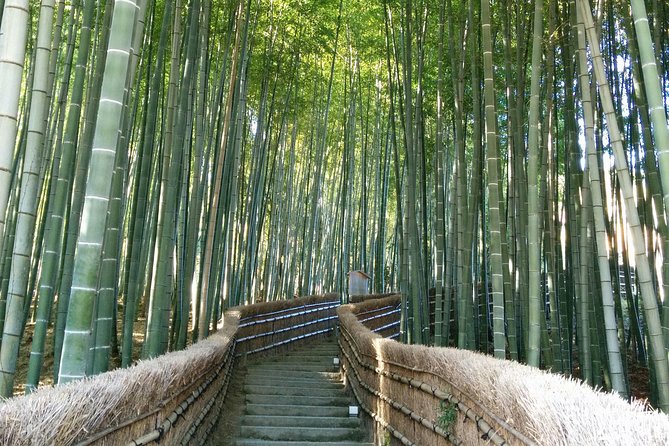
The northwest course begins in Arashiyama, one of Kyoto’s most photographed areas. The Bamboo Forest Street visit lasts about 30 minutes, giving you time to walk among the tall bamboo stalks and take in the unusual light and sound of the grove.
Keep expectations sensible. The bamboo path is famous and can be crowded, so this is a short scenic stop rather than a quiet woodland walk. The nearby Togetsukyo Bridge, a large wooden bridge over the river, may also be part of the Arashiyama visit. Together, the bridge and bamboo grove provide two very different views of the district.
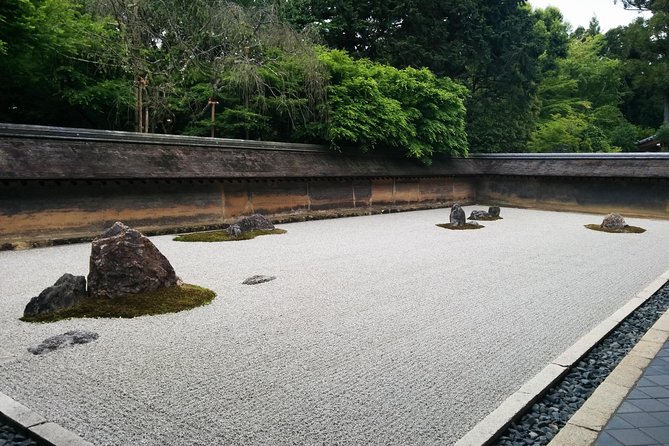
From Arashiyama, the route continues to Ryoan-ji Temple. Its rock garden is known for 15 stones arranged over a bed of pale gravel. The garden is a good place to slow down after the photo-heavy bamboo stop. Your guide can add meaning to the design and explain Zen ideas that are easy to miss if you simply walk in, take a picture, and leave.
The Ryoan-ji visit is listed at about 30 minutes. That gives you a useful introduction, but not a long, meditative stay. If the garden is the main reason you want this route, tell your guide early that you would like enough time to sit and look.
Kinkakuji, the Golden Pavilion
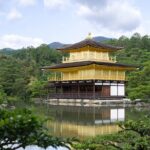
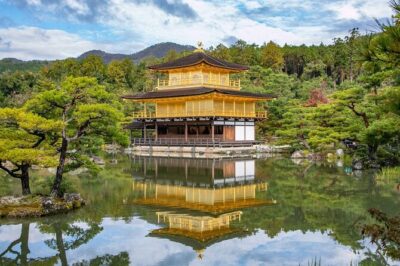
Kinkakuji, better known as the Golden Pavilion, is one of Kyoto’s signature sights. The gold-covered building reflects in a pond surrounded by trees, creating the postcard view most people expect.
The stop lasts about 50 minutes, with admission included. Your guide can explain the building’s place in Kyoto’s religious and political story, as well as the design details around the pond. The visit follows a set path, so you do not wander freely through the grounds, but the route gives you several good angles.
This is one of the places where a guide helps you see more than a glittering building. Look for the way the pavilion, water, rocks, and trees are arranged as one composition. It is also worth knowing that the Golden Pavilion is a working religious site, not just a scenic structure.
Nishiki Market or Nijo Castle
After lunch at your own expense, the northwest course may continue to Nishiki Food Market or Nijo Castle. These are quite different choices.
Nishiki is the better pick if you want food, local shopping, and a close look at Kyoto’s culinary traditions. It is a lively covered market with many small stalls, so your guide can help explain unfamiliar foods and customs. Since lunch is not included, Nishiki can also be a practical place to eat, though you should allow enough time for both the meal and sightseeing.
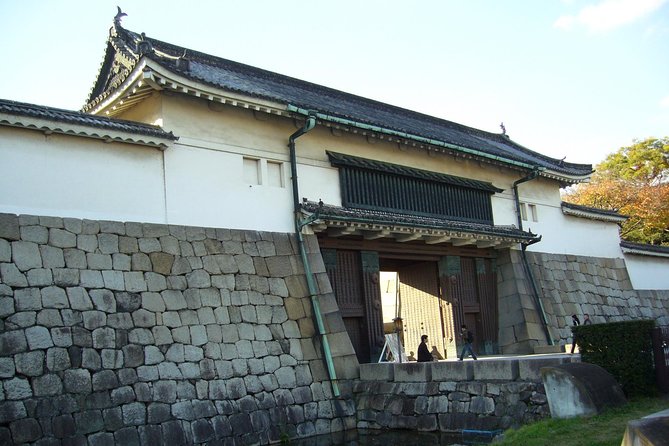
Nijo Castle suits you better if architecture and political history matter more than food. Built during the Tokugawa Shogunate period in the early 17th century, the castle is known for its original shogun living quarters, gold leaf decoration, and painted interiors. The famous floors are designed to chirp underfoot, an old security feature meant to warn of intruders.
The itinerary lists both options, but you should not assume you will receive a full visit to both. Ask your guide at the start which stop fits your chosen schedule.
Southeast Route: Sake, Torii Gates, and Old Kyoto
The southeast course begins at Gekkeikan Okura Sake Museum. This small brewery museum introduces the making of sake and the long history of one of Japan’s oldest sake brands. Admission is included, and the visit is listed at about 50 minutes.
This stop gives the day a welcome change of pace. Instead of another temple courtyard, you get an explanation of rice wine production and the tools used by brewers. A tasting has been included on some tour days, though you should confirm what is planned for your date.
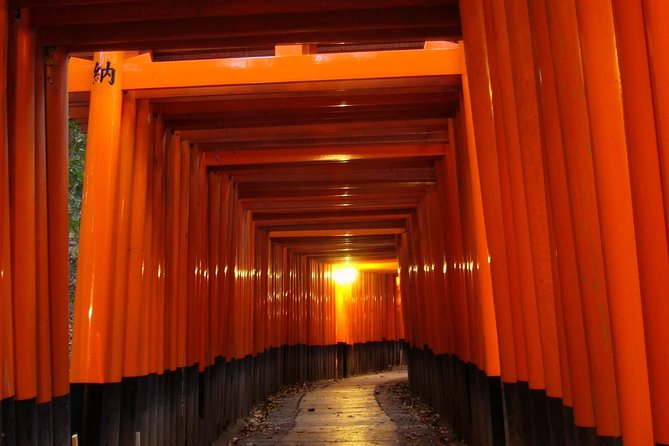
Next comes Fushimi Inari-taisha, famous for its thousands of red torii gates. The gates climb the wooded slopes behind the shrine, with stone fox figures and smaller shrines along the way. Foxes are linked with Inari, the Shinto deity associated with rice and prosperity.
The listed visit lasts about 50 minutes. That is enough to walk through the lower tunnel of gates and get a strong sense of the shrine, but not enough to climb the entire mountain. The path rises quickly, so wear comfortable shoes and be ready for steps. Fushimi Inari is also one of Kyoto’s busiest sights, and a private guide helps you move with purpose rather than wander at random.
Sanjusangendo and Kiyomizu-dera
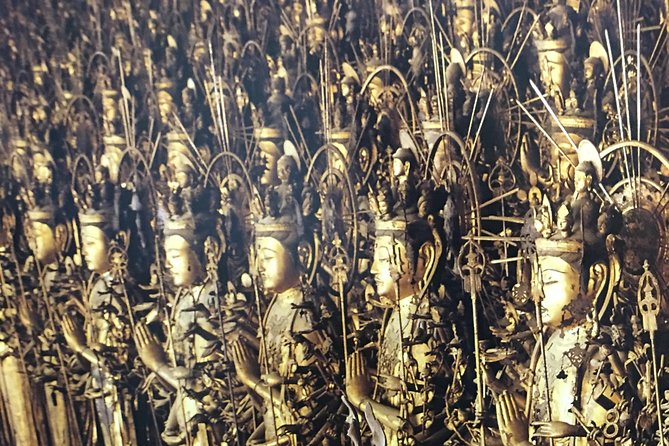
Sanjusangendo Temple offers one of the day’s most striking interiors. Its main hall contains 1,001 statues of Kannon, the Buddhist figure associated with compassion. The long wooden hall and repeated statues create a very different experience from the open gardens at Ryoan-ji or the pond at Kinkakuji.
The stop is listed at about 50 minutes, with admission included. Photography rules inside may limit what you can record, so this is a place to focus on the actual room rather than your camera.
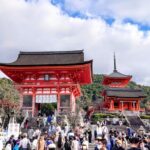
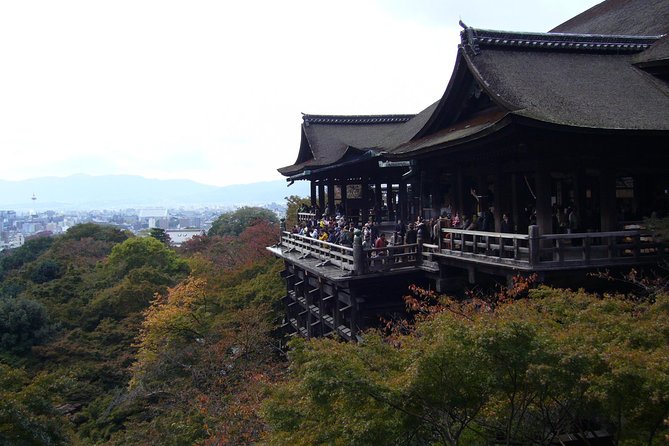
After lunch at your own expense, the route continues to Kiyomizu-dera. This hilltop temple dates to the eighth century and is famous for its wooden balcony and broad view over Kyoto. The view is especially attractive because the temple sits above the surrounding streets and trees, giving you a sense of how the old city fits together.
The Kiyomizu-dera visit lasts about 50 minutes and includes admission. The approach is part of the experience. You walk through the steep historic streets of Ninenzaka and Sannenzaka, lined with traditional-style buildings, shops, and places to buy snacks and souvenirs.
These lanes are enjoyable but not effortless. The slopes and crowds can make the walk slow, particularly in wet weather. One private tour continued successfully despite rain, but you should bring suitable footwear and clothing. The guide can help you manage the route, but cannot remove the hills.
Ending in Gion
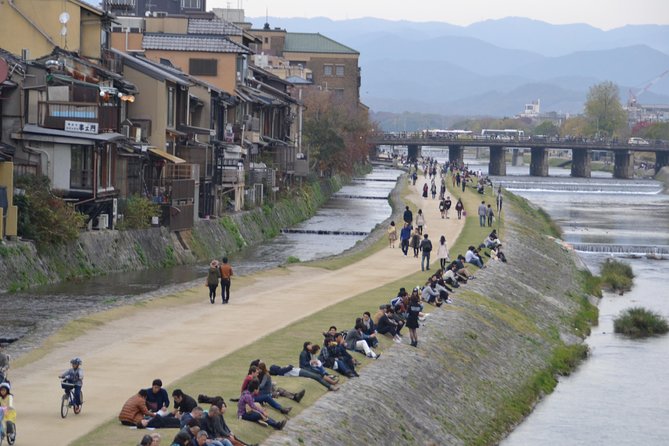
Both routes finish in Gion, Kyoto’s best-known geisha district. Narrow streets, traditional facades, tea houses, and the possibility of spotting a maiko give the area a strong sense of old Kyoto, though respectful behavior is essential. Do not block doorways or photograph people at close range without permission.
The listed Gion stop lasts about 50 minutes and has no separate admission fee. Because the tour ends here, you can continue into the evening, return to Kyoto Station, or join a separate Gion-focused tour that begins at 6 p.m.
This ending is well chosen. You finish near one of Kyoto’s most atmospheric districts rather than being sent back to the starting point. It also lets you use the included bus pass after the main tour, assuming your plans fit the pass’s terms and operating period.
What the Guides Add
The strongest part of this experience is the guide. Mie has been praised for her preparation, excellent English, humor, and ability to shape the day around a group’s interests. Mia has received similar praise for explaining both Japanese history and modern culture, and for making the tour work well for families.
Chako, also spelled Choko in some comments, has been described as an excellent historian, translator, photographer, and companion. Guides have suggested off-the-main-route meals, including ramen and okonomiyaki, and recommended places to visit on a later day.
That personal touch is the reason to book this instead of following a printed route. You can ask why a temple uses certain symbols, how a shogun lived, what the fox statues mean, or how to order lunch. One weak experience was described as little more than moving from one place to another, so guide quality can vary. The company’s pre-tour communication has also not always been quick, even when the guide arrived on time and performed well.
Send your main interests when booking, then confirm the route and priorities at the start. A private guide can often make useful adjustments, but the day still has a fixed length.
Walking, Weather, Lunch, and Group Size
You should be comfortable walking for much of the day. The route includes temple grounds, market streets, shrine paths, bamboo lanes, and the uphill streets around Kiyomizu-dera. Most travelers can participate, and service animals are allowed, but the tour is not a low-walking sightseeing ride.
Lunch and drinks are not included. This keeps the price from rising further and gives you some choice, but it also means you need to budget separately. A guide may point you toward a good local restaurant, and past tour days have included ramen and okonomiyaki meals.
The maximum group size is eight, though a private booking may be only your own party. Children must be accompanied by an adult, and the child rate applies only when sharing with two paying adults.
The experience requires good weather. If poor weather cancels the tour, you are offered another date or a full refund. You can also cancel for a full refund up to 24 hours before the start time.
Should You Book This Kyoto Tour?
Book it if you are visiting Kyoto for the first time, want to cover major sights in one day, and value a guide who can explain what you are seeing. It is especially useful for families, small groups, and anyone uneasy about Kyoto’s bus and train system.
Choose the northwest course for bamboo, Zen, Kinkakuji, and food culture. Choose the southeast course for shrine gates, sake, Buddhist sculpture, Kiyomizu-dera, and old Kyoto streets.
Skip it if you prefer a slow day at one or two sites, or if $151.20 per person feels too high for guided sightseeing. The schedule is active, lunch costs extra, and crowds are part of the deal. For a focused first look at Kyoto with a flexible private guide, though, the tour offers a practical and rewarding start.
FAQ
Where does the Kyoto tour begin?
The tour begins at Hotel Granvia Kyoto, near the central entrance of Kyoto Station, at 9 a.m.
How long does the tour last?
The tour lasts approximately seven hours.
Is this a private tour?
Yes. The experience is private and has a maximum group size of eight travelers.
Which routes can I choose from?
You can choose a northwest-bound route featuring Arashiyama, Ryoan-ji, Kinkakuji, and either Nishiki Market or Nijo Castle. The southeast-bound route includes Gekkeikan Sake Museum, Fushimi Inari, Sanjusangendo, Kiyomizu-dera, and Gion.
Is transportation included?
Yes. Public transportation and a one-day city bus pass are included. The bus pass can continue to be used after the tour.
Are admission tickets included?
Admission is included for Kinkakuji, Kiyomizu-dera, Nijo Castle, Sanjusangendo, Ryoan-ji, and the Gekkeikan Okura Sake Museum. Fushimi Inari, Gion, the Bamboo Forest Street, and the listed historic paths do not require a separate admission fee.
Is lunch included?
No. Lunch, food, and drinks are not included, so you pay for your own meal.
Is hotel pickup provided?
No. Hotel pickup and drop-off are not included. You meet the guide at Hotel Granvia Kyoto near Kyoto Station.
What is the cancellation policy?
You can cancel at least 24 hours before the start time for a full refund. Changes or cancellations made less than 24 hours before the start time are not accepted for a refund. If poor weather causes the tour to be canceled, you are offered another date or a full refund.
More Private Tours in Kyoto
More tours in Kyoto we've reviewed


Private, compared.
 ★ 5.0Fushimi Inari Hidden Hiking Tour (Private Option Available)From $63
 ★ 5.0Private Kyoto Tour with a Local, Highlights & Hidden Gems, PersonalisedFrom $102
 ★ 5.0Kyoto 6hr Private Tour with Government-Licensed GuideFrom $155
 ★ 5.010 Must-see Spots in Kyoto One Day Private Tour (up to 7 people)From $179
 ★ 5.0Kyoto 4hr Private Tour with Government-Licensed GuideFrom $109
 ★ 4.8Kyoto: Private Tour with Local Licensed GuideFrom $1064 - 8 hours