
Reviewed · COOKING CLASSES
Japanese Cuisine Cooking Class in Kyoto
The most appealing part of this Kyoto class is its focus on the everyday food many visitors miss. Near Toji Temple, Iku teaches you to make one soup and five side dishes, with clay-pot rice, miso, and mostly plant-based ingredients at the center.
I like the small, private setting, where you can ask about utensils, ingredients, and Japanese food customs without fighting for attention. I also like the practical menu: these are home-style recipes you can try again, rather than a one-off showpiece dish.
The main consideration is timing. The class runs only on Tuesdays at 11:30 a.m., and fish or eggs may be used unless you arrange a fully vegan menu in advance. The three-hour session also leaves little room for a rushed arrival.
In This Review
- Key points to know
- A Kyoto cooking class built around everyday food
- Finding the machiya near Toji Temple
- Starting with rice, miso, and basic technique
- Making a complete meal, not just one dish
- Eating what you prepared with matcha afterward
- The value of a private, personal lesson
- Price, schedule, and what the three hours mean
- Who will enjoy this class most
- Should you book Iku’s Kyoto cooking class?
- FAQ
- Where does the Japanese cooking class take place?
- What time does the class start?
- How long does the experience last?
- Which day of the week is the class offered?
- Is the activity private?
- What food will I prepare?
- Is the menu vegan?
- Can I report an allergy before the class?
- What is included in the price?
Key points to know
- Clay-pot rice and homemade miso: You learn two basic Japanese techniques with plenty of use beyond this single meal.
- A full plant-forward lunch: The menu includes miso soup and five side dishes, mostly made with vegetables.
- Near Kyoto Station and Toji Temple: The machiya meeting place is about a five-minute walk from Kyoto Station.
- Private group format: Only your group takes part, making it easier to ask questions and discuss dietary needs.
- English and Japanese instruction: Iku teaches in both languages and provides recipes, utensils, and writing materials.
- Tuesday-only schedule: Plan around the fixed 11:30 a.m. start and allow time to find the address.
A Kyoto cooking class built around everyday food
This is not a lesson in elaborate restaurant plating. It is a look at the food Japanese families might recognize: rice, soup, several small side dishes, and the seasoning that ties everything together.
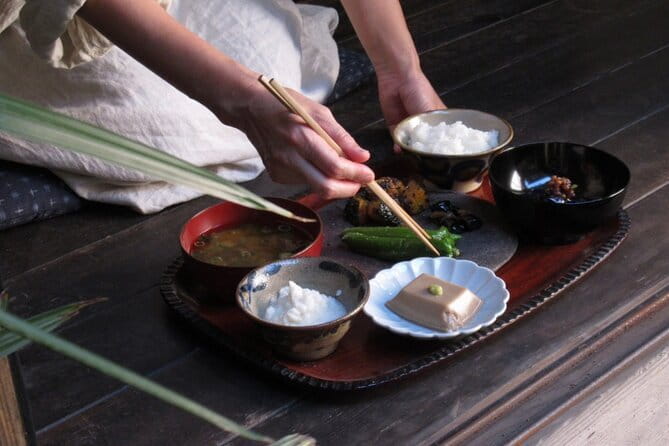
That matters in Kyoto, where food is often presented with care but does not need to be flashy. The meal follows the traditional pattern of one soup with several side dishes. You do not simply watch a chef prepare lunch. You help make the components, arrange them on the plate, and then sit down to eat what you prepared.
I find this format especially useful for anyone who wants to understand how a Japanese meal works as a whole. One dish may be seasoned with miso, another with a different balance of soy, vegetables, or other basic ingredients. The lesson gives you a better sense of how variety is created without relying on one large main course.
The teacher, Iku, is both a chef and a nutritionist. Iku previously ran a French restaurant serving home-style meals on Yakushima, a World Heritage site, and now focuses on healthy Japanese cooking. That background helps explain the class’s emphasis on simple, balanced food rather than heavy restaurant fare.
Other cooking classes in Kyoto

Finding the machiya near Toji Temple
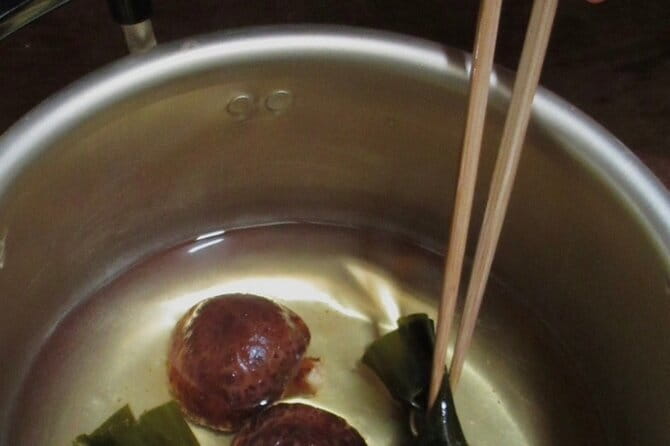
The class meets at 411-2 Kujōchō in Minami Ward, roughly five minutes on foot from Kyoto Station. The location is a Kyoto machiya exhibition room near Toji Temple, giving the class a more personal setting than a large commercial cooking school.
The short walk from the station is useful, especially if you are carrying luggage or trying to fit this into a busy sightseeing day. Still, you should not treat the five-minute walk as a reason to arrive at the last second. The start time is 11:30 a.m., and the address is specific, so give yourself enough time to get oriented.
The location also makes sense for a half-day plan. You could visit Toji Temple before or after the class, depending on opening hours and your wider schedule. The activity itself ends back at the meeting point, and no private transportation is included.
Because the class is held in a machiya-style room, the setting is part of the appeal. You are cooking in a place designed to feel connected to Kyoto life, not in a generic hotel kitchen. The information provided does not specify every feature of the room, so do not book this expecting a formal sightseeing tour of the building. The focus is the kitchen and the meal.
Starting with rice, miso, and basic technique
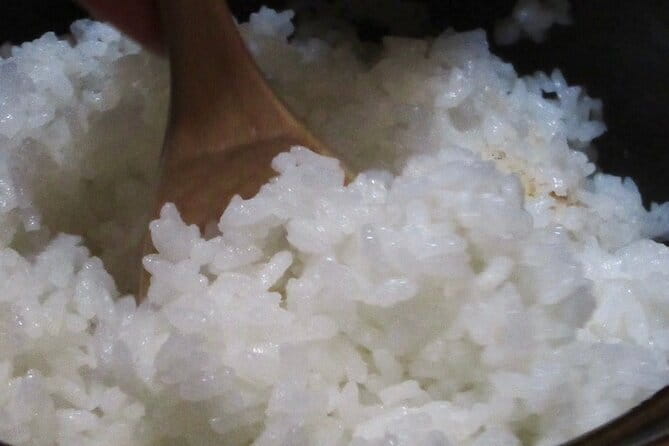
The lesson begins with demonstrations and guided preparation. One of the main skills is cooking rice in a clay pot. This is a valuable choice for a class because rice is the backbone of the meal, and the method gives you something concrete to repeat at home.
You will also learn how to make miso, one of Japan’s best-known fermented foods. The class is not limited to tasting miso as a finished seasoning. Instead, Iku explains how it is used and how it fits into Japanese cooking.
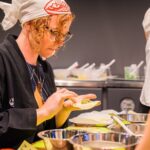
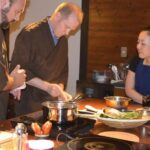
The pace appears to combine demonstration, note-taking, tasting, and hands-on work. That balance is helpful if you are new to Japanese cooking. You can watch the technique first, then try part of it with guidance rather than being left to guess your way through every step.
Recipes and writing implements are included, so bring your questions and take notes as you go. The recipes are an important part of the price because they let you recreate the meal after returning home. If you are comparing this with a class that only provides a meal, the take-home instructions add practical value.
Making a complete meal, not just one dish
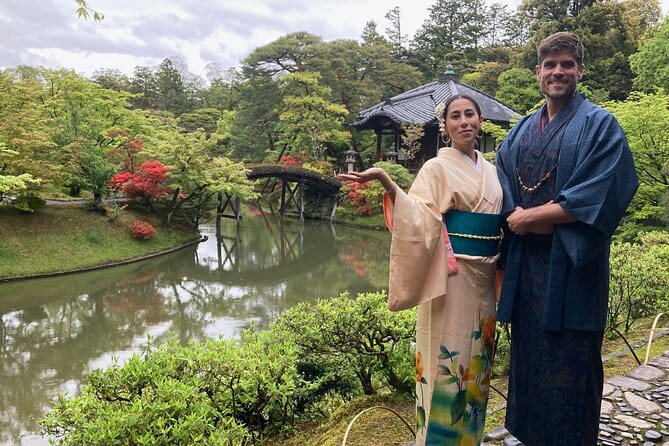
After the rice and soup work, you help prepare several side dishes. The final meal includes miso soup and five other dishes, with most ingredients coming from the vegetable side of Japanese cuisine.
This is where the class differs from a lesson built around one famous food. You get to see how separate small dishes can create a complete lunch. The menu may also give you a useful introduction to ingredients unique to Kyoto, although the exact dishes are not fixed in the information provided.
I like the educational value of this structure. A visitor can leave a class knowing how to make one recipe, but still not understand how that recipe fits into a Japanese table. Here, you work toward a full set meal. The act of plating several dishes also shows why Japanese food can feel carefully organized even when the ingredients are simple.
The menu is mostly vegan, but fish and eggs may be used. If you eat vegetarian or vegan food, contact Iku before the class rather than relying on assumptions. The provider specifically asks for advance notice about allergies and says a completely vegan diet can be arranged by message.
That flexibility is a strong point, but it requires you to take action early. The more clearly you explain your needs, the easier it will be for the teacher to plan. Do not wait until the cooking begins to mention a serious allergy.
Eating what you prepared with matcha afterward
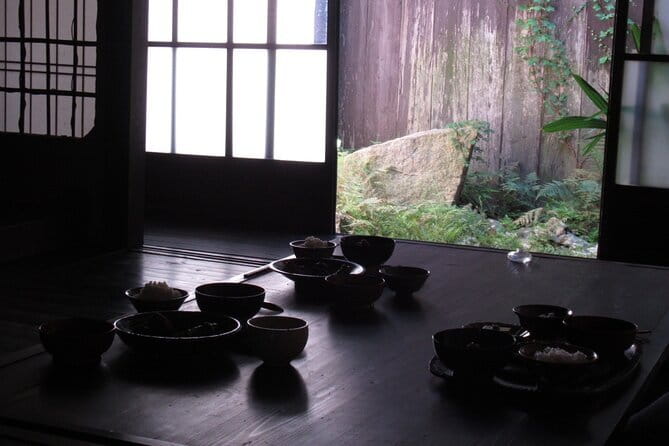
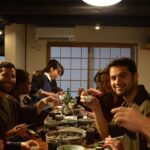
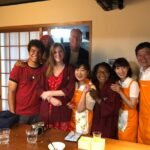
Once the cooking is finished, you plate the food and eat it at the class location. This shared meal is not an afterthought. It lets you taste how the rice, soup, and side dishes work together, and it gives you a natural time to ask final questions.
Matcha tea is served after the meal. That small finish helps the class feel like a complete food experience rather than a practical workshop that ends as soon as the burners are turned off.
The reviews supplied with the experience repeatedly praise the food presentation, the clear teaching, and the chance to eat the finished dishes. One account describes the teacher cooking in a professional way while the participants watched, took notes, tasted, and tried parts of the preparation themselves. Another highlights the care given to questions and the pleasure of eating the completed meal.
I would keep expectations realistic: this is a three-hour class, not a professional chef-training course. You will gain a working introduction to selected recipes and techniques, not mastery of every part of Japanese cuisine. That is a fair trade for a relaxed class aimed at overseas visitors.
Other cooking classes in Kyoto
The value of a private, personal lesson
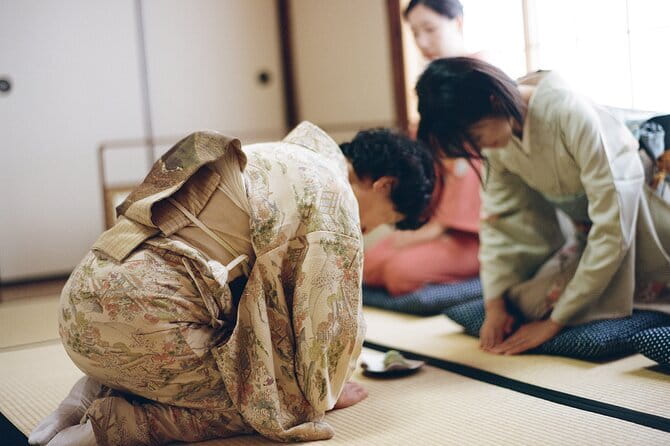
The activity is described as private, meaning only your group participates. That is a major advantage if you want a quieter session or have specific food needs. You can ask about Japanese utensils, food customs, fermentation, and ingredient use without worrying about interrupting a large class.
The available experiences also point to a very small format, including one session with three people. The exact size of your group is not stated, so I would not book on the assumption of a particular number. Still, the private setup should feel more personal than a crowded demonstration.
I especially value the chance to ask questions during food preparation. Japanese cooking tools and methods can look simple but have details that are easy to miss. A question about the clay pot, miso, rice, or a side dish may be more useful than another minute of silent demonstration.
Instruction is given in both English and Japanese. That makes the class accessible to overseas visitors while keeping a link to the local language and food culture. The information does not promise advanced language teaching, so think of the Japanese as part of the atmosphere and communication, not as a formal language lesson.
Price, schedule, and what the three hours mean
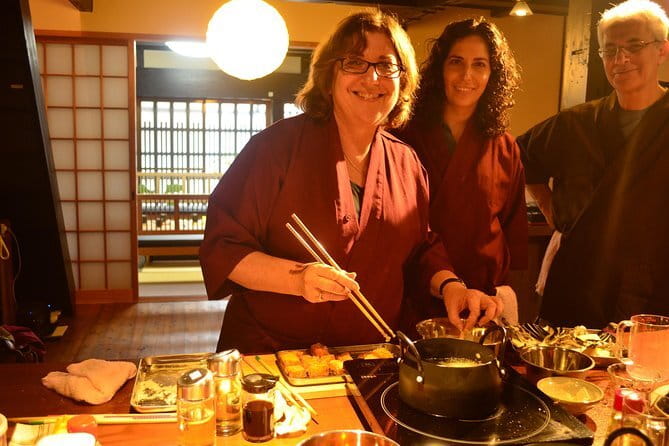
At $71.67 per person, the class sits in a reasonable range for a three-hour private cooking experience in Kyoto. The price includes all fees and taxes, cooking utensils, recipes, and writing materials. It does not include private transportation.
I would judge the value by what you want from the morning. If you only want a cheap lunch, this is not the best use of your budget. You are paying for instruction, a private setting, ingredients, hands-on preparation, and a full meal. If you want skills and context that continue after the trip, the price makes more sense.
The class is often booked about 74 days ahead, which suggests you should plan early if Tuesday is your only workable day. There is no reason to assume last-minute space will be available, especially since the activity is private and runs on one fixed day each week.
The cancellation terms are helpful for careful planners. You can cancel for a full refund up to 24 hours before the local start time. Changes or cancellations made within 24 hours are not accepted for a refund.
Who will enjoy this class most
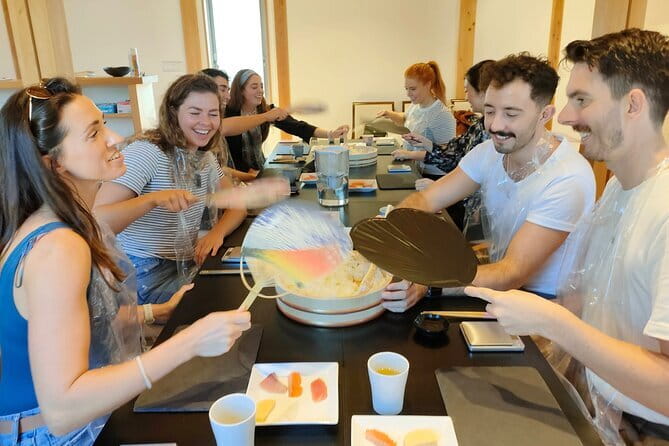
I would recommend this experience to you if you enjoy food as a way to understand daily life. It suits couples, families, and small private groups who want to cook together instead of sitting through a demonstration.
It is also a good match for vegetarians and many vegans, provided you send your requirements in advance. The mostly vegan ingredient list gives plant-based eaters a stronger starting point than a class built around fish or meat, though you still need to confirm a fully vegan menu.
Families may appreciate the informal questions-and-answers format, but the data does not specify a minimum age or child-focused activities. If you are booking with young children, ask Iku directly about participation before paying.
Food enthusiasts who already know Japanese cuisine may still enjoy the class if they want home-style Kyoto cooking, fermentation, and meal structure. It may be less satisfying if you are looking for advanced knife skills, a restaurant kitchen, or a lesson devoted to sushi, ramen, or wagashi. None of those subjects is promised here.
The class also works well for someone who has already seen Kyoto’s major sights and wants a slower morning. Its location near Kyoto Station makes it easy to combine with nearby sightseeing, while the meal gives you a break from simply moving between temples.
Should you book Iku’s Kyoto cooking class?
Book it if you want a personal, practical introduction to Japanese home cooking and like the idea of leaving with recipes you can use. The clay-pot rice, miso, five side dishes, and matcha finish create a well-rounded three-hour session, and the private format gives you room to ask real questions.
Think twice if your schedule cannot accommodate a Tuesday at 11:30 a.m., if you want a large social class, or if you expect a specialized culinary course. Also contact Iku ahead of time about allergies, fish, eggs, or a fully vegan meal.
For most food-focused visitors, the strongest reason to choose this class is its balance. You get instruction, a full lunch, local context, and a manageable location near Kyoto Station, without turning the morning into a formal production. That is a useful way to bring a little Kyoto home with you.
FAQ
Where does the Japanese cooking class take place?
The class takes place at 411-2 Kujōchō, Minami Ward, Kyoto, near Toji Temple. The location is about a five-minute walk from Kyoto Station.
What time does the class start?
The class starts at 11:30 a.m.
How long does the experience last?
The cooking class lasts approximately three hours.
Which day of the week is the class offered?
The class takes place every Tuesday.
Is the activity private?
Yes. Only your group participates in the activity.
What food will I prepare?
You will help prepare rice, soup, and several side dishes. The completed meal includes one soup and five side dishes.
Is the menu vegan?
Most ingredients used in the class are vegan, but fish and eggs may also be used. You can request a completely vegan diet by messaging Iku in advance.
Can I report an allergy before the class?
Yes. You should inform Iku about any allergies in advance.
What is included in the price?
The price includes all fees and taxes, cooking utensils, recipes, and writing implements. Private transportation is not included.
More Workshops & Classes in Kyoto
More Cooking Classes in Kyoto
More Cooking Classes in Kyoto
More tours in Kyoto we've reviewed
Cooking Classes, compared.
 ★ 5.0Ramen Cooking Class at Ramen Factory in KyotoFrom $131
 ★ 4.9Kyoto: Ramen Cooking Class at a Ramen Factory with SouvenirFrom $1271h 30m
 ★ 5.0Kyoto: Ramen, Gyoza, and Onigiri Cooking ClassFrom $901h 30m
 ★ 5.0Kyoto: Japanese Washoku Bento Small Group Cooking ClassFrom $582h 30m
 ★ 4.9Kyoto: Afternoon Japanese Izakaya Cooking ClassFrom $673 hours
 ★ 5.0Izakaya Style Cooking ClassFrom $71