
Reviewed · GION & GEISHA WALKS
Kimono Rental,Kimono Experience in Gion Kyoto
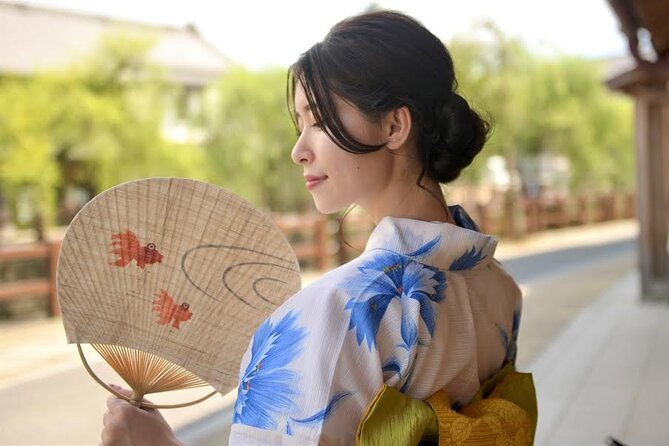
Gion is one of Kyoto’s best places to wear a kimono, and this shop puts you less than a minute from Gion Hanamachi and the Chaya District. You choose your look, then staff handle the dressing and basic hair styling, even if this is your first time. The result is a full day of sightseeing in Kyoto’s most photogenic old streets.
I like the pure silk kimono selection, which includes retro, cute, classic, modern, and Taisho Roman styles. I also like the practical setup: your kimono, obi, tabi socks, zori sandals, bag, dressing service, hair styling, and luggage storage are included for $36.36.
The main drawback is the strict return rule. You must be back by 5:00 PM, and late returns cost JPY 1,100 per person for each 30 minutes. The experience is also non-refundable, so punctuality and firm plans matter.
In This Review
- Key points to know before you book
- Getting dressed near Gion Hanamachi
- What the dressing appointment is like
- Why the $36.36 price can be good value
- Yasaka Shrine, your easiest first stop
- Kodai-ji Temple and the southern Higashiyama route
- Kiyomizu-dera and the busiest part of the day
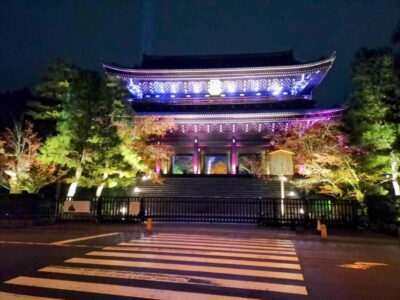
- Kennin-ji for a quieter temple setting
- Gion is the best place to finish your photo walk
- Luggage storage makes the day easier
- Strict timing and other rules to take seriously
- Who will enjoy this Kyoto kimono rental
- Should you book Momoka Kimono Rental?
- FAQ
- Where does the kimono rental take place?
- What is included in the basic price?
- Are English and Chinese services available?
- When must I return the kimono?
- What happens if I return late?
- Are makeup and upgraded hairstyles included?
- Can I add professional photography?
- Can children wear a rental kimono?
Key points to know before you book
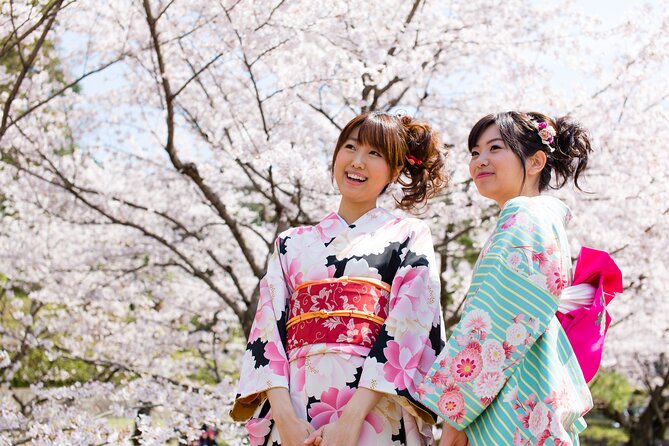
- A full basic outfit is included: Your package covers a basic Komon kimono, obi, bag, tabi, zori, dressing, basic hair styling, and on-site luggage storage.
- The shop is near Gion Hanamachi: You can step into Kyoto’s old entertainment district almost immediately after getting dressed.
- You choose from several styles: Options include retro, cute, classic, modern, and Taisho Roman designs.
- Help is available in three languages: Staff assistance is offered in Japanese, Chinese, and English.
- The route covers five Kyoto sights: Yasaka Shrine, Kodai-ji Temple, Kiyomizu-dera Temple, Kennin-ji Temple, and Gion.
- Return time is firm: Bring yourself back to the shop by 5:00 PM, or extra fees apply.
Getting dressed near Gion Hanamachi
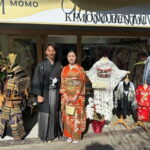
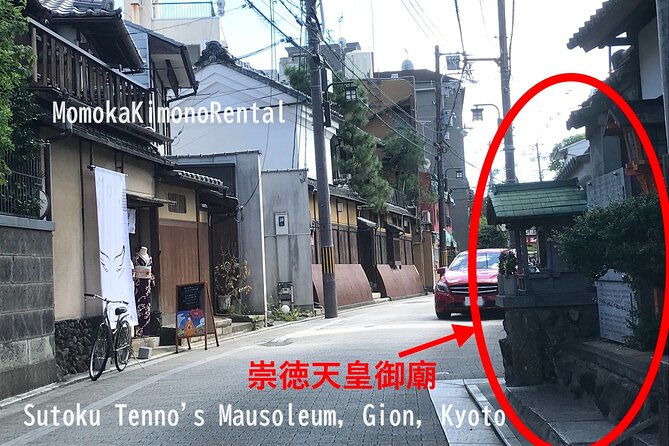
Momoka Kimono Rental is at 570-41 Gionmachi Minamigawa in Kyoto’s Higashiyama Ward. The shop is less than a minute from Gion Hanamachi and the Chaya District, a useful location if you want your first photographs in Kyoto’s traditional streets rather than beside a modern shopping area.
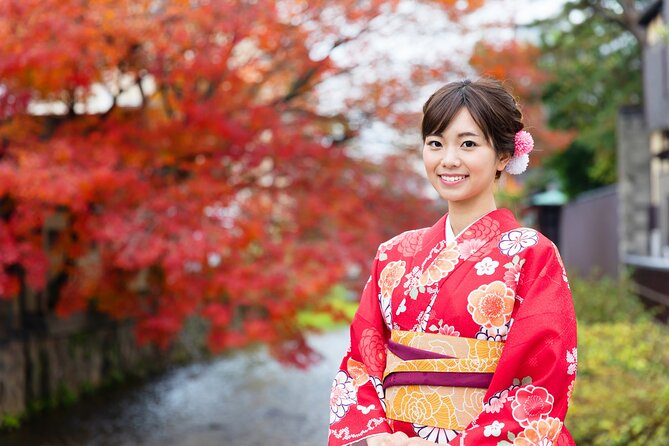
You begin with reception and check-in. Staff greet you, explain the process, and help you select a kimono. The range is designed to suit different tastes, from quiet classic patterns to more playful looks and Taisho Roman styling, a fashion direction linked with Japan’s early twentieth century.
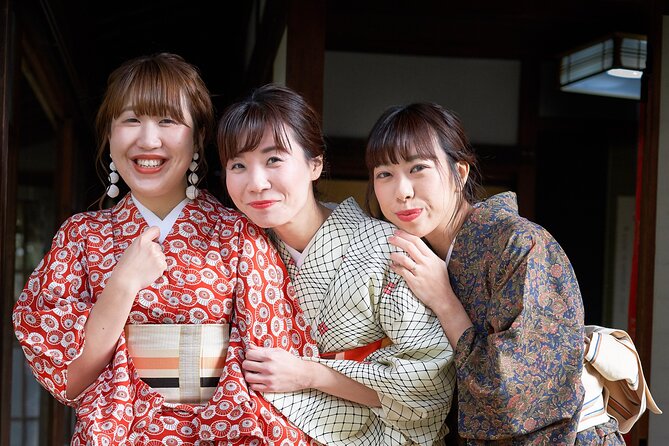
The basic package includes a complete outfit. You receive the kimono, obi sash, tabi socks, zori sandals, and a bag. That matters because a rental can become less convenient when every small item costs extra. Here, you can arrive without carrying accessories or a second bag for your belongings.
The shop describes its original selection as carefully chosen pure silk kimono. The included outfit is a basic Komon, a type of kimono with an all-over pattern that works well for casual daytime wear. You may have upgraded choices available in the shop, but the price specifically includes the basic Komon plan, so ask about any extra charge before changing your selection.
A few more Kyoto tours and experiences worth a look

What the dressing appointment is like
After you choose a design, professional staff dress you in the kimono. You do not need previous experience, and the service is aimed at people renting a kimono for the first time. English, Chinese, and Japanese assistance is available, which can make the fitting process easier when you need to ask about sizes, style choices, or return rules.
The dressing service is one of the strongest reasons to book this instead of trying to assemble a look on your own. A kimono is not simply a robe with a belt. The layers, obi, socks, sandals, and final adjustments all affect comfort and appearance. Staff take care of that work while you relax.
Basic hair styling is included. The shop plans the hairstyle to work with your chosen kimono, giving the finished look more polish than simply putting on the outfit and tying back your hair. If you want an upgraded hairstyle, the charge is JPY 1,650.
Makeup is not part of the listed basic package. A full makeup service costs JPY 8,800. One customer specifically enjoyed Japanese-style makeup during the visit, but you should treat that as an add-on rather than something included in the $36.36 price.
The shop’s staff have earned especially strong praise for being kind and patient. One account describes a staff member helping three daughters, including girls who were very tall and had extremely curly hair. That detail is useful if you are worried that your height, hair texture, or lack of experience will make the appointment difficult. Staff are there to adjust the look to you, not simply hand you a costume.
Why the $36.36 price can be good value
At $36.36 per person, this is a fairly efficient way to add a traditional Japanese dress-up experience to a Kyoto day. The price includes much more than the garment itself: dressing, basic hair styling, footwear, socks, a bag, and luggage storage.
You are also paying for location. Because the shop is beside Gion Hanamachi, you do not have to spend much time getting from the rental counter to the old streets that make the outfit feel at home. That gives you more useful time for photographs and sightseeing.
The value is strongest if you plan to spend several hours in southern Higashiyama and Gion. It is less compelling if you only want a quick photograph, since dressing takes part of your day and the return deadline limits how long you can keep the outfit.
Extra services can raise the total. An upgraded hairstyle adds JPY 1,650, makeup costs JPY 8,800, and a one-hour photography service for up to three people costs JPY 18,700. These options may suit a birthday, engagement, or family portrait, but the basic rental is enough for most visitors who mainly want to explore and take their own pictures.
Yasaka Shrine, your easiest first stop
Yasaka Shrine is the natural first stop from the shop. It sits at the eastern end of Shijo Avenue and gives you a grand setting without requiring a long walk immediately after dressing.
The shrine is a good place to get comfortable in the outfit. You can see how the sandals feel, practice walking at a slower pace, and take photographs before tackling the hillier temple streets. The bright shrine buildings also give your photos a different look from the wooden lanes of Gion.
A kimono changes your pace. Zori sandals are not made for rushing, and the clothing restricts long strides. Yasaka Shrine works well early in the day because it lets you settle into that slower rhythm before continuing.
Kodai-ji Temple and the southern Higashiyama route
The itinerary continues to Kodai-ji Temple, a temple area known for gardens and traditional architecture. The route places you in one of Kyoto’s most attractive sightseeing zones, where the clothing and surroundings fit together naturally.
Kodai-ji is a better stop for calm garden views than for a quick checklist photograph. Give yourself time to look around rather than trying to race through several locations. The terrain and temple grounds may require more walking than Yasaka Shrine, so comfortable movement matters.
The attraction of this route is not only the individual temple. You get a sequence of older streets, gates, paths, and wooden buildings between the major stops. Those transitions are often where the kimono feels most natural, though you should remember that Kyoto’s historic lanes can be crowded and uneven.
A few more Kyoto tours and experiences worth a look

Kiyomizu-dera and the busiest part of the day
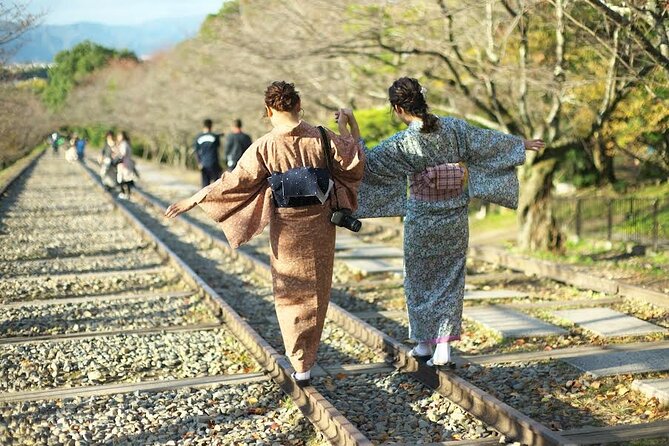
Kiyomizu-dera is likely to be the major sightseeing anchor of your day. Its hillside setting and famous temple buildings make it one of Kyoto’s most sought-after stops, and wearing a kimono adds a strong visual element to the visit.
There is a practical cost: Kiyomizu-dera is reached through uphill streets and popular approach lanes. You should allow extra time, walk carefully in zori, and avoid packing your schedule too tightly. The shop’s luggage storage helps here because you can leave larger belongings behind instead of carrying them through the temple district.
This is also a good place to think about photography etiquette. A kimono rental gives you a memorable way to see Kyoto, but it does not give you special access to private areas or permission to block narrow lanes. Take photographs quickly when the path is crowded and keep moving.
Kennin-ji for a quieter temple setting
Kennin-ji brings the route back toward Gion. It is a particularly fitting stop for a kimono day because its traditional temple setting feels more intimate than the broad tourist approach to Kiyomizu-dera.
The itinerary does not state how much time is scheduled at each stop, so you should treat these locations as a suggested sightseeing route rather than a guided tour with fixed visits. You are responsible for planning your pace and making it back to the shop before closing time.
Kennin-ji also gives you a chance to vary your photographs. Yasaka Shrine offers shrine architecture, Kiyomizu-dera supplies hillside temple scenery, and Kennin-ji adds a quieter traditional setting. You do not need the paid photography option to make use of that variety, although a professional one-hour session is available for up to three people.
Gion is the best place to finish your photo walk
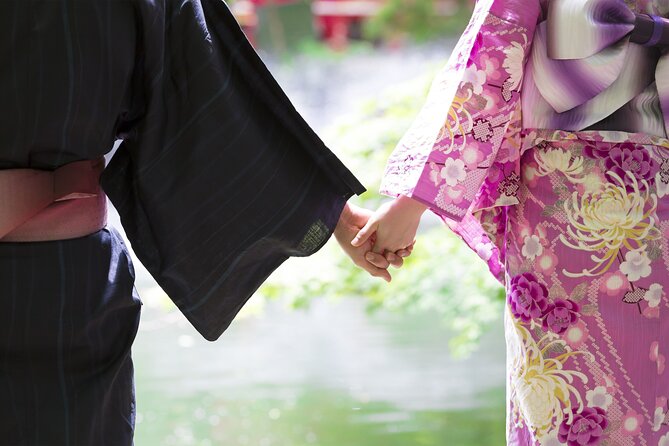
The final stop is Gion, which is also where the shop is located. This makes the end of the route convenient. You can spend your last stretch in the wooden lanes and traditional streets nearby, then return the outfit without crossing the city.
Gion is a place to be respectful and observant. The Chaya District is a working neighborhood and entertainment district, not just a photo backdrop. Stay on public paths, do not enter private doorways, and avoid stopping in the middle of narrow lanes.
You may also find that the best photographs are simple ones. A quiet doorway, a patterned kimono, and a careful walking pose can say more than a crowded group shot. The shop’s styling gives you the basic foundation, but your own pace and manners shape the experience.
Luggage storage makes the day easier
Free on-site luggage storage is included. You can leave your belongings at the shop after dressing, then collect them when you change back into your regular clothes.
This is useful if you arrive with a suitcase or day bag, though the information does not specify the storage size or capacity. Ask staff at check-in about any large luggage before assuming every item can be stored.
The activity ends back at the meeting point. You return to the shop, staff help you change, and you collect your belongings. Plan to arrive before 5:00 PM rather than treating that time as the moment to begin returning.
Strict timing and other rules to take seriously
Punctuality matters from the start. If you arrive more than 10 minutes late, priority may shift, and an arrival more than 20 minutes late can lead to cancellation. No refund is provided after the reservation time on the following day, so do not count on a casual late arrival.
Late return costs JPY 1,100 per person for each 30 minutes. A next-day return requires a JPY 10,000 deposit plus the JPY 1,100 surcharge, and the deposit is not refundable if the kimono is not returned the next day.
You are responsible for damage to the kimono or accessories. On-site insurance is available for JPY 550, and you can ask staff about its terms before dressing. I would take that option seriously if you are traveling with children or plan a long day in crowded streets.
Kimono wear is strictly prohibited during pregnancy. The shop also notes that adult kimono options are limited for a hip size above 130 centimeters. Children’s kimono are available for children over 70 centimeters and aged 12 or younger.
The activity is listed as suitable for most people and is near public transportation, but the route includes walking between major sights. If you have concerns about mobility, clothing comfort, or sizing, contact the shop before booking rather than relying on an adjustment at the appointment.
Who will enjoy this Kyoto kimono rental
I would recommend this experience to first-time kimono renters who want staff to handle the difficult parts. You receive the outfit, dressing, hair styling, and storage in one place, with help in English, Chinese, and Japanese.
It is also a strong choice for families. The patient assistance given to three daughters, including children with unusual height and hair needs, suggests that staff are used to making the process comfortable for young customers. Confirm children’s sizing in advance, since the stated children’s range is for ages 12 and under and heights above 70 centimeters.
Couples, friends, and small groups can use the route for self-guided photographs. If you want professional images, the optional photography service covers up to three people for one hour. Larger groups should check arrangements before booking.
I would be more cautious if you dislike fixed schedules, want heavy makeup included, or plan to spend the entire day far from Gion. The non-refundable booking rule also means this is a poor choice for uncertain plans.
Should you book Momoka Kimono Rental?
Book it if you want an easy first kimono experience in Kyoto, especially if your sightseeing plans already include Gion, Kiyomizu-dera, and the temples of southern Higashiyama. The location, complete basic outfit, hair styling, multilingual support, and luggage storage make the $36.36 price practical.
Before paying, decide if you can meet the 5:00 PM return time, check sizing if needed, and budget for any hairstyle, makeup, photography, insurance, or late-return charges. If you arrive on time and treat the kimono as part of a slower walking day, this is a pleasant way to see Kyoto in a style that matches its oldest neighborhoods.
FAQ
Where does the kimono rental take place?
The meeting point is Momoka Kimono Rental at 570-41 Gionmachi Minamigawa, Higashiyama Ward, Kyoto, 605-0074, Japan.
What is included in the basic price?
The price includes a basic Komon kimono, obi, bag, tabi socks, zori sandals, dressing service, basic hair styling, and free luggage storage at the shop.
Are English and Chinese services available?
Yes. Staff assistance is available in Japanese, Chinese, and English.
When must I return the kimono?
You must return to the shop by 5:00 PM to change out of the kimono.
What happens if I return late?
Late return costs JPY 1,100 per person for every 30 minutes. A next-day return requires a JPY 10,000 deposit and a JPY 1,100 surcharge.
Are makeup and upgraded hairstyles included?
No. An upgraded hairstyle costs JPY 1,650, and makeup costs JPY 8,800.
Can I add professional photography?
Yes. Photography costs JPY 18,700 for one hour and covers up to three people.
Can children wear a rental kimono?
Children’s kimono are available for children over 70 centimeters and aged 12 or younger. Adult kimono options are limited when hip size exceeds 130 centimeters, and kimono rental is strictly prohibited during pregnancy.
More Kimono Experiences in Kyoto
More Gion & Geisha Walks in Kyoto

More tours in Kyoto we've reviewed





Gion & Geisha Walks, compared.
 ★ 4.7Kyoto Geisha Walking Tour: Gion District & Hidden GemsFrom $252 hours
 ★ 4.7Kyoto: Gion Geisha District Walking Tour – Stories of GeishaFrom $202 hours
 ★ 4.9Best of Kyoto: Gion, Geisha, Pagodas & CobblestonesFrom $242 hours
 ★ 4.5Night Walk in Gion: Kyoto’s Geisha DistrictFrom $211h 40m
 ★ 5.0Kyoto Night Foodie Tour in Gion (9+ dishes + 6 Sake tastings)From $163
 ★ 5.0Kyoto Gion Geisha District Walking Tour – The Stories of GeishaFrom $25