
Reviewed · TOURS
Kyoto Afternoon Tour from Kyoto or Osaka
Kyoto packs centuries of worship into a remarkably small area, and this four-hour-40-minute tour gives you three very different sights in one afternoon. You pass through Fushimi Inari’s red torii, face the 1,001 statues at Sanjusangendo, then climb toward Kiyomizu-dera and its broad view over Kyoto.
I like the efficient route and the fact that transport and admission fees are included. I also like the guides’ role: Yoshi, Donna-san, Jessie, Amy, and Momo have each been praised for being warm, funny, organized, and good at explaining Japanese customs. The catch is time. Thirty minutes at Fushimi Inari and Sanjusangendo can feel tight, and a late arrival at Kiyomizu-dera may leave you looking at Kyoto in fading light.
In This Review
- Key points to know before booking
- Why this short Kyoto route works
- Meeting near Kyoto Station
- Fushimi Inari and its red torii
- Sanjusangendo’s extraordinary wooden hall
- Walking up to Kiyomizu-dera
- Guides make the difference
- Pace, crowds, and comfort
- Who should book this afternoon tour?
- Should you book it?
- FAQ
- How long does the Kyoto afternoon tour last?
- Where does the tour begin?
- Which sights are included?
- Are admission fees included?
- Is transportation included between the sights?
- How much time is spent at each stop?
- How much walking is required?
- Can children join the tour?
- What happens if I need to cancel?
Key points to know before booking
- Three major religious sites in one afternoon: You see a Shinto shrine and two Buddhist temples, giving you a useful introduction to Kyoto’s spiritual traditions.
- Sanjusangendo is the indoor star: The long wooden hall contains 1,001 life-size Kannon statues, an intense and memorable sight that photographs cannot fully convey.
- Kiyomizu-dera requires a climb: The approach includes an uphill walk and crowded shopping lanes, so comfortable shoes matter.
- The tour begins near Kyoto Station: Meet at the Avanti Tour Desk in the afternoon. The office can be hard to locate inside the large building, so arrive early.
- The group may be large: The listed maximum is 40 people, though one account describes a group of about 50. Staying near the guide helps you hear explanations.
- Best for a short Kyoto stay: If you have only one day or want help getting oriented, this route gives you a useful first look without planning several train and bus connections.
Why this short Kyoto route works
Kyoto has more temples and shrines than you can reasonably cover in a single visit. The strength of this tour is not slow, quiet exploration. It is the chance to connect three important places with one guide and one vehicle, then decide which parts deserve a longer return visit.
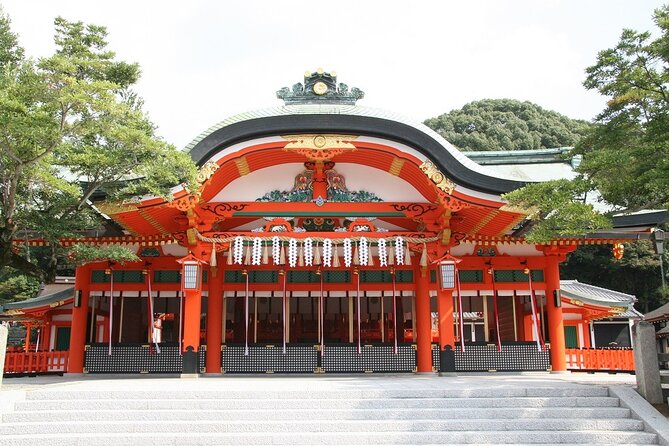
The route also gives you a quick lesson in the variety of Japanese religious spaces. Fushimi Inari is a Shinto shrine devoted to Inari, a deity associated with rice and prosperity. Sanjusangendo is a Buddhist temple known for its solemn hall and statues. Kiyomizu-dera brings together a historic temple, a mountainside setting, city views, and a busy approach lined with shops.
That combination matters. If you visit Kyoto independently, it is easy to collect pretty buildings without understanding how they differ. A good guide supplies the basic religious and historical context, points out customs, and keeps the afternoon moving.
The tour costs about $82.58 per person. That is not the cheapest way to visit these sites, since entrance fees alone are modest. You are paying for the guide, transportation, organization, and the ability to cover three locations without working out every connection yourself. I consider it fair value for a first afternoon in Kyoto, especially if you are coming from Osaka or have very limited time.
If you already know Kyoto well, prefer lingering, or want to photograph each site at your own pace, the price is harder to justify. Public transportation and independent visits give you more control.
If you're still narrowing it down, here are other tours in Kyoto we've reviewed.

Meeting near Kyoto Station
The meeting point is the Avanti Tour Desk near Kyoto Station. This sounds simple, but Kyoto Station is a large complex, and the office is in the basement of a big building. Give yourself extra time. One person arrived late after getting confused by the station and a taxi drop-off on the wrong side.
The tour is an afternoon departure, with the exact order and arrival times subject to road conditions and congestion. That matters in Kyoto, where narrow streets and popular temple districts can slow a bus considerably.
Transportation is included, and the vehicle provides a welcome break from the heat and humidity reported during summer visits. Seats may not be assigned, so do not count on sitting in a particular place. Children up to age five may join free, but they do not receive a bus seat unless booked at the child rate.
The walking is manageable for most people, but this is not a sit-down sightseeing outing. You walk from the parking area to Fushimi Inari for about 15 minutes each way, then continue through temple grounds, shopping streets, steps, and sloping paths. Kiyomizu-dera’s approach can feel strenuous on a hot day.
Fushimi Inari and its red torii
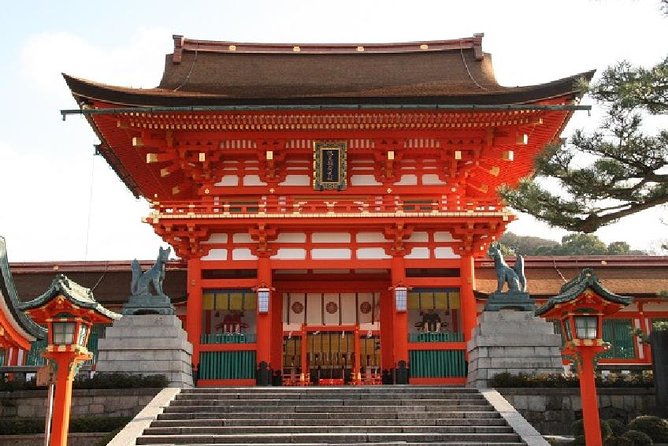
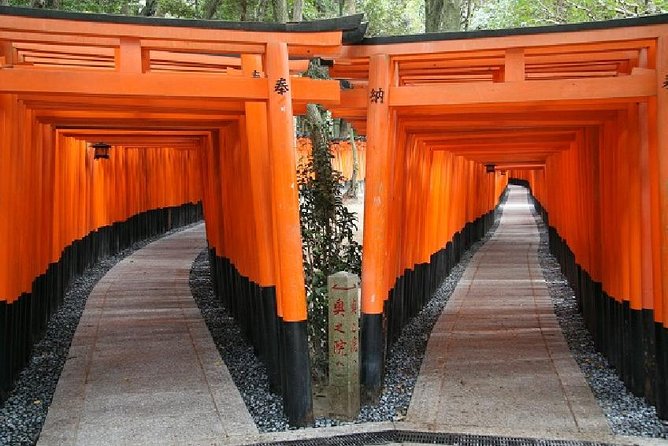
The first stop is Fushimi Inari-taisha, the head shrine of roughly 40,000 Inari shrines across Japan. Its most famous feature is the Senbon Torii, a long passage of bright-red gates that climb the wooded hillside.
The color and repetition make this the tour’s most instantly recognizable photo stop. Even with limited time, you get a clear sense of why Fushimi Inari is one of Kyoto’s essential sights. The gates were donated by individuals and businesses, with inscriptions recording the donors.
The scheduled visit is about 30 minutes, but the walk from the parking area takes around 15 minutes each way. That leaves little spare time, especially if the group moves together. You should expect an introduction rather than a full climb through the torii tunnels.
The site can be crowded, and the group may not enter every area. In particular, the tour does not enter the Shin-en garden. Set your expectations accordingly: this is a fast look at the shrine and its famous gates, not a complete visit to the entire hillside complex.
Wear shoes with a good grip and stay aware of the meeting instructions. The path can become spread out as people stop for photographs, and losing sight of the guide in a large group is easy.
Sanjusangendo’s extraordinary wooden hall
Sanjusangendo is the tour’s most unusual stop. The temple’s name refers to the 33 spaces between its columns, and the building stretches about 394 feet, or 120 meters. It is described as Japan’s longest wooden structure.
Inside, the main hall holds 1,001 life-size statues of Kannon, the Buddhist bodhisattva of compassion. The statues date from the 13th century, and the rows create a powerful visual effect. This is not simply another ornate temple room. The scale, repetition, and quiet atmosphere give the visit a different weight from the bright shrine at Fushimi Inari.
Photography inside is restricted, so you experience this place mainly by looking rather than by taking pictures. That is a good thing here. The hall rewards attention to the faces, hand positions, and arrangement of the figures.
The scheduled stop is about 30 minutes. That is enough to see the hall and hear the main explanation, but not enough for a slow inspection of every detail. I would treat the guide’s talk as a framework, then focus on the parts that catch your eye.
Several accounts single out Sanjusangendo as the most intense or memorable stop. I understand why. Fushimi Inari is more immediately photogenic, and Kiyomizu-dera has the famous view, but Sanjusangendo offers the strongest sense of concentration and scale.
Walking up to Kiyomizu-dera
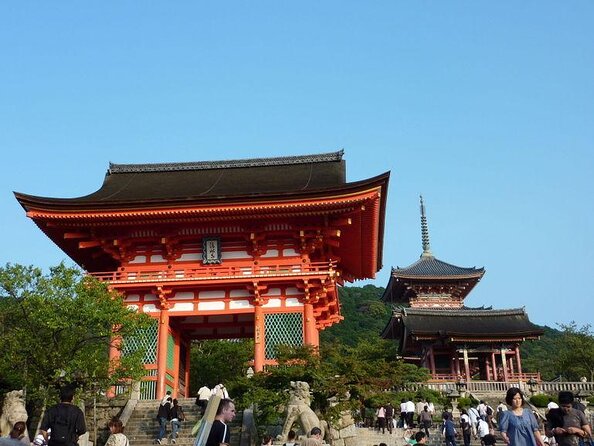
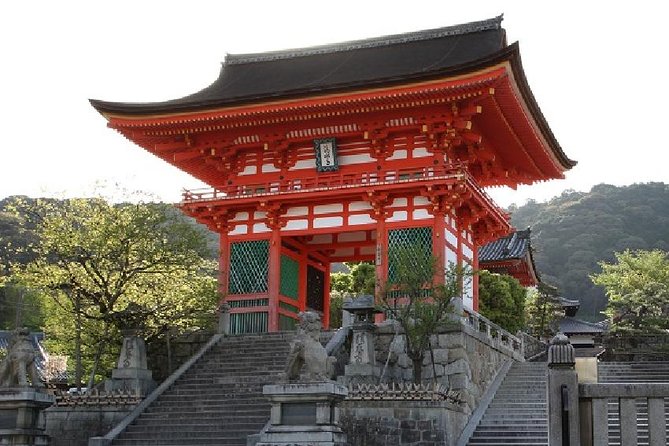
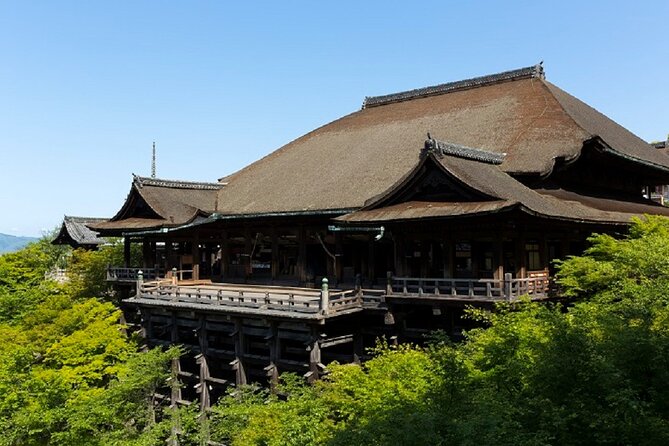
The final stop is Kiyomizu-dera, one of Kyoto’s best-known temples and a UNESCO World Heritage site. The route begins along the historic shopping lanes leading uphill to the temple. These streets add plenty of atmosphere, but they can be crowded and noisy.
You may have time for a quick ice cream or a little shopping, though the schedule does not guarantee a long browse. Keep an eye on the clock. It is easy to pause at pottery shops, snack counters, and small stores, then discover that the group is ready to move on.
Kiyomizu-dera is known for its large wooden terrace, which projects from the hillside and offers wide views across Kyoto. The surrounding paths provide different angles toward the city and nearby wooded slopes. This is the stop where timing matters most.
The scheduled visit lasts about one hour and 10 minutes, longer than the other two stops. That gives you time to see the main temple area, take photographs, and walk the approach. Still, the climb and crowds can make the hour pass quickly.
Several people have arrived at Kiyomizu-dera around 4:30 p.m., when daylight was already fading. In autumn, that can mean missing the foliage colors. On a clear afternoon, the view is a major reward. On a late or congested departure, you may get more of a dusk or evening visit.
If photography is your main reason for booking, check the season and expected sunset before you go. The tour operator controls the route, but traffic and crowd levels can change the timing.

Guides make the difference
The guides are a major part of the experience. Strong guides have been described as friendly, funny, informative, professional, and careful about keeping the group organized. Yoshi is noted for his humor and steady explanations. Donna-san is praised for a warm, polished approach, while Jessie and Amy are described as helpful and informative. Momo also received praise for guiding the group well.
You should not expect every guide to deliver the same style or the same amount of detail. The best guides add facts about Japanese history, religious practice, and everyday customs that you might not pick up from a guidebook. They also explain how to move through the sites respectfully.
A large group can reduce the benefit. One account describes a group of about 50, while the stated maximum is 40. If your group is full, stand close enough to hear, especially at outdoor stops where traffic and crowds create background noise.
The guide cannot change the crowds or make the walk shorter. The real question is how well the guide handles those limits. Based on the strongest accounts, the better guides keep the mood light without turning the visit into a comedy routine, and they make the route feel organized rather than chaotic.
Pace, crowds, and comfort
This is a brisk tour. The short stops help you see more, but they also limit quiet time. Some people find 30 minutes at each early stop enough for the main sight. Others feel rushed and want more time inside the temples or in the shops.
The route is not difficult in a technical sense, but you should be ready for a fair amount of walking. The 15-minute walk each way at Fushimi Inari, the uphill approach to Kiyomizu-dera, and the temple paths add up. Heat and humidity can make the climb feel harder.
Crowds are part of the Kyoto experience at these particular sites. Fushimi Inari’s red gates attract photographers from around the world. Kiyomizu-dera’s approach is one of the city’s busiest sightseeing areas. No tour can remove that pressure, although a guide and included transport save you from handling the route alone.
Bring water, wear comfortable shoes, and keep your camera ready. Food and drinks are not included, but you may find time for a quick purchase near Kiyomizu-dera if the schedule allows.
Who should book this afternoon tour?
I would choose this tour if you have one day in Kyoto, are staying in Osaka, or want a simple first look at the city’s major religious sights. It is especially useful at the beginning of a Japan trip, when you are still learning how shrines, temples, gates, gardens, and worship customs fit together.
It also suits anyone who dislikes navigating unfamiliar bus and train connections. The included vehicle takes care of the basic movement between sites, and the guide keeps you aware of the meeting times.
Families can join, though the walking and uphill sections deserve attention. Participants under 18 need written parental permission. Anyone under 15, or anyone not yet in middle school, must be accompanied by a parent or guardian.
I would skip it if you want a slow temple day. Independent visits would let you spend much longer at Sanjusangendo, climb farther through Fushimi Inari, or wait at Kiyomizu-dera for the best light. The tour gives you range, not depth.
Should you book it?
Book this Kyoto afternoon tour if you value efficient sightseeing, included transport, and a personable guide more than unlimited time at each site. The combination of Fushimi Inari, Sanjusangendo, and Kiyomizu-dera is well chosen, and Sanjusangendo adds a quieter, more serious experience to the familiar red gates and city views.
Think twice if you are sensitive to crowds, have mobility concerns, or want sunset and autumn foliage photographs at Kiyomizu-dera. For a first afternoon, the $82.58 price is reasonable. For a second or third Kyoto visit, exploring on your own may give you more for your money.
Free cancellation is available up to 24 hours before the start time. Confirmation is sent within 48 hours, subject to availability.
FAQ
How long does the Kyoto afternoon tour last?
The tour lasts approximately four hours and 40 minutes.
Where does the tour begin?
You meet the guide at the Avanti Tour Desk near Kyoto Station in the afternoon.
Which sights are included?
The tour visits Fushimi Inari-taisha Shrine, Sanjusangendo Temple, and Kiyomizu-dera Temple.
Are admission fees included?
Yes. Admission fees and transportation costs are included.
Is transportation included between the sights?
Yes. Transportation is included, but hotel pickup and drop-off are not.
How much time is spent at each stop?
The planned time is about 30 minutes at Fushimi Inari, 30 minutes at Sanjusangendo, and one hour 10 minutes at Kiyomizu-dera.
How much walking is required?
You walk about 15 minutes each way from the parking area to Fushimi Inari. The route also includes temple grounds, shopping lanes, slopes, and a climb toward Kiyomizu-dera.
Can children join the tour?
Children up to age five may join free, but they do not receive a bus seat unless booked under the child rate. Participants under 18 need written parental permission, and anyone under 15 or not yet in middle school must be accompanied by a parent or guardian.
What happens if I need to cancel?
You receive a full refund if you cancel at least 24 hours before the experience starts. Cancellations or changes made less than 24 hours in advance are not accepted for a refund.
More tours in Kyoto we've reviewed




Tours, compared.
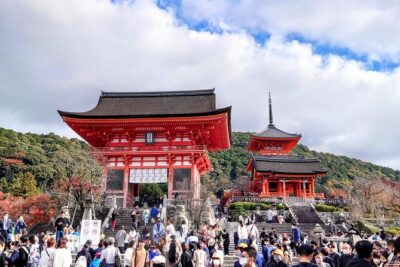 ★ 5.0PERFECT KYOTO 1-Day Bus TourFrom $129
 ★ 4.8Kyoto: Fushimi Inari, Kinkakuji, Bamboo Grove 1 Day Bus TourFrom $122510 minutes - 9 hours
 ★ 4.7Kyoto Geisha Walking Tour: Gion District & Hidden GemsFrom $252 hours
 ★ 4.7Kyoto: Gion Geisha District Walking Tour – Stories of GeishaFrom $202 hours
 ★ 5.0Hidden Kyoto E-Biking tourFrom $116
 ★ 5.0Kyoto Night Foodie Tour in Gion (9+ dishes + 6 Sake tastings)From $163