
Reviewed · ARASHIYAMA & BAMBOO TOURS
Kyoto: Arashiyama Customized Rickshaw Tour & Bamboo Forest
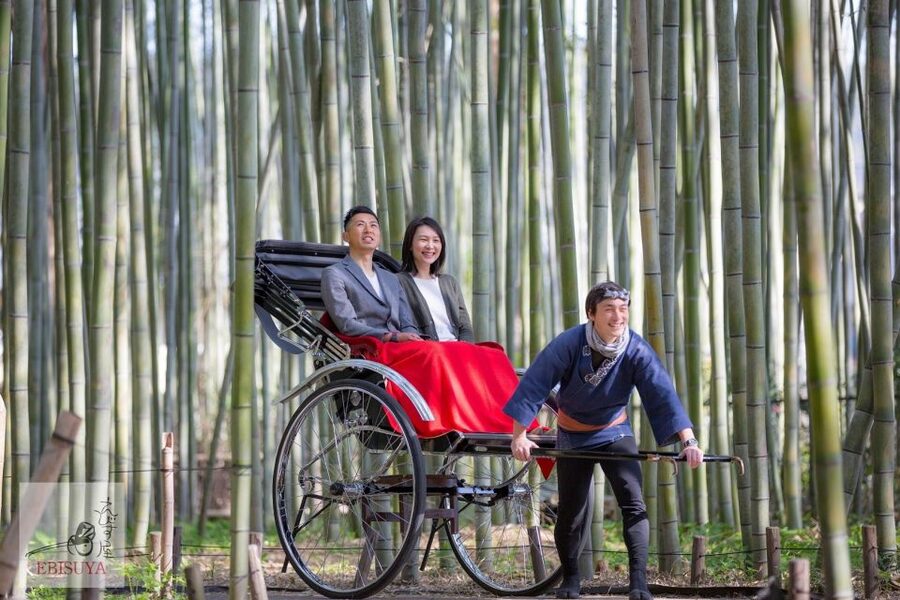
Arashiyama’s famous bamboo grove is beautiful, but walking it can mean edging through a crowd with a phone held above your head. This private Ebisuya rickshaw tour gives you a seat, a local guide, and access to a quieter rickshaw route through the bamboo.
I like the personal attention, especially when guides such as Koki, Aki, Shin, and Lucas explain the temples and take excellent photos for you. I also like the choice of four lengths, from a quick 45-minute introduction to a three-hour tour through less-visited parts of Arashiyama. The main consideration is price: at about $51 per person, it costs more than simply walking, and the longer rides can feel costly for a short visit.
In This Review
- Key points at a glance
- Why a rickshaw works well in Arashiyama
- Through Arashiyama’s bamboo grove
- Nonomiya Shrine and the meaning of a short tour
- Rakushisya and the longer routes
- Quiet lanes, temples, and gardens
- Guides make the biggest difference
- Comfort in rain, cold, and summer heat
- Seating, children, and accessibility
- Is $51 per person good value?
- Picking the right duration
- Who should book this Arashiyama ride?
- Should you book it?
- FAQ
- Where does the Arashiyama rickshaw tour begin?
- How long does the tour last?
- Does the ride go through the bamboo forest?
- Is the rickshaw tour private?
- Which languages do the guides speak?
- Can the route be customized?
- How many people fit in one rickshaw?
- Can young children ride?
- Is the tour suitable for wheelchair users and people with strollers?
Key points at a glance
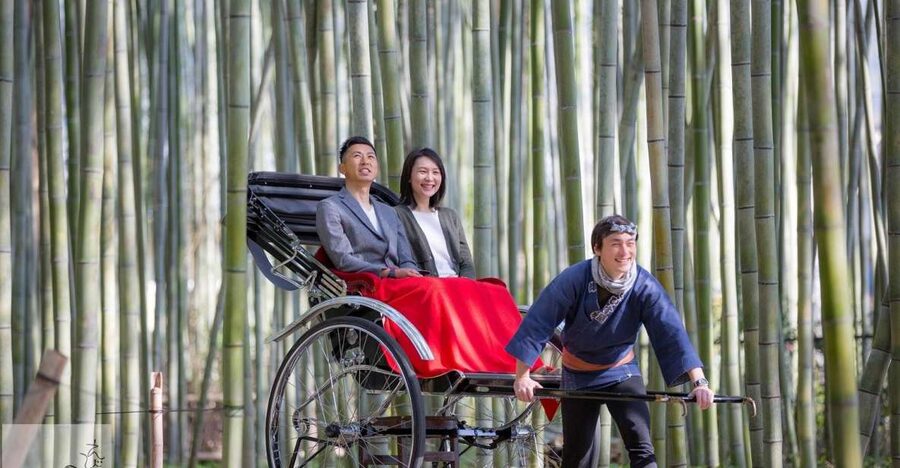
- A quieter route through the bamboo: Rickshaws use their own path in parts of the forest, helping you get away from the thickest pedestrian crowds.
- Four useful tour lengths: Choose 45 minutes, 70 minutes, 130 minutes, or 190 minutes according to your schedule.
- Private, flexible sightseeing: Your guide can shape the ride around bamboo, temples, gardens, local streets, or photography.
- Strong guide service: Guides including Koki, Aki, Shin, Yoshi, Aki, and Shin are praised for clear English, local insight, humor, and careful driving.
- More than a photo stop: Longer tours can include Rakushisya, Nison-in, Shinto shrines, gardens, and quiet neighborhood lanes.
- Good in poor weather: Blankets, leg covers, and rain protection help keep you comfortable in cold or wet conditions.
Why a rickshaw works well in Arashiyama
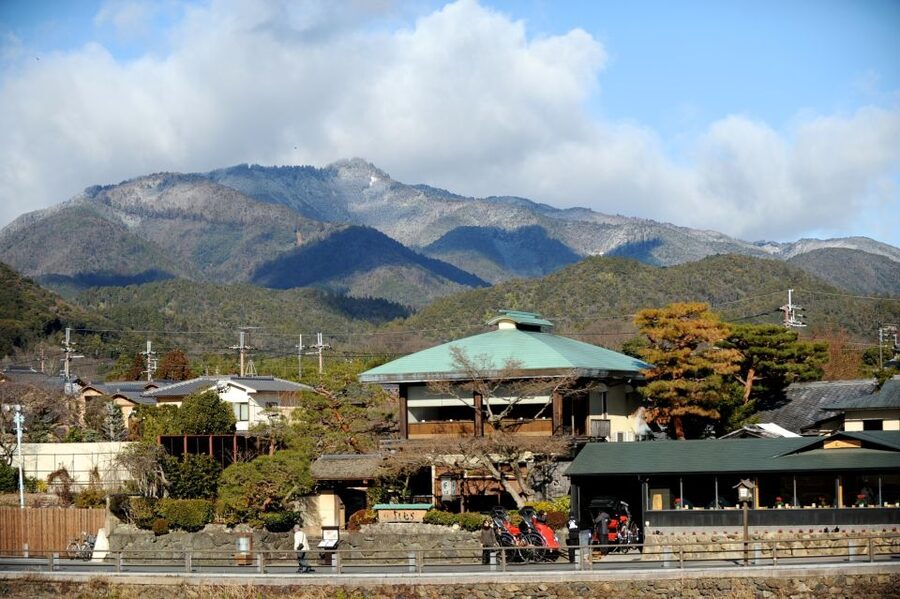
Arashiyama sits on Kyoto’s western edge, where the city gives way to wooded hills, temple grounds, gardens, and the Katsura River. Togetsu-kyo Bridge is the natural starting point. It is a scenic landmark in its own right, and meeting here puts you close to the district’s main sights.
The rickshaw changes the pace of your visit. You are not rushing from one photo stop to the next, and you are not trying to read a map while navigating crowds. You sit back as your driver pulls you through the area and points out details that are easy to miss on foot.
The ride also gives you a useful local contact. Guides speak English and Japanese, and the strongest part of the tour is often the conversation. You can ask about shrine customs, temple design, local life, food, matcha, or the history of the rickshaw itself.
There is a human side to the ride, too. Your guide is doing physical work, often pulling two adults uphill while talking and stopping for photos. The guides are careful and polite, but you should still choose a duration that feels fair for your own needs and comfortable for the driver.
A few more Kyoto tours and experiences worth a look
Through Arashiyama’s bamboo grove
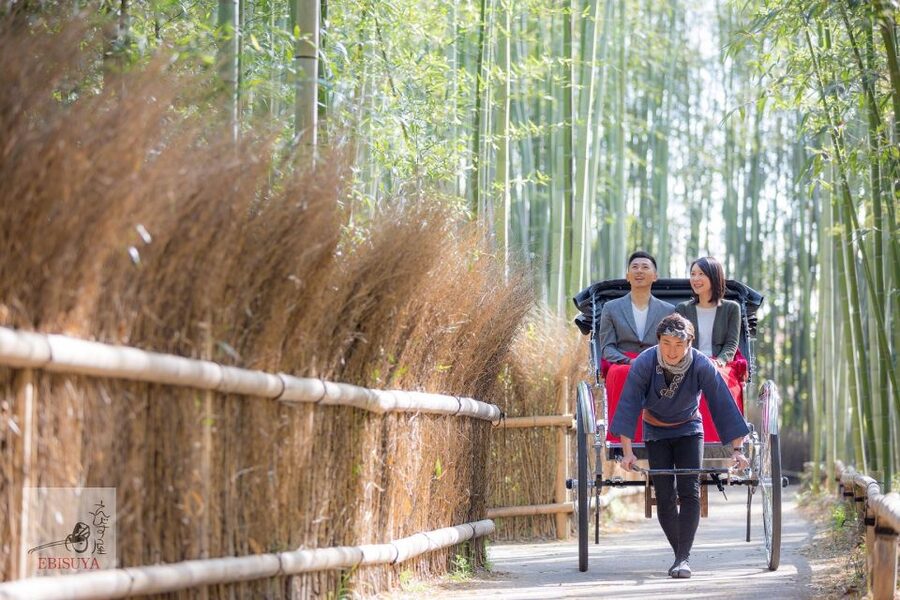
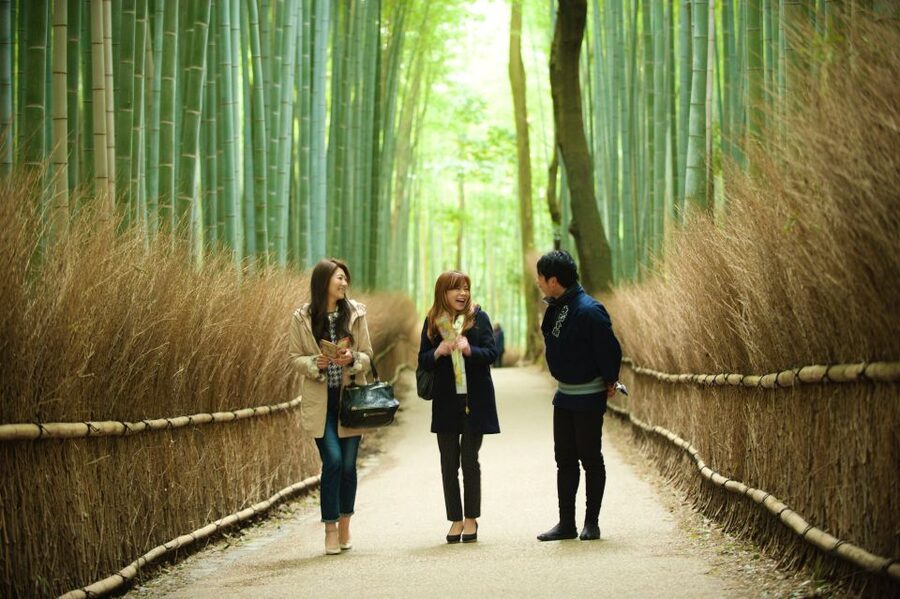
The bamboo forest is the star of the short tour. Tall green stalks rise on both sides of the path, creating a cool, filtered setting even when the surrounding streets are busy. The grove is not a silent wilderness, but the sound and movement change once you leave the main pedestrian flow.
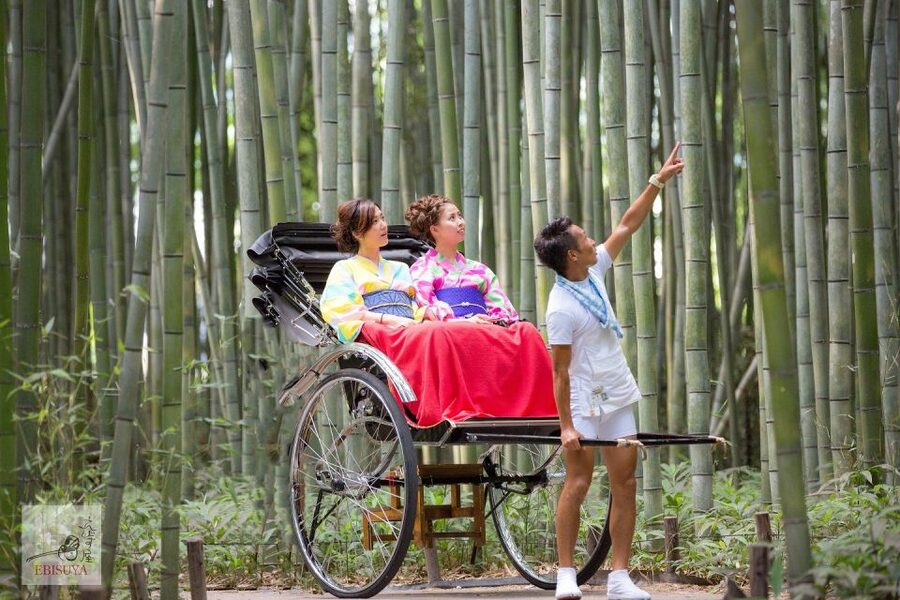
A key benefit is the rickshaw-only route through part of the bamboo area. This does not mean you will have the entire forest to yourself, but it can be much calmer than the main walking path. A rickshaw can also move through certain spaces more smoothly than a group trying to stop every few steps.
Your guide will usually pause at good picture spots. The photo service is more useful than it may sound. Instead of handing your phone to a stranger and hoping for a decent frame, you can ask the guide to capture pictures of both of you together.
Several guides are praised for this skill. Koki is described as a good communicator and strong photographer, while Aki is known for taking memorable pictures and offering practical Kyoto suggestions. Shin is also praised for finding attractive angles in the bamboo and for explaining what you are seeing.
Keep your expectations sensible. The bamboo grove is a public attraction, so it can still be crowded, particularly at popular times. The rickshaw route helps, but it does not turn Arashiyama into a private garden.
Nonomiya Shrine and the meaning of a short tour
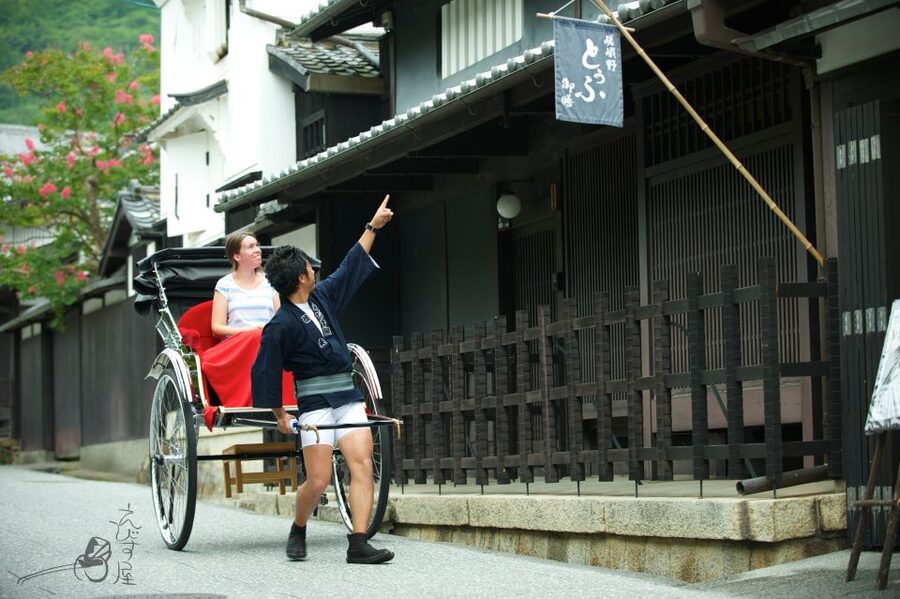
Nonomiya Shrine is the main cultural stop on the 45-minute route. This small Shinto site sits beside the bamboo area and gives you a quick look at a living place of worship rather than only a scenic photo setting.
Your guide can explain the difference between a Shinto shrine and a Buddhist temple, along with the local meaning of the site. That context matters because Arashiyama’s appeal comes from the way nature, religious buildings, and carefully tended grounds sit close together.
The 45-minute ride returns to the starting area after Nonomiya Shrine. Choose it if you have only a small window, if someone in your group tires easily, or if bamboo is your main goal.
This option is also a practical answer to the crowd problem. One 45-minute rider found the route worthwhile even in heavy rain and thick foot traffic because the rickshaw path was calmer and the vehicle kept the passenger fairly dry.
The drawback is obvious: you get only a taste of Arashiyama. You will not have time for the farther temples, Rakushisya, or the quieter lanes that make the longer rides more distinctive.
Rakushisya and the longer routes
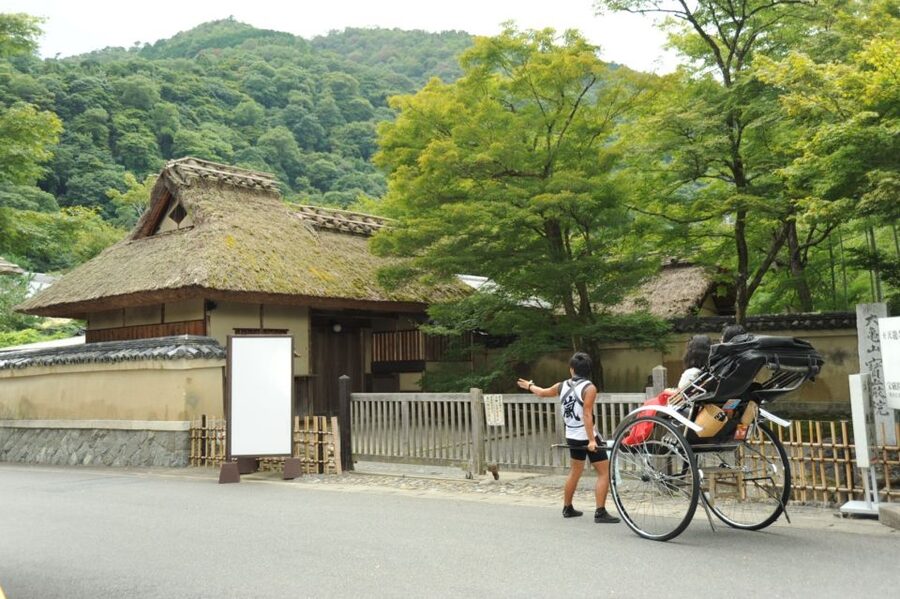
The 70-minute option gives you more time around the bamboo and nearby sights, but the 130-minute and 190-minute choices are where the tour becomes a broader look at Arashiyama.
One possible stop is Rakushisya, a simple thatched cottage linked with one of Japan’s respected poets and haiku masters. It offers a change of scale after the tall bamboo. Rather than another grand building, you see a modest home tied to literary life and the quiet rural character once associated with this part of Kyoto.
Longer routes can also include Buddhist Nison-in, additional Shinto shrines, old temples, gardens, and neighborhood roads. The value here is not simply the number of stops. You get to see how Arashiyama works beyond its famous grove, including places that many people skip while following the standard walking route.
Your guide can adjust the ride around your interests. You might ask for more temple time, more nature, more local streets, or more picture stops. The tour is not a rigid sightseeing bus circuit, though the exact route depends on the option you book and the time available.
The 130-minute tour is a sensible middle choice for many people. It gives you enough time to get beyond the bamboo without committing most of an afternoon. The 190-minute ride suits you best if Arashiyama is a major part of your Kyoto plans and you want a slower, more detailed outing.
Quiet lanes, temples, and gardens
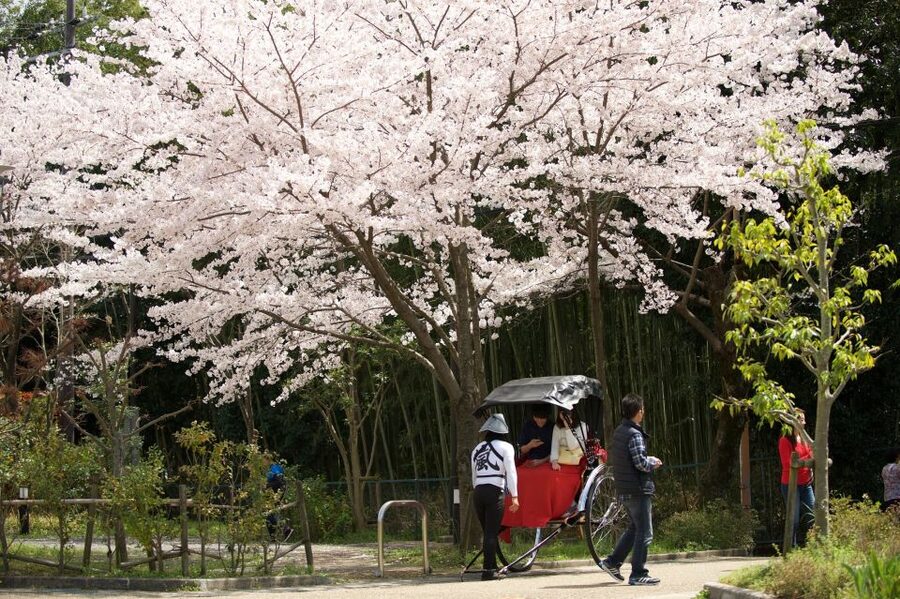
The backstreets are one of the best reasons not to stop at the shortest option. Arashiyama’s main attractions draw the crowds, but the quieter lanes show a more relaxed side of the district.
You may pass traditional-looking homes, small gardens, shrine entrances, and temple approaches that do not receive the same attention as the bamboo grove. Your guide can give these places a local setting, explaining what you are passing rather than leaving you with another unnamed photo.
The ride also saves your legs. Arashiyama involves walking between attractions, and the paths may be crowded or uneven. Sitting in the rickshaw lets you cover more ground without turning the visit into a march.
Still, a rickshaw is not a replacement for walking inside every temple or garden. The ride gives you an overview and selected stops. If you want to spend an hour studying a garden, you may need to return independently after the tour.
Guides make the biggest difference
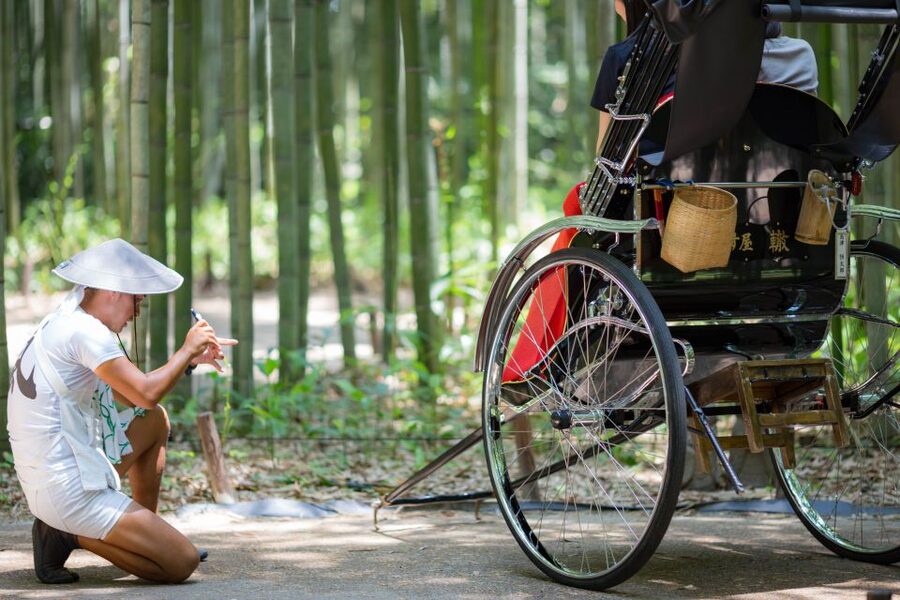
The rickshaw is memorable, but the guide shapes the quality of the outing. The strongest guides combine safe driving, clear spoken English, local facts, good timing, and a relaxed sense of humor.
Koki is a good example of the friendly, chatty style that works well here. Aki is praised for taking strong photographs and offering food and matcha suggestions. Shin is noted for detailed explanations and for helping passengers reach places they might not have found alone.
Other guides, including Yoshi, Lucas, Yuta, Yuya, Toru, Shuji, Shogo, Kei, and Kawai, are praised for warmth, careful driving, local recommendations, and useful conversation. You cannot guarantee a particular guide unless the booking allows it, but the repeated pattern is clear: the guide is not just pulling the vehicle. The guide is your interpreter of Arashiyama.
Good communication is especially helpful on a private tour. Tell your guide what matters to you at the beginning. You might prefer shrine customs, Japanese history, photography, food advice, or simply a peaceful ride with fewer stops.
Comfort in rain, cold, and summer heat
Weather can change the character of the ride, but it does not automatically ruin it. In cold conditions, blankets help keep your lap and legs warm. In wet weather, passengers have used rain covers and leg protection to stay reasonably dry.
That matters because Arashiyama can be less pleasant when you are walking through rain with an umbrella, trying to take pictures at the same time. The rickshaw gives you a covered, seated position and lets the guide handle movement through the area.
On the other hand, you are still outdoors. Dress for the forecast, and do not treat the blankets as a substitute for warm clothing in winter. In hot weather, the physical effort belongs to the guide, while you remain exposed to the air and sun.
The activity is not recommended for people with back problems or for pregnant women. It is specifically not recommended during the first 16 weeks of pregnancy, so ask a medical professional if you are unsure about your situation.
Seating, children, and accessibility
Each rickshaw fits up to two adults, but the seat is only 29.1 inches, or 74 centimeters, wide. Two adults can ride together, though some couples will be more comfortable booking separate rickshaws.
Children age six and older pay the adult rate. Up to two children age five and under can ride with two adults on their laps. If a five-year-old uses one of the two seats instead of sitting on an adult, that child must be booked at the full adult fare.
The tour is wheelchair and stroller friendly, which makes it more practical for families than the narrow vehicle might suggest. You should still explain your needs when booking, since the meeting point can vary by option and the route includes public paths.
Selfie sticks are not allowed. That is a small rule, but it helps keep the narrow route safer and less cluttered for everyone.
Is $51 per person good value?
The starting price of about $51 per person is reasonable if you treat the outing as a private guided tour, not just a short ride. You are paying for the rickshaw, a local guide, route planning, cultural explanation, photo stops, and access to a quieter bamboo path.
For a couple, the cost buys a private experience rather than a shared vehicle. That is important if you want to ask questions freely or set the pace around your interests. It is also useful if you want photos of both people together, since the guide can take them throughout the ride.
The 45-minute option gives the weakest value if you already plan to spend several hours walking around Arashiyama. It makes more sense when your main goals are the bamboo grove, Nonomiya Shrine, and a comfortable overview.
The longer options offer better value if you would otherwise hire a guide, struggle with navigation, or miss the quieter temples and lanes. Snacks and drinks are not included, and hotel pickup is not provided, so plan those costs and movements separately.
Picking the right duration
Use the 45-minute tour for a focused bamboo experience, a family-friendly introduction, or a tight Kyoto schedule. It includes the bamboo route and Nonomiya Shrine before returning to the starting area.
Choose 70 minutes if you want a little more breathing room for photos and nearby sights without giving the ride a large part of your day. This is a useful compromise for a first visit.
Choose 130 minutes if you want bamboo, temples, neighborhood streets, and a fuller sense of Arashiyama. It is long enough to include places beyond the standard route while still leaving time for an independent meal or temple visit.
Choose 190 minutes if you want the most flexible version. You can spend longer at selected sites and reach additional temples such as Nison-in, along with Rakushisya and less-frequented areas.
If you are unsure, I would choose 130 minutes for most couples and families with enough time in Kyoto. It gives the guide room to show you more than the famous grove without making the entire outing feel like a major commitment.
Who should book this Arashiyama ride?
I would recommend it to first-time Kyoto visitors who want orientation without a long walk. It is also a strong choice for couples, families, older adults, and anyone who wants a good set of shared photographs.
It works especially well for people who care about the setting but want help understanding it. A bamboo grove is easy to photograph and easy to misunderstand. A guide can connect the trees, shrines, gardens, temples, and local streets into a clearer picture of Arashiyama.
You may prefer to skip it if your budget is tight, you dislike being pulled in an open vehicle, or you want to explore every temple at your own pace. Independent walking costs less and gives you more control over how long you stay at each stop.
Should you book it?
Book this tour if you want to see the bamboo forest with less crowd pressure and more local explanation. The strongest reasons are the private format, the quieter rickshaw path, the flexible route, and the guides’ talent for taking useful photos.
I would book at least 70 minutes if Arashiyama is a major stop on your Kyoto day. Pick 45 minutes only when time is limited or bamboo is your clear priority. For a fuller visit, the 130-minute tour offers the best balance of price, sightseeing, and pace.
FAQ
Where does the Arashiyama rickshaw tour begin?
Your guide and rickshaw wait near Kyoto’s Togetsu-kyo Bridge in Arashiyama. The exact meeting point can vary according to the option booked.
How long does the tour last?
You can choose from four durations: 45 minutes, 1 hour and 10 minutes, 2 hours and 10 minutes, or 3 hours and 10 minutes.
Does the ride go through the bamboo forest?
Yes. The route includes Arashiyama’s bamboo forest, and rickshaws have access to an exclusive path through part of the grove.
Is the rickshaw tour private?
Yes. The activity is arranged for a private group rather than a shared tour.
Which languages do the guides speak?
Guides offer tours in English and Japanese.
Can the route be customized?
Yes. The tour can be adjusted around your interests, including bamboo, temples, shrines, gardens, neighborhood streets, and photography.
How many people fit in one rickshaw?
A rickshaw can carry up to two adults. It is 29.1 inches, or 74 centimeters, wide, so separate rickshaws may be more comfortable for some passengers.
Can young children ride?
Up to two children age five and under can ride with two adults on adult laps. Children age six and older are charged the adult price. A five-year-old using a regular seat must be booked at the adult fare.
Is the tour suitable for wheelchair users and people with strollers?
The activity is wheelchair and stroller friendly. Tell the operator about your needs when booking because the meeting point can vary by tour option.
More Arashiyama & Bamboo Tours in Kyoto
More tours in Kyoto we've reviewed


Arashiyama & Bamboo Tours, compared.
 ★ 4.8Kyoto: Fushimi Inari, Kinkakuji, Bamboo Grove 1 Day Bus TourFrom $122510 minutes - 9 hours
 ★ 4.1Osaka/Kyoto:Kinkakuji,Arashiyama,FushimiInariShrine,NaraParkFrom $66
 ★ 4.7Kyoto/Osaka: Nara, Fushimi Inari Taisha, Arashiyama Bus TourFrom $529 - 10 hours
 ★ 5.0Kyoto Arashiyama Walking Tour: Bamboo, Monkeys, Gardens & SecretsFrom $65
 ★ 4.8Arashiyama Bamboo, Temple, Monkeys, or Secret Sake BreweryFrom $875 hours - 330 minutes
 ★ 4.4Osaka/Kyoto: Arashiyama, Nara & Fushimi Inari Shrine w/LunchFrom $61