
Reviewed · WORKSHOPS
The Original Small-Group Sushi Making Class in Kyoto
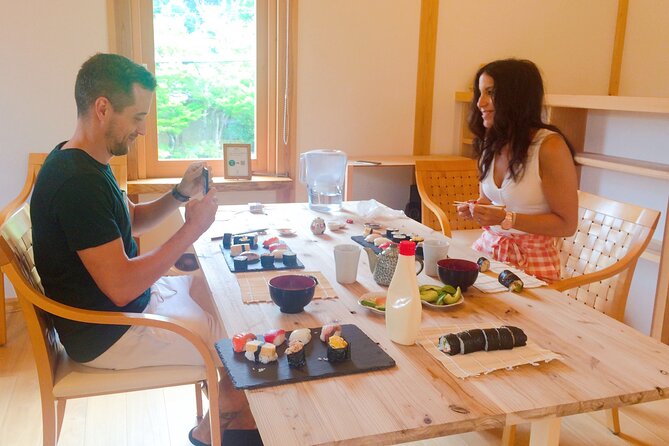
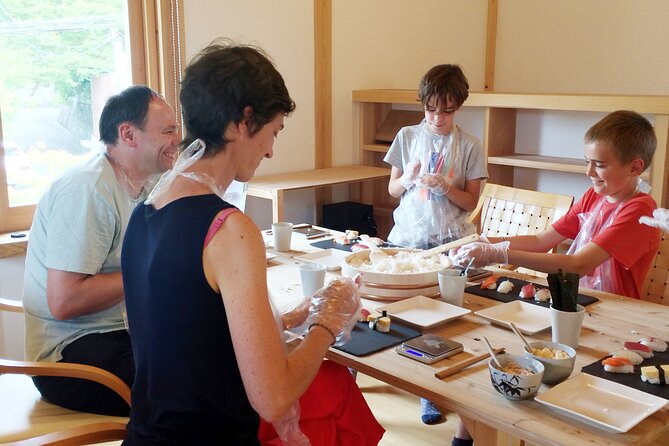
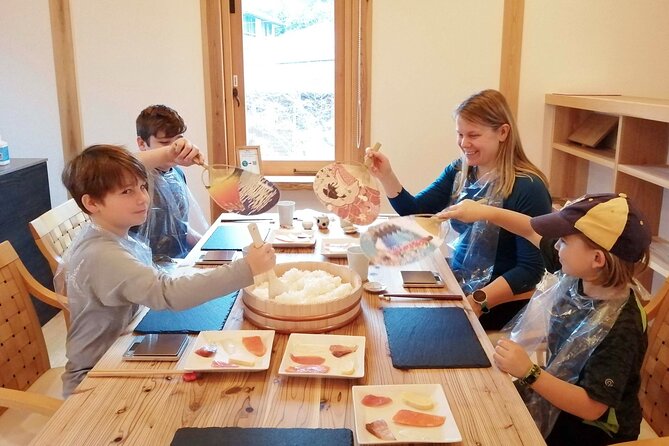
The best part of this Kyoto experience is its small size. With no more than eight people, Kana can correct your technique instead of giving a quick demonstration and sending you off on your own. You season rice, shape nigiri, roll maki, then sit down to eat the results.
I like the calm townhouse setting near Kiyomizu-dera and Gion, and I like that the class teaches useful skills rather than only staging a photo opportunity. You also get tea, an apron, gloves, and take-home items such as recipes, a sushi mat, chopsticks, or a small gift bag. The main consideration is food choice: a vegetarian or vegan option is not offered, so this class is best for people comfortable with the planned sushi menu.
In This Review
- Key points to know before booking
- A hands-on sushi class near Kyoto’s biggest sights
- What happens during the 90 minutes
- Nigiri, maki, and the pleasure of eating your own work
- Kana’s teaching style and the family welcome
- A historic townhouse instead of a standard cooking studio
- Is $69.64 a fair price?
- Who will enjoy this class most?
- What you take home after class
- Timing, transport, and cancellation rules
- Should you book the Atelier SUSHI class?
- FAQ
- How long does the sushi-making class last?
- Where does the class begin?
- Where does the activity end?
- How many people can join the class?
- Is the class taught in English?
- What types of sushi will I learn to make?
- Is food included?
- Is there a vegetarian or vegan option?
- Can I cancel for a full refund?
Key points to know before booking
- Only eight people per class: The small group leaves room for questions and personal help.
- Kana leads the English class: Her husband, Kerim, may assist, creating a friendly family-run atmosphere.
- You make and eat several sushi styles: The lesson covers seasoned rice, nigiri, and maki rolls.
- The setting is part of the experience: You work in a restored traditional townhouse near Kyoto’s major Higashiyama sights.
- Come ready for a full meal: The amount of sushi can be generous, not just a few samples.
- You can keep practicing at home: Recipes, a rolling mat, chopsticks, and class notes may be provided as souvenirs.
A hands-on sushi class near Kyoto’s biggest sights
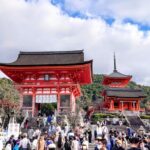
Atelier SUSHI is at 311-1 Kitatōryōchō in Kyoto’s Higashiyama Ward, close to Kiyomizu-dera and the Gion area. That location makes this an easy class to pair with a morning at the temple, an afternoon walk through old Kyoto, or an evening in Gion.
The workshop takes place in a beautifully restored historic townhouse. That matters because the setting feels tied to Kyoto, rather than like a generic cooking school in a modern commercial room. You have a quiet place to concentrate on the food, while the surrounding streets give you plenty to do before or after the 90-minute session.
You should still allow time to find the address and arrive without rushing. The meeting point and ending point are the same, and the location is near public transportation. The class itself lasts about one and a half hours, so it fits neatly into a sightseeing day.
A few more Kyoto tours and experiences worth a look

What happens during the 90 minutes
The workshop is fully hands-on, but much of the preparation is done before you arrive. That is a good arrangement for a short class. You spend your time learning the parts that require practice, rather than waiting for fish to be cleaned or rice to cool.
Kana begins with the foundation: properly prepared sushi rice. This is more important than it sounds. Rice that is too wet, too dry, too warm, or poorly seasoned can ruin the texture of the finished sushi. Learning how to season it gives you a skill you can use at home, even if your first pieces are not perfectly shaped.
From there, you work with fresh fish and selected local ingredients. The class teaches nigiri, the hand-shaped rice topped with fish, and maki, the rolled style made with seaweed and fillings. You may make several pieces of nigiri and a roll of maki, with the exact selection depending on the session and ingredients available.
The technique is simplified for beginners without turning the class into a gimmick. You learn how to handle the rice, place the topping, and shape the pieces with enough control to hold them together. For maki, the sushi mat helps you create a firm, even roll.
This is where the eight-person limit earns its keep. You can ask Kana to look at a piece that is too loose or too large, and you have time to watch someone else’s method before trying again. If you already make sushi at home, the class still offers room to improve your shaping and rice work, though you should not expect a professional chef-training course.
Nigiri, maki, and the pleasure of eating your own work
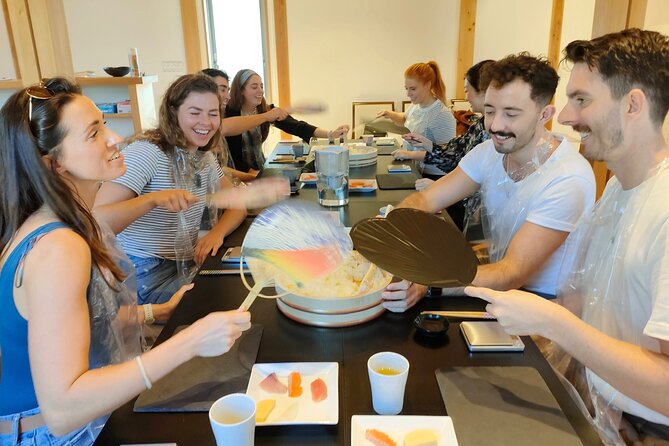
Once the making is finished, you eat the sushi you prepared. The meal is included and may be served as lunch or dinner, depending on the class time. Plan accordingly. This is not a tiny tasting followed by a search for a second lunch.
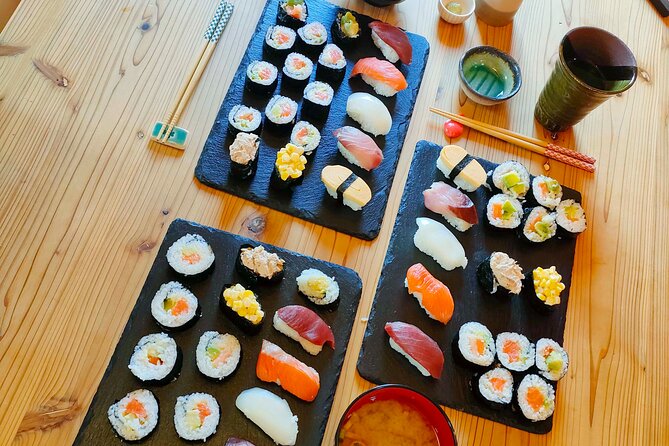
The menu uses premium fresh fish and local ingredients, and the meal can be surprisingly filling. The fresh fish also lets you see why sushi depends so much on ingredient quality. There is no complicated sauce or elaborate cooking method to hide mediocre food. The rice, fish, and simple preparation need to work together.
You will probably produce pieces with different shapes and sizes. That is part of the fun. Your first nigiri may look more like a small rice mound than a sushi-counter masterpiece, but it should still taste good. Maki is often more forgiving, and rolling it gives you a clear sense of how pressure and placement affect the final result.
The class includes Japanese tea and possibly coffee, along with an apron and gloves. Gloves are useful for hygiene, while the apron keeps the activity comfortable and practical. You do not need to bring special equipment for the lesson.
Kana’s teaching style and the family welcome
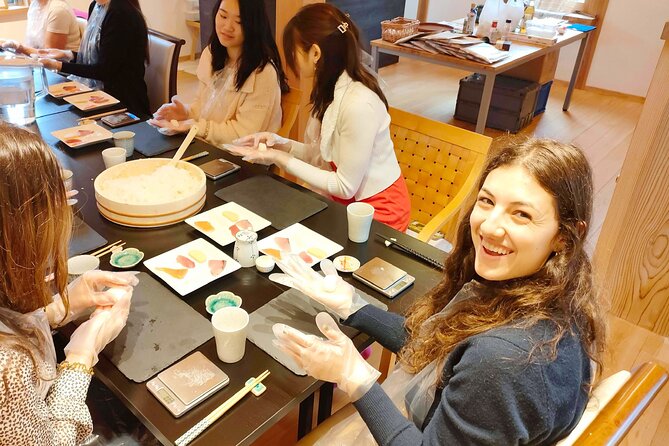
Kana is the main instructor, and the class is conducted in English. The strongest feature here is her patient, encouraging approach. She explains the process clearly and keeps the pace relaxed, which is helpful if you have never made sushi before.
Kana also shares parts of her personal story, Japanese culture, and local customs during the lesson. That gives the class more substance than a simple recipe demonstration. You are learning how sushi is made, but you also get a small window into daily life and food traditions in Japan.
Her husband, Kerim, may assist with the class. The two create a family-run feel, and the social side is a real part of the experience. You may find yourself talking about Kyoto sights, restaurants, and the rest of your itinerary between steps. The hosts have also offered local advice, so this can be a useful early-trip activity if you want practical ideas for the days ahead.
I especially like the suggestion of booking this near the beginning of your Kyoto stay. You receive food, a cultural introduction, and local tips in one sitting. If you are only in Kyoto for a short time, that combination gives the class value beyond the sushi itself.
A historic townhouse instead of a standard cooking studio
The building adds atmosphere without taking over the lesson. A restored Kyoto townhouse provides a refined, quiet backdrop, and the traditional architecture helps the activity feel connected to the neighborhood around Kiyomizu-dera and Gion.
That said, you should book this for the instruction and meal first, with the setting as a bonus. The class does not promise a formal architectural tour or a detailed history of the building. The cultural information comes mainly through conversation with Kana and her assistants.
The location also makes planning simple. You can visit Kiyomizu-dera and nearby Higashiyama streets before class, then walk toward Gion afterward, depending on your timing. Since the activity returns to its meeting point, you do not need to arrange a separate end location.


Is $69.64 a fair price?
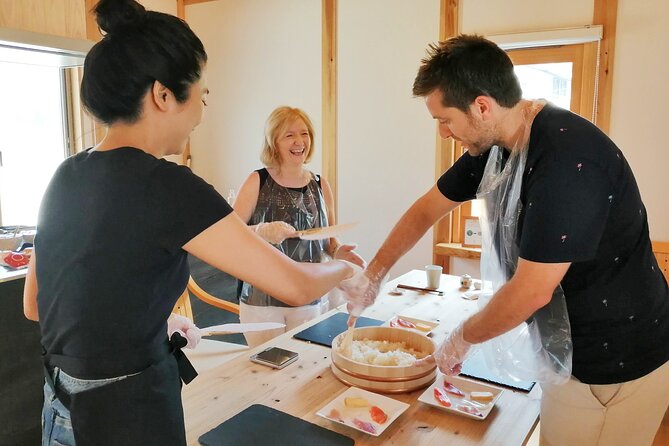
At $69.64 per person, this is not the cheapest meal you could buy in Kyoto. You can find excellent sushi for less, especially if your only goal is to eat. But that is not what you are paying for here.
The price covers a 90-minute, English-language class, fresh ingredients, a complete sushi meal, tea or coffee, equipment, and instruction from a Japanese host. The small group is the key value. With a maximum of eight people, the cost buys access to personal help and enough time to practice.
Take-home items improve the deal. Depending on the session, you may receive class notes, rice recipes, chopsticks, a sushi mat, or a small gift bag. These are useful souvenirs rather than decorative clutter. If you make sushi again at home, the experience keeps giving you something back.
I would call the price fair for a visitor who wants an activity as well as lunch. For a family or couple, the cost adds up, so compare it with your priorities. If you are choosing between a standard restaurant meal and this class, the restaurant will likely cost less. If you want a memorable Kyoto activity with food included, the workshop makes a stronger case.
Who will enjoy this class most?
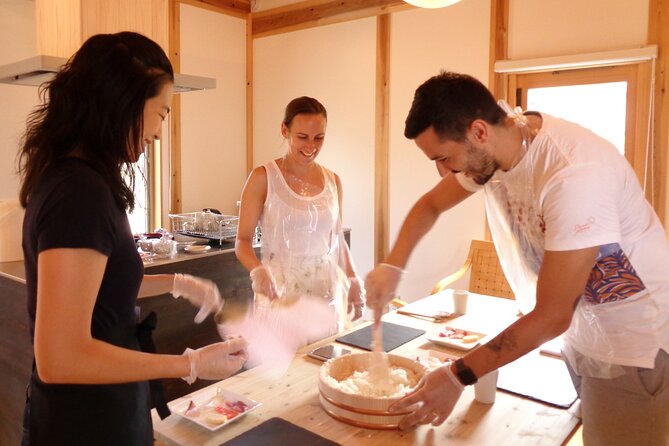
This is a good fit for couples, families, solo visitors, and anyone who likes cooking activities. A 12-year-old sushi-loving child has enjoyed the class, and the format works well for parent and child because you can learn side by side.
It also suits people who are unsure about raw fish. One participant arrived with a spouse who did not usually enjoy sushi and found the ingredients fresh and approachable. Still, you should be comfortable with the planned menu, since there is no vegetarian or vegan option.
People with allergies should contact the provider before booking. The hosts have accommodated gluten and shellfish allergies in some cases, but the official information does not promise a universal allergy-free menu. Explain your needs clearly and get confirmation rather than relying on an assumption.
Experienced home cooks can enjoy it too. The class is not only for complete beginners, and the social setting can make it worthwhile even if you already know how to roll sushi. Just keep your expectations realistic: the focus is on a fun, accessible foundation, not advanced knife work or professional sushi-counter training.
What you take home after class
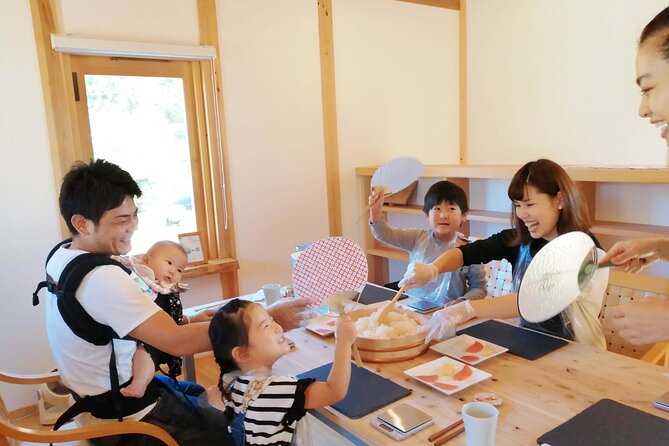
The most useful souvenir is the method. You learn how to season the rice, shape nigiri, and use a mat for maki. Those skills are easier to remember because you practice them yourself and eat the finished result immediately.
Some sessions include recipes for the rice, class notes, chopsticks, and a sushi rolling mat. A gift bag has also been offered. Since the exact souvenir package may vary, treat these items as a welcome extra rather than the main reason to book.
The mat is especially practical. With rice, seaweed, and suitable fillings, you can repeat the maki-making process at home. The recipes also help you recreate the part many beginners find hardest: getting the rice seasoning right.
Timing, transport, and cancellation rules
The activity accepts mobile tickets, and confirmation is provided when you book. The meeting point is Atelier SUSHI at 311-1 Kitatōryōchō, Higashiyama Ward, Kyoto, 605-0918. The class ends back there.
Because the workshop lasts only about 90 minutes, it is easy to combine with nearby sightseeing. Give yourself enough time to reach the townhouse, especially if you are coming from another part of Kyoto. Near public transportation does not mean you should arrive at the last second.
Free cancellation is available if you cancel at least 24 hours before the start time. Cancellations or changes made within 24 hours are not accepted for a refund, and the cut-off follows local Kyoto time. That rule is worth noting if your itinerary is still shifting.
Should you book the Atelier SUSHI class?
I would book this class if you want to do more than eat sushi in Kyoto. The combination of a very small group, clear English instruction, fresh ingredients, a full meal, and a traditional townhouse gives you a well-rounded experience in a short block of time.
Book it especially if you are traveling with a child, want a hands-on break from temple visits, or hope to bring a practical Japanese skill home. It is also a smart choice early in your stay, since Kana and her family can add local suggestions to your itinerary.
Skip it if you want a formal chef lesson, a vegetarian menu, or a quick inexpensive meal. For everyone else, the $69.64 price is reasonable because you are paying for the lesson, the setting, the food, and the personal welcome, not just a plate of sushi.
FAQ
How long does the sushi-making class last?
The workshop lasts approximately 1 hour and 30 minutes.
Where does the class begin?
The class begins at Atelier SUSHI, 311-1 Kitatōryōchō, Higashiyama Ward, Kyoto, 605-0918, Japan.
Where does the activity end?
The activity ends back at the meeting point.
How many people can join the class?
The class has a maximum of eight participants.
Is the class taught in English?
Yes. The workshop is conducted in English and led by a Japanese instructor.
What types of sushi will I learn to make?
You will learn to season sushi rice and make different styles, including nigiri and maki rolls.
Is food included?
Yes. You eat the sushi you prepare, served as lunch or dinner depending on the workshop time. Coffee, tea, or Japanese tea is also included.
Is there a vegetarian or vegan option?
No. A vegetarian or vegan option is not included.
Can I cancel for a full refund?
Yes, if you cancel at least 24 hours before the experience start time. Cancellations or changes made less than 24 hours in advance are not refunded or accepted.
More Workshops & Classes in Kyoto
More tours in Kyoto we've reviewed





Workshops, compared.
 ★ 4.3Kyoto: 45-Minute Tea Ceremony Lesson ExperienceFrom $2245 min
 ★ 5.0Ramen Cooking Class at Ramen Factory in KyotoFrom $131
 ★ 4.9Kyoto: Ramen Cooking Class at a Ramen Factory with SouvenirFrom $1271h 30m
 ★ 4.9Kyoto: Samurai Class, Become a Samurai WarriorFrom $70
 ★ 5.0Ninja 1-hour Hands-on Lesson by Japanese master in Kyoto -EntryFrom $80
 ★ 5.0Kyoto: Ramen, Gyoza, and Onigiri Cooking ClassFrom $901h 30m