
Reviewed · WORKSHOPS
Kyoto: Authentic Sushi Making Cooking Lesson
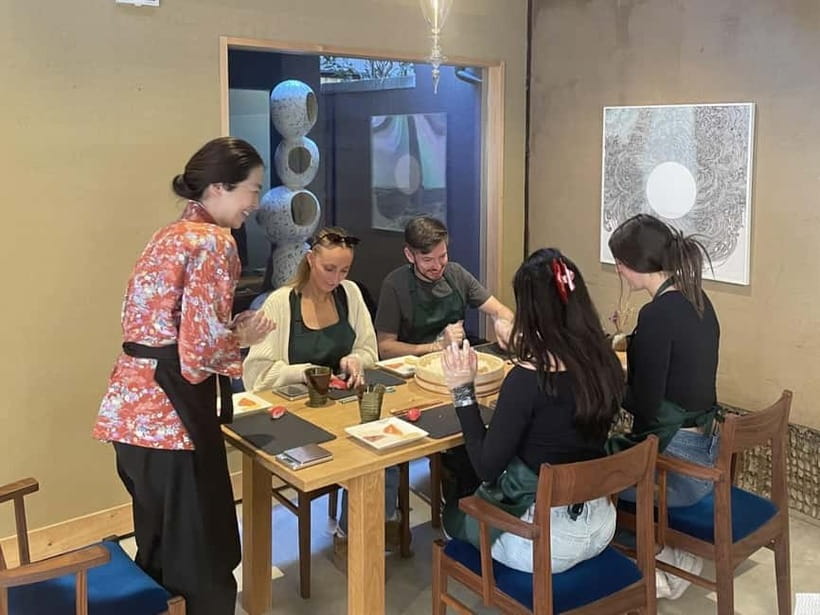
Making sushi is far more satisfying when lunch is the result. At this small Kyoto workshop, Kana shows you how to season rice and shape nigiri and maki sushi with fish sourced locally that morning. You make the food, then sit down and eat it in the same cozy setting.
I like the small group of up to eight, which leaves room for patient instruction and questions. I also like the cultural side: Kana talks about Kyoto, Japanese history, and home cooking rather than treating the class as a quick assembly line. The main consideration is that this is not suitable for vegetarians or wheelchair users, and $102 is a serious price for a 90-minute activity.
In This Review
- Key points to know before booking
- Why this Kyoto sushi class feels personal
- Arriving at Kyoto Wand near Kiyomizu-Gojō
- The first lesson: rice, tools, and sushi basics
- Shaping nigiri with fresh local fish
- Maki, gunkan, and the fun of making a mess
- Eating the sushi you made for lunch
- Kana’s cultural conversation adds real value
- What the $102 price includes
- Who should book, and who should skip it
- Booking details that matter
- Is this Kyoto sushi class worth booking?
- FAQ
- Where does the sushi-making class take place?
- How long does the activity last?
- Is the class taught in English?
- How many people are in the group?
- What types of sushi will I make?
- Do I eat the sushi I make?
- What is included in the gift bag?
- Is the class suitable for vegetarians?
- Is the activity wheelchair accessible?
- Can I cancel the booking?
Key points to know before booking
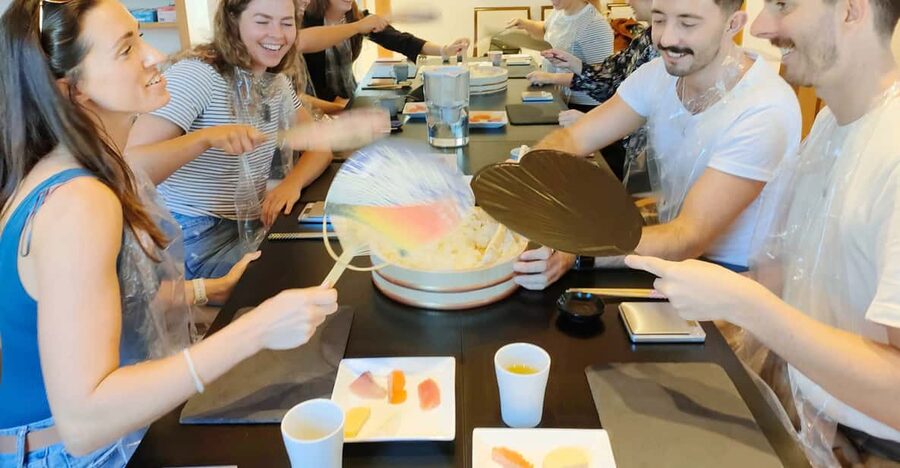
- Fresh fish and several sushi styles: Learn nigiri and maki, with examples that may include salmon, tuna, squid, yellowtail, egg omelet, and filled gunkan sushi.
- Kana leads the class in English: She explains each step slowly and makes time for questions about food, Kyoto, and Japanese culture.
- A generous lunch: You eat the sushi you prepare, along with miso soup. Plan to arrive hungry.
- Useful take-home items: The gift bag includes a sushi rolling mat, chopsticks, and a recipe card.
- Easy central location: Kyoto Wand is a short walk from Kiyomizu-Gojō Station and within walking distance of Kiyomizu-dera and Gion.
- Good for families and first-timers: No previous sushi-making experience is required, though dietary limits need to be shared when booking.
Why this Kyoto sushi class feels personal
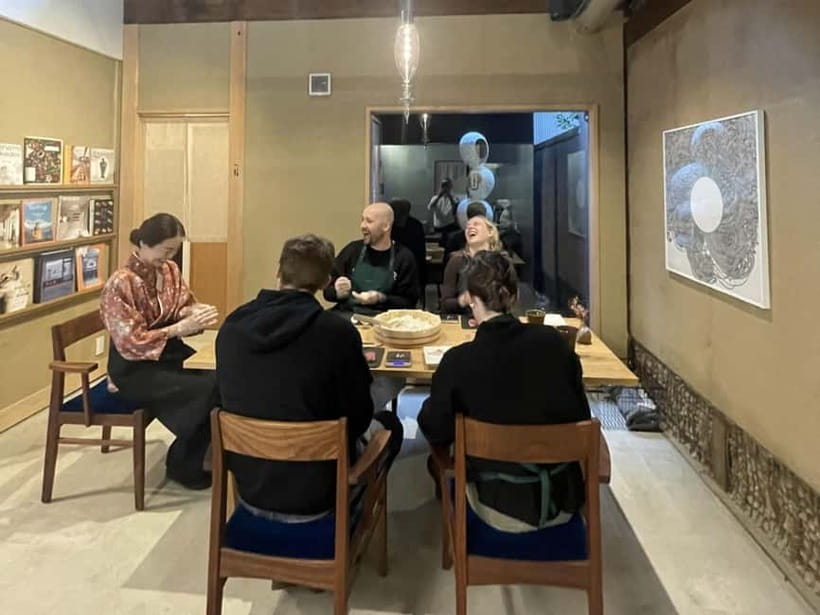
Many cooking activities give you a recipe, a quick demonstration, and a plate of food. This one puts more weight on the interaction. Kana welcomes people by name, answers questions as the work progresses, and uses the sushi lesson as a doorway into Japanese culture.
That matters in Kyoto, where food is tied closely to custom and presentation. You are not simply filling a roll. You are learning why the rice needs careful seasoning, how a piece of nigiri is formed, and how different fillings are handled. The lesson stays friendly rather than formal, so it works well if you have never held a sushi mat before.
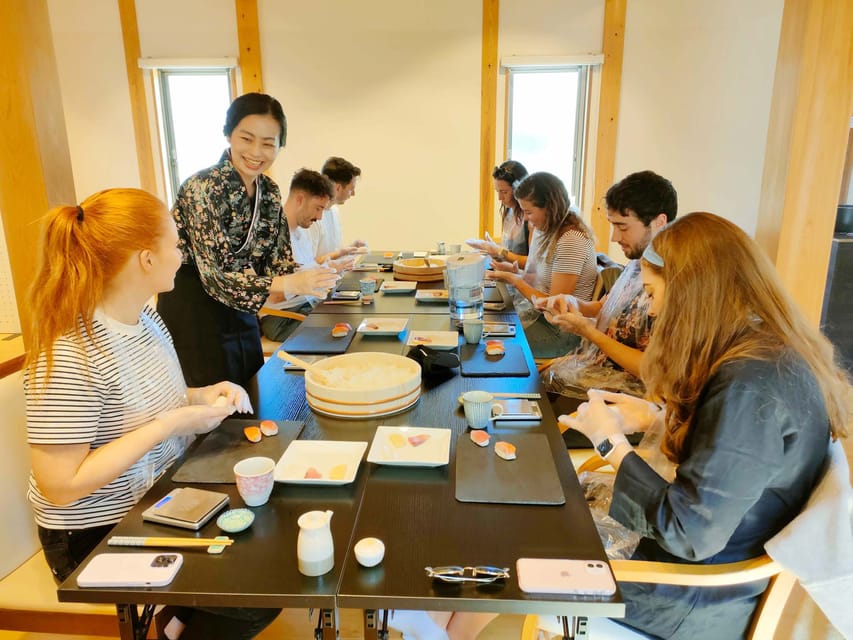
The group limit is eight. That is small enough for the instructor to watch your technique and help when rice sticks to your gloves or a roll does not quite hold together. It also gives you a chance to talk with the people beside you. The social part is a useful bonus for solo visitors, couples, and families.
The activity lasts 1.5 hours. That is long enough to learn and eat, but short enough to fit beside a temple visit or an afternoon in Gion. Since the class ends where it begins, you do not lose time arranging transport afterward.
A few more Kyoto tours and experiences worth a look
Arriving at Kyoto Wand near Kiyomizu-Gojō
The workshop takes place in the Kyoto Wand building, a short walk from Kiyomizu-Gojō Station on the Keihan Main Line. The location is central for a day around eastern Kyoto. Kiyomizu-dera and Gion are both within walking distance, so you can pair the class with sightseeing in this part of town.
Use the supplied Google Plus Code, XQVC+J7 Kyoto, if your map app has trouble finding the building. Kyoto has plenty of narrow streets and similarly named areas, so leaving a little extra time is sensible. Hotel pickup and drop-off are not included. You make your own way to the starting point and return there after lunch.
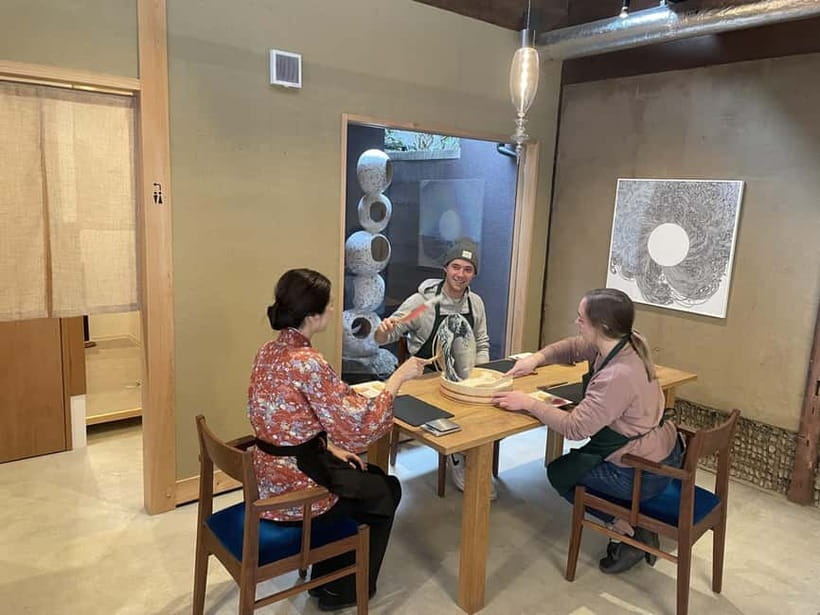
The setting is described as cozy and welcoming rather than a large professional kitchen. That suits this kind of lesson. You can focus on the food and conversation without feeling as if you are part of a crowded demonstration.
The first lesson: rice, tools, and sushi basics
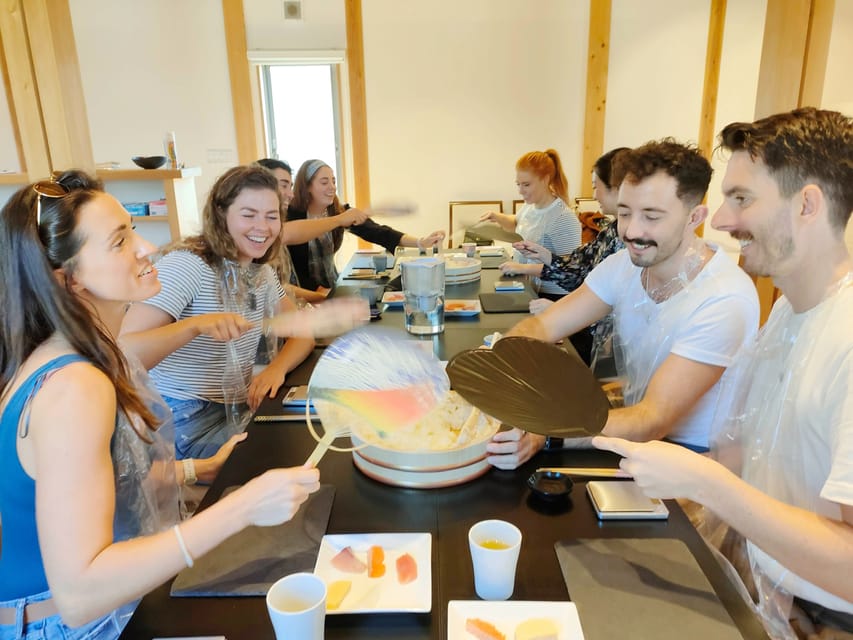
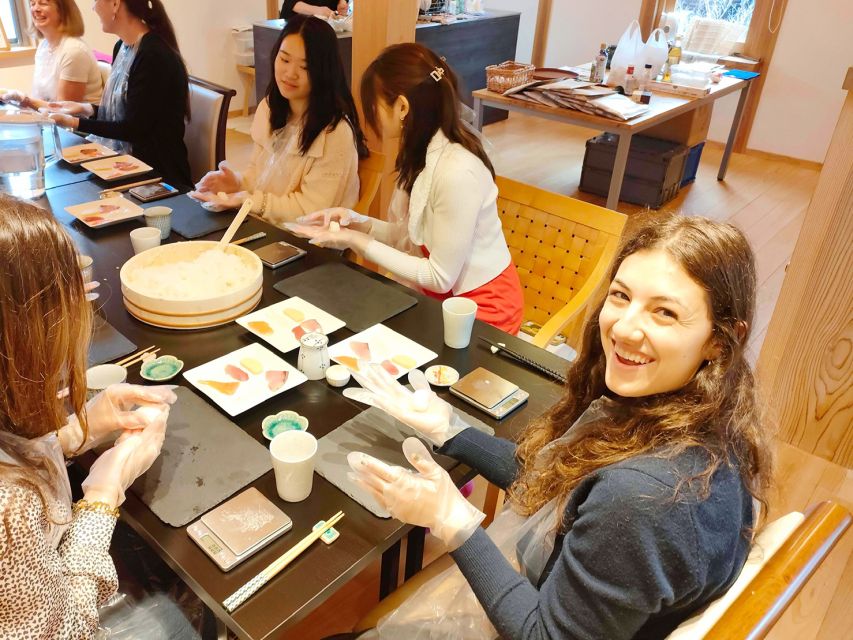
The class begins with an explanation of the sushi-making process. You put on the provided apron and disposable gloves, then follow Kana’s demonstration step by step.
The rice is an important part of the lesson. Good sushi is not just raw fish placed on plain rice, and the class shows you how to season properly cooked rice before shaping it. You learn to handle it gently and form portions that will hold their shape without being packed too tightly.
You do not need previous cooking skills. The teaching is paced for beginners, with demonstrations repeated slowly when needed. If you already make sushi at home, you can still pick up useful details about traditional local styles and technique.
One practical limit is worth noting: the fish is prepared for you. You will learn to shape and assemble the sushi, but you should not expect a full fish-cutting lesson. That keeps the activity manageable in 90 minutes, though anyone seeking professional knife training may want a more advanced cooking course.
Shaping nigiri with fresh local fish
Nigiri is the classic hand-formed sushi made with a small mound of rice and a topping. It looks simple, but getting the rice portion right takes a bit of care. Kana demonstrates the movement, then you try it yourself.
The fish is sourced locally that morning. Examples from the class can include salmon, tuna, squid, and yellowtail, with egg omelet offering a cooked option. The exact selection may vary, but the focus is on fresh ingredients and several different textures.
This is where the class becomes more than a craft project. You can compare how each topping feels to handle and tastes with the seasoned rice. You also begin to see why sushi chefs pay attention to proportion. Too much rice overwhelms the fish, while too little makes the piece difficult to pick up.
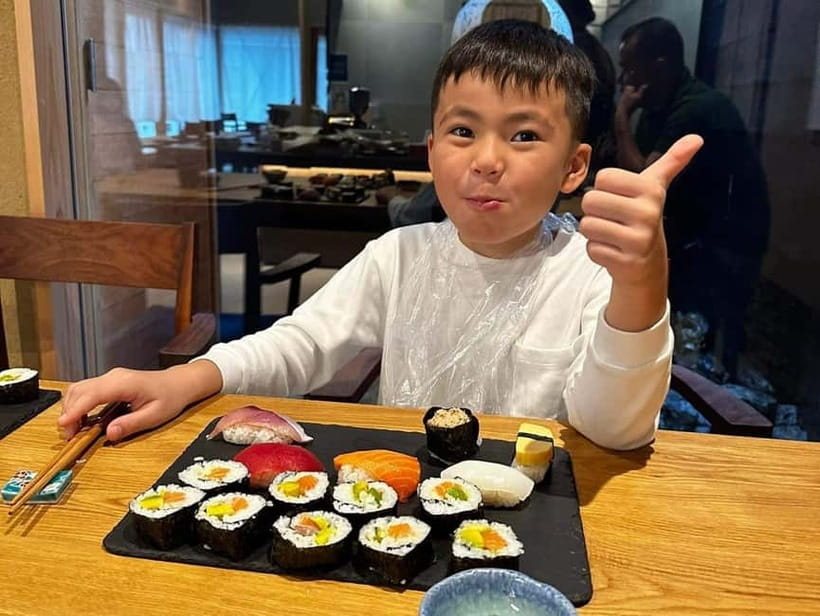
The quantity is generous. One family described eating two sets of 16 pieces, and several participants found they had plenty for a full meal. The precise amount can differ by session, but you should not plan a large lunch immediately afterward.
Maki, gunkan, and the fun of making a mess
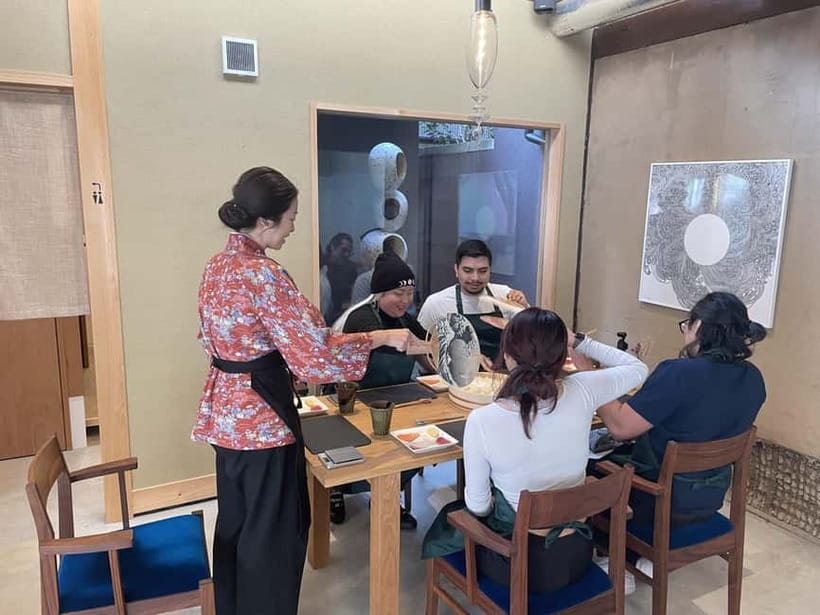
After nigiri, you work with rolled sushi. Maki uses a sheet of nori around rice and fillings, then gets cut into pieces. The rolling mat included in your gift bag becomes useful here, and you can repeat the technique at home.
Possible fillings include salmon and avocado. The class may also include gunkan sushi, a small seaweed-wrapped form that holds softer fillings such as corn or tuna salad. These styles give you different tasks: compact hand-shaped rice for nigiri, a firm roll for maki, and careful filling for gunkan.
Do not expect every piece to look like it came from a restaurant counter. That is part of the pleasure. Your first roll may be uneven, and your rice may not land perfectly. Kana’s patient demonstrations keep the mood relaxed, and the final meal rewards effort more than appearance.
The class uses disposable gloves and provides aprons. Even so, you are handling sticky rice and several ingredients, so this is an active lesson, not a sit-back presentation. Wear something comfortable and be ready to work with your hands.
Eating the sushi you made for lunch
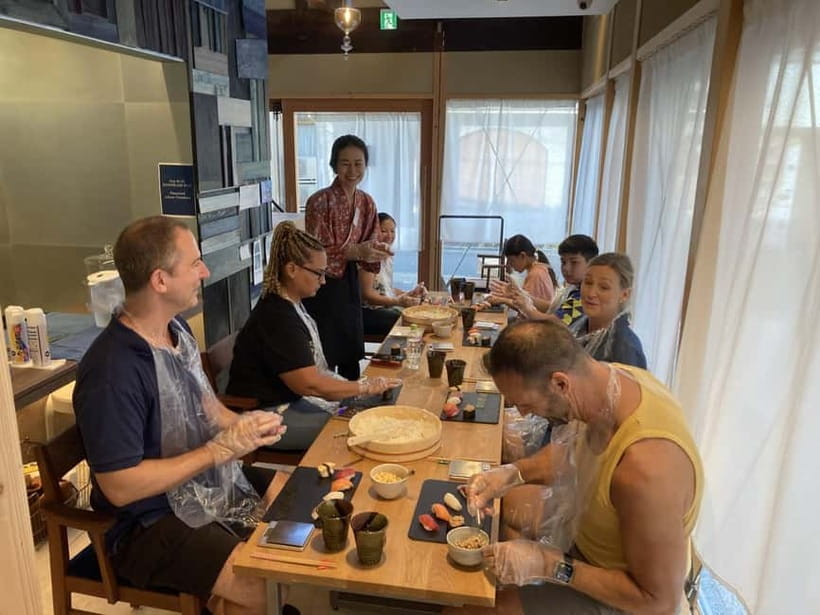
The best part comes after the last piece is shaped. You sit down and eat your own sushi with soy sauce, wasabi, ginger, and miso soup.
This meal gives the lesson a clear finish. Instead of leaving with a small sample, you get to see how the techniques add up to a proper lunch. The amount can be substantial, so arriving hungry is good advice.
The fresh fish is the central food attraction, but the class also gives you a better sense of balance. Seasoned rice, fish, nori, fillings, soy sauce, and wasabi each play a part. You can adjust how much condiment you use, which is helpful if you are still getting used to raw seafood.
The meal is also social. You sit with the people from your group and can compare rolls, talk about your Kyoto plans, and ask for suggestions. Several sessions have included advice about restaurants, sightseeing, and getting around the city. Those informal conversations can be as useful as the printed recipe card.
Kana’s cultural conversation adds real value
Kana is the main reason this feels like a Kyoto experience rather than a generic sushi lesson. She speaks English and welcomes questions throughout the class. Her conversations can cover home-style Japanese food, local Kyoto attractions, Japanese history, and everyday customs.
Her interest in Japanese history comes through in the way she connects food with place and culture. You can ask about what you are seeing around Kyoto, or use the class to clarify details you have noticed elsewhere in Japan.
An assistant, including Kenneth in some sessions, helps support the activity. The warm, personal approach is especially useful for families and people who may feel nervous about joining a cooking class alone. Children can take part with an adult, and the instruction is presented as suitable for a range of ages.
The class also works for people with some sushi experience. If you already make rolls at home, tell Kana. She can offer a local perspective and show how traditional sushi differs from the simplified versions many people prepare outside Japan.
What the $102 price includes
At $102 per person, this is not a bargain meal. You could eat sushi for less in Kyoto, and a short class costs more than simply ordering lunch.
The price makes more sense if you value the teaching and the setting as much as the food. You receive a 90-minute English-language workshop, the sushi you make, miso soup, ingredients including fresh local fish, protective gear, and a gift bag with a rolling mat, chopsticks, and recipe card.
The take-home items give the class a longer life. The rolling mat and recipe card mean you can try the process again after returning home, while the chopsticks are a practical souvenir. The useful measure is not only how much sushi you eat, but whether you will actually use what you learned.
For a family, the cost adds up quickly. For a couple marking a special day in Kyoto, or for someone who wants an activity with cultural conversation rather than another restaurant meal, the value is easier to see. I would book it for the hands-on lesson and personal contact, not simply for lunch.
Who should book, and who should skip it
This class suits first-time sushi makers, couples, families, solo visitors, and people who want an easy way to meet others. It is also a good choice if you have already visited several temples and want a different kind of Kyoto activity.
You should be comfortable eating fish and using seafood ingredients. Vegetarian visitors should skip this class because it is specifically listed as unsuitable for vegetarians. Dietary restrictions should be provided when booking, but the available information does not promise that every restriction can be accommodated.
The activity is not suitable for wheelchair users. The meeting point is central, but central does not automatically mean fully accessible, so contact the provider before booking if mobility is a concern.
Because the class takes place in a small group, it can be a good rainy-day plan. It does not require a long transfer or a full day away from central Kyoto. Check the available starting times before booking, then build your temple or Gion plans around the class.
Booking details that matter
You can cancel up to 24 hours before the activity for a full refund. The reserve-now, pay-later option lets you hold a place without paying immediately, which helps when your Kyoto schedule is still changing.
The activity begins and ends at Kyoto Wand. There is no hotel transportation. The instructor language is English, and the group is limited to eight participants.
The precise start time depends on availability. That matters in Kyoto, since popular sights around Kiyomizu-dera and Gion can take longer than expected. Allow time to find the building, especially if you are coming directly from a temple or station.
Is this Kyoto sushi class worth booking?
Book it if you want to make a full lunch, ask real questions in English, and take home skills rather than just another food photograph. Kana’s patient instruction, the small group, fresh fish, and cultural conversation give the 90 minutes substance.
Skip it if you are vegetarian, need wheelchair access, dislike seafood, or want a serious knife-skills course. At $102, the activity asks you to pay for personal instruction and cultural exchange, not just a plate of sushi.
For most visitors who enjoy Japanese food and want a friendly break from sightseeing, this is a well-shaped Kyoto experience. Schedule it near Kiyomizu-dera or Gion, arrive hungry, and leave room in your bag for the rolling mat.
FAQ
Where does the sushi-making class take place?
The workshop takes place in the Kyoto Wand building, a short walk from Kiyomizu-Gojō Station on the Keihan Main Line. The location is also within walking distance of Kiyomizu-dera and Gion.
How long does the activity last?
The sushi-making experience lasts 1.5 hours. Starting times vary, so check availability when booking.
Is the class taught in English?
Yes. The workshop includes an English-speaking host, and English is the listed instruction language.
How many people are in the group?
The class is a small-group activity limited to eight participants.
What types of sushi will I make?
You learn to season sushi rice and make nigiri and maki sushi. The class may also include gunkan sushi, with ingredients such as salmon, tuna, squid, yellowtail, egg omelet, corn, tuna salad, and avocado.
Do I eat the sushi I make?
Yes. The sushi you prepare is served as your lunch, along with miso soup.
What is included in the gift bag?
The gift bag includes a sushi rolling mat, chopsticks, and a recipe card.
Is the class suitable for vegetarians?
No. The activity is listed as unsuitable for vegetarians. You should provide any dietary restrictions when booking.
Is the activity wheelchair accessible?
No. The activity is listed as unsuitable for wheelchair users.
Can I cancel the booking?
Yes. You can cancel up to 24 hours in advance for a full refund. A reserve-now, pay-later option is also available.
More Workshops & Classes in Kyoto
More tours in Kyoto we've reviewed




Workshops, compared.
 ★ 4.3Kyoto: 45-Minute Tea Ceremony Lesson ExperienceFrom $2245 min
 ★ 5.0Ramen Cooking Class at Ramen Factory in KyotoFrom $131
 ★ 4.9Kyoto: Ramen Cooking Class at a Ramen Factory with SouvenirFrom $1271h 30m
 ★ 4.9Kyoto: Samurai Class, Become a Samurai WarriorFrom $70
 ★ 5.0Ninja 1-hour Hands-on Lesson by Japanese master in Kyoto -EntryFrom $80
 ★ 5.0Kyoto: Ramen, Gyoza, and Onigiri Cooking ClassFrom $901h 30m