
Reviewed · ARASHIYAMA & BAMBOO TOURS
Kyoto: Descending Arashiyama (Private)
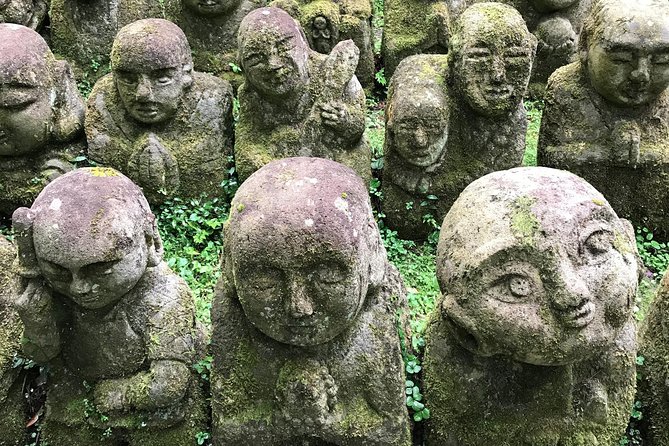
Arashiyama is more than its famous bamboo path. This 7.5-hour walking tour takes you from Togetsukyo Bridge through Zen gardens, mossy temple grounds, an Edo-period cafe, and Otagi Nenbutsu-ji, where 1,200 stone Buddha figures fill the hillside. It is a good way to see the area’s quieter corners without wrestling with a map.
I like the route for two clear reasons: the mix of major sights and lesser-known temples, and the guide’s focus on gardens, stories, and local connections. Guide Andrew is praised for bringing meaning to what you see, especially the design of the gardens. The private format also lets your group set the pace.
The main catch is cost. At $690 for up to four people, this is best value for a full group, not a solo visitor. You also need to bring 5,000 yen in cash per person for admissions, plus money for lunch and tea.
In This Review
- Key points to know before booking
- Why this Arashiyama route feels different
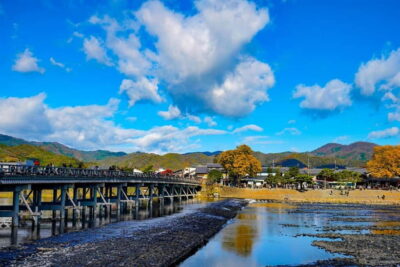
- Starting at Togetsukyo Bridge
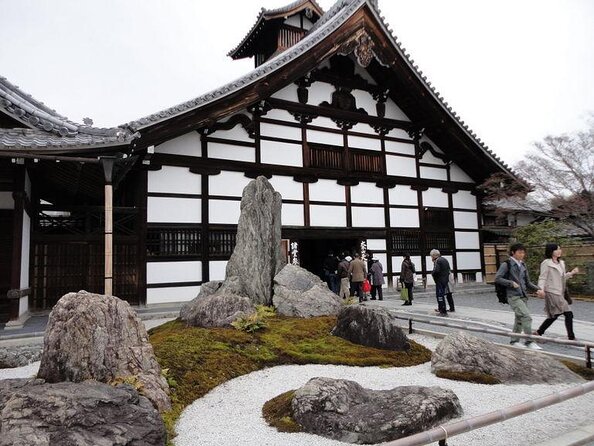
- Tenryu-ji and its Zen garden
- Otagi Nenbutsu-ji and its 1,200 stone figures
- Tea and sweets at Ayuchaya Hiranoya
- Adashino Nembutsu-ji and the memorial stones
- Gio-ji’s moss garden
- Okochi Sanso Garden and the best views
- Finishing through the Sagano Bamboo Grove
- What the $690 price really buys you
- Walking, timing, and practical comfort
- Who should choose this tour
- Booking, cancellation, and weather notes
- Should you book Kyoto: Descending Arashiyama?
- FAQ
- How long does the Arashiyama tour last?
- What time and where does the tour begin?
- Where does the tour end?
- How many people can join the private tour?
- Are admission tickets included?
- Is lunch included?
- What happens if the weather is poor?
Key points to know before booking
- The 1,200 stone Buddhas at Otagi Nenbutsu-ji are the tour’s most unusual sight.
- Andrew’s garden explanations help you understand why rocks, moss, water, and paths are placed as they are.
- The route lasts about 7 hours 30 minutes, with a steady amount of walking between temples.
- Admission fees are extra, and each person should carry 5,000 yen in cash.
- The private price works best for two to four people sharing the booking.
- The famous bamboo grove comes late, after a fuller tour of Arashiyama’s temples and gardens.
Why this Arashiyama route feels different
Most first visits to Arashiyama focus on Togetsukyo Bridge, Tenryu-ji, and the Sagano Bamboo Grove. Those are worthwhile, but they can make the district feel like a short checklist. This route adds several places that are easier to miss, including Otagi Nenbutsu-ji, Adashino Nembutsu-ji, Gio-ji, and Okochi Sanso Garden.
I like that order. You begin with a familiar Kyoto image, then move farther into the wooded temple district. By the time you reach the main bamboo path, you have seen a more layered side of Arashiyama, one built around religious sites, memorials, garden design, and old local businesses.
The guide matters here. Arashiyama’s sights are spread out, and their appeal is not always obvious at first glance. Andrew is especially good at explaining gardens, including what different features may mean and how the spaces were created. His storytelling also helps connect the places you visit with the people who care for them.
This is a private activity, although the general tour description also refers to a maximum of seven people. The booking price is clearly listed for a private group of up to four, so confirm the group size and final arrangements when booking if your party is larger.
A few more Kyoto tours and experiences worth a look

Starting at Togetsukyo Bridge
The meeting point is at the center of Randen Arashiyama Station at 9:30 a.m. From there, the tour begins at Togetsukyo Bridge, one of Kyoto’s most recognizable views.
You spend about 20 minutes here. That is enough time to get oriented, take in the river setting, and hear why the bridge became such a strong symbol of Arashiyama. It is also a sensible starting point because the area around the bridge gives you an immediate sense of the district before the route turns toward the temples.
There is no admission charge at this first stop. Since the day is long, use this time to make sure you have water, cash, and comfortable shoes. The tour moves from site to site on foot, and the walking adds up.
Tenryu-ji and its Zen garden
Next comes Tenryu-ji, one of Japan’s earliest Zen temples. You spend about an hour here, with admission paid separately.
The main reason to visit is the garden. Rather than treating it as a pleasant backdrop, the tour gives you a chance to look at how the garden uses space, rocks, plants, and borrowed views. This is where Andrew’s interest in garden design can make a real difference. You will not simply pass through and take photographs. You will have a framework for noticing what the designers intended.
Tenryu-ji is one of Arashiyama’s major sights, so it may feel more familiar and more visited than some later stops. That is not a flaw, but it means the experience depends partly on timing and crowd levels. The guided visit helps by giving your time there a clear purpose.
Otagi Nenbutsu-ji and its 1,200 stone figures
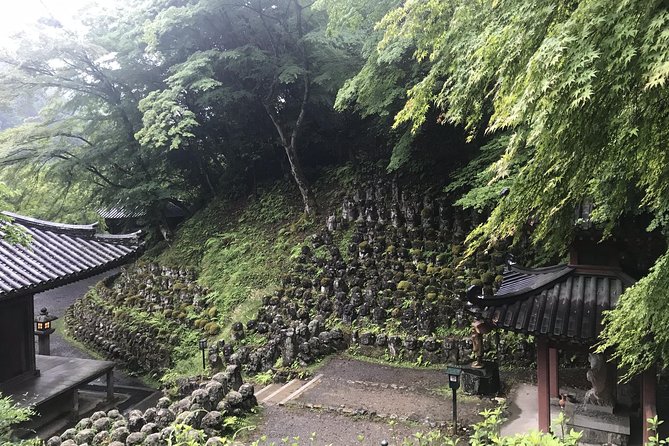
Otagi Nenbutsu-ji is the first stop that feels truly unusual. The temple has roots reaching back to the Heian period, and its grounds contain about 1,200 stone Buddha statues.
You get an hour to walk among them while the guide explains what you are seeing. The figures are not presented as one uniform set. Their faces and expressions give the grounds a more personal feel, and the sheer number makes this temple unlike the polished, formal spaces found elsewhere in Kyoto.
For me, this is one of the strongest reasons to choose the tour. It is the kind of place that can be missed when you are planning only the famous stops. The setting also changes the rhythm of the day. After the broad views and formal garden at Tenryu-ji, you spend time with hundreds of small stone figures in a quieter temple environment.
Admission is extra, so this is one of the places covered by the required cash budget.
Tea and sweets at Ayuchaya Hiranoya
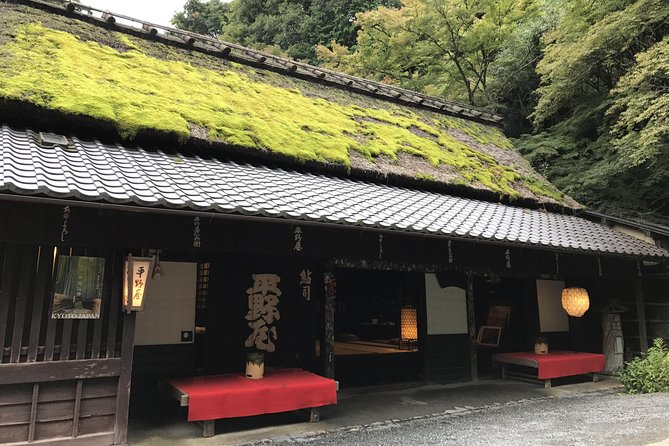
The route pauses for about an hour at Ayuchaya Hiranoya, a cafe that began in the Edo period. Tea and sweets are included in the stop, but the cost is not included in the tour price.
This break is useful for more than refreshment. A long temple walk can become a blur of roofs, gardens, and stone paths. Sitting down gives you time to absorb the morning and ask questions. It also adds a link to everyday food and hospitality, rather than keeping the tour only inside religious sites.
Lunch is separate as well, and the stated cost should not exceed 1,500 yen per person. That is a useful budget guide, though you should still carry enough yen for your own choices. The schedule is structured around a modest meal rather than a long restaurant visit, so expect the day to keep moving.
Other private tours in Kyoto
Adashino Nembutsu-ji and the memorial stones
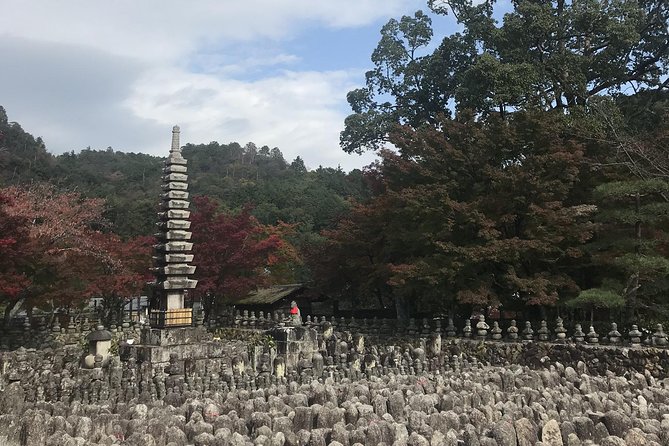
Adashino Nembutsu-ji brings a different kind of atmosphere. More than 8,000 memorial stones from the surrounding mountains are gathered here, creating a powerful reminder that these temple districts are also places of remembrance.
You spend about an hour on the grounds and walk through a small bamboo grove. This bamboo path is less famous than Sagano’s main grove, which is part of its appeal. It gives you a more contained setting before the final visit to the larger bamboo trail.
The memorial stones require a respectful pace. This is not simply another photo stop, and the guide’s explanations help you understand why so many stones were brought together here. The combination of memorial grounds and bamboo also shows how often Kyoto places quiet natural beauty beside religious reflection.
Admission is not included. Wear shoes that feel secure on temple paths, since the day involves repeated walking and standing.
Gio-ji’s moss garden
Gio-ji takes about 30 minutes, making it the shortest temple visit of the day. It was once a nunnery founded by two former geisha, and its moss garden sits among bamboo.
The garden is compact, but that does not make it forgettable. Its appeal comes from the close setting, with moss and bamboo creating a softer, more enclosed view than the broad spaces at Tenryu-ji. After the larger temple grounds earlier in the day, Gio-ji gives you a short, quiet pause.
Half an hour is enough to see the site without turning it into a rushed dash. Still, the stop may feel brief if you want a long period for photography or silent reflection. Like the other temple visits, admission is separate.
Okochi Sanso Garden and the best views
Okochi Sanso Garden occupies the estate of a well-known silent film actor. You spend about an hour exploring the grounds, which are known for some of the finest views in Arashiyama.
This stop adds a different type of cultural interest. You are no longer looking only at temple architecture or religious sculpture. The estate reflects the taste and private world of a film star, with gardens designed as part of a larger residence.
The views are a major reason to save time for this stop. After walking through enclosed temple spaces, you get a wider look across Arashiyama. The garden also helps explain why the district has remained such a strong draw: it combines wooded hills, river views, temples, and carefully shaped private gardens.
Admission is extra. If you are tired by this point, do not treat the garden as an optional afterthought. It is one of the tour’s more rewarding pauses, especially for anyone interested in garden design and scenic views.
Finishing through the Sagano Bamboo Grove
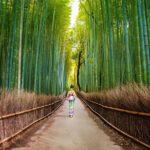
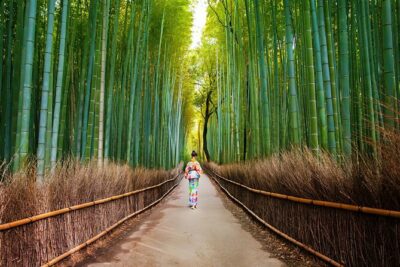
The final stop is the Bamboo Forest Trail, where you spend about 30 minutes in the well-known Sagano Bamboo Grove.
Ending here makes practical sense. The grove is the sight most people already associate with Arashiyama, but it can be very busy and visually repetitive if it is your only destination. After a full day of temples and gardens, you can place the bamboo path in context rather than judging Arashiyama by one narrow strip of green.
Do not expect complete solitude. The route includes a famous public sight, and the short visit keeps the focus on seeing it without allowing the crowds to dominate the entire day. The tour then returns to the original meeting point.
What the $690 price really buys you
The cost is $690 per group of up to four, not per person. Split four ways, that is $172.50 each before admissions, food, and drinks. For two people, it becomes $345 each, and for one person it is a very costly day.
The value comes from the time and planning rather than from included tickets. You are paying for a private guide, a carefully linked route, navigation between distant sights, and explanations that can make gardens and temple grounds easier to read. If you would otherwise hire a guide separately or spend hours planning the order, the price becomes easier to justify.
Still, you must add the extra costs. Each person should bring 5,000 yen in cash for admissions. Lunch should stay around 1,500 yen per person, and the tea and sweets stop also costs extra. The required cash makes the total higher than the headline price suggests.
I would book this for a group of three or four that wants a full day with a guide. I would hesitate for a couple on a tight budget, especially if you are happy exploring independently and mainly want the bamboo grove.
Walking, timing, and practical comfort
The tour starts at 9:30 a.m. and lasts about seven and a half hours. That is a full outing, not a quick introduction. You should be comfortable walking from site to site and spending much of the day on your feet.
A moderate level of physical fitness is requested. The route includes temples, gardens, and paths, so the effort is spread across the day rather than concentrated in one climb. Even so, comfortable footwear matters more here than fashionable footwear.
Strollers can be available during the walks between sites, but they cannot enter the sites themselves. They can be stored at each site’s reception desk. This makes the tour possible for some families with small children, but it does not remove the practical challenge of moving between multiple temple grounds.
The tour is near public transportation and ends back at the starting point. That return is helpful after a long day, since you do not need to work out a new route home from an unfamiliar part of Kyoto.
Who should choose this tour
I would recommend it to you if you want more than Arashiyama’s headline sights. It is particularly suited to people interested in Buddhist temples, garden design, local stories, memorial sites, and the way nature is shaped around religious spaces.
It also suits anyone who dislikes spending a vacation morning studying maps and transport connections. The guide handles the route, leaving you free to look around and ask questions. Andrew’s strength, based on the available feedback, is making garden details lively and explaining how the spaces were created.
Families may appreciate the private format, since your group can avoid being tied to strangers. But the long duration and steady walking mean that younger children may find the day demanding. The stroller arrangement helps, though strollers must stay outside the sites.
This is less suitable if you want a relaxed half-day or a tour built around shopping and restaurants. It is also not the best match for a visitor who wants only a quick photograph at the bamboo grove. The bamboo comes at the end, after several hours of temples and gardens.
Booking, cancellation, and weather notes
You receive confirmation when you book, and the activity uses a mobile ticket. Free cancellation is available up to 24 hours before the local start time. Changes or cancellations inside that window are not accepted for a refund.
The tour requires good weather. If poor weather causes cancellation, you are offered another date or a full refund. Since much of the day takes place outdoors, a weather check before departure is sensible even when the tour is still scheduled to run.
Should you book Kyoto: Descending Arashiyama?
Book it if you want a full, guided day in Arashiyama that goes well beyond the usual bridge and bamboo photographs. Otagi Nenbutsu-ji’s stone Buddhas, Adashino Nembutsu-ji’s memorial stones, Gio-ji’s moss, and Okochi Sanso Garden give the day real variety.
The best value comes when three or four people share the $690 price. Bring the required 5,000 yen in cash per person, budget for lunch and tea, and wear shoes made for several hours of walking.
Skip it if your budget is tight, your time in Kyoto is short, or you prefer to explore temples on your own. For the right group, though, this is a thoughtful way to see Arashiyama’s quieter and more meaningful side, with the famous bamboo grove saved for the finale.
FAQ
How long does the Arashiyama tour last?
The experience lasts approximately 7 hours and 30 minutes.
What time and where does the tour begin?
It begins at 9:30 a.m. at the center of Randen Arashiyama Station, located at 20-2 Tsukurimichi-cho in Kyoto.
Where does the tour end?
The tour ends back at the original meeting point.
How many people can join the private tour?
The listed private price is $690 per group for up to four people. The general description also mentions a maximum of seven participants, so confirm the arrangement if your group is larger than four.
Are admission tickets included?
No. Each person must bring an additional 5,000 yen in cash for admission tickets.
Is lunch included?
No. Lunch is not included, and the stated lunch cost should not exceed 1,500 yen per person. Tea and sweets at Ayuchaya Hiranoya are also not included in the tour price.
What happens if the weather is poor?
The experience requires good weather. If it is canceled because of poor weather, you will be offered a different date or a full refund. You can also cancel for a full refund up to 24 hours before the start time.
More Private Tours in Kyoto
More Arashiyama & Bamboo Tours in Kyoto
More tours in Kyoto we've reviewed




Arashiyama & Bamboo Tours, compared.
 ★ 4.8Kyoto: Fushimi Inari, Kinkakuji, Bamboo Grove 1 Day Bus TourFrom $122510 minutes - 9 hours
 ★ 4.1Osaka/Kyoto:Kinkakuji,Arashiyama,FushimiInariShrine,NaraParkFrom $66
 ★ 4.7Kyoto/Osaka: Nara, Fushimi Inari Taisha, Arashiyama Bus TourFrom $529 - 10 hours
 ★ 5.0Kyoto Arashiyama Walking Tour: Bamboo, Monkeys, Gardens & SecretsFrom $65
 ★ 4.8Arashiyama Bamboo, Temple, Monkeys, or Secret Sake BreweryFrom $875 hours - 330 minutes
 ★ 4.4Osaka/Kyoto: Arashiyama, Nara & Fushimi Inari Shrine w/LunchFrom $61