
Reviewed · E-BIKES
Kyoto E-Bike Tour of Hidden Gems, Backstreets and Temples
Kyoto reveals itself best at street level, and this four-hour small-group e-bike tour takes you from Gion’s old canal lanes to temples, shrines, gardens, and quiet residential roads. You cover far more ground than you could on foot, with an English-speaking guide leading the way.
I like two things right away: the route mixes famous sights with peaceful corners, and the bikes let you see how Kyoto’s neighborhoods connect. Guides such as Ben, Jay, and Yuki are praised for clear English, local insight, and useful tips on food and culture. The main catch is that this is not only a bike ride. You will also walk at several stops, so bring comfortable shoes and be ready for a moderate morning of activity.
In This Review
- Key points to know before you ride
- Why an e-bike works so well in Kyoto
- Gion Shirakawa: a graceful start beside the canal
- Nanzen-ji: temple architecture at the foot of the hills
- Heian Shrine: a bold change of scale and color
- Honen-in: a quiet pause on the route
- Shimogamo Shrine: ancient woods and a slower rhythm
- Kyoto Imperial Palace: imperial history in an open park
- Philosopher’s Walk: a scenic finish by the canal
- What the guides add to the ride
- Price, pace, and who gets good value
- Practical advice for a smoother morning
- Should you book this Kyoto e-bike tour?
- FAQ
- How long is the Kyoto e-bike tour?
- Where does the tour begin?
- Where does the tour end?
- Are the e-bike and helmet included?
- What sights are included?
- Is the tour suitable for children?
- What happens if the weather is poor?
Key points to know before you ride
- Seven very different Kyoto stops: The route links Gion Shirakawa, Nanzen-ji, Heian Shrine, Honen-in, Shimogamo Shrine, the Kyoto Imperial Palace, and Philosopher’s Walk.
- E-bikes and helmets are included: You do not need to rent equipment separately or plan the route yourself.
- A maximum of eight people: The small group makes it easier to follow the guide and ask questions.
- Strong English-language guiding: Ben, Jay, and Yuki are specifically praised for explaining Kyoto’s history, religions, customs, and daily life.
- A useful early-trip orientation: The route gives you a broad sense of Kyoto and can help you decide where to spend the rest of your visit.
- A few limits matter: You must be taller than 145 centimeters, have moderate fitness, and accept that bad weather can change or cancel the ride.
Why an e-bike works so well in Kyoto
Kyoto is spread across a broad plain, with major sights separated by canals, old districts, temple grounds, and long stretches of ordinary city streets. Walking between all of them takes time. Public transportation can help, but buses may be slow, and trains do not reach every place on this route.
The e-bike fills that gap. You still move at a human pace, but the electric assistance makes longer distances much easier. One guide-led morning can connect Gion in the east with the Imperial Palace and Shimogamo Shrine farther north, something that would be tiring on foot.
I would not choose this tour simply to avoid exercise. You still need to ride safely and walk around the sights. But the electric motor takes much of the strain out of Kyoto’s longer stretches. One particularly useful point from the experience is that riders found the bikes easy to use and in good condition, with helmets provided.
The tour begins at 9 a.m. at Kyoto Tourist Lounge Gion, at Pare Gion near Komatsu Cho in Higashiyama. It returns to the same meeting point after about four hours. That start time is sensible: you get a cool, active morning before the day’s sightseeing crowds and heat build up.
Other cycling tours in Kyoto

Gion Shirakawa: a graceful start beside the canal
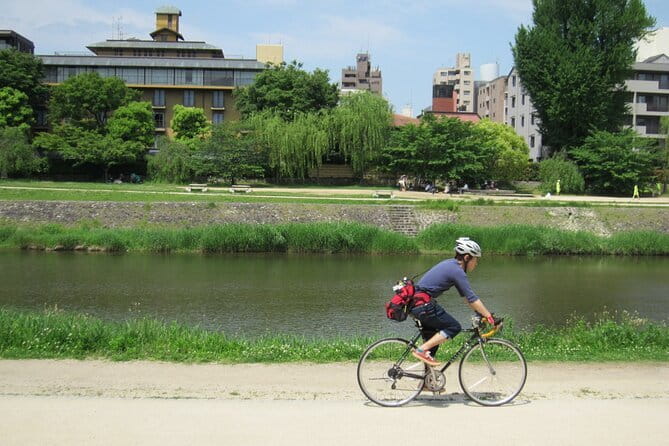
The first stop is Gion Shirakawa, one of Kyoto’s prettiest traditional districts. The route follows the Shirakawa Canal, where preserved wooden buildings and quiet waters create a strong first impression of old Kyoto.
This is a good place to begin because it introduces the city’s visual character without requiring a long walk. You can take photographs, listen to the guide’s explanation, and settle into the bike before the route moves farther across town.
Gion is also an area where respectful behavior matters. You are passing through a living neighborhood, not a stage set. Stay with the group, avoid blocking narrow lanes, and follow the guide’s advice about where to stop for photographs.
The scheduled visit lasts about 30 minutes, and admission is free.
Nanzen-ji: temple architecture at the foot of the hills
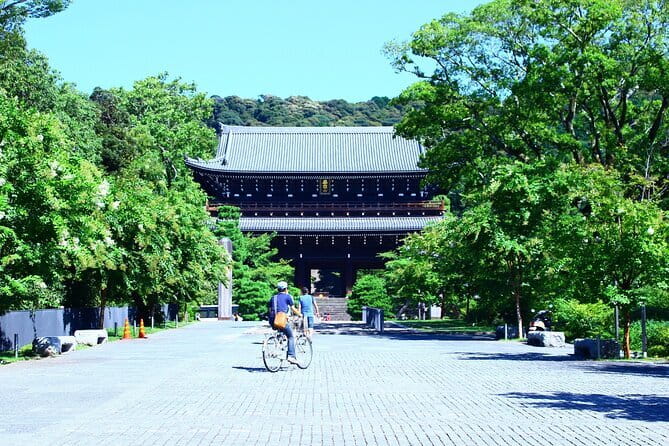
From Gion, the ride continues to Nanzen-ji, a major Zen Buddhist temple complex near Kyoto’s eastern mountains. The setting changes quickly from urban streets to broad temple grounds and traditional architecture.
Nanzen-ji is one of the stops where walking shoes become important. The bike gets you there, but you will leave it behind while exploring the grounds. Give yourself time to look up at the large gates, notice the calm garden spaces, and absorb the difference between riding through the city and standing inside a temple precinct.
The stop is planned for about 30 minutes, with no admission charge listed for the visit. The guide is especially useful here because Kyoto’s religious sites can look similar at first glance. Clear explanations about Zen practice and temple design make the stop more meaningful than a quick photo break.
Heian Shrine: a bold change of scale and color

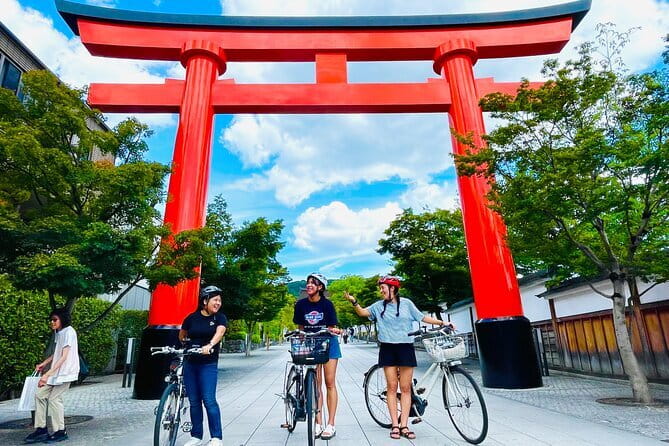
Heian Shrine offers a sharp contrast to Nanzen-ji. Its large red-and-white structures have a ceremonial presence, with architecture based on classical imperial forms.
The shrine is in central Kyoto and gives you another angle on the city’s religious life. At Nanzen-ji, the mood is restrained and contemplative. At Heian Shrine, the approach feels more formal and open. Seeing both in one morning helps you understand that Kyoto’s temples and shrines are not all variations on one theme.
The planned stop lasts around 30 minutes, and admission is free. You may find the time enough for the main approach and an explanation from the guide, but it is not a long, independent visit to every part of the shrine grounds.
Honen-in: a quiet pause on the route
Honen-in is the most peaceful stop on the schedule. Founded in the 12th century, this temple is reached through tree-lined paths and offers a quieter mood than Kyoto’s larger, more famous sites.
The visit lasts about 20 minutes, so expect a short walk and a focused look rather than a full temple tour. The main hall and the teachings connected with Honen provide the setting for the guide’s explanation, while the surrounding paths offer a welcome pause after several hours of moving through the city.
Admission is not included here. The supplied details do not give the separate fee, so you should be prepared for a small extra charge if the temple is open for the planned visit.
Honen-in also shows why the bike is useful. Places like this can sit close to better-known sights yet feel removed from the main sightseeing flow. You reach the area without spending a large part of your morning walking there.
A few more Kyoto tours and experiences worth a look

Shimogamo Shrine: ancient woods and a slower rhythm
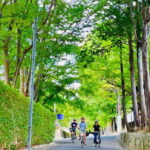
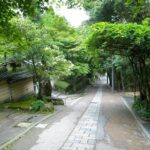
Shimogamo Shrine is among Kyoto’s oldest and most respected Shinto sites. It sits at the northern edge of the city, surrounded by an ancient forest and quiet paths.
This is one of the route’s most appealing changes of pace. After Gion’s traditional streets and the broad architecture of Heian Shrine, Shimogamo brings you into a more wooded setting. The shrine helps explain the connection between Shinto worship and natural spaces, while the ride itself shows how quickly Kyoto changes from dense city blocks to calmer green areas.
The stop is scheduled for about 30 minutes and admission is free. You will likely walk around the shrine grounds, so comfortable footwear remains useful.
For me, this is also a strong reason to take the tour early in your stay. A guide can point out how the different districts fit together, giving you a better sense of where you might want to return later.
Kyoto Imperial Palace: imperial history in an open park
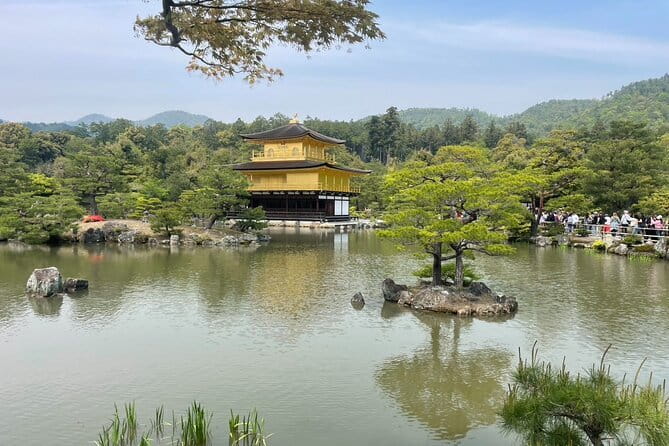
The Kyoto Imperial Palace lies within Kyoto Gyoen National Garden, a large, calm park in the middle of the city. It was the former home of Japan’s imperial family and adds a political and courtly layer to a morning otherwise centered on temples and shrines.
The surroundings matter as much as the buildings. After riding through city streets, the open garden gives you room to pause. Traditional palace architecture and broad paths create a strong contrast with the narrow lanes of Gion.
The scheduled stop lasts about 30 minutes, with no admission charge listed. Since the tour has several stops still ahead, you will not have unlimited time to examine every building or garden area. Think of this as an introduction that helps you decide if the palace deserves a longer return visit.
The guide’s role is valuable here. A palace can be visually impressive but hard to interpret without context. Guides Ben, Jay, and Yuki are praised for explaining Kyoto’s past and Japanese culture in clear English, which can turn a quick stop into a useful lesson.
Philosopher’s Walk: a scenic finish by the canal
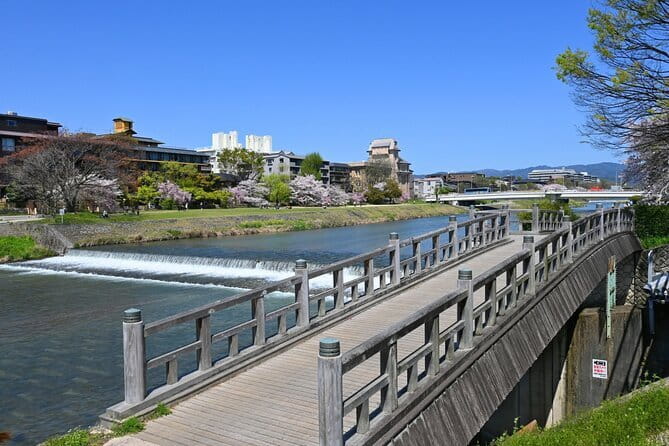
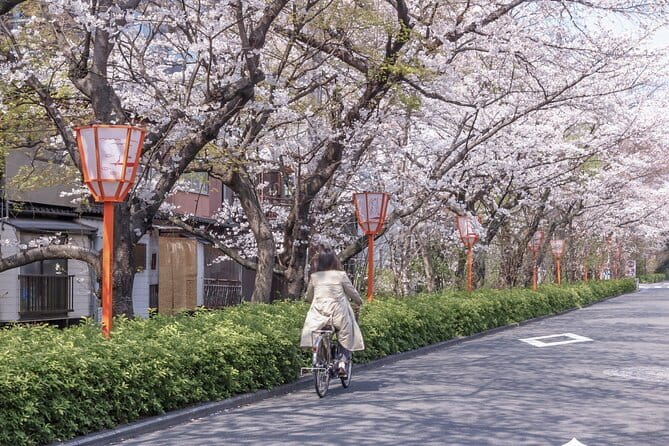
The route includes Philosopher’s Walk, a canal-side path lined with cherry trees and tea houses. It is associated with Nishida Kitaro, a Japanese philosopher, and is one of Kyoto’s best-known walking routes.
The name can make it sound solemn, but the appeal is simple: water, trees, a narrow path, and a slower final stretch after the longer rides. In spring, the cherry trees are a major draw. Timing is never guaranteed, of course. One rider visited when the blossoms had just begun and expected the display to become much fuller a week later.
The itinerary allows about 30 minutes here. That is enough to enjoy the setting and take photographs, though the path is designed more for walking than fast cycling. Follow the guide’s instructions and be considerate of people on foot.
This stop neatly brings together several themes of the tour: Kyoto’s canals, temples, gardens, old streets, and seasonal beauty.
What the guides add to the ride
The bikes get you from place to place, but the guide is what gives the morning its shape. Ben is praised for being funny, approachable, and able to explain a large amount of history in a short time. Jay is noted for strong English and explanations of Japanese religion and culture. Yuki, a Kyoto local, is praised for answering questions and offering suggestions for restaurants and shopping.
Those details matter because a four-hour route can otherwise become a series of quick stops. A good guide tells you what you are looking at, but also explains why it matters and how it fits into Kyoto.
You should feel free to ask questions. The small group, capped at eight people, is a real advantage here. It is easier to hear the guide, stay together, and ask about food, customs, or places you may want to visit later.
The quality of the experience may vary somewhat with the guide assigned on your date. Still, the repeated praise for Ben, Jay, and Yuki points to a consistent strength in the guiding team.
Price, pace, and who gets good value
At $70 per person, the tour is not the cheapest way to see Kyoto, but the price includes the e-bike and guided route. You are paying for equipment, navigation, four hours of transport, and interpretation at seven stops.
I see the best value for people with limited time. If you have only a few days in Kyoto, this tour gives you a broad introduction without asking you to spend hours planning connections between distant sights. It also works well as a first or second morning activity, since you can use the route to choose later visits.
The value is less clear if you already know Kyoto well, prefer long unhurried temple visits, or want to set your own pace. The itinerary is full, and each stop receives a limited amount of time. You will see many places, but you will not study every one in depth.
The tour requires moderate physical fitness. You must be over 145 centimeters tall, and it is not recommended for children under 12. Insurance is not included, and the provider accepts no responsibility for injury, illness, accidents, or lost belongings. Those terms are worth reading before booking.
Practical advice for a smoother morning
Wear comfortable shoes. This sounds basic, but the tour includes walking at temples, shrines, the palace grounds, and Philosopher’s Walk.
Keep personal belongings secure. The provider does not take responsibility for items that are lost, damaged, stolen, or left behind.
Plan around the weather. This is an outdoor activity, and severe weather can lead to a route change, cancellation, or a different date. If the provider cancels because of poor weather, you can receive another date or a full refund.
The tour has mobile ticketing, and confirmation is sent when you book. It begins and ends at the Gion meeting point, which is near public transportation. You can cancel for a full refund up to 24 hours before the 9 a.m. start time. Inside that 24-hour window, refunds and changes are not accepted.
Should you book this Kyoto e-bike tour?
I would book it if you want a well-planned overview of Kyoto, enjoy moving outdoors, and value a guide who can explain culture as you go. The combination of Gion, temples, shrines, the Imperial Palace, and Philosopher’s Walk gives you a broad feel for the city in one morning.
I would skip it if you want a slow, private visit at each temple, dislike cycling in city streets, or cannot manage the walking that comes with the stops. For everyone else, the $70 price is fair for the equipment, small group, and amount of ground covered.
Book early in your Kyoto stay if possible. The ride can help you get your bearings, then leave the rest of the day free for a favorite temple, a meal, or a second look at the neighborhood that caught your eye.
FAQ
How long is the Kyoto e-bike tour?
The tour lasts approximately four hours. It starts at 9 a.m. and ends back at the meeting point.
Where does the tour begin?
The meeting point is Kyoto Tourist Lounge Gion, at Pare Gion, 557-4 Komatsu Cho in Kyoto’s Higashiyama area.
Where does the tour end?
The activity ends back at the starting meeting point.
Are the e-bike and helmet included?
Bicycle use is included. The equipment details also state that helmets are provided.
What sights are included?
The route includes Gion Shirakawa, Nanzen-ji Temple, Heian Shrine, Honen-in, Shimogamo Shrine, Kyoto Imperial Palace, and Philosopher’s Walk.
Is the tour suitable for children?
Participants must be over 145 centimeters tall. The tour is not recommended for children under 12.
What happens if the weather is poor?
The route may be changed or the tour may be canceled for safety. If the experience is canceled because of poor weather, you will be offered a different date or a full refund.
More E-Bikes in Kyoto
More Cycling Tours in Kyoto
More tours in Kyoto we've reviewed





E-Bikes, compared.
 ★ 5.0Hidden Kyoto E-Biking tourFrom $116
 ★ 5.05 Top Highlights of Kyoto Full Day Bike Tour (E-bike option)From $172
 ★ 5.0E-Bike Tours of the highlights of Kyoto!!!From $109
 ★ 4.9Kyoto: Memory Kyoto E-Bike TourFrom $105
 ★ 4.9Kyoto: City Secrets eBike TourFrom $1273h 45m
 ★ 5.0Pedal Adventure Kyoto’s iconic landmarks on an e-bike tourFrom $86