
Reviewed · FUSHIMI INARI TOURS
Kyoto: Early Morning Fushimi Inari Shrine – Beat the Crowds
Fushimi Inari is at its best before Kyoto wakes up. This early morning tour gives you a calmer walk through the famous orange torii gates, when the paths are far less crowded and the summer heat has not yet settled in. You also get a local guide to explain the shrine’s customs, symbols, and importance to people in Kyoto.
I like two things especially: the chance to take clear photos without a sea of people, and the way the guide points out details you would likely miss alone. Guides such as Teppei, Akino, Hiro, Yoshi, and Maru have earned warm praise for their kindness, cultural insight, and helpful travel advice. The main consideration is physical effort: this is not just a quick look at the lower shrine. The route can include a long uphill walk toward the mountain viewpoint, so it is not suited to people with mobility, heart, back, or respiratory problems, or to anyone with a low level of fitness.
In This Review
- Key points to know before booking
- Why an early start matters at Fushimi Inari
- Meeting your guide outside JR Inari Station
- The first torii gates and Fushimi Inari Taisha
- Walking through the orange torii tunnels
- The viewpoint and the uphill effort
- A quiet fountain and smaller worship sites
- What the guides add to the morning
- Is $70 a fair price?
- Who will enjoy this tour most?
- My practical verdict
- FAQ
- How long does the Fushimi Inari tour last?
- Where do I meet the guide?
- What language is the tour conducted in?
- Is the tour private or shared?
- Is this tour suitable for people with limited mobility?
- Can I cancel or pay later?
Key points to know before booking
- Early access changes the mood: The shrine feels quieter and more reflective before the daytime crowds arrive.
- The walk can reach the mountain viewpoint: Plan for a 2.5-hour outing with uphill sections, not a flat photo stop.
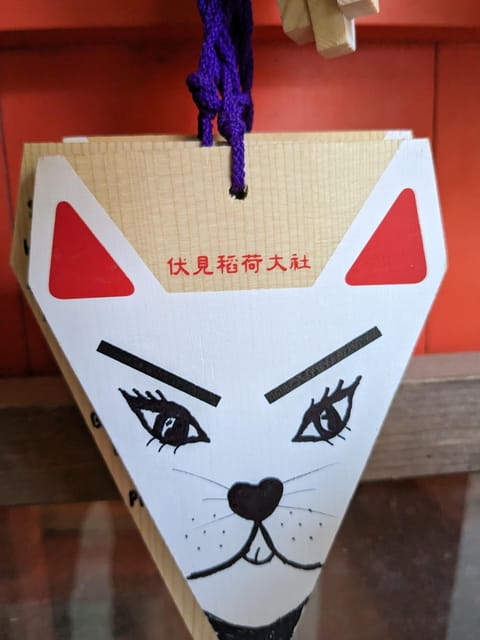
- Your guide adds cultural meaning: You learn how to show respect at the shrine and what the torii gates, fox figures, and smaller worship sites represent.
- Photos are a major strength: The orange tunnels are much easier to photograph when the path is relatively clear.
- Small groups or private tours are available: That gives you more room to ask questions and set a comfortable pace.
- You receive an Inari-specific souvenir: The keepsake is described as something not available elsewhere.
Why an early start matters at Fushimi Inari
Fushimi Inari Taisha is one of Kyoto’s essential sights, and its orange torii gates are among Japan’s most recognizable images. That fame brings crowds. During the day, the lower shrine area and the first torii tunnels can become difficult places for quiet sightseeing or clean photographs.
An early start solves part of that problem. You get cooler air, softer morning light, and a better chance to pause beneath the gates without blocking the path. The shrine is still an active religious place, not simply a scenic backdrop, so the quieter setting also helps you notice the rituals and atmosphere.
I would not book this tour only to save time. You spend 150 minutes here, and much of that time is devoted to walking and explanation. The value comes from seeing Fushimi Inari at a better hour while gaining a clearer sense of what you are looking at.
A few more Kyoto tours and experiences worth a look

Meeting your guide outside JR Inari Station
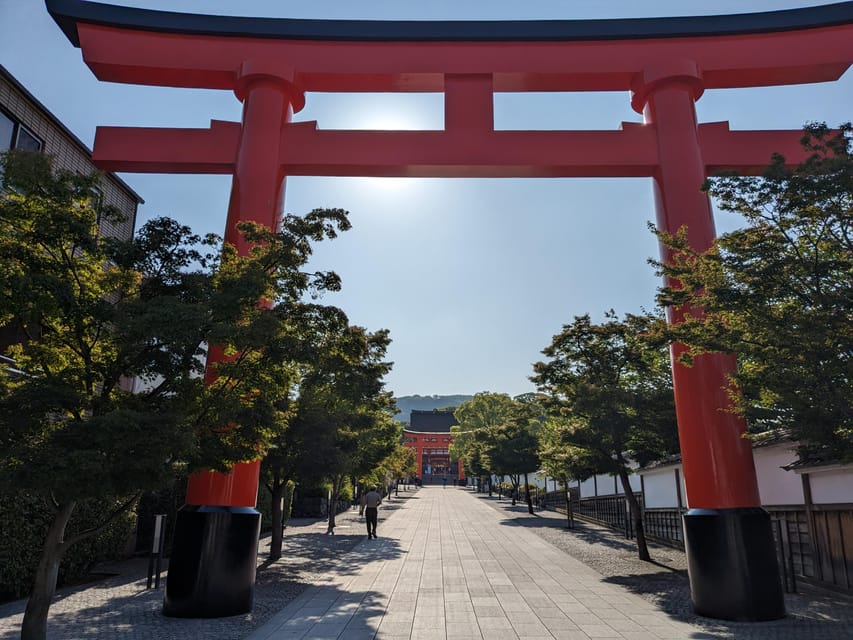
The meeting point is simple: your guide waits outside, across from the main entrance to JR Inari Station, holding a bright yellow DeepExperience signboard. That is useful in a busy station area, especially if you are arriving early and the surroundings are not yet familiar.
Allow extra time to identify the correct train and station. One party arrived late after confusing a local train with an express service, since the local stopped several times before Inari. The guide handled the delay kindly, but you will have a smoother morning if you check the service carefully before leaving.
Inari Station is a practical starting point because the shrine is right by the station. You do not need a long transfer after meeting your guide. Still, keep your arrival precise. A small-group tour waits for late arrivals, and an early morning schedule leaves less room for mistakes.
The first torii gates and Fushimi Inari Taisha
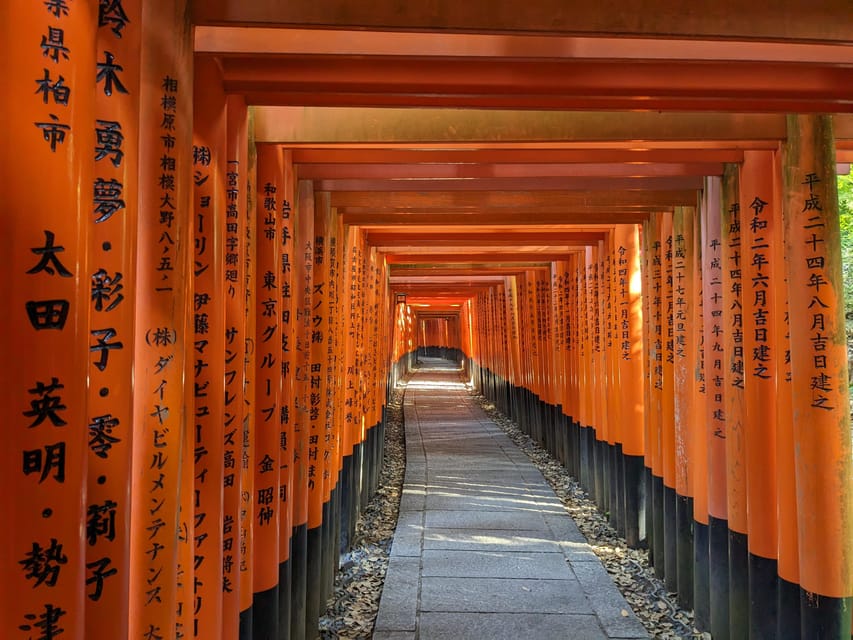
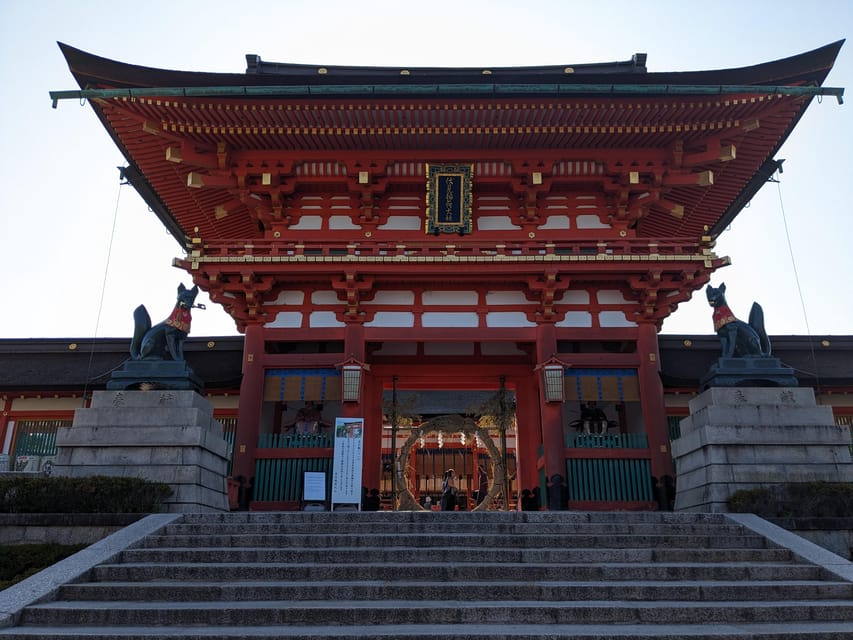
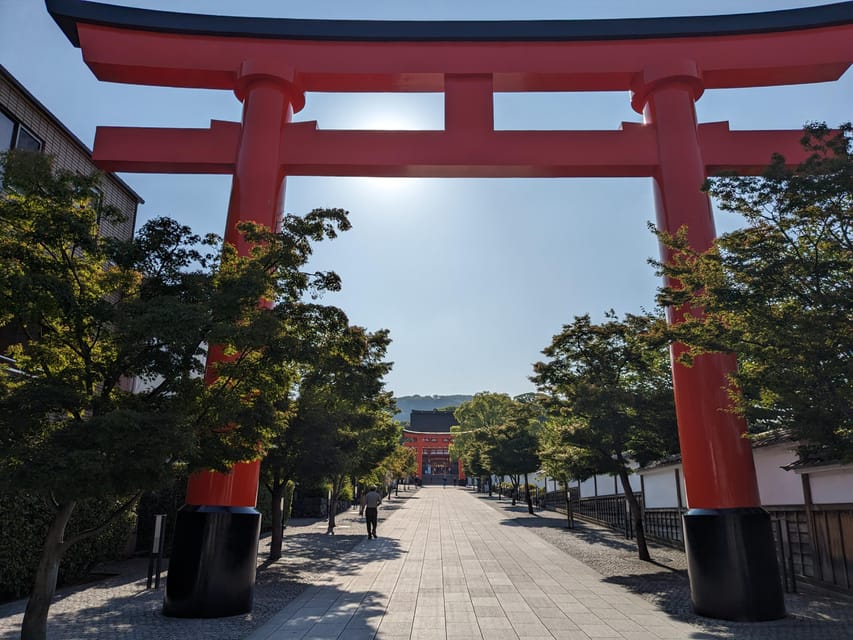
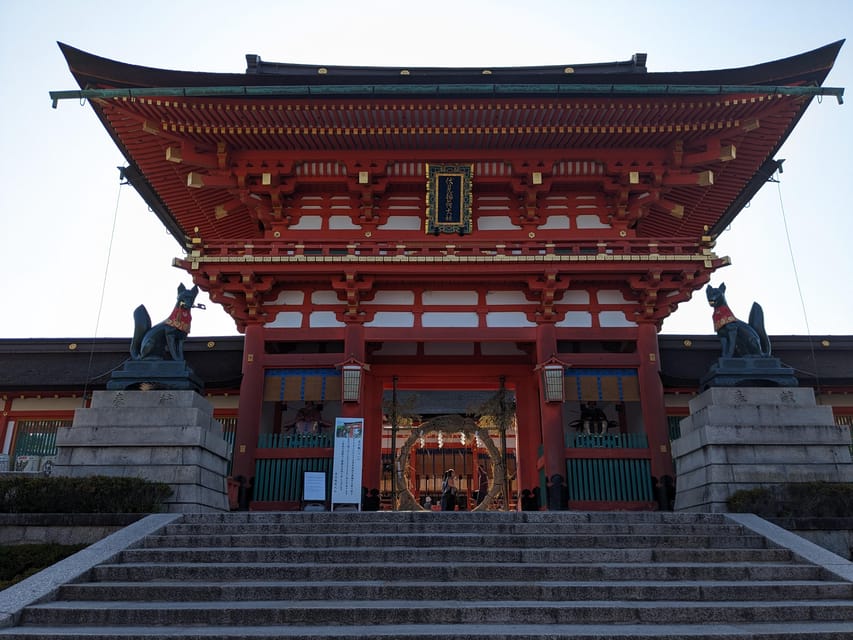
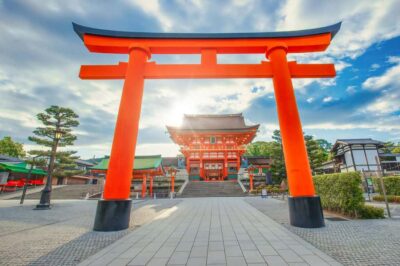
The guided portion begins at Fushimi Inari Taisha, where you see the shrine’s main structures and enter the torii-lined route. Your guide explains the religious meaning behind the site and gives you instructions for showing respect at the main torii and worship areas.
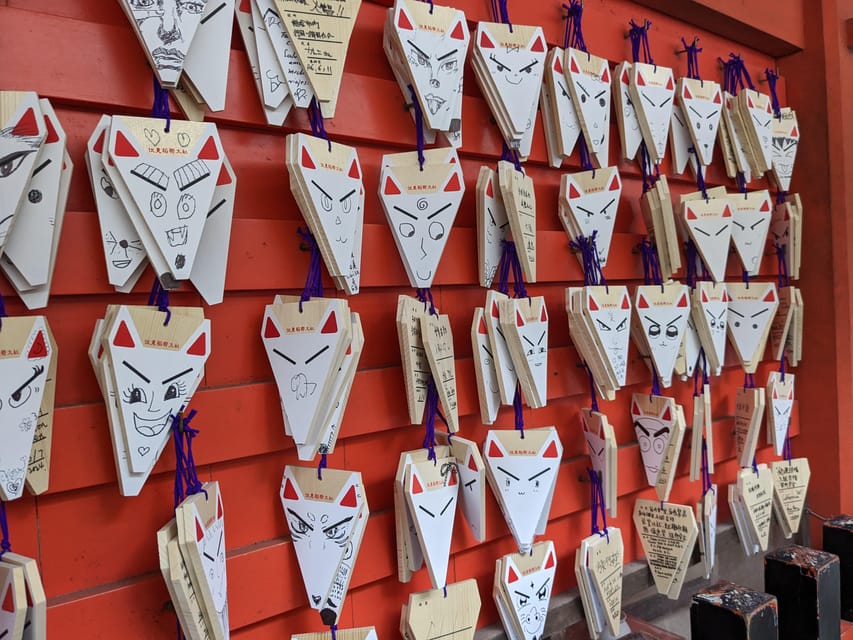
That guidance matters. A first visit can easily turn into a hunt for attractive orange tunnels, but Fushimi Inari is more than a photo location. The guide helps connect the gates, fox imagery, smaller shrines, and local worship practices so you understand why the site remains important to residents.
Hiro, a Kyoto-born guide, was praised for explaining the shrine’s customs step by step. That kind of practical instruction is one of the tour’s strongest features. You can enjoy the setting while also learning what to do at the gates and shrine buildings.
The lower section is the busiest part of Fushimi Inari during normal daytime hours. An early tour gives you the best chance to take photographs here before the foot traffic builds. Your guide can also help with photos, a useful touch for couples and families who want a picture together.
Walking through the orange torii tunnels
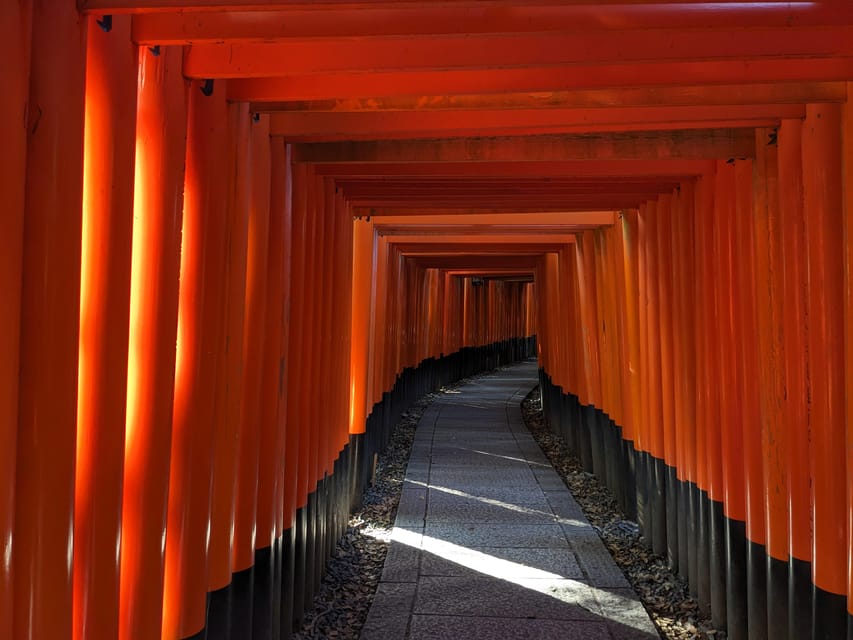
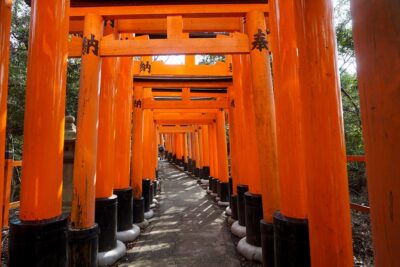
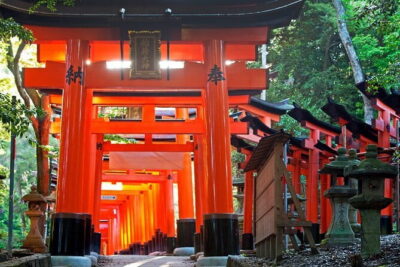
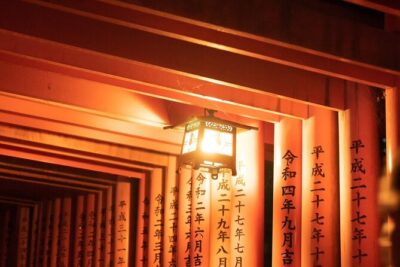
The torii gates are the visual heart of the outing. Gate after gate creates a long orange passage through the wooded mountain, with occasional openings toward smaller religious sites and views.
Do not expect every section to be empty. Fushimi Inari is popular even in the morning, and the exact level of quiet will depend on the date and start time. Still, an early visit is the right strategy if you want less crowd pressure.
The guide’s role is especially useful here. You learn that the gates are not random decorations, and you can ask questions while walking instead of trying to piece together information from a sign later. The pace also gives you time to look at stone fox figures, worship areas, and details along the route.
Bring comfortable shoes. The path includes uphill walking, and the full outing can feel more like a mountain walk than a simple shrine visit. Comfortable clothing is also wise, particularly during Kyoto’s warmer months. Several people found the early timing helpful for avoiding both crowds and heat.
The viewpoint and the uphill effort
The itinerary includes 30 minutes for sightseeing at a viewpoint. The route toward it is part of what makes this tour different from a short visit to the shrine entrance.
You should think carefully about your fitness before booking. One family initially worried about the 2.5-hour mountain walk, then found the route rewarding. That does not mean the climb is easy for everyone. The tour is specifically unsuitable for people with low fitness, mobility impairments, back problems, heart problems, respiratory issues, altitude sickness, or wheelchair users. It is also not suitable for children under 10 or people over 70.
The reward is a quieter side of Fushimi Inari and a broader view from the mountain area. The viewpoint gives the outing a clear sense of progress, rather than ending after the first attractive tunnel. Your guide can explain the significance of the mountain setting while you take a break and look out from the route.
If you have any doubt about the uphill walk, ask before reserving. The description makes clear that this is an active sightseeing experience, not a vehicle-assisted or fully accessible tour.
A few more Kyoto tours and experiences worth a look



A quiet fountain and smaller worship sites
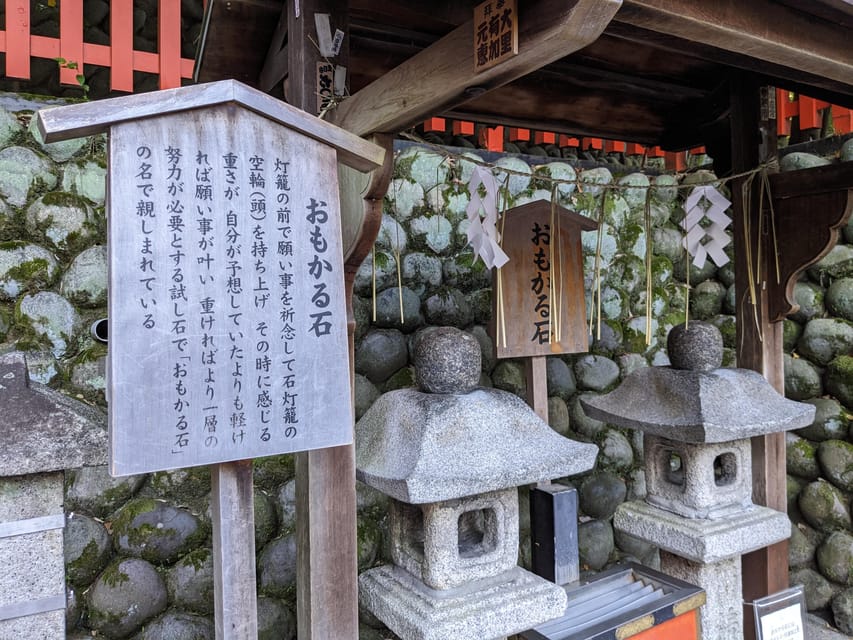
The final part includes a 30-minute stop at a less obvious place along the route. One guide showed visitors a small fountain connected with a local legend that it can cure illness. This is the sort of detail that gives the tour its personal character.
You should keep expectations sensible. This is not a grand attraction with a large viewing platform or a long list of facilities. Its value is in the story, the setting, and the chance to notice something many people would pass without understanding.
The route also includes smaller shrines and fox-related religious symbols. With a guide, these stops become part of a larger explanation about Inari worship and the traditions surrounding the site. Without that context, you might simply see another structure beside the path.
The tour returns to Inari Station after the shrine, viewpoint, and smaller stop. That makes it easy to continue your Kyoto day from the same area.
What the guides add to the morning
This tour succeeds or fails largely on the quality of the guide, and the available guide team has received unusually strong praise. Teppei is repeatedly singled out for warmth, clear explanations, patience, and careful attention to individual needs. Yoshi, Akino, Masa, Hiro, and Maru are also named as friendly guides who bring personal interest to Japanese culture and local customs.
You may not receive a particular guide by name, so do not book on the assumption that Teppei or another individual will lead your group. What you can expect is an English-speaking local expert, with private and small-group formats available.
The strongest guide moments are practical. Akino helped with Kyoto and Hiroshima suggestions after the tour. One guide even accompanied a group on the train afterward to help them arrive safely. Those extras are not guaranteed features, but they show the sort of personal assistance that can make a morning easier, especially early in a Japan trip.
I also like that the guides explain how to behave at the shrine rather than treating local customs as decoration. You come away with useful cultural understanding, not just a set of photographs.
Is $70 a fair price?
At $70 per person, this is not the cheapest way to see Fushimi Inari. You can visit the shrine independently, and there is no indication that this price includes a meal or a separate transport service. The listed inclusion is the English-speaking local guide.
The price makes more sense if you value three things: an early start, a structured route, and cultural explanation. A private or small-group format can also make the cost easier to justify because you have more opportunity to ask questions and receive help with photos or the pace.
For a confident independent walker who only wants the famous torii gates, self-guided sightseeing may be enough. For a first-time visitor who wants to understand the shrine and avoid the worst crowds, $70 buys useful time and direction.
The free-cancellation policy also reduces some booking risk. You can cancel up to 24 hours in advance for a full refund, and the reserve-now, pay-later option lets you hold a place without paying immediately.
Who will enjoy this tour most?
I would recommend it most to adults and older children who enjoy walking, early starts, and cultural explanation. It works particularly well for a first visit to Kyoto, when you want help making sense of a major sight rather than simply checking it off your list.
It is also a strong choice for photographers. The quiet morning timing gives you a better shot at the torii tunnels, and the guide can help take pictures of your group. Couples, friends, and small families may appreciate the private or small-group choices.
I would be cautious if you dislike hills, have limited stamina, or want a relaxed shrine visit with little walking. The tour’s 150 minutes can pass quickly for an active walker, but it may feel demanding if you are not prepared for an uphill mountain route.
Leave luggage and large bags behind. Baby strollers and carriages are not allowed, and intoxicated participants are not permitted. Comfortable shoes and clothes are the only listed items to bring, but they are essential rather than optional.
My practical verdict
Book this tour if your priority is a quieter, more meaningful Fushimi Inari visit and you are comfortable walking uphill for up to 2.5 hours. The early timing, clear meeting point, local explanations, viewpoint, smaller religious sites, and special Inari souvenir give the morning more substance than a quick independent stop.
Skip it if you want only the lower torii gates, need an accessible route, or prefer to explore at your own speed. For the right participant, though, $70 is a reasonable price for better timing, a well-planned route, and a guide who can turn a famous photograph into a place you actually understand.
FAQ
How long does the Fushimi Inari tour last?
The experience lasts 150 minutes, or two and a half hours. The schedule includes a guided visit to Fushimi Inari Taisha, viewpoint sightseeing, and a guided stop at a less obvious site before returning to Inari Station.
Where do I meet the guide?
Meet outside, across from the main entrance to JR Inari Station. Your guide will be holding a bright yellow DeepExperience signboard.
What language is the tour conducted in?
The tour is conducted in English by a live local guide.
Is the tour private or shared?
Private and small-group options are available. The exact group format depends on the option you reserve.
Is this tour suitable for people with limited mobility?
No. It is not suitable for wheelchair users or people with mobility impairments. The activity is also not recommended for people with back, heart, or respiratory problems, low fitness, altitude sickness, children under 10, or people over 70.
Can I cancel or pay later?
Yes. You can cancel up to 24 hours in advance for a full refund. The reserve-now, pay-later option lets you book without paying immediately.
More Morning in Kyoto
More Fushimi Inari Tours in Kyoto
More tours in Kyoto we've reviewed





Fushimi Inari Tours, compared.
 ★ 4.8Kyoto: Fushimi Inari, Kinkakuji, Bamboo Grove 1 Day Bus TourFrom $122510 minutes - 9 hours
 ★ 5.0Fushimi Inari Hidden Hiking Tour (Private Option Available)From $63
 ★ 4.7Kyoto/Osaka: Nara, Fushimi Inari Taisha, Arashiyama Bus TourFrom $529 - 10 hours
 ★ 4.4Osaka/Kyoto: Arashiyama, Nara & Fushimi Inari Shrine w/LunchFrom $61
 ★ 5.0Kyoto: Nijo, Kinkaku-ji, Arashiyama, Kiyomizu & Fushimi InariFrom $51
 ★ 5.0Kyoto Fushimi-Inari Night Walking TourFrom $43