
Reviewed · GION & GEISHA WALKS
Kyoto: Gion Highlights & Hidden Treasures Guided Tour
Kyoto’s Gion district rewards slow walking, and this full-day route gives you both its famous streets and its quieter religious corners. You begin beside the Izumo no Okuni statue, then move through teahouses, shrines, temple gardens, and lanes leading toward Kiyomizu-dera.
I like the mix of major sights and smaller stops, especially Entoku-in and Yasaka Koushindo, which can be missed when you focus only on Kyoto’s headline attractions. I also like that the guide can adjust the day: Yoshi shifted one booking by two hours, while Saya changed the route to avoid places already visited.
The main drawback is simple: seven and a half hours on foot is a long day, and lunch is not included. At $102 per person, the price can be fair for a private or small group, but it makes the most sense if you want explanation and help with the route rather than a quick photo stop.
In This Review
- Key points to know before booking
- Why this Gion route works so well
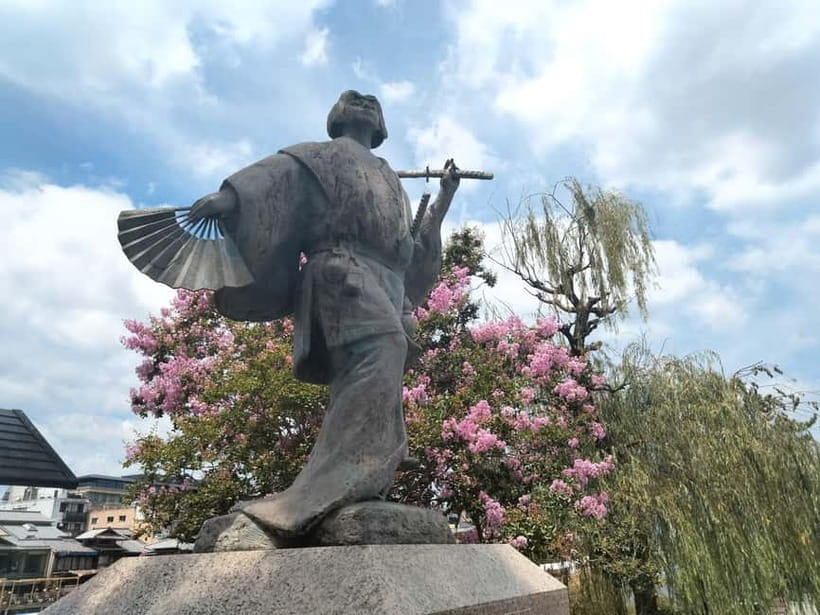
- Meeting at the Izumo no Okuni statue
- Gion Shirakawa and Hanamikoji Street
- Yasaka Shrine and Kyoto’s Shinto traditions
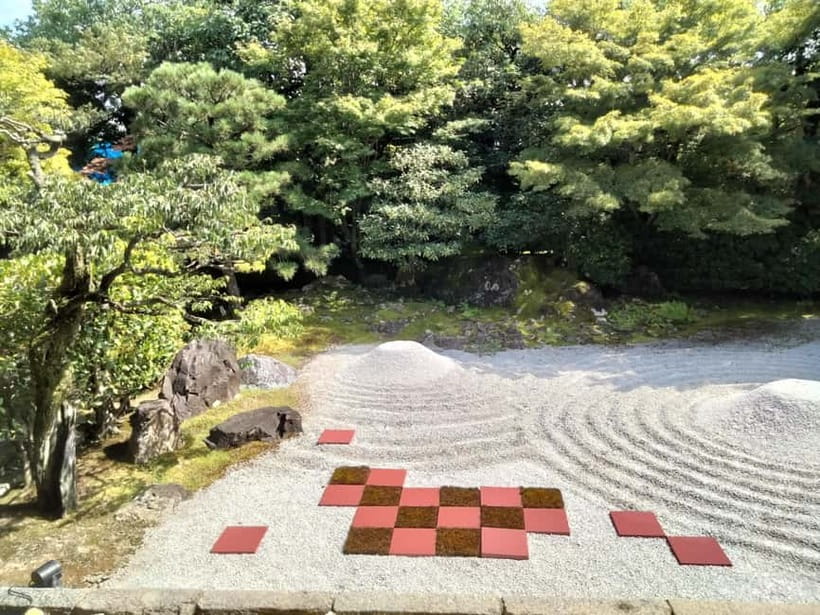
- Kodaiji’s gardens and architecture
- Entoku-in, a smaller and quieter stop
- Lunch in Gion, with your own budget
- Kiyomizu-dera and the best city views
- Yasaka Koushindo’s colorful wish balls
- Yasui Konpiragu and the meaning of fresh starts
- Returning to Gion after seven and a half hours
- Is $102 a fair price?
- Who should book this Gion day?
- Should you book it?
- FAQ
- Where does the tour meet?
- Where does the tour finish?
- How long does the tour last?
- What languages are available?
- Is this a private tour?
- Is lunch included?
- Are temple entry tickets included?
- Is transportation included?
- Can I share dietary restrictions in advance?
- What is the cancellation policy?
Key points to know before booking
- Gion Shirakawa starts the day gently, with traditional teahouses and a calmer riverside setting.
- Hanamikoji Street offers classic Gion scenery, with a chance of seeing geisha, though no sighting is guaranteed.
- Kodaiji and Entoku-in add quiet temple time, balancing the busier streets and major landmarks.
- Kiyomizu-dera takes 90 minutes, giving you time for architecture, views, and the surrounding approach.
- Yasaka Koushindo is one of the day’s most colorful stops, thanks to its many wish balls.
- Yoshi and Saya have shown useful flexibility, including changing the start time and tailoring the route.
Why this Gion route works so well
Many Kyoto sightseeing days become a race between famous temples. This one has a better rhythm. You start in Gion, move through several places of worship, pause for lunch, then finish near Kiyomizu-dera and two smaller shrines.
That order matters. The opening streets introduce you to the look and customs of Gion before the temples take over. By the time you reach Kiyomizu-dera, you have some context for the neighborhood rather than arriving there as an isolated sightseeing stop.
The tour lasts 450 minutes, or seven and a half hours. That is enough time to cover a lot, but it is not a casual stroll. I would wear shoes with good support, bring water, and expect stairs, slopes, and extended periods on your feet.
The tour is available with an English or Japanese guide. Private and small group formats are offered, so the day may feel more personal than a large walking group. The guide is especially useful here because the value is not only in seeing the buildings. It is in understanding how shrines, temples, wishes, relationships, and local customs fit into daily life.
A few more Kyoto tours and experiences worth a look


Meeting at the Izumo no Okuni statue
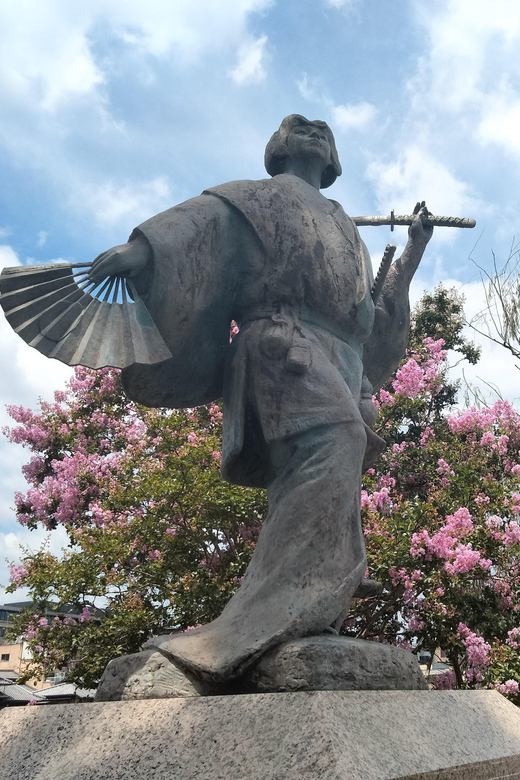
The meeting point is in front of the statue of Izumo no Okuni, at the east end of the Shijo Ohashi bridge. This gives you a clear starting place near one of Kyoto’s key crossings.
You should allow extra time to find the statue and meet your guide. The location is written as 出雲阿国像, which can help if you need to show the name while asking for directions.
The route begins on foot. There is no included bus or taxi transfer listed, so the day is best suited to someone happy to walk between stops. The planned walk from Yasaka Shrine to Kodaiji takes about 15 minutes, and other portions also involve moving through streets and temple approaches.
Gion Shirakawa and Hanamikoji Street
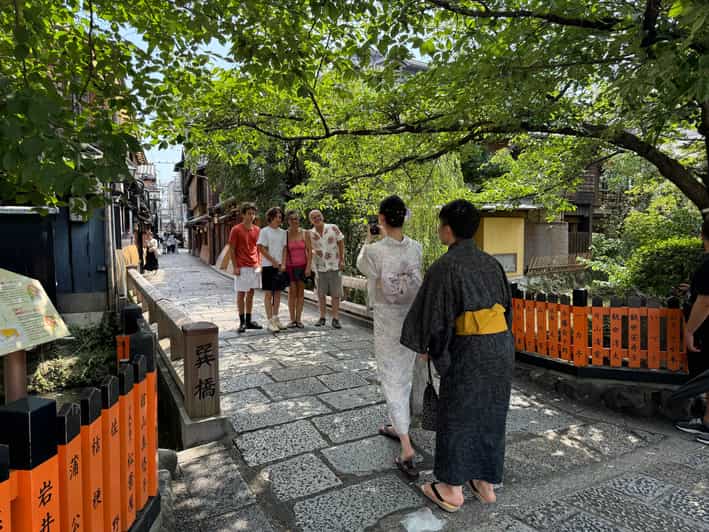
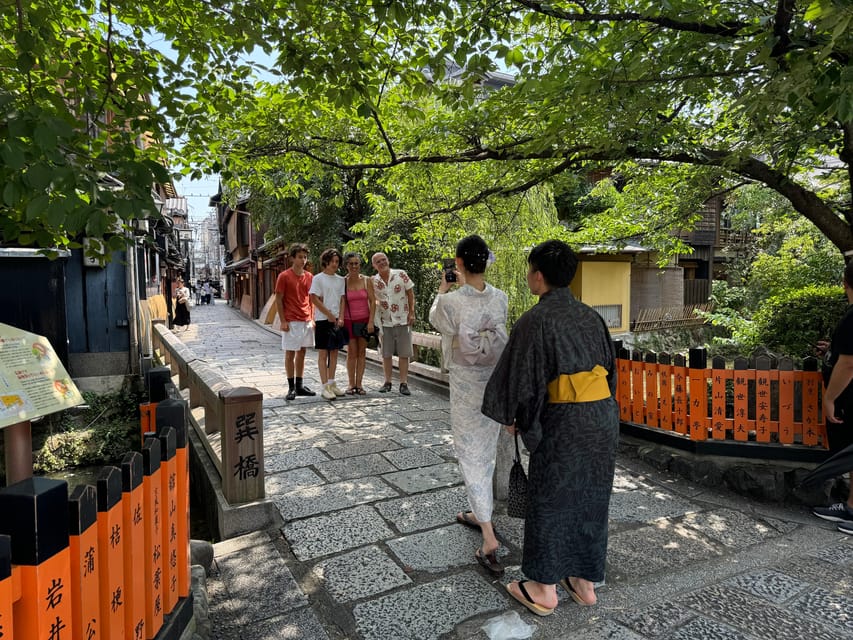
Gion Shirakawa is a graceful introduction to the district. Traditional teahouses line the route, and the setting feels more composed than the wider streets around it. This is a good place to learn why Gion has such a strong connection with Kyoto’s arts and dining culture.
The first viewpoint is a short pass-by of about 15 minutes. That sounds brief, but it helps you get your bearings before the route continues to Hanamikoji Street.
Hanamikoji is another 15-minute pass-by and gives you the classic Gion scene: historic wooden architecture, narrow lanes, and teahouses associated with geisha entertainment. You may have a chance to see geisha moving between appointments, but treat that as a possibility rather than a promise.
This part of the tour is best approached with respect. These are working streets, not a stage set. Your guide can help explain what you are seeing while keeping the focus on the neighborhood itself.
Yasaka Shrine and Kyoto’s Shinto traditions
Yasaka Shrine receives a 15-minute visit. It is one of the most recognizable religious sites in Gion and gives you a first look at Shinto practice during the day.
A guide can make a short shrine stop much more useful. You can learn how the site functions as a place of prayer, what visitors do at the entrance, and why Yasaka Shrine matters to Kyoto’s religious life.
Fifteen minutes is not enough for an exhaustive visit. That is also part of the route’s design. You get an introduction here, then more extended temple time later at Kodaiji, Entoku-in, and Kiyomizu-dera.
From Yasaka Shrine, you walk for about 15 minutes toward Kodaiji. This transition is part of the appeal. Instead of repeatedly boarding transport, you see how Gion connects to the Higashiyama temple area on foot.
Kodaiji’s gardens and architecture
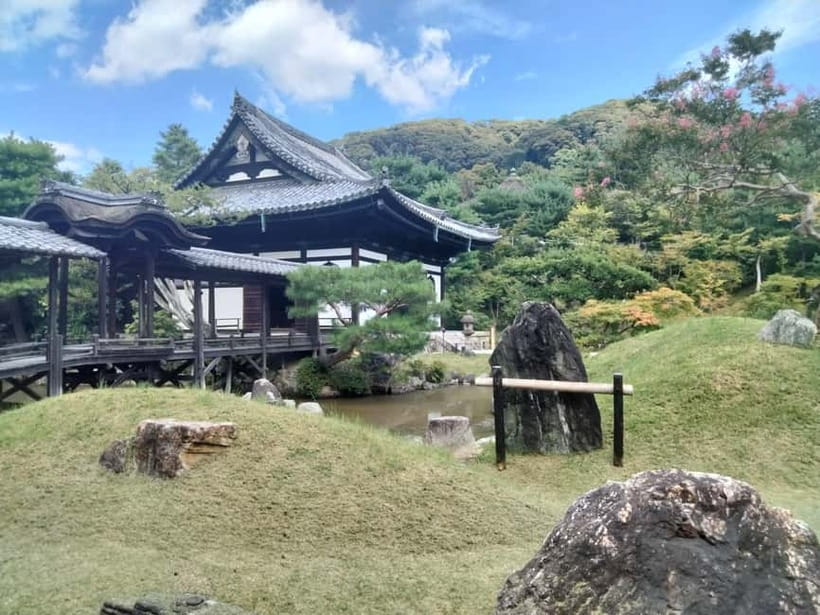
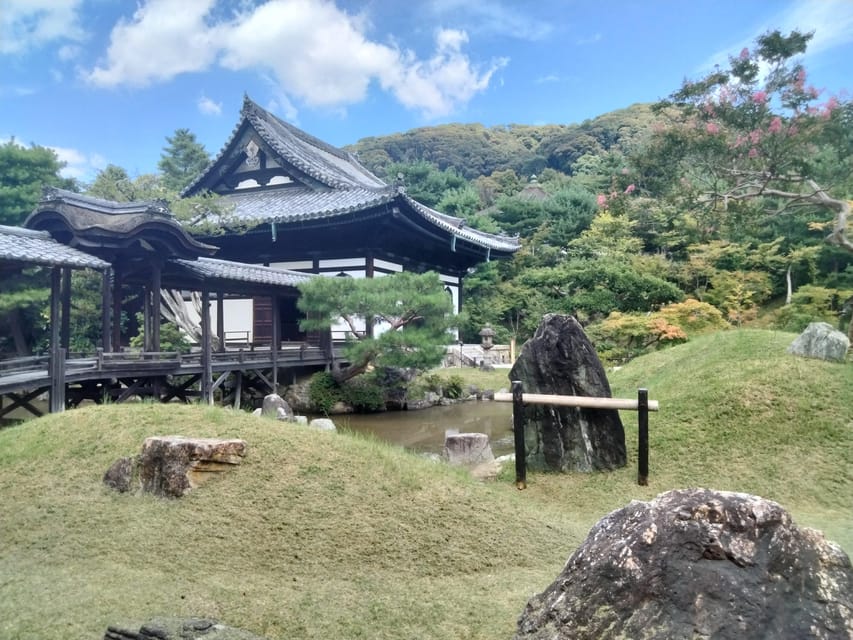
Kodaiji receives a full hour, making it one of the day’s central visits. Entry is included, which is important because the admission cost is already covered in the $102 fee.
The temple is known for its historic architecture and garden setting. I like this stop because it slows the pace after the opening streets. You have time to look carefully instead of stepping inside, taking one picture, and leaving.
A guide can also point out details that are easy to miss in the buildings and grounds. The exact balance between explanation and free time will depend on your guide and group format, but one hour gives the stop enough breathing room.
Kodaiji is likely to feel more rewarding if you enjoy design, gardens, and quiet observation. If you prefer a rapid checklist of sights, this hour may feel long. For most people interested in Kyoto’s temples, though, it provides a needed pause.
Other guided tours in Kyoto

Entoku-in, a smaller and quieter stop
Entoku-in follows with a 25-minute visit. Entry is included, and the shorter stop works as a contrast to Kodaiji.
This is one of the places that gives the tour its character. The route does not simply collect the biggest names in Kyoto. It also makes room for a less prominent temple where you can enjoy a calmer setting and a more focused visit.
Twenty-five minutes is enough to see the main features without making the day drag. It also protects your energy for the long afternoon ahead.
The exact amount of time you spend listening, photographing, or sitting quietly will vary with the group. In a private booking, you can ask the guide to explain points that interest you most. In a small group, the pace may be set more firmly.
Lunch in Gion, with your own budget
After the morning’s temple visits, the tour stops in Gion for one hour of lunch. Lunch is not included in the price, so you should plan for an additional meal cost.
The hour is useful for more than eating. It gives your feet a break and divides the day into two manageable sections. You can also use this moment to tell the guide about foods you avoid or dietary needs. The activity asks you to provide dietary restrictions in advance, which is a practical step for arranging the meal.
A past booking with Saya included a recommendation for a good restaurant and a shopping area after the tour. That suggests the guide may be helpful beyond the fixed route, though you should not assume a particular restaurant or extra stop is guaranteed.
Since the lunch location is described as Gion rather than a named restaurant, do not book a tightly timed meal elsewhere. Let the guide manage the route and use the break to recharge.
Kiyomizu-dera and the best city views
Kiyomizu-dera is the longest stop of the day at 90 minutes, and entry is included. This is the tour’s major landmark, so the generous time allocation makes sense.
The temple is famous for its historic architecture and broad views over Kyoto. The elevated setting gives you a different perspective from the intimate streets of Gion. You move from enclosed lanes and teahouses to a more open view across the city.
Kiyomizu-dera can be crowded, especially at popular times, so the experience depends partly on the day’s conditions. A guide helps you use the available time well, pointing out the important structures and explaining the temple’s place in Kyoto.
The approach to Kiyomizu-dera is also part of the visit. The surrounding streets connect the temple to the older Higashiyama district, so you are not only visiting a single building. Expect walking, slopes, and a busy atmosphere around a major sight.
Ninety minutes is a good compromise. You have time for the principal views and architecture without spending the entire afternoon at one site. If Kiyomizu-dera is your top priority, you may wish for even longer, but the route has several other stops to fit in.
Yasaka Koushindo’s colorful wish balls
After Kiyomizu-dera, the route moves to Yasaka Koushindo for about 20 minutes. This compact temple is known for its colorful wish balls, which bring a playful burst of color after the more restrained settings earlier in the day.
The balls are connected with written wishes and give the site a distinct visual identity. It is a quick stop, but it offers a different kind of Kyoto experience. You are seeing how popular religious practice can be personal, colorful, and immediately visible.
This is also a strong photography stop, though you should follow the guide’s advice about where to stand and what may be appropriate to photograph. Twenty minutes should be enough for a short explanation and a close look without turning the visit into another long temple session.
Yasui Konpiragu and the meaning of fresh starts
The final religious stop is Yasui Konpiragu, also called Yasui Kompira-gu Shrine. The visit lasts about 20 minutes.
This shrine is associated with breaking bad habits and seeking good relationships. That gives the tour a memorable ending. After a day focused on Kyoto’s buildings and traditions, you encounter a place where visitors bring very personal hopes for change.
The shrine offers a different kind of blessing from the grander sites. You are not simply looking at old architecture. You are seeing a living practice built around renewal, relationships, and personal wishes.
The visit is brief, but its purpose is easy to understand. If you have a particular interest in Japanese religious customs, ask the guide how people use the shrine and what the rituals mean.
Returning to Gion after seven and a half hours
The route returns to the Izumo no Okuni statue. That makes the start and finish easy to understand, though the day covers a wide section of southeastern central Kyoto on foot.
The overall schedule is tightly arranged:
- About 15 minutes at the opening viewpoint
- About 15 minutes on Hanamikoji Street
- About 15 minutes at Yasaka Shrine
- About 15 minutes walking to Kodaiji
- One hour at Kodaiji
- About 25 minutes at Entoku-in
- One hour for lunch in Gion
- About 90 minutes at Kiyomizu-dera
- About 20 minutes at Yasaka Koushindo
- About 20 minutes at Yasui Konpiragu
Those times add up to a full day, and the walking between them is a major part of the experience. I would not pair this tour with another demanding activity that evening.
The guide’s flexibility is one of the strongest practical points. Yoshi accommodated a two-hour start-time change and helped add another temple when it mattered to the person booking. Saya adjusted the route around sights already seen and suggested places to eat and shop afterward.
Those examples do not guarantee that every request can be accommodated. They do show why a private or small group can be useful in Kyoto, where your interests may not match a fixed sightseeing script.
Is $102 a fair price?
At $102 per person, this is not the cheapest way to see Gion. You could walk through several of these areas independently and avoid a guide fee.
The price becomes more reasonable when you value the included admission to Kodaiji, Entoku-in, and Kiyomizu-dera, plus a guide for seven and a half hours. You are paying for route planning, cultural explanation, and help connecting separate sights into one coherent day.
Lunch is extra, and the price does not include transport. That keeps the cost from being all-inclusive, but the tour is built around walking, so paid transfers are not central to the plan.
I would consider the price fair for a private or small group if you are visiting Kyoto for the first time, want cultural background, or dislike sorting out temple admissions and directions. It is less compelling if you already know Gion well or prefer to spend a long time at only one or two temples.
Free cancellation up to 24 hours before the start and the option to reserve now and pay later make the booking less rigid. Check the available starting times before committing, since the duration is fixed but the departure time can vary.
Who should book this Gion day?
I would recommend it to a first-time Kyoto visitor who wants a strong introduction to Gion, Higashiyama, Shinto shrines, and Buddhist temples in one day. It is also useful for anyone who wants a guide to explain customs rather than simply point out buildings.
The tour suits couples, families, and small groups with shared interests. A private format is especially useful if you have already seen some major sights, since the guide may be able to reshape the route, as Saya did for a previous booking.
I would think twice if you have limited stamina for walking or want a slow, unstructured day. The schedule includes several short visits, a long temple stop, lunch, and a substantial amount of standing and walking.
Should you book it?
Book this tour if you want one well-organized day in Gion that includes famous sights, smaller religious sites, and a guide who may adapt the route to your interests. The strongest reasons are the combination of Kodaiji, Entoku-in, Kiyomizu-dera, Yasaka Koushindo, and Yasui Konpiragu, plus the useful flexibility shown by guides Yoshi and Saya.
Skip it if you prefer exploring alone, have already visited most of these places, or want to spend a whole morning at Kiyomizu-dera. For the right person, the $102 price buys more than entry tickets. It buys context, a sensible walking route, and a chance to see the Gion district as a living part of Kyoto rather than a string of photo stops.
FAQ
Where does the tour meet?
Meet your guide in front of the statue of Izumo no Okuni at the east end of the Shijo Ohashi bridge.
Where does the tour finish?
The tour returns to the statue of Izumo no Okuni, the same place where it begins.
How long does the tour last?
The tour lasts 450 minutes, which is seven and a half hours.
What languages are available?
The tour is available with a live guide speaking English or Japanese.
Is this a private tour?
Private and small group options are available.
Is lunch included?
No. Lunch is not included, and the schedule allows one hour for lunch in Gion.
Are temple entry tickets included?
Entry tickets to Kodaiji Temple, Entoku-in Temple, and Kiyomizu-dera are included.
Is transportation included?
The route is conducted on foot. A 15-minute walking section is specifically scheduled between Yasaka Shrine and Kodaiji Temple.
Can I share dietary restrictions in advance?
Yes. You should inform the provider of any dietary restrictions in advance.
What is the cancellation policy?
You can cancel up to 24 hours in advance for a full refund. You can also reserve now and pay later.
More Guided Tours in Kyoto
More Gion & Geisha Walks in Kyoto
More tours in Kyoto we've reviewed











Gion & Geisha Walks, compared.
 ★ 4.7Kyoto Geisha Walking Tour: Gion District & Hidden GemsFrom $252 hours
 ★ 4.7Kyoto: Gion Geisha District Walking Tour – Stories of GeishaFrom $202 hours
 ★ 4.9Best of Kyoto: Gion, Geisha, Pagodas & CobblestonesFrom $242 hours
 ★ 4.5Night Walk in Gion: Kyoto’s Geisha DistrictFrom $211h 40m
 ★ 5.0Kyoto Night Foodie Tour in Gion (9+ dishes + 6 Sake tastings)From $163
 ★ 5.0Kyoto Gion Geisha District Walking Tour – The Stories of GeishaFrom $25