
Reviewed · WALKING TOURS
Kyoto Late Bird Walking Tour
Fushimi Inari’s thousands of red torii gates give this Kyoto tour its biggest visual thrill, but the afternoon keeps going with Yasaka Pagoda, Yasaka Shrine, and the old streets of Gion. Your guide handles the route and explains what you are seeing, which helps you make sense of several major sights in only four hours.
I like two things right away: the private format, which lets your group keep a comfortable pace, and the chance to use local trains rather than simply moving from one taxi stop to the next. Guides including Kazu, Saori, Mitsue, Meg, and Key have been praised for patience, clear English, good conversation, and thoughtful explanations.
The main consideration is cost. At $86.49 per person, this is not a cheap sightseeing walk, and public transportation costs another ¥850 per person. You are paying for personal guiding and route planning, not admission tickets, meals, or a long visit at every stop.
In This Review
- Key points at a glance
- Why the late afternoon timing works
- Fushimi Inari and the long tunnel of torii
- Yasaka Pagoda and Kyoto’s old-town views
- Yasaka Shrine and the meaning of Gion
- Gion, geisha culture, and respectful sightseeing
- The private format and guide quality
- What the $86.49 price includes
- Who should book this Kyoto afternoon
- Practical details before you go
- Should you book the Kyoto Late Bird Walking Tour?
- FAQ
- What time does the Kyoto Late Bird Walking Tour start?
- Where do I meet the guide?
- Where does the tour end?
- How long does the tour last?
- Which places are included?
- Are transportation costs included?
- Can I cancel for a refund?
Key points at a glance
- Start at 2 pm: The later beginning suits a day when you want a slower morning or have already visited a temple.
- Four major Kyoto sights: Fushimi Inari, Yasaka Pagoda, Yasaka Shrine, and Gion fit into one private half-day outing.
- Public transport is part of the plan: Bring a loaded IC card, as the route uses trains and costs ¥850 per person in transport fares.
- Private group experience: Only your party participates, so you can ask questions and move at your own pace.
- Geisha and maiko sightings are possible: Gion offers a chance to see them walking between appointments, but no sighting is promised.
- Strong guide focus: Kazu, Saori, Mitsue, Meg, and Key are among the guides praised for warmth, English skills, patience, and local explanation.
Why the late afternoon timing works
The Kyoto Late Bird Walking Tour begins at 2 pm at Kyoto Station and lasts about four hours. That timing is useful if you prefer not to rush out first thing in the morning, or if you want to pair the tour with an independent temple visit earlier in the day.
I also see value in starting at Kyoto Station because it is a clear transport hub. The route then moves by public transportation to the first sight, rather than wasting the afternoon on a long private vehicle transfer.
This is not a pure walking tour in the strict sense. You will walk through shrine grounds and historic streets, but trains form part of the connection between areas. One person specifically advises bringing a loaded IC card, and that is practical advice. It keeps your group from stopping to work out fares at a machine.
The supplied transport cost is ¥850 per person. That is separate from the tour price, so include it when comparing the total cost with other Kyoto excursions. The four-hour schedule is fairly full, but the private setup gives the guide some room to adjust the pace.
Other walking tours we've reviewed in Kyoto
Fushimi Inari and the long tunnel of torii
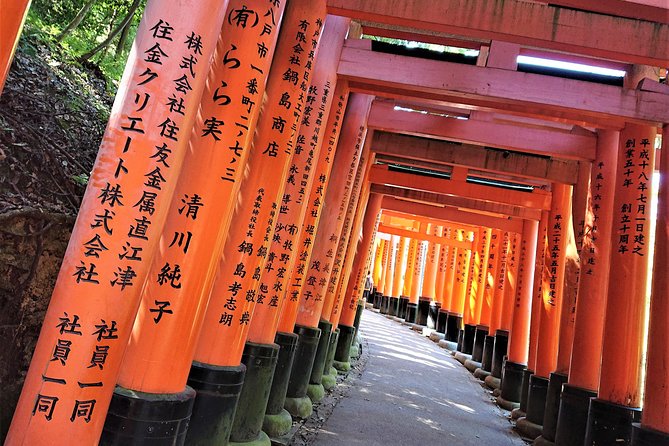
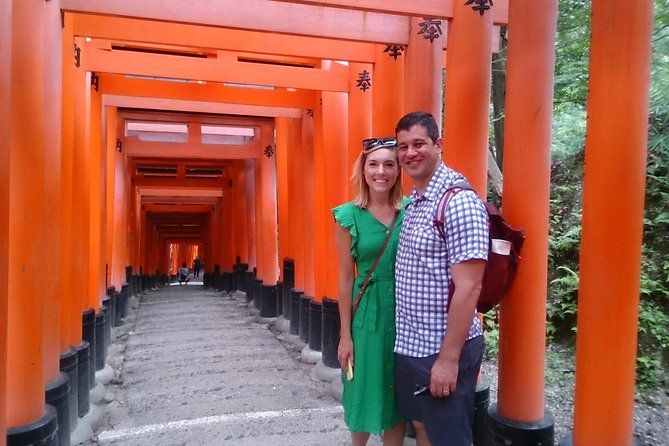
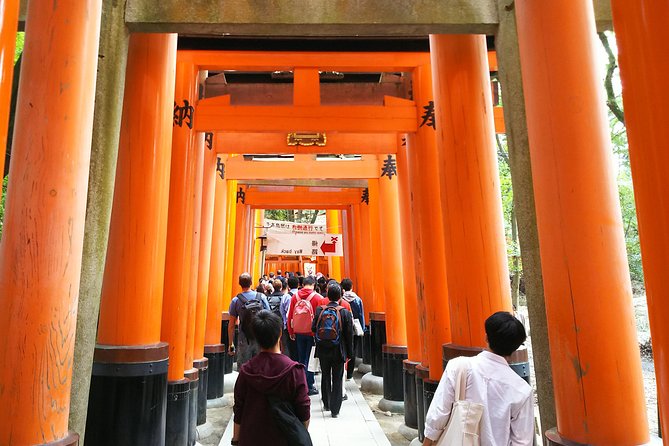
Fushimi Inari-taisha is the visual centerpiece. Its famous path runs beneath thousands of vermilion torii gates, each donated by worshippers in thanks for good fortune connected with the shrine deity.
You have about one hour here. That is enough to enter the shrine area, walk beneath a good stretch of gates, take photographs, and hear the basic religious and cultural context from your guide. It is not enough to explore every path on the mountain, so you should see this stop as an introduction rather than a full Fushimi Inari hike.
The gates create one of Kyoto’s most recognizable scenes, but the experience is better when you understand what you are looking at. Your guide can explain why the gates were donated and how the shrine’s traditions connect with worship and prosperity.
I like having a guide at this stop because it is easy to focus only on photographs. A good explanation turns the rows of gates from a pretty corridor into a living religious custom. Guide Kazu, for example, was praised for waiting patiently when a participant arrived late and then managing a route that included several train trips and additional cultural stops.
There is no admission fee for the listed visit. Wear shoes you can walk in, and keep your expectations realistic about crowd levels. This is one of Kyoto’s best-known sights, so the most famous section can feel busy, especially around the most photographed gates.
Yasaka Pagoda and Kyoto’s old-town views
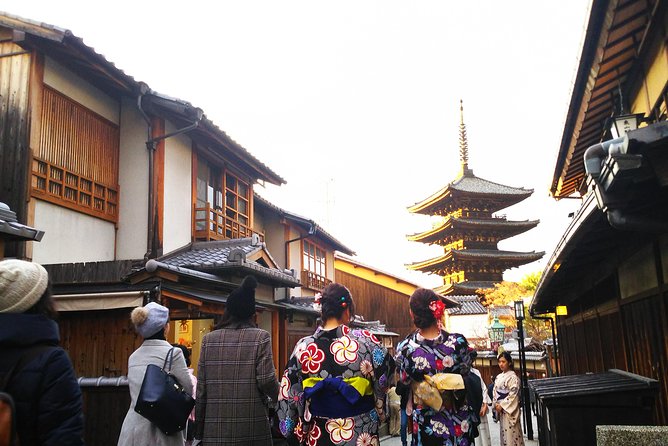
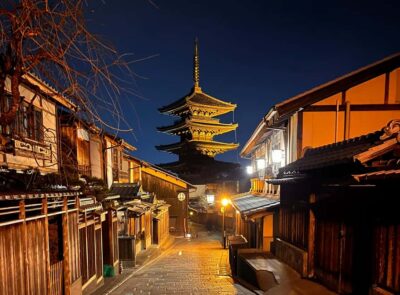
The next listed stop is Yasakanoto, usually known as Yasaka Pagoda. The pagoda was first built in 592 and rebuilt in 1440. Its setting gives you one of the most recognizable views associated with eastern Kyoto, with traditional streets leading toward the five-story structure.
You have about 30 minutes here. That makes this a photo and orientation stop rather than a long architectural visit. Your guide can point out the surrounding streets and explain why the pagoda is important within this part of the city.
This stop also changes the mood of the tour. Fushimi Inari offers a bold, repeated pattern of gates. Yasaka Pagoda gives you a more open view through Kyoto’s historic streets. The contrast helps the afternoon feel varied rather than like a string of similar shrines.
The time limit can be a drawback if you want to linger with a camera. Evening light can be attractive here, and the area is known for photographers, but the schedule does not promise a long sunset session. You will need to follow the group’s timing so the tour can reach Yasaka Shrine and Gion.
Yasaka Shrine and the meaning of Gion
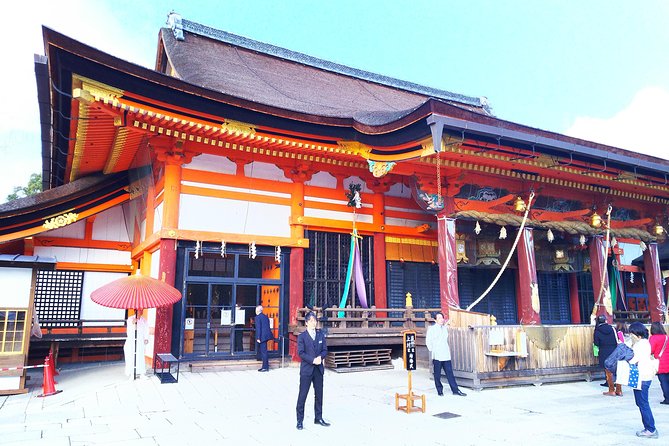
Yasaka Shrine receives about 20 minutes, making it the shortest formal stop. The shrine was once called Gion Shrine, and the name Gion later became attached to the surrounding district.
The main deity is described as powerful, and a beauty deity also draws visitors. Your guide can help you understand these connections rather than leaving you to read a sign and move on. With only 20 minutes, the value here comes from a focused explanation and a quick look at the shrine grounds.
I would not choose this tour if your main goal is a long, quiet shrine visit. The stop is brief. But it works well as a bridge between the pagoda and Gion, since it explains why the district has such a strong connection to traditional religious and performing arts culture.
The shrine is free to enter. Since this is a private tour, you can ask what the different areas mean and request clarification if a custom or deity is unfamiliar. That personal exchange is one of the better reasons to choose this format over a large group walk.
Gion, geisha culture, and respectful sightseeing
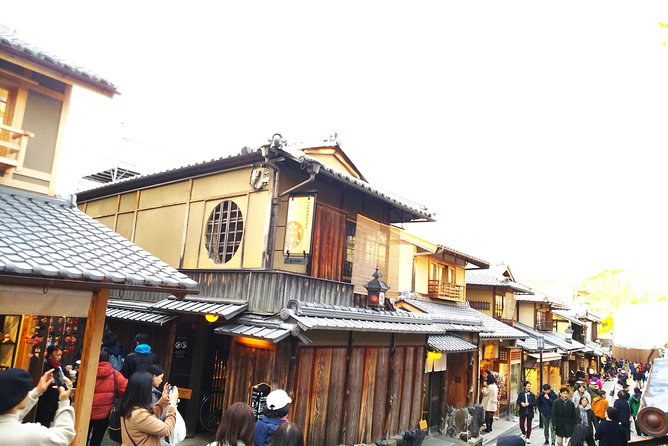
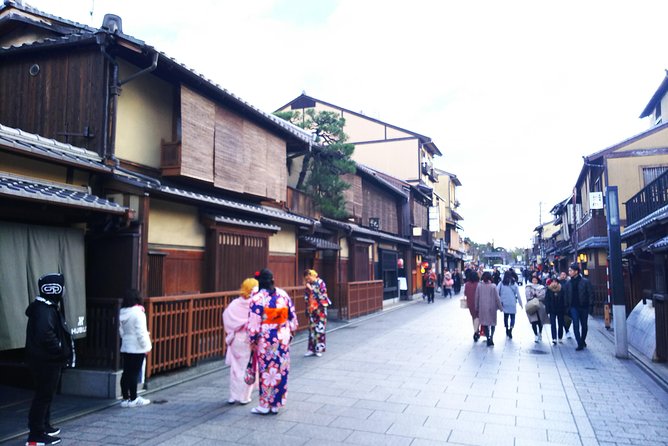
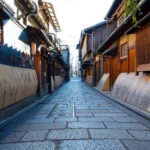
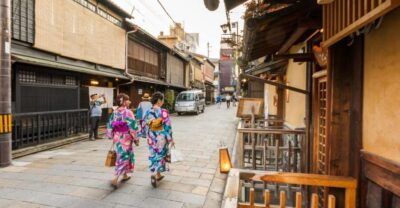
The tour ends its sightseeing portion in Gion, with about 50 minutes among preserved old-style houses and narrow streets. Gion is one of the best places in Kyoto to get a sense of the city’s traditional entertainment districts.
Your guide will explain the role of geisha and maiko, the apprentices who train in the arts of music, dance, conversation, and hospitality. You may see them walking through Gion, but this is a possibility, not a scheduled performance or guaranteed meeting.
That distinction matters. The appeal is in observing ordinary movement through a historic district, not treating people as staged attractions. Keep your camera ready, but give anyone you see space and avoid blocking the street.
One afternoon with Saori included the good fortune of seeing geisha and trainees in Gion, along with snacks. That is a pleasant bonus, but you should book this tour for the district, its architecture, and the guide’s cultural context rather than for a promised sighting.
The old wooden houses are part of Gion’s appeal. A guide can help you notice details you might otherwise walk past and explain how the district relates to the shrine called Gion Shrine in earlier times. The 50-minute visit is long enough for a proper stroll, though not long enough to explore every lane.


The private format and guide quality
This is a private activity for your group only. That changes the feel of the afternoon. You do not have to match the pace of a large party, and you can ask questions about trains, shrine customs, or Kyoto neighborhoods as they come up.
The guide is the main reason to consider the price. The listed guides include Kazu, Saori, Mitsue, Meg, and Key, though the guide assigned to your booking may differ. Their praised qualities include patience, strong English, enthusiasm, punctuality, and easy conversation.
Saori studied in the United States and was able to connect comfortably with visitors’ stories. Mitsue was described as welcoming and relaxed, while Meg was praised for meeting the group exactly where arranged and explaining the sights clearly. Key was singled out as an exceptional guide, and Kazu’s patience with a late arrival was especially useful.
Those details tell you what the experience is designed to offer. It is not just a route through four famous places. It is a guided afternoon where the human connection can make public transport, shrine etiquette, and local history easier to follow.
Still, the guide experience can vary because different people lead the tour. The repeated praise for communication and warmth is encouraging, but you should not assume you will receive a particular guide unless your booking confirms it.
What the $86.49 price includes
The price is $86.49 per person. The guide fee is included, but food and drink are not, and public transportation costs ¥850 per person.
There are no admission charges for the four listed stops, so the extra expense is straightforward. You are mainly paying for a private guide, route coordination, interpretation, and the convenience of linking distant Kyoto sights in one afternoon.
For a solo visitor or couple, the cost may feel high compared with using a map and visiting the shrines independently. For a family or small group, group pricing can improve the value, especially if the private arrangement helps everyone stay together and avoids lost time.
I would also place a value on the route itself. Fushimi Inari and Gion are not next door to one another, and the afternoon requires some transport planning. If you are comfortable navigating Kyoto and reading shrine information on your own, you may not need the guide. If you want someone to handle the connections and explain the cultural setting, the price is easier to justify.
Who should book this Kyoto afternoon
I would recommend this tour to you if you want several major sights in a compact block of time and prefer conversation over a recorded audio guide. It fits visitors who have only a short stay in Kyoto, families who want a private pace, and anyone who finds train connections or shrine customs confusing.
It also suits repeat visitors who have seen central Kyoto but want help connecting Fushimi Inari with Gion and Yasaka. The route offers a broad sample of shrine architecture, traditional streets, and geisha culture without requiring a full day.
You should think twice if you want a slow photographic study of Fushimi Inari, a long visit inside each shrine, or a guaranteed geisha encounter. The itinerary gives each place a defined amount of time, and Gion’s geisha sightings depend on chance.
The tour is described as suitable for most participants, including people with limited eyesight or limited mobility. It is near public transportation and animals or pets are allowed. It is not stroller accessible, so families with young children should plan around that limitation.
Practical details before you go
Meet at Kyoto Station at 2 pm. The activity ends back at the meeting point, which is useful if you need to continue by train or return to a hotel near the station.
Bring a loaded IC card for the public transportation portion and budget ¥850 per person for fares. Food and drink are not included, so eat beforehand or plan to buy something separately if needed.
Good walking shoes will make the afternoon easier. You will move through shrine grounds, streets, and station areas, and the tour requires enough mobility for a full four-hour outing.
The experience requires good weather. If poor weather causes cancellation, you can choose another date or receive a full refund. You can also cancel for a full refund up to 24 hours before the start time, while cancellations or changes made within 24 hours are not accepted.
Should you book the Kyoto Late Bird Walking Tour?
Book it if you want a private, guide-led introduction to eastern Kyoto and value clear explanations, flexible conversation, and an efficient route. Fushimi Inari, Yasaka Pagoda, Yasaka Shrine, and Gion make a strong combination, and the 2 pm start leaves room for a relaxed morning.
Skip it if you are comfortable arranging trains yourself and want to spend much longer at one shrine. At $86.49 per person plus ¥850 for transport, it is a personal guiding service rather than a bargain sightseeing pass.
For families, first-time visitors, and small groups, I think the private format makes the most sense. You get a focused afternoon, local context, and a chance to see Gion as a real district rather than simply a photo stop. Just treat a geisha sighting as a lucky extra, not the reason to book.
FAQ
What time does the Kyoto Late Bird Walking Tour start?
The tour starts at 2 pm.
Where do I meet the guide?
You meet the guide at Kyoto Station in Kyoto, Japan.
Where does the tour end?
The activity ends back at the meeting point.
How long does the tour last?
The tour lasts approximately four hours.
Which places are included?
The listed stops are Fushimi Inari-taisha Shrine, Yasaka Pagoda, Yasaka Shrine, and Gion.
Are transportation costs included?
No. Public transportation costs ¥850 per person and is not included in the tour price. Food and drink are also excluded.
Can I cancel for a refund?
Yes. You can cancel at least 24 hours before the start time for a full refund. Cancellations or changes made less than 24 hours before the start time are not refunded or accepted.
More Walking Tours in Kyoto


More tours in Kyoto we've reviewed





Walking Tours, compared.
 ★ 4.7Kyoto Geisha Walking Tour: Gion District & Hidden GemsFrom $252 hours
 ★ 4.7Kyoto: Gion Geisha District Walking Tour – Stories of GeishaFrom $202 hours
 ★ 4.5Night Walk in Gion: Kyoto’s Geisha DistrictFrom $211h 40m
 ★ 5.0Kyoto Gion Geisha District Walking Tour – The Stories of GeishaFrom $25
 ★ 5.0Nishiki Market Brunch Walking Tour (7 Tastings + Brunch)From $68
 ★ 4.9Kyoto: Gion Magical Night Walking Tour with Geisha InsightsFrom $34