
Reviewed · GION & GEISHA WALKS
Kyoto Gion Tea ceremony & Wabi-sabi Walking Tour
Kyoto’s tea ceremony is less about drinking a cup of matcha than learning to notice small things: an aged tea bowl, a quiet garden, a seasonal sweet, or the careful movement of a tea master. This small-group walking tour builds toward that idea, using Gion’s temples, art, and pottery as your classroom before the final ceremony.
I like two things here. First, the walk gives the tea ceremony a useful setting instead of treating it as a stand-alone photo stop. Second, the group is limited to seven, and the guide adds context about Japanese tea culture and wabi-sabi as you go. The main drawback is timing: the tour lasts three and a half hours, and a scheduling error could cost you the ceremony, so check the start time closely and arrive early.
In This Review
- Key points to know
- Why this Kyoto tea tour starts with wabi-sabi
- Meeting at Gion-Shijo Station
- Gion, where Kyoto’s tea culture feels close at hand
- Kenninji Temple and Kyoto’s Zen connection
- Short stops for tea bowls, art, and quiet spaces
- Entoku-in’s paintings and dry Zen garden
- The final tea ceremony with matcha and a seasonal sweet
- What the small group adds
- Price, timing, and practical value
- Who should book this experience?
- Final verdict: a thoughtful introduction to Kyoto tea culture
- FAQ
- Where does the Kyoto tea ceremony tour meet?
- How long does the experience last?
- What language is the tour conducted in?
- How many people can join the group?
- What is included in the price?
- Is the tea ceremony suitable for young children?
- Is the tour wheelchair accessible?
- What happens if I arrive late?
- Can I cancel or reschedule?
Key points to know
- The tea ceremony comes after the walking tour, so you first learn to recognize wabi-sabi in temples, art, gardens, and tea bowls.
- Kenninji is a major stop, with a local guide explaining its place in Kyoto’s Zen and tea traditions.
- Entoku-in provides a quieter garden setting, with Japanese paintings and a dry Zen garden to study.
- You choose a tea bowl according to season and taste, then receive matcha and a small seasonal sweet.
- The group is capped at seven, making it easier to ask questions and follow explanations in English.
- The route is not suitable for wheelchair users, and some stops are difficult with a stroller.
Why this Kyoto tea tour starts with wabi-sabi
Many tea ceremonies begin and end inside one room. This experience takes a wider route. You meet near Gion-Shijo Station and spend the first part of the afternoon looking at the ideas that shape the ceremony before sitting down for tea.
That approach matters because wabi-sabi can sound vague when it is explained only through words. Here, you may encounter it in an uneven tea bowl, an old wooden surface, a restrained garden, or an artwork that values quiet space as much as decoration. The guide’s job is to connect those details to the tea room.
The tour also treats tea as part of Japanese art and daily culture, not as an isolated ritual. You will see how temples, pottery, gardens, sweets, utensils, and seasonal choices fit together. I find that helpful if you are curious about the meaning behind the bows and careful gestures, rather than simply wanting to taste matcha.
A few more Kyoto tours and experiences worth a look


Meeting at Gion-Shijo Station
The meeting point is in front of the Izumo no Okuni Statue, directly outside Exit 5 of Gion-Shijo Station on the Keihan Line. Look for a guide holding an orange Magical Trip signboard.
Arrive early. The tour starts on time, and the stated policy is strict: if you miss the group, you cannot join later, reschedule, or receive a refund. This is especially important in Gion, where a few minutes spent finding the statue or sorting out the station exit can put you behind.
The starting point is practical for a walking tour through central Kyoto. From here, the group moves into Gion, a district known for traditional streets and old-style buildings. The first 30 minutes are devoted to guided sightseeing, giving you a sense of place before the temple and tea sections begin.
The schedule can vary slightly, so think of the listed stops as the shape of the experience rather than a promise that every minute will unfold in exactly the same way. The tea ceremony remains the final goal.
Gion, where Kyoto’s tea culture feels close at hand
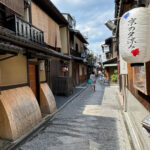
Gion gives the tour its proper setting. This is not simply a backdrop for photographs. The guide uses the district to explain how tea culture developed within Kyoto’s artistic and religious life.
A visit to a well-known matcha shop adds a useful everyday connection. You can see how matcha is presented and sold in Kyoto before learning how the same ingredient is handled in a formal ceremony. The difference between a quick drink and a carefully prepared bowl becomes easier to understand.
The Gion walk is also a good time to ask basic questions. If you have never attended a tea ceremony, you may want to know when to bow, how to hold the bowl, or why the room contains such carefully chosen objects. The English-speaking guide is there to explain the background and help you feel prepared for the final sitting.
Do not expect a long free-shopping period here. The shop visit is part of the lesson, and the overall route has several short stops. If you want a relaxed, unstructured afternoon in Gion, this tour may feel a little guided.
Kenninji Temple and Kyoto’s Zen connection
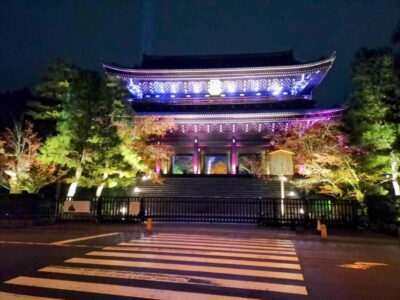
Kenninji is presented as Kyoto’s oldest Zen temple, and the tour allows about 30 minutes for a guided visit. This is one of the more important stops because Zen practice and tea culture are closely linked in the way the tour explains them.
At Kenninji, the guide places tea ceremony within a larger set of Japanese ideas about attention, restraint, and the beauty of simple things. You are not just moving from one photo opportunity to another. The temple helps explain why a tea room can value an understated bowl or a plain arrangement over something shiny and elaborate.
The temple visit also gives you a chance to see how religious spaces shape the visual language of Kyoto. Take your time with the details the guide points out. The value here comes from the explanation, so staying close to the group is worthwhile.
As with many older temple compounds, surfaces and routes may not be fully accessible. The tour is not suitable for wheelchair users, and the overall route is not designed around stroller access.
Short stops for tea bowls, art, and quiet spaces
Several stops in Higashiyama are listed at around 10 minutes each. They include sightseeing, guided explanation, and a shopping stop connected with traditional pottery.
The pottery visit is one of the tour’s most distinctive features. You will have a chance to look at tea bowls with wabi-sabi qualities before you must choose one for the ceremony. The guide explains how Japanese tea utensils can carry signs of age, irregularity, and seasonal character.
This is where the idea becomes practical. Instead of hearing that wabi-sabi means finding beauty in imperfection, you can compare bowls and notice which one appeals to you. The choice is personal, and the tour describes it as being based on the season and your taste.
The pottery stop is not a full workshop, and you should not expect to make a bowl yourself. It is a viewing and shopping stop within the walking route. Still, it gives you a useful way to connect an abstract idea with an object you can hold.
Because the stop is short, you may need to listen carefully and make decisions promptly. If you are tempted by Japanese ceramics, keep in mind that the primary purpose is to prepare you for the ceremony, not to provide a long retail session.
A few more Kyoto tours and experiences worth a look
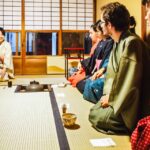
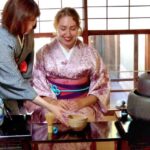
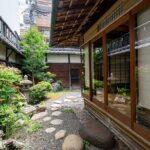
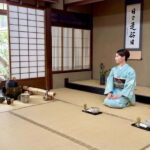
Entoku-in’s paintings and dry Zen garden
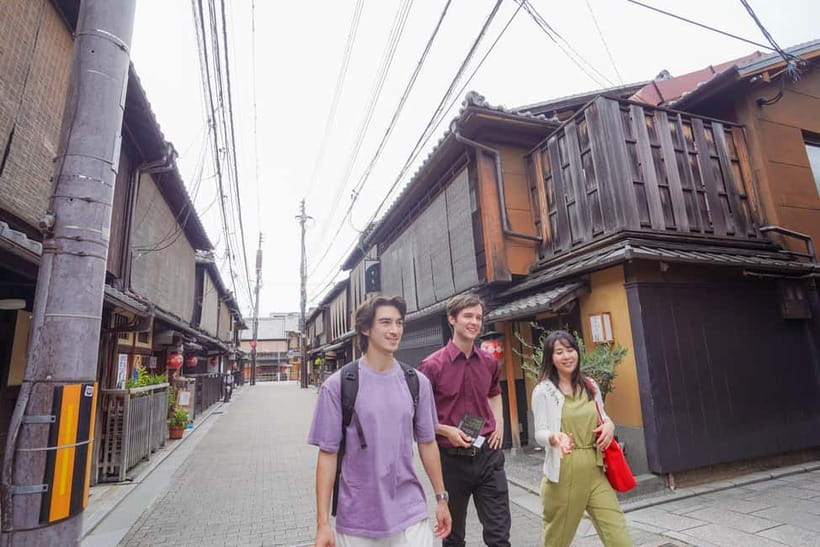
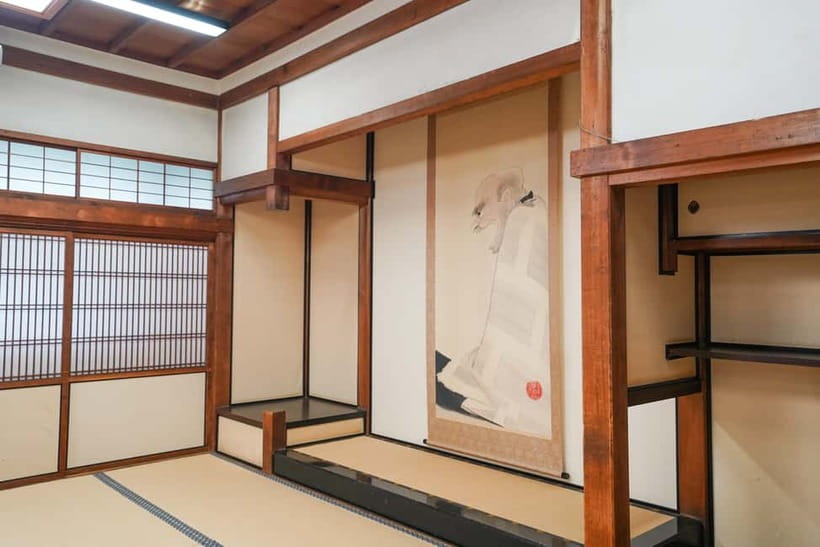
The tour allows about 30 minutes at Entoku-in. This quieter temple stop brings together two elements that are especially useful for understanding wabi-sabi: Japanese paintings and a karesansui, or dry landscape Zen garden.
A dry garden uses arranged stones, gravel, and open space rather than plants and water to suggest a larger natural setting. You do not need specialist art knowledge to appreciate it. The guide’s explanation helps you look at what is present, but also at what has been left out.
The same principle applies to the Japanese paintings. Their value in this tour is not just visual. They help show how Japanese art can use controlled composition, quiet surfaces, and seasonal suggestion rather than filling every space with detail.
Entoku-in is a good pause between the busier streets and the final tea room. I would use this part of the tour to slow down and absorb the themes. The schedule gives you enough time for a guided visit, but not an entire afternoon of independent meditation.
The final tea ceremony with matcha and a seasonal sweet
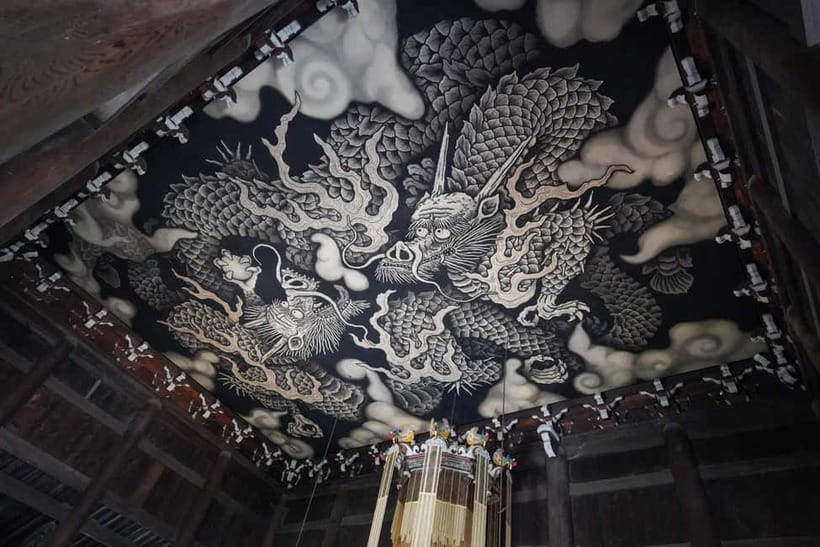
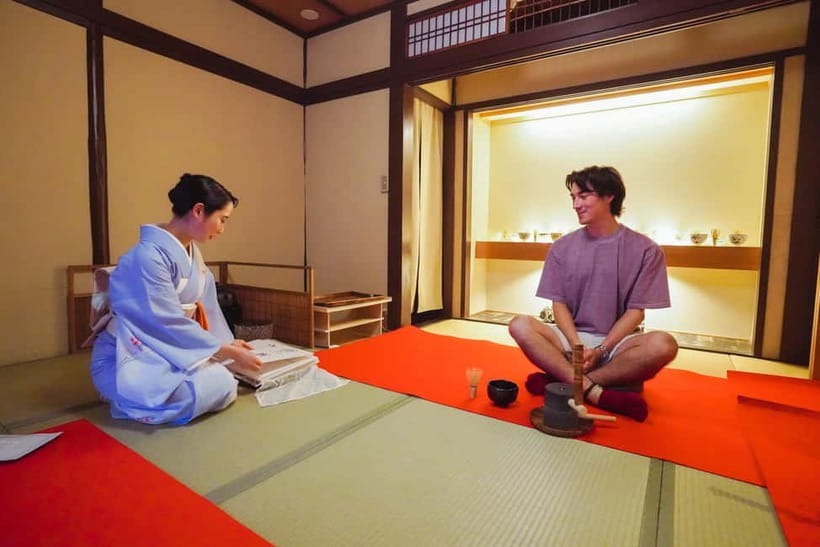
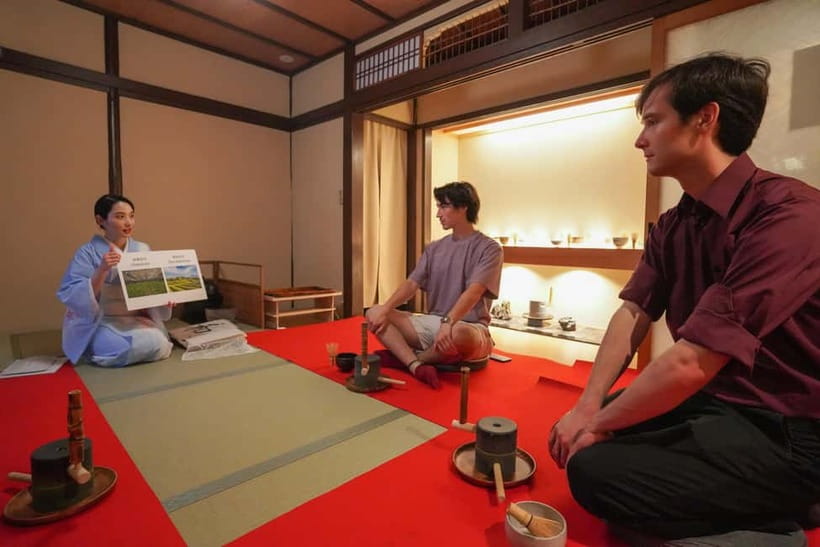
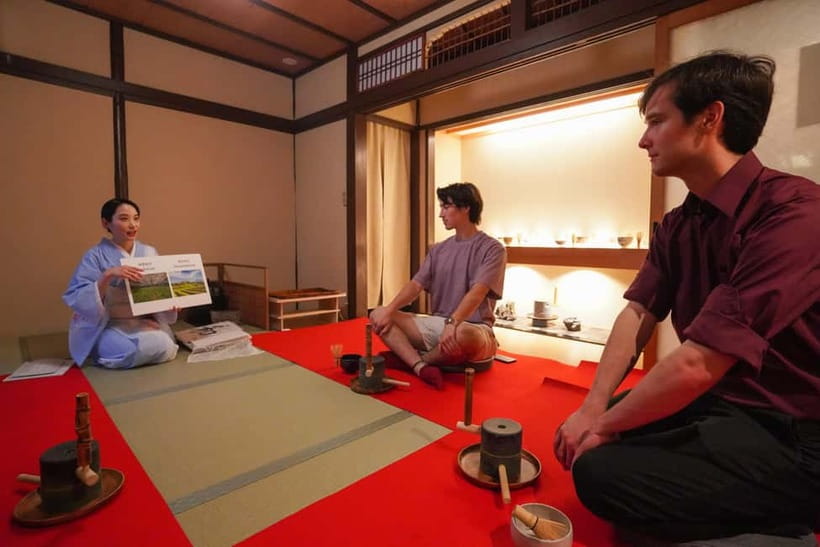
The last 45 minutes take place in Higashiyama, where you sit down for the tea ceremony under a tea master. This is the heart of the experience.
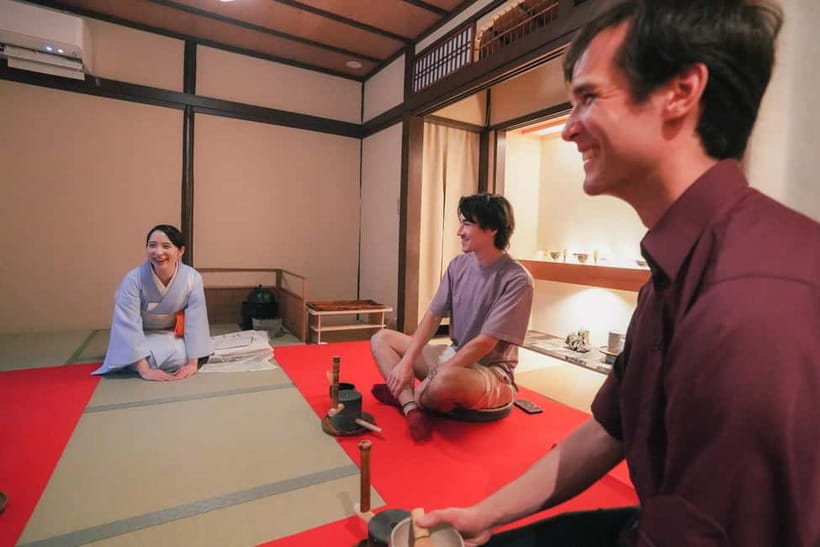
You receive matcha and a small seasonal snack, and you learn about the movements and meaning behind the ceremony. The guide has already introduced the utensils, temples, gardens, and wabi-sabi, so the tea room should feel less mysterious than it would at the start of the day.
The seasonal element is important. You choose a tea bowl according to the season and your own taste, then use it as part of the experience. The bowl is not just a cup. Its shape, surface, and character become part of the moment.
Expect a formal setting, but not one that requires prior experience. The point is to learn and take part respectfully. Your guide can explain the essentials, while the tea master handles the preparation.
The ceremony itself is calming, but it is also structured. You may find the pace slower and more deliberate than a normal café visit. That is the point. The tour asks you to pay attention to touch, movement, presentation, and taste.
Children must be at least six years old to take part in the tea ceremony. Younger children may join the walking portions, but one adult must remain outside the facility with them during the ceremony. Families should plan for that split before booking.
What the small group adds
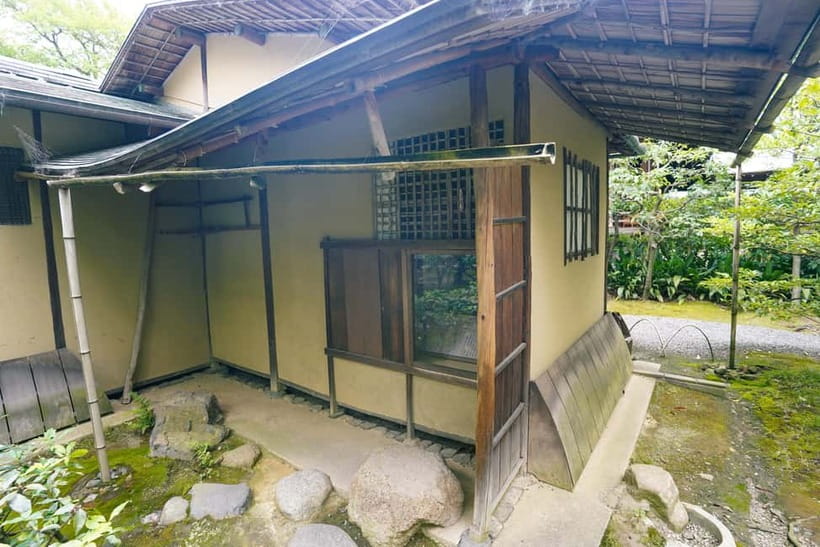
With a maximum of seven participants, this is a more personal format than a large sightseeing walk. You can usually stay near the guide, ask questions, and hear the explanations about utensils and temple art more clearly.
The guide also takes photos during the tour, which means you do not need to document every moment yourself. That can be useful during the ceremony, when it is better to focus on what is happening than to keep reaching for your phone.
The quality of the experience depends partly on the guide. Masa has led this tour and is described as friendly, helpful, and good at explaining details. If Masa is assigned to your departure, you can expect a warm personal style based on the feedback available. Guide assignments can vary, so the tour’s main promise is the English-language interpretation and the planned route, not a particular person.
Some departures have a flexible program, which can be useful if weather, temple conditions, or local timing require small changes. It also means you should not treat every short stop as rigidly fixed.
Price, timing, and practical value
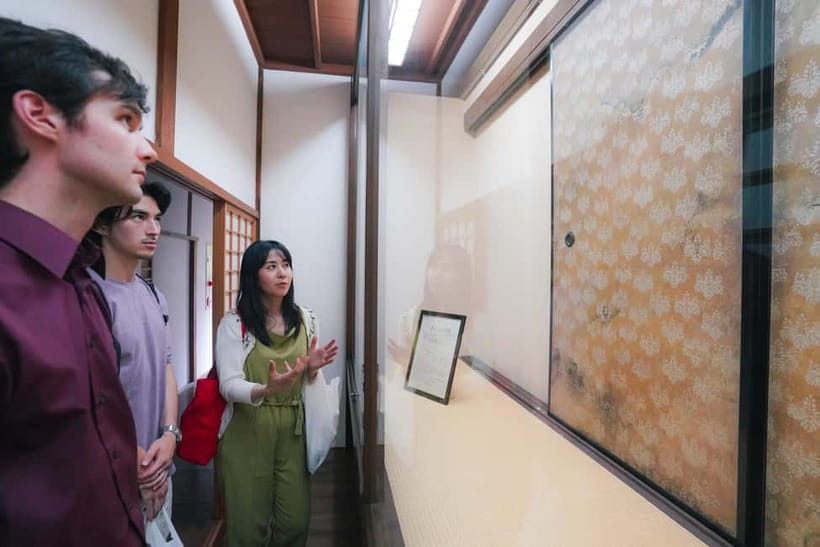
At $92 per person, this is not the cheapest way to drink matcha in Kyoto. You are paying for more than the beverage: three and a half hours of guiding, admission to two temples, the tea ceremony, the seasonal snack, and photos during the walk.
The value is strongest if you want context. A lower-cost tea experience may give you matcha and sweets but leave you unsure why the bowl, garden, or gestures matter. This tour adds Gion, Kenninji, pottery, Entoku-in, and the explanation that connects them.
It also saves you from arranging several separate visits. The route includes temple entrance fees, and the guide handles the cultural explanation in English. For a first Kyoto visit, that can make the price reasonable.
The value is weaker if you mainly want a long formal tea ceremony or a free afternoon in Gion. The ceremony lasts about 45 minutes, while much of the total time is spent walking and sightseeing. You are buying a combined culture walk and tea session.
Plan for Kyoto’s weather. Summer temperatures can reach 40°C, while winter can fall to -5°C. Wear shoes and clothing suited to several hours outside, and prepare for the season rather than relying on mild conditions.
The route includes places that are not wheelchair or stroller accessible. Also, unsuitable weather may cause cancellation for safety reasons. You can cancel or reschedule without charge up to 24 hours before the start time, and the reserve-now-pay-later option lets you hold a place without paying immediately.
Who should book this experience?
I would recommend this tour to you if you want to understand tea ceremony as a cultural practice rather than a quick tasting. It suits first-time visitors to Kyoto, people interested in Zen and Japanese art, and anyone who likes a guide to connect separate sights into one story.
It is also a good match for curious couples, solo visitors, and small groups who prefer an English-speaking guide and a limited group size. The pottery and garden stops make it more varied than a ceremony alone.
I would think twice if you use a wheelchair, need stroller-friendly access, dislike walking in heat or cold, or have only 90 minutes available. The start time must be correct, and a documented scheduling problem left one participant with only 90 minutes and no tea ceremony. Double-check the time shown when you book and arrive before the meeting time.
Final verdict: a thoughtful introduction to Kyoto tea culture
Book this tour if you want the tea ceremony to make sense. The strongest feature is the order: Gion first, then Zen temples, art, gardens, and tea bowls, followed by matcha in a formal setting.
The tour’s best moments are likely to come from small details rather than grand sights. You may notice why an uneven bowl feels right for a season, how a dry garden uses empty space, or why the tea master’s movements are so measured.
At $92, it is a fair choice for a guided cultural afternoon that includes two temple admissions and the ceremony itself. Just confirm the start time, arrive early, and be ready for walking. If you want a calm, structured introduction to wabi-sabi and matcha, this is a worthwhile Kyoto outing.
FAQ
Where does the Kyoto tea ceremony tour meet?
Meet in front of the Izumo no Okuni Statue, directly outside Exit 5 of Gion-Shijo Station on the Keihan Line. The guide will hold an orange signboard marked Magical Trip Tour.
How long does the experience last?
The tour lasts 210 minutes, or three and a half hours.
What language is the tour conducted in?
The live tour guide speaks English.
How many people can join the group?
The group is limited to seven participants, although other participants may be part of your departure.
What is included in the price?
The price includes the tea ceremony, matcha, a small seasonal snack, admission to two temples, an English-speaking guide, and photos taken during the tour.
Is the tea ceremony suitable for young children?
Children must be at least six years old to take part in the tea ceremony. Younger children may join the walking portion, but one adult must stay outside the facility with them during the ceremony.
Is the tour wheelchair accessible?
No. The experience is not suitable for wheelchair users, and some locations are also difficult to access with a stroller.
What happens if I arrive late?
The tour starts on time. If you miss the group, you cannot join the tour later, receive a refund, or reschedule because of lateness.
Can I cancel or reschedule?
You can cancel or reschedule for free up to 24 hours before the tour begins. You can also reserve now and pay later.
More Walking Tours in Kyoto

More Tea Ceremony Experiences in Kyoto
More Gion & Geisha Walks in Kyoto
More tours in Kyoto we've reviewed



Gion & Geisha Walks, compared.
 ★ 4.7Kyoto Geisha Walking Tour: Gion District & Hidden GemsFrom $252 hours
 ★ 4.7Kyoto: Gion Geisha District Walking Tour – Stories of GeishaFrom $202 hours
 ★ 4.9Best of Kyoto: Gion, Geisha, Pagodas & CobblestonesFrom $242 hours
 ★ 4.5Night Walk in Gion: Kyoto’s Geisha DistrictFrom $211h 40m
 ★ 5.0Kyoto Night Foodie Tour in Gion (9+ dishes + 6 Sake tastings)From $163
 ★ 5.0Kyoto Gion Geisha District Walking Tour – The Stories of GeishaFrom $25