
Reviewed · WALKING TOURS
Kyoto Philosophy Walk with Philosopher (Private/6.5 hour)
Kyoto’s famous Philosopher’s Walk becomes far more interesting when you have a guide who can explain not only where you are, but what the place asks you to think about. This private tour connects Pure Land Buddhism, Shinto, Zen gardens, Buddhist ideas of awakening, and Japan’s response to Western philosophy.
I like two things right away: the one-to-one feel of a private outing, and the chance to discuss ideas with Hiroki, a nationally licensed guide and trained philosophy researcher. I also like that the route includes less obvious stops, such as Konchi-in and the Suirokaku Aqueduct.
The catch is the price. At $230 per person, plus about ¥1,600 in temple fees, ¥750 for public transportation, and your lunch, this is not a bargain sightseeing loop. You pay for time, conversation, and an unusual way to understand Kyoto rather than for a long list of major attractions.
In This Review
- Key points at a glance
- Why this Kyoto walk is different
- Starting at Higashi Hongan-ji and asking about the Pure Land
- Yoshida Shrine and the Shinto view of the sacred
- Ginkaku-ji and the appeal of restraint
- The Philosopher’s Walk with room for real conversation
- Nanzenji Suirokaku and the meeting of old and new
- Sanmon Gate and the three steps to liberation
- Konchi-in and the question of a true Zen garden
- What the six-and-a-half-hour schedule feels like
- Is $230 per person a fair price?
- Who should book this experience?
- Practical details before you reserve
- Should you book the Kyoto Philosophy Walk?
- FAQ
- How long does the Kyoto Philosophy Walk last?
- What time does the tour begin?
- Where does the tour start?
- Where does the tour end?
- Is this a private tour?
- Which places are included on the route?
- Are temple admission fees included?
- Are lunch and public transportation included?
- Is the tour suitable for people with limited mobility?
Key points at a glance
- Philosophy-led sightseeing: Connect Kyoto’s temples and shrines to Pure Land Buddhism, Shinto, Zen, and modern Japanese thought.
- Private six-and-a-half-hour route: Only your group takes part, with room for questions and a flexible pace.
- Seven thoughtful stops: Visit Higashi Hongan-ji, Yoshida Shrine, Ginkaku-ji, the Philosopher’s Walk, Nanzenji Suirokaku, Sanmon Gate, and Konchi-in.
- A guide with an unusual specialty: Hiroki combines national guiding credentials with research in philosophy.
- Extra costs are separate: Plan for ¥1,600 in temple admissions, ¥750 in transit, lunch, and the $230 tour fee.
- Walking and stairs matter: The day includes about one mile on foot and a two-story building reached only by stairs.
Why this Kyoto walk is different
Most Kyoto tours explain dates, buildings, and famous residents. This one uses each place as a prompt. At Higashi Hongan-ji, you consider the Pure Land. At Yoshida Shrine, you look at Shinto ideas about the presence of the sacred in nature. At Ginkaku-ji, the subject turns to Japanese simplicity.
That approach can change the feel of a familiar route. You are not only taking pictures of a gate or garden. You are being asked to connect the site with a larger question, then discuss it with your guide.
Hiroki is the named experience provider and is described as both a nationally licensed guide and philosophy researcher. The feedback associated with the tour also refers to him as Hiro and, in one case, Hero. The repeated praise focuses on his command of Japanese history, culture, religion, and philosophy, along with his ability to manage time and adjust the day around what you want to explore.
This is still a sightseeing tour, not a university seminar. You will walk, ride public transportation, stop for lunch, and visit major Kyoto sights. The philosophy adds another layer rather than replacing the practical business of getting around.
Other walking tours we've reviewed in Kyoto
Starting at Higashi Hongan-ji and asking about the Pure Land
The meeting point is the Bus Ticket Centre and Information Centre near Kyoto Station, at 902 Higashishiokōjichō in Shimogyo Ward. The tour begins at 9:00 a.m., and the first stop, Higashi Hongan-ji Temple, is about a 10-minute walk away.
You spend roughly 30 minutes here. Admission is free, so this is an easy first stop and a useful introduction to the day’s method.
The question is the meaning of the Pure Land, one of the central ideas in Japanese Buddhism. Hiroki’s role here is not simply to point out a building. He helps place the temple within the Pure Land Buddhist tradition and gives you a way to think about why this idea has mattered so much in Japan.
The short visit also sets expectations. If you want a guide who talks only about architecture and construction dates, this may feel unusual. If you enjoy asking why religious ideas developed as they did, the conversation begins on solid ground.
Yoshida Shrine and the Shinto view of the sacred
Yoshida Shrine receives another 30-minute visit, also without an admission charge. It is one of Kyoto’s oldest shrines, and until about 150 years ago it was connected with government-approved religious authority.
The subject here is Shintoism, especially the idea described for the tour as Japanese pantheism. You explore how sacred meaning can be felt throughout the natural world rather than contained only inside a single building.
This is a helpful contrast with the first stop. Instead of treating Japanese religion as one single tradition, the route begins to show you different ways of understanding spiritual life in Japan. The value lies in comparison: Pure Land thought at one stop, Shinto practice at the next, and Zen ideas later in the day.
Yoshida Shrine also gives the tour a useful historical range. You are not looking only at modern Kyoto or at temples frozen in the past. You are discussing how religious institutions related to public life before Japan’s modern period.
Ginkaku-ji and the appeal of restraint
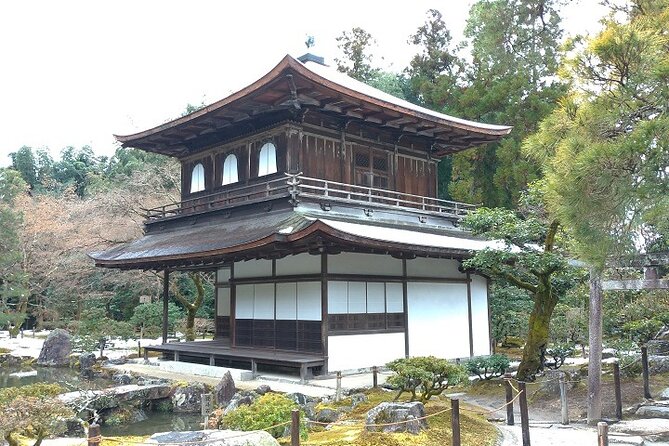
Ginkaku-ji, or the Silver Pavilion, receives about 45 minutes. It is a Zen temple and a UNESCO World Heritage site. Admission is not included, so this is one of the places where you should have cash ready.
The theme is Japanese simplicity, sometimes summed up by the idea that less can be more. The point is not merely that the temple grounds are attractive. You consider how restrained design, empty space, and limited decoration can create a strong sense of beauty.
This stop should appeal to anyone who likes gardens and architecture but wants more than a quick photo stop. Hiroki can use the site to explain how Zen ideas influenced Japanese aesthetics, though the exact balance between formal explanation and open discussion will depend on your questions.
Forty-five minutes is enough to make the visit meaningful without making it the entire morning. Still, Ginkaku-ji is a popular Kyoto sight, and you should expect a public temple setting rather than a private, silent garden. The tour’s quieter moments are more likely to come along the walking route than inside every famous site.
The Philosopher’s Walk with room for real conversation
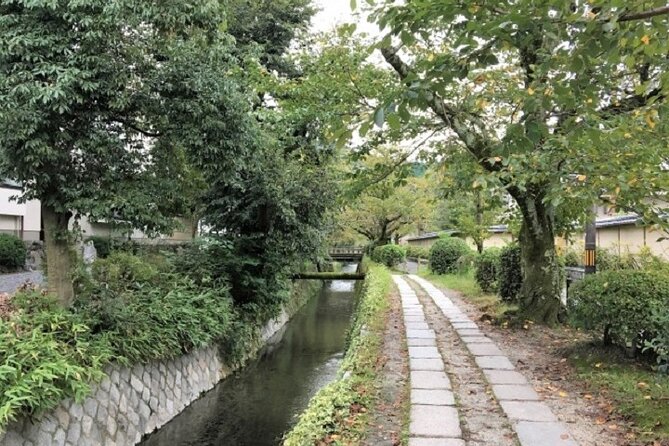
The Philosopher’s Walk is the heart of the experience. You spend about an hour along this well-known path, discussing how Japanese philosophers responded to Western philosophy and how modern Japanese thought developed.
This is the part most likely to justify the tour’s price for the right person. A standard walk can be pleasant but fairly passive. Here, the path becomes a setting for a conversation about competing traditions, cultural change, and the way Japanese thinkers handled ideas from Europe and North America.
The route includes roughly one mile of walking, plus backstreet walking around the stops and movement between sites. Wear comfortable shoes. The distance is not extreme, but the day is long, and the walking comes alongside temple visits, stairs, public transportation, and sustained conversation.
You may also appreciate the flexibility of a private format here. The feedback connected with the tour describes Hiroki as adaptable and good at time management. That matters on a discussion-based outing because one question can easily lead to another. A private guide can spend more time on a subject that catches your interest rather than rushing everyone along.
Other private tours in Kyoto
Nanzenji Suirokaku and the meeting of old and new
The Suirokaku Aqueduct at Nanzenji receives a short 15-minute stop. This Western-style brick structure sits within a traditional Buddhist temple setting, creating a striking meeting of architectural periods and ideas.
The question here is how to think about protecting an ideal view and preserving a place’s character. The aqueduct is useful precisely because it complicates any simple picture of Kyoto as purely traditional. Modern engineering and older religious architecture share the same setting.
Fifteen minutes is brief, but the stop works as a visual example. You do not need a long visit to see the contrast between brick construction and the surrounding temple grounds. Hiroki can use that contrast to introduce broader questions about preservation, change, and what a city chooses to keep.
Admission is listed as free for this stop. Your overall temple costs still apply elsewhere, so do not mistake one free stop for a completely ticket-free day.
Sanmon Gate and the three steps to liberation
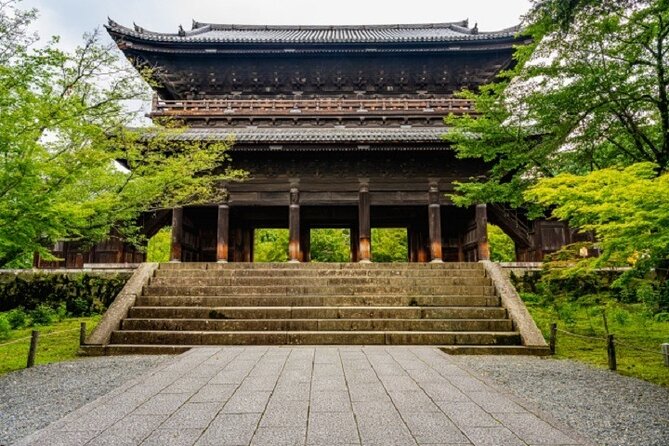
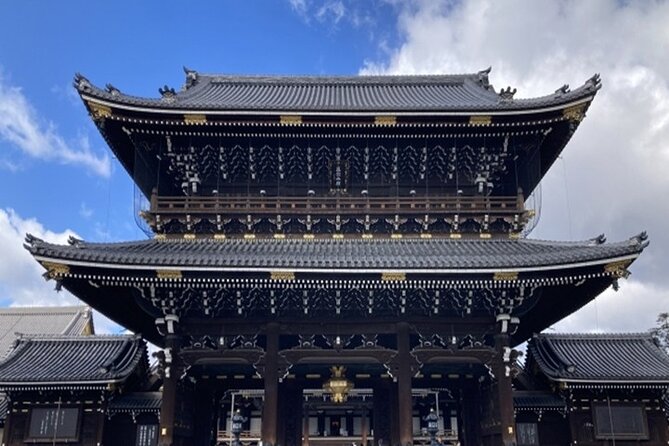
Sanmon Gate is another 15-minute stop at Nanzenji. The gate is two stories high, and the tour connects its name with three steps toward liberation in Buddhist thought.
Admission is not included. The itinerary includes a two-story building reached only by stairs, so this is the point to consider your comfort with climbing. The information provided does not give an elevator alternative, so anyone with mobility concerns should ask the provider before booking.
The visit is short, but the gate gives the Buddhist themes a strong physical form. You are looking at an entrance while discussing a path toward awakening. That connection between the shape of a place and the idea attached to it is typical of the tour.
If you prefer long, unhurried visits at each major temple, the 15-minute timing may feel tight. If you like a day that uses several sites as connected examples, the short stop keeps the route moving.
Konchi-in and the question of a true Zen garden
The final listed stop is Konchi-in, with about 30 minutes inside. This Zen temple is described as a place especially appreciated by Japanese people interested in history, and it is known for its Zen garden.
The guiding question is simple but useful: What does an authentic Zen garden look like? You can examine the garden not just as a beautiful arrangement of rocks, gravel, and plants, but as an expression of religious and aesthetic ideas.
This stop is a strong finish because it brings several themes together. Earlier, Ginkaku-ji introduced simplicity. At Konchi-in, that idea becomes more focused through the design of a Zen garden. You also return to the question of how religion shapes the way people understand space.
Admission is not included. The day ends back at the original meeting point, though the schedule allows time for transportation, lunch, and walking between the main stops. The stated breakdown gives one hour for lunch and one hour and 45 minutes for backstreet walking and public transportation beyond the listed stop times.
What the six-and-a-half-hour schedule feels like
The tour lasts about 6 hours and 30 minutes, but the seven named stops account for only part of that time. The rest includes a one-hour lunch break, transit, and walking around the sites.
Lunch is at your own expense. No restaurant or set menu is specified, so you should budget separately and expect the break to be a practical pause rather than a featured food experience.
Public transportation costs about ¥750 per person. The route is near public transportation, and transit is part of the experience rather than an optional extra. Keep small cash available, especially since the temple fees are also listed as cash expenses.
The day has a clear intellectual arc:
- Pure Land Buddhism
- Shinto thought
- Zen simplicity
- Modern Japanese philosophy
- Preservation and cultural change
- Buddhist liberation
- Zen garden design
That sequence gives the outing shape. You are not simply moving from one attraction to another.
Is $230 per person a fair price?
The listed price is $230 per person, with group discounts available. Since this is a private tour, the value changes with the size of your group. A couple paying the full rate will feel the cost more sharply than a larger party sharing the private guide service.
The entrance fees and transportation are extra. You should prepare approximately ¥1,600 per person for temple admissions, ¥750 per person for public transit, plus lunch. The fee structure is fairly clear, but the added costs mean the advertised price is not your full spending total.
I would judge the value by your interest, not by the number of sights. You can visit many Kyoto temples on your own for less. You cannot easily reproduce the combination of a private licensed guide, philosophy research, connected discussion, and a route that includes both major landmarks and less obvious stops.
This is good value if you want personal attention and enjoy asking large questions about religion, art, and cultural change. It is weaker value if you mainly want fast transportation, extensive free time at each temple, or a low-cost introduction to Kyoto.
Who should book this experience?
I would recommend it most strongly to:
- First-time Kyoto visitors who want cultural context rather than a checklist of sights
- Couples, families, or friends who enjoy discussion
- People interested in Buddhism, Shinto, Zen, Japanese aesthetics, or modern philosophy
- Repeat visitors looking for a different way to see the Philosopher’s Walk
- Small private groups that want a flexible day with one guide
You do not need formal training in philosophy. The tour is designed around questions, not an academic qualification. Still, you should be comfortable with conversation and willing to think aloud. The experience will have less appeal if you want a quiet stroll with only short historical comments.
The schedule is suitable for most people, but it is not completely effortless. You walk about one mile, use public transportation, and encounter stairs in a two-story building. Comfortable shoes are essential, and anyone concerned about stairs or walking should contact Hiroki before reserving.
Practical details before you reserve
Confirmation is provided at booking, and the activity is private, so only your group takes part. The tour starts at 9:00 a.m. and returns to the same meeting point near Kyoto Station.
Bring cash for the ¥1,600 in temple fees. The information specifically asks you to prepare cash, and relying only on a card could create avoidable trouble.
Wear comfortable footwear and keep your schedule open for the full morning and afternoon. A philosophy discussion can make the day feel quick, but the tour still runs for six and a half hours.
Free cancellation is available if you cancel at least 24 hours before the local start time. Cancellations or changes made inside that window are not refunded or accepted.
Should you book the Kyoto Philosophy Walk?
Book this if you want Kyoto to give you something to think about after you leave. Hiroki’s mix of licensed guiding and philosophy research makes the route unusual, and the private format gives you room to ask questions that a large group tour would usually skip.
Skip it if your priority is saving money, avoiding stairs, or spending a long time at only one or two temples. At $230 per person before meals, transport, and admissions, this is a specialist experience.
For the right audience, it offers a rare benefit: you see Kyoto’s religious sites, gardens, and paths while learning how to connect them. That makes the day feel less like a sightseeing transfer and more like a guided conversation with the city.
FAQ
How long does the Kyoto Philosophy Walk last?
The experience lasts approximately 6 hours and 30 minutes.
What time does the tour begin?
It begins at 9:00 a.m. local time.
Where does the tour start?
The meeting point is the Bus Ticket Centre and Information Centre at 902 Higashishiokōjichō, Shimogyo Ward, Kyoto, near Kyoto Station.
Where does the tour end?
The activity ends back at the same meeting point.
Is this a private tour?
Yes. Only your group participates in the activity.
Which places are included on the route?
The route includes Higashi Hongan-ji Temple, Yoshida Shrine, Ginkaku-ji Temple, the Philosopher’s Walk, Nanzenji Suirokaku, Sanmon Gate, and Konchi-in.
Are temple admission fees included?
No. Temple entrance fees are separate. You should prepare approximately ¥1,600 per person in cash.
Are lunch and public transportation included?
No. Lunch is at your own expense, and public transportation costs approximately ¥750 per person.
Is the tour suitable for people with limited mobility?
The itinerary includes about one mile of walking and a two-story building accessible only by stairs. Most people can participate, but you should contact the provider before booking if stairs or walking are a concern.
More Private Tours in Kyoto
More Walking Tours in Kyoto

More tours in Kyoto we've reviewed



Walking Tours, compared.
 ★ 4.7Kyoto Geisha Walking Tour: Gion District & Hidden GemsFrom $252 hours
 ★ 4.7Kyoto: Gion Geisha District Walking Tour – Stories of GeishaFrom $202 hours
 ★ 4.5Night Walk in Gion: Kyoto’s Geisha DistrictFrom $211h 40m
 ★ 5.0Kyoto Gion Geisha District Walking Tour – The Stories of GeishaFrom $25
 ★ 5.0Nishiki Market Brunch Walking Tour (7 Tastings + Brunch)From $68
 ★ 4.9Kyoto: Gion Magical Night Walking Tour with Geisha InsightsFrom $34