
Reviewed · PRIVATE
Kyoto Private Tour with Customized Itinerary
Kyoto is easiest to enjoy when someone helps you choose. This private five-hour tour lets you shape the morning around temples, shrines, Gion, Arashiyama, or quieter lanes instead of following a fixed script.
I like the personal scale, with only your group and a local host, and I like the chance to ask for a less tourist-heavy route. Guides including Alejandra, Laura, Maya, and Milo have been praised for thoughtful planning, strong local knowledge, patience, and taking family photos.
The main catch is time. The suggested stops add up to nearly five hours before travel between them, so you will need to choose carefully. Seeing Fushimi Inari, Kiyomizu-dera, Gion, and Arashiyama all in one morning may feel rushed, especially if you want time inside each place.
In This Review
- Key points at a glance
- A private Kyoto morning instead of a fixed checklist
- Fushimi Inari and its tunnel of red gates
- Kiyomizu-dera and Higashiyama’s old lanes
- Yasaka Shrine and the approach to Gion
- Gion’s wooden streets and tea-house atmosphere
- Arashiyama and the bamboo grove
- What the guide adds to the day
- Five hours, one morning, and a lot of Kyoto
- Is $293.19 good value for six people?
- Who will get the most from this tour?
- Booking details worth knowing
- Should you book the Kyoto private tour?
- FAQ
- How long does the Kyoto private tour last?
- What time does the tour start?
- How many people can join the private tour?
- Is hotel pickup included?
- Which Kyoto sights can be included?
- Are entrance fees included?
- Is transportation included?
- Is the tour private?
- Is the tour suitable for most people?
- What happens if the weather is poor?
- Can I cancel for a full refund?
Key points at a glance
- Private group of up to six: You spend the tour with your own party and a local host, not a large sightseeing group.
- Hotel pickup included: The guide can meet you at your hotel or accommodation at the 10:00 am start.
- A route built around your interests: Pick famous sights, traditional neighborhoods, gardens, temples, or quieter streets.
- Strong guide feedback: Alejandra, Laura, Maya, and Milo are specifically praised for flexibility, history, cultural explanations, and family-friendly help.
- Nearly five hours of suggested sightseeing: Fushimi Inari, Kiyomizu-dera, Yasaka Shrine, Gion, and Arashiyama all appear in the possible route.
- Extra costs are modest but real: Paid entrance fees and local bus or subway fares are not included.
A private Kyoto morning instead of a fixed checklist
Kyoto rewards a good plan, but it can punish an overambitious one. The city’s main sights are spread across different areas, and a private guide can help you spend your limited morning in a way that fits your interests and energy.
The tour lasts about five hours and is designed for a maximum of six people. That makes it a useful choice for a family or small group that wants one shared guide, one conversation, and a route adjusted to the group’s pace.
You can ask for major landmarks such as Fushimi Inari-taisha and Kiyomizu-dera. You can also request old residential streets, traditional shops, Gion, gardens, or a mix of old and new Kyoto.
I especially like the chance to make the tour personal before the day begins. If one person in your group loves religious architecture and another wants food streets or traditional neighborhoods, tell the guide early so the plan does not become a rushed list of every famous place.
The guide also adds value through context. A temple or shrine is more memorable when you understand what you are seeing, how it fits into Kyoto’s culture, and which details deserve your attention.
Other private tours in Kyoto
Fushimi Inari and its tunnel of red gates
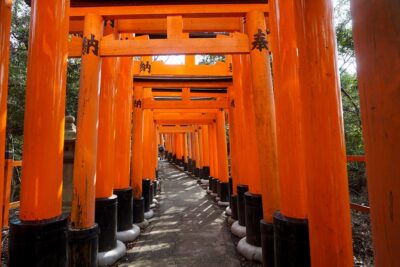
Fushimi Inari-taisha is the most physically distinctive stop on this route. Its famous path climbs Mount Inari beneath thousands of red torii gates, creating a long, repeating corridor of color and shadow.
The suggested visit lasts about 1 hour and 10 minutes. You do not need to reach the top to enjoy it, and the tour description points out that good views can be found around the halfway point.
That timing matters. A private guide can help you decide how far to go based on your group’s stamina rather than treating the mountain as an all-or-nothing climb. Look for the fox statues along the way, which represent messengers of Inari, the deity connected with the shrine.
Admission is free, which keeps this stop simple. The challenge is that the path is uphill, and the combination of walking, stairs, and crowds can use a large share of your morning.
If Fushimi Inari is your top priority, I would give it room and trim the rest of the route. It is not a quick photo stop if you want to appreciate the gates, mountain setting, and fox guardians.
Kiyomizu-dera and Higashiyama’s old lanes
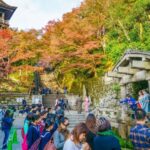
Kiyomizu-dera brings you into one of Kyoto’s best-known temple settings. Entrance is not included, with the listed cost given as $8 per person, so allow for that extra charge if this is part of your final route.
The suggested temple visit lasts about an hour. That is enough for a useful look, but not an unhurried exploration of every corner, particularly if you stop often for views and photographs.
The area around the temple is just as important as the temple itself. Higashiyama’s narrow lanes, wooden buildings, shops, and cafes give you a sense of old Kyoto that a single temple courtyard cannot provide.
This is where a local host can make a difference. The guide can point out how the district works as a living neighborhood, not just a sightseeing backdrop, and help you balance temple time with a walk through the surrounding streets.
Kiyomizu-dera pairs well with Gion and Yasaka Shrine because they are all in Kyoto’s eastern sightseeing area. It pairs less neatly with Arashiyama, which is on the western side of the city, so ask the guide to explain the travel plan before trying to include both.
Yasaka Shrine and the approach to Gion
Yasaka Shrine is allotted about 30 minutes and has no admission fee. Its location makes it a practical link between Higashiyama and Gion.
The shrine is more than a quick stop for photographs. It has served as a guardian of Kyoto’s Gion entertainment district for more than 1,350 years, and it is closely associated with the Gion Matsuri, Kyoto’s major summer festival held in July.
Half an hour is a sensible amount of time for a first look. You can see the shrine, hear about its role in the district, and then continue toward Gion without using the whole tour on one complex.
I like this stop for the connection it creates between religious Kyoto and the city’s traditional entertainment quarter. It helps explain why the surrounding streets have such a distinctive feel.
Gion’s wooden streets and tea-house atmosphere
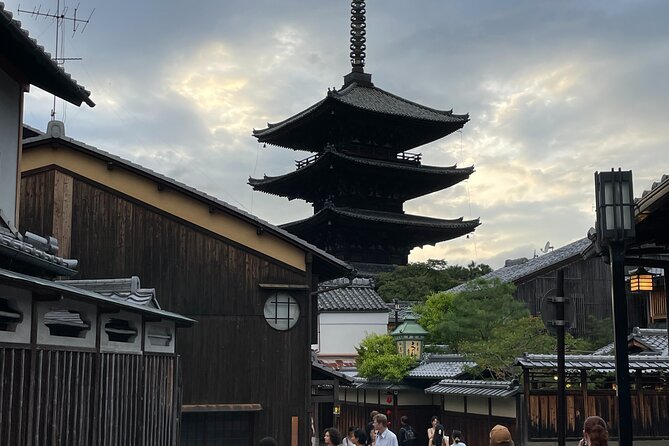
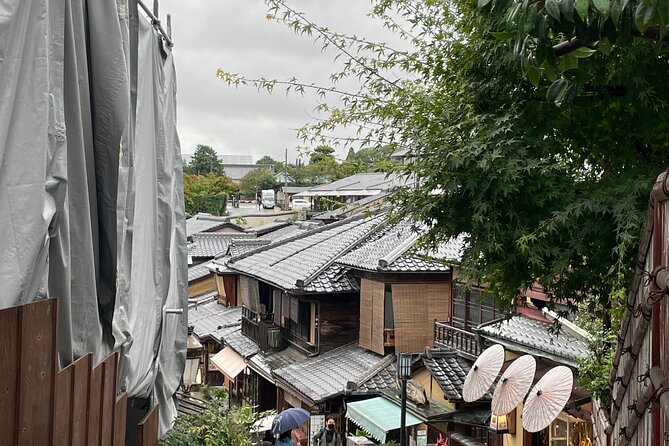
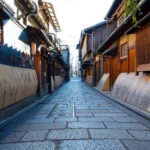
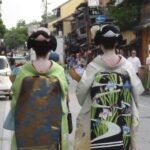
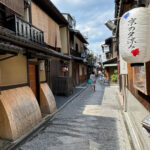
Gion is the tour’s best choice if you want traditional Kyoto without spending all your time inside a temple. The route highlights Hanami-koji Street and the Shimbashi area, where wooden houses contain restaurants, cafes, and tea houses.
The suggested visit lasts about an hour. That gives you time to walk, look closely at the buildings, and ask the guide about the district’s customs and history.
Gion is also a place where you should be considerate. The tour description identifies it as Kyoto’s geisha district, but this is a working neighborhood, not a stage set. A guide can help you understand the area while keeping your visit respectful.
This portion may suit you best if you enjoy atmosphere and street detail more than checking off another large monument. The traditional buildings, narrow lanes, and quiet corners can make the district feel more personal than a fast stop at a major attraction.
Gion also works well for groups with mixed interests. Some people can focus on architecture and photography, while others can ask about cafes, restaurants, and Kyoto’s traditional arts.

Arashiyama and the bamboo grove
Arashiyama sits in Sagano on Kyoto’s western side, away from the eastern cluster of Fushimi Inari, Kiyomizu-dera, Yasaka Shrine, and Gion. The suggested visit takes about 1 hour and 10 minutes, including time for the path through the famous bamboo grove.
The bamboo creates a very different mood from the red gates at Fushimi Inari. Light filters through the tall stalks, and the narrow path offers one of Kyoto’s most recognizable scenes.
The grove itself is not an all-day experience, but the trip across the city affects your schedule. Transportation is not included, and the listed estimate is $5 per person for bus and subway when used.
That is why I would usually treat Arashiyama as the main focus of a separate half-day plan, unless your guide recommends it as the best fit for your location and priorities. Adding it to all four eastern Kyoto stops may leave you spending too much of the tour moving between places.
Entrance fees are also not included for paid venues. The bamboo path may not require the same paid entry as some attractions, but any additional venue you choose can add to the final cost.
What the guide adds to the day
The strongest feature here is not the number of stops. It is the guide’s ability to adjust the day while you are still in it.
Alejandra is praised for taking a group to places they would not have found alone and for finding an alternative route away from the usual sightseeing circuit. That is useful if you have already seen Kyoto’s major landmarks or want a quieter morning.
Laura is described as flexible and helpful with family needs, while also explaining Japanese culture and historical sites clearly. Maya is praised for expertise, taking photographs, and creating a memorable time.
Milo receives particular praise for thoughtful contact before the visit, patience during the tour, and bringing Kyoto’s history to life for a family. Another family described a fulfilling day with temple and garden visits, along with time for reflection and quiet.
Those details suggest that the human side of the tour is its main selling point. You are not simply hiring someone to walk you from one gate to another. You are paying for help with choices, pacing, explanations, and the small adjustments that make a private outing work.
You should still send clear preferences before the start. Tell the guide if you want fewer famous sights, more history, photographs, traditional streets, temples and gardens, or a route that is easier for your group.
Five hours, one morning, and a lot of Kyoto
The planned times total about 4 hours and 50 minutes:
- Fushimi Inari-taisha: 1 hour 10 minutes
- Kiyomizu-dera: 1 hour
- Yasaka Shrine: 30 minutes
- Gion: 1 hour
- Arashiyama: 1 hour 10 minutes
That leaves almost no room for moving between districts, pauses, food, unexpected discoveries, or a slower pace. In practical terms, these times describe the possible sightseeing menu, not a promise that every group will enjoy all five stops fully.
The tour is better when you view customization as a real choice. Pick two or three areas and let the guide build a sensible route around them.
For example, Fushimi Inari, Kiyomizu-dera, Yasaka Shrine, and Gion form a more logical eastern Kyoto morning. Arashiyama can then be selected instead of the eastern route if bamboo and Sagano are your main interests.
A guide may also suggest a different mix based on your hotel or accommodation and the places you have already visited. The important point is to avoid treating the tour as a race.
Is $293.19 good value for six people?
The listed price is $293.19 per group, with up to six people included. That works out to roughly $49 per person for a full group of six, before transportation and paid admission.
For two people, the per-person cost is much higher. The value depends on how much you care about having a private guide and how difficult it would be for you to plan Kyoto’s scattered sights on your own.
For a family, the price can make sense because the guide can adjust the pace, explain cultural details to different ages, and help with photographs. A private group also avoids the lost time that comes with waiting for strangers or following a pace that does not suit you.
The extra costs are clear enough to plan for. Paid venues may add $8 per person, and bus or subway use is listed at $5 per person. The tour itself includes hotel pickup, but transportation during the outing is not included.
I would consider it good value if you want guidance and flexibility more than the lowest possible price. If you are comfortable planning trains, buses, temple visits, and walking routes yourself, you may prefer an independent morning.
Who will get the most from this tour?
This experience fits first-time Kyoto visitors who want help making sense of a large city in a short window. It also suits families and small groups that value a private pace.
It is a strong match for you if you want:
- A guide who can explain Japanese culture and history
- A route built around your own interests
- Help finding less familiar streets or an alternative to the busiest circuit
- A private outing for up to six people
- Assistance with photographs and family pacing
- A morning that combines major sights with local context
It may not suit you if you want a slow, detailed visit to every stop listed. It is also less appealing if you prefer to explore independently or if Arashiyama and eastern Kyoto are both essential on the same morning.
Most travelers can participate, service animals are allowed, and the meeting point is near public transportation. Pickup is offered at your hotel or accommodation, with a 10:00 am start.
Booking details worth knowing
Confirmation is provided at booking, and the activity is private, so only your group participates. The experience requires good weather, and if poor weather causes cancellation, you can choose another date or receive a full refund.
You can cancel for a full refund up to 24 hours before the start time. Changes or cancellations made within 24 hours are not accepted for a refund, and the cut-off follows local Kyoto time.
The tour is commonly booked well ahead, with the average booking made 54 days in advance. That is a useful warning for busy travel periods, especially if you need a particular morning or want to request one of the named guides.
Should you book the Kyoto private tour?
I would book this tour if you want a guide to shape Kyoto around your group rather than simply march through a standard route. The best reasons are the private format, hotel pickup, flexible planning, and the guide’s apparent strength with families, history, photographs, and quieter alternatives.
I would not book it expecting a leisurely visit to all five listed stops. Ask for a focused route, and decide which matters most: the red gates of Fushimi Inari, the temple and lanes around Kiyomizu-dera, Gion’s wooden streets, or Arashiyama’s bamboo grove.
For six people, the group price is attractive. For a couple, it is a bigger investment, but it can still be worthwhile if local explanation and efficient planning are central to your Kyoto visit.
FAQ
How long does the Kyoto private tour last?
The tour lasts approximately five hours.
What time does the tour start?
The stated start time is 10:00 am.
How many people can join the private tour?
The tour is available for a private group of up to six people.
Is hotel pickup included?
Yes. Pickup is offered at your hotel or accommodation.
Which Kyoto sights can be included?
Possible stops include Fushimi Inari-taisha Shrine, Kiyomizu-dera Temple, Yasaka Shrine, Gion, and Arashiyama. The itinerary is customizable around your interests.
Are entrance fees included?
No. Entrance fees for paid venues are not included. The listed estimate is $8 per person, depending on the places you choose.
Is transportation included?
No. Bus and subway costs are not included. The listed estimate is $5 per person when public transportation is used.
Is the tour private?
Yes. Only your group participates in the activity.
Is the tour suitable for most people?
The provided information says most travelers can participate. Service animals are also allowed, and the tour is near public transportation.
What happens if the weather is poor?
The experience requires good weather. If it is canceled because of poor weather, you will be offered a different date or a full refund.
Can I cancel for a full refund?
Yes. You must cancel at least 24 hours before the experience start time for a full refund. Cancellations or changes made less than 24 hours before the start time are not accepted for a refund.
More Private Tours in Kyoto
More tours in Kyoto we've reviewed



Private, compared.
 ★ 5.0Fushimi Inari Hidden Hiking Tour (Private Option Available)From $63
 ★ 5.0Private Kyoto Tour with a Local, Highlights & Hidden Gems, PersonalisedFrom $102
 ★ 5.0Kyoto 6hr Private Tour with Government-Licensed GuideFrom $155
 ★ 5.010 Must-see Spots in Kyoto One Day Private Tour (up to 7 people)From $179
 ★ 5.0Kyoto 4hr Private Tour with Government-Licensed GuideFrom $109
 ★ 4.8Kyoto: Private Tour with Local Licensed GuideFrom $1064 - 8 hours