
Reviewed · TOURS
Kyoto Rickshaw Tour
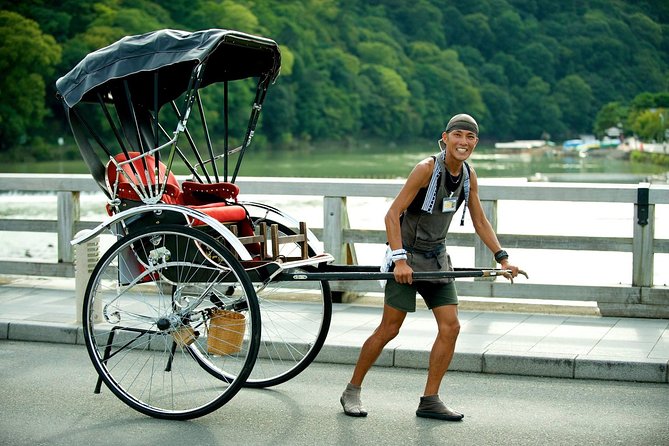
Kyoto’s old streets make far more sense from a rickshaw. You sit above the crowd while a strong local driver pulls you past wooden town houses, stone lanes, shrines, temples, and the geisha district. The ride is not just transport. Your guide points out details you would likely miss on foot, then takes photos at the best stops.
I like the personal route planning and the easy introduction to Higashiyama. A 30-minute ride gives you a quick taste of Gion, while two or three hours lets you slow down for temple grounds, tucked-away lanes, and questions. I also like the drivers’ friendly, practical style. Guides including Fumi, Hina, Yoshi, Kanta, Kai, Kota, and Shuhei have earned praise for their English, local stories, humor, and photo skills.
The main consideration is comfort. Each rickshaw is only 29.1 inches wide, and two adults may feel cramped. A longer tour also costs more, and the short options cannot cover every listed sight. Plan your route and seating needs before you arrive.
In This Review
- Key points to know before booking
- Why a rickshaw works so well in old Kyoto
- Starting at the Ebisuya Higashiyama stand
- Higashiyama’s wooden streets and stone lanes
- Entering the geisha district and traditional town houses
- The small bridge and the quiet traditional lanes
- Temples, gardens, and Kyoto’s religious traditions
- Yasaka Shrine and the Gion area
- What the guides add to the ride
- Choosing between 30 minutes and three hours
- Seating, weather, and practical limits
- Who will enjoy this Kyoto ride most
- Should you book the Kyoto Rickshaw Tour?
- FAQ
- Where does the Kyoto Rickshaw Tour start and finish?
- How long does the rickshaw tour last?
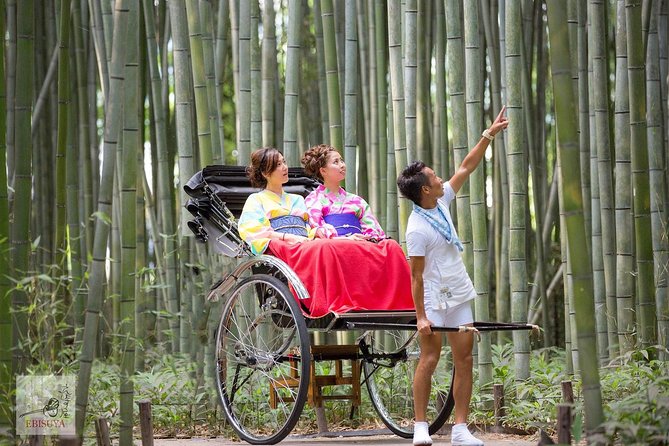
- Is the Arashiyama Bamboo Forest included?
- How many people can ride in one rickshaw?
- Is the tour private?
- What happens if I need to cancel?
Key points to know before booking
- The route centers on Higashiyama and Gion: Expect old wooden buildings, cobblestone lanes, shrines, temples, a small traditional bridge, and the geisha district.
- Tour times range from 30 minutes to three hours: Short rides focus on a small part of the old town, while longer rides can include more stops and photo time.
- Your driver is also your guide and photographer: Guides such as Fumi, Yoshi, Kanta, Kai, and Kota explain customs and local history in English.
- The ride is private to your group: You are not placed with unrelated passengers, and the route can be adjusted around your interests.
- Two adults fit, but the seats are narrow: Booking one rickshaw per person may be more comfortable, especially for larger passengers or anyone who dislikes close seating.
- Arashiyama Bamboo Forest is not included: This booking is for the Ebisuya Higashiyama branch, not the separate Arashiyama operation.
Why a rickshaw works so well in old Kyoto
Higashiyama is one of the parts of Kyoto where walking can become slow and tiring. Its lanes are narrow, its slopes can be surprising, and the most appealing views often appear one after another. A rickshaw gives you a moving seat without cutting you off from the street.
You are close enough to see timber details, tiled roofs, lanterns, shop fronts, and passing pedestrians. At the same time, you are high enough to get a clear view over the immediate crowd. The pace is slow, so you can look around rather than worry about maps and turns.
I especially like this format for a first visit. Kyoto can feel scattered at first, with shrines, temples, alleys, and historic districts spread across the city. A local driver helps you connect the pieces. Guides have explained temple customs, local folklore, geisha district traditions, and the difference between what you are seeing at a shrine and at a Buddhist temple.
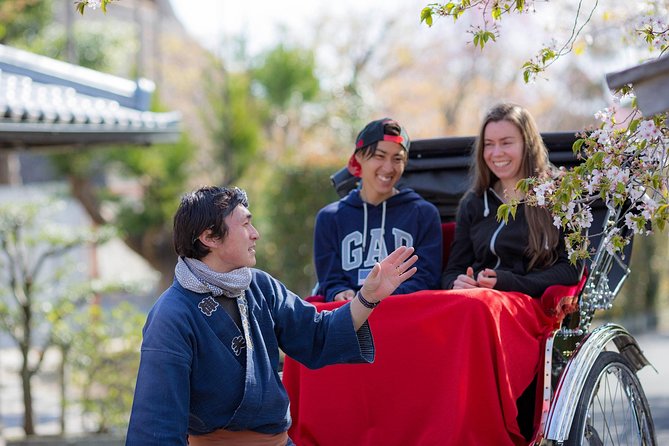
The experience also has a human element that a bus tour cannot match. You can ask a direct question, request a photo stop, or tell the guide that you want more architecture and less history. The driver is working hard throughout, both physically and as a guide, so a respectful attitude and a reasonable pace matter.
If you're still narrowing it down, here are other tours in Kyoto we've reviewed.

Starting at the Ebisuya Higashiyama stand
The tour begins at Ebisuya Higashiyama Rickshaw, at 483 Shimokawaracho in Kyoto’s Higashiyama Ward. The activity returns to this meeting point unless you arrange another finish in advance. A different drop-off may bring an extra fee payable on the day.
The location is near public transportation, but leave enough time to find the stand. Kyoto’s old districts have many small lanes and busy pedestrian areas. Arriving late is a poor gamble because your lost time is deducted from the tour. A delay of 10 minutes or more results in automatic cancellation.
At the stand, you meet the driver who will pull your rickshaw and guide the outing. The experience is private to your group, not a shared vehicle with strangers. That makes the seating arrangement important. Two adults can ride in one rickshaw, and children age five and under may sit on an adult’s lap, with one child per adult.
Children age six and over pay the adult rate. If a child five or younger uses one of the two seats rather than an adult’s lap, that child must be booked as an adult. Up to two small children can ride with two adults if they remain on adult laps.
Higashiyama’s wooden streets and stone lanes
The first part of the ride takes you into the old Higashiyama area. This is the setting many people picture when they think of historic Kyoto: wooden town houses, narrow lanes, stone paving, traditional storefronts, and buildings that make modern traffic feel far away.
The rickshaw is especially useful here because the driver knows how to handle the old streets. You can keep your eyes up and watch the details instead of navigating every turn. The guide can also pause for photographs, which is useful because the best pictures often come from quiet corners rather than major entrances.
The route is customizable, but the exact coverage depends on the time you book. A 30-minute outing is best treated as a short orientation. It can show you a slice of the old town and the Gion area, but it will not cover every temple, shrine, bridge, and lane listed for the full experience.
The 70-minute option gives you more room to explore. It has been used for Gion and Higashiyama routes with stops at shrines, temples, and scenic streets. For many people, this is a sensible middle ground: enough time to see the character of the district without committing half a day.
Entering the geisha district and traditional town houses
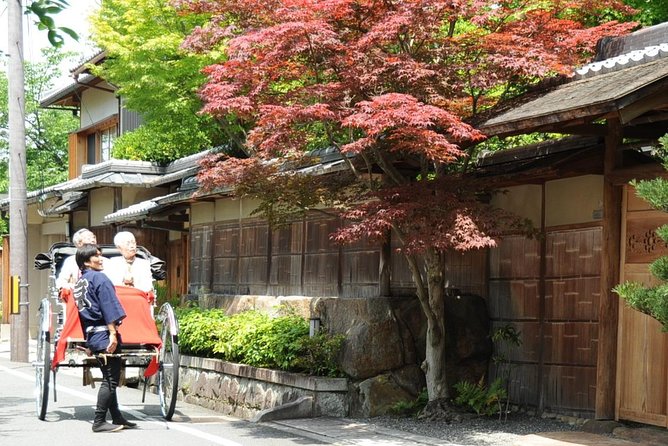
The ride continues through a geisha district with traditional wooden town houses. You may spot a geisha or maiko, though this is never something to count on or chase. The district is a working neighborhood, not a stage set, so your guide can help you understand the setting while you pass through respectfully.
This section is valuable because the atmosphere comes from the streets themselves. You see the narrow frontage of the old houses, the careful use of wood, and the way small lanes frame temples and shrines. During a daytime ride, you can study these features more easily than you might during an evening visit.
Several guides have been praised for making this part more than a photo stop. They explain local customs and folklore, answer questions, and point out routes that are easy to miss. A few guides have also taken photos and short videos for their groups, often choosing quieter paths and scenic backgrounds.
Keep your camera ready, but do not let it take over. The appeal of the ride is the chance to absorb the district at a gentle pace. If you want more time for pictures, tell the guide at the start. A longer booking gives you more freedom to stop without rushing the next section.
The small bridge and the quiet traditional lanes
One itinerary stop is a small bridge in the traditional district. It may not have the scale of Kyoto’s biggest landmarks, but this is exactly the kind of place where a rickshaw ride earns its keep. A local guide can explain why a modest lane or bridge matters, while you take in the architecture and street pattern around it.
You also travel along an old cobblestone street, where the sense of age comes from the paving, buildings, and narrow view lines. This is a good point to let the driver do the navigating. The street may look simple on a map, but the experience comes from the sequence of small views as the rickshaw moves through it.
The ride does not turn every stop into a long walking tour. You remain seated for much of the experience, with opportunities to get out or pause depending on the route and duration. If you want to enter a temple or spend extended time in a garden, ask before booking. Shorter tours cannot include all stops, and some temple visits may involve an extra charge.

Temples, gardens, and Kyoto’s religious traditions
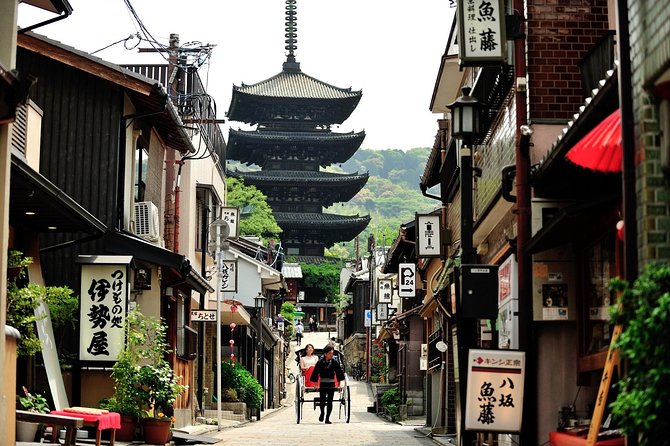
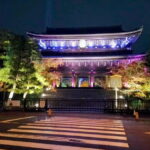
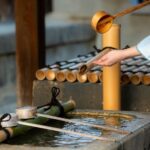
The longer routes can include a beautiful temple with a garden and another impressive temple. These stops give the ride more depth. Kyoto’s temples are not only photo backgrounds. Their gates, gardens, carvings, courtyards, and rituals show how religion shaped the city’s daily life.
Kodaiji and Yasaka Shrine have been included on longer Higashiyama and Gion outings. Kennin-ji Temple has also been visited on a two-hour tour for an additional fee. That detail matters when comparing options. The base ride includes the rickshaw and English-speaking guide, but admission or special temple access may not be part of the price.
I would choose the longer tour if you want explanations rather than a simple circuit. Guides such as Shuhei, Kanta, and Yoshi have been singled out for clear English and useful explanations at temples and shrines. You can ask about customs, architecture, or the meaning of what you see without having to keep pace with a large group.
Still, be realistic about the clock. A three-hour booking can cover much more, but it is not the same as spending three hours inside temple grounds. The rickshaw itself remains the center of the experience. Discuss the plan with your guide so you know how much time will be spent riding, stopping for photos, and visiting sites.
Yasaka Shrine and the Gion area
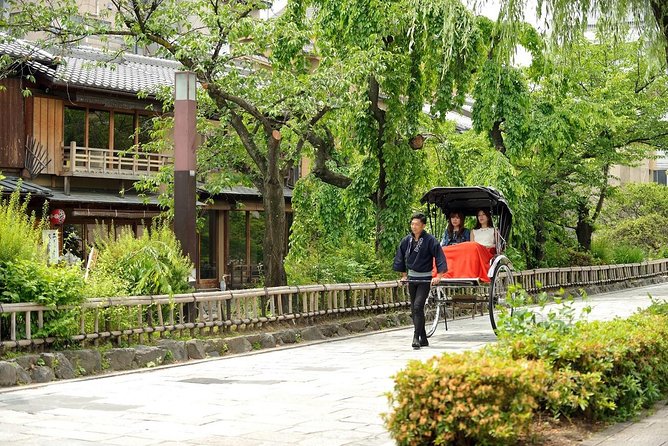
The large shrine in Gion is Yasaka Shrine, a major stop in the district and a natural part of a Higashiyama route. It is worth visiting around New Year, too, either before or after the ride, when it becomes an important place for seasonal visits.
The shrine gives you a useful contrast with the surrounding Buddhist temples. Your guide can explain the setting and customs, and you can ask about how people use the site today. This kind of context is one of the strongest reasons to book a private ride instead of simply hiring a vehicle for sightseeing.
If your tour is short, the shrine may be viewed from the route rather than explored at length. The exact stops depend on the duration and your chosen interests. Tell the operator in advance if Yasaka Shrine is a priority, especially if you are booking 30 minutes or one of the other shorter options.
What the guides add to the ride
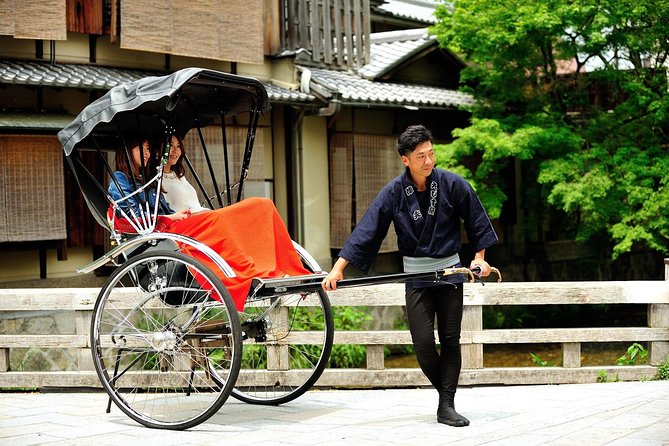
The drivers are central to the experience. They are not simply pulling a carriage and pointing at buildings. The strongest guides combine local knowledge, humor, English conversation, route judgment, and photography.
Fumi has been praised for vivid stories and an attentive manner. Hina has been described as patient with questions and careful about comfort. Yoshi is known for engaging conversation and photographs, while Kanta has been appreciated for his English and clear explanations around Gion. Kai has handled longer rides with large adults and kept the mood light.
You may be assigned someone else, so do not book on the assumption that a particular guide is guaranteed. The useful point is the standard of interaction you should expect: a guide who can answer questions, adjust the pace, and help you notice more than you would on your own.
The physical work is impressive. Several outings involved drivers pulling two adults, including tall passengers, for 70 to 120 minutes or longer. That effort is part of the price, but it is also a reason to be considerate. Follow seating instructions, avoid last-minute route demands that add strain, and tip according to your own judgment if you feel the service deserves it.
Choosing between 30 minutes and three hours
The price starts at $39.79 per person, though the cost of your booking depends on the duration and seating arrangement. Group discounts are available, and the ticket is mobile, which keeps the process simple.
Here is how I would think about the time choices:
- 30 minutes: Best for a quick introduction to Gion or Higashiyama. It is easy to fit into a busy sightseeing day, but you should not expect every landmark.
- 70 minutes: A useful middle choice for seeing several old streets, temples, shrines, and photo spots without making the ride the main event of your day.
- Two hours: Better for a slower route, more questions, and a possible temple visit. It gives your guide room to adjust the outing.
- Three hours: Best for a major introduction to the old town, families or couples who want a relaxed pace, and anyone who wants several stops. Some groups have enjoyed the experience enough to add extra time, but book the amount you want in advance rather than relying on availability.
The value is strongest when you treat this as a private cultural tour, not a short amusement ride. You are paying for the rickshaw, the driver’s time and physical effort, local interpretation, route flexibility, and help with photographs. A 30-minute ride is reasonably priced for a memorable orientation. The longer tours make more financial sense if you value personal attention and want to cover old Kyoto efficiently.
Seating, weather, and practical limits
The narrow seat deserves serious attention. Two adults fit in the rickshaw, but the width is 29.1 inches, or 74 centimeters. For some pairs, one rickshaw is fine. For others, booking an individual rickshaw per passenger will be more comfortable.
If two passengers do not fit comfortably in one rickshaw, you need an additional vehicle. That second rickshaw may not be available with an English-speaking guide on the day, so arrange it during booking. The same applies to a group that wants to ride together in multiple rickshaws.
The tour is planned to operate rain or shine, but poor weather can still lead to cancellation under the weather policy. If that happens, you are offered another date or a full refund. The booking also allows free cancellation up to 24 hours before the start time. Changes or cancellations inside that window are not accepted, so keep your schedule firm.
Hotel pickup, food, drinks, and the Arashiyama Bamboo Forest are not included. The voucher is valid only at the Higashiyama branch. If bamboo paths are your main goal, this is the wrong booking. Arashiyama has a separate branch and separate experience.
Who will enjoy this Kyoto ride most
I would recommend it to first-time visitors who want a clear introduction to Gion and Higashiyama. It also suits couples looking for a relaxed way to see old Kyoto, families who want something that holds children’s attention, and anyone who prefers a private guide to a large walking group.
It can help if walking long distances is difficult, since you can see a broad stretch of the old town from the seat. Still, the provided information does not promise special wheelchair access or a fully accessible route, so ask the operator about your exact needs before booking.
This is less suitable if you want a detailed interior tour of many temples, a full-day historical lecture, or a ride through Arashiyama’s bamboo forest. It is also not ideal if you dislike close seating or want complete control over the route without discussing it ahead of time.
Should you book the Kyoto Rickshaw Tour?
Yes, if you want an easy, personal introduction to Kyoto’s old neighborhoods. I would choose 70 minutes for a first taste, two hours if temples and questions matter, and three hours if you want the ride to become one of the main activities of your day.
Book one rickshaw per adult when comfort is uncertain, and name your priority stops before arrival. Keep in mind that the tour ends at the Higashiyama stand unless you arrange and pay for another drop-off. With those limits understood, this is a strong-value way to see the wooden lanes, Gion streets, shrines, and temples that make old Kyoto so memorable.
FAQ
Where does the Kyoto Rickshaw Tour start and finish?
It starts at Ebisuya Higashiyama Rickshaw, 483 Shimokawaracho, Higashiyama Ward, Kyoto, 605-0825, Japan. The activity ends back at the meeting point unless another finish is arranged, and an additional drop-off fee may apply.
How long does the rickshaw tour last?
Available tour lengths range from about 30 minutes to three hours. Shorter options cannot cover every landmark, so discuss your preferred stops with the operator or guide.
Is the Arashiyama Bamboo Forest included?
No. This experience is for the Ebisuya Higashiyama branch and does not include the Arashiyama Bamboo Forest. The voucher is not valid at the Arashiyama branch.
How many people can ride in one rickshaw?
A maximum of two adults can ride in one rickshaw. Children age five and under may sit on an adult’s lap, with one child per adult. Up to two young children can ride with two adults if both children sit on adult laps.
Is the tour private?
Yes. Only your group participates in the activity. The route can also be customized around your interests.
What happens if I need to cancel?
You can cancel at least 24 hours before the start time for a full refund. Cancellations or changes made less than 24 hours before the start time are not accepted. If poor weather causes the operator to cancel, you are offered a different date or a full refund.
More tours in Kyoto we've reviewed





Tours, compared.
 ★ 5.0PERFECT KYOTO 1-Day Bus TourFrom $129
 ★ 4.8Kyoto: Fushimi Inari, Kinkakuji, Bamboo Grove 1 Day Bus TourFrom $122510 minutes - 9 hours
 ★ 4.7Kyoto Geisha Walking Tour: Gion District & Hidden GemsFrom $252 hours
 ★ 4.7Kyoto: Gion Geisha District Walking Tour – Stories of GeishaFrom $202 hours
 ★ 5.0Hidden Kyoto E-Biking tourFrom $116
 ★ 5.0Kyoto Night Foodie Tour in Gion (9+ dishes + 6 Sake tastings)From $163