
Reviewed · SAMURAI & KENDO EXPERIENCES
Kyoto Samurai Discovery Samurai Sword Test Cutting Training
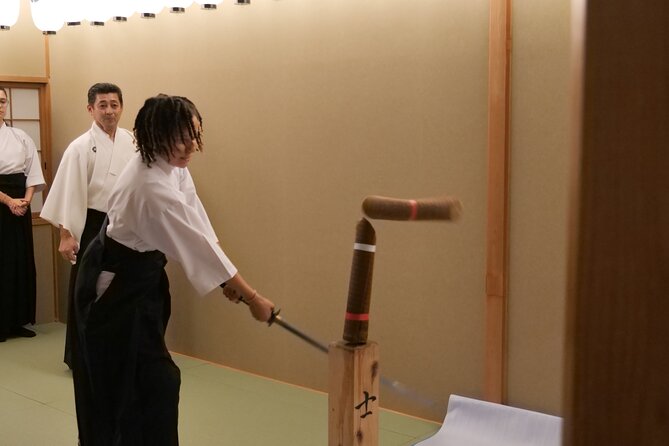
A real katana, rolled tatami, and a short lesson in Kyoto’s Gion district make this more than a photo stop. You learn the basics of handling a Japanese sword, practice your swings, then try tameshigiri, the controlled cutting of tatami mats.
I like the compact format and the careful instruction. At about 30 minutes, it fits neatly beside a temple visit, and the small maximum group of five keeps the session personal. I also like that the instructor records the cutting session, giving you a keepsake beyond the memory itself.
The main thing to watch is the timing. The advertised session is about 30 minutes, but individual participation takes roughly 15 minutes and the total can shift with group size. This is a focused introduction, not a full martial arts course.
In This Review
- Key points to know before you book
- Holding a real katana at Tozando Gion Yasaka
- Learning the basic sword movements
- From practice swings to tatami cutting
- Why the short format works in Kyoto
- What the $59 price includes
- The Samurai Bar and the shop visit
- Who will enjoy this experience most
- Timing, booking, and cancellation details
- Should you book the Kyoto samurai sword experience?
- FAQ
- Where does the samurai sword experience begin?
- Where does the activity finish?
- How long does the experience take?
- How many people can join?
- Is a real katana used?
- What is included in the price?
- Is transportation included?
- Can I cancel for a full refund?
Key points to know before you book
- You handle a real katana: The lesson covers safe handling, basic technique, and controlled cutting with an actual Japanese sword.
- Rolled tatami provide the target: After practice swings, you test your form in a tameshigiri session.
- Mark is one named instructor: He is described as patient and reassuring, useful if you feel nervous about holding a sword.
- The session stays short: Plan on roughly 30 minutes, with about 15 minutes per person when the group is larger.
- The shop and Samurai Bar add extra atmosphere: You can browse swords and samurai equipment, then visit the basement bar separately.
- The small group keeps things manageable: No more than five people can join the activity, and the price is $59 with equipment, costume, insurance, fees, and taxes included.
Holding a real katana at Tozando Gion Yasaka
The experience begins inside Samurai Shop Tozando Gion Yasaka, at 542 Gionmachi Minamigawa in Kyoto’s Higashiyama Ward. That setting matters. You are not walking into a generic activity room with a few themed props. You begin in a shop devoted to swords and samurai equipment, so the subject is present before the lesson starts.
I like this immediate sense of place. The shop gives you a chance to see authentic swords and samurai gear before or after your session. It also helps put the activity in context: the katana is not simply a costume accessory, but a carefully handled object with a long place in Japanese culture.
The meeting point is near public transportation, and the activity ends where it begins. That makes planning simple, especially if you are already visiting Gion, Yasaka Shrine, or nearby temples. You do not need to budget time for a separate return transfer.
The session includes a katana, costume, and insurance. Since these are covered in the $59 price, you can arrive without arranging equipment or paying separate fees on site. Private transportation is not included, but for a short activity in central Kyoto, that is rarely a serious drawback if you are using public transportation or walking from nearby sights.
A few more Kyoto tours and experiences worth a look

Learning the basic sword movements
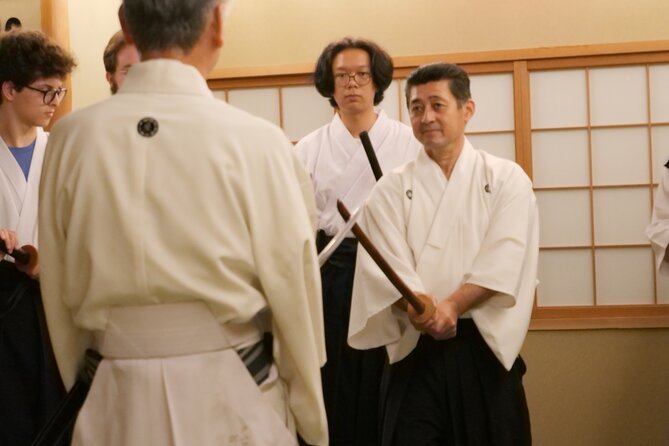
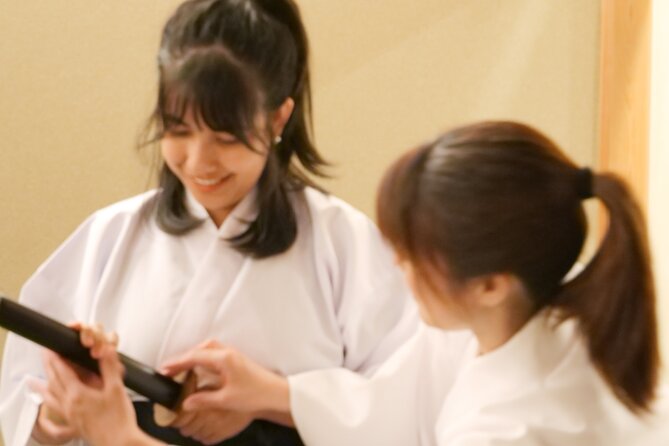
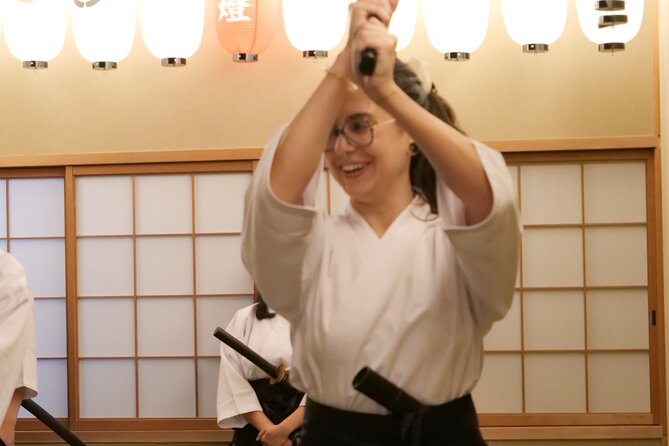
Your instructor starts with the fundamentals of Japanese sword handling. The focus is on precision and power, but the lesson also calls for control. You are shown how to hold the sword and how to prepare for a cut before moving on to the target.
That order is important. You do not simply pick up a sword and swing at tatami. The warm-up swings give you a chance to understand the movement first. If you arrive with no martial arts background, this makes the activity less intimidating. If you already practice a martial art, you will still need to follow the instructor’s method rather than rely on your own habits.
The lesson is brief, so you should expect a clear introduction rather than a detailed technical course. The aim is to help you perform a controlled cut safely and with enough confidence to enjoy the attempt. The instructors work quickly, but the experience is designed for beginners as well as people with prior interest in swordsmanship.
Mark is specifically noted as patient and reassuring. That detail will matter if you feel nervous. A real katana has weight and presence, and a calm instructor can make the difference between feeling tense and being able to focus on the movement.
I would treat the instruction as the main value of the experience. The costume and photographs are fun, but the useful part is learning why the sword must be handled with care and how a basic cut requires more than strength.
From practice swings to tatami cutting
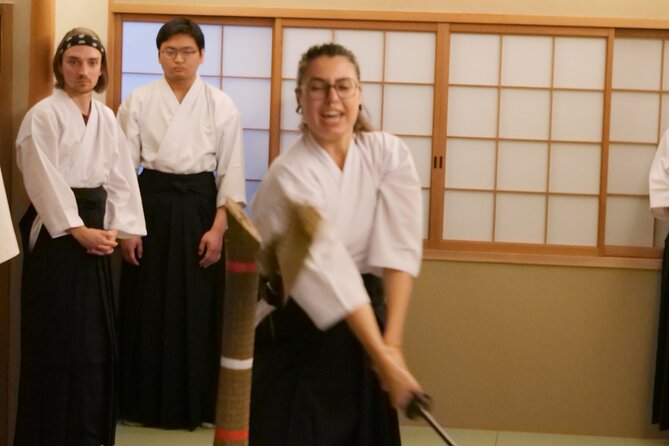
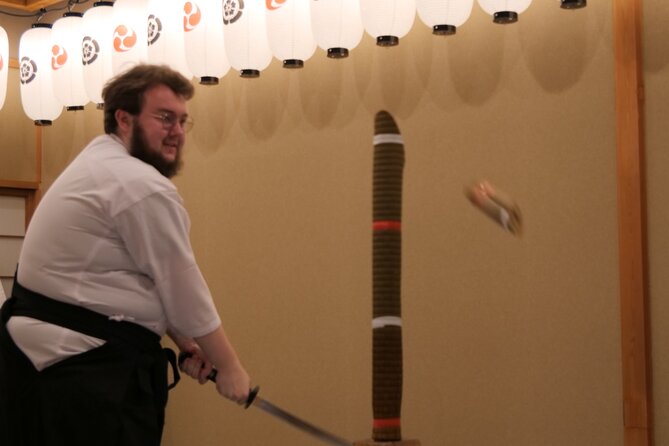
After the warm-up, you move to the tameshigiri portion of the session. You cut through rolled tatami mats using the technique you have just practiced. This is the moment that gives the activity its clear purpose. Instead of only posing with a sword, you get to test your movement against a real target.
The tatami mat is a practical choice for a short introductory class. It provides visible feedback. A clean cut shows that your angle, timing, and follow-through worked together. A less successful cut can show that power alone is not enough.
You should not expect a long sequence of increasingly difficult targets. The supplied details describe a brief activity, and the experience time changes according to the number of participants. One account describes each person cutting the mats multiple times, but the amount of time available depends on the group.
The maximum group size is five. That is small enough for each participant to receive direct attention, though the total session may run differently from one booking to the next. The stated guidance is roughly 15 minutes per person, with a maximum total duration of 30 minutes even if the number of participants increases. For your schedule, I would reserve at least 30 minutes and avoid placing an important timed booking immediately afterward.
The session can be recorded for you. That is a particularly useful touch because sword cutting is difficult to watch while you are doing it. A video lets you see your form later and gives you something more personal than a standard group photograph.
Why the short format works in Kyoto
Kyoto days fill quickly. You may have a temple reservation in the morning, a walk through Gion in the afternoon, and dinner plans before the evening crowds gather. A 30-minute sword activity can fit into that kind of day without taking over your schedule.
I especially like the location for that reason. The experience is close to major sightseeing in Gion and near public transportation. One of the most practical ways to use it is to pair it with a nearby temple or shrine visit. You can handle the activity first, then continue sightseeing without crossing the city.
The short length also keeps the experience focused. You learn a few basic movements, try the cutting exercise, and finish before the novelty wears off. The tradeoff is that you will not leave with a full understanding of samurai swordsmanship. You will have a taste of the discipline and a better sense of the focus required to cut well.
For families, the format may work especially well. A teen can take part, and the instructor’s patient approach helps adults who feel uncertain. The activity is not described as limited to martial artists, and most people can participate. Still, anyone booking should be comfortable following safety instructions closely while handling a real sword.
What the $59 price includes
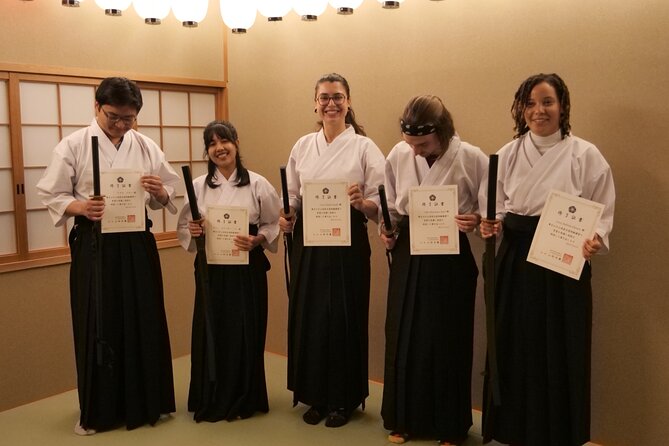
At $59, this is not the cheapest photo opportunity in Kyoto. It offers more than a costume rental, though. Your price covers all fees and taxes, the katana, the costume, and insurance. You also receive instruction, the tatami cutting session, and a recorded session according to the experience details.
That package gives the price reasonable value if you want an active cultural experience rather than a passive display. You are paying for equipment, supervision, a small group setting, and the chance to perform a traditional sword-cutting exercise. The cost is easier to justify if the activity is a highlight of your Kyoto visit rather than something you squeeze in only for a quick photograph.
The value is less clear if your main goal is a long lesson. At approximately 30 minutes, this is an introduction. You will not spend an hour working through several styles or practicing a large set of forms. Think of it as a compact hands-on encounter with samurai swordsmanship.
The shop adds value for anyone interested in Japanese swords beyond the cutting session. You can look at authentic swords and samurai gear after the lesson. Purchases are not included, of course, and browsing should be treated as an optional extra rather than part of the core activity.


The Samurai Bar and the shop visit
The basement Samurai Bar gives the experience a second setting. After handling a katana upstairs, you can relax in a samurai-themed space and order a samurai-inspired drink. The drink is not listed among the included items, so plan to pay separately if you choose one.
This is a pleasant add-on rather than a reason to book the lesson by itself. If you enjoy themed spaces and want to keep the samurai mood going, the bar makes the visit feel less rushed. If you are on a tight sightseeing schedule, you can simply finish the activity and continue into Gion.
The shop itself is worth allowing a few extra minutes for. Seeing swords and related equipment can help you understand the object you just used. You may also find that the retail setting changes how you view the activity: it connects the lesson to the craft and collecting side of samurai culture, not only to performance.
I would avoid treating the shop as an obligation. The cutting session is the booked activity. Browse if the displays interest you, and visit the bar if you have time, but do not feel you need to purchase anything for the experience to feel complete.
Who will enjoy this experience most
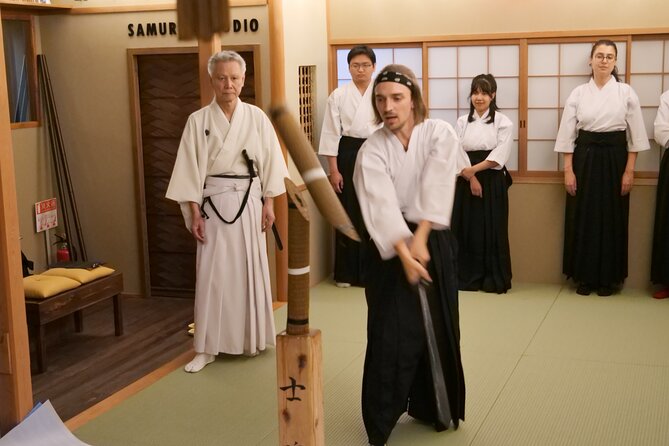
I would recommend this activity to you if you want something active, short, and easy to place between major Kyoto sights. It suits first-time visitors who want a cultural activity with a physical element, couples looking for an unusual shared experience, and families with a teen who enjoys samurai stories or martial arts.
It also works for martial arts enthusiasts who want to try a basic Japanese sword exercise in Kyoto. Keep your expectations measured, though. The lesson is brief and introductory, so experienced practitioners may find the technical content limited.
The small group is another point in its favor. With no more than five participants, you are not lost in a large demonstration. The instructor can guide each person through the movement, and the individual cutting time remains manageable.
I would be more cautious if you dislike strict physical instruction or feel uncomfortable handling a real blade. This is not a prop-sword show. The activity requires attention, patience, and respect for the equipment.
The format also suits people who want a memorable souvenir without committing to a full-day tour. You get a costume, a real cutting exercise, and a recording, then return directly to your Kyoto plans.
Timing, booking, and cancellation details
Confirmation is provided when you book, and the activity accepts mobile tickets. That is useful for a day when you are moving between sights and do not want to carry printed paperwork.
The listed duration is approximately 30 minutes. The exact timing can change with the number of participants, with about 15 minutes per person and a maximum of 30 minutes even if the group grows. I would arrive ready to begin and allow a little breathing room around the appointment.
The activity has a maximum of five participants, and most people can participate. It is near public transportation, but private transportation is not included. You meet and finish at Tozando Gion Yasaka.
Cancellation is free up to 24 hours before the local start time, with a full refund. Cancellations or changes made within 24 hours are not accepted for a refund. That policy is fairly flexible, but Kyoto plans can change quickly, so check your temple bookings and travel route before reserving.
Should you book the Kyoto samurai sword experience?
Book it if you want a hands-on Kyoto activity that takes about 30 minutes and gives you a genuine task to perform. The real katana, rolled tatami, small group, patient instruction, costume, and recording make it more substantial than a simple dress-up session.
It is also a good choice if you are visiting Gion and want to pair a cultural activity with nearby sightseeing. The shop and basement Samurai Bar give you optional extra time around the lesson, while the short format protects the rest of your day.
Skip it if you want an in-depth martial arts class or a long study of samurai history. This experience gives you a taste of sword handling and tameshigiri, not a complete course.
For $59, I find the strongest value in the combination of instruction and action. You do not only look at a katana. You learn how to handle it, practice the motion, and make a controlled cut under supervision. That is enough to make this a worthwhile Kyoto stop for curious beginners, families, and anyone who wants a story to take home.
FAQ
Where does the samurai sword experience begin?
It begins at Samurai Shop Tozando Gion Yasaka, located at 542 Gionmachi Minamigawa, Higashiyama Ward, Kyoto, Japan.
Where does the activity finish?
The activity ends back at the meeting point, inside or at Tozando Gion Yasaka.
How long does the experience take?
The activity lasts approximately 30 minutes. Timing can change with the number of participants, with roughly 15 minutes per person and a maximum total of 30 minutes.
How many people can join?
The activity has a maximum of five participants.
Is a real katana used?
Yes. The experience includes handling a real katana and cutting rolled tatami mats during a tameshigiri session.
What is included in the price?
The price includes all fees and taxes, a katana, a costume, and insurance.
Is transportation included?
Private transportation is not included. The meeting point is near public transportation.
Can I cancel for a full refund?
Yes. You can cancel at least 24 hours before the local start time for a full refund. Cancellations or changes made less than 24 hours before the start time are not refunded.
More Samurai & Kendo Experiences in Kyoto
More tours in Kyoto we've reviewed








Samurai & Kendo Experiences, compared.
 ★ 5.0Kyoto Samurai ExperienceFrom $119
 ★ 4.9Kyoto: Kendo and Samurai Experience with Uniform and GearFrom $1032 hours
 ★ 4.5Skip the lines Basic Ticket at SAMURAI NINJA MUSEUM KYOTOFrom $28
 ★ 4.9Kyoto: Samurai Class, Become a Samurai WarriorFrom $70
 ★ 5.0Ninja 1-hour Hands-on Lesson by Japanese master in Kyoto -EntryFrom $80
 ★ 4.8Kyoto: Ninja Weapon Forging ExperienceFrom $1482h 30m