
Reviewed · GOLDEN PAVILION & TEMPLE TOURS
Kyoto : Samurai Sword Experience at Myokaku-ji Temple
Kyoto’s Myokaku-ji Temple offers something far more hands-on than a standard temple visit: you dress in a kimono, learn basic chambara swordplay, and film your own short samurai scene. The instructors are professional period-drama actors, so the lesson has both real technique and a playful stage quality.
I especially like the chance to see the main hall and Houshien garden, areas that are open only on select occasions. I also like the small group limit of eight, which gives you room to handle the sword, ask questions in English, and get useful help during the filming.
The main consideration is physical. You will hold and swing a sword and perform a short action sequence, so this is not suited to children under five, pregnant women, people with back problems or pre-existing medical conditions, or anyone looking for a quiet, sit-down temple tour.
In This Review
- Key points at a glance
- Why this Kyoto activity feels different
- Meeting at Myokaku-ji Dojo
- Learning to wear a traditional kimono
- Sword instruction: from grip to staged movement
- Watching a professional chambara performance
- Filming your own samurai scene
- Entering the main hall and viewing Houshien
- Is the $116 price good value?
- Who will enjoy this most?
- Practical advice before you book
- Should you book the Myokaku-ji samurai experience?
- FAQ
- Where does the samurai sword experience meet?
- Where does the activity end?
- How long does the experience last?
- Is the activity conducted in English?
- What is included in the price?
- Can I take photos and videos?
- Who should not take part?
Key points at a glance
- Real temple setting: Meet at the Myokaku-ji Dojo, just inside the temple’s main gate.
- Kimono lesson included: Learn how traditional clothing is put on before your sword session.
- Professional performers teach you: Your English-speaking instructors work as actors in period dramas.
- You make a short action scene: Practice moves such as makkogiri and kesagiri, then perform them on camera.
- Rare main hall access: Finish with a guided visit to the main hall and views of the moss-covered Houshien garden.
- Small group format: The group is limited to eight people, and the full visit lasts about 70 minutes to 1.5 hours.
Why this Kyoto activity feels different
Many Kyoto cultural activities ask you to watch, listen, or copy a formal movement. This one asks you to perform. You are not simply looking at a samurai display. You put on the clothing, learn how to hold the sword, follow a sequence, and appear in a filmed scene.
That mix makes the activity especially appealing if you want a strong holiday memory rather than another long explanation of Japanese history. It is also a good choice for families with older children, couples, and friends who enjoy a little theater and do not mind looking slightly silly for the camera.
The setting adds weight to the fun. Myokaku-ji is connected in the experience to Sengoku-era warlords, including Nobunaga Oda, who stayed there around 400 years ago. You are not reenacting a documented event from his life, but the temple gives the sword lesson a setting with a clear link to Japan’s warrior past.
The activity is also designed for English speakers. That matters here because sword positions and movement need to be shown clearly. A guide can explain where to place your hands, how to move the blade, and when to turn for the camera.
A few more Kyoto tours and experiences worth a look

Meeting at Myokaku-ji Dojo
You meet at the Myokaku-ji Dojo, located to the left after entering through the temple’s main gate. Transportation to the temple is not included, so you need to arrange your own way there and allow enough time to find the dojo before the scheduled start.
The activity begins and ends at this same meeting point. That makes the plan simple, especially if you are fitting it between other Kyoto sights. The stated duration is about 70 minutes to 1.5 hours, depending on the schedule and pace of the group.
You should arrive in comfortable clothes suitable for physical activity. The kimono is provided, but practical clothing underneath will make the dressing and movement easier. Bring your camera, since you are welcome to record parts of the session with your own device.
The separate entrance helps the group get started without waiting in a general line. Still, Myokaku-ji is a temple setting, not a theme-park stage, so keep your voice and behavior respectful while moving through the grounds.
Learning to wear a traditional kimono
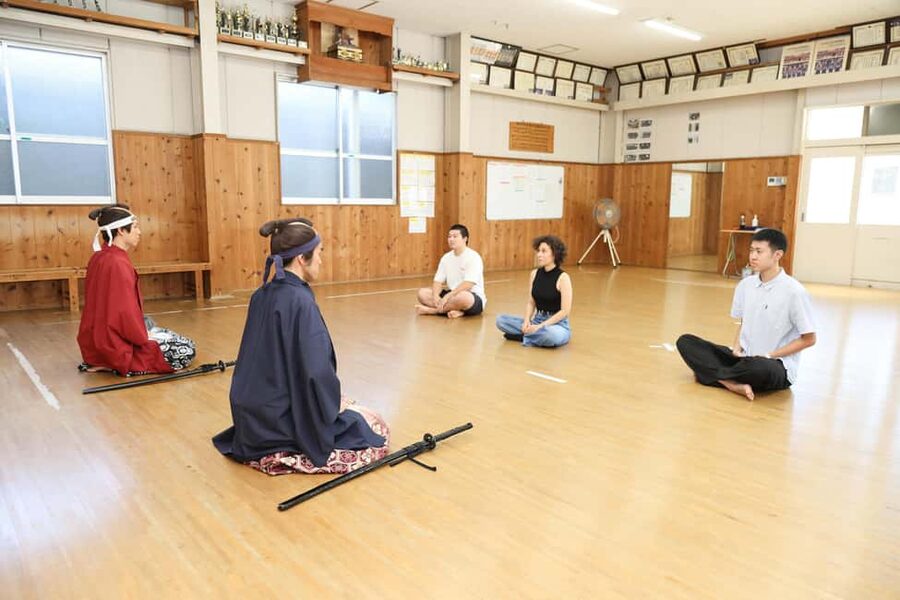
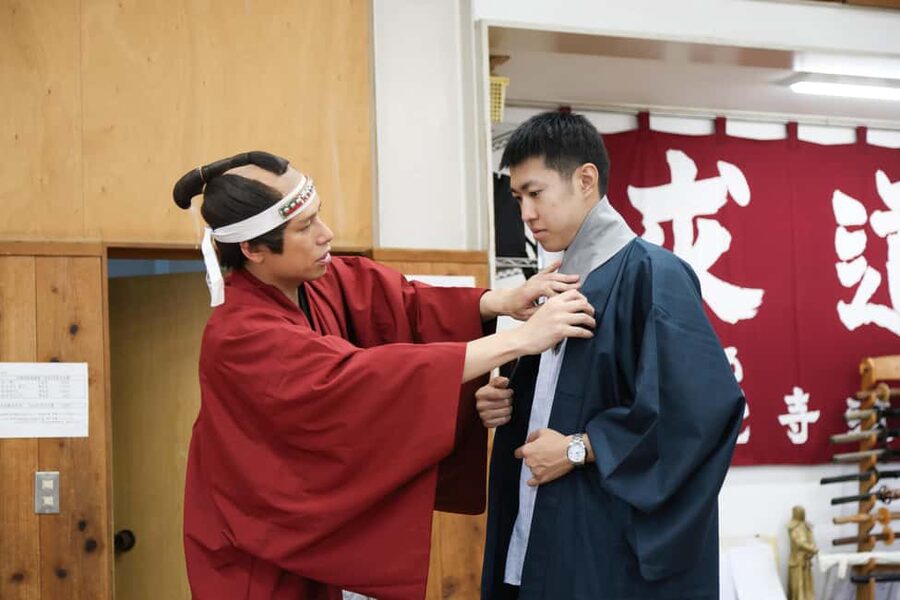
The kimono portion comes before the sword work. Rather than simply having an outfit placed on you, you learn something about how it is worn properly. That gives you a better sense of why the clothing feels and moves as it does.
A kimono changes the way you carry yourself. The layers restrict large, casual movements, and the wrapped fabric makes posture more important. That is useful preparation for the sword lesson, where controlled motion matters more than speed.
The dressing is also a practical reason to choose comfortable clothes. You will be changing into rental clothing, then moving through a physical activity, so avoid anything that makes changing difficult or feels restrictive underneath.
The kimono creates some of the best photographs of the session, especially during the later temple visit. You can take pictures and video during the activity, and a photo download service is included. The provider also offers photography and video recording with your camera, so you do not have to rely only on quick selfies or a friend trying to capture the action.
One small point to keep in mind: dressing and changing take up part of a relatively short activity. If your main goal is swordplay, you may find the clothing lesson slows the pace. If you want a cultural activity with a visual element, it is an important part of the appeal.
Sword instruction: from grip to staged movement
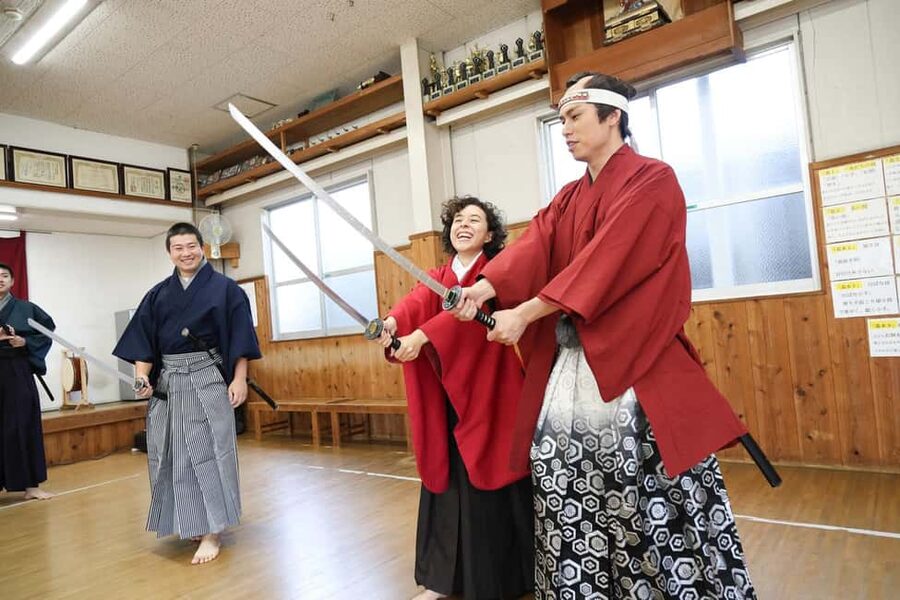
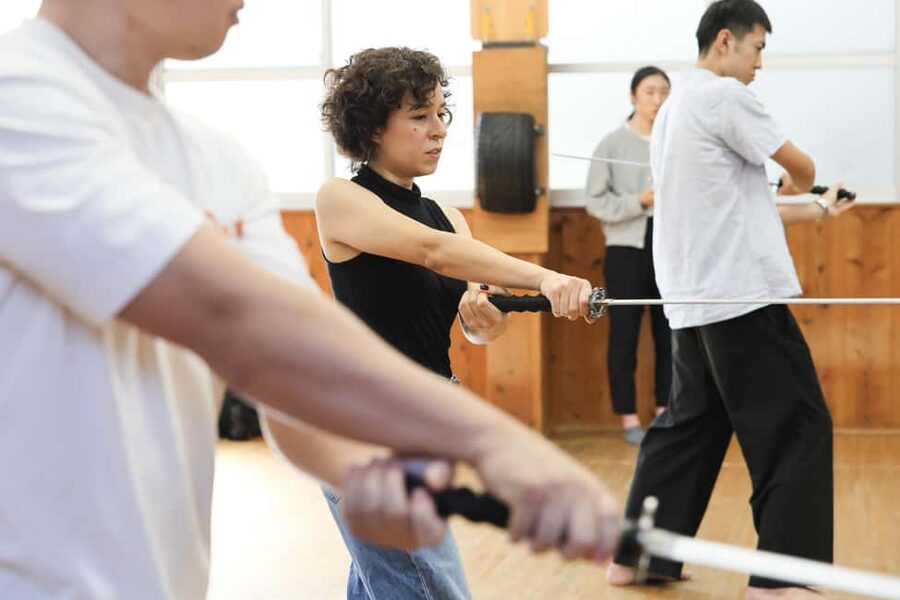
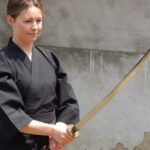
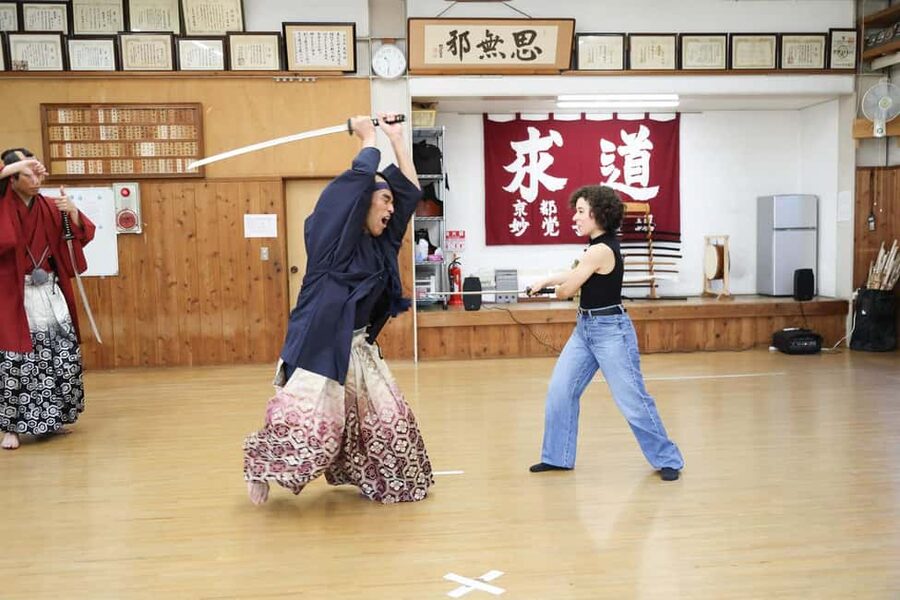
The sword lesson introduces the basic way to hold and wield the weapon. You learn techniques including makkogiri and kesagiri, then work toward using them in a short sequence.
The experience presents these as skills for actual sword fights, but you should understand the format correctly. This is a guided performance activity, not combat training or a full martial arts course. The value is in learning the shape, timing, and body movement well enough to perform a convincing scene.
Your instructors are professional actors in period dramas who have trained in samurai-style performance and bushido-based movement. That background should help with the theatrical side of the lesson. They can show you how a motion should look, not just describe it.
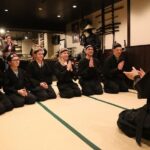
The small group size matters here. With no more than eight participants, you have a better chance to see the demonstration and receive corrections. You will also need to pay attention to spacing and timing, since the final scene depends on several people moving in order.
Expect the activity to be fun rather than solemn. You may not look polished on the first try, and that is part of the point. One useful tip is to commit to the movements. Hesitating halfway through a sword swing will look less convincing than making a clear, controlled gesture.
Safety and control remain important. The experience does not invite reckless swinging, and you should follow the instructor’s directions closely. The restrictions for pregnant women, people with back problems, those with pre-existing medical conditions, and people over 95 are worth taking seriously.
Watching a professional chambara performance
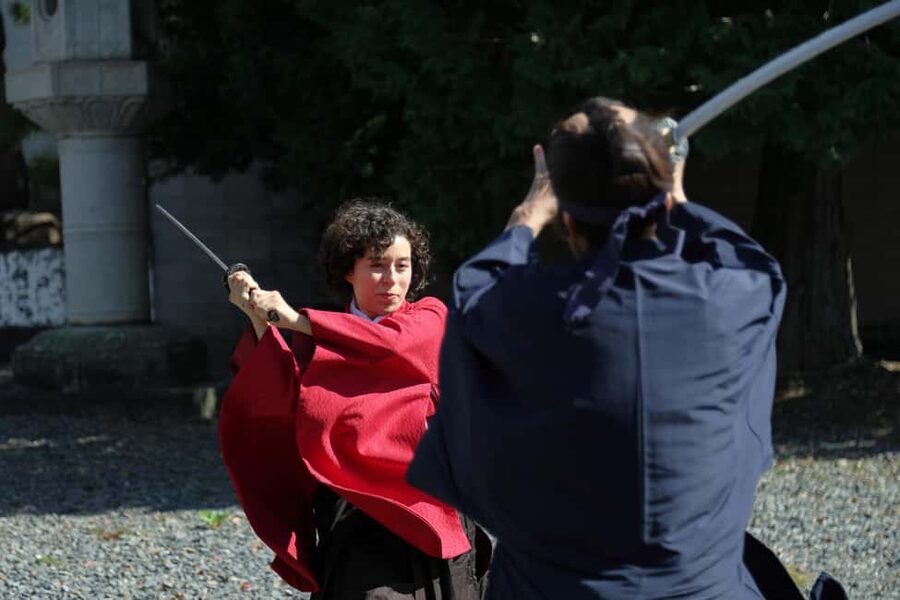
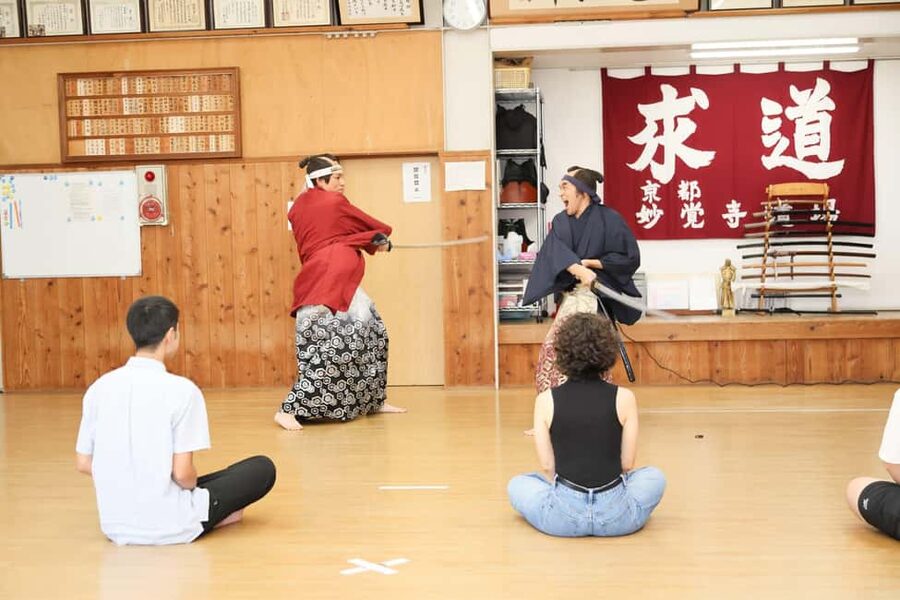
Before you perform, you watch a professional chambara demonstration. Chambara refers to Japanese sword-fighting drama, the kind of stylized action seen in period films and stage performances.
This demonstration gives you a target. You see the difference between waving a sword around and making a movement that reads clearly on camera. The instructors’ performance also shows the rhythm of a staged fight, where pauses, turns, and reactions matter as much as the blade movement.
This is one of the stronger parts of the activity for visitors who enjoy Japanese cinema. The actors bring the lesson to life without requiring you to know a long list of historical facts. You can watch first, then try a simplified version yourself.
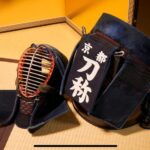
The performance also makes the session welcoming for beginners. You do not need previous kendo, martial arts, or acting experience. The supplied information does not describe the activity as a formal kendo class, so you should book it for a cultural and performance experience, not as a way to earn technical qualifications.
A few more Kyoto tours and experiences worth a look

Filming your own samurai scene
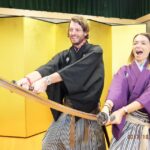
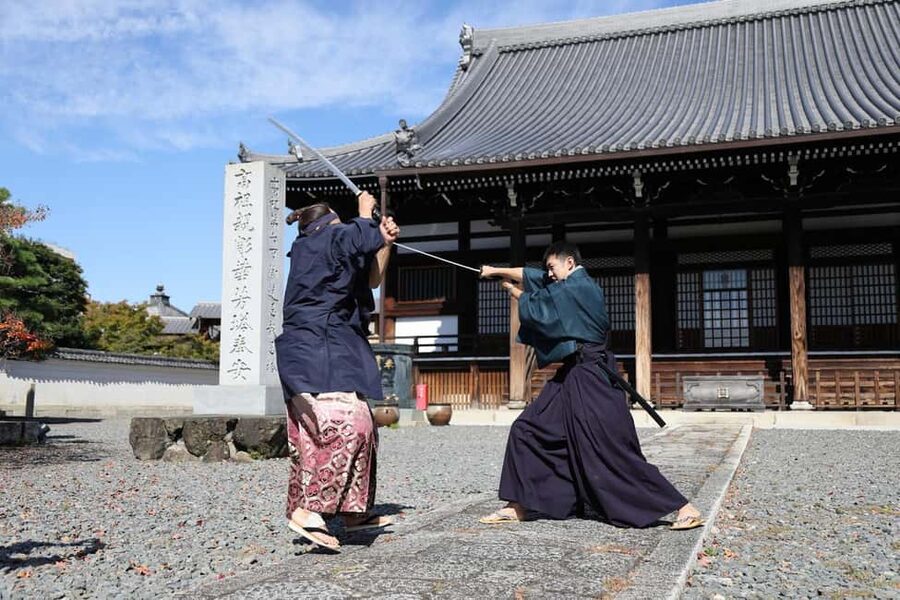
After learning the movements, you perform them in a swordplay and filming session. This is where the earlier lessons come together. You wear the costume, use the techniques, take your place in the sequence, and act out the scene with the instructors.
You can film with your own camera, and the experience includes photography and video recording using that camera. A photo download service is also included. Bring a device that is ready to use, with enough battery and storage for both still pictures and video.
The filming is likely to be the most memorable part for many people because it gives the activity a clear finish. You leave with something you can watch later, rather than only a few posed photographs.
It also rewards a willing attitude. The action sequence is staged and playful. If you try to appear perfectly serious, you may miss the fun. Follow the instructors, make the movements clearly, and accept that the result may look more like a charming home movie than a professional period drama.
This part can be particularly good for families and pairs. If one person wants to take pictures while another performs, the camera element gives everyone a role. Children under five cannot take part, and the physical restrictions mean this is not a universal family activity.
Entering the main hall and viewing Houshien
The final section is a guided tour of Myokaku-ji’s main hall. This is more than a quick walk back to the meeting point. The main hall is open to participants only during select occasions, making this a special chance to see an interior that is not always accessible.
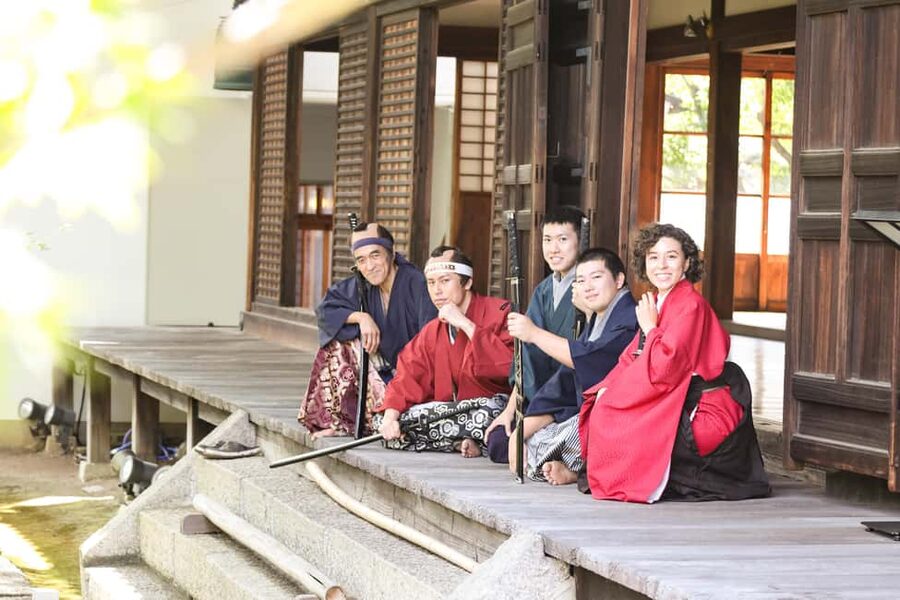
From the main hall, you get views of the moss-covered Houshien garden. The garden provides a quieter contrast to the energetic sword session, and the change of pace helps the visit feel like a temple experience as well as an action activity.
This is also the best time for temple photographs in the kimono. The setting gives your pictures more character than a plain studio backdrop. You should still follow any instructions about where you may stand and what you may photograph, since this is a functioning religious site.
I like this ending because it gives the activity some balance. Without the main hall visit, the experience would be mostly dressing up and staged action. With it, you get a short introduction to the temple itself and a chance to appreciate the place beyond its role as a backdrop.
Do not expect a full temple tour or a long historical lecture. The scheduled activity is under two hours, and the temple visit is one part of a compact program. If you want extended garden time, detailed religious history, or a slow architectural tour, you will need a separate visit.
Is the $116 price good value?
At $116 per person, this is not a budget activity. The value depends on what you want from a Kyoto outing.
You are paying for more than kimono rental. The price includes an English-speaking instructor, swordplay instruction, a professional chambara performance, the filming session, photography and video recording with your camera, a photo download service, the guided main hall visit, and the rental clothing. The group limit of eight also gives the activity a more personal feel than a large public demonstration.
For someone who wants a short, distinctive cultural activity with photos and video, the price can make sense. You get several linked elements in one visit, and the filming gives the experience a lasting result.
The value is weaker if you mainly want to learn serious sword technique. Seventy minutes to 1.5 hours is enough for an introduction and a staged sequence, not enough for advanced training. It is also less suitable if your priority is a quiet temple visit, since the main focus is active and theatrical.
Free cancellation up to 24 hours before the start adds some flexibility, and you can reserve now and pay later. That helps if you are arranging a Kyoto schedule that may change, though you still need to check the available starting times before choosing a slot.
Who will enjoy this most?
I would recommend this for you if you like hands-on activities, Japanese period films, costume photography, or small-group cultural programs. It works especially well for couples and friends who want a shared story to take home.
Families can also enjoy it with children old enough to follow instructions and take part safely. The experience is not suitable for children under five, and adults should consider the physical demands before booking for older relatives.
You do not need previous sword experience. What you do need is a willingness to copy movements, listen carefully, and perform in front of a camera. The activity rewards enthusiasm more than athletic ability.
I would skip it if you dislike dressing up, do not want to be filmed, or have a condition that makes sword movements uncomfortable. I would also avoid booking it as a replacement for a full martial arts lesson or a detailed temple tour.
Practical advice before you book
Wear comfortable clothes and bring a camera. Since the activity includes changing into a kimono and performing sword movements, simple clothing will make the process easier.
Keep smoking, alcohol, and drugs out of the activity. The rules specifically prohibit them, and the setting is a temple dojo with a physical performance component.
Check the starting times carefully because the duration can vary from about 70 minutes to 1.5 hours. The tour ends where it begins, at the Myokaku-ji Dojo, so you can plan your next stop from there.
The experience has a 4.8 rating from 39 reviews, with the strongest praise focused on the friendly instructors, the fun of the action sequence, the kimono, and the chance to tour the temple afterward. Those are the parts I would value most when deciding if the cost fits your plans.
Should you book the Myokaku-ji samurai experience?
Book it if you want to do something active, photogenic, and distinctly Japanese without giving up a real temple setting. The combination of kimono dressing, professional chambara instruction, a filmed sword scene, and rare main hall access gives you a fuller visit than a simple costume rental.
Skip it if you want quiet contemplation, serious martial arts training, or a low-cost sightseeing stop. For the right person, though, this is a memorable Kyoto activity, especially if you are willing to play the part and enjoy the slightly silly business of becoming a samurai for an hour.
FAQ
Where does the samurai sword experience meet?
Meet at the Myokaku-ji Dojo, to the left after entering through the main gate of Myokaku-ji Temple.
Where does the activity end?
The experience ends back at the Myokaku-ji Dojo, the same place where you meet.
How long does the experience last?
The duration is approximately 70 minutes to 1.5 hours. Starting times vary, so check availability when booking.
Is the activity conducted in English?
Yes. The instructor language is English.
What is included in the price?
The price includes kimono rental, swordplay instruction, a chambara performance, photography and video recording with your camera, a photo download service, and a guided tour of the temple’s main hall. Indemnity insurance specified by the provider is also included.
Can I take photos and videos?
Yes. You are welcome to use your own camera during the experience. Photography and video recording with your camera are included, along with a photo download service.
Who should not take part?
The activity is not suitable for children under five, pregnant women, people with back problems, people with pre-existing medical conditions, or people over 95 years old. It is also not suitable if you cannot take part in physical sword movements.
More Samurai & Kendo Experiences in Kyoto
More Golden Pavilion & Temple Tours in Kyoto

More tours in Kyoto we've reviewed





Golden Pavilion & Temple Tours, compared.
 ★ 4.8Kyoto: Fushimi Inari, Kinkakuji, Bamboo Grove 1 Day Bus TourFrom $122510 minutes - 9 hours
 ★ 4.9Kyoto: Tea Ceremony in a Traditional Tea House in KiyomizuFrom $4945 min
 ★ 4.9Kyoto: Tea Ceremony Ju-An at Jotokuji TempleFrom $291h 10m
 ★ 4.1Osaka/Kyoto:Kinkakuji,Arashiyama,FushimiInariShrine,NaraParkFrom $66
 ★ 4.8Arashiyama Bamboo, Temple, Monkeys, or Secret Sake BreweryFrom $875 hours - 330 minutes
 ★ 5.0Kyoto: Nijo, Kinkaku-ji, Arashiyama, Kiyomizu & Fushimi InariFrom $51