

Reviewed · WORKSHOPS
Kyoto: Taiko Drum Workshop
Kyoto’s taiko drumming puts you right in the middle of the music. You do not sit quietly while an expert performs. You learn the stance, grip the wooden sticks, and strike the drum with your whole body. The session also includes cultural background, a live demonstration, and a final group piece.
I like the beginner-friendly teaching and the fact that the workshop is held in English. I also like the Gion location, just minutes from Yasaka Shrine, which makes this an easy cultural stop between walks through Kyoto’s old district.
The main consideration is time. No session length is provided, so you cannot plan your day around an exact finish. The activity is also a focused taste of taiko, not a full concert or advanced music course.
In This Review
- Key points to know before you book
- Why taiko works so well in Kyoto
- Finding the workshop in Gion
- The opening: history, demonstration, and preparation
- Getting your first strikes right
- Rhythm exercises and the final group piece
- The traditional music concert and live musicians
- What makes the English instruction useful
- Who will get the most from this workshop
- Is $44 a fair price?
- Practical planning for your Gion visit
- The main strength and the one real limitation
- Should you book the Kyoto Taiko Drum Workshop?
- FAQ
- Where does the Kyoto Taiko Drum Workshop meet?
- Where does the activity end?
- Is previous taiko or musical experience required?
- What language is the workshop conducted in?
- What does the $44 price include?
- Can I cancel for a full refund?
Key points to know before you book
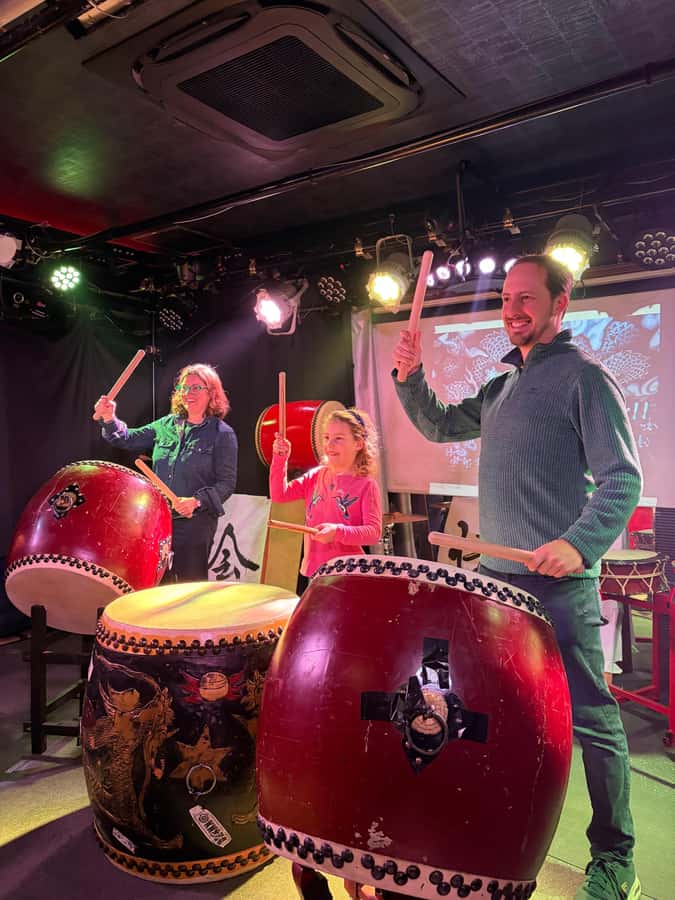
- You play from the start: Learn how to hold the bachi, stand correctly, and strike with full-body energy.
- The lesson begins with context: Hear how taiko has been used in rituals, festivals, and battlefields before taking your turn.
- Instruction is in English: Japanese is also available, making this suitable for international visitors.
- The final piece is a group effort: You work through simple rhythm exercises and finish by playing together.
- The setting is easy to reach: Find the fourth floor of the brick building across from Starbucks in Gion, near Yasaka Shrine.
- The price is $44 per person: That covers the workshop, demonstration, traditional Japanese music concert, and local musicians’ performance.
Why taiko works so well in Kyoto
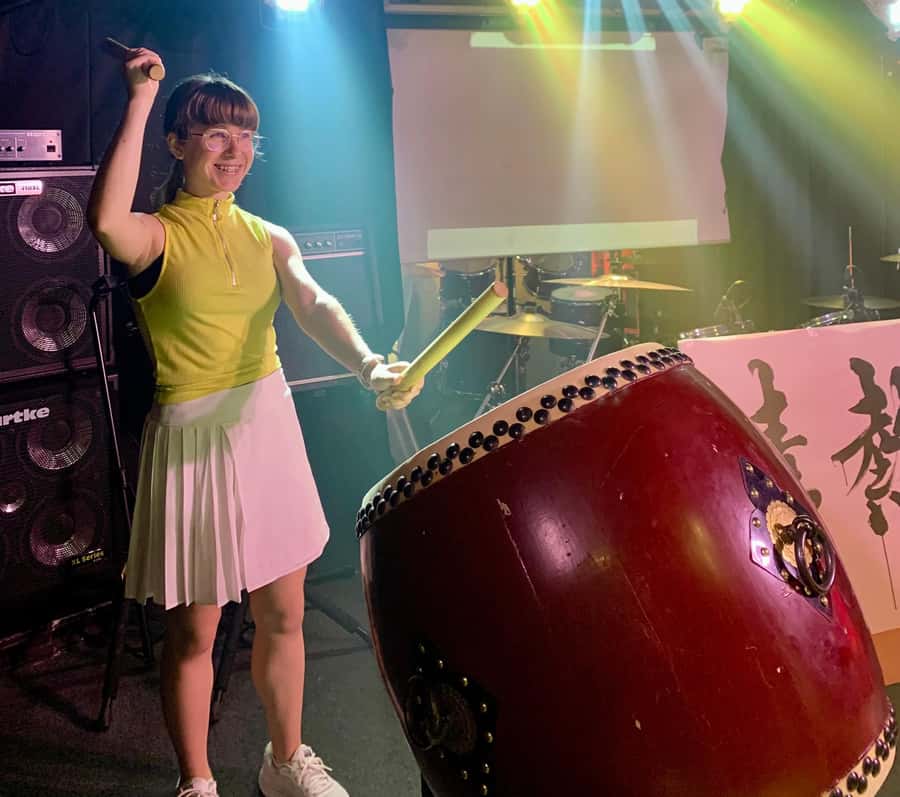
Kyoto gives you plenty of ways to look at Japanese culture from the outside. You can visit a shrine, admire a garden, or walk through a preserved street. Taiko offers a different route. You take part.
Traditional Japanese drums are not treated here as ordinary percussion instruments. The instruction connects the sound to body position, focus, and group timing. That matters because taiko is not only about striking hard. You need to stand with purpose, move in a controlled way, and listen for the rhythm around you.
The opening cultural introduction helps put the activity in place. Taiko has served religious rituals, festivals, and even military settings. You get that background before the practical lesson, so the drum feels like part of a wider Japanese tradition rather than a prop brought out for a quick photo.
I like this balance. You receive enough context to understand what you are doing, but the session still gets you to the drum without turning into a long lecture.
A few more Kyoto tours and experiences worth a look


Finding the workshop in Gion
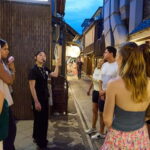
The meeting point is on the fourth floor of a brick building across from Starbucks in Gion. This is a useful landmark in one of Kyoto’s most visited districts, though you should allow a little time to identify the correct building and reach the fourth floor.
The workshop ends back at the same meeting point. That makes the outing simple to combine with sightseeing around Gion and Yasaka Shrine. You do not need to arrange a separate return transfer or work out a distant pickup location.
The setting also gives the activity a nice sense of place. You are not being sent to an anonymous venue on the edge of town. You begin in Kyoto’s historic cultural district, where a taiko lesson fits naturally into a day of shrines, traditional streets, and local restaurants.
The location is convenient, but do not confuse convenience with a street performance. The drumming takes place indoors on the fourth floor. You should choose this for the hands-on lesson, not because you expect to watch an outdoor festival in progress.
The opening: history, demonstration, and preparation
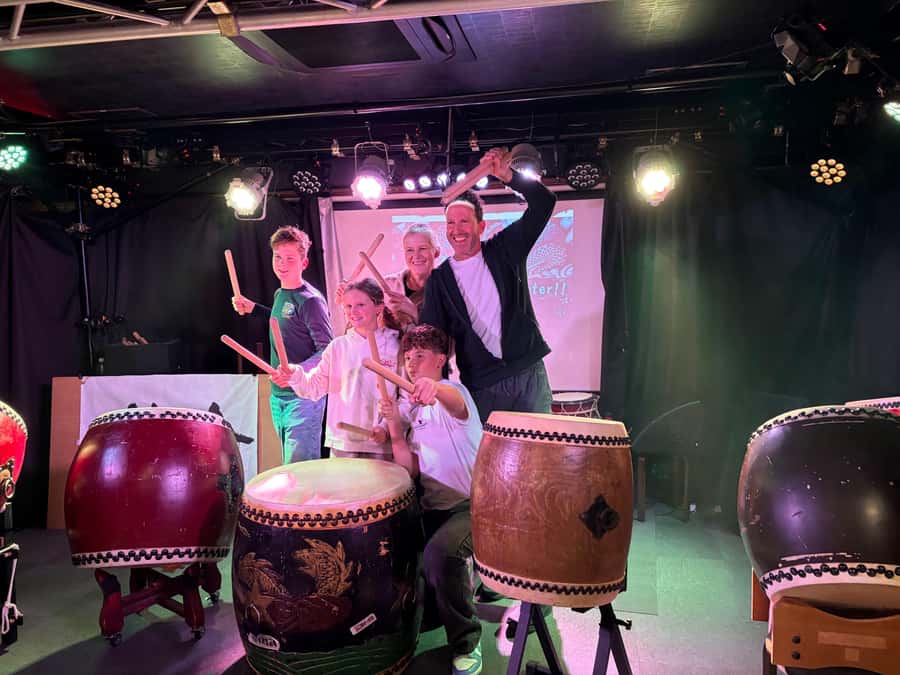
The session starts with an introduction to taiko’s role in Japanese life. You learn that these drums have been used in rituals, festivals, and battlefields. That short history gives the sound some weight before you create it yourself.
Next comes a live demonstration by the instructor. This is an important part of the lesson for beginners. You see the posture, the reach, and the force needed before trying to copy it. Watching first can also help you understand that taiko technique involves the whole body rather than just the wrists.
The instructor then covers the basic mechanics:
- How to stand at the drum
- How to hold the bachi
- How to strike with energy and control
- How to follow simple rhythms
- How to use focus and body movement together
The instruction is designed for people with no musical background. You do not need to read music or know Japanese drumming terms before arriving. Step-by-step teaching keeps the first attempts manageable, and the small-group format allows for personal guidance.
The phrase small group is useful here, but no exact group size is given. That means you should expect a more guided session than a large public show, without assuming private instruction.
Getting your first strikes right
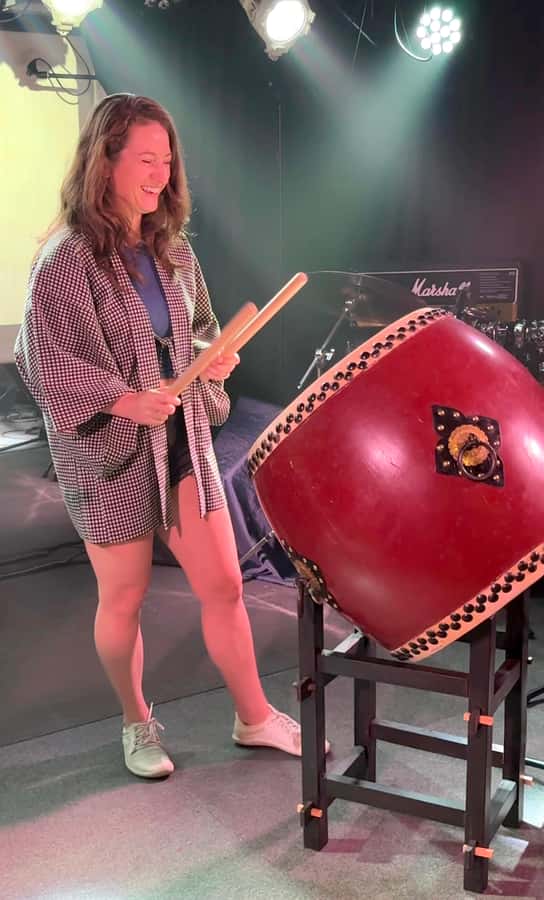
The first hit can feel more serious than it sounds. A taiko drum invites a big motion, and the workshop encourages you to use full-body energy. That is part of the fun, but it also means you should pay attention to the instructor’s directions instead of simply hitting as hard as possible.
The correct stance gives your movement a base. Holding the bachi properly helps you control the strike. The goal is not noise alone. You are learning how posture, timing, and force combine to create a clear beat.
This makes the class suitable for a wide range of ability levels. A complete beginner can follow the demonstration and exercises. Someone with previous drumming experience may pick up the rhythm more quickly, though the session is clearly aimed at first-timers rather than advanced players.
The physical side is one of the workshop’s strongest features. You feel the beat through your arms, shoulders, legs, and torso. That makes the activity more memorable than simply hearing an explanation of taiko.
Still, you should not expect a workout class or a long technical course. The aim is a satisfying introduction. You learn enough to play a simple piece with others, not enough to perform a complex professional arrangement.
Rhythm exercises and the final group piece
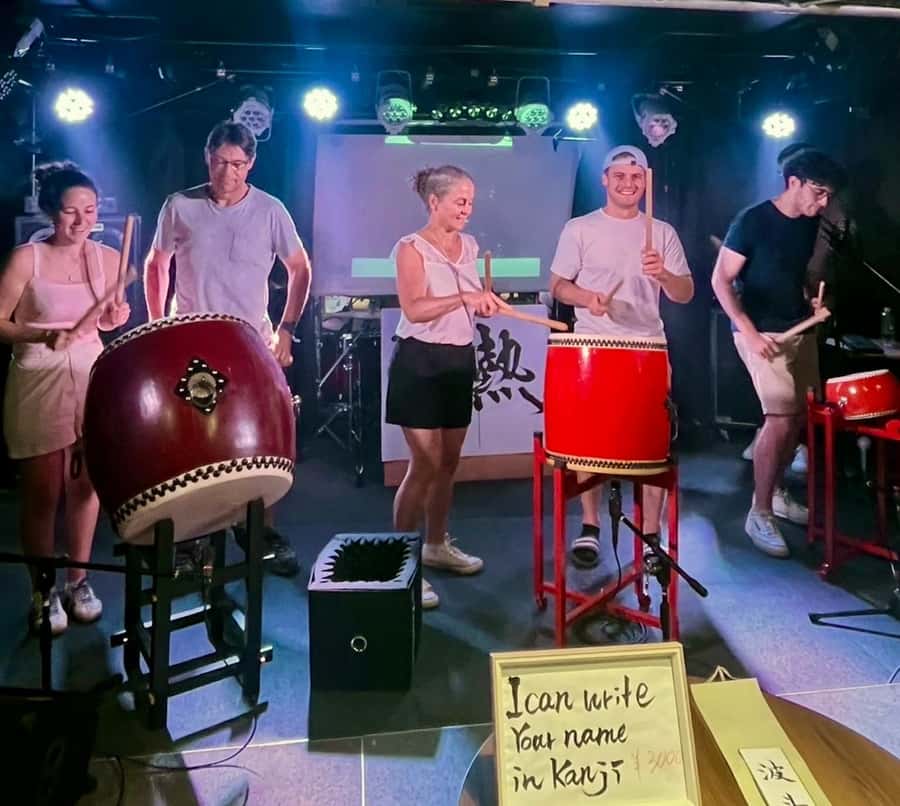
Once everyone has learned the basic position and stroke, the group moves into rhythm exercises. This is where the class changes from demonstration to participation. You start to listen, repeat, and keep time with the people around you.
The exercises are described as fun and beginner-friendly. That matters for groups with mixed confidence levels. You do not have to arrive ready to perform in front of strangers. The format builds toward the final piece through simple patterns and repeated practice.
The group performance is the natural payoff. You play a straightforward piece together, using the techniques introduced earlier. The result is not meant to test you. It gives the session a clear finish and lets you feel what taiko is like when individual strikes become a shared rhythm.
I especially like this feature for families and friends. You leave with a common achievement rather than a passive memory of watching a show. Solo participants can also fit into the group without needing a partner.
The group format has one small tradeoff. Your performance depends on everyone keeping time, so it may not sound polished in the way a concert does. That is not a flaw in the workshop. It is simply the difference between learning music together and watching trained performers.


The traditional music concert and live musicians
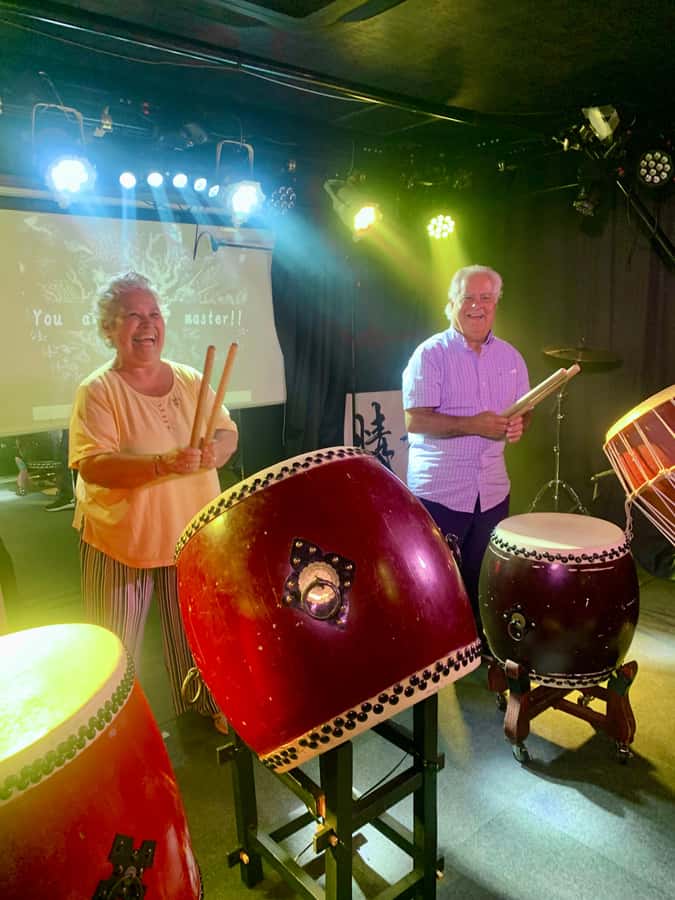
The booking includes a traditional Japanese music concert and a performance by local musicians. This gives you a listening component alongside the hands-on drumming.
The live demonstration comes before you play, helping you see the technique in action. The concert and local musicians’ performance add a broader musical frame. You can hear what trained performers do, then compare that polished sound with your own group piece.
The exact order and length of the concert are not specified, so you should not assume a long standalone recital. Think of it as part of the workshop package. The main focus remains your taiko lesson, with live performance included to add cultural and musical context.
That combination helps justify the price more than a short drumming lesson alone. At $44 per person, you are paying for instruction, a demonstration, hands-on playing, and live traditional music. For someone who wants only a quick photo opportunity, it may feel like more activity than needed. For someone who wants to participate and listen, the package offers better value.
What makes the English instruction useful
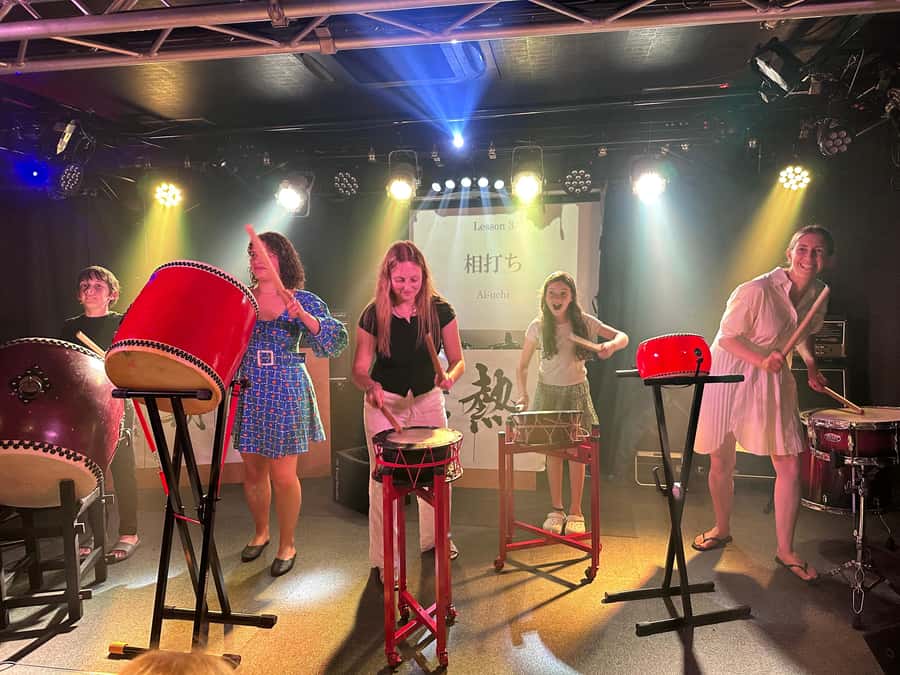
The workshop is conducted in English, with Japanese also available. That is a practical advantage for international visitors who want clear guidance on stance, stick position, and rhythm.
Physical activities can look easy until you try them. A good explanation matters when the instructor is correcting how you hold the bachi or how you position your body. English instruction means you can understand those details rather than relying only on imitation.
The cultural introduction benefits from language clarity as well. Taiko’s uses in rituals, festivals, and battlefields are part of what gives the lesson meaning. You can ask questions or follow the explanation without needing prior knowledge of Japanese music.
No instructor names are provided, so I would not book this expecting a particular teacher. The important point is that an experienced instructor leads the demonstration and gives personal, step-by-step help in a small group.
Who will get the most from this workshop

This is a strong choice for first-time visitors who want more than sightseeing. You get a direct physical connection to Japanese culture, and you do not need previous musical skill.
It suits:
- Couples looking for a shared activity in Gion
- Families with children old enough to follow instructions
- Friends who enjoy energetic cultural activities
- Solo participants who are comfortable joining a group
- Visitors who want English instruction
- Anyone curious about traditional Japanese music
The activity is not suitable for babies under one year. The information does not set a broader age limit, so families with older children should judge their child’s ability to follow directions and take part in a group lesson.
I would also consider your personal comfort with noise and movement. Taiko is loud and physical by nature. If you prefer quiet cultural visits, a shrine or garden may suit you better. If you want to make sound and move with purpose, this is a much better match.
Is $44 a fair price?
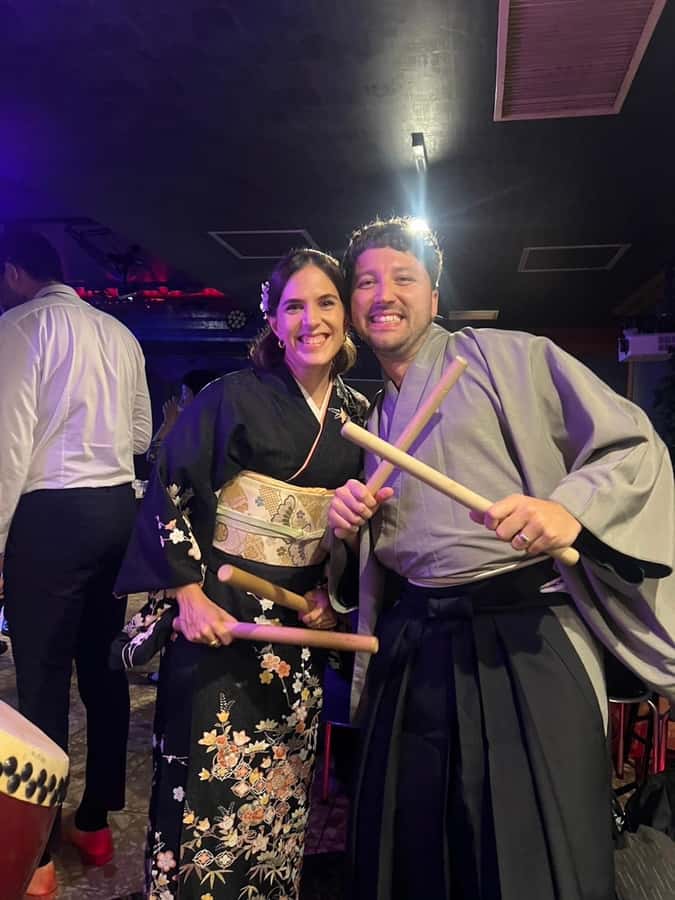
At $44, the workshop sits in the reasonable range for a structured cultural activity in central Kyoto. The value comes from the combination of several parts:
- A guided taiko lesson
- A cultural introduction
- An instructor demonstration
- Hands-on practice
- A group performance
- A traditional Japanese music concert
- A local musicians’ performance
You are also paying for the setting and convenience. The activity takes place in Gion, near Yasaka Shrine, and begins and ends at one central meeting point.
The price is less compelling if you only want to hear taiko. In that case, a concert alone might be a better fit, though no separate concert price is provided here. This booking is aimed at people who want to hold the sticks, learn the basics, and play alongside others.
A useful way to judge the cost is to ask how much participation you want. If your ideal Kyoto day includes one activity where you actively learn something, $44 is a fair spend. If you already have a packed schedule of paid sights and want only a short stop, confirm the session length before booking because no duration is stated.
Practical planning for your Gion visit
Plan to arrive with enough time to locate the brick building and reach the fourth floor. The meeting point is across from Starbucks in Gion, which is clear once you are in the area, but busy streets and unfamiliar building entrances can still slow you down.
Because the activity begins and ends at the same place, you can place it within a Gion walking day. Yasaka Shrine is only minutes away, so you might schedule shrine sightseeing before or after the workshop. The information does not specify a meeting time, session duration, clothing rules, or storage arrangements, so check those details when selecting a date.
The workshop is conducted in English, while English and Japanese are listed as available languages. Booking is flexible because you can reserve and pay later, with no payment required today. Cancellation is allowed up to 24 hours in advance for a full refund.
Those policies are helpful when your Kyoto schedule may change. Still, reserve ahead if the date matters to you, since the class uses small groups and available places may be limited.
The main strength and the one real limitation
The best feature is the quick shift from learning about taiko to actually playing it. You hear the background, watch a demonstration, learn the basic movements, and join a group piece. The activity has a clear shape and does not leave you wondering when your turn will come.
The most important limitation is the lack of practical timing details. No duration is listed, and the exact concert format is not explained. That makes it harder to fit the workshop into a tight day of Kyoto sightseeing.
I would also keep expectations in check. This is a beginner session, not an advanced lesson and not a full-scale theatrical production. Its success depends on your willingness to participate, make mistakes, and enjoy the noise of a group learning together.
Should you book the Kyoto Taiko Drum Workshop?
Book it if you want a lively, hands-on cultural activity near Yasaka Shrine. The English instruction, small-group guidance, cultural introduction, and final group performance make it easy for beginners to join without feeling unprepared.
It is especially good for families, friends, and solo visitors who want to do something together rather than simply observe. The $44 price is sensible because it includes both instruction and live Japanese music.
Skip it if you are looking for a long professional concert, advanced drumming tuition, or a completely quiet Kyoto experience. Before you commit, check the session time so the missing duration does not disrupt your day. For most first-time participants, though, this is a quick and fun way to feel the force of taiko in the heart of Gion.
FAQ
Where does the Kyoto Taiko Drum Workshop meet?
It meets on the fourth floor of the brick building across from Starbucks in Gion. The location is near Yasaka Shrine.
Where does the activity end?
The workshop ends back at the meeting point.
Is previous taiko or musical experience required?
No. The activity is designed for beginners and includes step-by-step instruction.
What language is the workshop conducted in?
The workshop is conducted in English. English and Japanese are listed as available languages.
What does the $44 price include?
The price includes the taiko drum workshop, a traditional Japanese music concert, a live demonstration, hands-on practice, and a performance by local musicians.
Can I cancel for a full refund?
Yes. You can cancel up to 24 hours in advance for a full refund.
More Workshops & Classes in Kyoto
More tours in Kyoto we've reviewed




Workshops, compared.
 ★ 4.3Kyoto: 45-Minute Tea Ceremony Lesson ExperienceFrom $2245 min
 ★ 5.0Ramen Cooking Class at Ramen Factory in KyotoFrom $131
 ★ 4.9Kyoto: Ramen Cooking Class at a Ramen Factory with SouvenirFrom $1271h 30m
 ★ 4.9Kyoto: Samurai Class, Become a Samurai WarriorFrom $70
 ★ 5.0Ninja 1-hour Hands-on Lesson by Japanese master in Kyoto -EntryFrom $80
 ★ 5.0Kyoto: Ramen, Gyoza, and Onigiri Cooking ClassFrom $901h 30m