
Reviewed · PHOTOGRAPHY SESSIONS
Kyoto Photography Masterclass – Private Photography Lesson
Kyoto’s best photographs often come from small details: a wooden machiya facade, a glowing lantern, a temple roof framed by a narrow lane. This private lesson puts a photographer beside you to help find those details, choose better angles, and adjust your camera before the moment slips away. Gion and Pontocho give you classic Kyoto scenes, while the night option adds lantern light and long-exposure practice.
I like the one-to-one format, since the guide can match the lesson to your skill level instead of giving a canned talk. I also like the hands-on approach: Irven brought a tripod for one night session, reviewed shots during the lesson, and helped reset the camera for stronger results. The main consideration is price: at $170 per person, this is a serious spend for three hours, especially if you are already comfortable with your camera.
In This Review
- Key points before you book
- Why this private Kyoto lesson works
- Gion: wooden streets and careful framing
- Pontocho and the glow of Kyoto after dark
- Gion Corner and Minamiza Theater
- Yasaka Shrine: color, gates, and changing light
- Hokan-ji Temple and the Yasaka Pagoda view
- Ninenzaka and the walk toward Kiyomizudera
- Kiyomizudera: the final major subject
- Day photography or night photography?
- Is $170 per person a fair price?
- Practical details for a smooth lesson
- Who should book this Kyoto photography tour?
- Should you book it?
- FAQ
- How long does the Kyoto Photography Masterclass last?
- Is this a private tour?
- What locations are included?
- Does the tour include night photography?
- Is a camera provided?
- Can I use a tripod?
- Where does the experience begin and end?
- Can I cancel for a refund?
Key points before you book
- Three private hours: Your group has the guide to itself, with room to pause, ask questions, and work at your own pace.
- Day or night possibilities: Photograph traditional streets and temples, or focus on lanterns, low light, and long exposure after dark.
- A practical camera lesson: Expect help with settings, composition, angles, lighting, and reviewing your images as you shoot.
- A strong Kyoto route: The stops include Gion, Pontocho, Yasaka Shrine, Hokan-ji, Ninenzaka, and Kiyomizudera.
- Tripod support by request: A camera is not supplied, but a tripod may be available if you ask ahead.
- Good for a focused visit: The guide can help you make better use of limited time instead of wandering from one photo spot to the next.
Why this private Kyoto lesson works
This is not simply a walk through pretty streets with a few photographs along the way. The central idea is to pair Kyoto sightseeing with direct instruction. You learn where to stand, what to include in the frame, how to handle difficult light, and how to make a photograph say something about the place.
The private format matters. If you are new to manual settings, you can spend more time on shutter speed, aperture, and focus without holding up a group. If you already know your camera, you can concentrate on composition, timing, and finding less obvious angles. You set the pace with the photographer.
The experience lasts about three hours and accepts only your group. That gives the guide room to adapt the walk, though the time still goes quickly. Kyoto’s lanes are full of tempting subjects, and stopping at every doorway would leave little time for instruction. The value comes from having someone help you choose.
A professional photographer guide and licensed English-speaking local guide are included. The supplied information names Irven in connection with a night photography session, where the teaching included location choice, tripod use, image review, and repeated adjustments. That is the sort of practical coaching that can improve your results during the tour and after you leave Kyoto.
Other private tours in Kyoto
Gion: wooden streets and careful framing
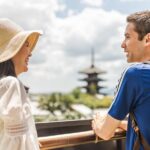
The walk begins at the Statue of Izumo-no-Okuni near Kawabatacho in Higashiyama Ward. Gion is the natural starting point because it gives you the visual language most people associate with old Kyoto: traditional wooden machiya houses, narrow streets, restrained colors, and a close mix of old buildings and present-day city life.
Your guide can help you move beyond the obvious wide shot. Look for repeating roof lines, timber textures, doorways, shadows, and the contrast between a carefully preserved facade and modern details nearby. These subjects reward patience more than expensive equipment.
Gion can also test your judgment. It is a well-known district, so the most familiar views may feel busy or predictable. A private photographer can help you change height, angle, or focal length rather than simply pointing your camera down the lane. You should also follow local etiquette and avoid treating private entrances or people as props.
The street portion is useful for learning composition because it gives you many short scenes in quick succession. You might work on symmetry in one lane, texture in another, and the relationship between a person and a doorway in the next. The setting changes without requiring a long transfer.
Pontocho and the glow of Kyoto after dark
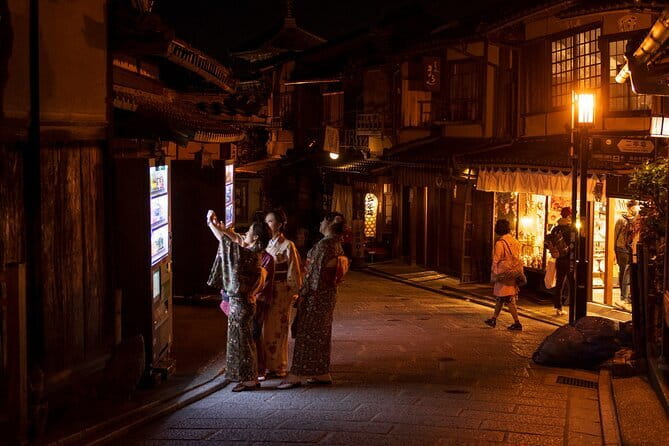
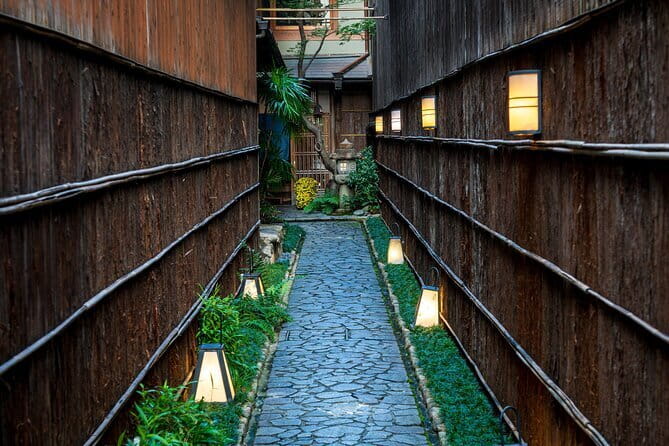
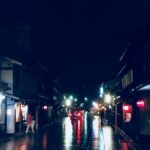
Pontocho District is especially suited to the night version of the lesson. Its narrow alley and traditional lanterns create small pools of light, deep shadow, and strong lines that can make a simple street photograph feel atmospheric.
Night photography is harder than it looks. The camera needs enough time or sensitivity to record the scene, yet too much movement can blur the image. A guide can help you work through shutter speed, ISO, aperture, and focus rather than leaving you to guess.
The detailed night lesson with Irven included a tripod and repeated image checks. The process was simple and useful: take a photograph, review it, adjust the settings, and try again. You are not just collecting pictures. You are learning why one exposure works better than another.
A tripod is available upon request, but you should ask before the tour rather than assume one will be waiting. Your camera is not included, so bring the equipment you want to use. If you rely on a phone, confirm in advance that the lesson fits your needs, since the supplied details focus on camera settings and photography techniques rather than a dedicated phone class.
Gion Corner and Minamiza Theater
Gion Corner and Minamiza Theater add architectural and cultural detail to the route. They are useful stops for practicing how to photograph a subject that is larger than a single doorway or lantern.
At Gion Corner, you may find opportunities to frame a building within the surrounding street rather than photographing it in isolation. The goal is to show place and setting together. Your guide can help you decide how much of the street belongs in the frame and where distracting edges should be removed.
Minamiza Theater brings a different kind of subject. Its facade gives you strong shapes, decorative details, and a broader building front. This is a good point to work on lines and balance, especially if your first instinct is to center everything.
The supplied route does not promise an interior visit or a performance, so think of these as exterior photography stops. That keeps the focus on the lesson and avoids turning the three-hour walk into a general sightseeing tour.
Yasaka Shrine: color, gates, and changing light
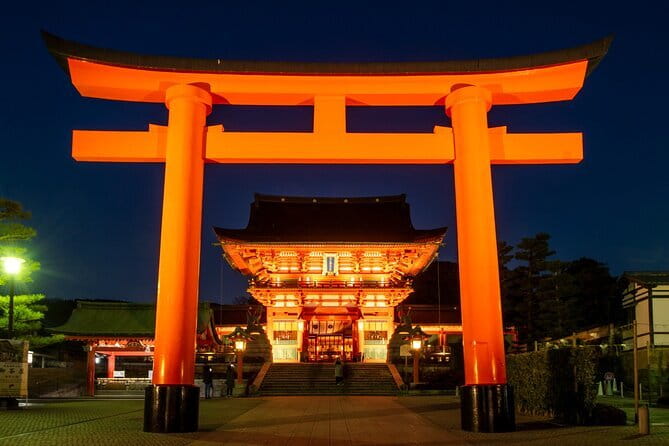
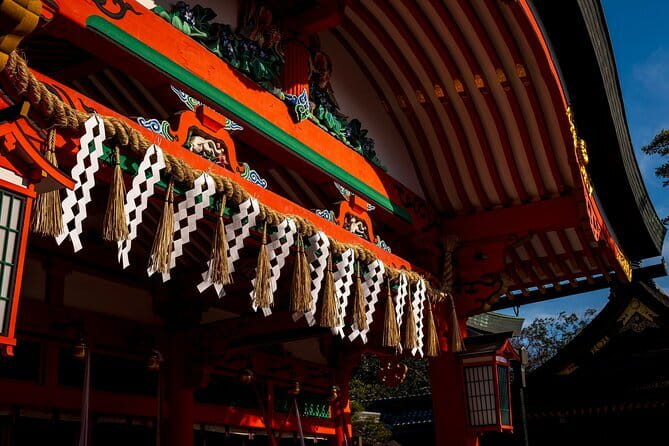
Yasaka Shrine offers a shift from tight lanes to a more open religious setting. Shrine architecture can be difficult to photograph well because bright surfaces, dark recesses, gates, ropes, lanterns, and people may all compete for attention.
This is where a guide’s feedback can be more useful than a list of camera settings. You can work on isolating one detail, using a gate as a frame, or placing a large structure within the surrounding space. The textures and patterns of the shrine also fit the tour’s wider aim: capturing the details that give Kyoto its character.
Lighting will change the feel of the stop. During the day, you can practice handling stronger contrast and open shade. At night, traditional lanterns and modern lights create a quieter, more dramatic subject. The exact balance depends on the selected timing, so ask when booking if you have a clear preference for daylight or night work.
Other photography tours in Kyoto
Hokan-ji Temple and the Yasaka Pagoda view
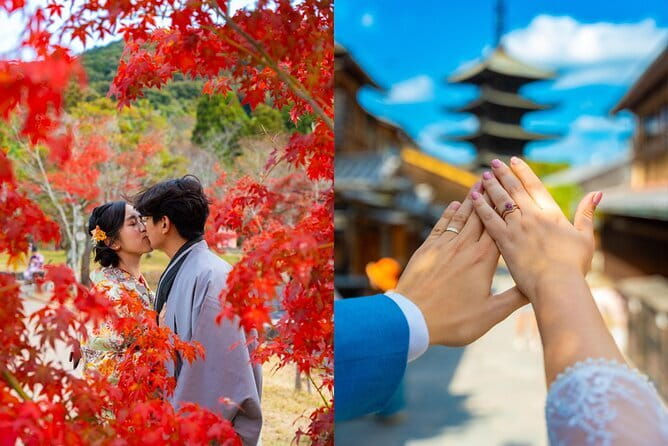
Hokan-ji Temple, known for its distinctive pagoda, is one of the route’s strongest architectural subjects. Its height gives you a clear focal point, while the surrounding lanes offer opportunities to frame it through Kyoto’s traditional streets.
This kind of view can tempt you into taking the same photograph everyone else takes. A private lesson gives you a chance to try several approaches: a wider scene showing the street, a tighter view emphasizing the pagoda, or a composition built around lines leading toward the structure.
The area is also a reminder that a good photo depends on timing and position. You may need to wait for a cleaner view or change your angle by only a few steps. That is where an experienced local photographer earns the fee. You spend less time guessing where to go and more time making deliberate choices.
Ninenzaka and the walk toward Kiyomizudera
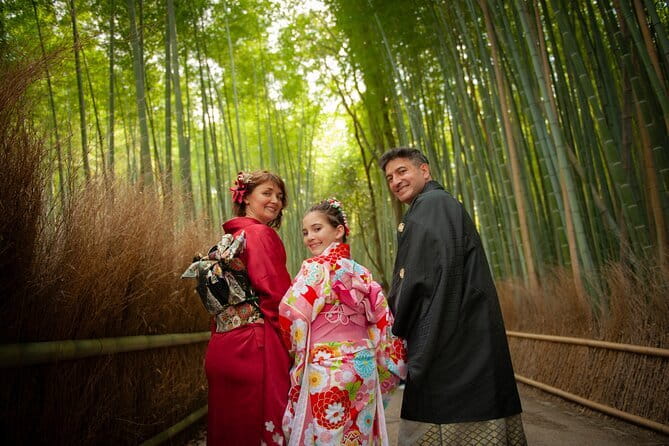
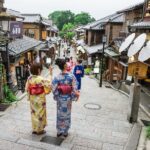
Koju Ninenzaka, listed as part of the route, brings you into one of Kyoto’s most recognizable sloping streets. Traditional buildings, steps, signs, and rooflines create plenty of material, but the setting can also feel visually crowded.
Use this part of the walk to practice editing before you press the shutter. Ask yourself what the main subject is. If it is a building, do the signs help or distract? If it is a person moving through the street, is there enough space in the frame for that movement? A guide can offer quick answers while the scene is still in front of you.
The slope and stone paving also give you a chance to work with perspective. Lines in the street can pull the eye toward the temple area, while a low viewpoint can make the incline feel stronger. You do not need a special lens to learn from this. You need time to notice how your position changes the picture.
Kiyomizudera: the final major subject
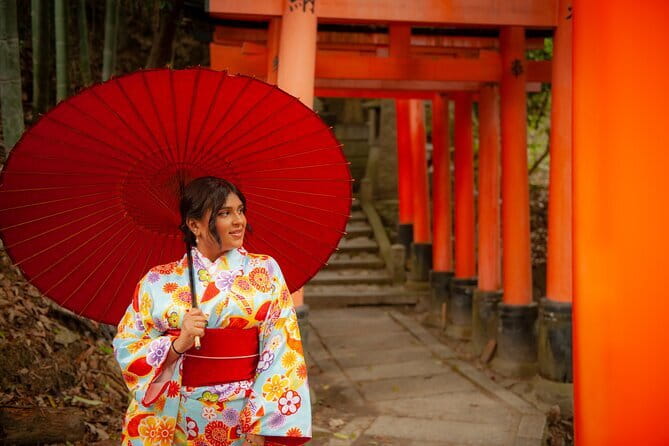
Kiyomizudera Temple is the route’s grand finish. Its scale and elevated setting give you a different challenge from the close quarters of Gion and Pontocho.
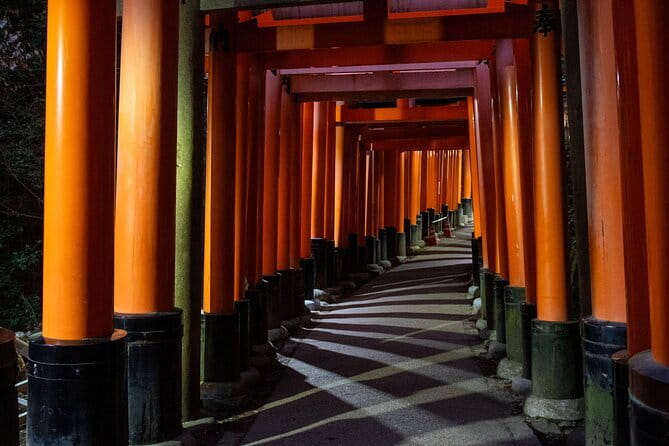
In daylight, the temple offers broad views, rooflines, wooden construction, and changing relationships between architecture and the surrounding scenery. At night, Kiyomizudera may be lit against the sky, creating a strong subject for low-light work. The supplied description presents it as part of the night route, with attention to long exposure and the quiet mood after dark.
Do not expect three hours of uninterrupted temple access or a formal guided history tour. The emphasis is photography. You are there to make choices about exposure, framing, and atmosphere, with the temple as your subject.
The final stop is also a good time to review what you have learned. A successful lesson should leave you with more than a folder of attractive images. You should understand why you chose certain settings and how to repeat the process elsewhere in Japan.
Day photography or night photography?
The experience supports two distinct moods. The street option focuses on Gion, traditional lanes, the Philosopher’s Path, serene scenery, architectural details, textures, and the meeting of older Kyoto with modern life. The night option centers on lanterns, illuminated streets, Kiyomizudera, long exposure, and the challenge of making clear images in low light.
Choose the day format if you want help with basic composition, architectural photography, and reading a scene. Choose the night format if you specifically want to improve low-light technique or have struggled with blurry, noisy, or flat evening photographs.
The night session described with Irven is particularly practical because it included tripod support and image review. The step-by-step process matters more than the equipment itself. You learn by seeing the result, making a correction, and trying again.
Since the listed route includes both daytime and nighttime descriptions, confirm the timing and focus you want before booking. The experience is private, so the guide should be able to tailor the lesson, but the exact schedule is not specified.
Is $170 per person a fair price?
At $170 per person, this is not a cheap sightseeing walk. The price makes more sense if you place a high value on instruction and personal attention.
You are paying for three private hours, a professional photographer guide, a licensed English-speaking local guide, local route planning, and help with your own images. A group discount may also be available, which could improve the value if you are booking with companions.
The cost is harder to justify if you only want someone to lead you to famous photo spots. You can see Gion, Pontocho, Yasaka Shrine, Hokan-ji, Ninenzaka, and Kiyomizudera without a photography lesson. The benefit is the feedback: where to stand, what to include, how to handle light, and how to improve the next shot.
I would consider the price worthwhile for a serious beginner, a keen amateur, or anyone visiting Kyoto for a short time who wants focused practice. If you already produce strong night photographs and know your camera well, you may prefer exploring alone and spending the money elsewhere.
Practical details for a smooth lesson
Bring your own camera, since one is not provided. Ask about a tripod when you book if night photography is your priority. The detailed night session used a tripod supplied by Irven, but availability is listed as by request.
The meeting point is the Statue of Izumo-no-Okuni at Kawabatacho, in Kyoto’s Higashiyama Ward. The tour returns to that same meeting point at the end. It is near public transportation, which makes arrival easier, though the exact transport instructions are not provided.
The activity is private, and only your group participates. Service animals are allowed, and most people can take part. Confirmation is provided at booking, and mobile tickets are supported.
You can cancel for a full refund up to 24 hours before the start time. Cancellations or changes made less than 24 hours before the start are not accepted for a refund, with cut-off times based on Kyoto local time.
Who should book this Kyoto photography tour?
Book it if you want direct help rather than a general walk. It suits someone who owns a camera but still hesitates over manual settings, an amateur who wants better travel photographs, or a visitor who specifically wants to learn long exposure at night.
It is also a good choice if you prefer a flexible private outing. You can ask questions freely, slow down when a scene deserves more attention, and spend less time on techniques you already know.
Think twice if your main goal is a broad cultural tour, an interior temple visit, or a low-cost introduction to Kyoto. The experience is built around photography, and three hours is a limited window for both sightseeing and teaching.
Should you book it?
I would book this lesson if improving your photographs is one of your Kyoto priorities. The combination of Gion’s wooden streets, Pontocho’s lanterns, Hokan-ji’s pagoda, Ninenzaka’s sloping lanes, and Kiyomizudera’s night lighting gives you varied subjects in a compact private session.
The strongest reason to choose it is the practical coaching. Irven’s night lesson included a tripod, patient guidance, and repeated review of the images, exactly the sort of feedback that can turn a frustrating evening into a useful class.
The $170 price asks you to take the lesson seriously. Bring your own camera, request a tripod if needed, confirm whether you want day or night photography, and arrive ready to shoot rather than simply sightsee. If that sounds right, this is a focused way to see Kyoto and return home with better skills, not just more pictures.
FAQ
How long does the Kyoto Photography Masterclass last?
The private photography lesson lasts approximately three hours.
Is this a private tour?
Yes. Only your group participates in the activity.
What locations are included?
The route includes Gion, Pontocho District, Gion Corner, Minamiza Theater, Yasaka Shrine, Hokan-ji Temple, Koju Ninenzaka, and Kiyomizudera Temple.
Does the tour include night photography?
A night photography option is described, featuring lantern-lit Pontocho Alley, Kiyomizudera after dark, long exposure, and low-light techniques. Confirm the preferred timing when booking.
Is a camera provided?
No. A camera is not included, so you need to bring your own.
Can I use a tripod?
A tripod is available upon request. Ask ahead if you want one for the night session.
Where does the experience begin and end?
The meeting point is the Statue of Izumo-no-Okuni at Kawabatacho, Higashiyama Ward, Kyoto. The activity ends back at the meeting point.
Can I cancel for a refund?
Yes. You can cancel at least 24 hours before the start time for a full refund. Cancellations or changes made less than 24 hours before the start time are not refunded or accepted.
More Workshops & Classes in Kyoto


More Photography Tours in Kyoto
More Private Tours in Kyoto
More tours in Kyoto we've reviewed

Photography Sessions, compared.
 ★ 4.7Kyoto: Maiko Makeover and Photoshoot ExperienceFrom $1402h 30m
 ★ 5.0Kyoto: Private Photoshoot ServiceFrom $781 hour - 90 minutes
 ★ 5.0Your Private Vacation Photography Session In KyotoFrom $297
 ★ 4.9Kyoto: Tea Ceremony with Kimono and PhotoshootFrom $1271h 30m
 ★ 5.0Kyoto: Private Gion District Photoshoot ExperienceFrom $10990 minutes - 7 hours
 ★ 5.0Private Photoshoot Experience in Kyoto ( Gion )From $132