
Reviewed · TEA CEREMONY EXPERIENCES
Kyoto: Tea Ceremony, in traditional Japan house (ENG/ES/NLD)
Kyoto’s tea ceremony is much more than a cup of green tea. In this small, relaxed session, a Japanese teacher demonstrates the careful movements of sadō, explains the room and its objects, and then lets you make your own bowl of matcha. It is a fine way to understand what you are watching rather than simply pose for a photo.
I especially like the maximum six-person group, which keeps the view clear and leaves room for real questions. I also like the old kimono-fabric merchant’s house, with its small garden, seasonal flowers, and changing utensils. The main consideration is comfort: sitting on the floor in seiza can be hard on knees, although chairs are available if you ask.
In This Review
- Key points to know before booking
- Why this short Kyoto tea experience works
- Entering the old house across from Shinrenji
- Understanding sadō before the demonstration
- Watching the teacher prepare matcha
- Whisking your own bowl of matcha
- A small group makes a real difference
- Sitting on the floor, socks, and matcha caffeine
- Is $45 a fair price for one hour?
- Who should book this tea ceremony?
- Practical booking advice for your Kyoto day
- Should you book it?
- FAQ
- Where does the Kyoto tea ceremony meet?
- How long does the tea ceremony last?
- How many people can join?
- Which languages are available?
- Do I make my own matcha?
- Are sweets included?
- Do I have to sit on the floor?
- What should I bring, and who cannot take part?
Key points to know before booking
- A 100-year-old Kyoto house: The tea room belongs to an original home once connected with a kimono-fabric-selling family and now owned by the temple across the road.
- A teacher with decades of practice: The ceremony is performed by a Japanese tea teacher with about 50 years of experience.
- You make your own matcha: You receive one bowl prepared by the teacher and whisk a second bowl yourself.
- Seasonal details matter: Flowers, hanging scrolls, utensils, and sweets change with the time of year.
- Small and personal: The group is limited to six, and English, Dutch, and Spanish support is available.
- Plan for floor sitting: Socks are required, and chairs can be requested. The activity is not suitable for wheelchair users.
Why this short Kyoto tea experience works
Many first-time tea ceremony sessions can feel stiff or hard to follow. The gestures are quiet and precise, and the Japanese terms can seem like a wall between you and the meaning. This experience takes a better approach for most visitors: first explain what is happening, then show it, then let you try it.
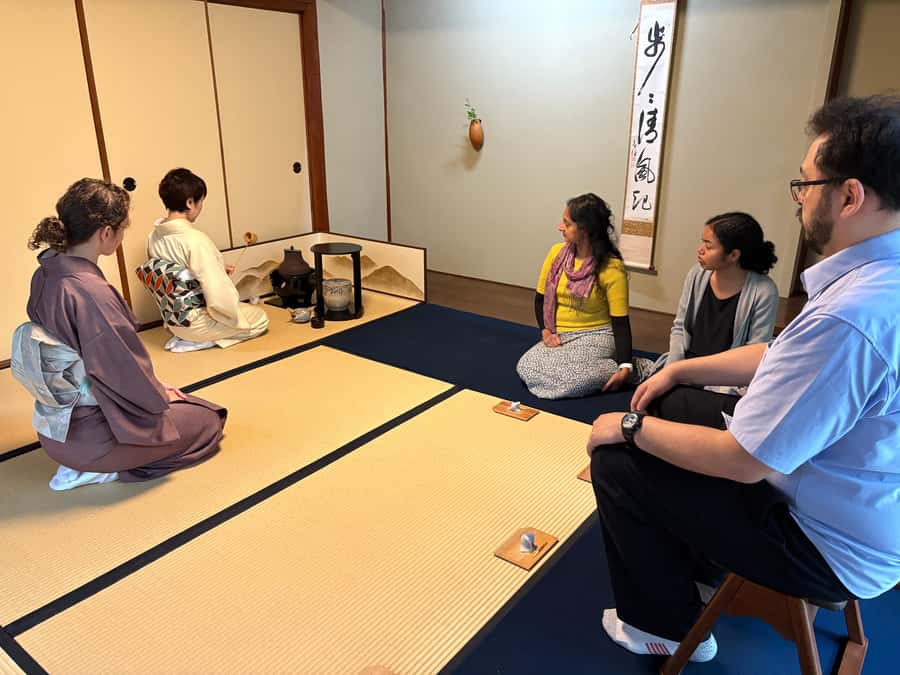
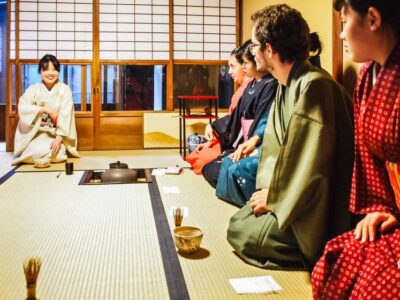
The setting helps. You are not placed in a large hall with a crowd gathered around a distant performance. You sit in a small tea room inside an old Kyoto house, close enough to see how the bowl, whisk, scoop, cloth, and sweets are handled. With no more than six people, you can ask why a gesture is made or what a particular object means.
The atmosphere is intentionally casual. That does not make the ceremony casual. The teacher performs it with the care and elegance expected of the tradition, while the explanations around it are friendly and open. That balance is valuable because you can appreciate the discipline without feeling that you must already know the rules.
The session lasts one hour. That is enough time for an introduction, a demonstration, sweets, and your own bowl of tea, but it is not a full study course in tea ceremony. If your interest is mainly cultural and practical, the length is sensible. If you want extended meditation or a detailed lesson in every school of tea, you will need something longer.
A few more Kyoto tours and experiences worth a look
Entering the old house across from Shinrenji
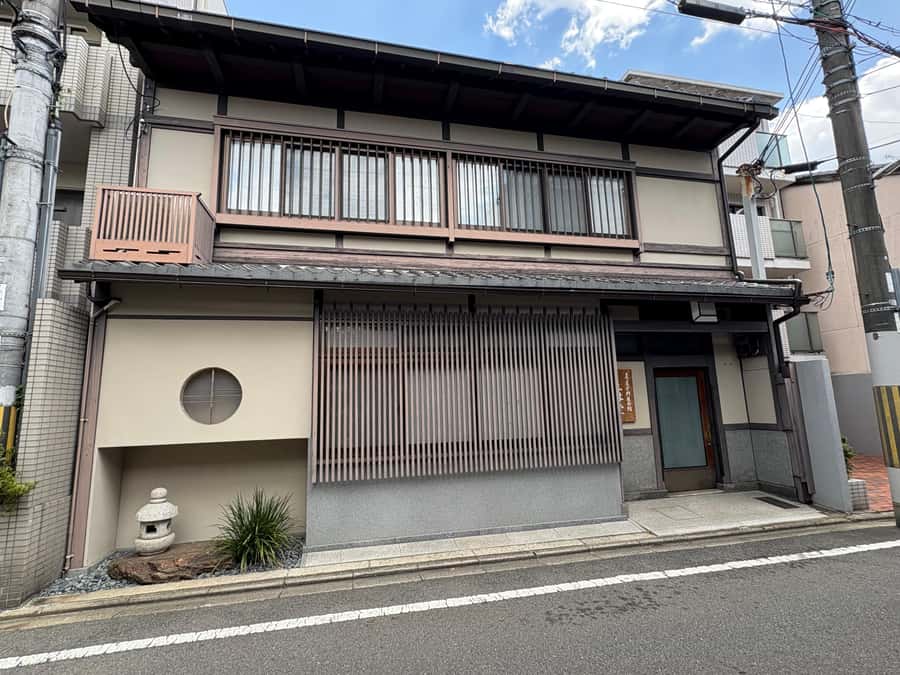
The meeting point is across from Shinrenji, the temple used as the map marker. Look for the person holding a tablet with the GetYourGuide logo. The building is about five minutes from the Hankyu-Omiya and Shijo-Omiya bus stop, making this one of the easier cultural activities to fit between sightseeing stops in central Kyoto.
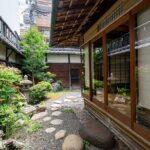
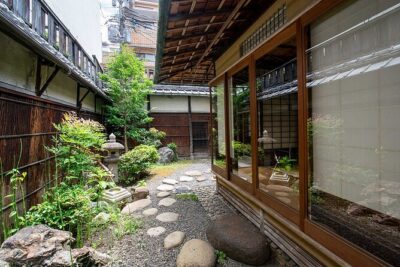
The house itself adds meaning before the tea begins. It is around 100 years old and once belonged to a family involved in selling kimono fabrics. The property later came into the possession of the temple across the road. The tea room was part of the original house because the former owners practiced tea ceremony themselves.
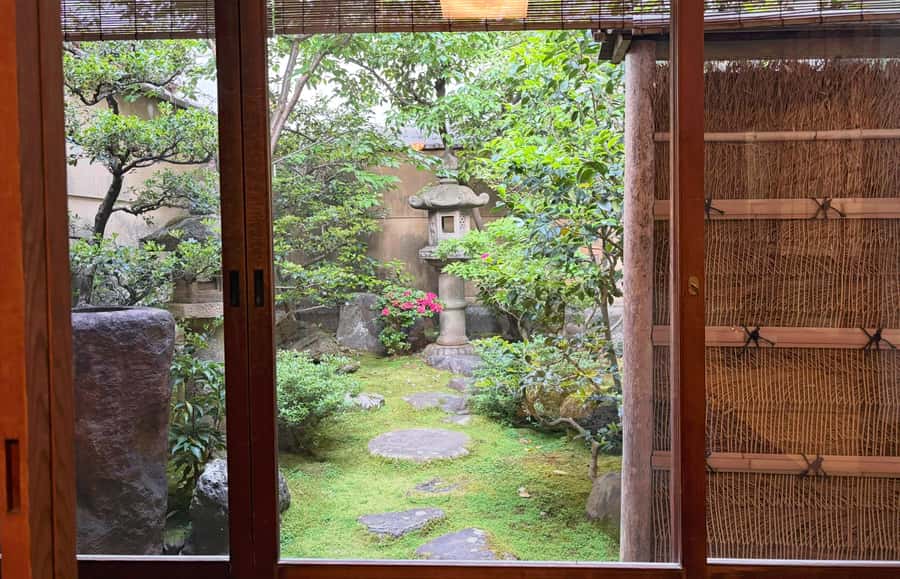
That detail gives the setting a real connection to the activity. You are not simply entering a room decorated to look Japanese for an hour. The room was made for tea and remains part of an older home. You can also see a small Japanese garden from inside, a modest view but one that suits the quiet pace of the ceremony.
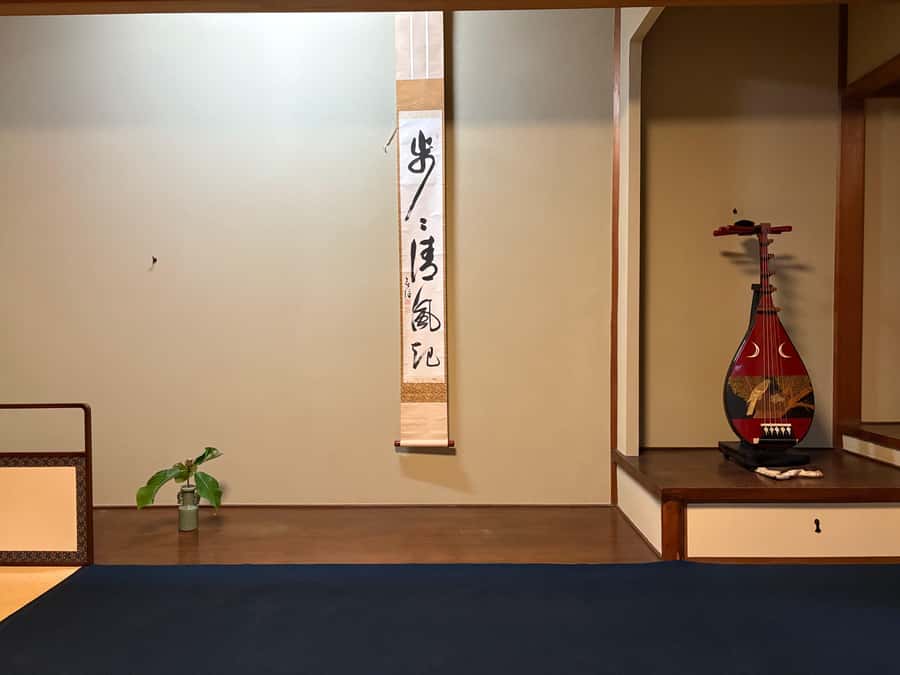
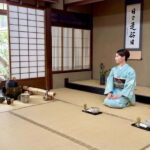
Take a moment to look around when you arrive. Seasonal flowers and a hanging scroll with a seasonal saying are displayed in the room. These are not permanent decorations. The flowers and words change during the year, as do the utensils and sweets, so the setting has a sense of time and season.
Understanding sadō before the demonstration
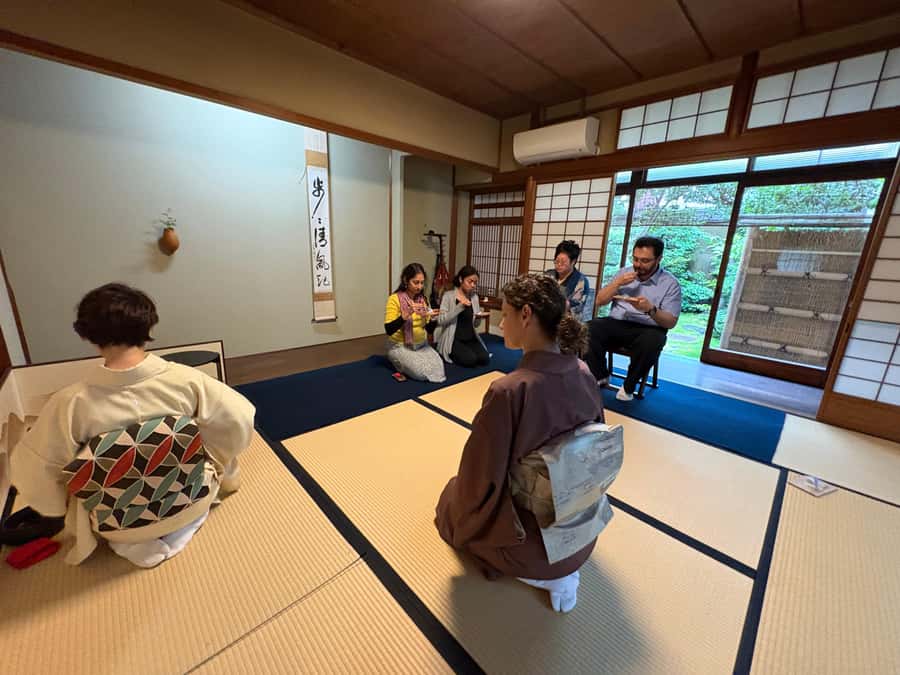
The introduction explains that tea ceremony is known as sadō, the way of tea, or chanoyu, hot water for tea. In Japan, it is treated as a way of life, not just a method for preparing a drink. People can spend decades learning its movements, etiquette, objects, and underlying ideas.
That background matters because the ceremony can otherwise look like a series of mysterious hand motions. Here, you are told what you are watching and why the room is arranged as it is. An English-speaking person is present to translate the Japanese teacher’s explanations, and Spanish support is available upon request. Dutch is also listed as an available language.
The explanations are designed for questions. You can ask about the tea, the utensils, the sweets, the room, or the meaning of a particular action. This is especially useful if you have never seen a tea ceremony. One participant described arriving unsure what to expect and leaving with a clearer understanding of the tradition. That is exactly the role this format should play.
There is also a Spanish-language strength worth noting. José and his wife help provide the experience, and Spanish-speaking visitors can request a fully Spanish-supported session. A Spanish-language group described the arrangement as having more than 30 years of tea ceremony practice behind it. The main description gives the Japanese teacher about 50 years of experience, so the safest way to read these figures is that the people involved bring decades of experience, though the exact role of each person may vary by session.
Watching the teacher prepare matcha
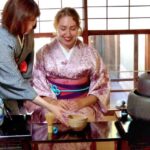
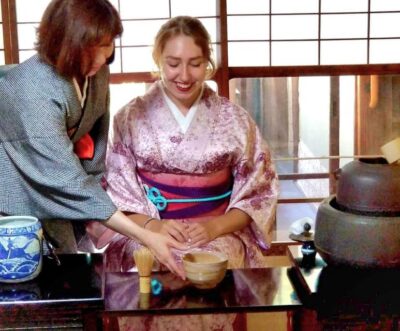
The demonstration is the heart of the hour. The Japanese teacher prepares matcha in the traditional tea room while you follow each stage through the translation and explanation. The appeal is in the small movements: how the utensils are placed, how the tea is measured, how the bowl is handled, and how the presentation unfolds in a set order.
The teacher’s long practice should be visible in the calm, exact quality of the performance. This is not a hurried show designed only to fill time. You are watching an art built on repetition, restraint, and attention to the person receiving the tea.
The seasonal elements add another layer. A sweet served in spring may not be the same as one served in another season. The flowers, scroll, tools, and presentation can also change. This is one reason to pay attention to the details around the main action. Tea ceremony treats the season as part of the occasion.
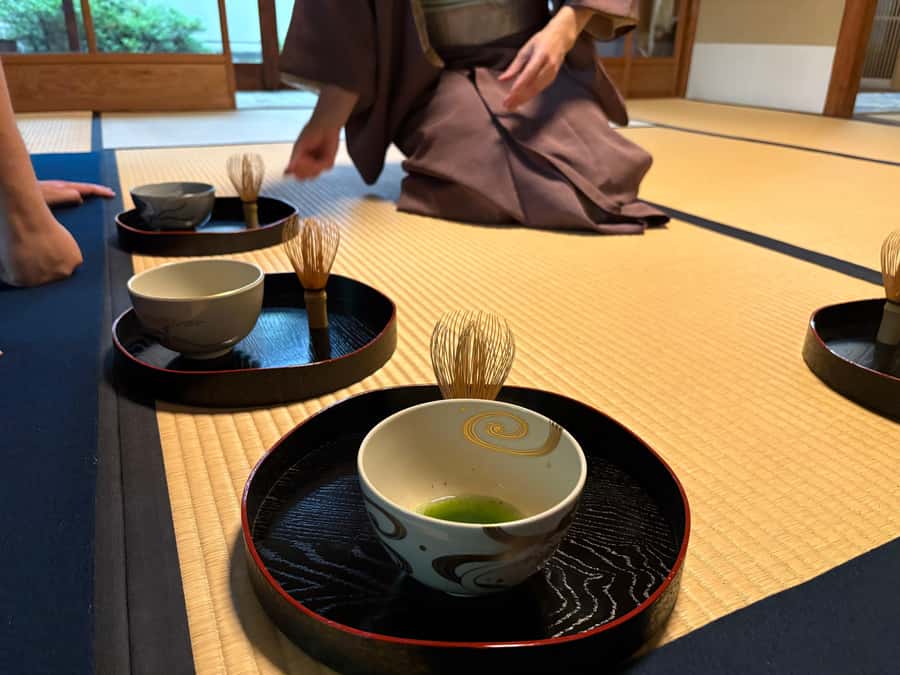
You receive a bowl of matcha prepared by the teacher, along with a seasonal Japanese sweet. Most of the sweets contain anko, or sweet red bean paste. They are made to order, and no alternative sweets are available, so this matters if you dislike red bean or have dietary concerns.
The sweet is not just a snack on the side. Its sweetness balances matcha’s grassy, bitter edge and prepares your palate for the tea. The pairing is part of the lesson, even if the explanation is brief.
Whisking your own bowl of matcha
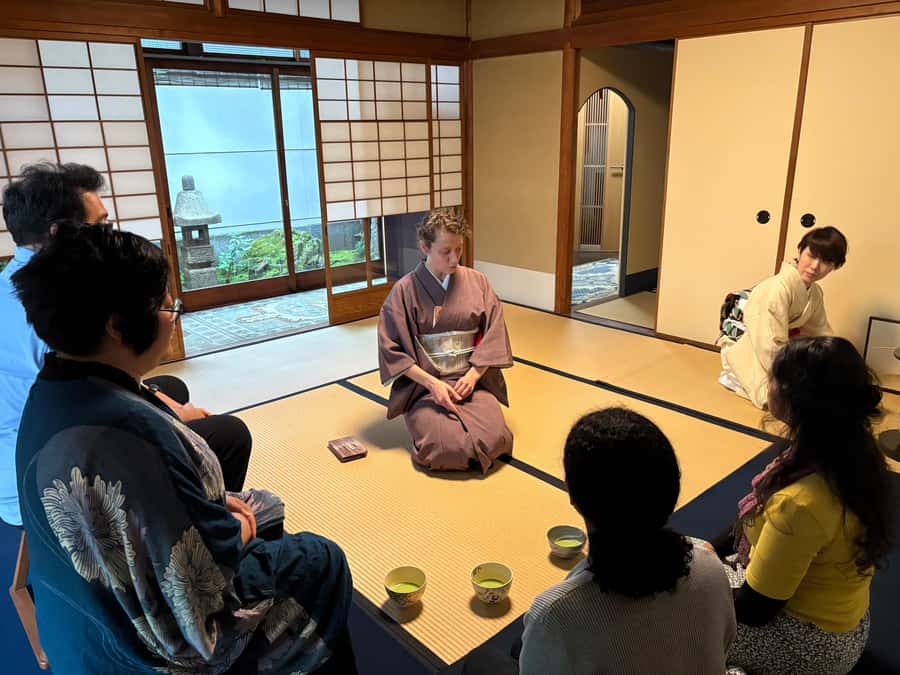
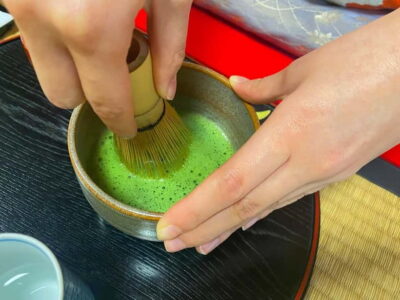
After watching the teacher, you get to prepare a second bowl yourself. You will whisk your own matcha and drink it with a small sweet. This hands-on step changes the experience from a performance into a lesson you can feel in your hands.
Whisking looks simple until you try it. The bamboo whisk must be moved briskly and evenly to create the right texture. You may find it harder than expected, which is part of the fun. The teacher or assistant can guide you, and the small group means you should have a clear view of the process.
This is also the point when the ceremony’s discipline becomes practical. You begin to notice how much control goes into a good bowl of tea. The exercise does not turn you into a tea master, but it gives you respect for the skill you just watched.
You receive two bowls in all: one made by the teacher and one made by you. That makes the $45 price easier to assess. You are paying not only for a drink, but for access to an experienced teacher, a traditional room, interpretation, seasonal sweets, and a personal attempt at the craft.


A small group makes a real difference
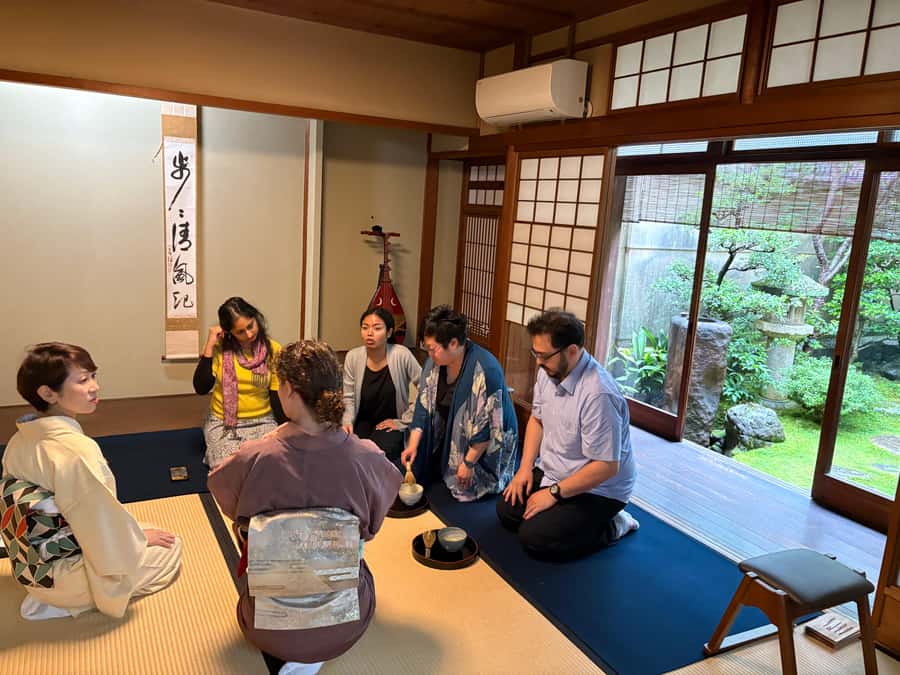
The six-person limit is one of the strongest features here. In a larger group, you might struggle to see the teacher’s hands or feel uncomfortable interrupting with questions. Here, the room stays intimate, and each person can take part in the practical section.
The group size can also affect the exact length. The advertised duration is one hour for a full group of six. If only two people book a time slot, the session may finish sooner because preparing tea for fewer people takes less time. Keep that in mind if you are counting on a full hour.
This is not necessarily a problem. A smaller group may give you more personal attention and a quieter room. Still, if you want the full advertised pace, check the booking conditions and allow a little flexibility afterward.
The informal tone suits people who want cultural context without a strict lecture. It also worked well for a family with a baby, where the staff remained kind and welcoming. That does not mean every child will sit quietly for the whole ceremony, but the friendly setting is less intimidating than a highly formal presentation.
Sitting on the floor, socks, and matcha caffeine
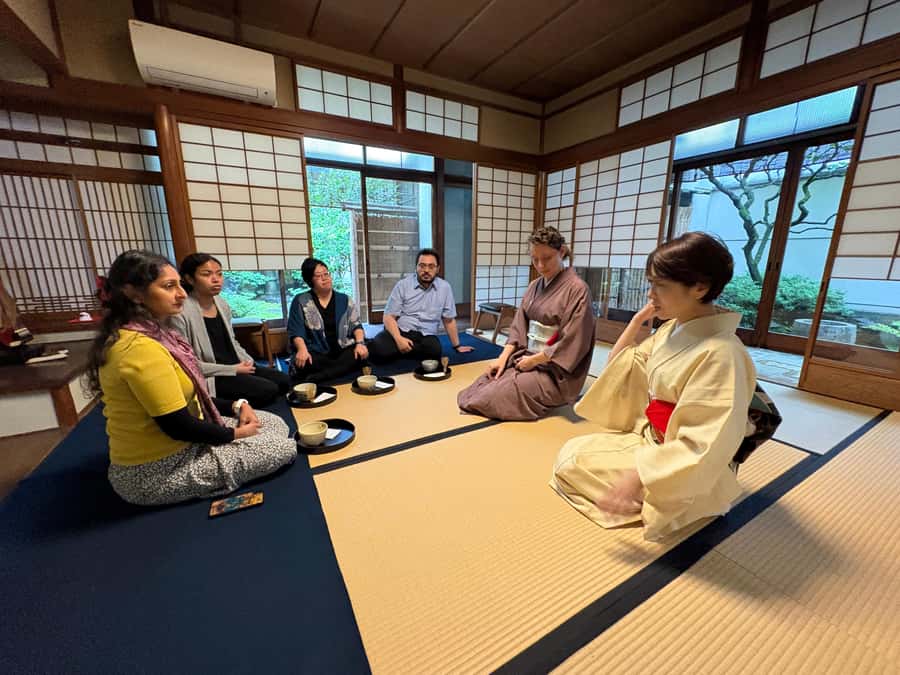
Traditional tea ceremony commonly uses seiza, with your knees folded under you and your weight resting on your heels. Some people manage it easily for a short session. Others find it uncomfortable within minutes, especially if they have knee, hip, or ankle problems.
Chairs are available upon request. Ask at the start rather than waiting until you are uncomfortable. You can still see and take part while seated on a chair, and there is no prize for enduring pain in the name of etiquette.
You must wear socks in the tea room. Bare feet are not allowed, so bring a pair if you are wearing sandals. Drinks are also not allowed in the room.
Matcha contains a high amount of caffeine. You receive two bowls, so anyone sensitive to caffeine should think carefully before booking. If you cannot consume caffeine for medical reasons, the matcha cannot be replaced with another tea according to the stated conditions.
The experience is not suitable for wheelchair users. People with mobility concerns should also consider the house setting, floor seating, and the need to request a chair in advance.
Is $45 a fair price for one hour?
At $45 per person, this is not the cheapest way to drink matcha in Kyoto. You can find a tea and sweet for less in a café. That comparison misses the point, however. This is a compact cultural lesson with a seasoned teacher, translation, two bowls of tea, two sweets, and access to a traditional home.
The value is strongest if you want to understand tea ceremony rather than simply taste matcha. The teacher’s demonstration gives you the formal side, while whisking your own bowl gives you a direct sense of the work involved. The six-person limit also means you are paying for attention and visibility, not just admission to a room.
The price is less convincing if you dislike matcha, cannot have caffeine, or have no interest in Japanese customs. The sweets are mainly red bean paste, and there is no alternate sweet listed. In that case, much of the experience’s central appeal disappears.
The one-hour format makes it easy to fit into a Kyoto itinerary. You do not lose half a day, and the location near Hankyu-Omiya and Shijo-Omiya keeps transport simple. For a first introduction, I consider the price reasonable, especially for visitors who value a personal setting over a quick tourist demonstration.
Who should book this tea ceremony?
I would recommend it most strongly to first-time visitors who want a clear explanation of tea ceremony in English, Spanish, or Dutch. It also suits couples, small families, and anyone who prefers asking questions instead of silently watching from the back of a crowd.
Spanish-speaking visitors should pay close attention to the language option. A fully Spanish-supported session can be arranged, with José and his wife involved in the experience. This may be one of the better choices in Kyoto for people who want to discuss the tradition naturally in Spanish rather than rely on scattered translation.
The activity is also a good fit for photographers. Pictures and videos are allowed, including during the ceremony. Be respectful and avoid letting the camera replace your attention, but you do not have to choose between remembering the setting and following the demonstration.
I would hesitate if you have serious knee problems, need wheelchair access, cannot consume caffeine, or dislike red bean sweets. Chairs solve the floor-sitting issue for many people, but they do not solve the access limits or food and drink restrictions.
Practical booking advice for your Kyoto day
Allow enough time to find Shinrenji and identify the tablet with the GetYourGuide logo. The house is close to the Hankyu-Omiya and Shijo-Omiya bus stop, but Kyoto streets can still take a moment to sort out, especially if you are arriving from another part of the city.
Wear socks from the start. That small bit of planning prevents an awkward problem at the door. If you want a chair, request one when you arrive, and mention any mobility concerns before the ceremony begins.
You can cancel up to 24 hours before the start for a full refund, and the reserve-now, pay-later option keeps your schedule flexible. Starting times vary, so check availability for your date. The activity provider is LAMBDA CUBE LLC.
Should you book it?
Book this tea ceremony if you want a personal, well-explained introduction to one of Japan’s most formal arts. The old house, small garden, seasonal objects, experienced teacher, and chance to whisk your own matcha give the hour real substance.
Skip it if you are avoiding caffeine, cannot manage floor-based surroundings even with a chair, or want a long and highly academic study of tea ceremony. For most curious visitors, though, the one-hour balance is right: you watch, you learn, you taste, and you try it yourself. That is enough to make the next tea room you see in Kyoto far easier to understand.
FAQ
Where does the Kyoto tea ceremony meet?
The meeting point is across from Shinrenji temple, which is marked on the map. Look for the person holding a tablet with the GetYourGuide logo. The building is about five minutes from the Hankyu-Omiya and Shijo-Omiya bus stop.
How long does the tea ceremony last?
The stated duration is one hour. If the time slot has fewer than six participants, the ceremony may end sooner because less time is needed to prepare tea for a smaller group.
How many people can join?
The group is limited to six participants. This allows everyone to see the demonstration and ask questions in a more personal setting.
Which languages are available?
English, Dutch, and Spanish are listed as available languages. A native English speaker translates the Japanese teacher’s explanations, and a native Spanish speaker can be available upon request.
Do I make my own matcha?
Yes. You receive one bowl of matcha prepared by the teacher and prepare a second bowl yourself by whisking the tea.
Are sweets included?
Yes. You receive one seasonal Japanese sweet with the teacher’s tea and one small sweet with your own bowl. Most sweets contain anko, or sweet red bean paste, and no alternative sweets are available.
Do I have to sit on the floor?
Sitting on the floor in the seiza position is customary, but chairs are available upon request. Ask for a chair if kneeling is uncomfortable or difficult.
What should I bring, and who cannot take part?
You must wear socks or bring a pair, since bare feet are not allowed. Matcha contains a high amount of caffeine, and the activity is not suitable for wheelchair users.
More Tea Ceremony Experiences in Kyoto
More tours in Kyoto we've reviewed



Tea Ceremony Experiences, compared.
 ★ 4.9Kyoto: Tea Ceremony in a Traditional Tea House in KiyomizuFrom $4945 min
 ★ 4.9Kyoto: Tea Ceremony Ju-An at Jotokuji TempleFrom $291h 10m
 ★ 4.3Kyoto: 45-Minute Tea Ceremony Lesson ExperienceFrom $2245 min
 ★ 5.0World Heritage Kyoto & Nara Uji Authentic Matcha ExperienceFrom $129
 ★ 4.9Kyoto: Table-Style Tea Ceremony at a Kyo-MachiyaFrom $451h 30m
 ★ 5.0Kimono Tea Ceremony at Kyoto Maikoya, NISHIKIFrom $65