
Reviewed · GION & GEISHA WALKS
KYOTO: Tempio Kiyomizu Pagode Gion “Geisya” (Guida Italiana)
Kyoto’s best-known old streets make more sense when you walk them as an ancient approach to Kiyomizu-dera, not as a string of photo stops. This five-hour tour follows the pilgrimage route from Kyoto Station through Sannenzaka, Ninenzaka, Gion, and on to Pontocho, with an Italian-speaking guide explaining the religious and cultural details along the way.
I like two things right away: transport and admission tickets are included, and the tour ends in Pontocho, a useful spot for dinner or an evening walk. I also like the option to request a flexible schedule or route when possible, which can help if your Kyoto plans are tight.
The main consideration is the pace. This is a walking-focused tour through popular historic streets, with about an hour at Kiyomizu-dera and more stops afterward. If you want a slow visit with lots of shopping or private time, five hours may feel full.
In This Review
- Key points at a glance
- Why this route works for a first Kyoto day
- Meeting at Kyoto Station without confusion
- Kiyomizu-dera and the old pilgrimage approach
- Sannenzaka and Ninenzaka, Kyoto’s shop-lined old streets
- Gion, geisha culture, and the Minami-za theater
- A guide who can explain Kyoto in Italian
- What the $117 price really covers
- Flexible planning, with sensible limits
- Who should book this Kyoto walk?
- FAQ
- Is the tour conducted in Italian?
- Who is the guide?
- How long does the experience last?
- Where does the tour begin?
- Where does the tour finish?
- Are transport and entrance tickets included?
- Is the tour wheelchair accessible?
- Can the itinerary or schedule be changed?
- What is the cancellation policy?
Key points at a glance
- Italian-speaking Kyoto guide: Omae leads the tour and explains local history, religion, customs, and culture in Italian.
- Kiyomizu-dera as the centerpiece: Spend about one hour at one of Kyoto’s major Buddhist temples.
- Old Higashiyama streets: Walk Sannenzaka and Ninenzaka, lined with sweets, souvenirs, cafés, and traditional-looking buildings.
- Gion and Minami-za: See Kyoto’s famous geisha district and pass Kyoto’s best-known kabuki theater.
- Easy five-hour format: Start at Kyoto Station and finish in Pontocho, with transport and scheduled entrance fees covered.
- Flexible support: Itineraries and times can be adjusted on request as far as practical, and assistance is available during the outing.
Why this route works for a first Kyoto day
This tour gives you a clean introduction to eastern Kyoto. Instead of sending you straight to a temple and leaving you to decode the streets alone, it connects the temple with the approach roads, shops, theater district, and restaurant quarter around it.
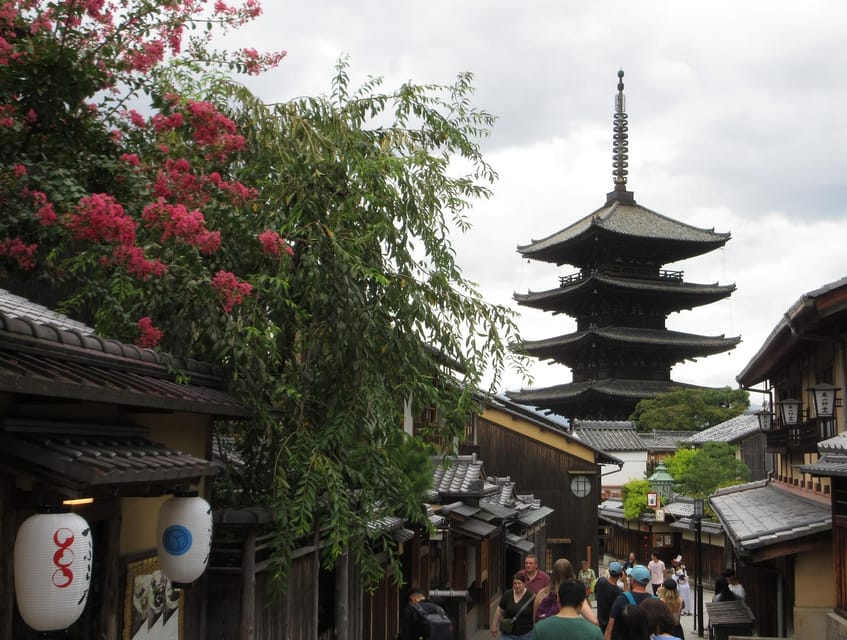
That connection matters. Kiyomizu-dera is not an isolated monument. For centuries, people approached it along narrow streets filled with small shops and food sellers. Today, Sannenzaka and Ninenzaka still serve that role, though the merchandise is aimed at modern visitors. A guide can help you see the difference between a religious approach, a shopping street, and a district built for evening entertainment.
You also get several sides of Kyoto in one outing. The temple offers Buddhist architecture and views, the old lanes provide everyday shopping and sweets, Gion brings traditional performing arts and geisha culture, and Pontocho gives you a practical place to continue your night.
The route is especially useful if you are visiting Kyoto for the first time and prefer to ask questions as you go. The guide’s role is not only to point out buildings. The tour promises help with the necessary practical matters during the route, along with answers to questions about Japanese culture.
A few more Kyoto tours and experiences worth a look

Meeting at Kyoto Station without confusion
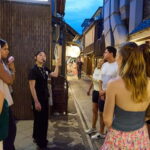
The meeting point is outside the central north entrance of Kyoto Station, also called the Karasuma-Guchi side. Look for the open space between the four escalators in front of the taxi terminal, not the bus terminal.
A useful visual clue is Kyoto Tower. From the meeting area, you should see the tower in front of the station toward the upper left, not the upper right. That small detail is worth remembering because Kyoto Station is large, busy, and full of levels.
You receive an email by the day before with confirmation and more precise meeting instructions. I would still arrive early enough to find the north entrance and identify the taxi terminal before the meeting time. Starting calmly matters here, since the first ride to Kiyomizu-dera takes about 15 minutes.
The price is $117 per person. That is not a low-cost neighborhood walk, but it covers the transport used during the itinerary and entrance tickets for the scheduled monuments. You are also paying for five hours with an Italian-speaking guide, rather than simply buying admission and following a route on your own.
Kiyomizu-dera and the old pilgrimage approach
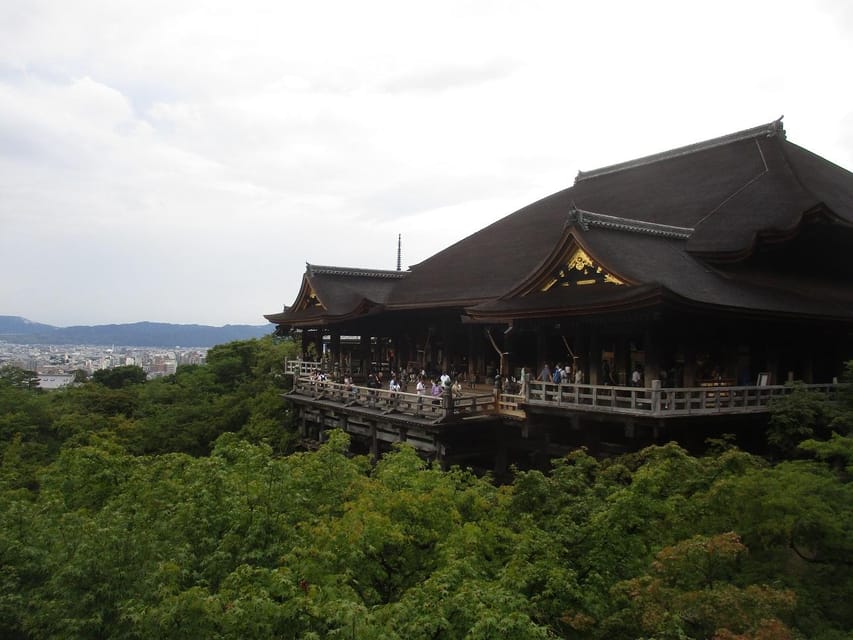
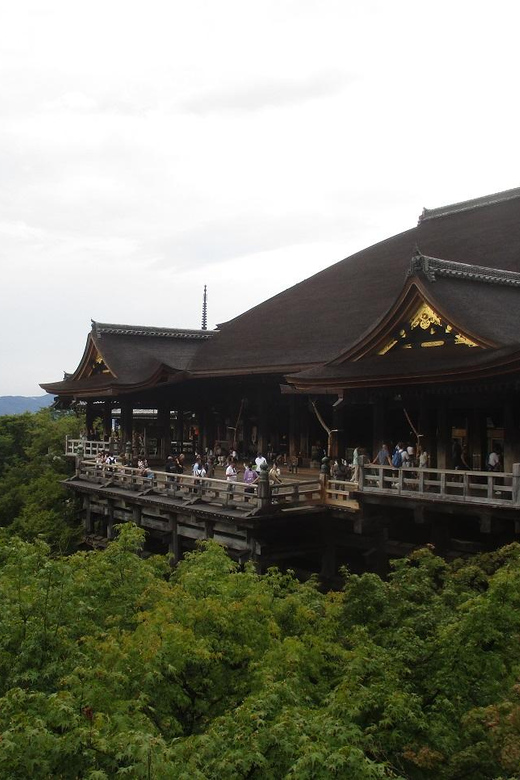
After the short bus or coach ride, the main visit begins at Kiyomizu-dera. The guided portion here lasts about one hour, giving the temple enough time to serve as the center of the morning or afternoon rather than a rushed backdrop for photographs.
Kiyomizu-dera is a Buddhist temple area whose development reaches back to the eighth century. The tour focuses on the historical, cultural, and religious details that are easy to miss if you only walk through the grounds looking for the famous views.
This is where the guide’s Italian matters most. Religious customs and temple details can be difficult to understand from signs alone, especially when you are trying to connect architecture with belief. Omae is described as careful with explanations, attentive to details, and comfortable answering questions in Italian.
You should expect the visit to include sightseeing and interpretation rather than a formal religious ceremony. The supplied schedule allows about an hour, so you will get a focused introduction, not unlimited time in every corner of the temple grounds.
Kiyomizu-dera is also a strong first stop because it gives the rest of the walk a clear purpose. After seeing the temple, you follow the streets that developed around it. The shops and cafés are not random tourist additions in the larger story of the area. They are part of the long tradition of serving people making the pilgrimage.
Sannenzaka and Ninenzaka, Kyoto’s shop-lined old streets
From Kiyomizu-dera, the route moves on foot for about five minutes to Sannenzaka. The scheduled walk here is short, around three minutes, followed by another five-minute walk to Ninenzaka and a two-minute visit there.
The timetable may look brief, but these streets are best understood as links in the route rather than separate museum exhibits. You pass rows of souvenir shops, sweet stores, cafés, and businesses designed to keep people browsing. The area is aimed at all ages, so you may find food gifts, small crafts, and easy stops for a snack.
I like this part because it adds ordinary pleasure to the temple visit. Kyoto can become a parade of major sights, but stopping to look at sweets or local souvenirs gives the route a more relaxed rhythm. The guide can also explain why these streets matter beyond their attractive façades.
The short scheduled times are a useful warning. You should not expect a long independent shopping session at each lane. If you already know you want to buy ceramics, sweets, clothing, or gifts, ask about the possibility of extra time when arranging the tour. The itinerary can be flexible on request as far as possible, but changes are not guaranteed.
These lanes are also the part of the route where comfortable footwear becomes important. The activity is described as a walking tour, and the day includes several transfers between stops. The experience is listed as wheelchair accessible, but anyone needing specific support should discuss the exact route and timing before booking.
Gion, geisha culture, and the Minami-za theater
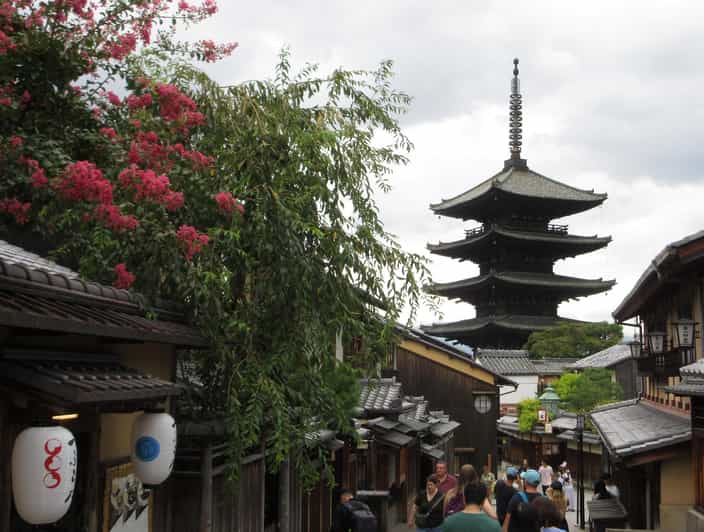
The walk from Ninenzaka to Gion takes about 15 minutes. This is the longest listed walking connection, and it shifts the mood from temple approach to one of Kyoto’s best-known entertainment districts.
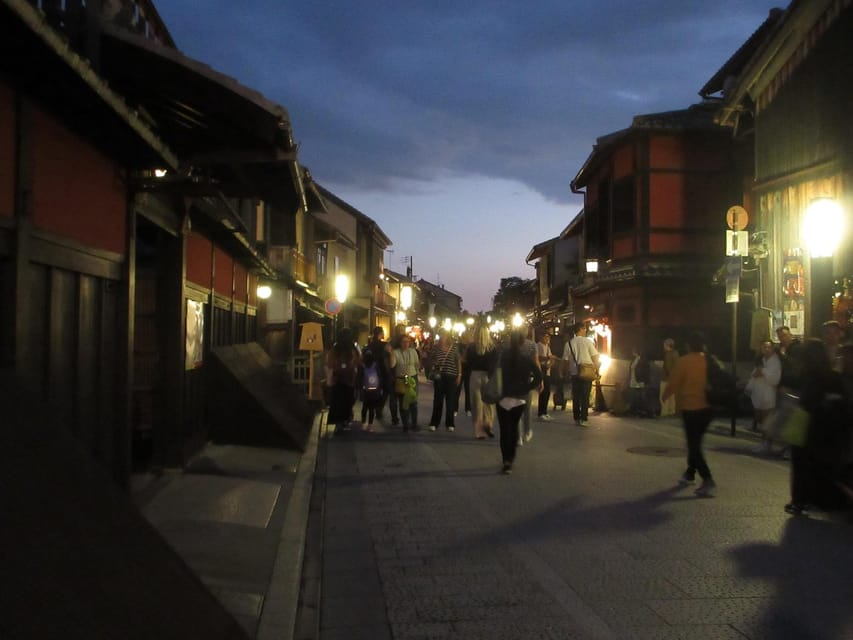
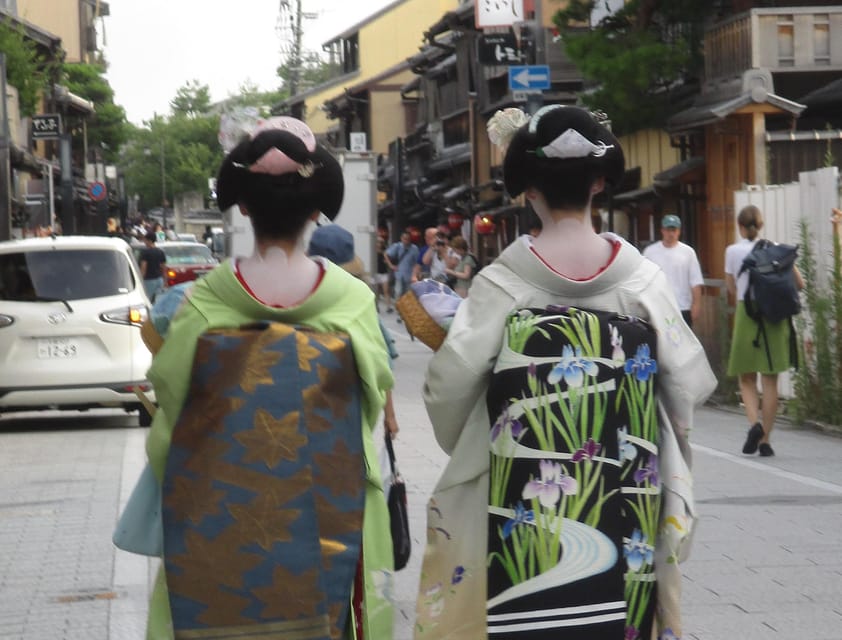
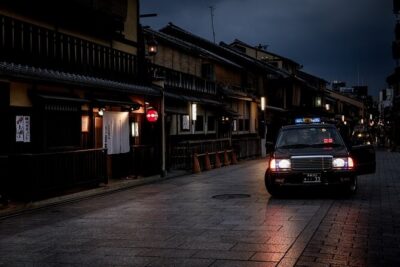
The guided Gion visit lasts about 30 minutes. Gion is closely associated with geisha culture, traditional arts, tea houses, and evening dining. The important point is to treat it as a living district, not a stage set. You are walking through an area where traditional culture and modern city life share the same streets.
An Italian-speaking guide can help you approach the subject with the right context. Terms, customs, and social roles do not always translate neatly, and a quick explanation can prevent the usual confusion between geisha, performers, restaurants, and tourist imagery.
The tour then passes by Kyoto Minami-za, the city’s famous kabuki theater. The stop is brief, about three minutes, so this is an exterior orientation point rather than a theater performance. If kabuki interests you, the guide may help you understand why the building matters, but you should not book this tour expecting a show or interior visit.
The final walk takes about three minutes, bringing you to Pontocho. This is a smart ending because the district is well suited to an evening meal or a continuation of your Kyoto plans. The tour does not include dinner, and no meal is listed, so plan that part separately.
A few more Kyoto tours and experiences worth a look

A guide who can explain Kyoto in Italian
The experience is led by Omae, a native guide of Kyoto who speaks Italian. The strongest praise centers on his manner as well as his explanations. He is described as friendly, lively, accurate, attentive to details, and ready to answer questions.
That combination is valuable. A guide who only recites dates can make a temple feel like a classroom. A guide who only entertains may leave you with pleasant pictures but little understanding. The feedback associated with Omae points to a middle ground: clear explanations delivered in an easy, personable way.
This is a good match for you if Italian is the language in which you prefer to discuss religion, history, and social customs. It also suits families or mixed-age groups who may need help with questions and practical support during a long outing.
The tour can be private or group-based. The supplied information does not promise a particular group size, so ask before booking if the size of the party matters to you. A private format may offer more room for questions and adjustments, while a group tour can be a simpler way to keep the cost predictable.
What the $117 price really covers
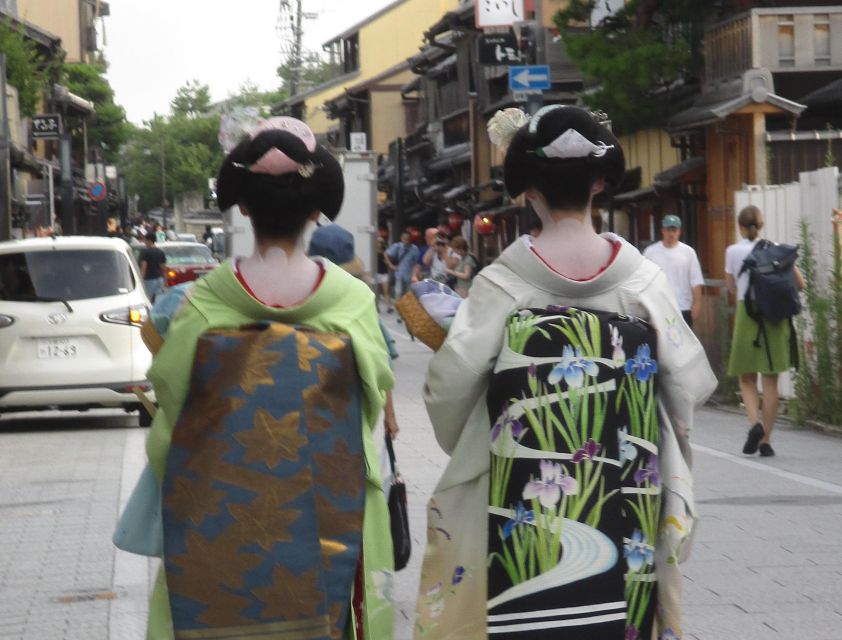
At $117, this is a convenience-and-context purchase, not a bargain sightseeing ticket. The value comes from combining transport, monument admission, a five-hour route, and an Italian-speaking guide in one booking.
If you tried to recreate the day yourself, the individual transport and entry charges would be separate. More important, you would need to research the links between Kiyomizu-dera, the approach streets, Gion, Minami-za, and Pontocho. The tour saves that planning time and gives you someone to consult throughout the route.
The price makes the most sense for:
- Italian-speaking visitors who want detailed explanations without relying on translation apps
- First-time visitors who want Kyoto’s eastern sights arranged in a logical order
- Families or couples who value assistance and a planned route
- People with limited time who want several famous areas in one half-day
It makes less sense if you are comfortable navigating Kyoto independently, mainly want free time for shopping, or plan to spend an entire day inside Kiyomizu-dera and its surrounding streets. You may feel constrained by the five-hour schedule.
Free cancellation is available up to 24 hours before the start for a full refund. You can also reserve and pay later, which is useful when your Kyoto schedule is still changing. Starting times depend on availability.
Flexible planning, with sensible limits
The provider allows itinerary and timing requests as far as possible. That could be helpful if you want to adjust the balance between temple sightseeing, shopping streets, and Gion.
Do not treat flexibility as an unlimited custom tour, though. The published route has a clear shape, and the five-hour duration still has to cover transport, the one-hour temple visit, walking connections, the Gion stop, and the final arrival at Pontocho.
I would send any important request before the day of the tour. Mention if you need extra time at a particular stop, have mobility concerns, or want to focus more on cultural explanation than shopping. The activity is marked wheelchair accessible, but the route includes walking between several historic districts, so specific needs deserve confirmation in advance.
Who should book this Kyoto walk?
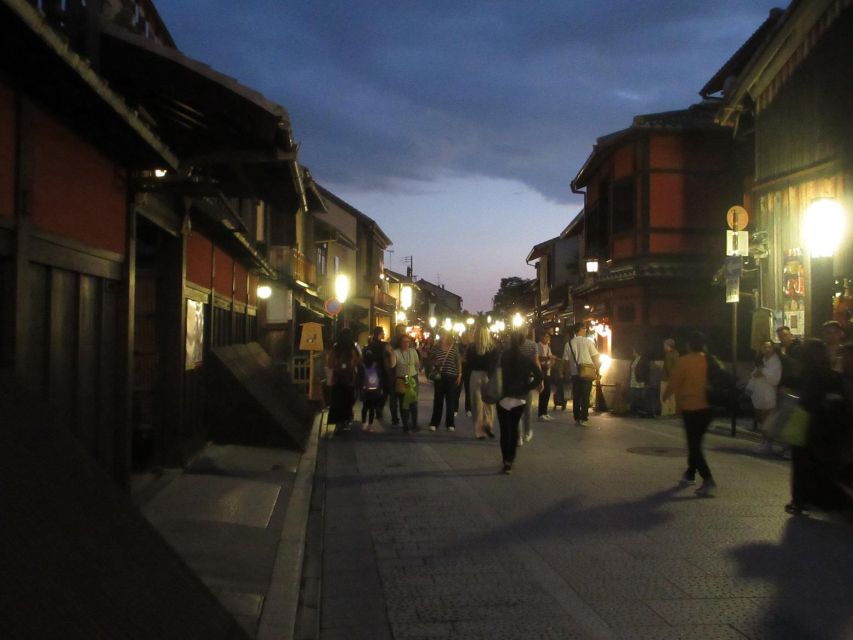
I would choose this tour if you want to see the major Higashiyama highlights but also want someone to explain what you are seeing. The Italian language service is the central reason to book, and Omae’s careful, warm style appears particularly suited to people who like asking questions.
It is also a good opening activity for a Kyoto stay. After five hours, you will have a clearer sense of how Kiyomizu-dera connects to the old streets, how Gion fits into Kyoto’s traditional arts, and where Pontocho can take you next.
I would skip it if your top priority is unstructured wandering. The schedule moves steadily, and the short times assigned to Sannenzaka, Ninenzaka, and Minami-za leave limited room for lingering. Independent explorers may prefer to visit these areas alone and set their own pace.
For the right person, the $117 fee is fair because it buys more than transport and tickets. It buys a well-connected route, Italian explanations, and practical help in a city where cultural details are easy to miss.
FAQ
Is the tour conducted in Italian?
Yes. The tour includes a live Italian-speaking guide, and the guide answers questions in Italian.
Who is the guide?
The guide is Omae, a native guide of Kyoto who speaks Italian.
How long does the experience last?
The tour lasts five hours. Starting times depend on availability.
Where does the tour begin?
It begins at Kyoto Station, at the north entrance on the Karasuma-Guchi side. Meet in the space between the four escalators in front of the taxi terminal, not the bus terminal.
Where does the tour finish?
The tour finishes at Pontocho.
Are transport and entrance tickets included?
Yes. The price includes the listed transport costs and entrance tickets for the monuments scheduled during the itinerary.
Is the tour wheelchair accessible?
Yes, the activity is listed as wheelchair accessible. Since the route includes several walking sections, contact the provider about your specific needs before booking.
Can the itinerary or schedule be changed?
Itineraries and schedules can be adjusted on request as far as possible. Any changes depend on practical availability.
What is the cancellation policy?
You can cancel up to 24 hours before the tour for a full refund. You can also reserve now and pay later.
More Golden Pavilion & Temple Tours in Kyoto
More Gion & Geisha Walks in Kyoto
More tours in Kyoto we've reviewed


Gion & Geisha Walks, compared.
 ★ 4.7Kyoto Geisha Walking Tour: Gion District & Hidden GemsFrom $252 hours
 ★ 4.7Kyoto: Gion Geisha District Walking Tour – Stories of GeishaFrom $202 hours
 ★ 4.9Best of Kyoto: Gion, Geisha, Pagodas & CobblestonesFrom $242 hours
 ★ 4.5Night Walk in Gion: Kyoto’s Geisha DistrictFrom $211h 40m
 ★ 5.0Kyoto Night Foodie Tour in Gion (9+ dishes + 6 Sake tastings)From $163
 ★ 5.0Kyoto Gion Geisha District Walking Tour – The Stories of GeishaFrom $25