
Reviewed · FUSHIMI INARI TOURS
Kyoto Wagashi(Japanese sweets) Cooking Class near Fushimiinari
Making wagashi in a traditional Japanese home is the real draw here. You sit in a tatami-style room, watch an English-speaking instructor demonstrate three sweets, then shape and cook them yourself before eating them with matcha and a garden view. Miho is one of the named instructors.
I like the small maximum of six people, which gives the class a friendly, hands-on feel rather than a factory-line lesson. I also like that you leave with the recipes, useful if you want to surprise your family with black sesame mochi or mitarashi dango back home. The main consideration is the price, $79.26 per person, which is fair for a two-and-a-half-hour private-home experience but more than a quick market snack.
In This Review
- Key points to know before booking
- Why this wagashi class feels different from a food stop
- Entering the Japanese-style house near Fushimi Inari
- The opening tea and demonstration
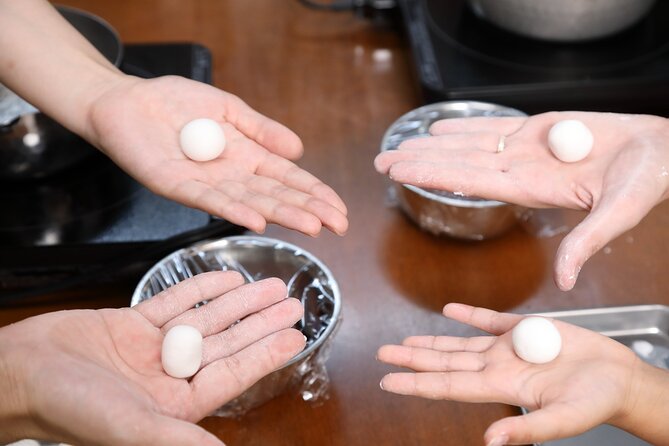
- Making three kinds of wagashi by hand
- Tea, garden views, and eating what you made
- The small-group format and the role of the instructor
- Is $79.26 a good value?
- Who will enjoy this most
- Practical details before you reserve
- Should you book the wagashi class?
- FAQ
- How long does the wagashi cooking class last?
- Where does the activity begin and end?
- How many people can join the class?
- Is the class taught in English?
- Are ingredients and drinks included?
- Can vegetarians and vegans join?
Key points to know before booking
- Three wagashi to make: Prepare about three kinds of Japanese sweets, with examples including black sesame mochi and mitarashi dango.
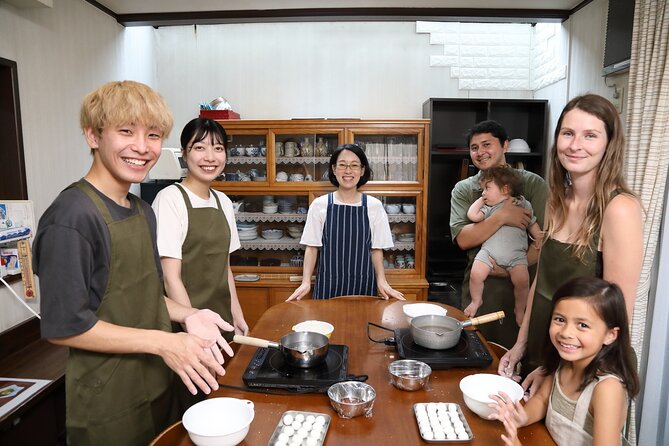
- Traditional home setting: The class takes place in an authentic Japanese-style house, with sweets served in a room overlooking a garden.
- Very small group: The maximum is six people, so solo participants and families can get direct help.
- English instruction: The class is conducted in English by licensed guide interpreters.
- Recipes go home with you: You can repeat the sweets for friends and family after returning home.
- Dietary flexibility: Vegetarians are welcome, and the class is vegan-friendly if you explain your needs in advance.
Why this wagashi class feels different from a food stop
Kyoto offers no shortage of sweets, but buying one at a shop only gives you the finished product. Here, you learn why the sweet looks and feels the way it does. Wagashi often depend on texture, shape, color, and balance more than on a long list of ingredients. That makes the preparation part of the pleasure.
The class is held in an authentic Japanese-style house rather than a standard cooking school. You first relax in a traditional room, then move into the practical work. That change of pace matters. You are not simply rushing from one tourist sight to the next with a snack in hand.
I especially like the idea of beginning with a pause. Kyoto sightseeing can become a march of temples, gates, buses, and photographs. Sitting down over tea before making sweets gives you a quieter look at everyday Japanese hospitality.
The group size keeps the experience personal. With no more than six participants, you can ask questions and get help with the small details that make wagashi tricky. Shaping a sweet neatly is not the same as watching someone else do it from across a large room.
A few more Kyoto tours and experiences worth a look


Entering the Japanese-style house near Fushimi Inari
The meeting point is 38-4 Fukakusa Watamoricho in Fushimi Ward, Kyoto, near public transportation and in the Fushimi Inari area. The activity begins and ends at this same location, so you do not need to arrange a separate return transfer.
The exact appeal of the setting is its domestic feel. You are treated as if you have been invited into a friend’s home for tea, not ushered into a commercial demonstration room. That does mean you should allow enough time to find the address. A mobile ticket is provided, and confirmation arrives at booking.
The location makes this a useful pairing with time around Fushimi Inari. I would schedule the class as its own two-and-a-half-hour block rather than trying to squeeze it between several major sights. The class has a relaxed rhythm, and you will get more from it if you are not watching the clock.
Hotel pickup and drop-off are not included. That is normal for a small local class, but it matters if you are counting on door-to-door transport. You make your own way to the house and return from there when the sweets are finished.
The opening tea and demonstration
The first stage is settling into the traditional room. You receive tea, with the hands-on session later ending with matcha and the sweets you have made. The included refreshments help turn the class into a complete cultural activity rather than a narrow recipe lesson.
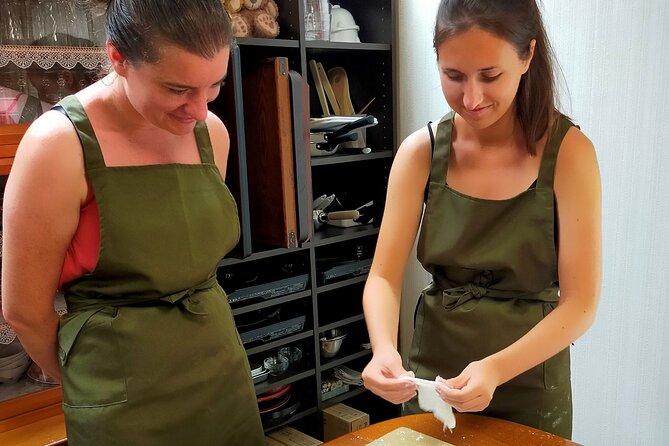
Before you begin, the instructor demonstrates the methods in front of you. This is important with wagashi, since the techniques can be more precise than they first appear. You can watch the order of the steps, see the expected texture, and then try the work with guidance nearby.
The class is conducted entirely in English. The instructors are licensed guide interpreters, so explanations are meant to be clear for international participants. That makes the class suitable for people who want more than a silent cooking demonstration.
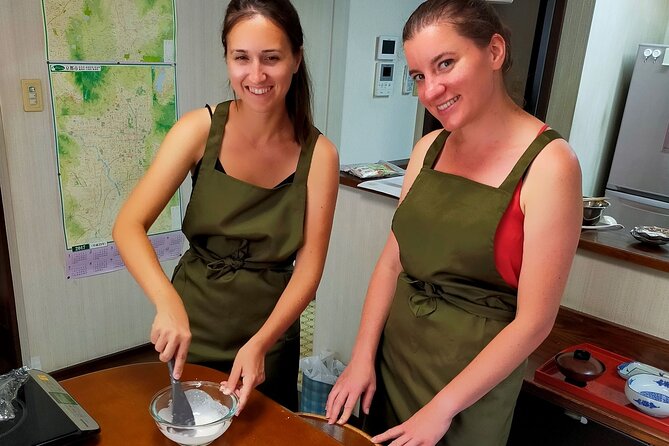
The small group also helps if you arrive alone. You may prepare the sweets by yourself or work with a partner, depending on the class arrangement. Families and friends can enjoy the shared activity, while solo participants still have a chance to meet others without being placed in a large group.
Making three kinds of wagashi by hand
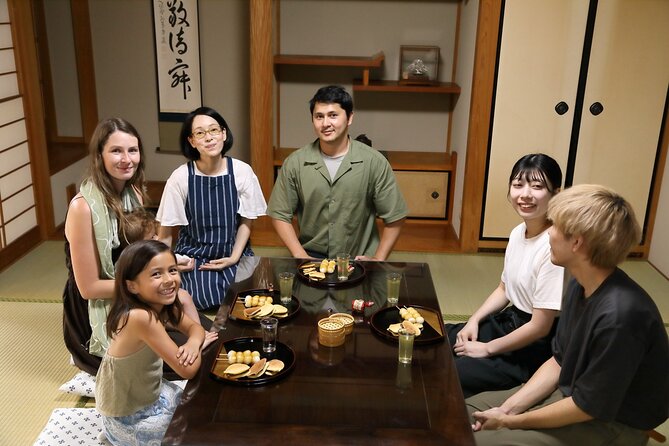
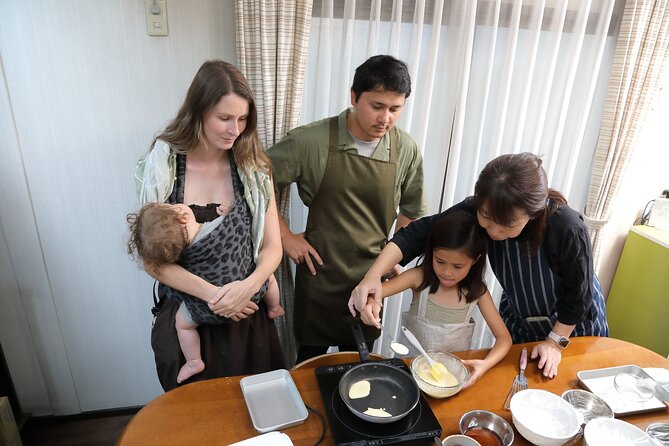
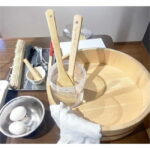
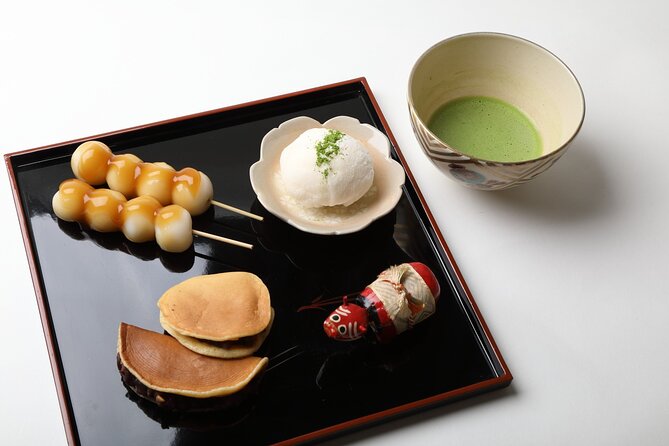
The central part of the experience is preparing about three different Japanese sweets. The exact selection is not fully specified in advance, so you should not book expecting a particular menu every time. The examples connected with the class include black sesame mochi and mitarashi dango.
Black sesame mochi is a good example of why this lesson can be memorable. The strong, nutty sesame flavor is not the same as the familiar sweetness of many Western desserts. One participant found it such a favorite that black sesame became a new obsession. That is the sort of small discovery that makes a cooking class more worthwhile than simply ordering a known dish.
Mitarashi dango gives you another style of Japanese sweet. Its appeal comes from the contrast between soft dumpling texture and the sauce served with it. The preparation also shows how Japanese sweets can be modest in size while still requiring care.
You will prepare the sweets yourself or with a partner after watching the demonstration. The instructor can offer practical help as you work. Expect the pleasure of making something attractive, along with the occasional imperfect shape. That is part of the fun, especially for families. A parent may struggle while teenagers produce surprisingly good results, and nobody needs to take the process too seriously.
The ingredients and seasonings are included, as are all fees and taxes. You do not need to shop for supplies or bring cooking materials. At the end, you receive the recipes, which adds real value for anyone who wants to recreate the experience at home.
Still, this is not a professional pastry course. The goal is an approachable introduction to wagashi, not advanced certification or a long study of confectionery technique. You will learn useful methods and cultural context, but the class lasts only 2 hours and 30 minutes.
Tea, garden views, and eating what you made
Once the cooking is complete, you sit with the other participants in the traditional room and enjoy the finished sweets. The garden view gives this final part a calm sense of place. After working with your hands, it is satisfying to stop and taste the results rather than pack everything away immediately.
Matcha is specifically part of the serving experience, while the inclusions also list coffee and/or tea. If matcha matters to you, it is reasonable to confirm the exact drink available on your date. Either way, the drink provides a useful contrast to the sweets.
This tasting is not just a reward. It lets you compare what you expected with what you actually made. You notice texture, sweetness, and the effect of ingredients such as black sesame more clearly when you have handled them yourself.
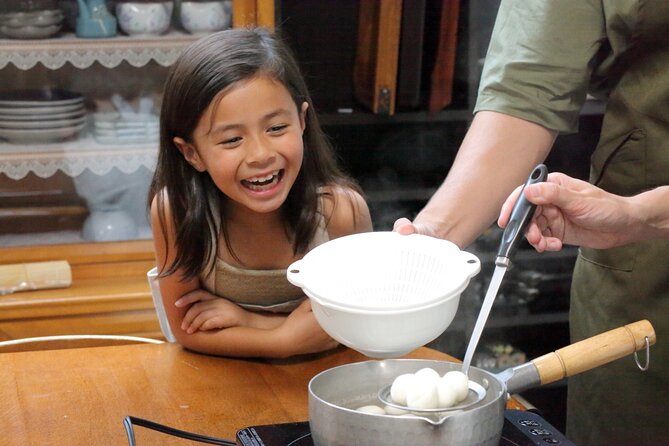
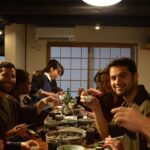
The final sitting also suits families and teenagers. The activity has enough structure to keep younger participants involved, but the atmosphere is relaxed rather than stern. One family described a session full of laughing, learning, and eating, which is a good guide to the tone you should expect.
Other cooking classes in Kyoto

The small-group format and the role of the instructor
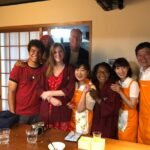
A maximum of six people is one of the strongest features of this class. Small groups are especially useful for hands-on food activities because the instructor can see what you are doing. You are less likely to miss a step, and asking for help does not interrupt a large class.
Miho is specifically associated with the experience, and the feedback about her teaching highlights an organized, welcoming approach. The class is designed to be friendly even if you arrive alone. Other instructors may lead the session, but all are described as English-speaking licensed guide interpreters.
The language setup is worth noting. The class itself is in English, so you should be comfortable following spoken English instructions. The provider also says the class can accommodate non-English speakers, but the supplied details do not explain how translation is handled. If that is important for your group, ask before booking.
The relaxed style does not mean the session is unstructured. You begin in the traditional room, watch the demonstrations, prepare the sweets, and finish by eating them with tea. That clear sequence gives the experience an easy flow.
Is $79.26 a good value?
At $79.26 per person, this is not the cheapest way to eat Japanese sweets in Kyoto. You can buy wagashi for far less at a shop. The price makes more sense when you count the full package: 2.5 hours, ingredients, instruction, refreshments, a traditional home setting, a maximum of six people, and recipes to take away.
The value is strongest if you want participation rather than consumption. You are paying for the setting and the time with an instructor as much as for the food itself. The recipes also extend the experience beyond Kyoto, since you can try making the sweets for family and friends at home.
For a family, the cost adds up quickly, but the class may replace another paid activity and gives everyone a shared project. For a solo visitor, the small group helps justify the price because you are not lost in a crowd. For someone focused only on tasting wagashi, a shop or market will be better value.
The fact that the class is commonly reserved about 29 days in advance is a practical signal. If your Kyoto dates are fixed, book early rather than assuming you can find a last-minute opening. The maximum of six also limits how many places are available in each session.
Who will enjoy this most
I would recommend this class to you if you enjoy food, crafts, or small cultural experiences. It suits first-time visitors who want a break from major sights, families looking for an activity everyone can share, and solo visitors who prefer a friendly setting.
It is also a strong choice if you have seen wagashi in Japanese anime or manga and want to understand them in real life. The class connects those familiar images with actual ingredients and techniques.
Vegetarians are welcome, and the experience is vegan-friendly. You should share dietary restrictions in advance rather than waiting until the class begins. The provided information does not list every ingredient or possible substitution, so advance notice is the sensible approach.
I would hesitate to recommend it if you dislike sweets, want a fast activity, or are looking for a full savory Japanese cooking lesson. This is a focused introduction to wagashi, with time spent preparing and eating desserts in a quiet home setting.
Practical details before you reserve
The activity lasts approximately 2 hours and 30 minutes. It begins and ends at the meeting point, 38-4 Fukakusa Watamoricho, Fushimi Ward, Kyoto, 612-0022, Japan. Public transportation is nearby, but hotel transfers are not included.
Your booking confirmation is provided at the time of reservation, and the ticket is mobile. Ingredients, seasonings, taxes, the English-speaking instructor, and coffee and/or tea are included. Gratuity is not included.
Free cancellation is available if you cancel at least 24 hours before the local start time. Cancellations or changes made less than 24 hours before the start are not accepted for a refund. The provider also says poor weather can lead to cancellation, in which case you are offered another date or a full refund.
The weather condition may seem surprising for an indoor cooking activity, so check the notice if conditions are poor. Keeping your schedule slightly flexible is wise.
Should you book the wagashi class?
Book it if you want to do something hands-on near Fushimi Inari, enjoy small groups, and value an authentic home setting over the lowest possible food price. The combination of three sweets, English instruction, recipes, tea, and a garden-view room gives the class a clear purpose.
I would give it extra weight for a family or a solo visitor. The maximum of six keeps the experience personal, and the relaxed format leaves room for laughter as well as learning. If you mainly want to sample wagashi cheaply, skip the class and buy sweets elsewhere. If you want to understand how they are made and carry the skill home, $79.26 is a reasonable price for the time and setting.
FAQ
How long does the wagashi cooking class last?
The class lasts approximately 2 hours and 30 minutes.
Where does the activity begin and end?
It begins and ends at 38-4 Fukakusa Watamoricho, Fushimi Ward, Kyoto, 612-0022, Japan.
How many people can join the class?
The maximum group size is six participants.
Is the class taught in English?
Yes. The class is conducted entirely in English, and the instructors are licensed guide interpreters.
Are ingredients and drinks included?
Yes. Ingredients, seasonings, taxes, and coffee and/or tea are included. The class also includes enjoying your sweets with matcha in the traditional room.
Can vegetarians and vegans join?
Yes. Vegetarians are welcome, and the class is vegan-friendly. You should tell the provider about dietary restrictions in advance.
More Cooking Classes in Kyoto
More Cooking Classes in Kyoto
More Fushimi Inari Tours in Kyoto
More tours in Kyoto we've reviewed





Fushimi Inari Tours, compared.
 ★ 4.8Kyoto: Fushimi Inari, Kinkakuji, Bamboo Grove 1 Day Bus TourFrom $122510 minutes - 9 hours
 ★ 5.0Fushimi Inari Hidden Hiking Tour (Private Option Available)From $63
 ★ 4.7Kyoto/Osaka: Nara, Fushimi Inari Taisha, Arashiyama Bus TourFrom $529 - 10 hours
 ★ 4.4Osaka/Kyoto: Arashiyama, Nara & Fushimi Inari Shrine w/LunchFrom $61
 ★ 5.0Kyoto: Nijo, Kinkaku-ji, Arashiyama, Kiyomizu & Fushimi InariFrom $51
 ★ 5.0Kyoto Fushimi-Inari Night Walking TourFrom $43