
Reviewed · PRIVATE
Kyoto: Zen Garden, Zen Mind (Private)
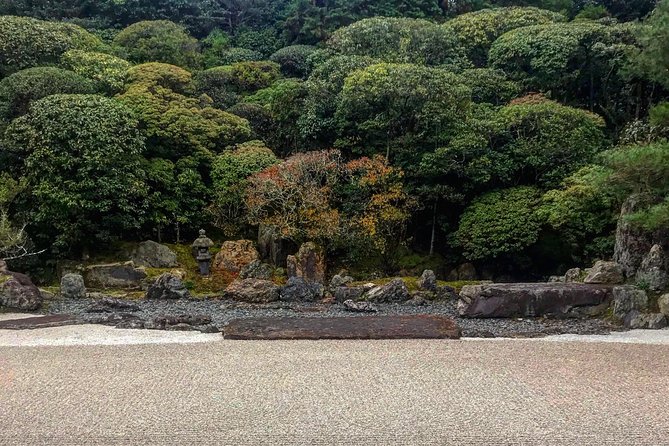
Kyoto’s Zen gardens can look simple at first: a few rocks, raked gravel, clipped plants, and a plain wall. The real pleasure of this private walk is learning how much thought sits behind that restraint. Andrew, a landscape designer with 15 years of experience, explains the design choices and the spiritual ideas tied to them.
I like the small private format, which lets you ask questions instead of listening to a lecture meant for a crowd. I also like the route through three important temple sites, especially Konchi-in and Tenjuan, before ending at Nanzen-ji. The drawback is cost: $380 per group is a serious outlay, and each person also pays ¥1,600 in temple admission.
In This Review
- Key points to know
- Why a garden walk changes the way you see Kyoto
- Starting near Keage Station
- Konchi-in: the first lesson in Zen garden design
- Tenjuan: a quieter stop within the same temple area
- Nanzen-ji: ending at Kyoto’s major Zen temple
- What Andrew adds to the experience
- The real value of the $380 group price
- Who will get the most from this walk
- Booking and cancellation details to keep in mind
- Should you book Kyoto: Zen Garden, Zen Mind?
- FAQ
- How long does the Kyoto: Zen Garden, Zen Mind tour last?
- How many people can join the private tour?
- Which temples are visited?
- What is included in the tour?
- Are temple admission fees included?
- Where does the tour start and end?
Key points to know
- Three temple gardens in about 3.5 hours: Visit Konchi-in, Tenjuan, and Nanzen-ji on foot.
- Andrew leads the walk: Expect practical explanations from a professional garden designer with 15 years of experience.
- Private for up to four people: Your group gets the guide’s full attention.
- More than garden design: The conversation includes Zen ideas, Buddhism, Shinto, Japanese history, and modern Kyoto life.
- A walking route with purpose: Starting near Keage Station, the tour reaches places that cars and buses cannot access directly.
Why a garden walk changes the way you see Kyoto
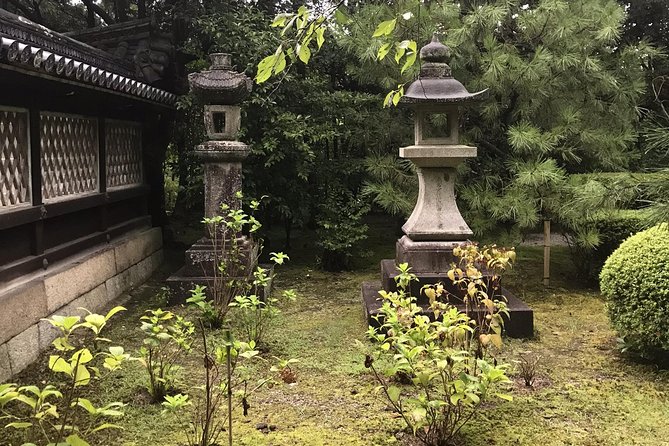
I find that Kyoto’s famous gardens are easy to admire and surprisingly hard to read. You see raked gravel and rocks, but without context you may miss the symbols, proportions, visual tricks, and religious ideas at work.
This experience is built around that missing context. Andrew’s background in garden design gives him a useful angle. He does not simply identify a temple or point out a pretty view. He connects the shape of a garden with Japanese aesthetics, Zen practice, Buddhist traditions, Shinto customs, and the way Kyoto has developed over time.
That makes the tour useful even if you are not a garden enthusiast. You may arrive interested in photography or architecture and leave with a better sense of how Japanese spaces ask you to look, pause, and notice relationships rather than decoration.
The private setup matters here. A group of up to four people can stop to discuss a question, ask for a design term to be explained, or steer the conversation toward religion, construction, history, or contemporary life in Kyoto. On a larger group tour, that sort of exchange is harder.
Other private tours in Kyoto

Starting near Keage Station
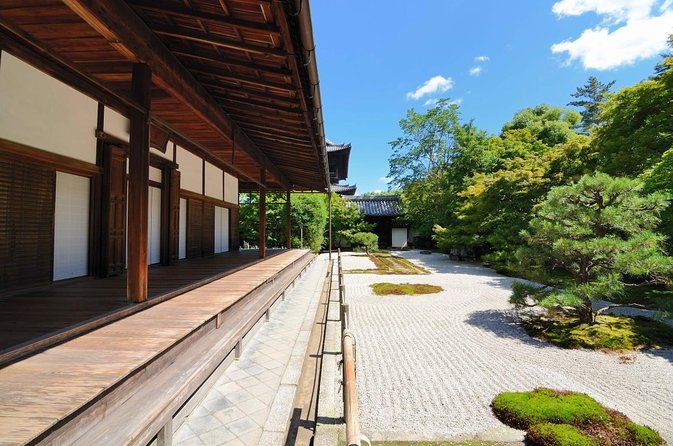
The meeting point is at Keage Station in Higashiyama Ward, at Higashikomonozacho. The area is served by public transportation, so you can reach the start without arranging a car.
From there, the tour proceeds on foot toward the Nanzen-ji complex. Walking is not just a way to move between stops. It allows the route to use temple approaches and smaller passages that are not practical for buses or cars.
Plan for a steady three-and-a-half-hour outing. The supplied schedule gives about one hour to each of the three stops, but the exact rhythm can change with questions, walking time, and the pace of your group. Wear comfortable shoes and be ready to spend time standing, walking, and looking carefully rather than rushing from one photo point to the next.
The experience requires good weather. That is worth noting in Kyoto, where rain can change the mood of a garden and make a long walk less pleasant. If poor weather forces a cancellation, you can choose another date or receive a full refund.
Konchi-in: the first lesson in Zen garden design
Konchi-in is a sub-temple of Nanzen-ji and the first scheduled stop. Beginning here gives the tour a focused entry point before you reach the larger head temple.
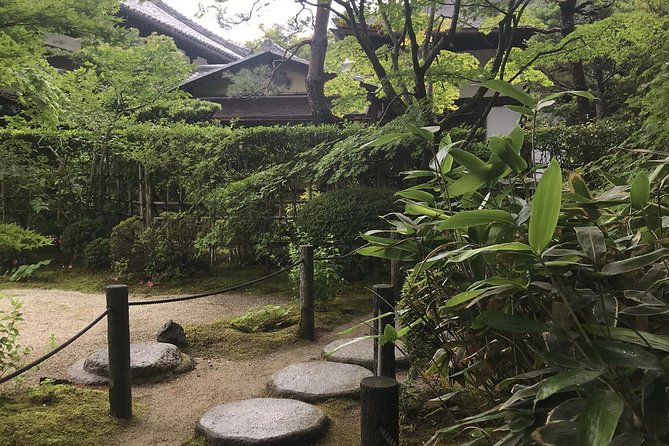
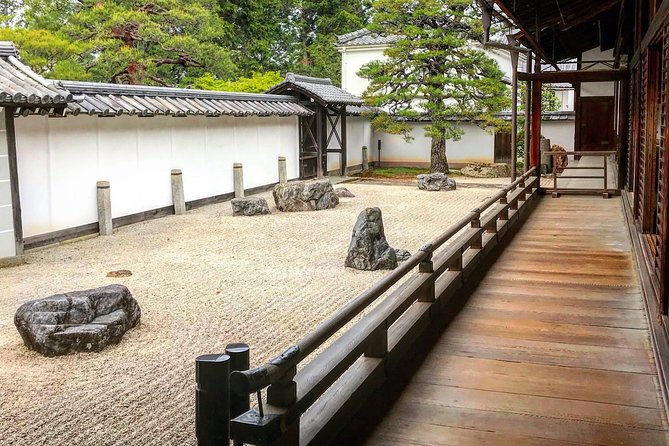
This is where Andrew can help you see a garden as a designed composition rather than a collection of objects. The arrangement of stones, open gravel, plants, walls, and borrowed views can carry meaning without spelling it out. The quiet visual language rewards patience, and a guide who understands construction and design can point out relationships you might otherwise pass over.
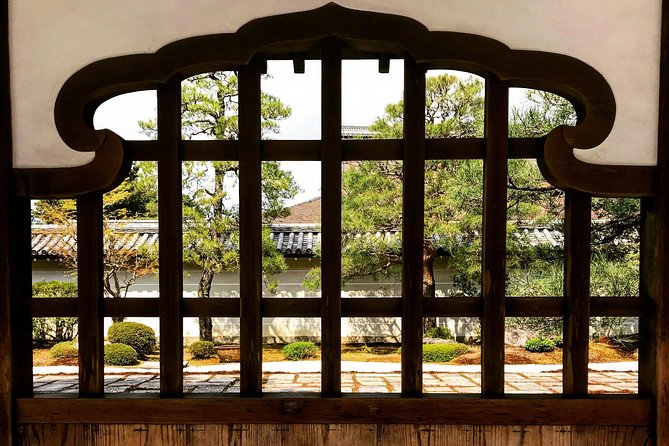
I would give this stop your full attention. Resist the urge to take a quick photo and move on. Look at how empty space works beside solid forms. Notice how a wall frames the garden and how the eye is guided across the scene.
Konchi-in is also a good setting for questions about Zen. The tour does not treat the garden as a separate art object. It places the design within wider Buddhist and Japanese traditions, while also explaining that garden symbolism is not always a simple code with one fixed answer.
That distinction is helpful. You are not handed a list of symbols to memorize. Instead, you get a way to think about what you see.
Tenjuan: a quieter stop within the same temple area
Tenjuan is another sub-temple of Nanzen-ji, and the second one-hour stop. Its position within the same larger temple area makes the route feel connected, while the garden gives you another chance to compare different choices in design.
This comparison is one of the strongest reasons to book the tour. Seeing one garden alone can leave you with vague impressions. Seeing several gardens with the same guide lets you ask why one space feels more open, more enclosed, more formal, or more contemplative than another.
Andrew can explain how plants, rocks, gravel, water-related imagery, walls, and viewing points work together. He can also discuss how garden design relates to Japanese aesthetics and religious practice. The goal is not to turn you into a specialist in one afternoon. It is to give you enough background to keep noticing things during the rest of your time in Kyoto.
The quieter setting may appeal to you if you dislike crowded sightseeing. One account describes the location as peaceful and calm, which suits the subject. Still, temple conditions can vary, and you should not assume every moment will be silent or empty.
Nanzen-ji: ending at Kyoto’s major Zen temple
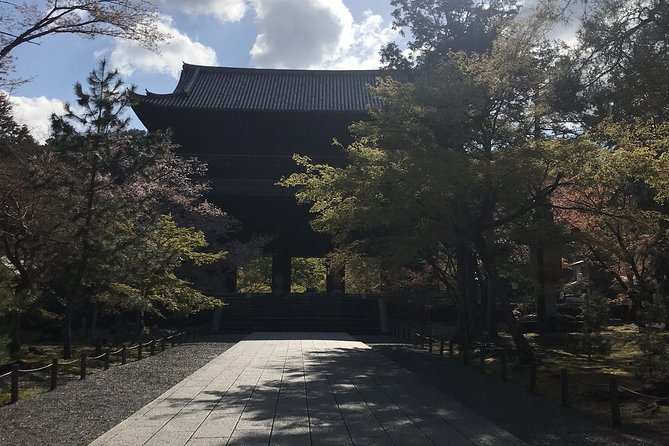
The final stop is Nanzen-ji, the head temple of the Nanzen-ji Zen monastery. The tour ends in front of Nanzen-ji at Nanzenji Fukuchicho in Sakyo Ward.
Ending here gives the walk a clear finish. You begin with close attention to individual gardens and finish at the larger temple complex that gives the route its setting. By this point, you can look at Nanzen-ji with more questions in mind: How does the site organize movement? How do buildings and gardens relate? What changes when a small sub-temple is compared with a major monastery?
The hour at Nanzen-ji is not simply a final photo stop. It completes the discussion of Zen spaces, Japanese religious traditions, and Kyoto’s cultural identity. Andrew has also been praised for linking garden design to society, history, and present-day life, so the conversation can move beyond stones and gravel.
You finish at Nanzen-ji rather than returning to Keage Station. That is convenient if you want to continue sightseeing in the area. It also means you should plan your onward route before the tour begins, especially if you have a timed booking elsewhere.

What Andrew adds to the experience
Andrew is identified as the guide, and the supplied material also refers to him as Andy in one place. His professional training is central to the experience. He has a master’s degree in landscape architecture and more than 15 years of experience as a designer.
That background gives the tour a practical foundation. You can ask not only what a garden may represent, but also how it was built and why its parts were placed as they were. The strongest comments about the experience focus on this blend of design knowledge and spiritual interpretation.
Andrew also appears to adjust the discussion to the group. One detailed account describes the tour being customized around personal interests, with extra time given so questions could be answered. That flexibility is especially valuable on a private tour, though you should remember that the advertised duration remains approximately three hours and 30 minutes.
The tone seems to be conversational rather than purely academic. You can ask about Japanese religion, garden construction, aesthetics, history, or daily life in Kyoto. If you prefer a guide who sticks to dates and names, this may feel broader than expected. If you want connections between subjects, it should suit you well.
The real value of the $380 group price
The listed price is $380 per group of up to four people, not $380 per person. That changes the calculation.
For four people, the guide fee works out to $95 per person before temple admission. For two people, it becomes $190 per person, and for one person it is the full group price. Each participant also pays a total temple ticket fee of ¥1,600, according to the supplied details.
I see the price as reasonable for a group of four that wants a specialist guide and a private conversation. It is less attractive for a solo visitor or couple unless garden design and Japanese spirituality are high priorities for the trip.
You are paying for interpretation, not transport, meals, or a full-day sightseeing program. The route lasts about three and a half hours and concentrates on three related temple sites. That focus is a strength if you want to understand gardens properly. It is a weakness if you want to cover many unrelated Kyoto attractions in the same morning or afternoon.
The tour is booked, on average, 53 days ahead. I would not treat that as a rule, but it is a useful signal that you should reserve early if your Kyoto dates are fixed.
Who will get the most from this walk

I would recommend it most strongly to:
- People who enjoy gardens, architecture, design, or photography
- Visitors curious about Zen, Buddhism, Shinto, and Japanese aesthetics
- First-time Kyoto visitors who want context rather than a checklist of sights
- Families or friends of up to four who can split the private fee
- Returning visitors who have already seen major temples but want to understand them better
You do not need prior knowledge of Zen or garden design. The tour is designed to explain the basics as it goes.
It may be less suitable if you dislike walking, want a fast-paced sightseeing route, or only want famous temple exteriors. The schedule gives about an hour at each stop, so the experience asks you to slow down and study details.
Most people can participate, and the tour is near public transportation. The supplied information does not give a detailed accessibility assessment, so contact the provider if you have specific mobility needs.
Booking and cancellation details to keep in mind
Confirmation is received when you book, and the ticket is mobile, which keeps the process simple. The activity is private, so only your own group participates.
You can cancel for a full refund up to 24 hours before the local start time. Cancellations or changes made inside that window are not refunded or accepted. Since good weather is required, the provider may offer another date or a full refund if conditions force cancellation.
Should you book Kyoto: Zen Garden, Zen Mind?
Book it if you want Kyoto’s gardens to become readable rather than merely attractive. Andrew’s design background, the private format, and the chance to compare Konchi-in, Tenjuan, and Nanzen-ji make this more useful than a standard temple walk for anyone interested in how places carry meaning.
I would be more cautious if you are watching your budget or traveling alone. The group price is strongest when shared by four people, and the extra ¥1,600 per person for admission needs to be included in your calculation.
For the right audience, this is a focused and thoughtful way to spend half a day. You leave at Nanzen-ji with a better eye for rocks, gravel, walls, plants, and empty space, which can improve every garden visit that follows.
FAQ
How long does the Kyoto: Zen Garden, Zen Mind tour last?
The tour lasts approximately three hours and 30 minutes.
How many people can join the private tour?
The price covers one private group of up to four people. Only your group participates.
Which temples are visited?
The route includes Konchi-in, Tenjuan, and Nanzen-ji. Konchi-in and Tenjuan are sub-temples of Nanzen-ji.
What is included in the tour?
The experience includes a walking tour of Kyoto gardens and guided narration from a landscape designer with 15 years of experience.
Are temple admission fees included?
No. The total admission fee for the three temples is ¥1,600 per person.
Where does the tour start and end?
The tour starts near Keage Station at Higashikomonozacho in Kyoto’s Higashiyama Ward. It ends in front of Nanzen-ji at Nanzenji Fukuchicho.
More Private Tours in Kyoto
More tours in Kyoto we've reviewed




Private, compared.
 ★ 5.0Fushimi Inari Hidden Hiking Tour (Private Option Available)From $63
 ★ 5.0Private Kyoto Tour with a Local, Highlights & Hidden Gems, PersonalisedFrom $102
 ★ 5.0Kyoto 6hr Private Tour with Government-Licensed GuideFrom $155
 ★ 5.010 Must-see Spots in Kyoto One Day Private Tour (up to 7 people)From $179
 ★ 5.0Kyoto 4hr Private Tour with Government-Licensed GuideFrom $109
 ★ 4.8Kyoto: Private Tour with Local Licensed GuideFrom $1064 - 8 hours