
Reviewed · SAKE BREWERY TOURS
Private Pewter Sake Cup Experience with a Kyoto Artisan
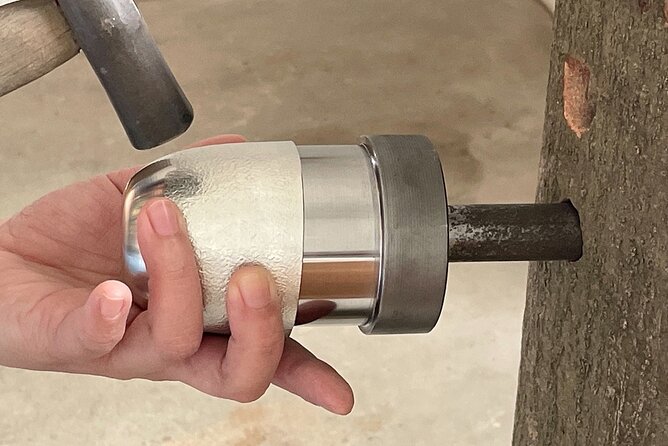
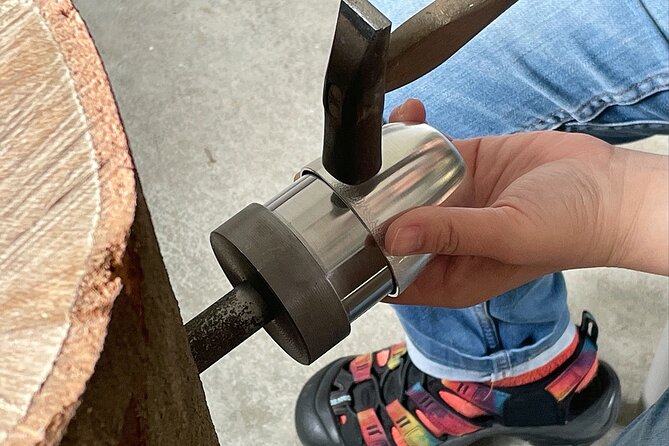
Creating a sake cup by hammering pewter is the heart of this Kyoto experience. At Saluk, craftswoman Kanako gives you a blank cup, several hammers, and clear guidance as you build the surface pattern stroke by stroke. You can add letters, numbers, initials, or a date to the base.
I like two things right away: you make a real object you can use, not a small craft that sits in a drawer, and the private format keeps the lesson personal. The peaceful setting outside central Kyoto is another plus. The trade-off is the location. Reaching the workshop can take about an hour from Kyoto Station by scenic train, so this is not a quick activity between downtown sights.
In This Review
- Key points to know before booking
- Why this Kyoto craft class feels different
- Arriving at Saluk outside central Kyoto
- Choosing a hammer and making the first marks
- Adding initials, dates, and personal details
- Filing the rim for a comfortable finish
- What pewter adds to the drinking experience
- Kanako’s teaching style and the mood of the class
- The finished cup, packaging, and taking it home
- Is $144.96 a fair price?
- Who should book this workshop?
- My call: book it if the cup matters as much as the class
- FAQ
- Where does the pewter sake cup experience take place?
- How long does the experience last?
- Is the activity private?
- What is included in the class?
- Can beginners participate?
- Can I personalize the cup?
- What size is the finished cup?
- Can I use the cup for drinks other than sake?
- What is the cancellation policy?
Key points to know before booking
- Hammer your own design: Rotate the pewter cup on an anvil while using one or several hammers to create different textures.
- Work with Kanako: The instructor teaches in clear English and adjusts her help for beginners.
- Personalize the base: Add initials, a meaningful date, letters, or numbers to make the cup distinctly yours.
- Enjoy more than sake: The finished cup also suits whiskey, chilled green tea, and other drinks.
- Visit a quiet workshop setting: Saluk is outside central Kyoto, near a stream and mountain scenery described by past participants.
- Plan for a useful souvenir: The cup measures about 64 millimeters across, stands 53 millimeters high, and holds about 90 milliliters.
Why this Kyoto craft class feels different
Many Kyoto activities put you in the role of observer. You look at temple roofs, admire garden design, and move on to the next stop. Here, you spend two and a half hours making something with your hands. The finished cup carries the marks of your choices, including every change in hammer shape and pressure.
That makes this a strong pick if you want a souvenir with a story. A shop-bought sake cup may be prettier at first glance, but it cannot show where you were, what you learned, or how you made it. Your cup will have its own small imperfections, and that is part of the point.
The class takes place at Craft Gallery SALUK, listed at 35-2 Shizuichinonakachō, Sakyo Ward, Kyoto, 601-1122, Japan. The workshop is usually closed to the public, so booking this activity gives you access to a working craft space rather than a standard retail stop.
The setting matters. This is not in the center of Kyoto’s busiest sightseeing zone. The trip out gives the class a calmer rhythm, with mountain surroundings and, according to one detailed account, a babbling stream nearby. If you have already spent several days in crowded lanes and packed temples, the change of pace can be welcome.
Other sake brewery and tasting tours in Kyoto



Arriving at Saluk outside central Kyoto
The location is the biggest practical issue to weigh. The workshop sits in northern Kyoto, away from the usual downtown circuit. One account describes the trip as roughly an hour from Kyoto Station by scenic train, though your exact journey will depend on your starting point and the transport schedule.
Give yourself enough time to find the meeting point. This is an activity where arriving flustered would work against the calm, careful mood of the class. Since the experience ends where it starts, you also need to plan your return trip.
The distance is not wasted time if you value local craft and quiet surroundings. It is less suitable if you want to pack several major attractions into the same afternoon. I would place this on a day when the workshop itself is the main event, rather than squeezing it between Kiyomizu-dera and an evening reservation across town.
The class is private, meaning only your group participates. It is also described as a small-group experience, which gives Kanako room to watch your technique and help when a pattern begins to go in an unintended direction. A private booking works especially well for couples, families, and friends who want to share a hands-on activity without a large class moving at one pace.
Choosing a hammer and making the first marks
The hands-on work begins with a choice of hammers. You select from several types, and each one leaves a different impression on the pewter. You can use one hammer for a consistent surface, or combine several to create more varied patterns.
The basic motion is simple but requires attention. Place the cup on the anvil, strike the metal, rotate the cup, and repeat. The design develops gradually. The cup’s final appearance depends on the hammer you choose, the force of each tap, and how closely you space the marks.
This is not a class where you need previous metalworking experience. Kanako explains the process and helps beginners find a comfortable pace. The activity does ask for patience, though. A few hard or misplaced strikes may not produce the look you expected, so listen closely and work methodically.
That slow process is one of the best parts. You can see a plain cup change into something personal in front of you. The hammering is also satisfying in a very direct way. You are not simply decorating a finished item. You are shaping its character.
If you have a strong design in mind, remember that pewter rewards control more than force. Start carefully, observe the pattern, and then decide if you want to make the marks denser or more varied. A design inspired by a forest has been made during the class, showing that you do not have to follow a strict pattern.
Adding initials, dates, and personal details
Once the surface pattern is taking shape, you can stamp the base. The available personalization includes letters, numbers, initials, and dates. This small detail adds real value for a wedding trip, anniversary, family visit, or first journey to Japan.
Think about the inscription before you arrive. A date may be the clearest reminder of the trip. Initials are more discreet. You might also choose a short set of letters that connects the cup to a person or place.
The personalization is not only for sake drinkers. One couple who did not drink used green tea in their finished cups, and that is a useful reminder to match the souvenir to your life at home. The cup can hold whiskey, chilled green tea, or other drinks as well.
The cup holds about 90 milliliters in normal use, or about 115 milliliters when filled to the rim. That is a modest serving size. It suits a small pour rather than a large drink, which fits the traditional sake cup format. For tea or whiskey, you will likewise be using it as a small tasting vessel.
Filing the rim for a comfortable finish
After the decorative work, you use a file to adjust the cup’s height and bevel the rim. This is an important step because it changes how the cup feels against your lips and in your hand.
The shape is made to fit comfortably in the hand, but the final feel still depends on the rim and surface. Filing gives you a direct role in the finish. You are not only making the outside attractive. You are helping prepare the cup for regular use.
The final polishing is handled by Kanako with a rotary machine for safety. That division of work makes sense. You get the satisfying handwork and decision-making, while the risky or highly precise final step is left to the craftsperson.
This is also where the class shows its balance between participation and professional finishing. Your cup is handmade by you, but it is not simply handed back in an unfinished state. The artisan checks the final surface and polishes it before you leave.
Other sake brewery and tasting tours in Kyoto




What pewter adds to the drinking experience
Pewter has long been valued in drinkware for its smooth feel, weight, and ability to take a hammered pattern. Here, it also gives the finished cup a cool, substantial quality that differs from a thin ceramic cup.
The material is part of what makes the souvenir worthwhile. You are learning why a particular metal is suited to a drinking vessel, then testing the result with your own cup. The class connects the craft process to daily use, rather than treating metalwork as decoration alone.
A pewter cup also changes as an object depending on the light and the pattern. Hammer marks can make the surface sparkle or appear more muted. Since each cup reflects the way it was struck, no two finished pieces will look exactly alike.
The cup is compact, measuring roughly 64 millimeters in diameter and 53 millimeters in height. It should fit easily into luggage once properly packed. The modest size also makes it practical for a small home bar, tea shelf, or display area.
Kanako’s teaching style and the mood of the class
The instructor is a major part of the experience. Kanako is described as patient, welcoming, and clear in English. She gives beginners enough direction to feel secure, while still leaving room for personal choices.
That balance matters. Too much instruction would make every cup look alike. Too little would leave you unsure how hard to strike or how to correct a mistake. Here, Kanako helps protect the final result without taking over the creative work.
The workshop also has a hospitality element. Tea and snacks have been offered during the visit, and conversation can range beyond the metalwork into Japanese crafts, food, language, and daily life. That gives the session a more personal feel than a quick demonstration.
You do not need to bring tools or materials. Everything required for the cup is provided. Wear clothing you can work comfortably in, but the supplied information does not list a special dress code or equipment requirement.
Service animals are allowed, and the activity is near public transportation. Most people can participate, although anyone with concerns about hammering, filing, or standing at a workbench should consider their own comfort before booking.
The finished cup, packaging, and taking it home
The end result is a functional handmade cup, not merely a workshop sample. The final polishing gives it a finished appearance, and several accounts describe the cups being packed carefully, including attractive wooden boxes.
Packaging is more important than it sounds. A handmade metal cup is a meaningful souvenir, but it still needs protection for the journey home. A secure box also makes the piece easier to give as a gift.
The cup is small enough to travel with, though you should still place it where it will not be crushed by heavier luggage. The activity does not state that international shipping is available, so plan to carry the finished piece with you.
At home, you can use it for sake, whiskey, chilled green tea, or other drinks. You can also treat it as a keepsake and bring it out for special occasions. The stamped date or initials will help preserve the connection to Kyoto long after the trip.
Is $144.96 a fair price?
At $144.96 per person, this is not a bargain-priced craft stop. The value comes from the private instruction, artisan access, materials, use of workshop tools, and the finished pewter cup you take home.
You are also paying for time. The session lasts about two hours and thirty minutes, which is long enough to learn the process rather than simply decorate an item in a rushed hour. If you compare the price with a basic souvenir purchase, it will seem high. If you compare it with a private cultural lesson that produces a durable object, it is easier to justify.
The price makes the most sense for someone who values making over collecting. I would choose this for a special trip, a couple’s activity, a family experience, or anyone interested in Japanese craft traditions. I would skip it if your main goal is inexpensive sightseeing or if you have little interest in carrying a handmade cup home.
It is booked an average of 37 days ahead, so planning early is sensible, especially if your Kyoto dates are fixed. Free cancellation is available up to 24 hours before the start time. Cancellations or changes made less than 24 hours ahead are not accepted for a refund.
Who should book this workshop?
I would recommend it to:
- Couples who want a shared souvenir with a date or initials
- Families looking for an activity everyone can make together
- Craft lovers who enjoy patient, tactile work
- Visitors who prefer a quiet setting to central Kyoto’s busy streets
- Non-drinkers who would use the cup for green tea or another beverage
- Repeat visitors seeking something beyond temples and shopping
It may not suit you if you want a fast activity close to Kyoto Station, dislike repetitive handwork, or need a fully passive demonstration. The trip out is part of the experience, but it also takes time from your sightseeing schedule.
The private format is particularly useful for mixed-age or mixed-skill groups. A confident maker can try a more complex pattern, while a beginner can work slowly with Kanako’s help. Since each person creates an individual cup, nobody has to produce the same result.
My call: book it if the cup matters as much as the class
This is a strong Kyoto choice if you want to return home with something you made yourself. Kanako’s patient instruction, the quiet setting, and the chance to personalize the base give the activity a personal quality that a standard shopping stop cannot match.
Book it when you can spare the travel time and when $144.96 feels reasonable for a private lesson plus a finished pewter cup. Skip it if you are focused on central Kyoto landmarks or want the cheapest possible souvenir. For a craft-minded visitor, though, the long-lasting value is clear: every sip brings back the hammer marks, the workshop, and the day you made it.
FAQ
Where does the pewter sake cup experience take place?
The meeting point is Craft Gallery SALUK, 35-2 Shizuichinonakachō, Sakyo Ward, Kyoto, 601-1122, Japan.
How long does the experience last?
The activity lasts approximately 2 hours and 30 minutes.
Is the activity private?
Yes. Only your group participates in the private activity.
What is included in the class?
Materials and the tools needed to make the pewter cup are provided. You do not need to bring your own supplies.
Can beginners participate?
Yes. The class is designed so beginners can follow Kanako’s instructions and receive guidance during the process.
Can I personalize the cup?
Yes. You can stamp letters, numbers, initials, or a date on the base of the cup.
What size is the finished cup?
The cup measures about 64 millimeters in diameter and 53 millimeters in height. It holds approximately 90 milliliters, or 115 milliliters when filled to the rim.
Can I use the cup for drinks other than sake?
Yes. The completed cup can also be used for whiskey, chilled green tea, and many other drinks.
What is the cancellation policy?
You can cancel up to 24 hours before the experience starts for a full refund. Cancellations or changes made less than 24 hours before the start time are not accepted for a refund.
More Private Tours in Kyoto






More Sake Brewery Tours in Kyoto
More Sake Brewery Tours in Kyoto
More tours in Kyoto we've reviewed








Sake Brewery Tours, compared.
 ★ 5.0Kyoto Night Foodie Tour in Gion (9+ dishes + 6 Sake tastings)From $163
 ★ 5.03-Hour Kyoto Insider Sake Brewery Tour with Tastings & PairingsFrom $84
 ★ 4.8Arashiyama Bamboo, Temple, Monkeys, or Secret Sake BreweryFrom $875 hours - 330 minutes
 ★ 5.0Kyoto: Insider Sake Brewery Tour with Sake and Food PairingFrom $873 hours
 ★ 5.0Kyoto Sake Brewery & Tasting Walking TourFrom $98
 ★ 5.01.5-Hour Kyoto Insider Sake Experience with 7 Tastings & PairingsFrom $68