
Reviewed · SAMURAI & KENDO EXPERIENCES
Samurai School in Kyoto: Samurai for a Day
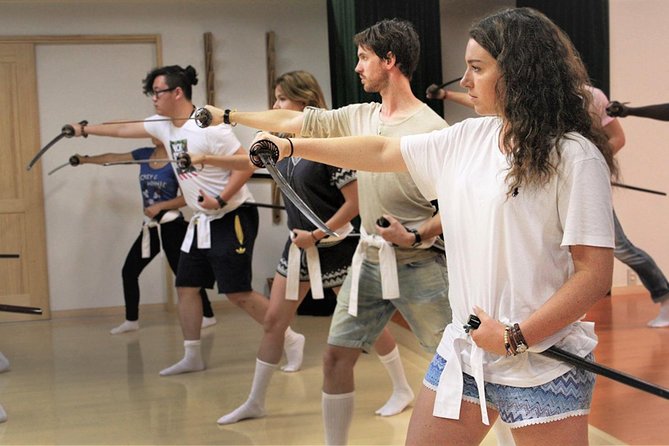
The most memorable part of this Kyoto experience is not simply holding a sword. It is learning the formal rhythm behind it: bowing correctly, drawing and returning the blade, then linking those actions into graceful kenbu, the performance art of the samurai. The class is practical, theatrical, and far more hands-on than a museum visit.
I especially like the patient instruction and the chance to wear a full samurai outfit for photographs. The small maximum group of 10 also matters, since you get more personal attention than in a large demonstration. The main consideration is timing: some sessions include a performance before the lesson, and the show can make the visit run longer than the advertised 90 minutes.
In This Review
- Key points at a glance
- What this Kyoto samurai class really teaches
- From the first bow to drawing the sword
- The costume change and photo session
- The shorter lesson and the longer option
- Why the kenbu performance is worth seeing
- Group size, atmosphere, and teaching style
- Is $66.32 a fair price?
- Finding the dojo and preparing for the visit
- Who should book this experience?
- The practical verdict
- FAQ
- How long does the samurai class last?
- What will I learn during the lesson?
- Is the class taught in English?
- Is a costume included?
- What do I receive after the experience?
- Can children join the activity?
Key points at a glance
- Learn the formal sword routine: Practice bowing, drawing the sword, replacing it in its scabbard, striking, and thrusting.
- Choose your lesson length: The standard session gives you a taste of the art, while the longer option adds walking, fan movements, and stage choreography.
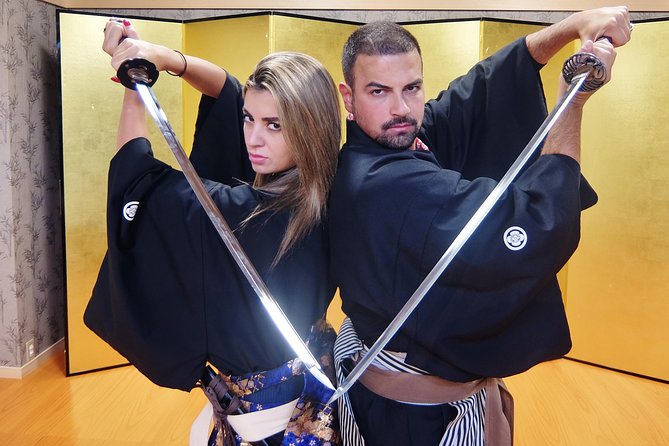
- Wear samurai costume: Change into traditional clothing with a white belt, Japanese-style socks, and sword for a photo session.
- See trained performers at work: The kenbu show combines sword movements with music and a poem, giving context to the lesson.
- Take home useful mementos: You receive a completion certificate and a tenugui, a traditional Japanese towel.
- Plan for a flexible finish: The listed duration is about 1 hour 30 minutes, but performances and costume photographs can add time.
What this Kyoto samurai class really teaches
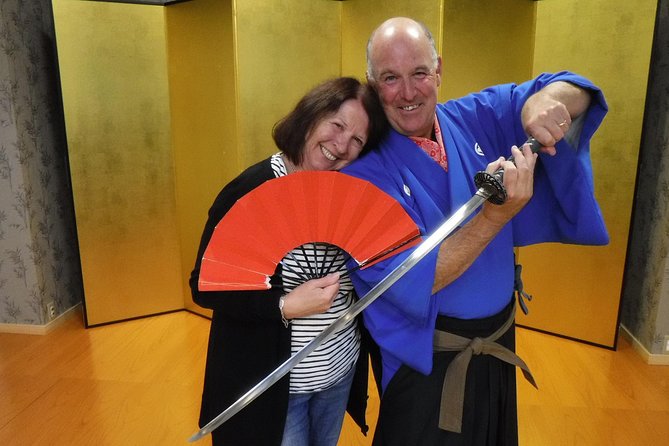
This is a short introduction to samurai culture through movement, not a historical lecture or a combat course. You will learn a stylized form of kenbu, an old Japanese performance tradition that uses a sword, controlled gestures, and sometimes a folding fan.
That distinction is useful. You are not being trained to spar, fence, or handle a sharpened weapon. The emphasis is on posture, discipline, ceremony, and choreography. The sword work still feels exciting, but the class is designed for safe, guided practice.
The session begins at the Kembu Kyoto Dojo in Kyoto’s Higashiyama Ward. You watch a short film of about three minutes covering basic samurai practices, then meet the instructor and prepare for the lesson.
The instructors speak English, and the class is built for people who may have no previous martial arts experience. You will be corrected as you go, so you do not need to arrive knowing the difference between a bow and a battle stance.
One detail gives the activity extra weight: an instructor described in the available feedback is the seventh generation of a family trained in the samurai arts and actively competes. Specific instructor assignments can vary, but the teaching comes from people who practice the form rather than simply explain it.
A few more Kyoto tours and experiences worth a look
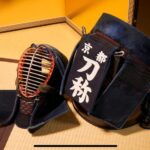
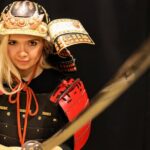
From the first bow to drawing the sword
The first movements are quieter than most people expect. You begin by learning how to bow properly, an important part of the discipline and not just a quick greeting before the fun starts.
Next comes the sword. You practice drawing it from its protective scabbard and returning it safely. The movement looks simple when performed by an expert. Trying it yourself reveals the balance, timing, and control required.
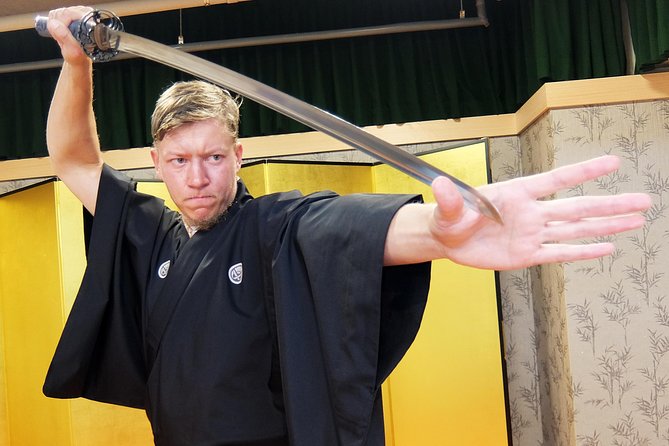
The instructor then introduces basic strikes and thrusts. These are taught as set movements, not free-form swings. You will need to listen closely and follow directions, especially when several people are practicing in the same room.
This is where the experience works well for families and older children. A 17-year-old who might lose interest in a long museum explanation gets a physical task and a clear goal. Adults also have enough structure to feel they are learning something, rather than simply posing with a prop.
Children between five and 11 can take part, but the operator prefers them to be attending a class or martial arts school. That is a useful warning for parents. The class requires focus and obedience, and the instructor may be strict about safety and form.
You should have a moderate level of physical fitness. Wear clothing that allows you to move and that can accommodate a costume change. Arriving in only a bulky hoodie or tight clothing is not suitable for changing into the outfit.
The costume change and photo session
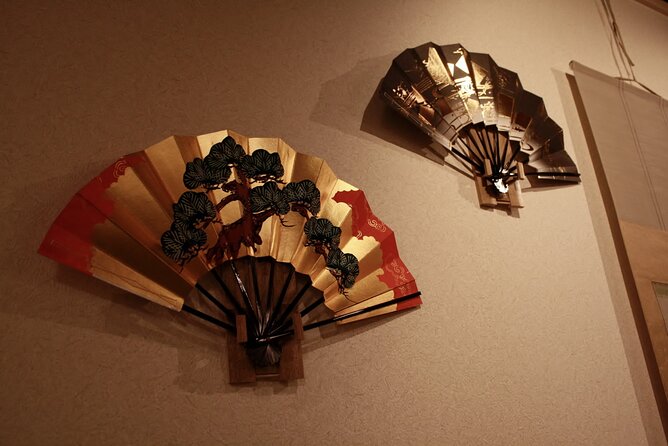
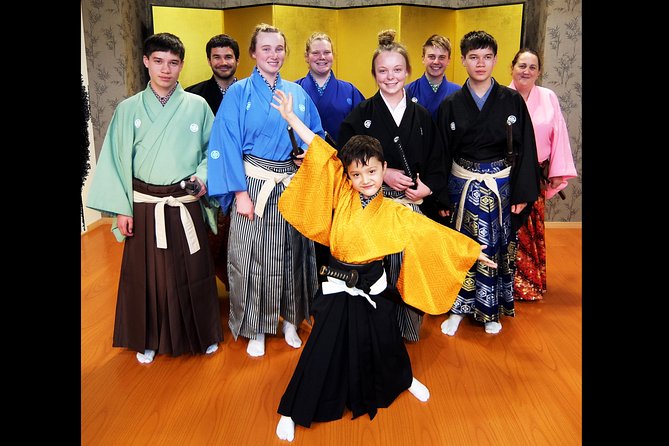
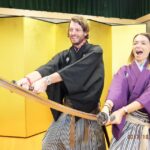
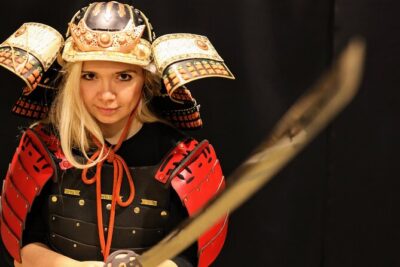
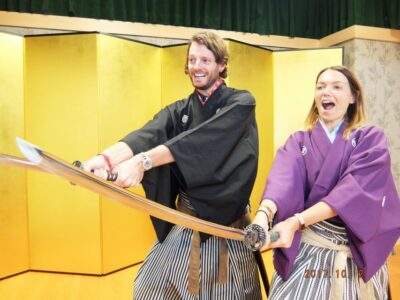
At some point during the lesson, you change into samurai clothing. The outfit includes a white belt, Japanese-style socks, and the sword. You also have the chance to select traditional clothing, depending on what is available during your session.
This part is especially good for families and couples because it breaks up the instruction. You can see the difference between an ordinary practice stance and the same movement in full costume. The photos also give you a tangible reminder of the activity, rather than leaving you with only a certificate.
Keep your expectations realistic about the photography. The photo session is included, but you may use your own camera or phone, and the time can feel short if another class is waiting. If photographs matter greatly to you, have your camera ready and decide in advance which poses you want.
You should have time for several pictures, but do not expect a long studio portrait session with endless retakes. The most reliable approach is to focus on a few strong shots: one holding the sword, one in a formal stance, and one with your group.
The costume is not only a dress-up extra. It helps explain why samurai movements rely so much on controlled posture. The belt, clothing, and sword change how you stand and walk, making the lesson easier to remember.
The shorter lesson and the longer option
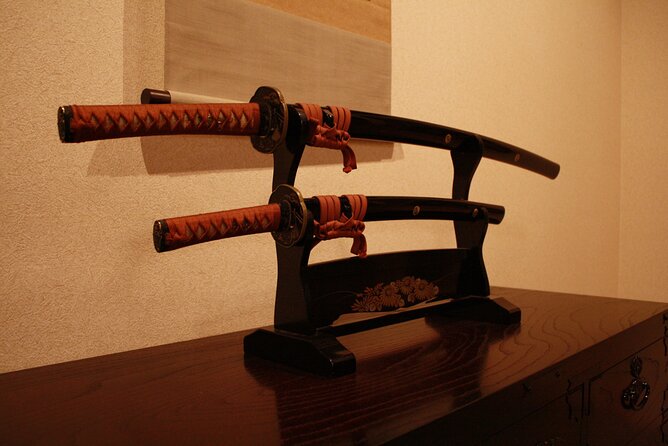
The standard experience gives you the central sequence: bowing, drawing and replacing the sword, basic strikes, costume photographs, and practice against a potential opponent in a stylized routine. It ends with a respectful bow to the instructor.
That is enough for a fun 90-minute-style activity, especially if you are fitting it between temples or other Kyoto plans. It gives you a clear taste of the art without asking for a large block of your day.
The longer lesson is the better choice if you want to understand the performance side of kenbu. You continue with the way a samurai walks and may learn how to use a folding fan. The session then builds toward choreography performed on stage with a sword, poem, and music.
This upgrade is not just extra time holding a blade. It adds the transitions and expressive gestures that turn isolated movements into a performance. I would choose it for martial arts enthusiasts, history buffs, older children, and anyone who wants more than a quick photo opportunity.
If your group includes very young children or people who dislike repetition, the shorter option may be a better fit. Sword movements require practice, and the longer session asks you to stay focused while refining the same actions.
The exact order can vary. Some sessions begin with a performance, while others teach the class first and end with the show. One available account found the opening performance much longer than expected, nearly an hour before the hands-on sword portion began. Others enjoyed training first and then watching the show because the lesson helped them understand the performers’ skill.
For that reason, do not schedule a tight reservation immediately afterward. The listed duration is approximately 1 hour 30 minutes, and the activity may run over.
Why the kenbu performance is worth seeing
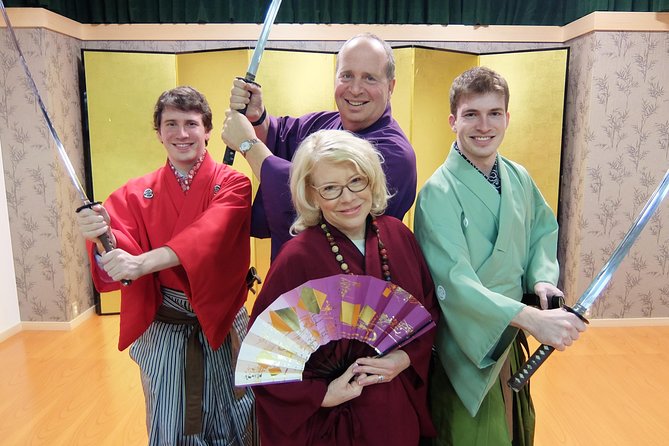
The performance shows what the basic exercises are building toward. Instead of isolated bows, strikes, and turns, you see those elements arranged with music and a poem.
The effect is graceful rather than frantic. Kenbu depends on precision, timing, and expressive movement. The sword is part of the storytelling, not merely a tool for simulated fighting.
This is also where the class gains cultural value. A museum can explain the samurai through objects and displays. Here, you see a living performance form and then attempt a small part of it yourself.
The performers are described as highly trained, and the show is often considered one of the strongest parts of the visit. If your booking includes the performance, make time to watch it carefully rather than treating it as background entertainment before the photographs.
Some family groups enjoyed the show more after completing the lesson first. That makes sense: once you have struggled with a basic draw or strike, the smooth stage version seems far more demanding.


Group size, atmosphere, and teaching style
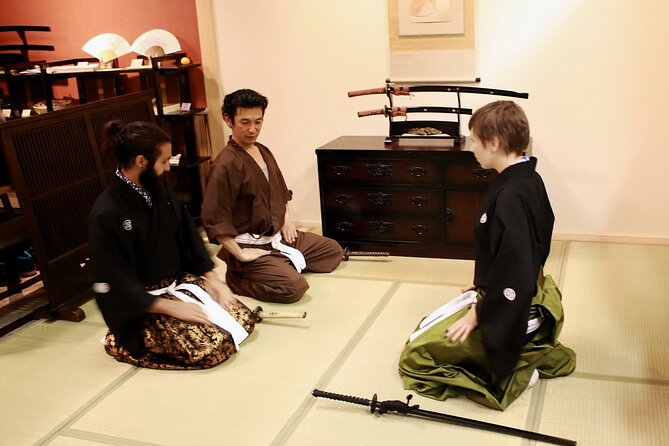
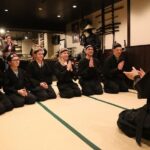
The maximum group size is 10 people. That is small enough for an instructor to see what you are doing and offer corrections, though the experience may feel more personal when only one or two groups have booked your time.
The teaching style is generally friendly and professional, with room for humor. At the same time, do not mistake a welcoming atmosphere for a casual free-for-all. You must follow instructions, handle the sword carefully, and respect the ceremony.
One less positive account described the instructor as strict with small children who made mistakes. I see that as something parents should know rather than an automatic fault. The sword work is theatrical, but safety still comes first.
The class suits couples, families with teens, groups of friends, and solo visitors who enjoy structured activities. It is also a strong rainy-day choice because the lesson, costume change, photographs, and performance take place indoors.
If your ideal cultural activity means sitting quietly and listening to a long explanation, this may feel too active. If you learn best by doing, the format is a good match.
Is $66.32 a fair price?
At $66.32 per person, this is not the cheapest short activity in Kyoto. The value depends on what you want from the visit.
You are paying for more than a costume photograph. The price includes an English-speaking local instructor, practical sword instruction, the costume session, a tenugui towel, a certificate, and access to the performance connected with the school. You also receive a compact introduction to a Japanese performing art that is difficult to understand from photographs alone.
For a family, the cost adds up quickly, so I would select it for people who will genuinely enjoy taking part. The activity offers better value for a group of martial arts fans or teenagers than for someone who only wants a quick souvenir picture.
The small group limit strengthens the value. A large class could turn the sword practice into a demonstration with a few chances to copy the instructor. With up to 10 participants, you have a better chance of receiving useful corrections.
The certificate and towel are modest souvenirs, but they are practical. The real keepsake is the photograph and the memory of performing the movements yourself.
Finding the dojo and preparing for the visit
The meeting point is in Kyoto’s Higashiyama Ward at the GOZAN building, near public transportation. On the day, go to the first basement floor using the stairs on the right side of the building.
This location detail is easy to miss, so save it before leaving your hotel. Arrive 10 minutes to 3 minutes before the start time, giving yourself room to find the building and change without rushing.
Hotel pickup and drop-off are not included. Food and drinks are also not provided, so plan those separately.
Bring clothing suitable for exercise and movement. You will change into the samurai costume, so avoid an outfit that makes changing awkward. You do not need to bring special equipment, since the sword and costume are part of the experience.
The activity accepts mobile tickets, and confirmation is provided at booking. Cancellation is free up to 24 hours before the local start time. A cancellation inside that window is not refunded, and changes made then are not accepted.
Who should book this experience?
I would recommend it most strongly to:
- Families with children who prefer hands-on activities to museums
- Teenagers interested in samurai, anime, Japanese culture, or martial arts
- Couples looking for unusual photographs in Kyoto
- Adults who enjoy learning through movement
- Martial arts enthusiasts who want to see a performance tradition
- Visitors seeking an indoor activity on a rainy day
It may be less suitable for anyone with very limited mobility, anyone uncomfortable changing into a costume, or anyone expecting serious combat training. The activity is a controlled cultural performance class, not a self-defense course.
Young children can participate, but the operator specifically prefers ages five to 11 to have experience attending a class or martial arts school. That suggests the best fit for younger participants is a child who can listen, wait, and follow safety instructions.
The practical verdict
Book this Kyoto samurai experience if you want to do more than look at old armor behind glass. You will bow, draw a sword, practice formal strikes, dress in costume, take photographs, and see how those simple movements become kenbu on stage.
I would choose the longer option if you have the time and a real interest in the art. Choose the shorter lesson if you mainly want a well-organized introduction and a memorable family photograph.
The biggest caution is the schedule. Allow extra time for the performance and photos, since the order and finish can vary. With that adjustment, this is a lively, focused way to spend part of a Kyoto day, and one of the better choices for visitors who want culture they can actively practice rather than simply watch.
FAQ
How long does the samurai class last?
The experience lasts approximately 1 hour 30 minutes, though the actual timing can vary by the option selected and the performance schedule. Allow extra time because some sessions may run over.
What will I learn during the lesson?
You will learn how to bow, draw and return a samurai sword, perform basic strikes and thrusts, and practice stylized movements. The longer option can include walking, folding-fan movements, and stage choreography.
Is the class taught in English?
Yes. An English-speaking local guide or instructor leads the activity.
Is a costume included?
Yes. You change into traditional samurai clothing that includes a white belt, Japanese-style socks, and a sword. A photo session is included.
What do I receive after the experience?
You receive a lesson completion certificate and a tenugui, which is a traditional Japanese towel.
Can children join the activity?
Children can participate, but for ages five to 11, it is preferable that they attend a class or martial arts school. All participants must follow the instructor’s safety directions and have a moderate level of physical fitness.
More Samurai & Kendo Experiences in Kyoto
More tours in Kyoto we've reviewed







Samurai & Kendo Experiences, compared.
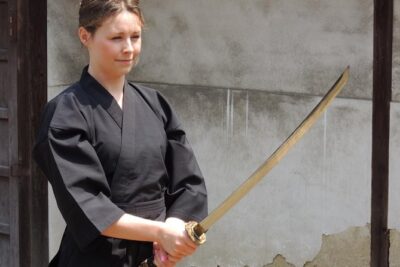 ★ 5.0Kyoto Samurai ExperienceFrom $119
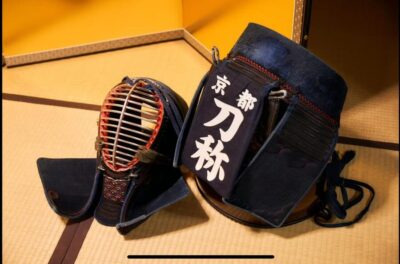 ★ 4.9Kyoto: Kendo and Samurai Experience with Uniform and GearFrom $1032 hours
 ★ 4.5Skip the lines Basic Ticket at SAMURAI NINJA MUSEUM KYOTOFrom $28
 ★ 4.9Kyoto: Samurai Class, Become a Samurai WarriorFrom $70
 ★ 5.0Ninja 1-hour Hands-on Lesson by Japanese master in Kyoto -EntryFrom $80
 ★ 4.8Kyoto: Ninja Weapon Forging ExperienceFrom $1482h 30m