
Reviewed · WALKING TOURS
The Way of Tea: Kyoto Crafts, Hidden Temples & Wabi-Sabi Walk
Kyoto’s tea culture makes the most sense when you see it beside the temples, gardens, and handmade objects that shaped it. This three-and-a-half-hour walking tour links Gion, Kennin-ji, ceramics, and a matcha ceremony without asking you to plan the route yourself.
I like the small maximum of seven people, which gives you a fair chance to ask questions. I also like the final tea lesson in a traditional Japanese house, where you do more than sip matcha. The main caution is communication: one low-rated experience found the guide’s English too soft to hear, so stay near the guide and speak up if you miss something.
In This Review
- Key points to know before booking
- Why tea and temples belong together in Kyoto
- Meeting the guide at Gion Shijo Station
- Gion and the first look at matcha culture
- Kennin-ji, Kyoto’s temple centerpiece
- Craft shops and the meaning of a raku tea bowl
- A quiet temple and garden before the tea house
- The final hour at a traditional tea house
- What the small group changes
- Timing, weather, and the practical details
- Who will get the most from this Kyoto walk
- Should you book The Way of Tea?
- FAQ
- Where does the tour begin?
- How will I find the guide?
- Where does the tour end?
- How long does the experience last?
- What is included in the price?
- Are food and extra drinks included?
- How many people can join the tour?
- Is the tour suitable for children?
- What happens if I arrive late?
- Can I cancel for a full refund?
Key points to know before booking
- The tour begins beside Gion Shijo Station: Meet at the Statue of Izumo-no-Okuni outside Exit 5, where the guide carries an orange MagicalTrip Tour signboard.
- Kennin-ji is the major temple stop: Admission to two temples is included, although only Kennin-ji is named specifically.
- Raku ceramics add a useful craft focus: You visit a tea bowl shop and learn why handmade cups differ in shape, character, and meaning.
- The group is capped at seven people: This is a better setup for questions than a large coach tour.
- The experience ends with hands-on tea making: You receive matcha at a traditional Japanese house and follow the tea master’s instructions.
- The finish is near Kiyomizu: The tour ends at the tea experience location, not back at Gion Shijo Station.
Why tea and temples belong together in Kyoto
This experience is built around a simple idea: Japanese tea is not just a drink. It is tied to architecture, gardens, ceramics, restraint, and the careful use of ordinary objects.
You begin in Gion, Kyoto’s famous traditional district, then move through a temple, craft shops, a quiet temple garden, and finally a tea house. The route gives you several ways to look at tea culture. You see where tea fits into the city, how it is served, and why the bowl itself matters.
That combination is more useful than a ceremony alone if you are new to Japanese tea. A stand-alone tea event can feel formal and brief. Here, the earlier walking stops give you some context before you sit down to make and drink matcha.
The tour is priced at $94.45 per person. That is not the cheapest way to see Gion, but the fee includes an English-speaking local guide, admission to two temples, the tea ceremony, matcha, and photos taken during the walk. For a small group, the price can be fair, especially if you want one booked experience rather than several separate admissions and a self-guided route.
Other walking tours we've reviewed in Kyoto

Meeting the guide at Gion Shijo Station
Your meeting point is the Statue of Izumo-no-Okuni, directly outside Exit 5 of Gion Shijo Station on the Keihan Line. The guide carries an orange signboard marked MagicalTrip Tour.
This is a practical meeting point because it is tied to a clearly named station exit. Still, arrive early. The tour starts on time, and if you miss the group, you cannot join later, reschedule, or receive a refund for that missed departure.
The tour has a maximum of seven people, though the exact number in your departure may be smaller. That size matters in Gion. Side streets and temple approaches are easier to manage with a few people, and you should have more room to ask about tea, architecture, or the craft shops.
The walk ends at 4-chōme-172-7 Kiyomizu in Higashiyama Ward, after the tea experience. You will need to arrange your onward journey from there. The start and finish are not the same, so do not leave your sightseeing plan dependent on returning to Gion Shijo.
Gion and the first look at matcha culture
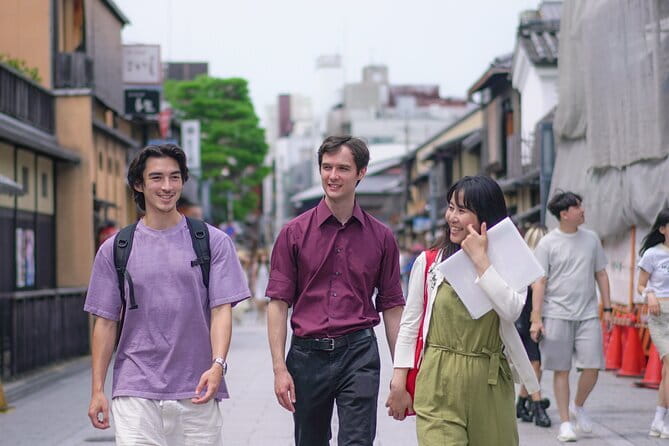
The first stop takes about 30 minutes and introduces the history of Japanese tea, how it is made, and how matcha fits into daily and ceremonial life. You stroll through Gion and visit a well-known matcha shop.
Gion is a fitting place to begin. Its traditional streets provide the setting for a discussion of tea as part of Kyoto’s old urban culture. Your guide can connect the shops and lanes around you with the broader customs you will see later at the tea house.
Do not expect this first stop to be a full tea ceremony. It is an introduction and a walk, not the main hands-on lesson. If you want to buy extra sweets, drinks, or tea products, those purchases are not included in the tour price.
This is also a good time to ask questions. The group is small, but the communication issue noted in the feedback is worth taking seriously. One participant found the guide difficult to hear and felt the explanations were not always clear. That does not mean every departure will have the same problem, but you can help by walking close to the guide and asking for a repeat when needed.
Kennin-ji, Kyoto’s temple centerpiece
Next comes Kennin-ji, one of Kyoto’s long-established temples. The visit lasts about 30 minutes, with admission included.
The value here is not simply checking a temple off your list. Kennin-ji gives the tour a physical setting for ideas linked to tea and wabi-sabi, including simplicity, age, irregularity, and attention to small details. Your guide is meant to explain what you are seeing rather than leave you to wander without context.
Thirty minutes is enough for a focused look, but it is not a full temple visit. If Kennin-ji is a top priority for you, you may want to return independently with more time. On this tour, the temple is one part of a wider sequence, and the pace has to keep the tea ceremony on schedule.
Admission to two temples is included overall. Kennin-ji is the temple named specifically in the route. A second temple and garden appear later, but the supplied details do not identify it by name. That makes the experience less suitable if you want a fixed list of every site in advance, but it preserves some of the route’s quieter character.
Craft shops and the meaning of a raku tea bowl
The next part shifts from buildings to objects. You visit craft shops for about 30 minutes, then spend another 30 minutes at a tea bowl shop connected with raku ceramics.
This is one of the most appealing parts of the experience for anyone who cares about Japanese design. A tea bowl is not a plain container that disappears behind the tea. Its shape, surface, weight, and marks affect how the ceremony feels in your hands.
Raku cups are especially suited to a conversation about wabi-sabi. Each handmade piece has its own character, history, and meaning. The point is not factory-perfect sameness. Small differences are part of the object’s identity.
The tour does not state that a bowl purchase is included, so treat the shop visit as a viewing and learning stop unless you choose to buy something yourself. Extra food and drinks are also excluded. If you enjoy ceramics, allow room in your budget for optional purchases, but do not feel pressured to buy.
The 30-minute timing keeps this stop from becoming a long shopping session. That is helpful if you want variety. It is less helpful if you are a serious collector hoping for an extended examination of individual pieces.


A quiet temple and garden before the tea house
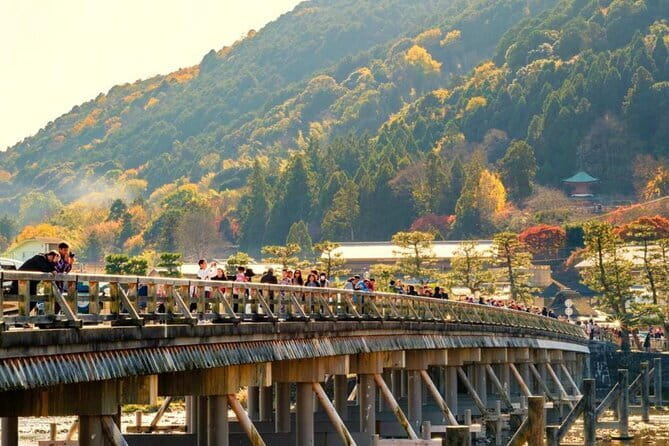
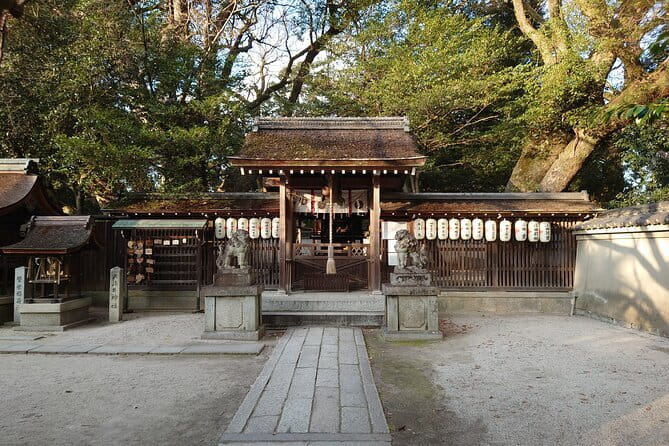
The route then takes you to a less prominent temple and garden. This stop lasts about 30 minutes and gives the tour a calmer pause between the city streets and the final ceremony.
The setting matters because the tea lesson is easier to understand after you have seen the visual language around it. A garden is not simply decoration. Its stones, plants, open space, and controlled views can prepare you to notice the small movements and deliberate choices of tea service.
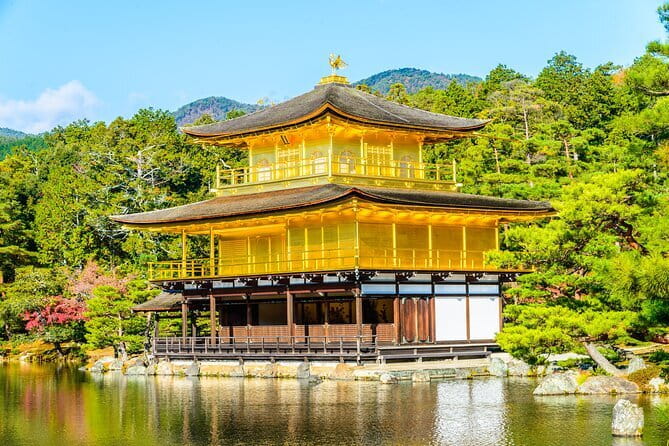
The available details do not name this temple, so you should book this portion for the type of experience rather than a particular landmark. If your Kyoto plan already includes major temples such as Kinkaku-ji or Fushimi Inari, this quieter stop may offer a useful change of pace.
The route includes walking between several locations. The tour does not describe a strenuous hike, and most people can participate, but you should wear comfortable shoes and prepare for the weather. Kyoto can reach about 40°C in summer and fall to about -5°C in winter, so light clothing, water, sun protection, or warm layers may make a real difference.
The final hour at a traditional tea house
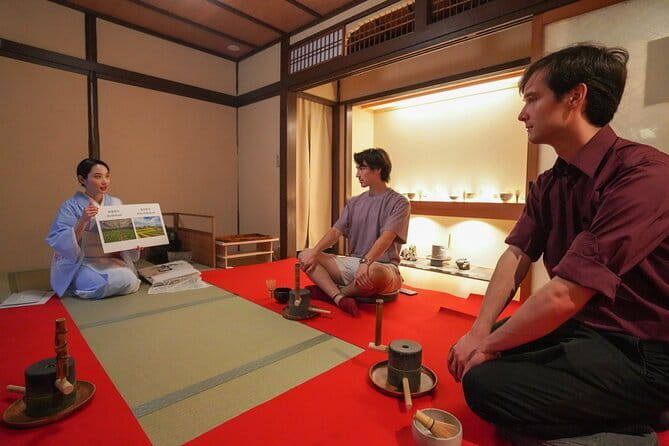
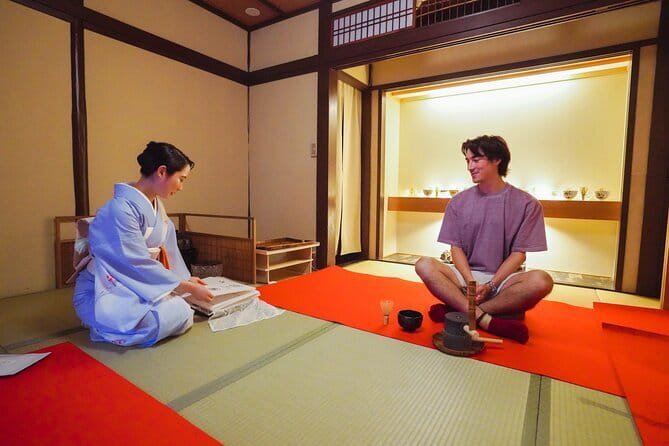
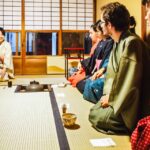
The tour finishes with about one hour at Tea Ceremony Chayu, a traditional Japanese house. This is the part that turns the day from sightseeing into participation.
A tea master instructs you as you make tea and drink matcha. You are not only watching a formal performance. You take part in the process, which helps explain why the earlier discussion of bowls, simplicity, and wabi-sabi matters.
Matcha can taste grassy, bitter, and more intense than the sweetened tea drinks many people know. The ceremony gives you a structured way to experience it, with instruction rather than guesswork. Your guide and the tea master can also help you understand the order and care involved.
The tea ceremony is included, as is the matcha served during the experience. Additional food and drinks are not included. The ceremony can accommodate children aged six and older. Younger children may come along, but one adult must remain outside the facility with them during the tea experience.
The traditional house setting is a strong reason to choose this tour over a simple café tasting. You get a better sense of how the room, bowl, movement, and drink work together. At the same time, anyone looking for a long, highly formal ceremony should check their expectations. The scheduled tea portion is about one hour within a broader walking tour.
What the small group changes
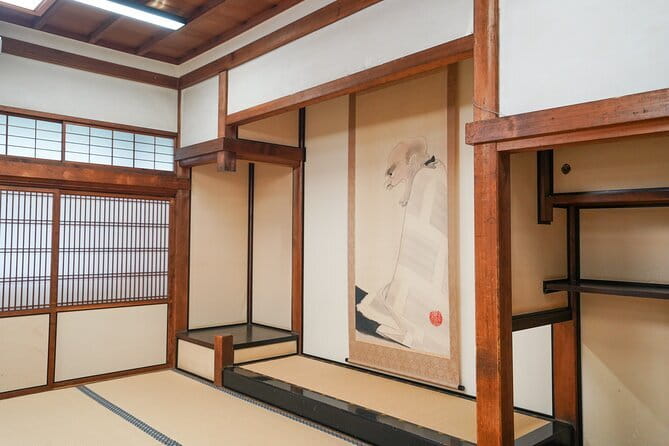
A maximum of seven people is a real advantage here. Gion streets, craft shops, and a tea room are all better suited to a small party than a large group.
You can ask about the difference between matcha and other Japanese teas, the use of a raku bowl, or the meaning of a garden feature without waiting for a microphone or trying to catch the guide at the front. The guide also takes photos during the tour, giving you a record of the walk and ceremony.
The tradeoff is that the quality of the experience depends partly on the individual guide. One participant found the guide’s spoken English too quiet and felt that some site explanations were uncertain. If your understanding depends on detailed historical commentary, this is the main risk to consider.
The tour is described as English-speaking, but English ability and volume can vary by guide. Stay close, ask questions early, and request clarification. That simple approach may prevent a small communication problem from affecting the whole morning or afternoon.
Timing, weather, and the practical details
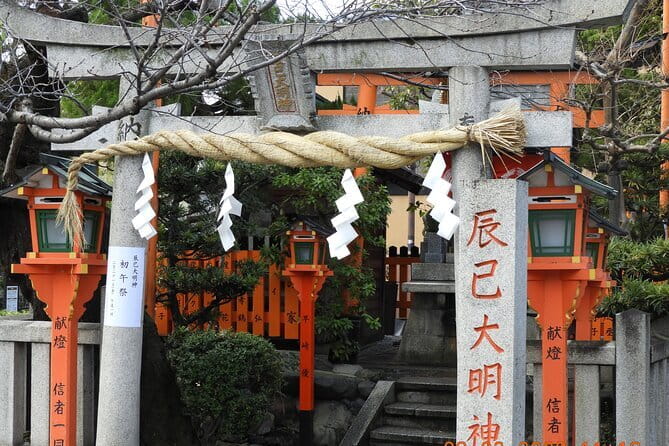
The listed duration is approximately three hours and 30 minutes. The four walking and sightseeing sections are each about 30 minutes, followed by a one-hour tea experience. Allow extra time around the start and finish for meeting the group and continuing to your next activity.
A mobile ticket is provided, and confirmation arrives when you book. The meeting point is near public transportation, but the route itself moves through Kyoto rather than remaining at one venue.
The operator may cancel if weather conditions are unsafe. You can cancel or reschedule for free until 24 hours before the starting time. Inside that 24-hour window, changes are not accepted and the amount paid is not refunded.
The guide’s own food and drinks are covered, so you do not need to pay those costs. The more important budget point is your own spending at the matcha and craft shops. The tour price covers the listed inclusions, not extra purchases.
Who will get the most from this Kyoto walk
I would choose this tour for a first visit to Kyoto if you want a gentle introduction to several connected traditions. It works especially well for you if you like temples but also want something hands-on and culturally focused.
It suits:
- First-time Kyoto visitors who want a guide-led route through Gion
- People interested in matcha, Japanese ceramics, and tea-room customs
- Couples and small groups who prefer a personal format
- Families with children aged six and older
- Visitors who want temple admission, the ceremony, and photos handled together
I would be more cautious if you dislike walking, need a very quiet and slow pace, or want extensive time at each temple. I would also think twice if a detailed English explanation of every site is the main reason you are booking.
The tour is not designed as a broad Kyoto highlights trip. You will not cover a long list of major landmarks. Its focus is narrower and more coherent: Gion, tea, temples, craft, garden design, and a tea ceremony.
Should you book The Way of Tea?
Book it if you want the pieces of Kyoto’s tea culture placed in one sensible route. The included temple admissions and one-hour ceremony make $94.45 reasonable for a small group, particularly when you value guidance and do not want to navigate between stops.
I would book it early in a Kyoto visit, when you can still use the ideas about tea bowls, gardens, and wabi-sabi during later sightseeing. Arrive early at Gion Shijo, wear comfortable clothes for the season, and keep optional shopping money separate.
Skip it if you want a famous temple marathon, a private guide, or a long formal ceremony with highly detailed commentary. For everyone else, this is a focused way to connect Kyoto’s streets, temples, handmade ceramics, and matcha in a single afternoon.
FAQ
Where does the tour begin?
It begins at the Statue of Izumo-no-Okuni outside Exit 5 of Gion Shijo Station on the Keihan Line in Kyoto.
How will I find the guide?
The guide will be holding an orange signboard marked MagicalTrip Tour.
Where does the tour end?
The tour ends at the tea experience location at 4-chōme-172-7 Kiyomizu, Higashiyama Ward, Kyoto.
How long does the experience last?
The experience lasts approximately three hours and 30 minutes.
What is included in the price?
The price includes an English-speaking local guide, admission to two temples, the tea ceremony, matcha at a traditional Japanese house, and photos taken during the tour.
Are food and extra drinks included?
No. Additional food and drinks are not included. The matcha served as part of the tea ceremony is included.
How many people can join the tour?
The tour has a maximum of seven participants.
Is the tour suitable for children?
Children aged six and older can take part in the tea ceremony. Younger children may come, but one adult must accompany them outside the facility during that portion.
What happens if I arrive late?
The tour starts on time. If you arrive too late and miss the group, you cannot join the tour, reschedule, or receive a refund.
Can I cancel for a full refund?
Yes. You can cancel for a full refund up to 24 hours before the experience begins. Cancellations and changes made less than 24 hours before the start time are not accepted.
More Walking Tours in Kyoto


More tours in Kyoto we've reviewed






Walking Tours, compared.
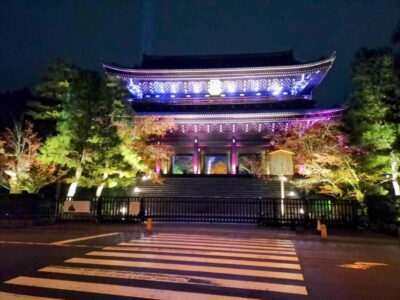 ★ 4.7Kyoto Geisha Walking Tour: Gion District & Hidden GemsFrom $252 hours
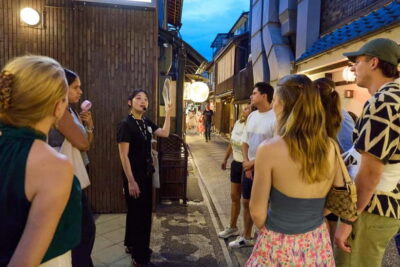 ★ 4.7Kyoto: Gion Geisha District Walking Tour – Stories of GeishaFrom $202 hours
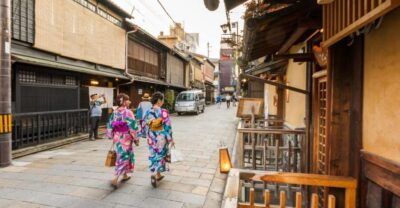 ★ 4.5Night Walk in Gion: Kyoto’s Geisha DistrictFrom $211h 40m
 ★ 5.0Kyoto Gion Geisha District Walking Tour – The Stories of GeishaFrom $25
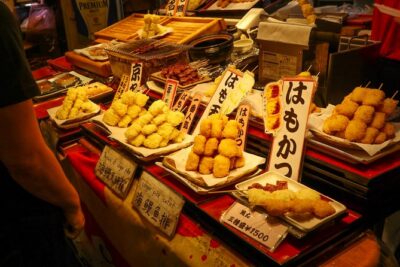 ★ 5.0Nishiki Market Brunch Walking Tour (7 Tastings + Brunch)From $68
 ★ 4.9Kyoto: Gion Magical Night Walking Tour with Geisha InsightsFrom $34