
Reviewed · GION & GEISHA WALKS
Cycle Kyoto’s Hidden Gems & Gion Stroll
Kyoto is much easier to understand from a bicycle seat. This four-hour outing links the Kamogawa River, the Imperial Palace, Shimogamo Shrine, university areas, quiet neighborhoods, and Gion without making you fight Kyoto’s busiest roads. You cover a lot, but the pace stays relaxed.
I especially like the riverside cycling routes and the chance to see Shimogamo Shrine’s old forest without spending the day in a packed sightseeing crowd. The included tea and Japanese sweets near Sanjo Bridge are another nice touch. The main catch is simple: you need to ride a bike comfortably, and the tour depends on good weather.
In This Review
- Key points to know before you book
- Why a bicycle works so well in Kyoto
- Starting beside Sanjo Bridge
- Kamogawa River: the calm opening stretch
- Small shrines and a natural spring
- The Imperial Palace and its seasonal reward
- Shimogamo Shrine and the old forest
- The river junction and return route
- Tea and Japanese sweets near Sanjo Bridge
- Gion after dark, with cultural context
- What the 65 dollar price covers
- Timing, weather, and practical planning
- Who will enjoy this Kyoto bike tour
- Should you book it?
- FAQ
- Where does the tour start and finish?
- How long does the experience last?
- Is bicycle rental included?
- Can I use an electric bike?
- What food and drinks are included?
- What happens if it rains?
Key points to know before you book
- Ride through quieter Kyoto: The route favors river paths, residential streets, and less touristed corners over major roads.
- See the Imperial Palace and Shimogamo Shrine: The day includes two major cultural sights, plus smaller shrines and a natural spring.
- Finish in Gion after dark: The short walk explains Gion’s entertainment culture and the role of maiko.
- Tea and sweets are included: You stop at a traditional snack shop near Sanjo Bridge.
- Small group format: The tour is described as limited to eight people, while the additional details list a maximum of five, so confirm the current group size when booking.
- Electric bikes cost extra: A standard bike is included. An electric bike costs 1,000 yen more and is paid locally.
Why a bicycle works so well in Kyoto
Kyoto’s famous sights are spread farther apart than a first-time map may suggest. The Imperial Palace sits north of the central shopping streets, Shimogamo Shrine is farther northeast, and Gion lies southeast across the river. Walking between all of them would take much of your day.
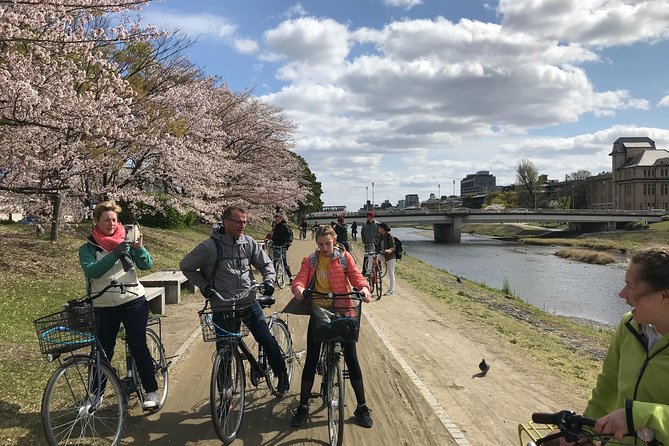
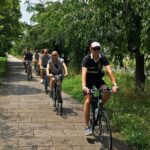
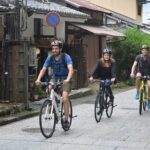
A bicycle gives you a better middle ground. You can cover real distance without being sealed inside a bus or taxi. You also notice small things: a narrow lane beside the river, a quiet university campus, a residential street, or the sound of water moving under a bridge.
This is not a hard cycling challenge. The included bikes have three to five gears, and the route is built around peaceful riverside paths and quieter roads. Still, you should be able to ride confidently, steer around other people, and stay with the group.
The small group matters here. A guide can explain a shrine offering, adjust the pace, and answer questions without shouting over a crowd. The tour information gives two different group limits, eight people in the highlights and five in the additional details. Treat it as a small-group experience, but check the current cap before paying if group size is important to you.
A few more Kyoto tours and experiences worth a look

Starting beside Sanjo Bridge
The meeting point is the statue of Takayama Hikokurō in Higashiyama Ward, near Sanjo. This is a practical central starting point, close to public transportation and near the river.
After the bike fitting and a short orientation, you head toward the Kamogawa River. The opening section is useful because it gets you away from the tight streets around central Kyoto almost at once. You begin with open sky, moving water, and room to settle into the bike.
The route is not designed as a race. You are there to see Kyoto at street level. Expect stops for photographs, brief explanations, and cultural details. Bring water, sunscreen, and clothes suited to the season. The tour lasts about three hours on the bike, so comfort matters more than looking polished.
Kamogawa River: the calm opening stretch
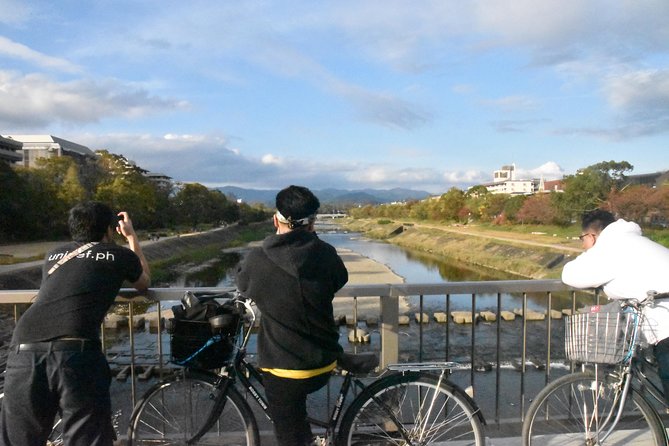
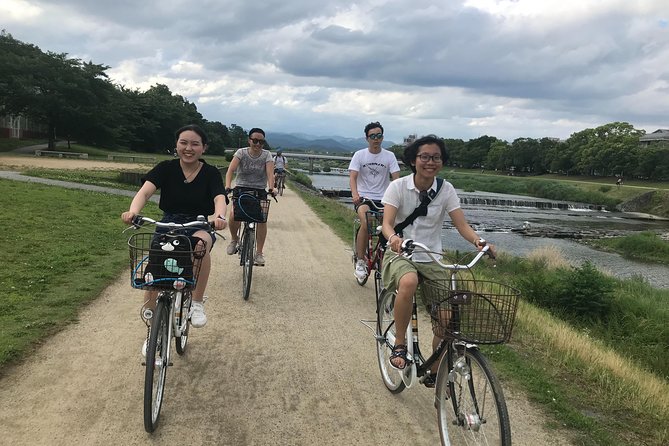
The Kamogawa River is one of Kyoto’s best public spaces. Its banks give you a long, open route through the city, with joggers, walkers, birds, stepping stones, and changing views of the surrounding neighborhoods.
Here, the bicycle earns its keep. You can move through central Kyoto while still feeling close to nature. The route also includes a scenic, illuminated riverside section later in the ride, which gives the return journey a different mood from the daytime opening.
One especially enjoyable feature is the stepping-stone area at the river. It is a small detail, but it gives the ride a playful break and helps show how Kyoto residents use the river, not just how visitors photograph it.
The river path can still have walkers and cyclists, so you should ride with care. Your guide will set the pace, but you should not expect a completely empty trail. That is part of the appeal: you are moving through a real city space rather than a staged attraction.
Small shrines and a natural spring
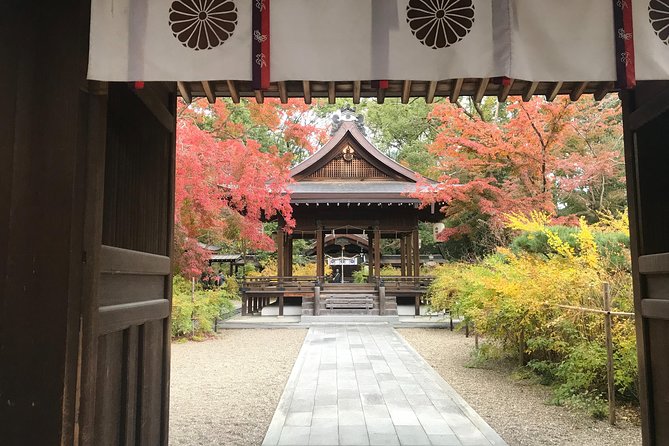
The route leaves the main sightseeing circuit for smaller religious sites and quieter corners. At one shrine, you learn how to make a proper Shinto offering. That practical explanation is more useful than simply hearing a date or architectural label because it helps you understand what people actually do at a shrine.
You also stop at a source of pure natural spring water. The appeal is not a grand monument. It is the chance to notice a local feature that is easy to miss when you rush from one major temple to another.
The guide’s role is important during this part of the ride. Honoka received particularly strong praise for clear English and a good pace, and the guide associated with the tour has a research background focused on Gion and maiko culture. Guide assignments can change, so do not assume Honoka will lead every departure, but the experience is built around explanation rather than simply following a route.
The Imperial Palace and its seasonal reward
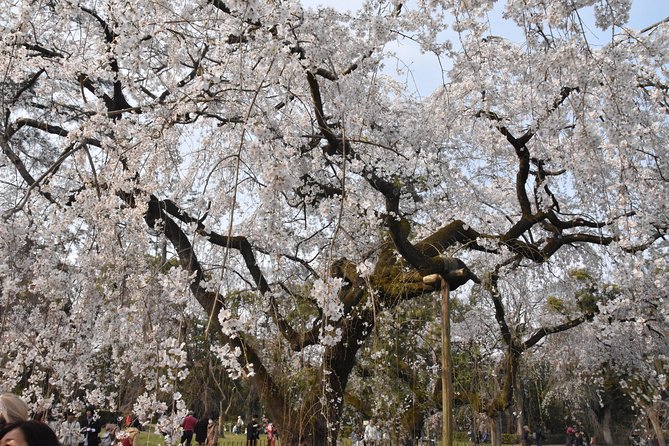
The Imperial Palace is one of the tour’s major stops. Its broad grounds offer a welcome change from Kyoto’s narrow lanes and crowded temple approaches. The scale helps you see the city as an old seat of government, not only as a collection of picturesque streets.
Access and viewing conditions can vary, and the cycling route does not promise every interior area. Still, the palace grounds are a strong reason to choose this tour if you want more than the standard Gion and Kiyomizu-dera circuit.
Season matters here. In autumn, the palace area can be especially striking, with strong color through the grounds. The timing of your visit may also affect what you can see. The value is that you get the palace within a wider four-hour route rather than giving it your entire morning.
Other cycling tours in Kyoto

Shimogamo Shrine and the old forest
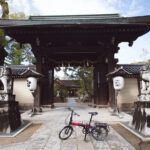
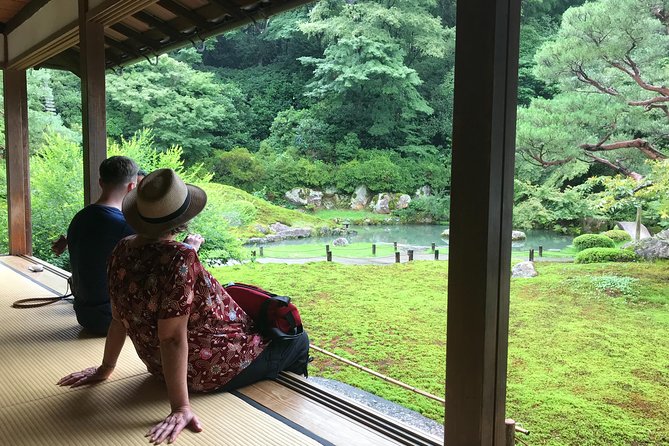
Shimogamo Shrine is a UNESCO World Heritage Site and one of the tour’s best cultural stops. It is known for its buildings, sacred setting, and primitive forest, called Tadasu no Mori. The forest feels notably different from the open riverbank and formal palace grounds.
You get three kinds of Kyoto in a short span: water beside the Kamogawa, wide civic space at the palace, and a wooded shrine setting at Shimogamo. That variety is the real strength of the route.
The shrine also gives your guide room to explain customs in a useful way. You can ask how to behave at the entrance, how to make an offering, and what the various parts of a shrine are for. If you have already visited several temples and shrines, this added context can make the next ones easier to read.
A possible drawback is that cycling is only part of the appeal, not the whole point. If you want a long, athletic ride, you may find the sightseeing stops take up more time than expected. One comment about the experience specifically wished for more riding. Choose this tour for access and interpretation, not for maximum mileage.
The river junction and return route
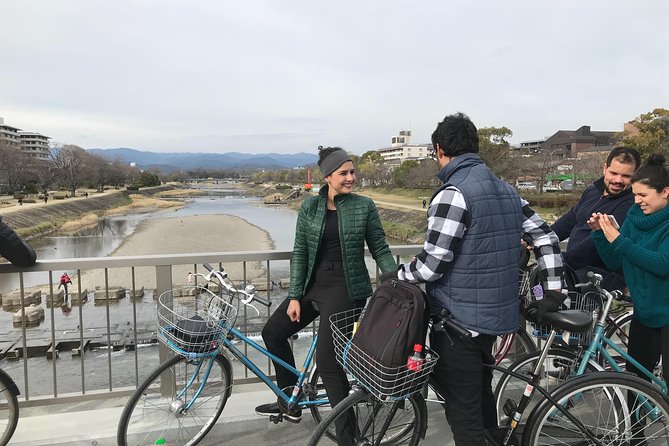
At a distinctive junction where rivers meet, the route turns back toward central Kyoto. This is another example of the tour’s approach: it seeks out places with local character instead of stringing together only the most famous postcard views.
The return follows a scenic riverside route, with lights reflecting after dark. The changing light makes the later ride feel different from the morning or afternoon opening, and it prepares you for the evening portion in Gion.
The three-hour bike section is long enough to make cycling the main activity, but short enough to fit into a larger Kyoto plan. You still have room before or after the tour for another meal or sight. Be realistic about your energy, especially in summer heat or during a full day of temple visits.
Tea and Japanese sweets near Sanjo Bridge
After returning the bicycles, you stop near Sanjo Bridge at a traditional snack shop. Japanese tea and sweet snacks are included, with coffee also listed as an option.
This is a modest but valuable pause. You get a seat, something small to eat, and a chance to ask questions before the Gion walk. The snack also gives the tour a more personal rhythm than a simple point-to-point bike rental.
Do not book this expecting a full meal. The stop is a refreshment break, and the guide can suggest restaurants and bars in the local food area according to your preferences. That advice is useful if you want to stay in central Kyoto afterward, but dinner itself is not included.
Gion after dark, with cultural context
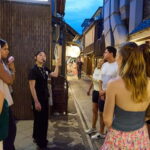
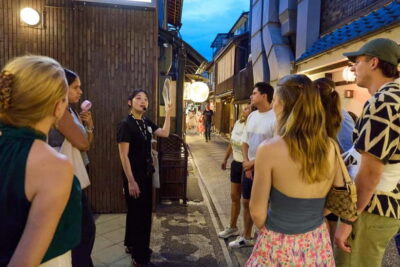
The final walk lasts about 30 minutes and focuses on Gion, Kyoto’s famous entertainment district. The guide explains how Gion operates and discusses the culture and system surrounding maiko.
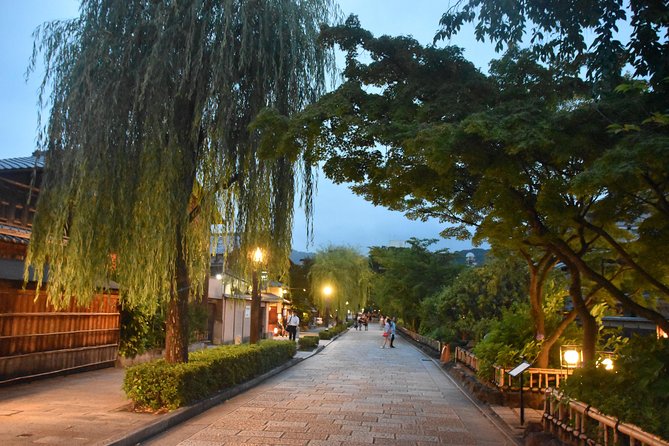
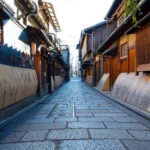
This short length is a strength if your legs are tired after cycling. You get an introduction to the area without committing to another long walking tour. Gion also changes character after dark, when lanterns and narrow lanes create a quieter, more traditional mood.
You may see a geisha or maiko, but this is not promised. You should treat any sighting as luck, not as the purpose of the walk. The better reason to join is the cultural explanation, especially if you want to understand why the district has such particular customs.
Please follow your guide’s instructions around private entrances and working performers. Gion is a living neighborhood and workplace, not a theme park. A respectful distance and a quiet approach make the visit better for everyone.
What the 65 dollar price covers
At $65, this is a strong value if you plan to visit several central and northern Kyoto sights in one outing. The bicycle rental is included, as are the tea, Japanese sweets, and listed entrance fees for a temple or shrine if a rainy-day alternative is used.
You are also paying for route planning. Kyoto’s river paths and quieter streets are not difficult to find on a map, but linking them with the Imperial Palace, Shimogamo Shrine, a spring, Gion, and Sanjo Bridge takes time and local judgment.
The price is less compelling if you mainly want to pedal continuously. You can rent a bicycle independently for less than the tour price, but you would need to build the route, navigate, choose stops, and arrange your own Gion explanation. For first-time visitors, the guide and efficient route are the main value.
An electric bike costs an additional 1,000 yen, payable on the spot. That may help if you are concerned about fatigue, but the provided information does not describe steep climbs. Ask locally if you want to know whether an electric bike is needed for your departure.
Timing, weather, and practical planning
The experience lasts about four hours and returns to the same meeting point. It is close to public transportation, which makes it easier to fit into a day based in central Kyoto.
The tour requires good weather. If poor conditions cancel it, you can choose another date or receive a full refund. You can also cancel for a full refund up to 24 hours before the start time. Inside that window, payment is not refunded, and changes are not accepted.
Wear shoes that work for both cycling and walking. You will not need specialist cycling equipment based on the information provided, but you should dress for the season and expect several stops outside.
Most people can participate if they can ride a bike. The activity is not suitable for anyone who cannot manage a bicycle, and you should tell the operator about your bike needs before arrival rather than waiting until the start.
Who will enjoy this Kyoto bike tour
I would choose this outing for a first or second visit to Kyoto when I wanted to see familiar landmarks and less obvious areas in the same morning or afternoon. It suits people who like context, local streets, and a guide who can explain customs without turning the day into a lecture.
It is also a good match for anyone tired of packed buses. The river paths and residential roads give you breathing room, while the palace and Shimogamo Shrine provide major cultural stops.
Families and mixed-age groups may appreciate the gentle pace, provided everyone can ride safely. The small group makes it easier to keep together than on a large cycling excursion.
I would hesitate if you dislike bicycles, want a strenuous workout, or need a fully weatherproof plan. The tour’s best features depend on being outdoors, and the bike portion includes stops and cultural visits rather than nonstop riding.
Should you book it?
Book this tour if you want an efficient, human-scale introduction to Kyoto beyond the busiest temple routes. The combination of riverside riding, the Imperial Palace, Shimogamo Shrine, tea and sweets, and a Gion walk gives you a broad view of the city in four hours.
Skip it if you are uncomfortable on a bike or if your priority is a long-distance cycling adventure. Before booking, confirm the current group limit and ask who will guide your departure. If the weather forecast is uncertain, keep your schedule flexible and remember that an electric bike costs 1,000 yen extra.
FAQ
Where does the tour start and finish?
It starts at the statue of Takayama Hikokurō in Higashiyama Ward near Sanjo. The activity finishes back at the same meeting point.
How long does the experience last?
The full activity lasts approximately four hours. The bicycle portion takes about three hours, and the Gion walk lasts about 30 minutes, with time also allowed for the tea and sweets stop.
Is bicycle rental included?
Yes. Use of a standard bicycle is included in the tour price.
Can I use an electric bike?
Yes, an electric bike is available for an additional 1,000 yen. You pay the extra fee on the spot.
What food and drinks are included?
Japanese sweet snacks and Japanese tea at a traditional snack shop are included. Coffee is also listed as an included drink option. Lunch or dinner is not included, though the guide can recommend restaurants and bars.
What happens if it rains?
The experience requires good weather. If the operator cancels because of poor weather, you can choose another date or receive a full refund.
More Cycling Tours in Kyoto
More Gion & Geisha Walks in Kyoto
More tours in Kyoto we've reviewed
Gion & Geisha Walks, compared.
 ★ 4.7Kyoto Geisha Walking Tour: Gion District & Hidden GemsFrom $252 hours
 ★ 4.7Kyoto: Gion Geisha District Walking Tour – Stories of GeishaFrom $202 hours
 ★ 4.9Best of Kyoto: Gion, Geisha, Pagodas & CobblestonesFrom $242 hours
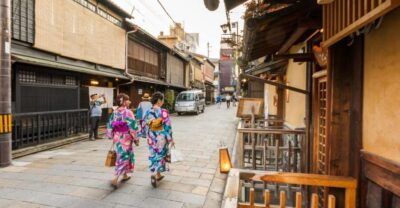 ★ 4.5Night Walk in Gion: Kyoto’s Geisha DistrictFrom $211h 40m
 ★ 5.0Kyoto Night Foodie Tour in Gion (9+ dishes + 6 Sake tastings)From $163
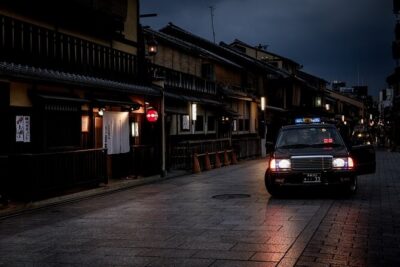 ★ 5.0Kyoto Gion Geisha District Walking Tour – The Stories of GeishaFrom $25