
Reviewed · TEA CEREMONY EXPERIENCES
Visiting to Katsura Imperial villa and tea ceremony experience
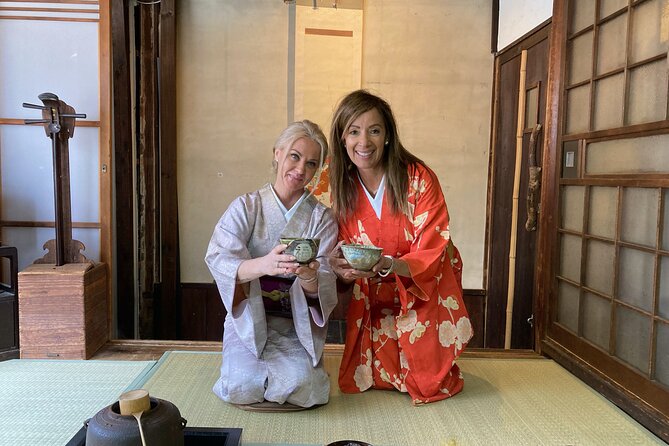
Katsura Imperial Villa is the star here: a 400-year-old imperial retreat with a famous circular garden and refined Sukiya-style tea houses. The tour adds a rare antique kimono, a visit with fourth-generation shop owner Tokusaburo Miyagawa, and tea in a 100-year-old traditional house.
I like that Toku handles the difficult same-day villa admission and drives you between his shop and the villa. I also like the quiet setting and the chance to wear an actual antique kimono rather than a modern costume rental.
The main concern is price. At $169.90 per person, you are paying far more than the villa admission alone, and the English explanation inside the villa may come through a prerecorded audio guide rather than directly from Toku.
In This Review
- Key points to know before booking
- Why Katsura Imperial Villa is worth your afternoon
- The afternoon begins at Miyagawa Tokusaburo Shoten
- Wearing an antique kimono to the villa
- A garden designed as a walking experience
- Tea in a 100-year-old Japanese house
- What the $169.90 price really covers
- Timing, transport, and group format
- Who will enjoy this experience most
- My booking advice
- FAQ
- Where does the activity start?
- What time does the activity begin?
- How long does the experience last?
- Where does the activity end?
- Is transportation included?
- Is admission to Katsura Imperial Villa included?
- Is kimono rental included?
- What is served during the tea ceremony?
- Can I cancel for a full refund?
Key points to know before booking
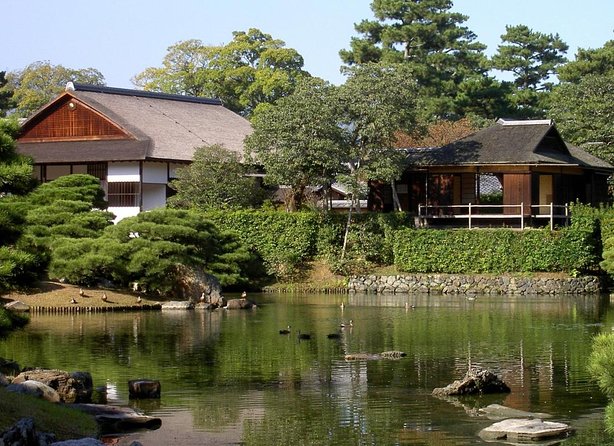
- Katsura Imperial Villa: See one of Kyoto’s most carefully preserved imperial gardens, with limited admission arranged for you.
- Tokusaburo Miyagawa: The fourth-generation kimono shop owner accompanies the visit and advises you on kimono and obi selection.
- Antique clothing: Wear a valuable early Showa-period kimono, with dressing included.
- Traditional tea house: Learn how to drink and prepare matcha in a 100-year-old Japanese home.
- Two cups of matcha: Local sweets from a Katsura confectioner are served during the tea experience.
- Private booking: Only your own group takes part in the activity, though the villa portion follows its own guided visiting system.
Why Katsura Imperial Villa is worth your afternoon
Kyoto has no shortage of temples, gardens, and tea experiences. Katsura Imperial Villa feels different because it brings these ideas together in a place designed from the start as an imperial retreat.
The villa was built in 1615. Although it has been repaired and renovated over the centuries, its overall design has remained almost unchanged for about 400 years. The garden follows a circular route, leading you through carefully framed views, quiet paths, ponds, bridges, and tea houses.
This is not a palace tour filled with grand rooms and royal furniture. The appeal lies in restraint. A simple wooden building, a shaped opening, a stretch of water, or a distant view is placed with great care. The Sukiya-style tea houses show how Japanese design can make modest materials feel formal and elegant.
The villa became known outside Japan after German architect Bruno Taut praised its beauty. You do not need to be an architecture expert to appreciate the place, but it helps to slow down. Look at how buildings and garden views connect. Pay attention to the way the path controls what you see next.
Admission is limited and requires permission. That is one of the strongest practical reasons to use this experience. The provider arranges the numbered same-day tickets, then takes you from the tea shop to the villa by car, about five minutes away.
Without that arrangement, you would need to understand the villa’s admission rules and apply during limited visiting hours. This tour removes that work, though it does not remove the need to check your booking confirmation carefully.
A few more Kyoto tours and experiences worth a look
The afternoon begins at Miyagawa Tokusaburo Shoten
The meeting point is Miyagawa Tokusaburo Shoten at 32-4 Katsuranozatocho in Kyoto’s Nishikyo Ward. The activity begins at 1:00 pm and lasts about three hours, ending back at the shop.
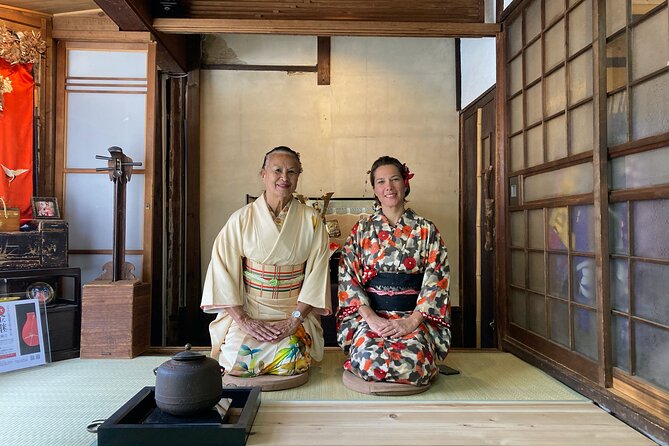
Tokusaburo Miyagawa, known as Toku, is the fourth-generation owner of the business. His family connection to kimono gives the clothing portion more substance than a simple dress-up session. He helps you select an antique kimono and obi, explains design details, and talks about occasions when people wear kimono.
That background matters. Kimono patterns, colors, fabric, and obi styles are not random decoration. Your choice may reflect season, formality, age, or the setting where the garment is worn. The supplied information does not promise a full technical lesson in kimono history, but you will get guidance on the clothing itself and its use.
The garments come from the early Showa period, making them older and more unusual than the standard modern rental outfits found in central Kyoto. You should treat this as a cultural clothing experience, not merely a photo opportunity.
Staff dress you in the kimono, and the rental fee is included. Allow yourself patience during this part. Traditional clothing can feel snug and formal, and the experience is meant to prepare you for the villa and tea ceremony rather than rush you out the door.
Wearing an antique kimono to the villa
The clothing changes the tone of the outing. Katsura Imperial Villa is already a formal place, and arriving in antique kimono gives the visit a stronger connection to Japanese customs and aesthetics.
It is also the part most likely to appeal to people who want photographs. The villa provides a beautiful setting, and the kimono creates a clear visual link between the garden, the tea houses, and the tea ceremony that follows.
Still, you should keep your expectations realistic. This is not a private photo shoot, and the villa visit is not led entirely by Toku. The garden uses its own visiting system, and the English explanation may be delivered through a prerecorded headset. Toku escorts the group and helps with the arrangements, but he is not necessarily the person giving every explanation inside the villa.
That distinction is important if you are booking mainly for an English-speaking personal guide. If your priority is seeing the garden while dressed in traditional clothing, the setup should work well. If your priority is a detailed, live English lecture at every stop, you may find the audio guide less personal.
The tour operator has explained that the audio guide is used to provide accurate information about the villa. That can be useful, but it means the experience has two different guide styles: Toku’s direct help around the activity and the villa’s recorded interpretation.
A garden designed as a walking experience
The circular garden is the heart of Katsura. Rather than presenting one grand view, it gives you a series of smaller discoveries as you move along the route.
You might first notice the balance of water, trees, stones, and buildings. Then a path shifts your view toward a tea house or a carefully placed bridge. The design rewards attention to small changes. A pond is not simply there for decoration. It helps connect the buildings and gives the garden a sense of movement.
The tea houses are especially important. They reflect the Japanese preference for quiet, controlled beauty. Their design is linked to tea culture, where the room, entrance, utensils, movement, and setting all matter.
Plan to listen carefully, even through a headset. The villa’s value is easy to reduce to pretty garden views, but the design becomes more interesting when you understand that the route and buildings were planned as one composition.
The villa section is also the least flexible part of the tour. Admission is limited, and you follow the established visiting arrangements. You cannot treat the grounds like an open public park where you wander anywhere or set your own pace.
Tea in a 100-year-old Japanese house
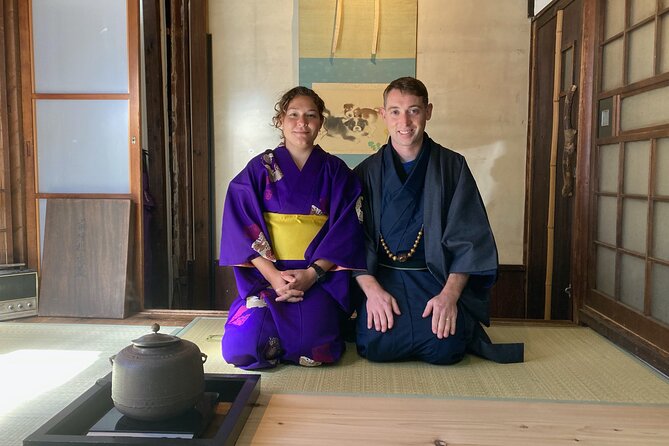
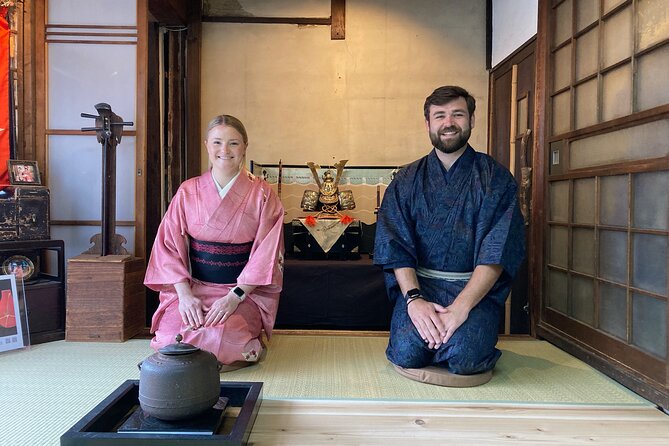
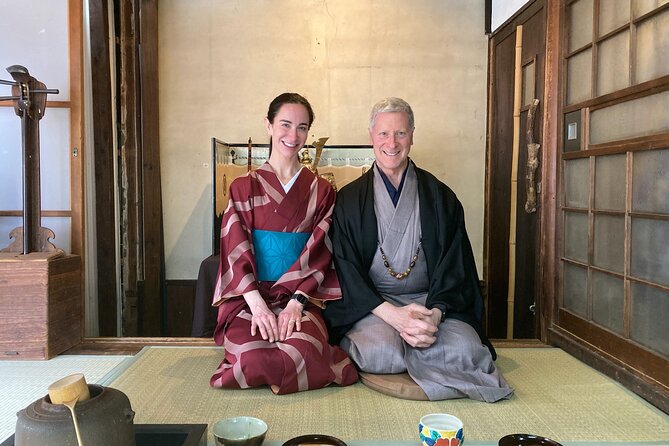
After the villa visit, the experience returns to the shop for tea in a 100-year-old traditional Japanese house. The quieter location near Katsura is a welcome change from Kyoto’s busiest sightseeing areas.
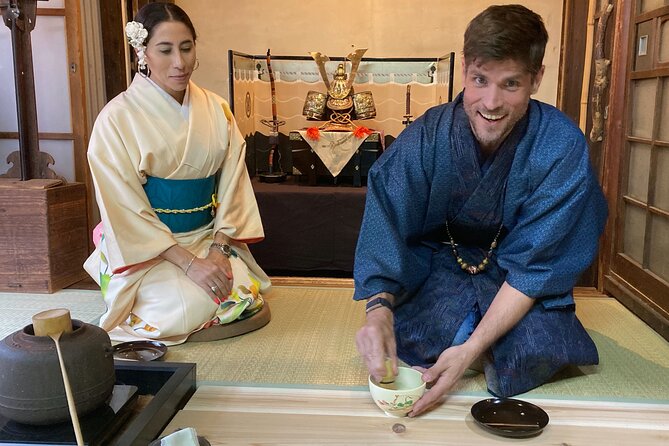
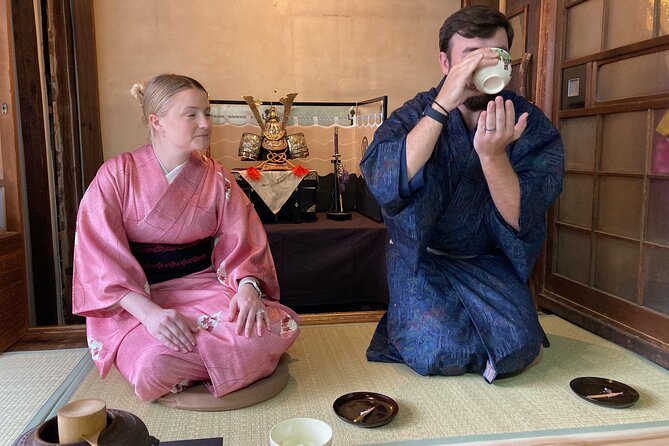
This is a hands-on introduction to tea ceremony. You watch Toku demonstrate the proper way to prepare and drink matcha, then learn the basic movements yourself. Two cups of matcha are served, along with sweets made by a local Japanese confectioner in Katsura.
The sweets are not an afterthought. In tea practice, the sweet balances the bitterness of matcha and prepares your palate for the drink. Local sweets also give the session a clear connection to the neighborhood rather than making it feel like a generic activity imported into a hotel room.
You will learn the correct way to drink matcha and see how it is prepared. The information provided does not promise that you will perform every stage of a formal tea ceremony independently, so think of this as a guided lesson with a demonstration, not an advanced tea-school class.
The setting is one of the best reasons to choose this experience. A traditional house near Katsura offers a calmer atmosphere than a busy downtown venue. You have time to notice the room, the clothing, the sweets, and the deliberate pace of the ceremony.

What the $169.90 price really covers
The cost is $169.90 per person. That is a serious price for a three-hour activity, especially because Katsura Imperial Villa’s stated admission price is 3,000 yen per person.
You should not compare the tour price only with that admission fee, though. The package also includes the limited-ticket arrangement, round-trip transportation from the shop, antique kimono rental, dressing, tea instruction, two cups of matcha, Japanese sweets, and Toku’s assistance.
The question is how much those extras are worth to you. If you only want to see Katsura Imperial Villa, this is not a good-value way to buy admission. The garden entrance itself is much cheaper, and you would not be paying for kimono, tea, or private transport.
If you want all three elements in one afternoon, the value becomes easier to understand. Arranging a difficult villa visit, being dressed in an antique garment, riding to the grounds, and taking tea in a historic house creates a much more specialized experience than a standard garden ticket.
There is still a gap between the direct cost of admission and the tour price. I would book this only if you genuinely want the kimono and tea components. Do not book it simply to gain access to Katsura unless obtaining a ticket independently is your main difficulty.
Timing, transport, and group format
The activity starts at 1:00 pm and runs for about three hours. It ends at the same place where you begin, which makes the day simple and removes the need to arrange a separate return from the villa.
Transportation is included between the shop and Katsura Imperial Villa. The drive takes about five minutes, so little of your afternoon is lost in transit.
This is a private activity, meaning only your own group participates in the booked experience. That gives the kimono fitting and tea session a more personal feel than a large class.
The villa visit itself should not be confused with a fully private tour. You follow the admission system and the villa’s guided format, and the English commentary may be provided by prerecorded headset. Toku accompanies you, but the exact balance between his live help and the villa’s audio information matters.
The activity requires good weather. If poor weather causes cancellation, you can choose another date or receive a full refund. Normal cancellation is free up to 24 hours before the 1:00 pm start time. Changes or cancellations made later are not accepted for a refund.
Who will enjoy this experience most
I would recommend this tour to someone who wants a focused cultural afternoon rather than a checklist of famous Kyoto sights. It suits couples, families, and small private groups who value clothing, tea, gardens, and personal help with complicated arrangements.
It is especially good for you if Katsura Imperial Villa is high on your list but you do not want to manage its limited admission process alone. The short drive, included ticket arrangement, and return to the shop make the logistics easy.
It is also a strong fit if you have already seen Kyoto’s major temples and want something quieter. Katsura is not in the thick of the city’s main sightseeing corridor, and the tea session takes place away from the busiest streets.
You may want to skip it if you are watching your budget, dislike formal clothing, or want a fully live English-guided tour inside the villa. The audio headset can provide correct information, but it is less warm and flexible than a guide speaking directly to you.
The experience may also feel loosely organized if you expect every part to run like one continuous private tour. The kimono and tea portions are handled through the shop, while the villa has its own rules and guide system.
My booking advice
Book this for the combination, not for the admission ticket alone. Katsura Imperial Villa is the strongest sight, the antique kimono is the most distinctive extra, and the tea session gives the afternoon a clear ending in a quiet traditional setting.
I would consider the price fair only when you place real value on the rare kimono, dressing service, tea lesson, local sweets, transport, and ticket arrangement. If you mainly want garden access, save your money and seek the villa ticket separately.
For the best fit, book well ahead. The experience is commonly reserved about 50 days in advance, and the villa tickets are limited. Confirm that the English audio format is acceptable to you, then enjoy the unusual chance to connect a 400-year-old garden with a family kimono business and a traditional tea lesson in the same afternoon.
FAQ
Where does the activity start?
It starts at Miyagawa Tokusaburo Shoten, 32-4 Katsuranozatocho, Nishikyo Ward, Kyoto, 615-8073, Japan.
What time does the activity begin?
The stated start time is 1:00 pm.
How long does the experience last?
The activity lasts approximately three hours.
Where does the activity end?
It ends back at the same shop where you meet.
Is transportation included?
Yes. Round-trip transportation between the shop and Katsura Imperial Villa is included.
Is admission to Katsura Imperial Villa included?
Yes. The package includes the villa entrance fee and the same-day admission ticket arrangement fee.
Is kimono rental included?
Yes. Antique kimono rental and dressing are included in the price.
What is served during the tea ceremony?
You receive two cups of matcha tea and sweets made by a local Japanese confectioner in Katsura, Kyoto.
Can I cancel for a full refund?
Yes, if you cancel at least 24 hours before the local start time. Later cancellations and changes are not refunded. If poor weather causes the activity to be canceled, you are offered another date or a full refund.
More Tea Ceremony Experiences in Kyoto
More tours in Kyoto we've reviewed

Tea Ceremony Experiences, compared.
 ★ 4.9Kyoto: Tea Ceremony in a Traditional Tea House in KiyomizuFrom $4945 min
 ★ 4.9Kyoto: Tea Ceremony Ju-An at Jotokuji TempleFrom $291h 10m
 ★ 4.3Kyoto: 45-Minute Tea Ceremony Lesson ExperienceFrom $2245 min
 ★ 5.0World Heritage Kyoto & Nara Uji Authentic Matcha ExperienceFrom $129
 ★ 4.9Kyoto: Table-Style Tea Ceremony at a Kyo-MachiyaFrom $451h 30m
 ★ 5.0Kimono Tea Ceremony at Kyoto Maikoya, NISHIKIFrom $65