
Reviewed · MORNING
Explore Hidden Alleyway with a Local Expert (Morning tour)
Kyoto’s best introduction may come on two wheels, not from a crowded sightseeing bus. This private morning e-bike tour links Miyagawacho and Gion with Tatsumi Bridge, Kyoto Imperial Palace, and a quiet Kamo River break, giving you a broad look at the city without wearing out your feet.
I like the small-group format, which means your guide can slow down for questions or adjust the route to your interests. I also like the practical rain plan: you can ride with a free poncho or switch to walking and public transport. The main drawback is that three hours can feel short, especially if you want long stops or a coffee break.
In This Review
- Key points at a glance
- Why an e-bike is a smart way to see Kyoto
- Starting in Miyagawacho’s wooden lanes
- Gion, with time for context
- Tatsumi Bridge and the willow-lined stream
- Kyoto Imperial Palace and its open garden
- A quiet break beside the Kamo River
- The guide makes the difference
- Is $103.04 a fair price?
- Rain plans and practical limits
- Who should book this Kyoto bike tour?
- Final verdict: book it for breadth and flexibility
- FAQ
- How long does the e-bike tour last?
- What time does the tour begin?
- Where does the tour meet?
- Where does the tour finish?
- How many people can join one guide?
- Is this a private tour?
- Are e-bike equipment rentals included?
- What happens if it rains?
- Can children join the tour?
- Can I cancel or change my booking?
Key points at a glance
- A private ride for two to six people: Your group has its own guide, with no need to keep up with a large party.
- Five contrasting Kyoto stops: See traditional wooden townhouses, geisha districts, willow-lined water, palace grounds, and the Kamo River.
- E-bikes make the distance manageable: Battery assistance helps on hot days and lets you cover more ground than on foot.
- Guides shape the morning: Guides including Rich, Yuichi, and Annie have been praised for answering questions and adapting to requests.
- Rain does not automatically cancel the outing: Choose a poncho-equipped bike ride or a walking route using buses or the metro.
- Plan for a firm starting point: Meet at 552-13 Higashiaburanokōjichō at 9 a.m., then return there after the tour.
Why an e-bike is a smart way to see Kyoto
Kyoto spreads its sights across several distinct areas. Walking between Gion, the Imperial Palace, and the Kamo River can take much of a day, while buses may leave you focused on routes and transfers instead of the city around you.
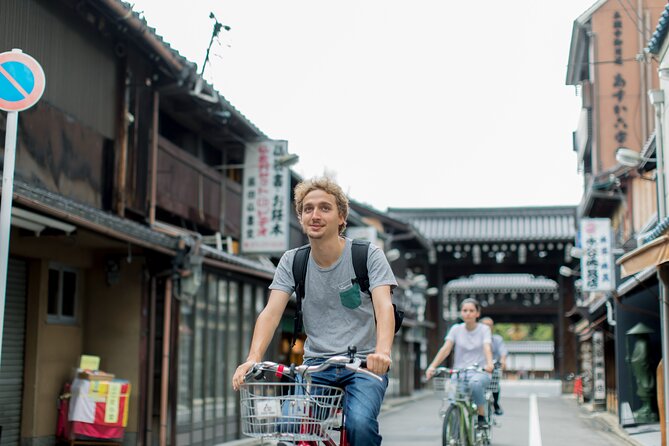
An e-bike gives you a middle ground. You still move at street level, passing through lanes and along waterways, but the electric assistance cuts down the effort. This matters in summer, when a walking tour can become a test of stamina rather than a pleasant morning.
The ride is not described as a race. It is a private activity for two to six people per guide, so you can ask questions, pause for a photograph, or request a coffee stop. For larger groups of seven to twelve, an additional guide can be arranged.
You should still be comfortable riding on public roads. Children must be at least 10 years old, at least 145 centimeters tall, and able to cycle safely without help. This is not a learn-to-ride session.
A few more Kyoto tours and experiences worth a look

Starting in Miyagawacho’s wooden lanes
The tour begins at 9 a.m. from 552-13 Higashiaburanokōjichō in Kyoto’s Shimogyo Ward. From there, the first listed stop is Miyagawacho Kaburenjo, in one of Kyoto’s five traditional geisha districts.
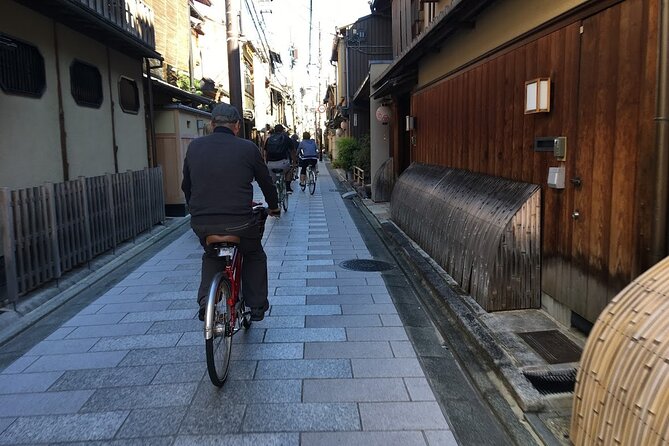
Miyagawacho is quieter in feel than the famous name Gion might suggest. Its narrow alley is lined with traditional wooden houses on both sides, giving you a glimpse of Kyoto’s older street pattern and a calmer atmosphere. The scheduled stop is about 15 minutes, so expect an introduction and a short look rather than a long architectural visit.
This is one reason the guide adds value. A row of dark wooden facades can look like a pleasant old street if you pass through alone. With context, you can better understand that the district remains tied to Kyoto’s performing arts traditions and the world of geiko and maiko.
Be respectful here. The district is not a stage set, and the houses are part of a living neighborhood. The short stop helps keep the visit from becoming intrusive while still giving you time to take in the setting.
Gion, with time for context
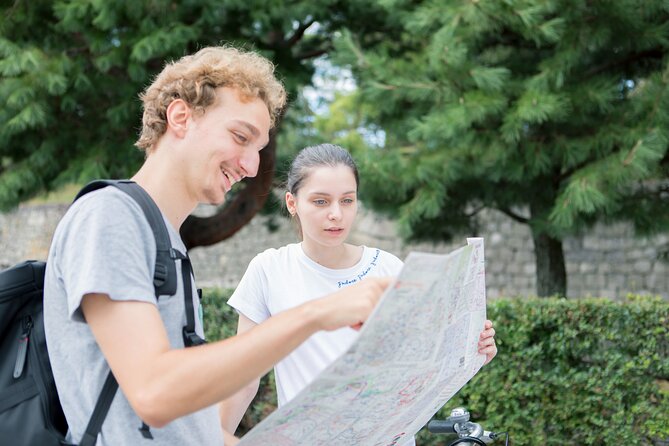
The ride continues to Gion, Kyoto’s best-known geisha district. Gion developed around geiko and maiko culture, and its refined old-style atmosphere remains one of the city’s defining sights.
The scheduled visit is another 15 minutes. That may sound brief, but it works well as part of a moving tour. You are not spending the whole morning in one district. Instead, you get a taste of Gion before cycling onward to parts of Kyoto that many first-time visitors miss.
A guide can explain the difference between the district’s cultural traditions and the popular image many people bring with them. That conversation is useful because Gion rewards quiet observation more than hurried photography.
The early start is a real advantage. A 9 a.m. departure gives you a chance to see these lanes before the day has fully gathered pace. The tour does not promise private access to performers or guaranteed sightings, so treat Gion as a place to appreciate streets, buildings, and atmosphere.
Tatsumi Bridge and the willow-lined stream
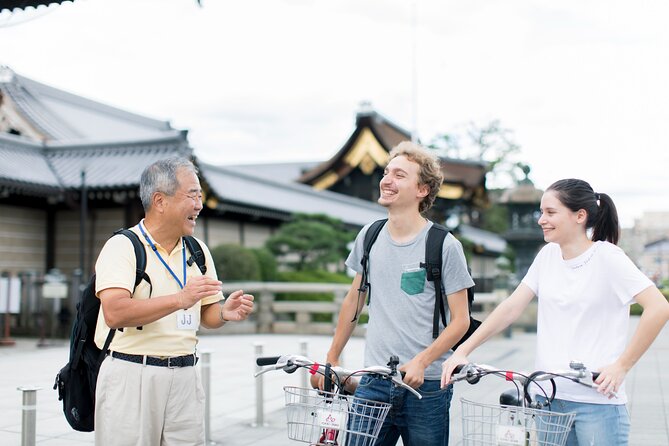
Tatsumi Bridge offers a change of mood. Here, the route follows a narrow stream, with willows moving in the breeze and a more restful feel than the city streets.
The stop lasts about 15 minutes. It is a small pause, but it breaks up the ride and gives you a chance to enjoy Kyoto at a slower speed. I like this part of the route because it is less about checking off a major monument and more about noticing the details that give the city its character.
The bridge and waterway also make a useful transition between Gion and the broader central Kyoto route. You are still close to historic neighborhoods, but the pace feels lighter. If you enjoy taking photographs, this is likely to be one of the more pleasant short stops.
Do not expect an extended riverside walk. The experience is built around cycling, and the schedule has several places to cover. If you want to linger at every stop, you may find the morning too tightly timed.
Kyoto Imperial Palace and its open garden
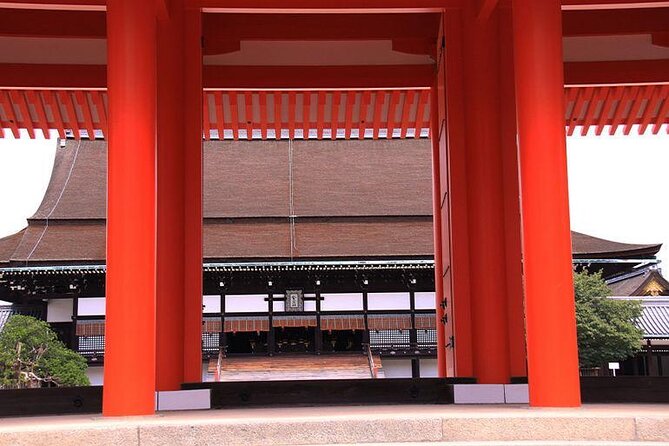
The largest scheduled stop is Kyoto Imperial Palace, with about 20 minutes to cycle along its gravel paths. The palace was once the residence of Japan’s Imperial Family. Today, the surrounding area is open to the public as a national garden with seasonal flowers.
This gives the tour a different scale. After the narrow wooden lanes of Miyagawacho and Gion, the palace grounds provide broad paths and open space. The contrast helps you understand Kyoto as more than a collection of old entertainment districts.
The tour cycles along the gravel paths rather than presenting a long interior visit. That distinction matters. You are seeing the palace area from a bicycle, not booking a detailed palace tour or extended garden visit.
I would treat this as a visual and historical stop, with the guide supplying the background. The 20-minute timing is enough to cross part of the grounds and hear an explanation, but not enough for a thorough examination of every garden feature.

A quiet break beside the Kamo River
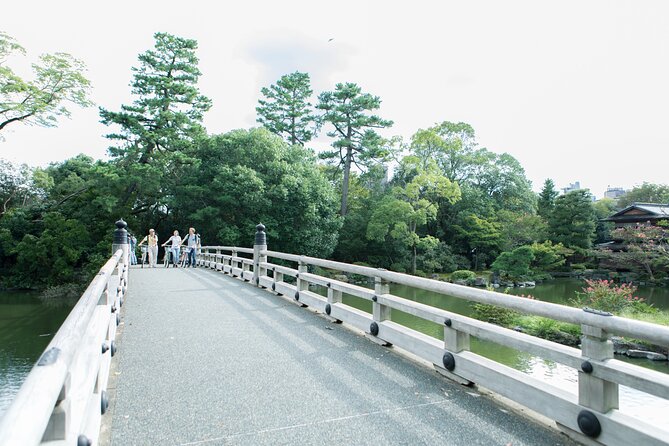
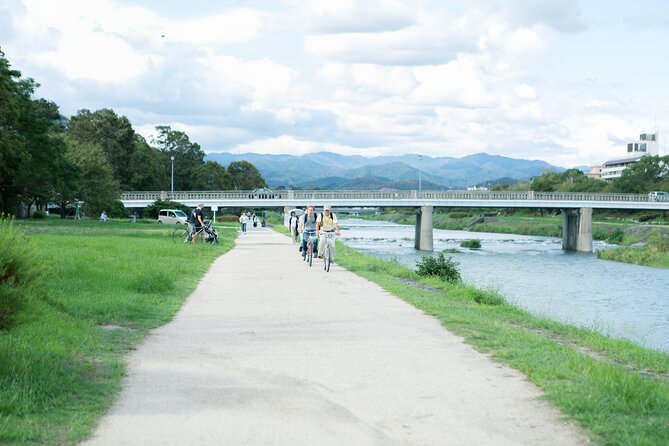
The final listed stop is Kashiwayacho, where you can relax beside the Kamo River. The scheduled break is about 20 minutes, and admission is included.
This is a welcome ending to the sightseeing loop. The river is a place local residents enjoy, and the stop gives you room to sit, cool down, and let the morning settle. It also prevents the tour from becoming a continuous chain of landmarks with no breathing space.
A coffee break may be possible if you request one. One past group used its break to chat with the guide, and that kind of flexibility is one of the strongest reasons to choose a private outing instead of a fixed group ride.
The Kamo River stop also shows the tour’s balance. You see major cultural districts and the Imperial Palace, but you also spend time in an ordinary public space. That mix feels more useful than visiting only headline attractions.
The guide makes the difference
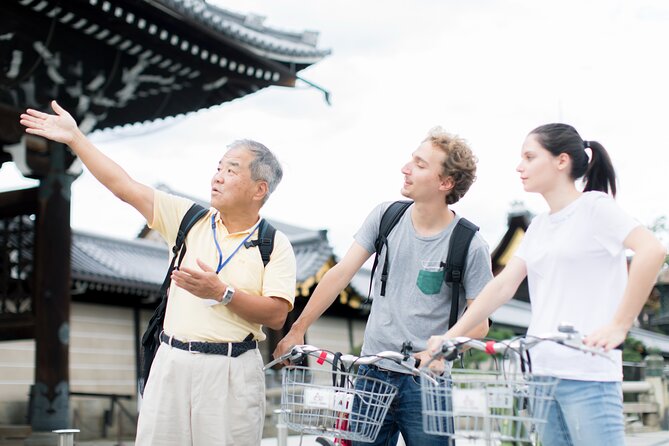
The guide is central to this experience. Guides including Rich, Yuichi, and Annie have been singled out for clear explanations, patience, local tips, and willingness to follow requests such as riding along the river or spending time near the Imperial Gardens.
You can ask about Kyoto’s history, culture, and religions throughout the morning. The private format makes those questions easier because you are not trying to interrupt a large group or wait until the end.
Language ability may vary by guide. English communication was praised in several accounts, but one rainy-day outing found the guide’s English less suited to extended discussion. If detailed historical conversation is especially important to you, it is sensible to raise that preference when booking.
The guide also controls the pace. You can ask for a slower ride, extra time at a stop, or a break, but the route covers several areas in three hours. The more time you spend talking or stopping, the less time remains for cycling the full route.
Is $103.04 a fair price?
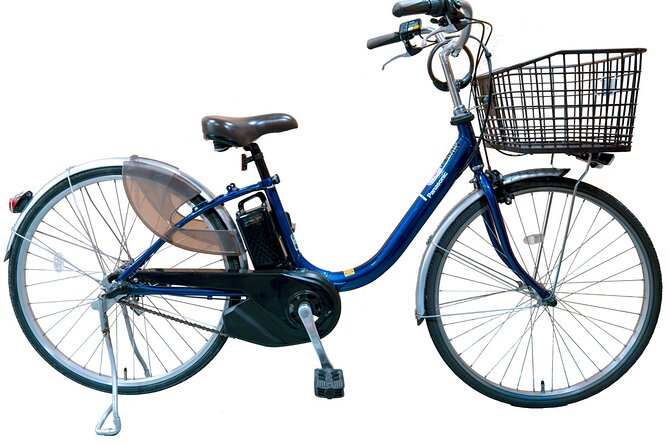
At $103.04 per person, this is not the cheapest way to move around Kyoto. It becomes better value when you consider what is included: an e-bike, equipment rental, a private guide, and roughly three hours of routing between several distant parts of the city.
For a pair or small family, the price buys convenience as much as sightseeing. You do not need to plan a route through unfamiliar lanes, work out how to connect the palace area with Gion, or manage a large group’s pace.
The value is strongest on a first or second day in Kyoto. You get a quick sense of how the districts fit together and can gather suggestions for the rest of your stay. It also suits a hot day, when battery assistance can make a large difference.
The value is weaker if you prefer long museum visits, detailed palace exploration, or slow photography. The tour is a city overview on wheels, not a deep visit to any one site.
Rain plans and practical limits
The tour operates in rain, which gives you two choices. You can continue by bike with a free rain poncho, or switch to a walking tour using public transport, with bus or metro costs included in the tour fee.
That policy is useful, but it does not make heavy rain enjoyable for everyone. If the weather is pouring, the walking and transit option changes the character of the outing. You will still have a guided route, but you lose much of the freedom and ease that make the e-bike appealing.
Check the cancellation terms carefully before paying. The supplied booking information gives two different statements: one says to request cancellation at least three days before the tour date by 6 p.m. Japan time for a refund, while another says the experience is non-refundable and cannot be changed. Confirm the current rule directly with KCTP before booking.
Confirmation is sent within 48 hours, subject to availability. The activity returns to the starting point, so you can plan the rest of your day from there.
Who should book this Kyoto bike tour?
I would choose this for first-time Kyoto visitors who want orientation without spending half a day on foot. It is also a good match for couples, families with older children, and small groups who enjoy asking questions and changing the pace as they go.
It works particularly well for people who can ride comfortably but do not want a strenuous cycling day. The e-bike assistance helps, and the route includes several rests. You should still be ready to ride on roads and handle a bicycle independently.
I would be more cautious if you dislike cycling, need guaranteed dry weather, or want long visits at the Imperial Palace and Gion. The tour’s strength is range and local explanation, not extended time at one attraction.
The 98 percent recommendation rate and 4.9 rating from 61 ratings point to a very strong overall experience, but the small amount of criticism is useful. Heavy rain and uneven English communication can affect the day, and three hours may leave you wishing for more.
Final verdict: book it for breadth and flexibility
This is a practical way to see several sides of Kyoto in one morning. You move from traditional wooden houses to geisha districts, a willow-lined bridge, palace grounds, and the Kamo River, with a guide who can explain what you are seeing and adjust the plan to your group.
I would book it early in a Kyoto stay, especially if you want help getting your bearings. Choose it for the private format, e-bike comfort, and range of neighborhoods. Skip it if your ideal morning means lingering at one garden, avoiding roads, or taking your chances with rain.
FAQ
How long does the e-bike tour last?
The tour lasts approximately three hours.
What time does the tour begin?
The tour starts at 9 a.m.
Where does the tour meet?
Meet at 552-13 Higashiaburanokōjichō, Shimogyo Ward, Kyoto, 600-8235, Japan.
Where does the tour finish?
The activity ends back at the meeting point.
How many people can join one guide?
A guide can accept a minimum of two and a maximum of six people. Groups of seven to twelve can arrange an additional guide.
Is this a private tour?
Yes. Only your group participates in the activity.
Are e-bike equipment rentals included?
Yes. The tour includes e-bike equipment rental.
What happens if it rains?
You can continue cycling with a free rain poncho, or switch to a walking tour using public transportation. Bus or metro costs are included in the tour fee.
Can children join the tour?
Children must be at least 10 years old, at least 145 centimeters tall, and able to ride a bicycle safely on the road without assistance.
Can I cancel or change my booking?
The supplied booking information has conflicting cancellation terms. One section says to contact the operator at least three days before the tour date by 6 p.m. Japan time for a refund, while another says the experience is non-refundable and cannot be changed. Confirm the applicable terms with KCTP before booking.
More Morning in Kyoto
More tours in Kyoto we've reviewed



Morning, compared.
 ★ 5.0Kyoto Early Morning Tour with English-Speaking GuideFrom $68
★ 4.9Kyoto: Early Morning Tour with English-Speaking GuideFrom $1015h 30m
★ 5.0Kyoto Early Morning Tour with English-Speaking GuideFrom $68
★ 4.9Kyoto: Early Morning Tour with English-Speaking GuideFrom $1015h 30m
 ★ 5.0Nara Early Morning Tour (Kyoto or Osaka Departure Available)From $61
 ★ 4.6From Kyoto: Nara Guided Morning TourFrom $774 hours
 ★ 4.6Kyoto: Gion Night or Morning Walking Tour with Local SnacksFrom $46
 ★ 4.0Kyoto Morning Tour from Kyoto or OsakaFrom $87