
Reviewed · FULL-DAY
Full-Day Kyoto Walking Tour: Most Iconic Landmarks & Monkeys
Kyoto’s biggest sights are spread across the city, but this eight-hour walking tour links three major areas in one long day: Fushimi Inari, Arashiyama, and Kinkakuji. You ride trains, trams, and a bus rather than sitting in a private coach, so you see more of how Kyoto works while keeping transport costs down.
I like the mix of spiritual sites and outdoor stops. The scarlet torii gates at Fushimi Inari and the gold-covered Kinkakuji are Kyoto essentials, while Iwatayama Monkey Park gives the day a playful change of pace. The main drawback is the physical demand: expect plenty of walking, a steep climb to the monkeys, and warm conditions that can make the day tiring.
In This Review
- Key points to know before booking
- Starting at Fushimi Inari’s red torii gates
- Using Kyoto’s trains to reach Arashiyama
- Walking through Arashiyama Bamboo Grove
- Tenryuji Temple and its garden
- Lunch and free time in Arashiyama
- Climbing to Iwatayama Monkey Park
- Reaching Kinkakuji by local tram and bus
- Seeing the Golden Pavilion in the afternoon
- What the $96 price really covers
- The guide can shape the whole day
- How demanding is the full eight hours?
- Who should book this Kyoto day?
- Should you book it?
- FAQ
- Where does the tour begin?
- Where does the tour finish?
- How long does the tour last?
- Is this a private tour?
- Is transportation included?
- Is lunch included?
- Are temple and park admission fees included?
- How difficult is the Monkey Park walk?
- What languages are available?
- What should I bring?
Key points to know before booking
- Three major Kyoto districts in one day: Fushimi Inari, Arashiyama, and Kinkakuji give you a broad first look at the city.
- A real public-transit tour: Trains, the Randen tram, and a bus are included in the route, but your fares are not included.
- The Monkey Park requires a climb: The uphill walk takes about 20 minutes for many people, though it can take longer.
- Tickets are included: Tenryuji Temple, Iwatayama Monkey Park, and Kinkakuji are covered in the tour price.
- Small shared groups: The group can include up to 10 people, and a private option is also available.
- Good guides matter here: Tom, Agustin, and Remi are named guides associated with departures, with strong praise for clear explanations, organization, language ability, and photography.
Starting at Fushimi Inari’s red torii gates
Meet your guide 10 minutes early in front of Kitsunezo, the fox statue across from JR Inari Station. This is a useful meeting point because the shrine is right there, but do not cut it close. The tour starts on time, and late arrivals cannot join or receive a refund.
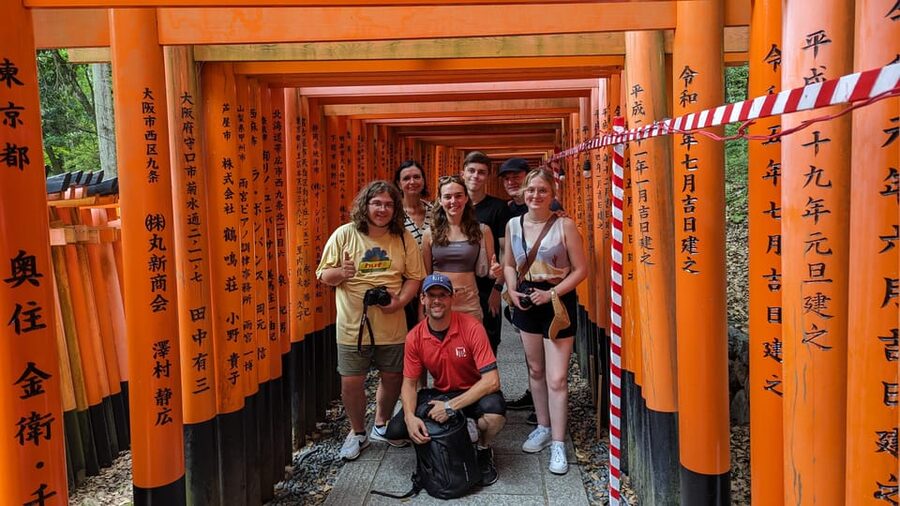
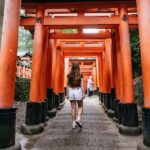
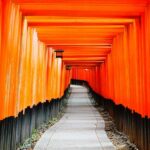
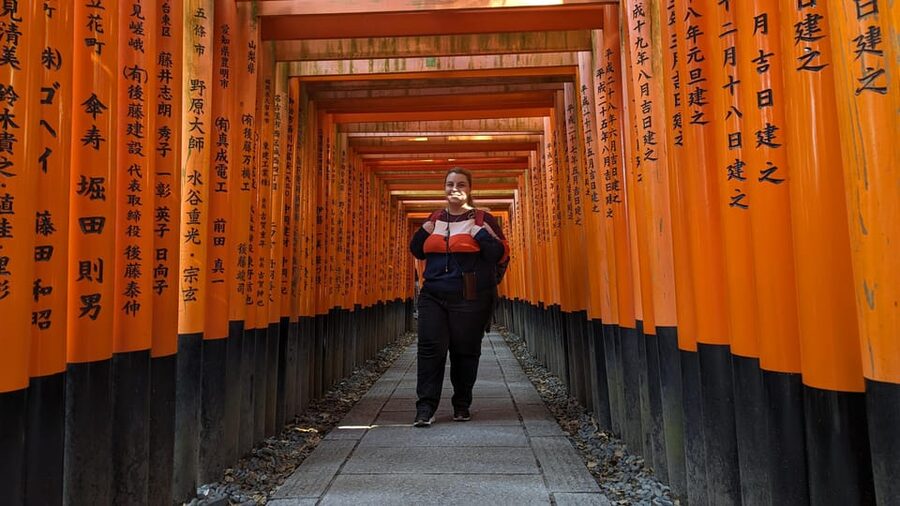
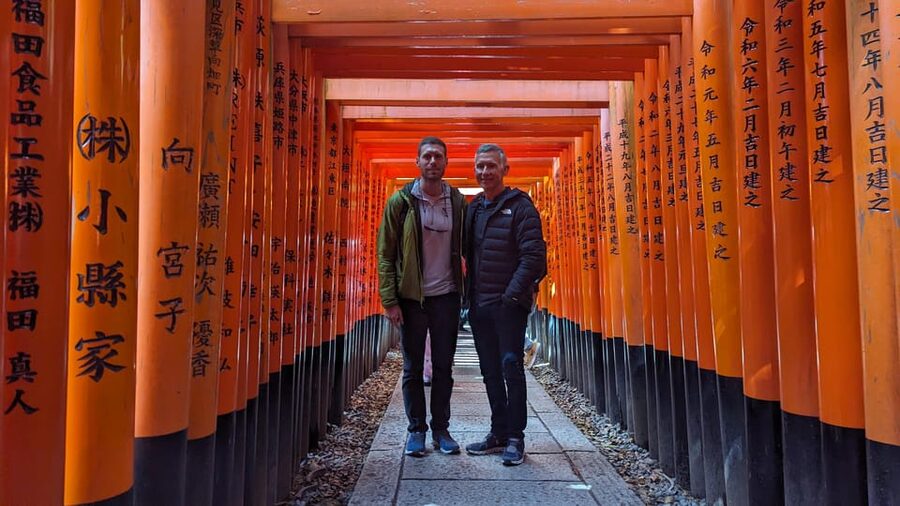
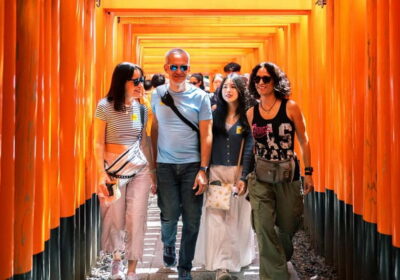
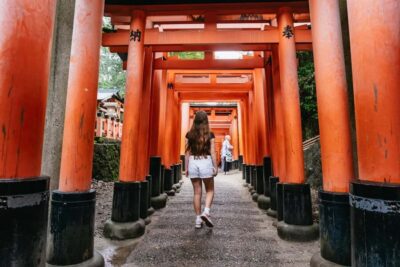
Fushimi Inari Taisha is an excellent first stop. Its famous path passes under thousands of vermilion torii gates, donated by individuals and businesses over many years. The gates form bright corridors up Mount Inari, with smaller shrines and stone fox figures along the way.
You receive about an hour here for a guided visit, photos, and walking. That is enough to see the most famous lower section and get a feel for the shrine, but it is not enough to walk all the way up the mountain. If you want a quiet hike through the full torii route, you need a separate visit.
The early part of the tour also helps with orientation. Your guide can explain the role of Inari in Japanese religion, the meaning of the fox statues, and how to behave at a shrine. This context turns a photo stop into something more memorable.
Other walking tours we've reviewed in Kyoto
Using Kyoto’s trains to reach Arashiyama
After Fushimi Inari, you take the JR Nara Line to Kyoto Station and transfer to the JR Sagano Line for Saga-Arashiyama Station. The train portion takes about 30 minutes, followed by a short break and roughly 10 minutes on foot.
This part is practical rather than scenic, but it is a real advantage for a busy day. Kyoto’s famous places sit in different parts of town, and public transit is often more useful than a vehicle caught in traffic. You will need a Suica or Icoca card, or another way to pay the fares, since transportation is not included.
A guide is especially useful during these transfers. You do not have to work out every connection while watching the clock, though you should still expect some station walking and standing. This is not a coach tour with a bus waiting at every stop.
Walking through Arashiyama Bamboo Grove
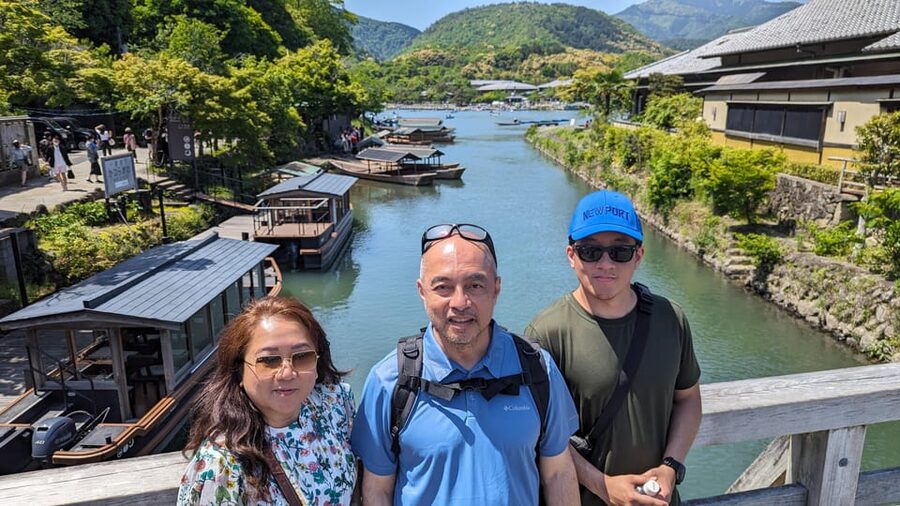
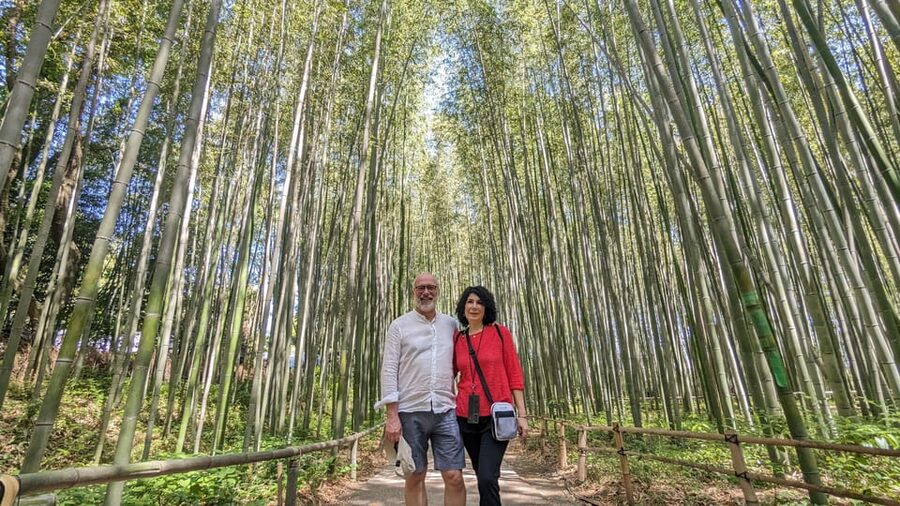
The Bamboo Grove is one of Kyoto’s most recognizable scenes. Tall bamboo rises on both sides of the path, and the sound and filtered light can make the area feel far removed from the city.
The scheduled visit lasts about 45 minutes. You have time for photos, a leisurely walk, and a closer look at the plants, but the path is not a private forest. The grove is a popular stop, so the peaceful feeling can vary by time of day and crowd levels.
I like that the tour does not treat the grove as the entire Arashiyama experience. You also visit nearby Nonomiya Shrine, a small Shinto site linked with the area’s old religious traditions. The stop lasts about 15 minutes and gives you a smaller, more intimate shrine setting after the tall bamboo.
Your guide can also help you move beyond the standard photo. Look at the way the bamboo trunks rise in tight groups, listen for the wind, and notice how quickly the path changes once you leave the most photographed section. Comfortable shoes make a real difference here and throughout the day.
Tenryuji Temple and its garden
Tenryuji is next to the Bamboo Grove and is one of Kyoto’s major Zen temples. Its garden is the main reason to visit. Water, rocks, trees, and borrowed views of the surrounding hills are arranged with the calm precision associated with Japanese garden design.
The visit takes about 30 minutes, and your entrance ticket is included. That saves both money and time at the gate. Still, half an hour is a brisk visit for a temple complex with several buildings and garden details, so you should listen closely when your guide points out the most important features.
Tenryuji provides a useful contrast with Fushimi Inari. Fushimi feels like a long, colorful route through a sacred mountain setting. Tenryuji is more measured, with open garden views and carefully framed spaces. Seeing both in the same morning gives you a better sense of Kyoto’s range.
The schedule also means you should not expect a long silent garden visit. If you are especially interested in Zen architecture or garden design, you may want to return to Tenryuji on another day. For a first visit, the guided overview works well.
Lunch and free time in Arashiyama
You have about 40 minutes for lunch and free time in the main Arashiyama area. Lunch is not included, and you pay for your own food and drinks. You can use the time independently or follow your guide to a proper restaurant with tables, hot or cold dishes, and a full meal. Vegetarian and children’s options are available there.
Forty minutes is enough for a focused meal, but it is not a leisurely restaurant break. If you want to shop, browse every food stall, or stop for several snacks, you will need to use the later free hour in Arashiyama carefully.
This is one place where your choices affect the pace of the day. A quick meal keeps the schedule moving and leaves more time for the Monkey Park. A larger lunch may be welcome after the morning’s walking, but you should be ready for the uphill climb afterward.
A few more Kyoto tours and experiences worth a look

Climbing to Iwatayama Monkey Park
The Monkey Park adds an unusual element to a temple-heavy Kyoto day. From Arashiyama, you walk uphill for about 20 minutes to reach the park, which is home to wild Japanese macaques. At the top, you can see the animals and look across Kyoto from the hill.
The climb is short but steep. It is not recommended if you have a leg or knee injury, and your own pace may make the ascent longer than 20 minutes. This is the most important fitness warning in the entire tour. Wear supportive shoes, carry water, and do not assume that a full day of city walking will feel easy.
At the summit, you can feed the monkeys in the designated area. Follow the guide’s instructions and keep a respectful distance. These are wild animals, not performers, which makes the encounter more interesting but also means you should pay attention to proper behavior.
The view is a strong reward for the climb. You look out over Kyoto from above rather than seeing the city only from temple grounds and streets. The park visit lasts about an hour, including the walk, time with the macaques, and the view.
Afterward, you have about an hour of free time in Arashiyama. This is a helpful buffer in a demanding schedule. You can rest, get a drink, browse the main street, or revisit a favorite spot before the final transfer. It also means the tour does not force you straight from the hill into the next connection.
Reaching Kinkakuji by local tram and bus
From Arashiyama, the route uses the Randen Arashiyama tram to reach the area nearest the Golden Pavilion. There is a short break for coffee, followed by about 20 minutes of walking before the final temple visit.
The Randen is a local tram line, not a sightseeing ride, but it adds another view of everyday Kyoto. The transfer takes time, and this is where the day may begin to feel long. You have already walked through two major areas and climbed a hill, so use the break to sit down and drink something.
The schedule is built around public transport, which helps keep the tour price lower than a private vehicle experience. The tradeoff is less control over the route and more walking between stations and sights. If you prefer a relaxed day with minimal movement, this is not the right format.
Seeing the Golden Pavilion in the afternoon
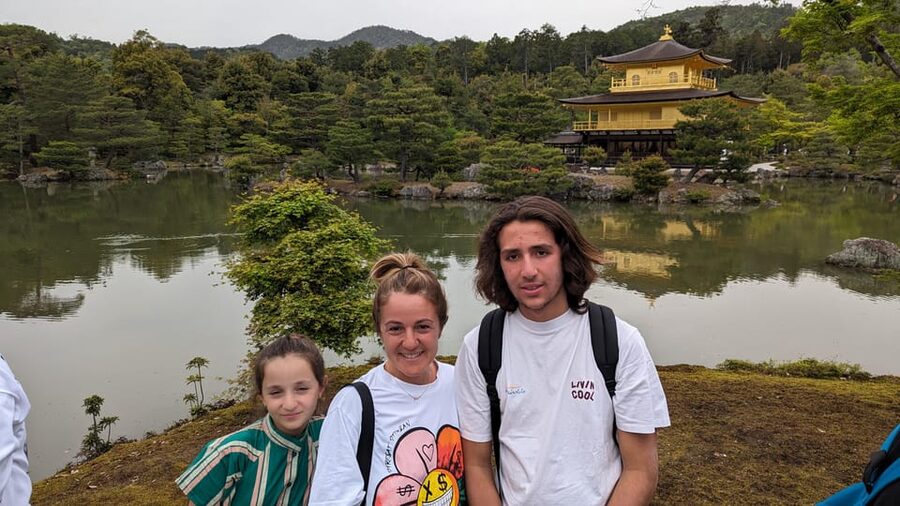
Kinkakuji, formally known as Rokuonji, is one of Kyoto’s best-known sights. The top two floors are covered in gold leaf, and the pavilion reflects in the pond beside it. The surrounding garden changes the view as you follow the marked route around the grounds.
You have about 45 minutes here for photos, sightseeing, and a little shopping. The entrance ticket is included, which is useful at a major attraction like this. The visit is mainly an exterior experience. The appeal comes from the building’s position over the pond, its gold surface, and the garden setting rather than from entering the pavilion itself.
The afternoon light can be attractive on the gold, though the exact effect depends on the weather. Do not expect a quiet, private viewing. Kinkakuji is one of Kyoto’s busiest icons, and the route is designed to keep people moving.
I appreciate ending here because the pavilion gives the day a clear visual finish. Fushimi Inari is defined by repeated red gates, Arashiyama by bamboo and garden spaces, and Kinkakuji by one highly polished structure. The three stops are different enough that the day does not feel like a procession of similar temples.
After Kinkakuji, you return to Kyoto Station by bus in about 35 minutes. The tour ends at the station, a convenient point for continuing to dinner or catching another train.
What the $96 price really covers
At $96 per person, this tour is priced as a full-day guided overview rather than a simple transport pass. The price includes an English or Japanese guide, entry to Tenryuji, Iwatayama Monkey Park, and Kinkakuji, plus downloadable souvenir photos from a private online drive.
Your train, tram, and bus fares are extra. Lunch, drinks, shopping, and souvenirs are also on your own budget. A Suica or Icoca card is recommended, so load it before the day if you already have one.
The value depends on how much planning you want to avoid. You could visit these places independently, but you would need to map several train and bus connections, manage entrance fees, follow a tight schedule, and find your own historical background. The tour earns its price through coordination and explanation, not luxury transport.
The downloadable photos may also matter to you. One named guide, Agustin, is specifically noted for taking strong photos in crowded places, while the tour description promises souvenir pictures from a private drive. Photography quality can vary by guide, but this is a useful extra for anyone who wants more than quick phone snapshots.
The guide can shape the whole day
This route works best when the guide keeps the group moving without rushing the important parts. Tom is noted for organization, clear explanations, history, customs, and Japanese language details. His ability to speak several languages is useful on a long day with a mixed group.
Agustin is associated with thoughtful historical context, Japanese customs and language, a good sense of humor, and creative photos. Remi is described as an interesting and cultured guide. The available guide languages include English, French, Spanish, and German, but you should contact the provider to confirm the language for your departure.
Because the shared group can reach 10 people, the experience is more personal than a large bus excursion but not private. Ask questions as you go, especially at Fushimi Inari and Tenryuji, where a short explanation can add much to what you see.
A private group option is available if you want more control over the pace. It may suit families, photographers, or anyone who wants extra time at one stop, though the stated $96 rate is for the advertised experience and private pricing should be confirmed separately.
How demanding is the full eight hours?
The day includes about 10 minutes of walking from the station to the Bamboo Grove, 45 minutes in the grove, 15 minutes at Nonomiya Shrine, 30 minutes at Tenryuji, the climb to Monkey Park, more walking in Arashiyama, and the final walk to Kinkakuji. Add station transfers and time on your feet at each site.
A family with children aged 11 and 15 completed the day successfully, but the pace was still described as tiring in hot weather. That is a fair warning. You should be comfortable walking for most of a day and climbing a steep hill without treating the tour as a gentle stroll.
Bring comfortable shoes, comfortable clothing, a passport, and cash. The passport requirement is listed in the tour information, and cash is useful for food, drinks, and small purchases. The schedule is approximately eight hours and can finish around 30 minutes earlier or later.
The best seasons for comfort are not specified, so plan for changing conditions. On a warm day, take every chance to drink water and use the Arashiyama free hour as a real rest rather than another race to shop.
Who should book this Kyoto day?
I would choose this tour for a first Kyoto visit when you want to see the city’s headline sights in a single day. It is also a good fit if you value a guide who can explain history and customs, or if public transit in a new city feels like work you would rather not handle yourself.
Families with older children can enjoy the variety: shrine gates, bamboo, a Zen temple, monkeys, and a gold pavilion. The route also suits people who want memorable photos and a broad introduction before returning to favorite areas independently.
I would hesitate if you have knee or leg problems, dislike steep climbs, or want long, quiet visits at each temple. The schedule is efficient, but efficiency means you will not have unlimited time at any stop. It is also a poor match if you expect a private vehicle or a mostly seated sightseeing day.
Should you book it?
Book this tour if your priority is maximum Kyoto coverage in one active day. The combination of Fushimi Inari, Arashiyama, the Monkey Park, and Kinkakuji is strong, and included admission fees plus a capable guide make the $96 price reasonable for many first-time visitors.
Skip it if you prefer a slow temple day or cannot manage the Monkey Park climb. Arrive early, carry a transit card, budget separately for lunch and fares, and treat the eight-hour estimate as flexible. If you do that, this is a practical way to see several of Kyoto’s most famous sights without spending your whole day planning connections.
FAQ
Where does the tour begin?
Meet in front of Kitsunezo, a fox statue across the street from JR Inari Train Station.
Where does the tour finish?
The tour finishes at Kyoto Station.
How long does the tour last?
The planned duration is about eight hours, but the actual finish can be around 30 minutes earlier or later.
Is this a private tour?
The standard option is a shared group tour of up to 10 people. A private group option is also available.
Is transportation included?
No. You use public trains, the Randen tram, and a bus, but transportation fares are not included. A Suica or Icoca card is recommended.
Is lunch included?
No. Lunch is not included. You have free time in Arashiyama and can choose your own meal, with a guided restaurant option available.
Are temple and park admission fees included?
Yes. Entry to Tenryuji Temple, Iwatayama Monkey Park, and Kinkakuji is included.
How difficult is the Monkey Park walk?
The uphill walk takes about 20 minutes for many people, but it can take longer depending on your physical condition. It is not recommended for people with leg or knee injuries.
What languages are available?
English, French, Spanish, and German guides are available. You should contact the provider to confirm the language for your chosen departure.
What should I bring?
Bring your passport, comfortable shoes, comfortable clothes, and cash. You should also be prepared for a long day of walking and public transportation.
More Full-Day in Kyoto
More Walking Tours in Kyoto
More tours in Kyoto we've reviewed

Full-Day, compared.
 ★ 4.5Kyoto: Full-Day English Guided Tour of Kyoto’s HighlightsFrom $88
 ★ 4.6Kyoto: Full-Day Guided Bus Tour to Top Highlights & TicketsFrom $50
 ★ 5.05 Top Highlights of Kyoto Full Day Bike Tour (E-bike option)From $172
 ★ 5.0Full Day Biking Tour Exploring the Best of KyotoFrom $119
 ★ 5.0Kyoto Private Car Tour – Full Day with Local Guide & Nara OptionFrom $170
 ★ 5.0Full Day Guided Tour to Kyoto and Nara from Osaka by VanFrom $96