
Reviewed · GION & GEISHA WALKS
Gion Nocturno: Secretos y Leyendas de las Geishas
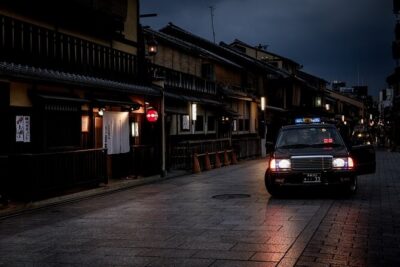
Gion changes after sunset. The tour takes you away from the daytime crowds and into quiet lanes, old wooden buildings, and the traditional world linked to Kyoto’s geisha culture. Starting at the Minamiza Theater, you walk through the district toward Yasaka Shrine, ending near Gion Corner.
I like the small group size, capped at 15 people, because it makes it easier to hear the guide and ask questions. I also like the route itself: it combines famous Gion sights with useful cultural context, rather than stopping at one photo spot and calling it a night.
The main point to consider is that this is a walking and storytelling experience, not a geisha performance or an admission-based cultural show. Gion Corner is visited from outside, and its admission is not included.
In This Review
- Key points to know before booking
- Why Gion is better after dark
- Minamiza Theater, the right place to begin
- Tatsumi Bridge and Gion Shinbashi
- Hanamikoji Street and the old machiya houses
- Gion Corner and the end of the walk
- Yasaka Shrine, a fitting final stop
- What you get for $21.80
- How the guides shape the experience
- Group size, pace, and practical planning
- Who should book Gion Nocturno
- Should you book it?
- FAQ
- How long does the Gion Nocturno tour last?
- What is the maximum group size?
- Where does the tour begin?
- Where does the tour end?
- Is admission to Gion Corner included?
- What sights are included in the walking route?
- Can I cancel for a full refund?
Key points to know before booking
- Nighttime Gion: See the district after the busiest daytime hours, when its traditional streets feel calmer.
- Five central stops: The route links Minamiza Theater, Tatsumi Bridge, Hanamikoji Street, Gion Corner, and Yasaka Shrine.
- Maximum 15 people: A smaller group should make the explanations easier to follow.
- Guides with different strengths: Sergio has been praised for teaching about geisha life and history, while Michael has been described as polite and engaging.
- Good value at $21.80: The price covers a guided 2 to 3-hour walk, but not admission to Gion Corner.
- Simple cancellation terms: Cancel at least 24 hours before the start for a full refund.
Why Gion is better after dark
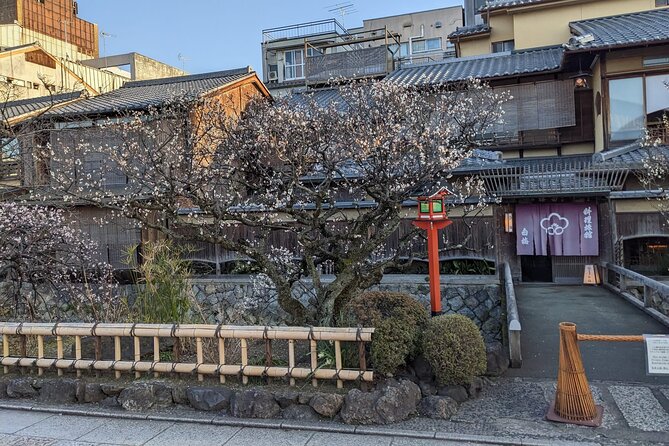
Gion is one of Kyoto’s most photographed districts, which can be both a blessing and a problem. During the day, crowds and cameras can make the old streets feel more like a sightseeing set than a living neighborhood.
This evening walk is designed around a different pace. You move through the district as the light fades, when the wooden machiya houses and narrow lanes take on a quieter mood. I like that timing because the tour’s subject is not just architecture. It is the connection between place, performance, tradition, and the people who have worked in Gion for generations.
You should keep expectations realistic. The title refers to secrets and legends of geishas, but the tour does not promise a private meeting, a performance, or guaranteed sightings. Instead, the value comes from seeing the streets in context and learning how the district’s theaters, restaurants, shrines, and tea houses fit together.
The walk lasts about two to three hours. That is long enough to cover the main sights without turning into an all-day commitment, though you should be comfortable walking for most of the experience.
A few more Kyoto tours and experiences worth a look
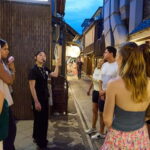

Minamiza Theater, the right place to begin
The meeting point is the Minamiza Theater, at the eastern end of Shijo Bridge in Kyoto’s Higashiyama Ward. This is a practical starting point because it places you right at the edge of Gion and near public transportation.
Minamiza is one of Japan’s best-known Kabuki theaters. Kabuki is famous for elaborate costumes, dramatic makeup, stylized movement, and stories filled with strong emotion. Even if you do not attend a performance, the theater gives the tour an immediate link to Kyoto’s performing arts.
The scheduled stop is about 10 minutes, with no admission ticket included. That tells you what to expect: this is an exterior introduction, not a theater visit. Your guide can use the building and its location to explain why Gion developed around entertainment and traditional performance.
I find this a smart opening stop. It gives you a cultural frame before you enter the smaller streets. Instead of hearing about geisha culture in isolation, you begin with the wider performance world that helped shape Kyoto’s famous entertainment districts.
Tatsumi Bridge and Gion Shinbashi
From Minamiza, the route continues to Tatsumi Bridge in the Gion Shinbashi area. This is one of the most atmospheric parts of the walk, with stone-paved lanes, traditional houses, and a strong sense of old Kyoto.
The stop lasts around 10 minutes and is free to visit. The bridge and surrounding streets are especially suited to an evening tour because the setting is quieter and the architecture is easier to appreciate without the full daytime crush.
This is also where the tour’s subject becomes more personal. The guide can explain the role of tea houses, entertainers, and geisha within Gion’s traditional social world. You will hear about the career and life of geishas, including the training and customs that separate this profession from the simplified image often presented in popular culture.
A careful guide matters here. One past guide named Sergio was praised for giving an instructive account of geisha life and for having strong historical knowledge. Another guide, Michael, was described as polite and engaging. Since guides can differ in approach, your experience may lean more toward storytelling, cultural explanation, or practical sightseeing advice.
One useful caution: some explanations on a walking tour may be simplified, and historical details can vary in accuracy. I would enjoy the stories while remembering that a short evening tour cannot cover every debate or nuance surrounding geisha culture.
Hanamikoji Street and the old machiya houses
Hanamikoji Street is one of Gion’s signature routes. Its traditional wooden machiya buildings, tea houses, and restaurants create the classic Kyoto scene that many people hope to see.
The stop is scheduled for about 10 minutes and does not require an admission ticket. You will have time to look at the street and hear why this area matters, but do not expect a long independent exploration built into the schedule. The route has several stops, so the guide needs to keep the group moving.
Hanamikoji is a place where respectful behavior matters. The area is connected to working businesses and private spaces, not just tourism. A good explanation of the district helps you understand that geisha culture is not a stage show arranged for every passerby.
This stop is likely to be one of the most photogenic. Still, I would treat photographs as secondary. The old facades are attractive, but the more useful part of the visit is learning to read the street: which buildings are traditional, how the entertainment district is arranged, and why Gion has retained such a distinct character.
The small group limit helps here. With no more than 15 people, the guide should be able to gather everyone without blocking the narrow street for long. You should still expect some crowding in popular areas, particularly if other evening groups are nearby.
Gion Corner and the end of the walk
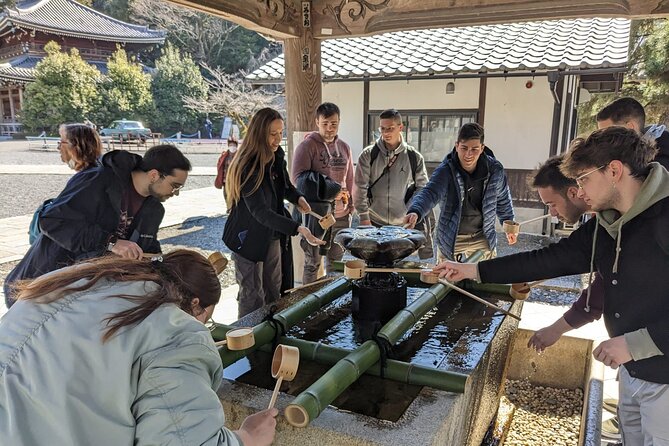
The tour continues to Gion Corner, a cultural center that presents several Japanese traditional arts in one place. It is located in the heart of Gion and is intended to give visitors a compact introduction to the country’s performance traditions.
The tour includes a stop of roughly 10 minutes, but the admission ticket is not included. The experience ends outside, in front of Gion Corner. This is an important detail when comparing the price with a show ticket or a dedicated cultural performance.
If you want to enter Gion Corner, you will need to arrange and pay for that separately. The walking tour itself does not include a performance. That can be an advantage if you want a flexible evening, but it may disappoint you if you expected the guide to take you inside for a staged geisha presentation.
Ending here makes practical sense. You finish in central Gion, with the option to continue exploring or make your own way elsewhere. The meeting point and endpoint are close to major sights and public transportation, so the tour fits fairly easily into a larger Kyoto day.

Yasaka Shrine, a fitting final stop
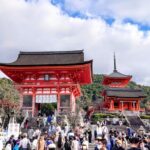
Yasaka Shrine is also known as Yasaka Jinja or Gion Shrine. It is more than 1,000 years old and sits directly within the Gion area. The stop takes about 10 minutes and is free to visit.
The shrine gives the walk a useful change of subject. Much of the tour focuses on entertainment, performance, and tea-house culture. Yasaka Shrine shifts the focus toward Shinto practice and the religious setting that has long been part of daily life in Kyoto.
An evening visit can make the shrine feel especially atmospheric. You might find the grounds calmer than during the day, though the experience will naturally vary with the time and season. The tour does not promise a ceremony or special access, so think of this as a guided orientation to an important site rather than a formal religious event.
I like the contrast between Yasaka Shrine and the earlier streets. It prevents the tour from becoming a narrow look at geisha culture and gives you a broader sense of Gion as a historic Kyoto district.
What you get for $21.80
At $21.80 per person, this is a reasonably priced guided walk. You are paying for a two to three-hour route through some of Kyoto’s most famous streets, plus an explanation of the district’s culture and history.
The value is strongest if you want help interpreting what you see. Gion’s buildings are easy to photograph but not always easy to understand. A guide can explain the difference between a theater, a tea house district, a shrine, and a street that is still connected to traditional work.
The price is less compelling if you only want photographs. You can walk through several of these areas independently, and no paid attraction is included. Gion Corner admission costs extra, and the theater and shrines are viewed without an admission charge.
Still, the small-group format improves the calculation. A group of up to 15 is more manageable than a large procession, and the tour covers a good amount of ground at a modest price. It also saves you from spending your evening trying to piece together the district’s background from signs and guidebooks.
The activity is booked, on average, about 38 days ahead. That does not mean every date sells out, but it suggests you should reserve before arriving in Kyoto, especially if your schedule is fixed.
How the guides shape the experience
The guide is the most important variable on a tour like this. The sights are public, but the explanations give them meaning.
Sergio has been singled out for his teaching about the career and life of geishas. If your guide takes a similar approach, you can expect more than a simple walk from one landmark to the next. You may learn how the profession developed, what life within that world involves, and why outsiders often misunderstand it.
Michael has been described as polite and engaging, with a style suited to visitors who want a friendly introduction to Kyoto. Other feedback has raised concerns about occasional historical inaccuracies from a guide. That is worth keeping in mind, especially if you already know Japanese history or want an academic-level account.
I would book this for cultural orientation, not as a specialist lecture. The tour appears best suited to people who want clear explanations, atmospheric streets, and a first look at Gion’s traditional culture.
Group size, pace, and practical planning
The maximum group size is 15 people. That is not a private tour, but it is small enough to keep the guide within speaking distance in most places. It also makes it easier to ask a question without holding up a large crowd.
The activity lasts approximately two to three hours and takes place on foot. Wear comfortable shoes and allow enough time for a steady walk through streets and shrine grounds. The supplied details do not specify the exact walking distance, so you should not assume that the route is a short stroll.
The meeting point is the Minamiza Theater, at Shijohashi Higashizume in Higashiyama Ward. The walk ends at Gion Corner, 570-2 Gionmachi Minamigawa. Both points are near public transportation, which makes the tour easy to add to a Kyoto sightseeing day.
A mobile ticket is provided, and booking confirmation arrives at the time of reservation. Most people can participate. If the minimum number of participants is not reached, the activity may be canceled, with a different date, another experience, or a full refund offered.
You can cancel for a full refund up to 24 hours before the start time. Changes or cancellations inside that 24-hour window are not accepted, and the local time in Kyoto determines the cutoff.
Who should book Gion Nocturno
I would choose this walk if you are visiting Kyoto for the first time and want an introduction to Gion that goes beyond daytime photographs. It is also a good fit if you are curious about geisha culture but prefer a guide to explain the setting rather than a staged show.
Couples and solo visitors may appreciate the evening mood and small group. Families can participate because most people are eligible, but younger children may find two to three hours of walking and listening tiring.
You should be comfortable with a basic walking tour format. There is no included meal, performance, or inside visit to a tea house. The experience is about streets, landmarks, explanations, and atmosphere.
Should you book it?
Book it if you want a low-cost, small-group introduction to Gion after dark, especially if cultural context matters as much as sightseeing. The route covers the district’s key landmarks, and the guides can add useful insight into geisha life, Kabuki, traditional architecture, and Shinto practice.
Skip it if you want guaranteed contact with geishas, a ticketed show, or a private experience. You will see Gion’s setting, not receive special access to its working entertainment world.
For $21.80, I think the tour offers solid value for a first visit. Just arrive expecting a respectful evening walk and a guide-led explanation, not a staged secret world revealed on demand.
FAQ
How long does the Gion Nocturno tour last?
The tour lasts approximately 2 to 3 hours.
What is the maximum group size?
The tour has a maximum of 15 participants.
Where does the tour begin?
The meeting point is the Minamiza Theater, at Shijohashi Higashizume, Nakanocho, Higashiyama Ward, Kyoto.
Where does the tour end?
The tour ends outside Gion Corner at 570-2 Gionmachi Minamigawa, Higashiyama Ward, Kyoto.
Is admission to Gion Corner included?
No. Admission to Gion Corner is not included in the tour price.
What sights are included in the walking route?
The route includes Minamiza Theater, Tatsumi Bridge, Hanamikoji Street, Gion Corner, and Yasaka Shrine.
Can I cancel for a full refund?
Yes. You can cancel at least 24 hours before the experience starts for a full refund. Cancellations or changes made less than 24 hours before the start time are not accepted.
More Gion & Geisha Walks in Kyoto


More tours in Kyoto we've reviewed





Gion & Geisha Walks, compared.
 ★ 4.7Kyoto Geisha Walking Tour: Gion District & Hidden GemsFrom $252 hours
 ★ 4.7Kyoto: Gion Geisha District Walking Tour – Stories of GeishaFrom $202 hours
 ★ 4.9Best of Kyoto: Gion, Geisha, Pagodas & CobblestonesFrom $242 hours
 ★ 4.5Night Walk in Gion: Kyoto’s Geisha DistrictFrom $211h 40m
 ★ 5.0Kyoto Night Foodie Tour in Gion (9+ dishes + 6 Sake tastings)From $163
 ★ 5.0Kyoto Gion Geisha District Walking Tour – The Stories of GeishaFrom $25