
Reviewed · 1-DAY TOURS
Kyoto 1 Day Tour from Kyoto
Kyoto can take weeks to understand, but this full-day coach tour gives you a strong first look in less than ten hours. You move from shogun-era castle to gold-covered temple, imperial residence, torii-lined shrine, and hillside temple without wrestling with several train and bus connections. I especially like the comfortable transport and the way admission fees are bundled in, two small details that make a packed day easier.
I also like the range of sites, from Nijo Castle’s creaking nightingale floors to the 1,001 Kannon statues at Sanjusangendo. The tradeoff is clear: six major stops means quick visits and plenty of walking, not long, quiet periods for contemplation. Guides such as KC, Miyuki, and Yoshitaka Harada have earned especially warm praise for clear explanations and good care of the group, though guide quality and speaking volume can vary.
In This Review
- Key points at a glance
- Why this Kyoto day tour works
- Nijo Castle opens the day with shogun drama
- Kinkaku-ji delivers the famous golden view
- The Imperial Palace shows a quieter side of Kyoto
- Fushimi Inari brings the day into motion
- Sanjusangendo is the tour’s quiet surprise
- Kiyomizu-dera closes with a city view
- What the guides add to a fast schedule
- Lunch choices and the Kyoto Station fallback
- Price, group size, and practical value
- Who should book this Kyoto itinerary
- Should you book this one-day Kyoto tour?
- FAQ
- What time does the Kyoto tour start and finish?
- Where is the meeting point?
- Are transportation and entrance fees included?
- Is lunch included?
- What happens if Kyoto Imperial Palace is closed?
- How much walking is involved?
Key points at a glance
- Six major Kyoto sights in one route: See Nijo Castle, Kinkaku-ji, Kyoto Imperial Palace, Fushimi Inari, Sanjusangendo, and Kiyomizu-dera in a single day.
- An air-conditioned coach saves time: Transportation and admission fees are included, useful when the sites are spread across Kyoto.
- The schedule moves quickly: Expect about 30 to 70 minutes at each stop, with walking between parking areas and entrances.
- The strongest guide experiences matter: KC, Miyuki, Yuki, Michi, and Yoshitaka Harada are among the named guides praised for humor, care, and clear explanations.
- Lunch is optional: Choose Western-style lunch, Indian thali lunch, or no lunch, but dietary requests must be made in advance and cannot cover halal or gluten-free meals.
- The meeting point takes planning: The JTB Sunrise Tours Desk is in the basement of the Avanti building near Kyoto Station, and the tour ends at Kyoto Station around 5:30 p.m.
Why this Kyoto day tour works
This is a classic sightseeing circuit, but that is exactly its strength. Kyoto’s headline sights sit in different parts of the city, and reaching all six independently in one day would require careful timing, several transfers, and a willingness to keep checking maps. The coach removes much of that work.
You start at 8:20 a.m. and return to Kyoto Station at about 5:30 p.m., making the day roughly 9 hours and 40 minutes. The tour has a maximum of 40 people, so this is not an intimate walk with a private guide. It is a practical group outing designed to cover ground.
I would choose it if you have only a day or two in Kyoto, or if you want an organized introduction before exploring the city on your own. If you already know Kyoto well and prefer lingering in one temple garden for an hour, the pace may feel too brisk.
The coach is heated and air-conditioned, which matters in Kyoto’s hot summers and cold, wet seasons. A comfortable ride also gives your feet a short break between sites. The bus does not remove all walking, though. At Fushimi Inari, you walk about 15 minutes each way from the parking area, and every temple involves standing, steps, or uneven outdoor paths.
A few more Kyoto tours and experiences worth a look

Nijo Castle opens the day with shogun drama
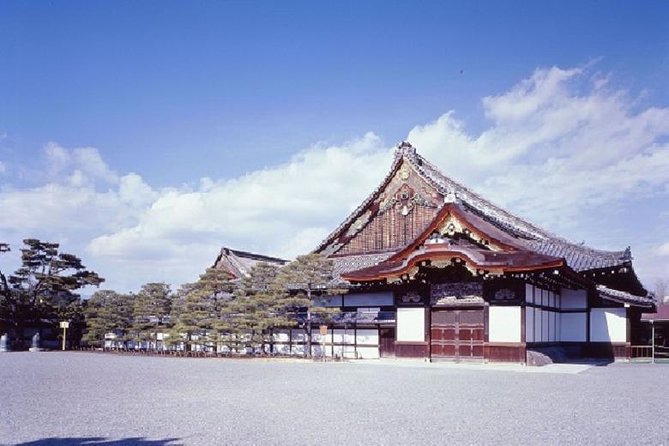
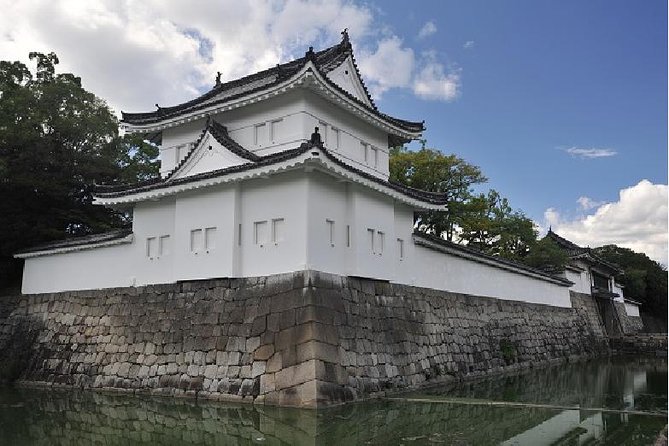
Nijo Castle is an excellent first stop because it feels different from Kyoto’s religious sites. Completed in 1626, it was built to house the Tokugawa shogun and protect the nearby Imperial Palace. From the outside, the complex can look restrained. Inside, it becomes lavish.
Your 50 minutes here include the castle’s decorated rooms, elaborate carvings, gold leaf, and strong colors. The famous nightingale floors are designed to chirp underfoot, an old security feature intended to alert occupants to unwanted movement. The visit works best when you listen to the guide’s explanation, since the architecture and room functions can otherwise seem like a series of beautiful but unfamiliar spaces.
This is one of the stops where a good guide adds real value. The castle is full of political clues, from who could enter which room to how decoration conveyed rank. You will not have time to inspect every detail, but you will see the main interior and leave with a sense of how power operated in early modern Japan.
Nijo Castle is closed on Tuesdays in January, July, August, and December, with the closure moving to the following day if Tuesday is a holiday. In that case, the tour visits Ryoan-ji Temple instead, and no refund is provided for the substitution.
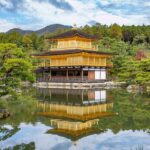
Kinkaku-ji delivers the famous golden view
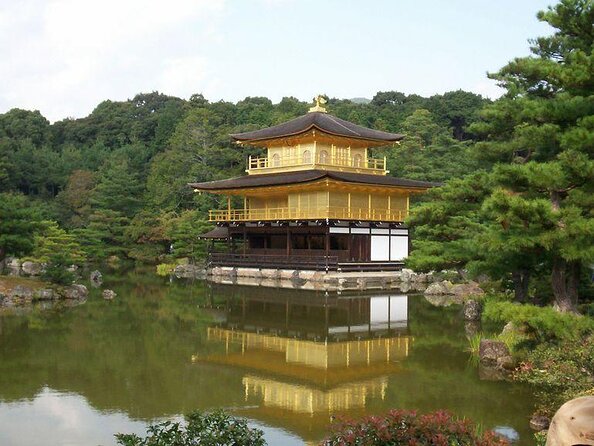
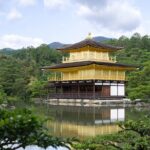
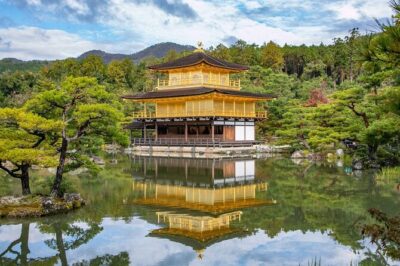
Kinkaku-ji, also called the Golden Pavilion, is the image many people carry in their heads before arriving in Kyoto. The wooden structure is coated in thin layers of pure gold and sits beside a pond in a carefully arranged Japanese garden.
The allotted 45 minutes is enough to walk through the garden and take in the pavilion from its principal viewing areas. It is not enough for a slow garden study, especially when the grounds are crowded. Still, the stop is efficient: you see the building, understand its place among Kyoto’s temples, and move on before the day loses momentum.
The gold can look almost theatrical, but the setting keeps it from becoming gaudy. Water, trees, stone, and the pavilion work together as one composition. I suggest taking a moment to look beyond the obvious photograph and notice how the building is framed by the pond and garden.
This is also a stop where the group must stay together. Listen for the meeting instructions and keep track of the time. A few minutes lost here can affect the later visits, and the schedule has little spare room.
The Imperial Palace shows a quieter side of Kyoto
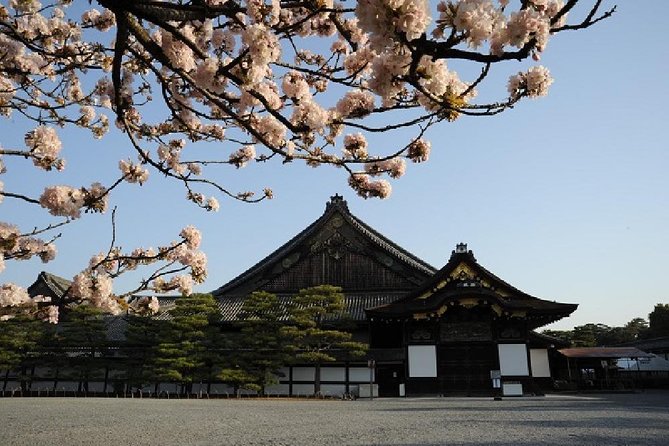
Kyoto Imperial Palace was the Emperor’s residence until about 150 years ago. Compared with Kinkaku-ji’s bright surface, the palace offers a more restrained version of Japanese design, with broad grounds, formal rooms, and a sense of ceremony.
You have about 40 minutes here. The guide explains the palace’s role and the ancient rituals connected with it, helping you read the spaces rather than simply walk through them. The short visit gives you a useful contrast: Nijo Castle represents shogunal authority, while the Imperial Palace points to the older imperial institution.
The palace is closed to visitors on Mondays, or on the following day when Monday is a holiday. It can also close for an Imperial Household Agency event. The replacement depends on the date. Kitano Tenmangu Shrine is used on most closure days, while Nishi Hongan-ji Temple is used if the closure falls on the 25th.
That flexibility keeps the tour running, but it means you should not assume the Palace is guaranteed. Since refunds are not issued when an alternative site is used, check the calendar if seeing the Palace is one of your main reasons for booking.
Fushimi Inari brings the day into motion
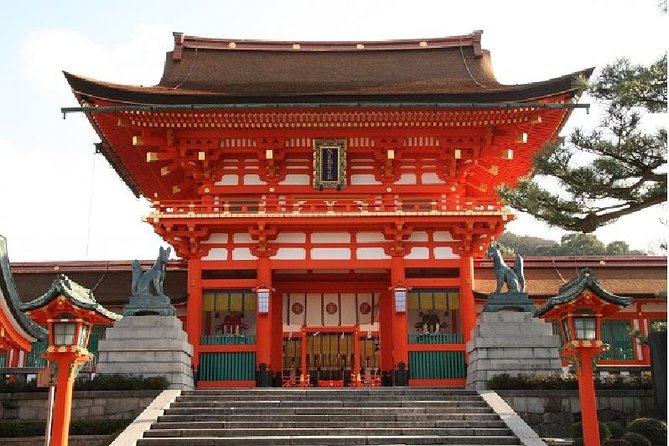
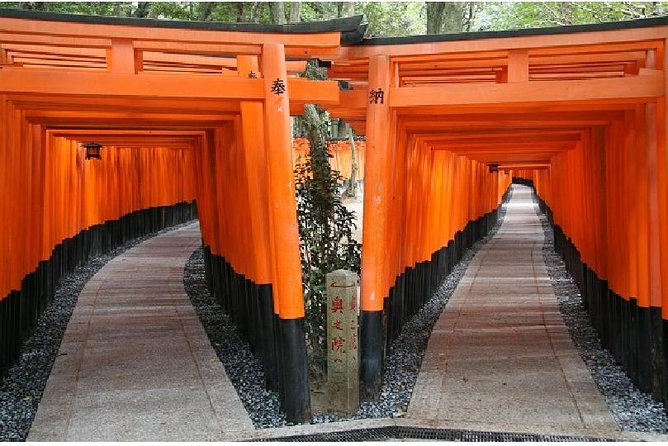
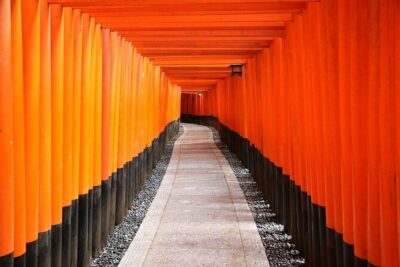
Fushimi Inari-taisha is the head shrine of roughly 40,000 Inari shrines across Japan. Its bright red Senbon Torii gates are the main attraction, forming a long passage that leads into the wooded hills.
The scheduled visit is 30 minutes, so you will see only a small section of the shrine approach rather than walk the entire mountain route. That is a limitation, but it is also realistic within a one-day circuit. The lower gates provide the signature view without requiring a long hike.
The practical detail matters here: the coach cannot pull up directly at the shrine. You walk about 15 minutes each way from the parking area. Wear shoes you can manage comfortably, and stay aware of the return time. This is one of the tour’s more active transfers, and the torii area can be crowded.
I like this stop because it breaks up the sequence of grand buildings. The repeated gates create a strong visual rhythm, while the shrine’s fox symbolism gives your guide a chance to explain a part of Japanese religious life that you might miss on a self-guided photo stop.

Sanjusangendo is the tour’s quiet surprise
Sanjusangendo Temple contains 1,001 life-size statues of Buddhist Kannon deities in a long wooden hall. The building itself is remarkable: it is described as the world’s longest wooden structure, and the scale of the interior changes the tone of the day.
You spend about 30 minutes here. That may sound short for so many statues, but the hall has an immediate impact. Rows of figures stretch through the space, and the repetition is more powerful than any single statue viewed alone. This is a place where silence and order do much of the work.
The stop also gives you a break from outdoor exposure. After the open grounds of the Imperial Palace and the walking at Fushimi Inari, the enclosed hall feels calm. Photography rules and temple etiquette apply, so follow the guide’s instructions and do not rush through the interior.
Sanjusangendo is easy to overlook when planning Kyoto independently, which makes its inclusion useful. It may not be the first place you think of, but it often becomes one of the day’s most memorable visits.
Kiyomizu-dera closes with a city view
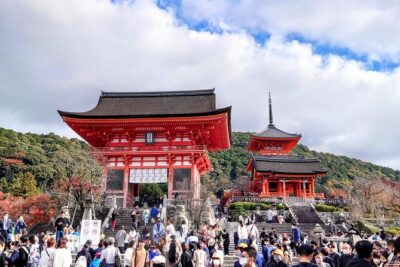
The final major stop is Kiyomizu-dera, one of Kyoto’s best-known World Heritage sites. You have about 1 hour and 10 minutes, the longest stop of the day, and you reach the temple along a lane lined with pottery shops.
The temple’s wooden terrace offers broad views across Kyoto. The height gives the final visit a sense of release after a day spent in enclosed halls, gardens, and crowded shrine paths. You also have time to look at the approach street, though the schedule still does not allow a relaxed shopping session.
The temple grounds include slopes and steps, so this is not an effortless finish. If you are tired, focus on the main terrace and the most important parts of the temple complex rather than trying to inspect every corner.
Kiyomizu-dera is a fitting final stop because it combines architecture, religion, shopping, and a view. You get a last strong image of Kyoto before returning to the coach and heading back to Kyoto Station.
What the guides add to a fast schedule
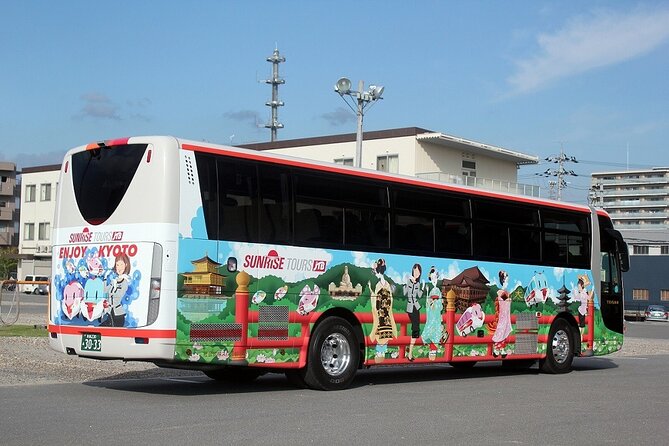
The guide can determine how much you take away from this tour. Strong guides turn the bus rides and short site visits into a connected lesson about Kyoto. KC is repeatedly singled out for humor, warmth, and excellent English, including his care during very hot weather. Miyuki is praised for steady commentary and for keeping the group together. Yuki, Michi, and Yoshitaka Harada are also named as guides who brought energy, practical help, and explanations of Japanese customs and daily life.
That said, do not book this expecting identical commentary every day. Some guide experiences are less effective, with problems involving pace, audibility, or limited explanations. One particularly useful complaint concerned a guide walking ahead of the group and speaking too softly for people at the back to hear.
You can improve your odds by staying near the guide during site explanations. If you have trouble hearing, move closer rather than relying on the bus microphone. The group may include people with different walking speeds, and the schedule depends on everyone returning to the coach on time.
Lunch choices and the Kyoto Station fallback
Lunch is not automatically included. You select a Western-style set menu, an Indian thali lunch, or the no-lunch option when booking.
The Western menu can accommodate a vegetarian request only if you provide it at reservation time. The Indian thali is vegetarian and includes three curries, vegetable pakora, yogurt, naan or roti, rice, salad, and one non-alcoholic drink. The two lunch groups eat in separate dining areas, and you cannot switch between them on the day.
Halal, gluten-free, and other meal requests are not available. If your diet is specific, the no-lunch option may be the safer choice. With no lunch, you have free time to eat independently in the Kyoto Station area, either before or after the main sightseeing portion as directed by the tour schedule.
The lunch option adds convenience, especially on a tightly timed day. The no-lunch choice gives you more control, but you must accept that your meal will not be part of the organized program. Kyoto Station has dining options, and the guide can direct you there, but the tour does not provide a special alternative meal beyond the stated choices.
Price, group size, and practical value
At $168.43 per person, this is not a bargain-basement outing, but the price covers the air-conditioned coach, an English-language national government licensed guide interpreter, transportation between widely separated sites, and admission fees. Add the cost of several entrance tickets and the time saved by avoiding transfers, and the fare becomes easier to justify.
The value is strongest when you have limited time. You could visit some of these places on your own, but reaching all six in one day would demand a disciplined route and very little hesitation. The tour also supplies context at sites where signs alone may not explain the political, religious, or architectural meaning.
The value is weaker if you dislike fixed schedules. Thirty minutes at Fushimi Inari and Sanjusangendo can feel short, while 45 minutes at Kinkaku-ji leaves little room for wandering. You are paying for breadth and efficiency, not solitude.
The maximum group size is 40, and seats may not be assigned. Solo visitors should know that the coach and lunch arrangements do not guarantee a social experience. You might sit alone on the bus or at the meal, so choose this tour for the sightseeing rather than for meeting companions.
The meeting point is the JTB Sunrise Tours Desk in the basement of the Avanti building at 31 Higashikujō Nishisannōchō, near Kyoto Station. Give yourself extra time to find it. The basement location has confused some people, and one person arrived an hour early and still needed time to get oriented. The tour ends at Kyoto Station around 5:30 p.m., which is useful if you are continuing by train, though delays from traffic or late returns can affect your plans.
Free cancellation is available up to 24 hours before the 8:20 a.m. start time. Confirmation arrives within 48 hours, subject to availability.
Who should book this Kyoto itinerary
I would recommend this tour to a first-time visitor with limited time, families who want transportation handled, and anyone who wants the major cultural sites explained in English. It also suits people staying near Kyoto Station, since both the start and finish are convenient for the rail hub.
It is a good fit if you appreciate a clear timetable and want to avoid figuring out Kyoto’s spread-out attractions alone. The coach is especially useful in poor weather, intense heat, or cold conditions.
I would hesitate if you have mobility concerns that make extended walking, steps, or uneven temple grounds difficult. Most people can participate, and service animals are allowed, but the itinerary remains active. Children up to age five may join free without a bus seat or lunch. If you need a seat or meal for a young child, book the child rate. Anyone under 18 needs written parental permission, and anyone under 15, or not yet in middle school, must be accompanied by a parent or guardian.
Should you book this one-day Kyoto tour?
Book it if your goal is to see Kyoto’s essential landmarks in one organized day. The route is broad, the transport saves effort, and the best guides add useful context that helps the temples and shrines make sense.
Skip it if you want slow photography, long temple visits, or a private pace. You will spend much of the day walking, boarding on time, and moving with a group. For a first visit, though, the combination of Nijo Castle, the Golden Pavilion, Fushimi Inari, Sanjusangendo, and Kiyomizu-dera offers a strong introduction at a fair all-in price.
FAQ
What time does the Kyoto tour start and finish?
The tour starts at 8:20 a.m. and ends at Kyoto Station around 5:30 p.m. The total duration is approximately 9 hours and 40 minutes.
Where is the meeting point?
The meeting point is the JTB Sunrise Tours Desk in the basement of the Avanti building at 31 Higashikujō Nishisannōchō in Kyoto’s Minami Ward. It is near Kyoto Station.
Are transportation and entrance fees included?
Yes. Transportation costs, admission fees listed for the included sites, and use of the heated and air-conditioned tour bus are included.
Is lunch included?
Lunch is included only if you select a lunch option when booking. You can choose a Western-style set menu, an Indian thali lunch, or no lunch.
What happens if Kyoto Imperial Palace is closed?
The tour visits Kitano Tenmangu Shrine when the Imperial Palace is closed on Mondays, the following day when Monday is a holiday, or during an Imperial Household Agency event. If the closure falls on the 25th, the tour visits Nishi Hongan-ji Temple instead.
How much walking is involved?
You walk between parking areas and the attractions, including about 15 minutes each way to Fushimi Inari Shrine. The temples and shrines may also involve steps and uneven paths, so comfortable walking shoes are important.
More 1-Day Tours in Kyoto
More tours in Kyoto we've reviewed




1-Day Tours, compared.
 ★ 5.0PERFECT KYOTO 1-Day Bus TourFrom $129
 ★ 4.8Kyoto: Fushimi Inari, Kinkakuji, Bamboo Grove 1 Day Bus TourFrom $122510 minutes - 9 hours
 ★ 5.010 Must-see Spots in Kyoto One Day Private Tour (up to 7 people)From $179
 ★ 4.5Kyoto and Nara Day Trip from KyotoFrom $194
 ★ 4.0From Tokyo 1-Day Kyoto English-guided Tour by Bullet TrainFrom $452
 ★ 5.0Kyoto Customized Private Tour: See Top Attractions in 1 DayFrom $132