
Reviewed · 1-DAY TOURS
Kyoto Customized Private Tour: See Top Attractions in 1 Day
Kyoto has too many major sights for one tidy sightseeing route. This private tour solves that problem by letting you choose two or three stops for a half-day or three or four for a full day. You might pair Kinkaku-ji with Nijo Castle, or spend your time around Fushimi Inari, Kiyomizu-dera, and Gion.
I like the one-to-one planning and the chance to ask a guide about Shinto, Buddhism, food, family life, or daily Japanese customs. I also like the practical help: guides such as Kiyoto, Toshi, Takuma, Yuka, and Saeko have helped with train routes, restaurant choices, photography spots, shopping, and even salon visits.
The tradeoff is cost and clarity. At $132.65 per person, this is not a cheap way to see Kyoto, and entrance tickets, local transportation, lunch, and the guide’s costs are extra. Confirm the pickup, transport plan, and included sights before you set off.
In This Review
- Key points to know before booking
- Why a private Kyoto route can be worth the price
- Planning two to four stops without rushing
- Kinkaku-ji, Kyoto’s bright Golden Pavilion
- Fushimi Inari and the red torii gates
- Kiyomizu-dera and the old Higashiyama streets
- Ryoan-ji and the discipline of a Zen garden
- Arashiyama’s bamboo and Tenryu-ji
- Nishiki Market, Kyoto’s food stop
- Nijo Castle and the Imperial Palace
- Ginkaku-ji, Nanzen-ji, and the Philosopher’s Path
- What the guides add to the day
- Transport, pickup, and the extra-cost question
- Is four hours enough for Kyoto?
- Who should book this private Kyoto tour?
- Should you book it?
- FAQ
- How long does the Kyoto customized private tour last?
- Is the tour private?
- Where does the tour start?
- Is hotel pickup available?
- Are admission tickets included?
- Are transportation costs included?
- Is lunch included?
- Which Kyoto sights can I request?
- What should I wear?
Key points to know before booking
- Choose your own route: Plan two or three stops on a half-day tour, or three or four on a full-day outing.
- Private attention: Only your group takes part, so the guide can adjust the pace and subject matter.
- Strong guide feedback: Kiyoto, Toshi, Takuma, Yuka, Naomi, Saeko, and others are praised for English, local knowledge, and friendly service.
- Kyoto icons are available: Kinkaku-ji, Fushimi Inari, Kiyomizu-dera, Nijo Castle, Arashiyama, Gion, and Nishiki Market are all possible choices.
- Extra costs matter: Tickets, transportation for you and the guide, and lunch are not included.
- Walking is part of the deal: Wear good shoes, and remember the tour runs in rain or shine.
Why a private Kyoto route can be worth the price
Kyoto is spread across several distinct areas. Kinkaku-ji and Ryoan-ji sit in the northwest, Fushimi Inari lies in the south, and Arashiyama is far to the west. Kiyomizu-dera, Gion, and the historic Higashiyama streets form another useful cluster.
On your own, you can see these places, but the day may become a puzzle of buses, trains, walking, and crowded streets. A private guide gives you a person to help make those choices. Mishima, for example, was praised for helping with train schedules and city navigation, while Yuka used several forms of transport to make good use of a short outing.
That value becomes clearer if you have only one day in Kyoto, are traveling with children, or want more than a quick photo stop. Your guide can explain what you are seeing instead of leaving you to read every sign. You can also change the plan if a temple holds your attention longer than expected.
At the same time, $132.65 per person adds up quickly for a couple or family. The price buys a private guide and planning flexibility, not an all-inclusive day. You still pay for admission, transport, and lunch for yourself and the guide.
For a group, discounts may improve the value. For a solo visitor, the price is harder to justify unless you care strongly about expert help, efficient routing, or personal interests that a standard group outing would not cover.
Other private tours in Kyoto
Planning two to four stops without rushing
The advertised duration is about four to eight hours. A half-day plan generally includes two or three places, while a full-day plan allows three or four. That limit is sensible. Kyoto’s famous sites are not quick hallway attractions, and moving across town can eat up time.
The smartest plan groups nearby sights. A Higashiyama day could include Kiyomizu-dera, Sannenzaka and Ninenzaka, Gion, and Pontocho. A northwest route could pair Kinkaku-ji with Ryoan-ji and perhaps Arashiyama, though travel time needs careful handling.
I would not try to squeeze every famous name into eight hours. The long list of possible stops is useful for planning, but it is not a promise that you will see them all. Decide what matters most before meeting your guide, then leave some breathing room.
The tour begins with a discussion of your interests and proposed schedule. This is your chance to say if you care about gardens, food, architecture, photography, religion, samurai history, shopping, or avoiding steep walking. Saeko received praise for adjusting a route around mobility concerns, but you should explain your needs clearly in advance.
Kinkaku-ji, Kyoto’s bright Golden Pavilion
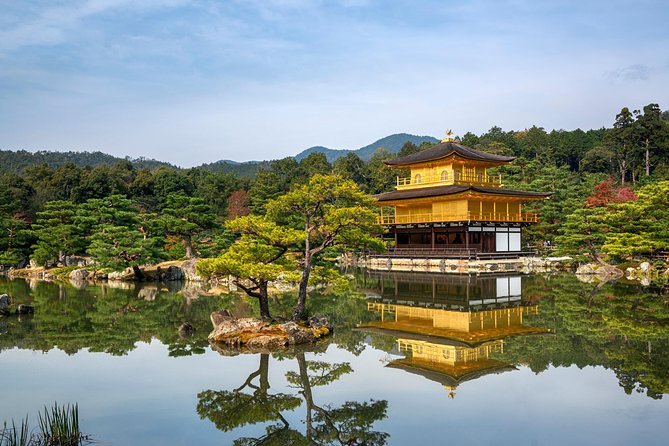
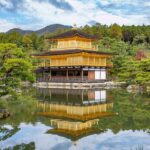
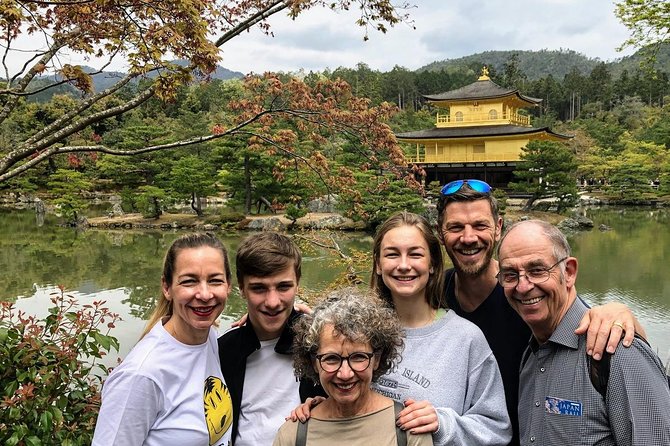
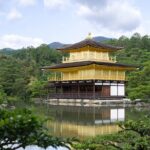
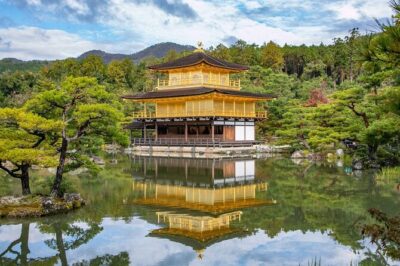
Kinkaku-ji, also called the Golden Pavilion, is one of Kyoto’s signature sights. Its gold-covered upper stories reflect in a pond surrounded by trees, creating the classic image found on countless postcards.
The listed visit time is about 30 minutes, not including admission. That is enough for the main viewing route and photographs, but not for a slow temple visit. Crowds can make the pond area feel tight, so an early start may be worth discussing with your guide.
This is a place where a guide adds useful context. The building’s appearance is striking, but a few basic facts will not carry you very far. One poor experience reported at this stop involved a guide offering only short, general explanations, leaving the visitor to read the signs alone. That warning is worth taking seriously: ask for historical and religious context, not just directions to the best photo.
Fushimi Inari and the red torii gates
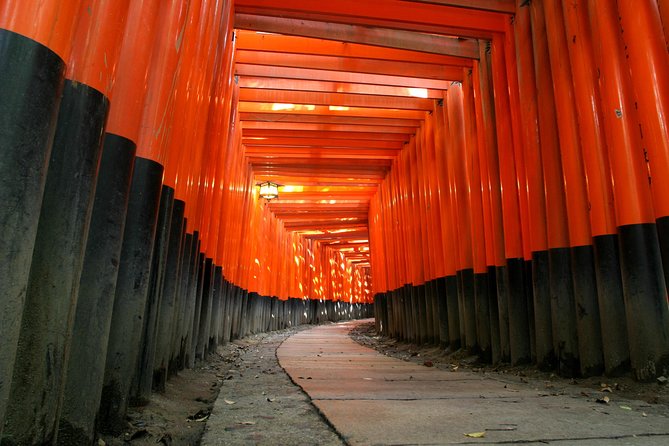
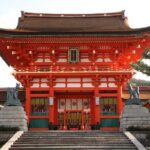
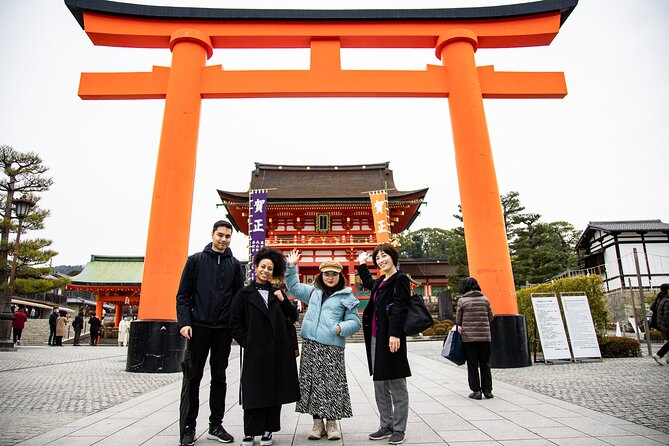
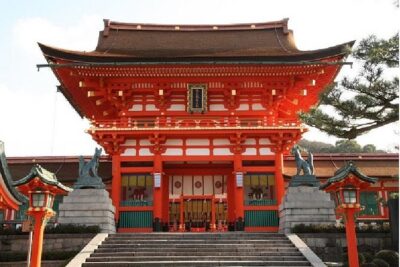
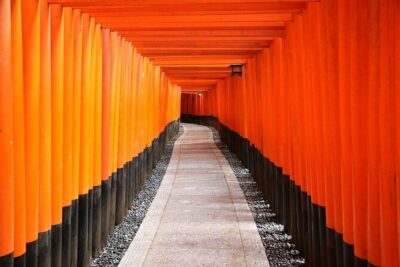
Fushimi Inari-taisha is famous for its long corridors of orange-red torii gates. The shrine is free to enter, and the suggested stop lasts about 45 minutes.
You do not need to walk the entire mountain route to enjoy it. A short visit gives you the main shrine buildings and the lower gate paths, while a longer walk takes you farther uphill and away from some of the thickest crowds. Tell your guide how much walking you want.
Fushimi Inari is a good choice for first-time visitors because it feels different from Kyoto’s large Buddhist temples. The repeated gates, fox imagery, and wooded paths create a strong sense of place. It is also an important stop to pace properly. If you combine it with Kiyomizu-dera and Arashiyama, your legs may complain before dinner.
Kiyomizu-dera and the old Higashiyama streets
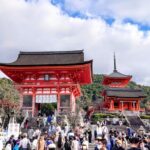
Kiyomizu-dera is an eighth-century Buddhist temple with wide views over Kyoto. The temple itself requires an admission fee, and the suggested visit is about 30 minutes.
The approach is part of the experience. Sannenzaka and Ninenzaka are steep, old streets lined with traditional wooden buildings, tea shops, food stalls, and souvenir stores. Their charm comes with crowds and uneven walking, so comfortable shoes are essential.
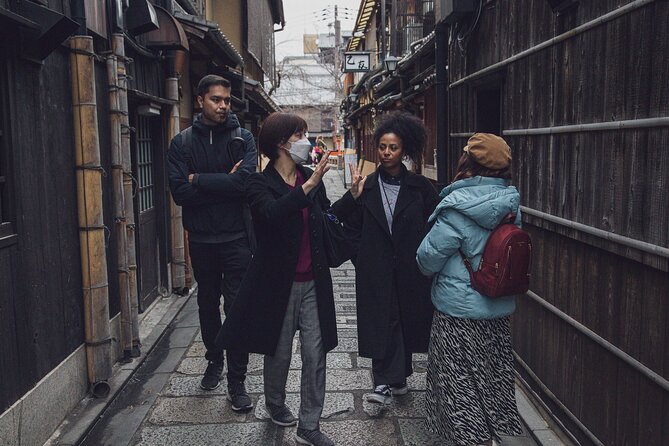
Gion is nearby and can be added to the same general area. Its wooden machiya houses, tea houses, and narrow streets are tied to Kyoto’s geisha culture. Your guide can explain the district without reducing it to a hunt for photographs. Be respectful around private buildings and people going about their work.
I would choose this cluster if you want classic Kyoto in a short time: temple architecture, traditional streets, local sweets, and the city’s old entertainment quarter. It is less suitable if you dislike crowds or steep paths.
A few more Kyoto tours and experiences worth a look

Ryoan-ji and the discipline of a Zen garden
Ryoan-ji is known for its dry rock garden, a simple arrangement of stones and gravel that rewards quiet attention. The suggested visit is 30 minutes, with admission extra.
This stop works best for people who like gardens, design, and places that do not explain themselves all at once. You can sit, look, and notice how the composition changes with your viewpoint. A guide can add background on Zen practice and the temple, but the garden should also have a few quiet minutes without a running lecture.
Ryoan-ji pairs naturally with Kinkaku-ji because both are in northwest Kyoto. I would choose it over another major stop if you want contrast: one site is bright and visually dramatic, the other restrained and contemplative.
Arashiyama’s bamboo and Tenryu-ji
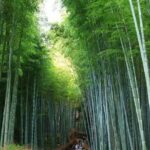
The Bamboo Forest Street is free to visit and is allotted about 45 minutes. Tall bamboo rises on both sides of the path, making this one of Kyoto’s most recognizable walks.
The grove is photogenic, but it is not always silent or empty. The path can feel crowded, and the bamboo section itself is shorter than many first-time visitors expect. Your guide can help place it within a larger Arashiyama visit rather than treating it as the entire district.
Tenryu-ji is another Arashiyama option. This major Zen temple is known for its gardens and requires an admission fee. One particularly good plan paired Tenryu-ji with the bamboo grove, with the guide recommending another temple afterward.
Choose Arashiyama if gardens and scenery matter more to you than collecting central Kyoto landmarks. Allow for travel time, and avoid building an overstuffed route that also reaches the far south and east of the city.
Nishiki Market, Kyoto’s food stop
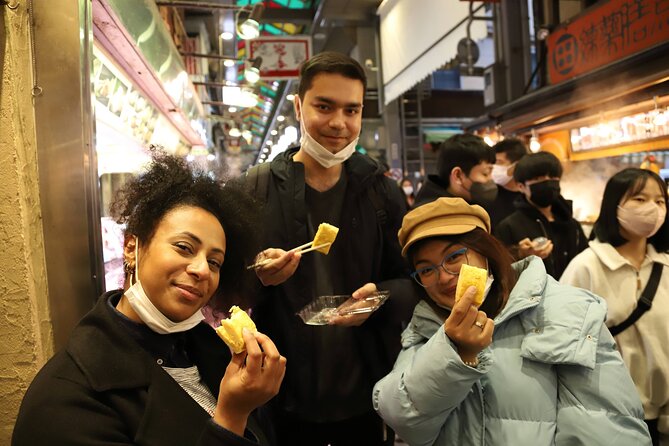
Nishiki Market is a free-to-enter shopping street often called Kyoto’s Kitchen. The suggested visit is about 45 minutes, enough to browse stalls selling prepared food, ingredients, pickles, sweets, and other local goods.
This is the natural choice for food lovers. You can ask your guide what to try, how particular foods are used, and where to pause for a snack. It also gives you a break from temples and helps you see Kyoto as a living city rather than an open-air museum.
Remember that market browsing is not the same as a sit-down lunch. Lunch is not included, and you pay for your own meal and the guide’s meal. Discuss the plan early so you are not hungry while racing between sites.
Nijo Castle and the Imperial Palace
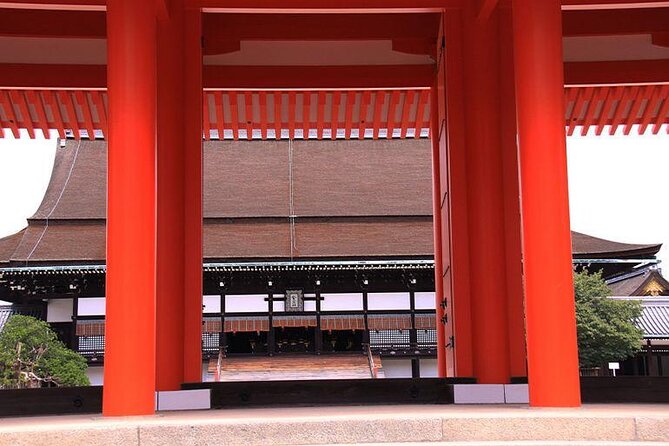
Nijo Castle offers a different view of Kyoto. Built in 1603 as the residence of Tokugawa Ieyasu, it is tied to samurai power and national history. Admission is extra, and the suggested visit is about 45 minutes.
Inside, look for decorated rooms, gold-leaf ceilings, and the famous nightingale floors, which make a chirping sound underfoot. This is a valuable stop if you want political history and architecture rather than only religious sites.
Kyoto Imperial Palace is free to visit and was home to Japan’s Imperial family for more than a thousand years. The grounds provide a broad sense of the city’s imperial past, though the listed itinerary gives only a very short suggested stop. Ask your guide how much time is realistic before choosing it.
Nijo Castle is the stronger pick if you have limited time and want a clearly defined historical visit. The Imperial Palace may suit you better if you prefer open grounds and the story of Kyoto as the nation’s former capital.
Ginkaku-ji, Nanzen-ji, and the Philosopher’s Path
Ginkaku-ji, the Silver Pavilion, is known for calm Zen gardens and understated beauty. Despite its name, it is not covered in silver. Nanzen-ji is another major Rinzai Zen temple, with impressive grounds and a large brick aqueduct that adds an unusual architectural touch.
The Philosopher’s Path follows a canal for roughly two kilometers near Ginkaku-ji. It is especially appealing if you want a peaceful walk rather than a quick checklist of buildings.
The itinerary information gives only very short suggested times for Ginkaku-ji and Nanzen-ji, so clarify the actual schedule. These stops need more than a few minutes if you want to appreciate the gardens and temple grounds. This eastern route can also connect with Kiyomizu-dera, but the day may become tiring.
What the guides add to the day
The strongest part of this experience is the guide, but the quality depends on the person assigned. Many guides have been praised for clear English, warmth, flexibility, and practical help.
Kiyoto received repeated praise for explaining history, finding good photo spots, avoiding lines, and adjusting the schedule. Takuma was valued for historical context and a relaxed way of answering questions. Toshi was described as organized, entertaining, and good at keeping the route away from the worst crowds.
Other useful examples include Naomi, who helped shape a temple and bamboo-forest visit; Mika, who made a crowded day manageable for a 10-year-old; and Osamu, who stayed beyond four hours to guide a group through the bamboo forest. These details show what a strong guide can do: turn a fixed sightseeing list into a day that fits your group.
Still, do not assume every guide will offer the same depth. One poor experience at Kinkaku-ji and Nijo Castle involved minimal explanation and an early finish. Ask questions, state your expectations, and make sure the end-of-tour plan is clear.
Transport, pickup, and the extra-cost question
Pickup is offered, and some groups have been collected and returned to their hotels. The formal meeting point is the Kyoto Tourist Information Center, Kyo-Navi, on the second floor of Kyoto Station Building. The stated end point is back at the meeting point.
Because both arrangements appear in the available details, confirm which one applies to your booking. Do not assume hotel pickup if your confirmation names Kyoto Station.
Transportation fees are not included. This includes the guide’s transport, according to the stated conditions. One unhappy experience involved a request for transit money during the tour and unclear directions at the end, while other groups appreciated guides who handled trains and city transfers well.
Set aside money for trains, buses, or taxis, and ask who pays for each ride before leaving. If a private car is arranged, clarify that separately. One four-hour outing used a private car, but that does not mean every booking includes one.
Is four hours enough for Kyoto?
Four hours is enough for a focused introduction. You could visit Kinkaku-ji and Ryoan-ji, or concentrate on Kiyomizu-dera, Gion, and the old Higashiyama streets.
It is not enough to see every major highlight without rushing. Fushimi Inari, Arashiyama, and Kinkaku-ji are in different parts of the city, and each requires transport plus walking. An eight-hour plan gives you more room, but even then, three or four well-chosen stops are a sensible limit.
I would choose the half-day option if you already have plans for food, shopping, or an evening walk. Choose the full day if Kyoto is your main stop and you want a guide to handle the day’s structure.
Who should book this private Kyoto tour?
This tour suits first-time visitors who want the major sights explained and organized around personal interests. It also works well for families, small groups, and anyone who wants to ask many questions without keeping pace with strangers.
It is a good fit for food lovers who want Nishiki Market, history fans interested in Nijo Castle, garden lovers drawn to Ryoan-ji and Ginkaku-ji, and visitors who want help managing transport. Guides have also helped with birthday requests, restaurant recommendations, dinner planning, shopping, and practical errands.
I would think twice if you want a low-cost group tour, a fully inclusive price, or a fixed professional lecture at every stop. The tour is flexible, and that is its strength, but it means you must take part in planning.
Free cancellation is available up to 24 hours before the start time. Changes or cancellations inside that window are not accepted for a refund. The tour operates in all weather, and moderate walking is involved.
Should you book it?
I would book this tour if you have limited time, want a private route, and will use the guide actively. Come prepared with your top three priorities, ask for cultural context, and confirm pickup and transport costs before the day begins.
The 4.9 rating from 342 ratings and 97 percent recommendation figure are strong, and the best guide experiences sound genuinely personal. But the mixed accounts show why expectations matter. You are paying for flexibility and human help, not just admission to temples.
For a family or group, the cost may be reasonable when divided among several people. For a solo visitor, compare it with public transport and self-guided sightseeing. If you want Kyoto to make sense rather than simply pass before your camera, this private format can earn its price.
FAQ
How long does the Kyoto customized private tour last?
The tour lasts approximately four to eight hours. A half-day plan usually includes two to three stops, while a full-day plan usually includes three to four stops.
Is the tour private?
Yes. Only your group participates in the activity.
Where does the tour start?
The stated meeting point is the Kyoto Tourist Information Center, Kyo-Navi, on the second floor of Kyoto Station Building.
Is hotel pickup available?
Pickup is offered, and hotel pickup and drop-off are described as included. Since the stated meeting point is also Kyoto Station, confirm the exact pickup arrangement for your booking.
Are admission tickets included?
No. Entrance fees for sites such as Kinkaku-ji, Ryoan-ji, Kiyomizu-dera, Nijo Castle, Tenryu-ji, Nanzen-ji, and Ginkaku-ji are not included.
Are transportation costs included?
No. Transportation fees for you and the guide are not included.
Is lunch included?
No. Lunch for you and the guide is not included.
Which Kyoto sights can I request?
Possible stops include Kinkaku-ji, Fushimi Inari, Ryoan-ji, the Arashiyama Bamboo Forest, Gion, Kiyomizu-dera, Sannenzaka and Ninenzaka, Nishiki Market, Nijo Castle, Pontocho, Tenryu-ji, Kyoto Imperial Palace, the Philosopher’s Path, Nanzen-ji, and Ginkaku-ji.
What should I wear?
A moderate amount of walking is included, so wear comfortable walking shoes. The tour operates rain or shine.
More 1-Day Tours in Kyoto
More Private Tours in Kyoto
More tours in Kyoto we've reviewed


1-Day Tours, compared.
 ★ 5.0PERFECT KYOTO 1-Day Bus TourFrom $129
 ★ 4.8Kyoto: Fushimi Inari, Kinkakuji, Bamboo Grove 1 Day Bus TourFrom $122510 minutes - 9 hours
 ★ 5.010 Must-see Spots in Kyoto One Day Private Tour (up to 7 people)From $179
 ★ 4.0Kyoto 1 Day Tour from KyotoFrom $168
 ★ 4.5Kyoto and Nara Day Trip from KyotoFrom $194
 ★ 4.0From Tokyo 1-Day Kyoto English-guided Tour by Bullet TrainFrom $452