
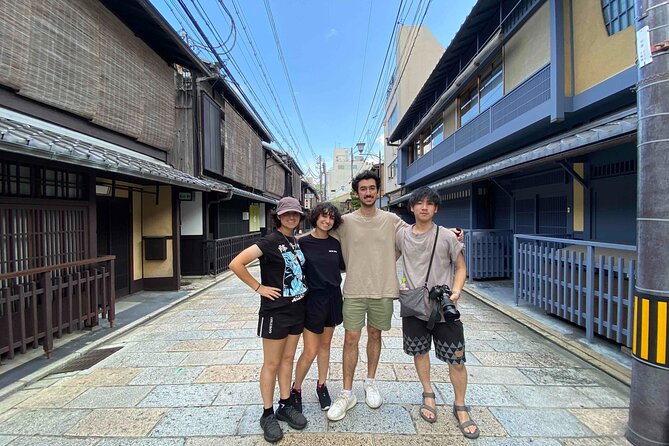
Reviewed · GUIDED
Kyoto 8hr Private Tour with Government-Licensed Guide
Kyoto is best seen with a plan, but not a rigid one. This eight-hour private tour lets you choose four to six places, then work with a licensed English-speaking guide to arrange a sensible day around your interests. You might focus on temples, old neighborhoods, gardens, food, or a mix of all four.
I like the one-to-one format, especially for a group of six, and I like that the guide can help with places such as Fushimi Inari, Kiyomizu-dera, Gion, and Arashiyama. Guides named Karkoo Tanigawa, Ichiro, and Shu appear in the supplied tour details, although a specific guide is not guaranteed.
The main catch is cost: $201.46 per person is a serious price before transport, food, and admission fees. This is a walking tour, so you also need to choose nearby sights rather than try to cover both northern and southern Kyoto in one day.
In This Review
- Key points to know before booking
- Why a private Kyoto day can work so well
- Building a sensible route from four to six sites
- Fushimi Inari and southern Kyoto
- Kiyomizu-dera, Higashiyama, and Gion
- Nishiki Market, Nijo Castle, and central Kyoto
- The Golden Pavilion and northern temple route
- Arashiyama’s bamboo, bridges, and quiet temples
- Gardens, mountain temples, and special-interest choices
- What the $201.46 price really buys
- Walking, meeting up, and preparing well
- Who should book this Kyoto experience?
- FAQ
- How long does the Kyoto private tour last?
- How many places can I choose?
- Is the tour private?
- Is an English-speaking guide included?
- Are transportation costs included?
- Are temple and castle admission fees included?
- Is lunch included?
- Is this a walking tour?
- Can I cancel for a full refund?
- Should you book it?
Key points to know before booking
- Choose four to six Kyoto sights: You build the day around your own interests instead of following a fixed route.
- A licensed English-speaking guide leads the way: This is useful at temples, shrines, markets, and traditional districts where context adds much more than photographs alone.
- The tour is on foot: Pickup and drop-off are on foot within a designated Kyoto area, with no private vehicle included.
- Admission fees are extra: Temple and palace entry costs are not part of the $201.46 price, and transportation and lunch are also separate.
- Popular highlights fit well: Kiyomizu-dera, Fushimi Inari, Gion, Nishiki Market, Kinkakuji, and Arashiyama are among the choices.
- Preparation saves time: Having Japanese yen and a transport card ready helped one six-person group begin promptly.
Why a private Kyoto day can work so well
Kyoto has too many famous places and too little time. The problem is not finding something to see. The problem is choosing sights that fit together without spending the whole day on trains and buses.
This tour solves part of that problem. After booking, your guide contacts you to plan the day. You can name three or four places you care about, then settle on a final selection of four to six sites. If Kyoto is new to you, ask for a suggested route based on your interests, such as Japanese architecture, Buddhist temples, gardens, food, or tea culture.
The private setup matters most if your group has different needs. You can spend more time at a temple that interests you, skip a place that does not, and take breaks without holding up strangers. A guide can also help you understand small details that are easy to miss, from shrine customs to the purpose of a garden.
The format is less useful if you want a low-cost introduction or prefer to wander alone. The price makes the most sense for a group sharing the guide fee, particularly a family or party that values flexibility. Solo visitors and couples should compare the price with a smaller group tour before booking.
Other guided tours in Kyoto
Building a sensible route from four to six sites
The long menu of possible stops can look exciting, but it can also tempt you into overplanning. Fushimi Inari in the southeast, Kinkakuji in the northwest, and Arashiyama in the west do not form a compact walking day.
I would group sights by area. For an eastern Kyoto day, combine Fushimi Inari or Sanjusangendo with Kiyomizu-dera, Higashiyama, Gion, and perhaps Pontocho. For a western day, pair Arashiyama with Tenryu-ji, the bamboo groves, Togetsukyo Bridge, and one or two smaller temples. A central day could include Nijo Castle, Nishiki Market, the Imperial Palace, Pontocho, and Gion.
Your guide is there to shape those choices. Still, you should speak up about walking speed, food stops, shopping, and the places you care about most. Four good stops with time to look around are better than six rushed photo calls.
The published stop times range from 10 to 30 minutes, but the tour description says you choose four to six sites for a full eight-hour day. Treat those short times as planning estimates, not as a promise that every location receives only a few minutes.
Fushimi Inari and southern Kyoto
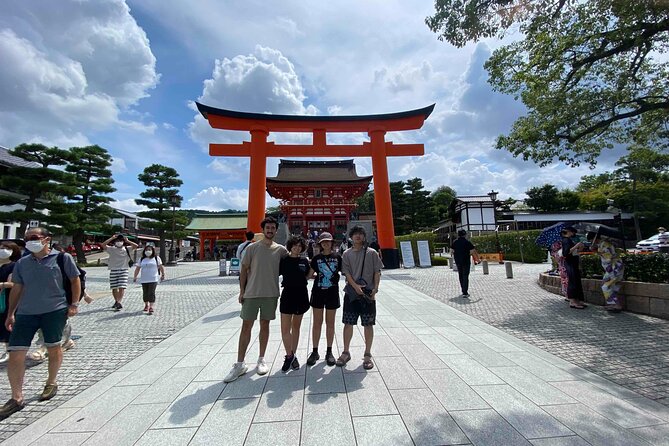
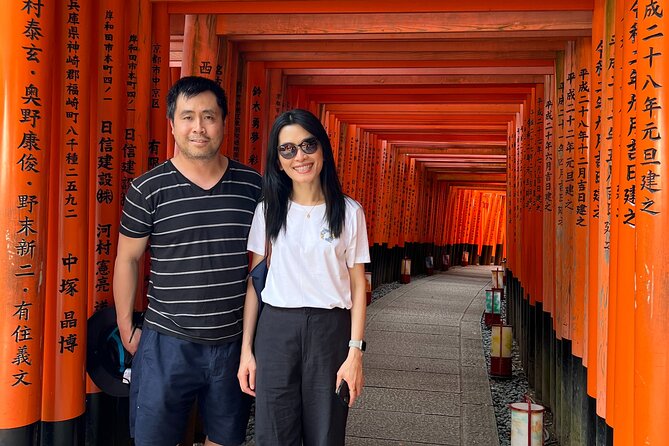
Fushimi Inari-taisha is one of the strongest choices for a first Kyoto day. Its rows of vermilion torii gates climb the wooded slopes behind the shrine, creating a very different mood from the open temple courtyards elsewhere in the city.
The shrine has free admission, which helps keep extra costs down. You can ask your guide about Shinto customs and the meaning of the shrine’s fox imagery. The key practical point is time: a quick visit near the lower gates is easy, but walking farther uphill takes more energy and can change the shape of your day.
Nearby, Tofuku-ji offers a major Zen temple setting, especially appealing in autumn when its maple trees turn color. Toji, known as the East Temple, gives you another important religious site near Kyoto Station and dates to the early Heian period.
Sanjusangendo is a good choice if you want a powerful interior experience rather than another garden. The temple is famous for its 1,001 statues of Kannon, the Buddhist figure associated with mercy. Admission is extra.
Kiyomizu-dera, Higashiyama, and Gion
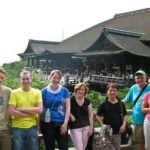
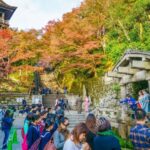
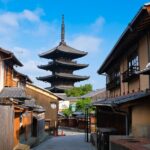
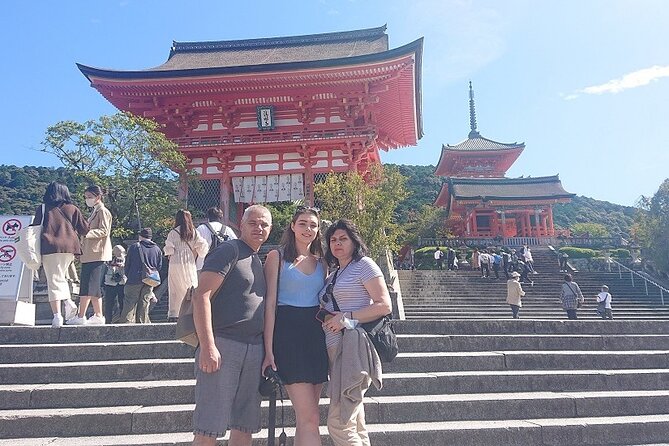
Kiyomizu-dera is one of Kyoto’s essential sights. Its elevated wooden stage looks across the eastern hills, while the approach leads through the preserved streets of the Higashiyama district.
A guide helps here because the visit is not just about the famous view. You can learn how the temple fits into Japanese Buddhist tradition, then walk through nearby lanes toward Sannenzaka and Gion. Kiyomizu-dera charges an admission fee, so keep cash or another accepted payment method ready.
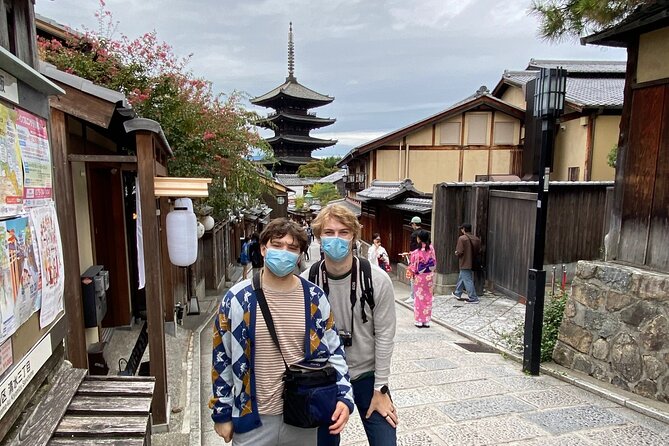
Higashiyama is where Kyoto often feels most like the old capital imagined in guidebooks. Traditional buildings line narrow streets, though the area can be crowded and slow. That is not a flaw in the neighborhood, but it does make comfortable shoes and a patient pace important.
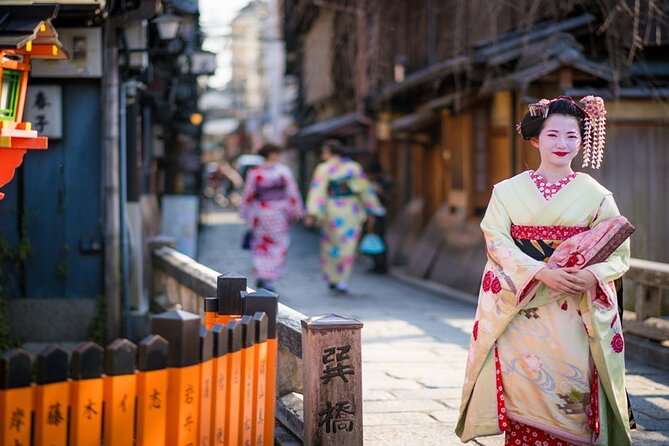
Gion brings a different kind of interest. Its lanes and traditional buildings are linked with Kyoto’s geisha culture, but you should treat the district as a living neighborhood, not a stage set. A guide can help you move respectfully and point out architectural details without turning the visit into a hunt for photographs of people.
Kennin-ji, close to Hanamikoji and Shijo streets, makes a fine quieter addition. Its grounds include dry gardens and offer a break from the street activity. The temple charges admission.
Nishiki Market, Nijo Castle, and central Kyoto
Nishiki Market is Kyoto’s Kitchen, a narrow, five-block shopping street lined with more than 100 shops and restaurants. It is the best choice in this group if you want food and daily life rather than a formal temple visit.
The market is compact but easy to rush through. Ask your guide what local foods are worth trying and leave room in the schedule for browsing. Lunch is not included, so Nishiki can serve as a practical meal stop, but any food you buy is your own expense.
Nijo Castle offers a strong history lesson. Tokugawa Ieyasu built it in 1603 as his Kyoto residence, and the site connects directly with the Tokugawa shogunate and the Edo period. Admission is extra.
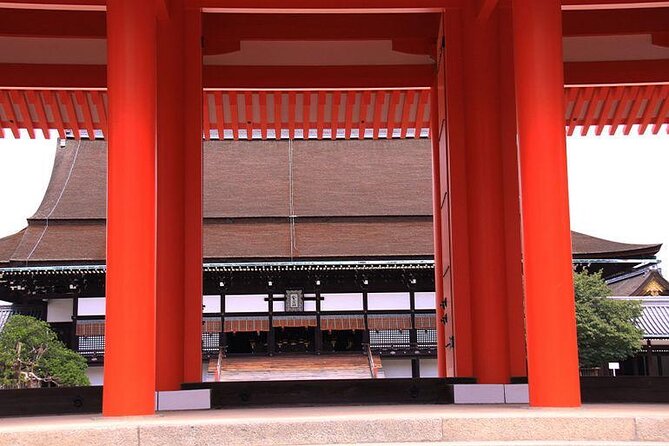
The Kyoto Imperial Palace gives you open grounds and a look at the former home of Japan’s Imperial Family. The emperor and capital moved from Kyoto to Tokyo in 1868. The palace grounds are spacious, which can feel refreshing after the tighter lanes of Gion and Nishiki Market.
Pontocho works well later in the day, especially if you want a narrow dining alley near the Kamogawa River. It is free to walk through, but restaurants and other personal purchases are not included.
Other private tours in Kyoto
The Golden Pavilion and northern temple route
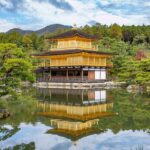
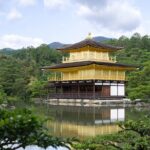
Kinkakuji, the Golden Pavilion, is one of Kyoto’s most recognizable sights. Its upper floors are covered in gold leaf, and the building reflects over a pond in a carefully arranged garden setting.
The view is memorable, but this is not a place for a long, free-form wander. The route through the grounds is controlled, and the temple can be crowded. Admission is extra. A guide adds value by placing the pavilion in the story of Ashikaga Yoshimitsu and explaining why the building you see today has been rebuilt over time.
Ryoanji is a natural partner for Kinkakuji. Its famous rock garden is spare and thought-provoking, with a design that rewards quiet attention. Admission is extra, and the visit is more about observation than a long list of objects.
Ninna-ji adds another World Heritage temple to the northern route. It is the head temple of the Omuro school of Shingon Buddhism and was founded in 888. Daitoku-ji and Myoshin-ji are also strong choices for visitors interested in Zen. Daitoku-ji is a large walled complex with many subtemples, while Myoshin-ji includes about 50 subtemples in addition to its main buildings.
These northern sites make a good temple-focused day. They do not pair naturally with Fushimi Inari and Arashiyama unless you are happy to spend more time moving between districts.
Arashiyama’s bamboo, bridges, and quiet temples
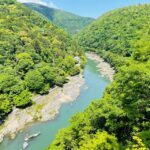
Arashiyama is the tour’s most scenic western option. The district has been a popular escape since the Heian period, and its combination of river views, wooded hills, temples, and old lanes gives you a change from central Kyoto.
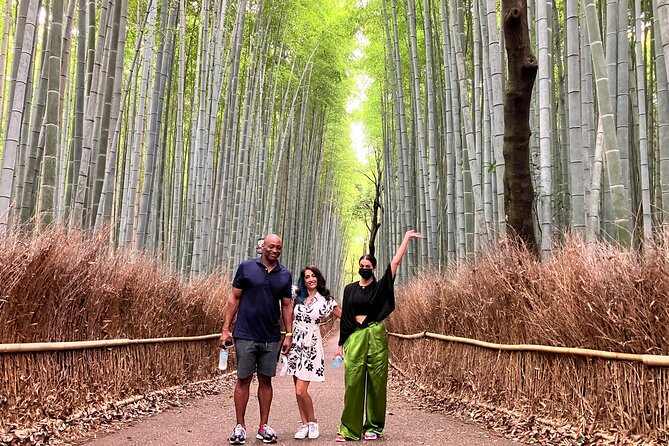
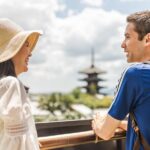
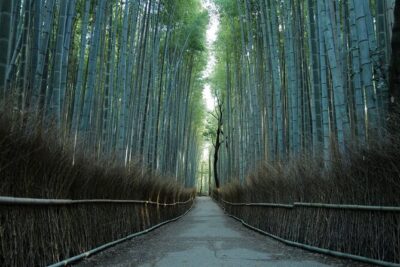
The bamboo groves are the headline stop. The paths are pleasant for walking, though the grove is not a private forest and the experience depends on how crowded the route feels. Togetsukyo Bridge, the Moon Crossing Bridge, is Arashiyama’s best-known landmark and crosses the river at the heart of the district.
Tenryu-ji is the major temple here and a UNESCO World Heritage site. Its garden and temple buildings give you a fuller visit than a quick stop at the bamboo. Admission is extra.
If you want a quieter side of Arashiyama, consider Okochi Sanso Garden, the former villa of actor Okochi Denjiro. Jojakko-ji and Nison-in have small hillside buildings, moss, and maple trees. Gio-ji is even more wooded, with a moss garden and thatched buildings.
Adashino Nenbutsu-ji is known for stone figures placed for the souls of the dead. Otagi Nenbutsu-ji, farther north, has about 1,200 stone rakan statues, each with a different face. Those two temples are more specialized choices and suit you if you want to move beyond Kyoto’s headline sights.
Daikaku-ji, also in the Sagano area, began as Emperor Saga’s detached palace. It offers another look at the northern temple tradition, but adding too many Arashiyama temples can turn the day into a march.
Gardens, mountain temples, and special-interest choices
Ginkakuji, the Silver Pavilion, was built as Ashikaga Yoshimasa’s retirement villa in 1482. Despite its name, it is not covered in silver. The value is in the temple grounds, garden design, and connection with the Higashiyama cultural world. Admission is extra.
Nanzenji is one of Kyoto’s leading Zen temples, set at the foot of the eastern mountains. The nearby Nanzenji Suirokaku, a brick aqueduct, adds an unusual engineering feature to the temple visit. Eikando, formally Zenrinji, is especially known for autumn color and evening illumination. It charges admission and works well for visitors who enjoy seasonal gardens.
Katsura Imperial Villa is one of Japan’s finest examples of architecture and garden design. Shugakuin Imperial Villa, built in the 17th century by Emperor Gomizuno, includes upper, middle, and lower villa areas. Both are special-interest selections, and admission is extra. Ask your guide about current access rules before building a day around either one.
Kibune and Kurama take you into Kyoto’s northern mountains. Kibune developed around Kifune Shrine in a forested valley, while Kurama is known for Kurama-dera and its hot spring. These places offer a rural change of pace, but their distance from central Kyoto makes them poor partners for a long list of city sights.
Yoshimine-dera sits in the western mountains and is built along a slope, much like Kiyomizu-dera on the opposite side of town. It suits you if you want views, stairs, and a less central setting. Again, you should choose it as the main focus of a regional route, not as one more stop added at the end.
What the $201.46 price really buys
At $201.46 per person, the tour is not cheap. The fee covers a licensed local English-speaking guide and a private, customized day for your group. It does not cover admission fees, transport, lunch, personal expenses, or a private vehicle.
The value improves as your group gets larger because the guide fee is shared among your party, though the listed price is presented per person. A group of six can gain a full day of help with route planning, temple context, neighborhood navigation, and local food suggestions.
The cost is harder to justify if you already know Kyoto well, can organize transport confidently, and mainly want to see one or two places. It is easier to justify if this is your first visit, your schedule is tight, or your group wants one person to handle the day’s practical details.
You should also budget for several temple admissions. Not every selected place charges an entry fee, but many of the major temples and castles do. Transport is separate because the service does not include a vehicle.
Walking, meeting up, and preparing well
This is a walking tour. Pickup and drop-off happen on foot within a designated Kyoto area, and the service is near public transportation. There is no private vehicle included, and you cannot combine separate tour groups.
Wear shoes you can use for a full day. Kyoto’s temple districts include slopes, stairs, narrow lanes, and long stretches between sights. You should also tell the guide early if your group wants fewer stairs, more food stops, or a slower pace.
Have Japanese currency and a transportation card ready if possible. A six-person group led by Karkoo Tanigawa was able to begin quickly because those basics were already in hand. That small bit of preparation matters when an eight-hour day has several moving parts.
The tour is private, and most people can participate. Service animals are allowed. Reserve at least two weeks ahead, with the experience typically booked well before the visit. You can cancel for a full refund up to 24 hours before the start time.
Who should book this Kyoto experience?
I would choose this tour for a family, group of friends, or first-time visitor who wants a private day with room to adjust. It is also a good match for people who want English explanations at temples and help deciding between famous sights and quieter places.
The tour suits a group that can share the cost and keep moving on foot. It is less suitable for anyone looking for an all-inclusive day, since food, transport, admission fees, and a vehicle are extra.
The strongest plan is to select four or five nearby sights rather than chase the entire city. Choose Kiyomizu-dera, Higashiyama, Gion, and Nishiki Market for a classic central day. Choose Arashiyama, Tenryu-ji, the bamboo groves, and one or two smaller temples for a scenic western day. Ask for a different route if gardens, Zen, food, or imperial history matter more to you.
FAQ
How long does the Kyoto private tour last?
The tour lasts approximately eight hours.
How many places can I choose?
The tour includes a customizable visit to four to six sites from the available choices.
Is the tour private?
Yes. Only your group participates, and separate tour groups cannot be combined.
Is an English-speaking guide included?
Yes. The tour includes a licensed local English-speaking guide.
Are transportation costs included?
No. Transportation fees are not included, and the tour does not provide a private vehicle.
Are temple and castle admission fees included?
No. Entrance fees are generally extra. The guide’s entry fees are covered only for sights listed under the tour’s stated inclusions.
Is lunch included?
No. Lunch and other personal expenses are separate.
Is this a walking tour?
Yes. Meet-up, pickup, and drop-off are on foot within the designated Kyoto area.
Can I cancel for a full refund?
Yes. You can cancel at least 24 hours before the local start time for a full refund. Changes or cancellations made less than 24 hours ahead are not accepted for a refund.
Should you book it?
Book this experience if you want a full Kyoto day shaped around your group, not a fixed checklist. The licensed guide, private format, and choice of four to six sights can make the $201.46 price worthwhile, especially when shared by a larger group.
Do not book it expecting a chauffeured tour or an all-inclusive price. Choose a compact area, allow extra money for entry and transport, and arrive prepared with a transport card and local currency. Done that way, this tour gives you a useful blend of Kyoto’s major temples, old streets, food stops, and personal guidance without forcing you to see the city at someone else’s pace.
More Private Tours in Kyoto
More Guided Tours in Kyoto
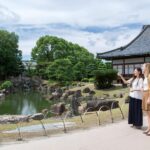

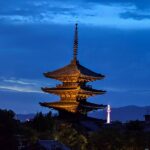
More tours in Kyoto we've reviewed
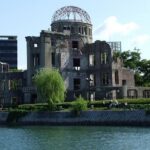
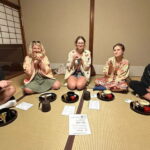

Guided, compared.
 ★ 5.0Kyoto Early Morning Tour with English-Speaking GuideFrom $68
 ★ 5.0Kyoto 6hr Private Tour with Government-Licensed GuideFrom $155
★ 4.9Kyoto: Early Morning Tour with English-Speaking GuideFrom $1015h 30m
★ 5.0Kyoto 6hr Private Tour with Government-Licensed GuideFrom $155
★ 4.9Kyoto: Early Morning Tour with English-Speaking GuideFrom $1015h 30m
 ★ 4.7Kyoto: Nijo-jo Castle and Ninomaru Palace Guided TourFrom $161 hour
 ★ 4.9Kyoto: Izakaya Bars Guided Walking TourFrom $253 hours
 ★ 5.0Kyoto Gion Night Walk & Geisha District Guided TourFrom $18