
Reviewed · FUSHIMI INARI TOURS
Kyoto: Fushimi Inari Taisha Night Tour with Guide
Fushimi Inari Taisha changes character after sunset. The crowds thin, the vermilion torii gates glow against the forest, and the shrine’s mountain paths take on a quiet, almost dreamlike mood. I like the peaceful night setting and the chance to hear the shrine’s stories from a local guide instead of simply walking through for photos. The drawback is clear: this is a dark, uphill walk on uneven paths, so it is not a good fit for anyone with mobility limits.
I also like the private-group format. Your guide can adjust the pace, answer questions, and respond to requests, which matters if you are tired or want more time for photographs. Guides named Judah and Juraj have led recent tours, with Judah noted for informative conversation and Juraj praised for patience and flexibility.
In This Review
- Key points
- Why Fushimi Inari Feels Different at Night
- Meeting at Daily Yamazaki Fushimi Inari Taisha-mae
- Walking Under the Vermilion Torii Gates
- Fox Guardians, Forest Silence, and Shrine Meaning
- The Mountaintop View Toward Kyoto
- A Private Tour That Can Match Your Pace
- Is $49 a Fair Price?
- Who Will Enjoy This Walk Most
- What to Bring for a Safer Night Visit
- Booking Flexibility and Timing
- Should You Book the Fushimi Inari Night Tour?
- FAQ
- How long is the Fushimi Inari night tour?
- Where does the tour begin?
- How will I identify the guide?
- Where does the tour finish?
- Is transportation included?
- What languages are available?
- Is the tour suitable for people with mobility impairments?
Key points
- Two hours inside Fushimi Inari after dark: See the famous torii gates when daytime crowds have largely gone.
- Private group with English or Japanese guiding: The guide can tailor the walk and conversation to your group.
- Meeting point by Daily Yamazaki: Find the guide in front of the Daily Yamazaki Fushimi Inari Taisha-mae Store, holding a yellow DeepExperience sign.
- A forest walk, not just a photo stop: The route includes shrine paths, fox guardians, torii tunnels, and higher views toward Kyoto.
- Bring proper footwear and a flashlight: The paths can be uneven, and the tour takes place at night.
- Good value for a special evening: At $49 per person, the price pays for guiding, context, and a quieter visit rather than transport or food.
Why Fushimi Inari Feels Different at Night
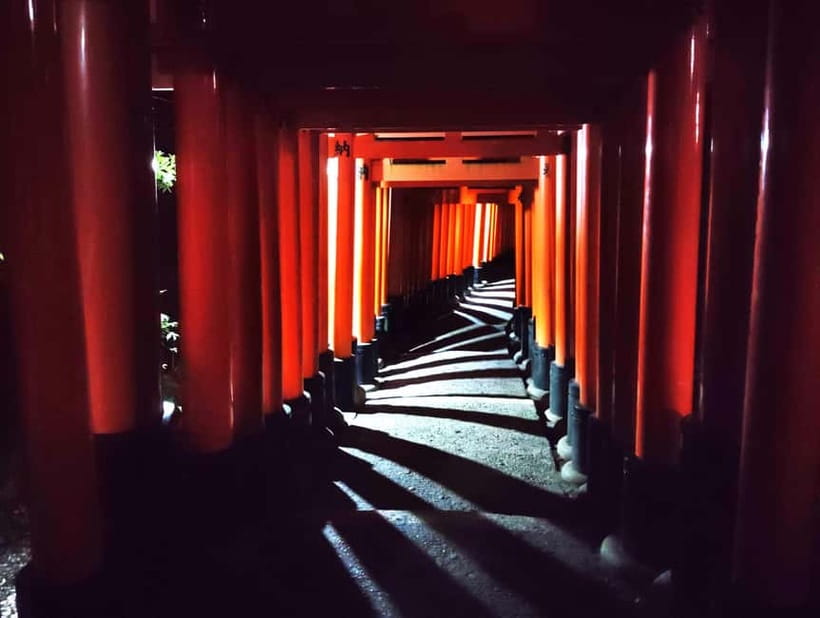
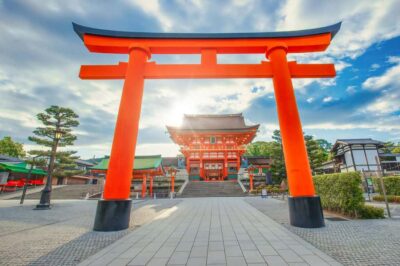
Fushimi Inari Taisha is one of Kyoto’s best-known sights, famous for its long corridors of vermilion torii gates. By day, those gates create one of Japan’s most recognizable views, but the experience can feel busy, especially near the main shrine and the first sections of the trail.
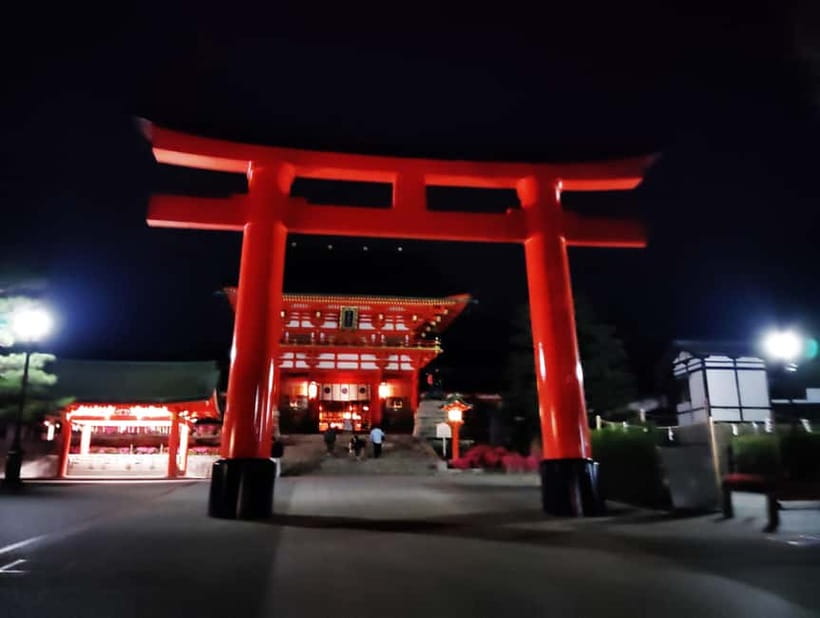
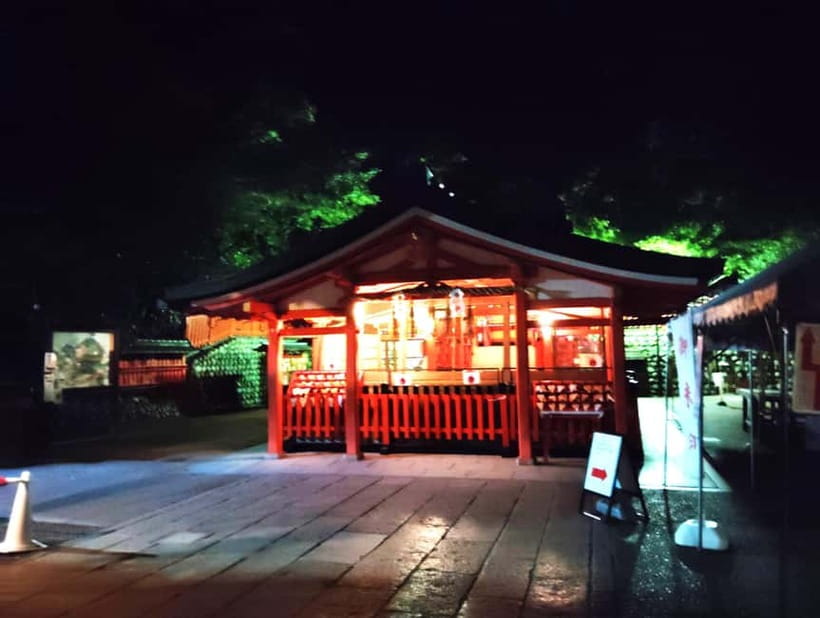
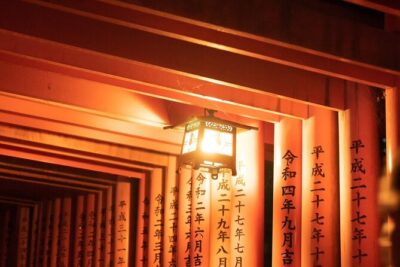
At night, the same place feels more private and subdued. Artificial lights catch parts of the gates, while other sections fade into shadow. The cedar forest grows quieter, and the narrow paths feel less like a sightseeing queue and more like a walk through an active religious site.
That change is the main reason to book this tour. You are not simply trying to see Fushimi Inari at a less popular hour. You are seeing how light, silence, and the forest alter the shrine’s mood.
Your guide helps keep the setting in context. Fushimi Inari is not only a scenic backdrop. It is a sacred site with stone fox guardians and long-standing religious meaning. A guided visit can help you notice details that are easy to miss when you are focused on getting the perfect gate photograph.
A few more Kyoto tours and experiences worth a look

Meeting at Daily Yamazaki Fushimi Inari Taisha-mae
The tour begins in front of the Daily Yamazaki Fushimi Inari Taisha-mae Store. This is a useful meeting point because it is directly associated with the shrine and easy to identify on a map.
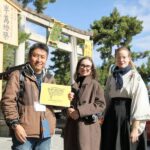
Look for a guide holding a yellow sign panel marked DeepExperience. I recommend arriving with enough time to locate the store and gather your things before the walk begins. The tour finishes at Inari Station, so you do not return to the original meeting point.
Transportation to and from Fushimi Inari is not included. You need to make your own way to the meeting point, and you are responsible for getting onward from Inari Station after the tour. Meals and drinks are also not included, so handle those before or after the walk.
The guide speaks English or Japanese. Since the group is private, you can usually make better use of that language choice than you would on a large shared outing. If your group has particular interests, such as shrine customs, photography, or local history, tell the guide early.
Walking Under the Vermilion Torii Gates
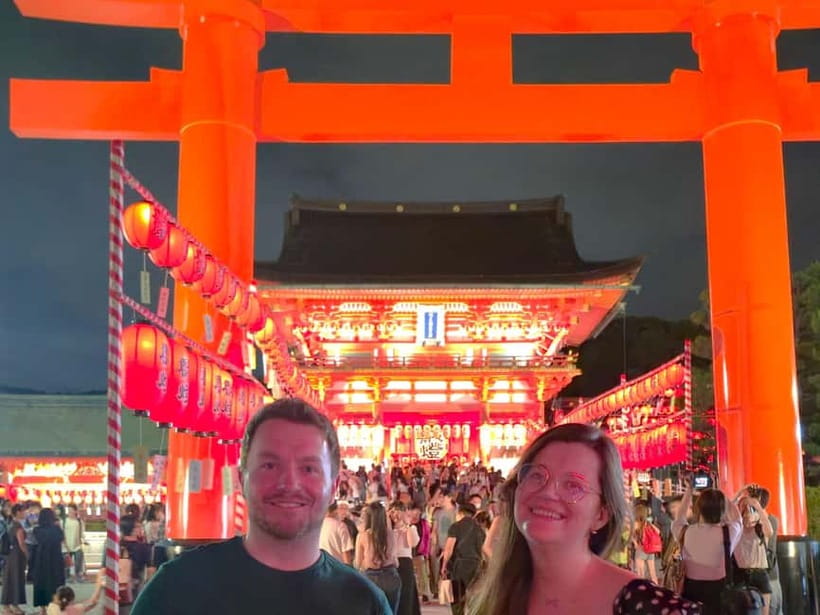
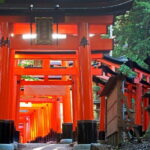
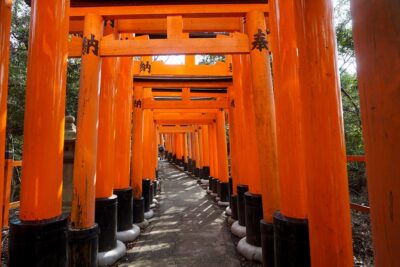
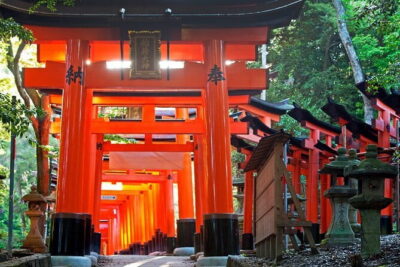
The main attraction arrives quickly: the torii-lined paths of Fushimi Inari. Gate follows gate, forming a tunnel of red-orange beams that recedes into the darkness.
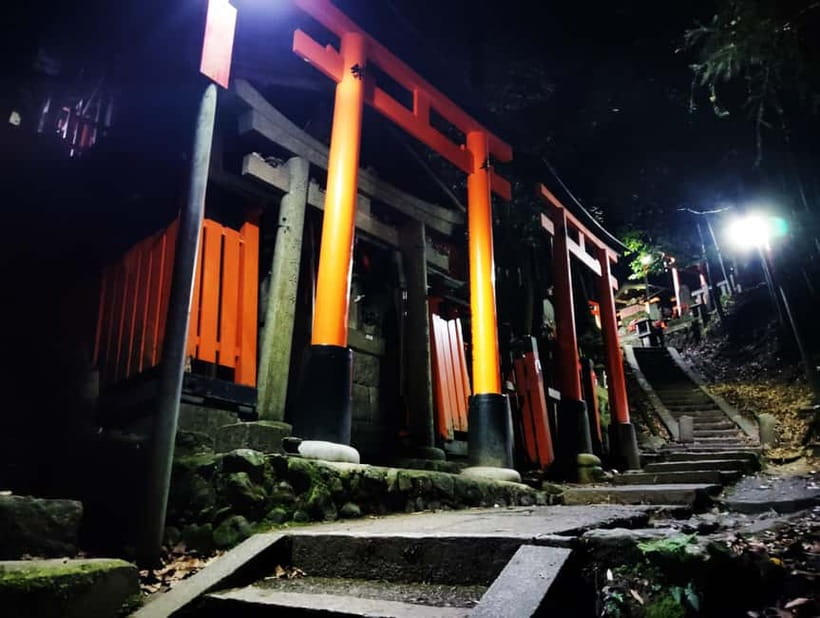
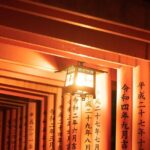
At night, the familiar view becomes more atmospheric but also less predictable. Some sections are lit, while other stretches may feel quite dark. The changing light creates beautiful shadows, though it can make footing harder and reduce the ease of taking photographs.
Flash photography is not allowed. This rule protects the quiet mood of the shrine and prevents sudden bursts of light from disturbing others. Bring a camera if you like, but plan to use available light and accept that some images may be soft or dark.
A flashlight is specifically recommended. It is a practical item, not a decorative extra. Use it to watch the path, steps, and uneven ground rather than shining it constantly into the gates or toward other people.
The walk is best for you if you enjoy looking closely and moving at a steady pace. It is less suitable if you want a fast, easy stroll with level pavement from start to finish.
Fox Guardians, Forest Silence, and Shrine Meaning
Fushimi Inari is linked with Inari, a Japanese deity associated with rice, prosperity, and commerce. Foxes appear throughout the shrine grounds as messengers of Inari, and the stone fox figures give the visit a strong visual identity.
A guide can explain why the fox guardians appear, how the torii gates relate to devotion and gratitude, and why the shrine extends so far up the mountain. Those details give meaning to what might otherwise seem like an endless series of attractive gates.
I find this kind of explanation especially useful at night. The reduced light draws your attention to sound, texture, and small shapes. A fox statue partly lit beside the path can feel more striking than a brightly photographed monument surrounded by daytime activity.
The forest also changes your sense of distance. The route may feel secluded even though Fushimi Inari is one of Kyoto’s most visited places. That contrast is part of the appeal, but do not confuse quiet with complete solitude. The shrine remains a public religious site, and conditions can vary by evening.
The Mountaintop View Toward Kyoto
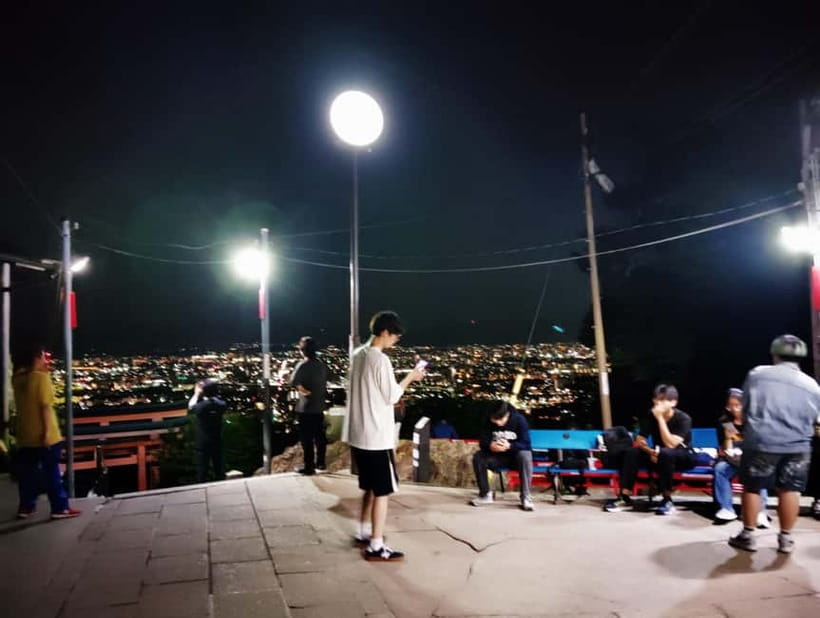
The itinerary includes walking toward higher ground, with views of Kyoto’s distant lights from the mountain. The sight is not presented as a separate transport stop or a formal observation deck. It is a payoff from continuing along the shrine paths.
This matters when you decide how much energy to save. If you are already tired, you may be tempted to treat the lower torii gates as enough. A night walk higher into the forest offers a more complete sense of the site, along with the chance to see Kyoto spread out below.
The climb also makes the two-hour length feel worthwhile. You are not spending the entire tour in one small shrine courtyard. You are moving through gates, trees, stone figures, and changing viewpoints.
Still, the higher sections require more effort. The tour is not suitable for people with mobility impairments, and comfortable shoes are essential. Dress for the weather, with extra warmth if the evening is cool. The mountain setting can feel colder than the city streets.
A few more Kyoto tours and experiences worth a look




A Private Tour That Can Match Your Pace
The private-group setup is one of the strongest practical features. You do not have to follow a large crowd or wait while a guide gathers many unrelated people. Your group can ask questions as they come up and set a pace that suits you.
This flexibility matters more on a night walk than it might on a short city stroll. Some people will want to stop often for photographs. Others may be more interested in the religious background or simply want to keep moving through the cool air.
Recent tour details identify guides named Judah and Juraj. Judah is described as informative and open to broad conversation, while Juraj is associated with patience and accommodation when a group could not walk very far. Those details suggest the guiding style may be personal and adaptable, though your assigned guide can vary.
I would tell the guide at the start if your group needs a gentler pace. Do not wait until the uphill sections become uncomfortable. The private format gives the guide room to respond, but it does not remove the physical demands of the route.
Is $49 a Fair Price?
The price is $49 per person for two hours. That is not the cheapest way to see Fushimi Inari, since entry to the shrine itself is not presented as a separate paid attraction and you can walk around parts of the site on your own.
The value comes from timing and interpretation. You are paying for a guided night visit, a private group, and help making sense of a large shrine complex when the setting is less familiar and less crowded. If you would otherwise wander without knowing which features matter, the guide adds real value.
The price is easier to justify for first-time visitors, couples, families with older children, or anyone who wants a planned evening activity in Kyoto. It is less compelling if you already know Fushimi Inari well, speak Japanese comfortably, or only want a quick look at the lower torii gates.
Remember what the fee does not cover. You pay for your own transportation, food, and drinks. The tour is also only two hours, so this is a focused evening walk, not a full Kyoto night outing.
Who Will Enjoy This Walk Most
I would choose this experience if you want to see a famous Kyoto site in a quieter setting and you enjoy having a guide nearby. It suits people who appreciate atmosphere, local explanation, and a little physical effort.
It is also a smart option during hot weather. One booking came from a group that preferred a night walk because daytime conditions were hot. The cooler timing can make the uphill route more manageable, though you should still dress for the actual evening weather.
The tour may work well for tired groups if you speak up about pace. One guide was patient with a group that could not manage extensive walking, which shows the value of the private format. Even so, the uneven paths and nighttime conditions remain important limits.
I would not choose it for a wheelchair user or anyone who needs a fully level route. I would also think twice if your priority is bright, easy photography. The ban on flash and the low light favor mood over crisp snapshots.
What to Bring for a Safer Night Visit
Pack lightly, but bring the items that make the walk comfortable:
- Comfortable walking shoes with reliable grip
- A flashlight for uneven or dark sections
- Weather-appropriate clothing
- A camera, if you want night photographs
Warm clothing may be useful, depending on the season. The tour takes place outdoors on forest paths, and conditions can feel different from those in central Kyoto.
Keep your flashlight pointed toward the ground when possible. It helps you see where you are going without spoiling the low-light mood for your group or other people at the shrine.
Since the route finishes at Inari Station, plan your evening around that endpoint. The provided information does not include onward transportation arrangements, so check your route before setting off.
Booking Flexibility and Timing
The experience lasts two hours, with starting times dependent on availability. You can reserve now and pay later, which helps if you are still arranging a Kyoto schedule.
Free cancellation is available up to 24 hours in advance for a full refund. That is useful when weather or plans are uncertain, but it does not change the need to check the forecast before the cancellation window closes.
The guide is available in English or Japanese. The private format can make language choice especially important, so select the option that best suits your group when booking.
The overall rating is 4.2 from four ratings, with three supplied ratings giving the full five points. The strongest praise centers on guide enthusiasm, patience, information, and willingness to adjust to requests. That emphasis tells you what this tour does best: it offers a flexible, human-guided way to experience the shrine, rather than a scripted procession through famous gates.
Should You Book the Fushimi Inari Night Tour?
Book it if you want quiet torii gates, forest paths, and a guide who can explain the shrine as you walk. The night setting gives Fushimi Inari a different mood, and the private format lets you slow down, ask questions, or adjust the pace.
Skip it if you need easy walking, dislike darkness, or mainly want bright photographs. At $49, the tour makes sense when the timing, guiding, and private attention matter to you. It is not simply a cheaper way to enter the shrine.
For most able walkers who have already seen Kyoto’s busy daytime sights, this offers a memorable change of pace. Bring good shoes, a flashlight, and realistic expectations about the climb, and you will be prepared for the experience it actually provides.
FAQ
How long is the Fushimi Inari night tour?
The tour lasts two hours.
Where does the tour begin?
It begins in front of the Daily Yamazaki Fushimi Inari Taisha-mae Store.
How will I identify the guide?
The guide will be holding a yellow sign panel marked DeepExperience.
Where does the tour finish?
The tour finishes at Inari Station.
Is transportation included?
No. Transportation to and from the shrine is not included.
What languages are available?
The live guide is available in English or Japanese.
Is the tour suitable for people with mobility impairments?
No. The paths can be uneven, and the experience is not suitable for people with mobility impairments. Comfortable shoes, weather-appropriate clothing, and a flashlight are recommended.
More Guided Tours in Kyoto


More Night Walks & Ghost Tours in Kyoto
More Fushimi Inari Tours in Kyoto
More tours in Kyoto we've reviewed







Fushimi Inari Tours, compared.
 ★ 4.8Kyoto: Fushimi Inari, Kinkakuji, Bamboo Grove 1 Day Bus TourFrom $122510 minutes - 9 hours
 ★ 5.0Fushimi Inari Hidden Hiking Tour (Private Option Available)From $63
 ★ 4.7Kyoto/Osaka: Nara, Fushimi Inari Taisha, Arashiyama Bus TourFrom $529 - 10 hours
 ★ 4.4Osaka/Kyoto: Arashiyama, Nara & Fushimi Inari Shrine w/LunchFrom $61
 ★ 5.0Kyoto: Nijo, Kinkaku-ji, Arashiyama, Kiyomizu & Fushimi InariFrom $51
 ★ 5.0Kyoto Fushimi-Inari Night Walking TourFrom $43