
Reviewed · GION & GEISHA WALKS
Kyoto Geisha Show Cultural Hour with an apprentice geisha, Maiko
Kyoto’s geisha culture is not something you can count on seeing from the street. This 90-minute meeting with a maiko, an apprentice geisha, gives you a scheduled chance to see traditional dance and ask direct questions about training, work, and daily life. An English-speaking guide, including guides named Ken and Saya, translates throughout.
I like the small group size, capped at 14 people, because it gives the question-and-answer session a personal feel. I also like that the experience goes beyond a stage show: you learn about geisha districts, training customs, and the format of private entertainment before meeting the performer. The main consideration is the price, $105.42 per person, and the strict non-refundable policy.
In This Review
- Key points at a glance
- Meeting a maiko instead of chasing a street sighting
- Starting in Kyoto’s geisha district
- Entering the tea house for the private session
- The question-and-answer session with the maiko
- Watching one or two traditional dances
- Why the English guide matters
- Is $105.42 a fair price?
- Who will enjoy this Kyoto experience most
- Timing, booking, and cancellation details
- Practical ways to get more from the meeting
- Should you book the Kyoto maiko experience?
- FAQ
- How long does the Kyoto Geisha Show Cultural Hour last?
- Where does the experience meet?
- What is included in the price?
- Is tea included?
- How many people can join the group?
- Will the guide translate the conversation?
- Will I meet a real maiko?
- Can most people participate?
- Can I cancel for a refund?
Key points at a glance
- Meet a real maiko in a private setting: You get time for conversation as well as a formal performance.
- See one or two traditional dances: The dancing is the artistic center of the session, not a quick photo opportunity.
- Ask questions through an English-speaking guide: Ken or Saya translates and explains customs clearly.
- Visit a geisha district first: The introduction includes the outside of geisha houses, theaters, and agencies.
- Small group of up to 14 people: This is more intimate than a large public cultural show.
- Tea is not included: Coffee and tea are listed as extra, so do not assume refreshments are part of the price.
Meeting a maiko instead of chasing a street sighting
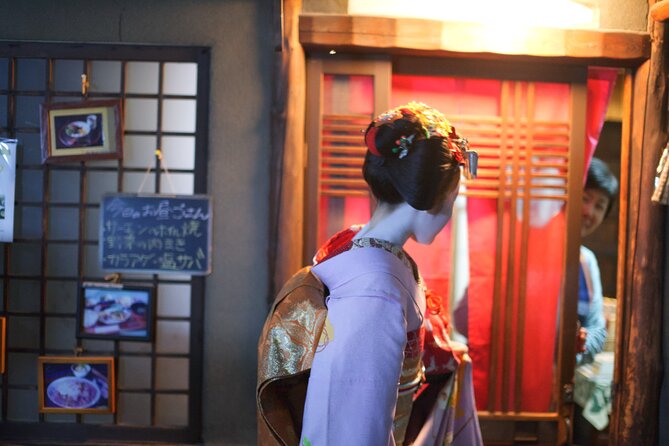
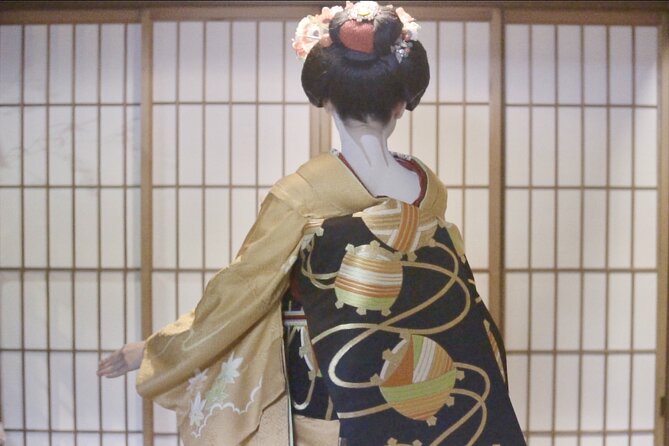
A maiko is an apprentice geisha, known in Kyoto as a performer in training who is still learning the arts, etiquette, music, and dance expected in the profession. Seeing one on the street can be difficult, and approaching someone who is working is not appropriate. This experience solves that problem in a respectful way by arranging a proper introduction.
You are not simply watching a costumed performer from a distant seat. The format includes a conversation, a question-and-answer session, and a performance of one or two songs or dances. That combination matters. The dance shows the polished public side of the tradition, while the conversation gives you a better sense of the discipline behind it.
The guide also helps prevent the encounter from becoming awkward. The maiko may not speak English, but the guide translates questions and answers, explains context, and keeps the exchange moving. This is especially useful when questions touch on training schedules, household customs, or the structure of geisha entertainment.
A few more Kyoto tours and experiences worth a look


Starting in Kyoto’s geisha district
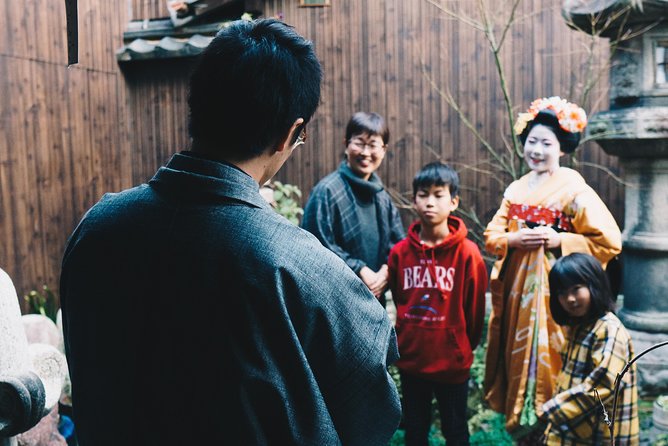
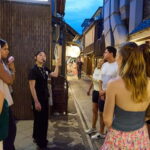
The meeting point is at 5-chōme-182 Honmachi in Kyoto. The experience begins near a shrine, where the guide gathers the group and gives an introduction to the surrounding area. From there, you walk through a geisha district, passing the exterior of theaters, agencies, and houses connected with the local entertainment tradition.
This short walk is an important part of the experience. Without it, the show could feel like an isolated cultural performance. The neighborhood context helps you understand that geisha work belongs to a specific network of houses, training systems, performances, and private gatherings.
Guide Ken has been praised for explaining the districts, the agencies that represent performers, and the customs surrounding geisha houses. Saya is also named as a warm and capable host who helped visitors feel comfortable while maintaining the proper respect due to the maiko.
Do not expect a long walking tour. The main focus is the meeting and performance, and the walk is an introduction rather than a full neighborhood exploration. Wear comfortable shoes, but this is not a demanding excursion.
Entering the tea house for the private session
After the neighborhood introduction, the group walks a short distance to a tea house or small theater. The setting is described as cozy and pretty, which suits the format better than a large auditorium would. You are there for close observation and conversation, not a mass-market stage production.
The host explains how traditional geisha entertainment is arranged, including the type of setting used for performances and how clients are selected. These details add useful context because geisha culture can look mysterious from the outside. The guide helps explain which parts are public performance, which parts depend on private invitations, and why a scheduled cultural meeting offers access most visitors would not otherwise have.
The group limit of 14 people is a real advantage here. It does not make the meeting fully private for every booking, but it should allow more room for questions than a large theater show. If you are booking as a family or small party, group discounts may be available, though the supplied details do not specify the discount amount.
The question-and-answer session with the maiko
The conversation is the heart of the experience for many people. You can ask about the maiko’s work, skills, training, lifestyle, and daily routine. The guide translates, so the language barrier does not prevent a proper exchange.
The discussion is valuable because it puts a human face on a tradition often reduced to costumes and makeup. You learn that the performance is supported by years of practice and formal instruction. The exact content of the conversation will depend on the maiko, the group’s questions, and the available time, so you should arrive with a few thoughtful questions ready.
The best questions are specific and respectful. Ask about training, the path from apprentice to geiko, performance preparation, or the kinds of arts studied. Avoid treating the maiko as a novelty or asking for private information. Your guide can help frame questions appropriately.
The experience can also include a traditional party game. One family described playing a game with the maiko after the conversation, which added a relaxed social element. This is a nice touch, though it should not be treated as a guaranteed separate feature unless it is offered during your session.
Watching one or two traditional dances

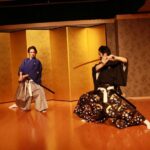
The maiko performs one or two traditional songs or dances. This is the formal center of the program, and it gives you a chance to watch the controlled gestures, posture, costume, and musical timing that define the art form.
The dances are not presented as a long theater program. The listed performance is one or two pieces within a one-hour meeting, so you should book this for personal access and explanation rather than for a full evening of entertainment.
The small room makes the performance feel close. You can pay attention to hand movements, fan work, foot placement, and changes in expression. At the same time, the setting means the experience is intimate rather than grand. If you want elaborate scenery, a full orchestra, or a large production, this may feel modest. If you want to understand what you are seeing, the guide’s explanations add far more value than a performance without context.
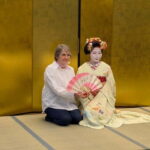
Photography with the maiko is available at the end, according to the experience details. Use the opportunity respectfully and follow the guide’s instructions. The encounter is built around cultural exchange, not unlimited posing.
A few more Kyoto tours and experiences worth a look



Why the English guide matters
The guide is more than a person who leads you to the venue. Ken is repeatedly singled out for his clear explanations, friendly manner, and help with local recommendations. Saya is also praised for translating and making the meeting comfortable while preserving the formal tone of the occasion.
That balance is important. A guide who is too casual could make the experience feel careless, while a guide who is too formal might leave you unsure how to participate. The strongest part of the format is the bridge between the group and the maiko.
Translation also changes the value of the ticket. Without it, you would mainly watch a dance and perhaps learn a few prepared facts. With it, the session becomes interactive. You can ask follow-up questions and understand answers that would otherwise be lost.
The guide may also help with practical problems. One booking party had trouble finding the address and received help from Ken while trying to locate the meeting point. Still, check the location carefully before departure, since the address is in Honmachi and the meeting begins near a shrine.
Is $105.42 a fair price?
At $105.42 per person, this is not a cheap one-hour cultural show. You are paying for a small-group arrangement, an English-speaking guide, translation, access to a maiko, a neighborhood introduction, a question-and-answer session, and a live performance.
The price makes more sense if you value direct conversation. A standard dance show may cost less, but it may not provide a chance to ask about the performer’s training or daily routine. Here, the personal exchange is a major part of what you are buying.
The ticket includes the one-hour show and meeting, plus the guide. Coffee and tea are not included, so do not build refreshments into the price. The total activity lasts about 90 minutes, including the district introduction and walk.
I would consider it good value for a first visit to Kyoto if geisha culture is high on your list. It is less compelling if you only want a long dance performance or a low-cost sightseeing stop. The experience has a strong cultural focus, and its value depends on your interest in conversation and explanation.
Who will enjoy this Kyoto experience most
This is a good choice for you if you want a rare, respectful introduction to geisha culture without relying on luck in Gion or another entertainment district. It suits couples, families, solo visitors, and small groups who enjoy asking questions.
It also works well for people who prefer a guide-led cultural activity over an unstructured evening. The guide gives you background before the performance, translates the meeting, and helps explain the customs you are seeing.
Most people can participate, and the activity is near public transportation. The supplied details do not give a full accessibility description, so contact the provider if you have specific mobility needs or require step-free access.
Children may appreciate the colorful clothing and live dancing, but the question-and-answer portion requires quiet attention and respectful behavior. Families should decide if their children will enjoy a formal cultural setting for 90 minutes.
This is not the best fit if you want guaranteed tea service, a long walking tour, or a large-scale theater production. Tea and coffee are not included, and the performance itself is limited to one or two dances.
Timing, booking, and cancellation details
The experience is commonly reserved well ahead of time, with an average booking lead of 44 days. That is a useful warning for anyone planning a Kyoto itinerary around cherry blossoms, autumn leaves, or major holidays. If this meeting is important to you, reserve it before filling every evening.
A mobile ticket is available, and confirmation is provided at booking. The activity has a maximum of 14 participants, but it also requires a minimum number to operate. If that minimum is not met, the provider offers a different date or experience, or a full refund.
The cancellation rule is strict. Your booking is non-refundable and cannot be changed for any reason if you cancel or request an amendment. Poor weather is an exception if the provider cancels the experience, in which case you can receive a different date or a full refund.
Practical ways to get more from the meeting
Read a little about Kyoto’s geiko and maiko tradition before you arrive, but do not overprepare. The guide’s explanations are designed to give you the basic framework, and your questions will be more useful if you leave room for the conversation to develop.
Arrive with two or three questions. Ask about training, performance preparation, or the difference between a maiko and an established geiko. A small group means you may have time for follow-up questions, but the 90-minute schedule still has limits.
Dress neatly and behave as you would at any formal cultural meeting. The maiko is working, not appearing at a casual meet-and-greet. Listen when the guide explains etiquette, and ask before taking photographs.
Allow enough time to reach Honmachi. The group meets near a shrine and then walks to the tea house, so arriving at the exact venue without finding the guide may not be enough. A phone with the mobile ticket and meeting details will help.
Should you book the Kyoto maiko experience?
I would book this if you want direct contact with Kyoto’s living geisha tradition, clear English translation, and a small performance with time for questions. The strongest elements are the maiko’s conversation, the guide’s explanations, and the chance to see the district before entering the tea house.
I would skip it if your main goal is a full theatrical production or if $105.42 feels too high for 90 minutes. The program is compact, tea is not included, and the non-refundable rule demands firm plans.
For the right visitor, this is a memorable Kyoto evening or afternoon: not a spectacle built around crowds, but a carefully guided meeting that connects the dance to the person and the tradition behind it.
FAQ
How long does the Kyoto Geisha Show Cultural Hour last?
The experience lasts approximately 1 hour and 30 minutes.
Where does the experience meet?
The listed location is 5-chōme-182 Honmachi, Kyoto. The group meets near a shrine before walking a short distance to the tea house or performance setting.
What is included in the price?
The price includes the one-hour geisha show and meeting, the question-and-answer session, the maiko performance of one or two songs or dances, and an English-speaking guide.
Is tea included?
No. Coffee and tea are not included in the experience price.
How many people can join the group?
The activity has a maximum of 14 participants.
Will the guide translate the conversation?
Yes. An English-speaking guide translates the question-and-answer session and explains the maiko’s training, customs, and daily life.
Will I meet a real maiko?
Yes. The experience includes a meeting with an apprentice geisha, known as a maiko, as well as her performance.
Can most people participate?
Yes. The activity information states that most people can participate and that the meeting point is near public transportation.
Can I cancel for a refund?
No. The experience is non-refundable and cannot be changed for any reason. If the provider cancels because of poor weather or because the minimum number of participants is not met, you can receive a different date or experience, or a full refund.
More Shows & Entertainment in Kyoto
More Gion & Geisha Walks in Kyoto


More tours in Kyoto we've reviewed






Gion & Geisha Walks, compared.
 ★ 4.7Kyoto Geisha Walking Tour: Gion District & Hidden GemsFrom $252 hours
 ★ 4.7Kyoto: Gion Geisha District Walking Tour – Stories of GeishaFrom $202 hours
 ★ 4.9Best of Kyoto: Gion, Geisha, Pagodas & CobblestonesFrom $242 hours
 ★ 4.5Night Walk in Gion: Kyoto’s Geisha DistrictFrom $211h 40m
 ★ 5.0Kyoto Night Foodie Tour in Gion (9+ dishes + 6 Sake tastings)From $163
 ★ 5.0Kyoto Gion Geisha District Walking Tour – The Stories of GeishaFrom $25