
Reviewed · LUNCH EXPERIENCES
Kyoto: Golden Route Sightseeing Tour via Bus with Lunch
Kyoto’s famous sights are spread across the city, and this Golden Route bus tour links them in one busy day. You’ll walk beneath the red torii at Fushimi Inari, see Kiyomizu-dera, visit Arashiyama’s bamboo grove and Tenryuji, then finish with Kinkaku-ji and a craft-center stop.
I like the way the price bundles transport, lunch, and temple admissions, and I like the English-speaking guide who helps turn a string of famous places into a more understandable day. One caution: this is a long walking day with limited time at each stop, and the half-day version may finish at Arashiyama, requiring you to make your own way back.
In This Review
- Key points
- A fast route through Kyoto’s greatest hits
- Starting at Kyoto Station
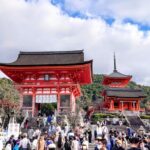
- Kiyomizu-dera and its famous wooden stage
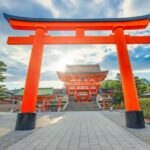
- Walking beneath the torii at Fushimi Inari
- Lunch without losing the day
- Two hours in Arashiyama
- Kinkaku-ji, Kyoto’s Golden Pavilion
- The Kyoto Handicraft Center stop
- What the $70 price really covers
- Walking, timing, and comfort
- Who should book this Kyoto day tour
- Should you book it?
- FAQ
- Where does the tour meet?
- How long does the tour last?
- What language is the tour conducted in?
- Is lunch included?
- Which entrance fees are included?
- Is transportation included?
- Does the bus return to Kyoto Station?
- Can I bring large luggage?
- Is the tour wheelchair accessible?
- Can I cancel for a full refund?
Key points
- Fushimi Inari’s red torii gates: Walk through one of Kyoto’s most memorable shrine settings, with 70 minutes to explore.
- A full Kyoto sampler: See Kiyomizu-dera, Fushimi Inari, Arashiyama, Tenryuji, Kinkaku-ji, and the Kyoto Handicraft Center.
- Kyoto-style buffet lunch included: You can eat without hunting for a restaurant during a tightly scheduled day.
- Air-conditioned bus transport: Useful when Kyoto’s major sights are spread far apart and public transport connections take time.
- A strong first-day option: The tour gives you a quick look at several essential sights before you return to favorite areas on your own.
- Walking is central: Wheelchair users, pregnant women, and anyone with trouble walking should choose another outing.
A fast route through Kyoto’s greatest hits
At $70 per person, this is designed for visitors who want to cover a lot of Kyoto without piecing together trains, buses, taxis, restaurant stops, and admission tickets. You spend the day with an English-speaking guide and a shared group on an air-conditioned coach.
The route is ambitious. You visit several major sites in one day, but you will not have the slow, reflective pace of a private temple visit. Think of it as a well-organized introduction to Kyoto, not a leisurely study of each place.
I especially like the practical value. The fee includes lunch, Kiyomizu-dera admission, Kinkaku-ji admission, and Tenryuji admission. Since these attractions are in different parts of the city, the bus may save you both time and the hassle of working out several connections.
The trade-off is simple: more sights means less time at each one. The listed duration can range from 260 to 570 minutes, depending on the selected plan and schedule. Check the exact option carefully before booking, particularly because the half-day plan ends at Arashiyama and requires you to return on your own.
A few more Kyoto tours and experiences worth a look


Starting at Kyoto Station
The meeting point is the Kyoto Station Hachijo Exit Tourist Bus Parking Area, in front of Kyoto Avanti, at the Hachijo Entrance Square Sunken Garden. The precise meeting information is sent by email seven days before the activity date, so do not leave this detail until the last morning.
Kyoto Station is a sensible departure point. It is a major transport hub, but it is also large and easy to misread when you are in a hurry. Give yourself extra time to find the Hachijo Exit and the bus parking area.
Bring only what you need for the day. Large luggage is not allowed, and the bus is intended for sightseeing rather than luggage storage. Smoking is not permitted in the vehicle, and alcohol and drugs are prohibited.
This is not a private tour. You share the coach and schedule with other people, so being ready at meeting times matters. A group tour works best when everyone treats the timetable seriously.
Kiyomizu-dera and its famous wooden stage
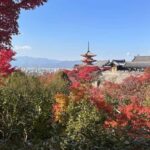
The first major visit is Kiyomizu-dera, with about 70 minutes on site. This is one of Kyoto’s most recognizable temples, known for its wooden stage and broad views over the city.
The temple is especially appealing during cherry blossom season and when autumn leaves color the surrounding hills. Even outside those seasons, the combination of old buildings, elevated walkways, and city views gives the stop a strong sense of place.
Seventy minutes is enough for a focused visit, but not enough to explore every corner at a slow pace. You should expect to walk, use stairs or uneven paths in places, and keep track of the meeting time. Wear shoes you can comfortably walk in for much of a day.
The admission fee is included, which keeps the tour’s cost easier to judge. You are not paying the full $70 only for bus transport. Several paid sights are already covered, along with lunch.
Walking beneath the torii at Fushimi Inari
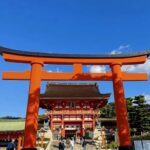
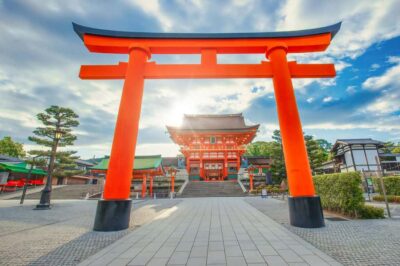
Fushimi Inari Taisha comes next, with another 70-minute visit. The shrine is famous for its thousands of vermilion torii gates, which form long corridors up the sacred mountain.
You do not need to reach the mountain summit to appreciate the setting. The lower paths give you the most immediate view of the gates, while the route continues uphill for those who want more walking. With a fixed tour schedule, you will need to judge how far to go and allow time to return to the bus.
This is one of the most visually striking stops, but it can also be one of the hardest for a large group to manage. The torii paths are narrow in places, and it is easy to focus on photographs and lose track of time. Listen carefully for meeting instructions from the guide.
Fushimi Inari is a shrine rather than a temple, and its identity is closely tied to Inari, the Shinto deity associated with rice and prosperity. The tour gives you a useful chance to see a major part of Japanese religious culture without requiring a separate trip from central Kyoto.
Lunch without losing the day
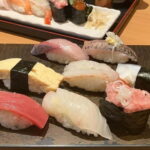
After the shrine visits, the bus travels for about 50 minutes before stopping at a local restaurant. Lunch lasts about 50 minutes and is a Kyoto-style buffet.
The buffet format is well suited to a busy sightseeing day. You can choose what appeals to you, rather than spending part of the limited schedule studying a menu or waiting for several separate dishes. It also gives you a proper break from walking.
Do not bring your own food or drinks into the restaurant. The lunch is included, but other expenses are not, so keep money available for anything outside the package, such as souvenirs or additional purchases.
A 50-minute meal is enough for a straightforward lunch, though it is not a long food experience. If Kyoto’s cuisine is a major reason for your trip, treat this as convenient fuel and plan a separate meal later for a slower taste of the city.

Two hours in Arashiyama
Arashiyama receives about two hours, making it the longest sightseeing stop on the route. That extra time matters because this district contains more than one major attraction.
The Bamboo Grove is the headline stop. Tall bamboo creates a narrow green corridor, and the sound of leaves moving in the air gives the path a calmer feel than the city streets. The grove is not a long hike, so two hours can also allow time for Tenryuji and a little independent wandering nearby.
Tenryuji is a historic Zen temple and a UNESCO World Heritage Site. Its carefully planned gardens are the main reason to make time for the temple. The entrance fee is included, which is helpful because you can visit without making another ticket decision during the tour.
Arashiyama is also where the half-day plan ends and disbands. If you choose that version, you are responsible for your return journey. This can be a plus if you want to stay in the district, continue exploring, or arrange your own route back. It can be a drawback if you expected the bus to return you to Kyoto Station.
For the full route, the bus continues after Arashiyama. Check the selected duration and finishing point when booking. The supplied schedule also lists a return to the Kyoto Station area, but the half-day arrangement has different instructions.
Kinkaku-ji, Kyoto’s Golden Pavilion
The next stop is Kinkaku-ji, commonly called the Golden Pavilion, with about 45 minutes to visit. The pavilion’s gold-covered exterior reflects in the surrounding pond, creating one of Kyoto’s most familiar views.
The setting is made for a short, direct visit. You follow the route through the grounds, stop for the classic view, and continue through the gardens. Forty-five minutes should work well for seeing the main sight, but you will not have time for a long visit or a quiet circuit at every corner.
Kinkaku-ji admission is included. Along with Kiyomizu-dera and Tenryuji, this gives the tour a useful advantage over a do-it-yourself day where separate entrance costs can add up.
Keep your expectations realistic. The pavilion is famous for its appearance, and the tour focuses on seeing that central view. If you want extended time at the temple grounds, you may prefer to visit independently on another day.
The Kyoto Handicraft Center stop
The schedule includes about 30 minutes at a visitor center, described as the Kyoto Handicraft Center. This is your chance to see traditional Japanese crafts and shop for souvenirs connected with Kyoto’s artistic traditions.
Thirty minutes is brief, but it can be useful near the end of a packed day. You can browse without giving up a major temple visit, and you may find it easier to compare craft items here than while rushing through several sightseeing districts.
This stop is more commercial than the shrines and temples, so it will not appeal equally to everyone. If you are not shopping, you may find the time less important than the historic sights. If you want a practical souvenir from Kyoto, it gives you a dedicated place to look.
What the $70 price really covers
The $70 fare is strongest when you use the included parts: the air-conditioned bus, English-speaking guide, Kyoto-style buffet lunch, and admission to Kiyomizu-dera, Kinkaku-ji, and Tenryuji.
You are also buying time. Getting between eastern Kyoto, Fushimi, Arashiyama, and Kinkaku-ji by yourself can take planning. The bus does not make the city smaller, but it reduces the number of transport decisions you need to make during one busy day.
The price is less attractive if you want a slow visit, have already seen most of these sights, or dislike fixed group schedules. You could spend a full morning at Arashiyama alone, for example, rather than fitting it into a two-hour block with several other stops.
The best value comes on a first Kyoto visit, especially if you have limited time. One verified booking praised the guide for making the day more fun and informative, and also appreciated being given choices about what to see and where to go. That suggests the guide may offer some flexibility within the schedule, but you should still expect the main route and meeting times to remain fixed.
Walking, timing, and comfort
This is a walking-heavy day. You move through shrine paths, temple grounds, garden routes, and sightseeing areas, often while keeping an eye on the clock. Comfortable shoes matter more here than stylish shoes.
The air-conditioned bus gives you a useful rest between stops, particularly during warm or humid weather. It also provides a clear base for the day, though you should not bring large luggage.
The tour is not wheelchair accessible, and it is not recommended for pregnant women or people who have trouble walking. Those restrictions are important because the challenge is not just the distance between attractions. Several stops involve outdoor paths, steps, slopes, or uneven ground.
The group size is not specified, but the experience is shared rather than private. If the minimum of four participants is not reached 14 days before the scheduled date, the tour may be canceled for that date. Keep that possibility in mind if your Kyoto plans are tightly connected to this outing.
You can cancel up to 24 hours in advance for a full refund, and the reserve-now, pay-later option gives you some planning flexibility.
Who should book this Kyoto day tour
I would choose this tour if you want to see Kyoto’s best-known sights in a single organized day. It is particularly useful for a first visit, a short stay, or a day when you would rather let someone else handle transport and admissions.
It also suits you if you enjoy hearing context from an English-speaking guide and like having lunch arranged. The combination of famous religious sites, a bamboo grove, a Zen garden, and traditional crafts gives you a broad introduction to Kyoto.
I would hesitate if you want long stretches of quiet time, have limited walking ability, or dislike group timetables. I would also check the plan carefully if Arashiyama is your priority, since the half-day version finishes there and sends you back on your own.
Should you book it?
Book this Kyoto Golden Route tour if your goal is efficient sightseeing with the major costs bundled together. At $70, the included lunch, transportation, and three entrance fees make the price reasonable for a busy first look at Kyoto.
Skip it if you already know the city well or want to explore each temple at your own pace. For everyone else, the tour offers a practical way to see Kiyomizu-dera, Fushimi Inari, Arashiyama, and Kinkaku-ji without spending the day studying transit maps.
FAQ
Where does the tour meet?
The meeting point is the Kyoto Station Hachijo Exit Tourist Bus Parking Area, in front of Kyoto Avanti, at the Hachijo Entrance Square Sunken Garden.
How long does the tour last?
The listed duration ranges from 260 to 570 minutes. You need to check availability and the selected plan for the exact starting time and length.
What language is the tour conducted in?
The tour has a live English-speaking guide.
Is lunch included?
Yes. Lunch is a Kyoto-style buffet lunch at a local restaurant.
Which entrance fees are included?
Admission to Kiyomizu-dera, Kinkaku-ji, and Tenryuji is included.
Is transportation included?
Yes. Transportation is provided by an air-conditioned bus.
Does the bus return to Kyoto Station?
The full schedule finishes at the Kyoto Station Hachijo Entrance Square Sunken Garden. The half-day plan ends and disbands at Arashiyama, and you must return on your own.
Can I bring large luggage?
No. Large luggage is not allowed during the tour.
Is the tour wheelchair accessible?
No. The tour is not wheelchair accessible and is not suitable for wheelchair users.
Can I cancel for a full refund?
Yes. You can cancel up to 24 hours in advance for a full refund.
More Lunch Experiences in Kyoto
More tours in Kyoto we've reviewed


Lunch Experiences, compared.
 ★ 5.0Bike Tour Exploring North Kyoto plus LunchFrom $106
 ★ 4.4Osaka/Kyoto: Arashiyama, Nara & Fushimi Inari Shrine w/LunchFrom $61
 ★ 5.0Kyoto Zen Meditation & Garden Tour at a Zen Temple with LunchFrom $110
 ★ 5.04.5-Hour Kyoto Bike Tour with Lunch and UNESCO Zen TemplesFrom $99
 ★ 4.8From Kyoto: Nara History Guided Half Day Bus Tour with LunchFrom $776 hours
 ★ 4.9Kyoto: Zen Meditation and Garden Tour at a Temple with LunchFrom $1074h 30m