
Reviewed · GUIDED
Kyoto Highlights & Hidden Gems in Nature (Private Van Eng-Guide)
Kyoto’s famous sights are spread across the city, and this tour tackles them by private van, then heads beyond the usual temple circuit into mountain roads and quiet villages. With guide Daiki Fukashi, you can see Kinkakuji, Arashiyama, Fushimi Inari, and lesser-known northern Kyoto sites in one afternoon.
I like the private door-to-door transport, especially for families or anyone short on time. I also like the chance to visit quiet mountain shrines and temples, including a site with giant cedar trees worshiped by local people. The main drawback is pace: six hours is a lot of ground to cover, so several stops are brief.
- Private minivan coverage: Cross Kyoto without piecing together buses, trains, and taxis.
- Daiki Fukashi as guide: Expect English commentary on Buddhism, Shinto, Kyoto, and local customs.
- Major sights plus quiet stops: Kinkakuji, Arashiyama, Fushimi Inari, mountain shrines, and cedar groves all fit into one afternoon.
- Strong scenic section: The Arashiyama-Takao Parkway leads to views of Mount Ogura and the Hozu Gorge.
- Flexible private format: The route can be adjusted for interests and mobility needs, within the available time.
- Check the group pricing: The listed price is $230.61 per group up to one person, while tour details also describe vehicle-based family bookings.
In This Review
- A fast way across Kyoto
- Kinkakuji, Kyoto’s golden opening act
- Three contrasting corners of Arashiyama
- Mountain roads and two wide Kyoto views
- Sacred trees and northern Kyoto’s quiet side
- A drive through old geisha streets
- Heian Jingu and the red gates of Fushimi Inari
- What the price gets you
- Who will get the most from this tour
- Should you book this Kyoto van tour?
- FAQ
- How long does the Kyoto private van tour last?
- What time does the tour start?
- Where can pickup and drop-off take place?
- Is the tour private?
- Is the guide fluent in English?
- What sights are included?
- Are admission fees included?
- Are fuel, tolls, and parking included?
- Is walking required?
- Can the route change?
- What is the cancellation policy?
A fast way across Kyoto
This six-hour tour begins at 1 p.m. with pickup anywhere in Kyoto City and ends with drop-off in the city. The private van matters here. Kyoto’s attractions sit in separate corners, and public transport can consume much of your day, particularly when you add walking, transfers, and crowded buses.
You ride in an air-conditioned Japanese minivan with fuel, tolls, and parking covered. That gives you a practical advantage, not just a comfortable seat. You can move from northern Kyoto to Arashiyama, then out toward the mountains, and finish near Fushimi Inari without repeatedly finding your way back to a station.
The route is ambitious. Some stops last only five or fifteen minutes, often enough for a view, a photograph, or a quick explanation rather than a full visit. I would treat this as a broad introduction to Kyoto, not a slow temple day.
Daiki Fukashi guides in English and drives the van. His approach, based on the information provided, includes explanations of Buddhism, Japanese history, bamboo, shrines, and local customs. He has also adjusted the day for specific interests and changing weather, which is useful on a private tour.
Kinkakuji, Kyoto’s golden opening act
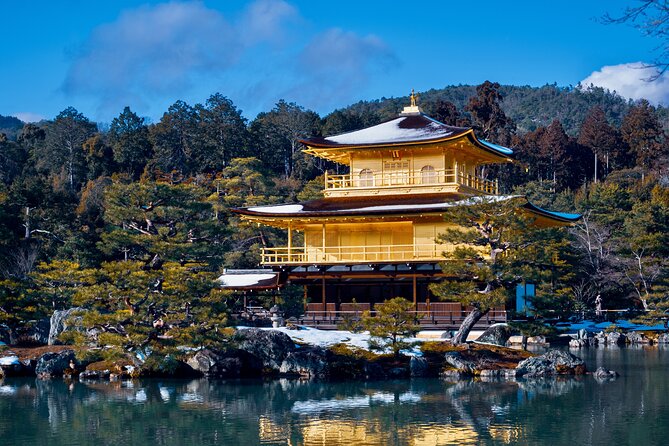
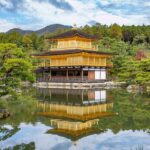
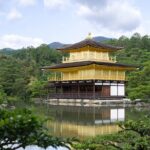
The first major stop is Kinkakuji, better known as the Golden Pavilion. Its gold-covered upper levels reflect in the pond, making this one of Kyoto’s most recognizable sights.
You get about 45 minutes here, the longest single temple visit on the route. That is enough to walk the designated grounds and take in the pavilion, though not enough for a slow study of every garden feature.
Admission is not included. The total entry fees for the day are listed at approximately ¥1,400 per person, so carry yen or confirm current payment arrangements before you go. Kinkakuji is usually the most crowded stop, and the private van cannot remove that pressure inside the grounds.
The timing also deserves attention. Starting at 1 p.m. means your Kinkakuji visit takes place in the afternoon, while later stops may come near sunset or after dark depending on the season. That can work well for Fushimi Inari, but daylight for mountain views is not guaranteed year-round.
Other guided tours in Kyoto
Three contrasting corners of Arashiyama
The tour then moves to Arashiyama, where it avoids treating the district as only one famous bamboo path. You visit Gio-ji Temple, the Arashiyama Bamboo Forest, and Otagi Nenbutsu-ji Temple.
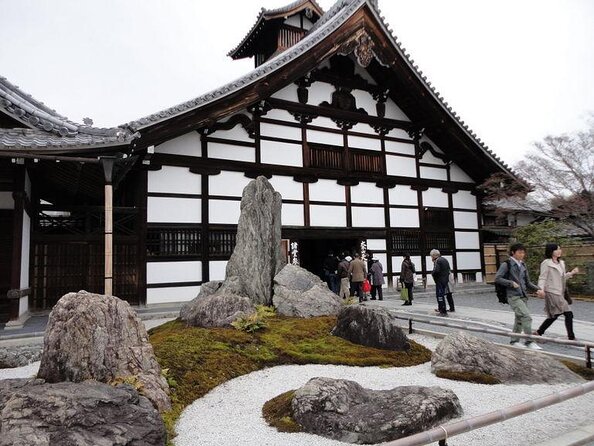
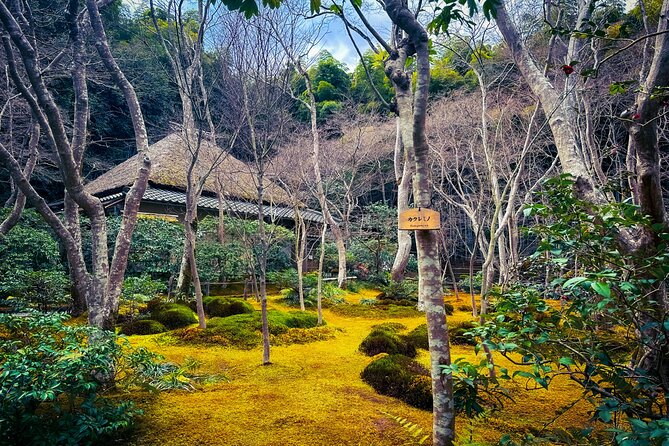
Gio-ji is a small temple with a moss-covered garden, a thatched hut, and bamboo around the grounds. Its appeal is quiet detail rather than grand architecture. The scheduled visit is only 15 minutes, so you will get an impression of the setting rather than a long pause for meditation.
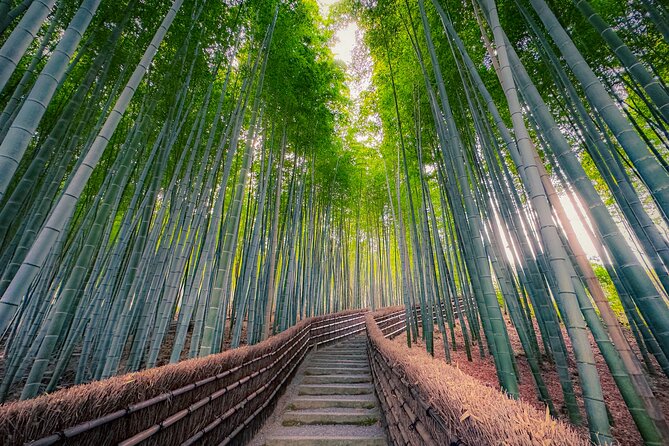
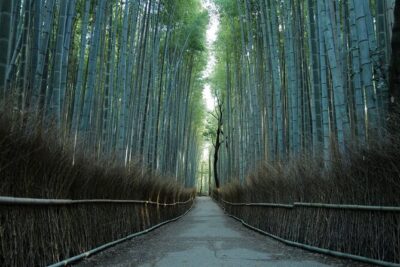
The Bamboo Forest also receives about 15 minutes. This is the iconic path, and your guide explains the origin of Japanese bamboo and its connection to Edison’s invention of the electric light. The walk is short, but the area can be crowded. One practical advantage of the private format is that Daiki can adjust the plan if the path is too congested, though skipping it means giving up one of Kyoto’s signature scenes.
Otagi Nenbutsu-ji is another 15-minute stop and a useful counterpoint to the main Arashiyama route. It sits in the northern part of the historic district, where the old-Kyoto setting is better preserved and foot traffic is lighter. The temple is known for its many stone figures, each with a different expression, though the supplied information does not specify how much time is devoted to viewing them.
Some temple admission fees are separate. You should also expect stairs and walking at some sites. If you need to avoid stairs, tell the guide early so the route can be adjusted.
Mountain roads and two wide Kyoto views
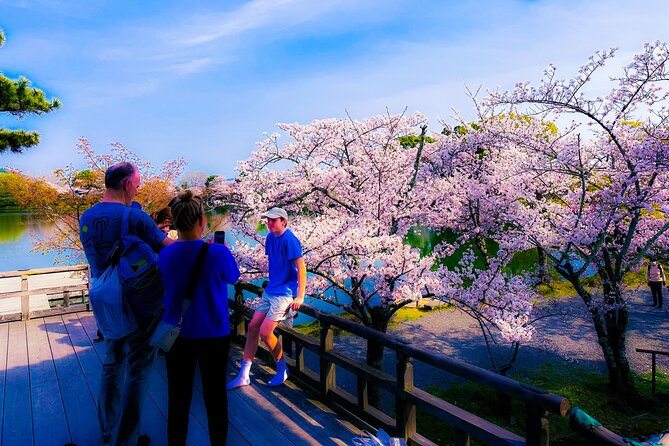
The Arashiyama-Takao Parkway shifts the mood from city temples to mountain scenery. The toll road is included, and the drive takes about 45 minutes in the scheduled plan. Cherry trees cover parts of the road in April, while maple trees bring autumn color in November.
This is one of the tour’s strongest features for anyone who wants more than the standard Kyoto checklist. You are not simply driving between attractions. You are seeing the wooded hills that surround the city and reaching places that are awkward to visit by public transport.
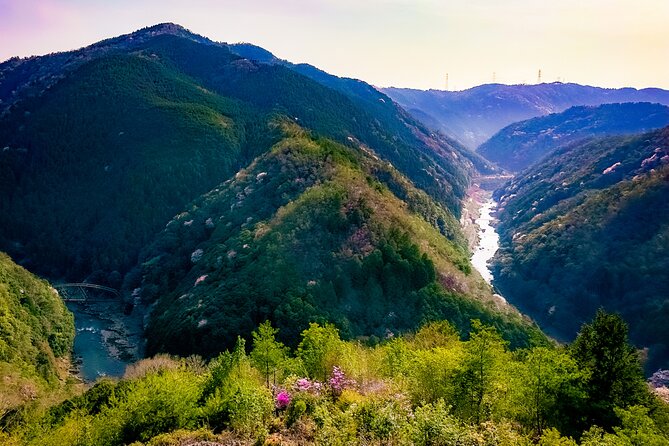
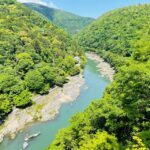
At Mount Ogura Observatory, you stop for about five minutes to look across Kyoto from above. At Hozukyo Observatory, another five-minute stop presents the Hozu Gorge, a well-known natural view linked with traditional fast-water boat trips.
These stops are short, so do not expect a long walk or a formal viewing platform experience. Think of them as carefully chosen pauses along a scenic drive. Bring a camera, but keep your expectations realistic: five minutes can pass quickly, especially if the van must keep to a tight schedule.
Sacred trees and northern Kyoto’s quiet side
Nakagawa Hachimangu Shrine is a small local shrine with a particularly old Japanese cedar tree. Local Shinto worship treats the tree as a powerful presence, and you are invited to touch it and reflect on its spirit.
That detail gives the stop meaning beyond simply photographing another shrine. Kyoto is often presented through imperial buildings and famous temples, but local worship at a large old tree offers a more personal view of how sacred places work in Japan.
The visit lasts about five minutes. That is enough for a brief stop, but not for a long religious or historical discussion. If this kind of local custom interests you, ask Daiki to explain the shrine and tree during the drive.
The next stop, Kitayama Big Daisugi, is described as a secret spot reached by a narrow cliff road in northern Kyoto. The giant platform cedar trees are the main attraction. Their unusual shape and the remote setting make this feel very different from the polished temple circuit.
This is also the part of the day where the private vehicle earns its keep. A narrow mountain road and a remote cedar-growing area are not easy additions to a normal first-time Kyoto route. Conditions can change by season or circumstance, and the exact sequence may be updated.
A drive through old geisha streets
The van also passes through a 600-year-old street associated with geishas. The point is to see the historic area from the vehicle and avoid adding a crowded walk to an already full afternoon.
This is a drive-by experience, not a guaranteed encounter with geishas. If you see someone you wish to photograph, you must ask permission. That is a small but important rule. A private tour should make it easier to behave respectfully, not turn local people into scenery.
Other private tours in Kyoto
Heian Jingu and the red gates of Fushimi Inari
The large torii gate of Heian Jingu is the next brief photo stop. At 24.4 meters, or about 80 feet, it is among the largest torii gates in Japan. The stop lasts five minutes and does not appear to include a full visit to the shrine grounds.
That brevity is useful if you want the photograph but have limited time. If Heian Jingu is a priority, tell Daiki before the tour begins. The schedule already contains many stops, and a longer visit would require cutting something else.
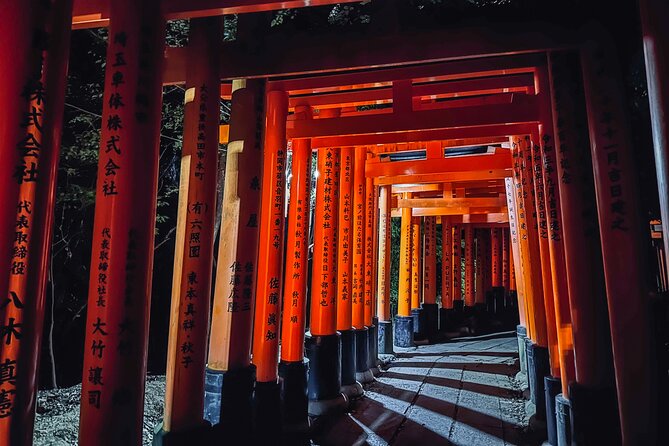
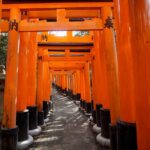
The final scheduled stop is Fushimi Inari Taisha, with about 40 minutes. The shrine is famous for its long corridors of red torii gates, donated over time by individuals and businesses. The route now contains more than 10,000 gates, though you will not walk the entire mountain in this visit.
Forty minutes lets you enter the shrine and experience part of the gate-lined path. It is not enough for the full hike to the summit. That is fine for a first look, especially after a full afternoon in the van.
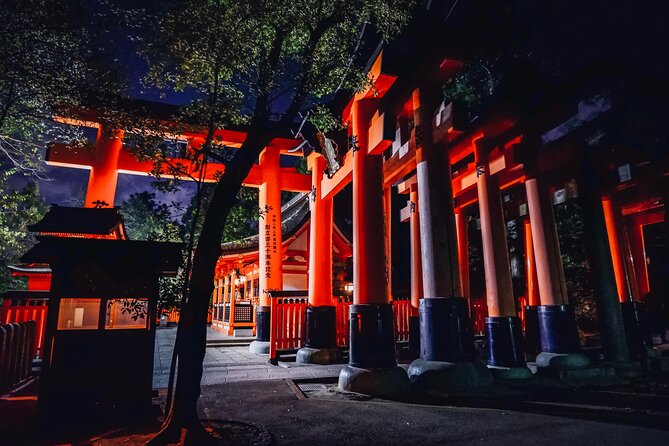
The timing may be a real advantage. Starting at 1 p.m. and spending the day moving through Kyoto can place Fushimi Inari in the late afternoon or evening. The exact light depends on the date, but a later visit can feel less hectic than the middle of the day. One family especially valued seeing the gates at night with fewer people around. The trade-off is that you may have less daylight for the mountain observatories.
What the price gets you
The listed rate is $230.61 per group up to one person. This needs clarification before booking because the tour information also describes a private vehicle arrangement, and one booking account indicates that a family of four paid by vehicle rather than by individual seat.
If the same group rate applies to your party, the value can be very good for a family or small group. You are covering a private van, English-speaking guide, fuel, tolls, parking, pickup, and drop-off. A group of four could find that far more efficient than arranging several taxis across Kyoto, though you should confirm the exact price for your party size.
Entry fees are extra, listed at about ¥1,400 per person in total. The description marks several individual temple admissions as not included, while some shrine and viewpoint stops are free. Ask for the current breakdown when booking so you know how much cash to carry.
The tour is not a budget sightseeing bus. You pay for time saved, a private vehicle, and access to northern mountain areas that would take more effort to reach alone. The value is strongest when your Kyoto schedule is tight, your group prefers private transport, or you want both famous sights and rural scenery in one outing.
Who will get the most from this tour
I would choose this for a family, a couple, or a small private group with only one day to cover a lot of Kyoto. It also suits people who dislike navigating crowded buses or who want an English-speaking guide to explain Buddhist and Shinto customs along the way.
The tour works well for people who are comfortable with short visits. You will spend much of the day moving, with several five-minute photo stops and only a few longer temple visits. If your ideal day means sitting quietly in one garden for an hour, this route will feel rushed.
People with limited mobility should speak with Daiki before departure. Some temples require walking and stairs, but the guide can help avoid certain sections. The van reduces the distance between places, yet it does not remove walking inside temple and shrine grounds.
Weather is another factor. The tour can continue in rain, and the mountain scenery may look atmospheric, but viewpoints can be less rewarding. One account describes a rainy day that still worked well because the guide adapted the route and interests. Seasonal changes can also alter the order or exact stops.
Free cancellation is available up to 24 hours before the 1 p.m. start time. Changes or cancellations inside that window are not accepted for a refund.
Should you book this Kyoto van tour?
Book it if you want maximum variety in six hours and value private transport more than long visits at individual temples. Daiki Fukashi’s role as both driver and guide keeps the day personal, and the northern mountain roads, cedar trees, and Hozu Gorge add something that a standard city tour often misses.
Think twice if you want a slow, highly focused tour of Arashiyama or Fushimi Inari. The schedule is packed, the bamboo walk may be shortened or skipped if crowds are heavy, and several stops are brief.
Before paying, confirm the price for your full group, the likely order of stops for your travel date, and which temple fees you will pay on the day. If those details work for you, this is a smart choice for seeing Kyoto’s headline sights while also reaching quiet places you would probably miss on your own.
FAQ
How long does the Kyoto private van tour last?
The tour lasts approximately six hours.
What time does the tour start?
The scheduled start time is 1 p.m.
Where can pickup and drop-off take place?
Pickup and drop-off are offered anywhere in Kyoto City.
Is the tour private?
Yes. Only your group participates in the activity.
Is the guide fluent in English?
Yes. The tour includes an English-speaking local Japanese guide. The guide identified in the supplied information is Daiki Fukashi.
What sights are included?
The route includes Kinkakuji Temple, Gio-ji Temple, the Arashiyama Bamboo Forest, Otagi Nenbutsu-ji Temple, the Arashiyama-Takao Parkway, Mount Ogura Observatory, Hozukyo Observatory, Nakagawa Hachimangu Shrine, Kitayama Big Daisugi, the historic geisha street by car, the Heian Jingu torii gate, and Fushimi Inari Taisha Shrine.
Are admission fees included?
No. Temple admission fees are not included. Total entry fees are listed at approximately ¥1,400 per person.
Are fuel, tolls, and parking included?
Yes. The private van, fuel, toll fees, parking fees, and guide are included.
Is walking required?
Yes. Some temples require walking and stairs. You can ask the guide to avoid certain sections if needed.
Can the route change?
Yes. Parts of the route may change or be updated based on the season or other circumstances.
What is the cancellation policy?
You can cancel at least 24 hours before the start time for a full refund. Cancellations or changes made less than 24 hours before the tour are not accepted for a refund.
More Private Tours in Kyoto
More Guided Tours in Kyoto

More tours in Kyoto we've reviewed



Guided, compared.
 ★ 5.0Kyoto Early Morning Tour with English-Speaking GuideFrom $68
 ★ 5.0Kyoto 6hr Private Tour with Government-Licensed GuideFrom $155
★ 4.9Kyoto: Early Morning Tour with English-Speaking GuideFrom $1015h 30m
★ 5.0Kyoto 6hr Private Tour with Government-Licensed GuideFrom $155
★ 4.9Kyoto: Early Morning Tour with English-Speaking GuideFrom $1015h 30m
 ★ 4.7Kyoto: Nijo-jo Castle and Ninomaru Palace Guided TourFrom $161 hour
 ★ 4.9Kyoto: Izakaya Bars Guided Walking TourFrom $253 hours
 ★ 5.0Kyoto Gion Night Walk & Geisha District Guided TourFrom $18