
Reviewed · COOKING CLASSES
Kyoto Udon & Tempura Cooking Class with Professional Chefs
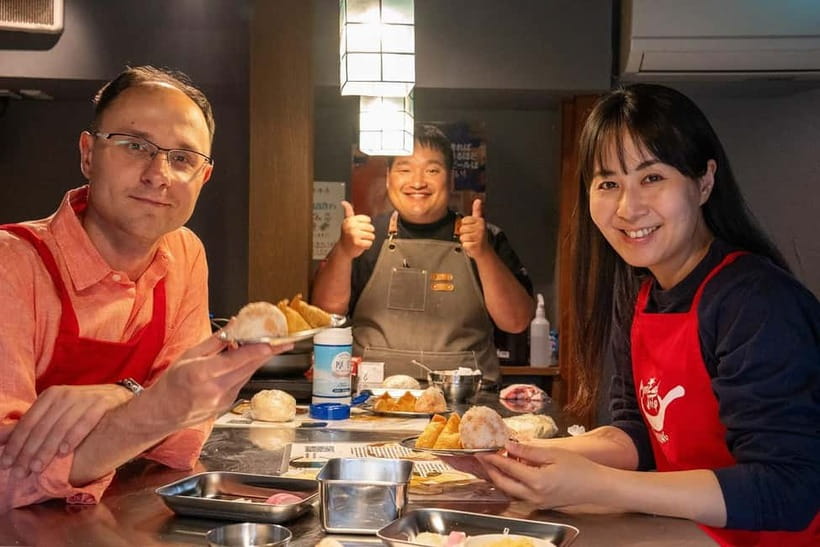
Making udon from only flour and water is the heart of this Kyoto class. You knead and roll the dough by hand, then sit down to eat Japanese dishes you helped prepare. I like the small group of up to eight, which gives the English-speaking guide time to help each person. I also like the friendly, practical setting in a real restaurant.
The main caution is that the advertised plan and the actual class may not match perfectly. The current duration is listed as two hours, but one verified account reported about one hour and 20 minutes, with no sushi preparation, no udon cooking, and no broth making. Confirm the day’s exact format if those details matter to you.
In This Review
- Key points to know
- Turning flour and water into udon
- Inari sushi, rice, and the planned menu
- Frying tempura in a small class
- Eating what you made, with two drinks
- A real restaurant setting and a small group
- Getting to the meeting point in central Kyoto
- Is $83 a fair price?
- Timing, cancellation, and what to expect
- Who will enjoy this Kyoto cooking class?
- Should you book it?
- FAQ
- How long does the Kyoto cooking class last?
- What dishes are included?
- Will I make udon from scratch?
- Is the class taught in English?
- Do I need cooking experience?
- How many people can join the class?
- Are drinks included?
- Where do I meet the guide?
Key points to know
- Hand-kneaded udon: Start with flour and water, then mix, knead, and roll the dough yourself.
- Three Japanese dishes: The planned menu includes udon, inari sushi, and tempura, though the class format may vary.
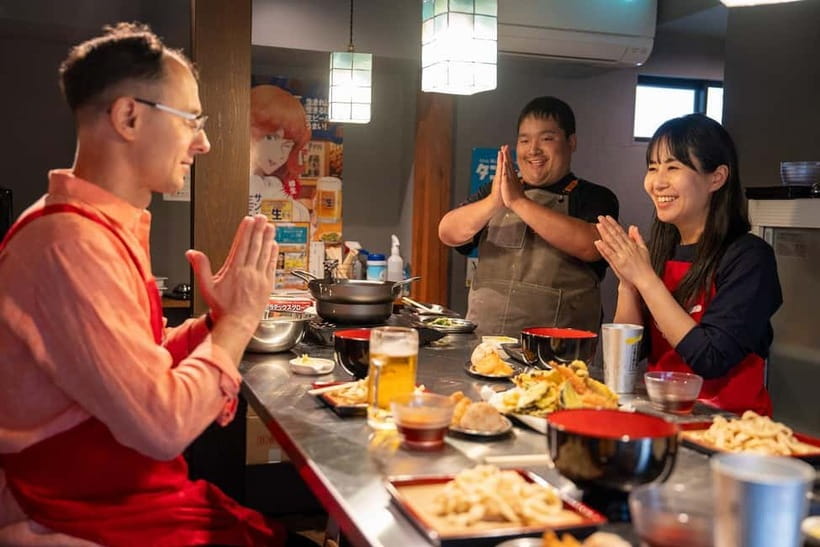
- English instruction: A local guide works with an udon master and explains each stage in English.
- Small-group setting: With a maximum of eight people, you should have a fair chance to receive personal help.
- Food, drinks, and recipes: Your meal, two drinks, a mini sake tasting, tour photos, and an English recipe set are included.
- Central Kyoto meeting point: Meet at the 7-Eleven near Kawaramachi-Takoyakushi, a short walk from Kyoto-Kawaramachi Station.
Turning flour and water into udon
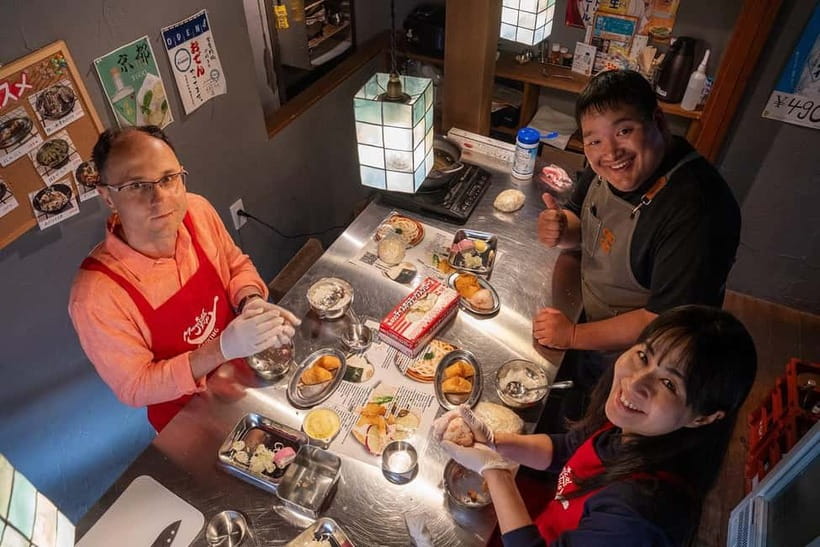
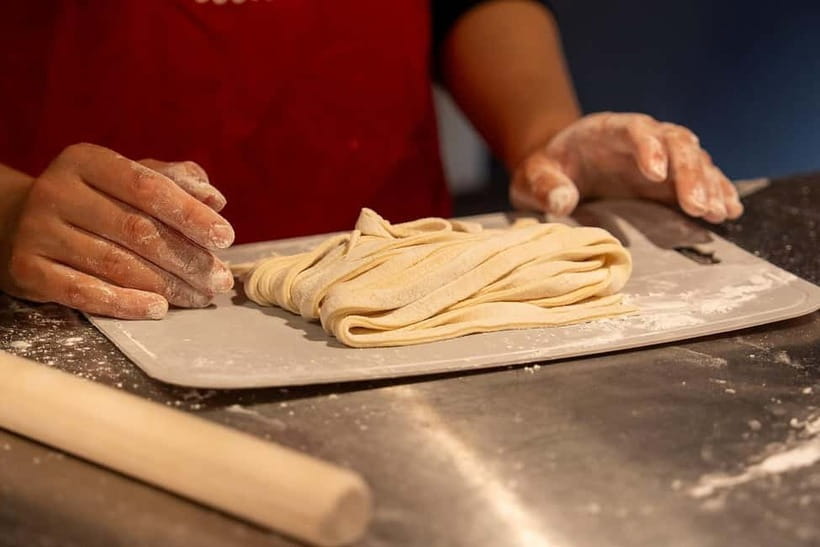
The class begins with the most satisfying task: making noodles from scratch. You start with flour and water, then mix and knead the dough by hand. This is not a demonstration where you watch a chef do everything while you stand back. You work the dough yourself and feel it change from a rough mixture into something smooth and springy.
That hands-on work is useful because udon is more than a finished bowl. The thick, chewy texture comes from how the dough is handled. You may not leave with the skill of an udon master, but you will understand why fresh noodles feel different from dried noodles bought at a shop.
The local udon master leads the technical side, while an English-speaking guide helps explain what is happening. No cooking background is needed. The class is built around learning by doing, so a crooked roll or uneven piece of dough is part of the fun rather than a problem.
One point needs careful attention. The written plan describes making udon, but it does not clearly promise that you will cook the noodles or prepare the broth from scratch. One account of the class found that the main activity was mixing and kneading the dough, while the cooking and broth preparation were not included. If your main goal is to learn a complete bowl of udon from dough to soup, ask for confirmation before booking.
Other cooking classes in Kyoto

Inari sushi, rice, and the planned menu
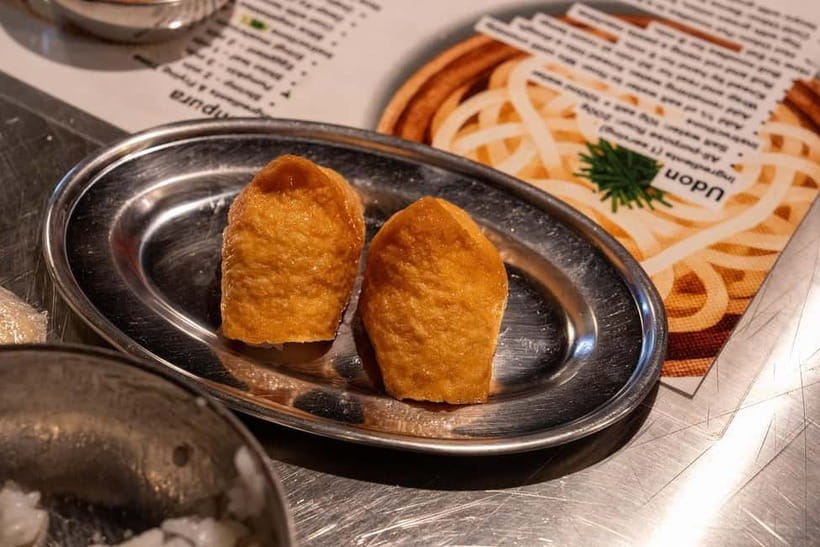
The class also includes instruction in Japanese rice dishes. You are meant to work with freshly steamed rice, season it, and use it for inari sushi. The activity information also refers to shaping onigiri and inari sushi, giving you a chance to see how simple rice becomes a portable Japanese snack or meal.
Inari sushi is especially approachable for beginners. The rice is placed inside seasoned tofu pouches, so you do not need advanced knife work or restaurant-level presentation skills. It is a good lesson in Japanese home cooking, where careful seasoning and neat shaping matter as much as speed.
Still, the sushi portion deserves a small warning. One verified account reported that sushi was not made during that session. Since the class is listed with a menu of udon, inari sushi, and tempura, this appears to be a variation in the way the activity is delivered rather than a guaranteed part of every session. If inari sushi is the dish you most want to learn, contact the provider before paying.
That uncertainty does not cancel the value of the class, but it changes how I would frame it. Think of the experience as a Japanese cooking workshop centered on udon, with rice and tempura included in the planned menu. Do not book it solely for one specific dish unless you have confirmed that dish will be prepared on your date.
Frying tempura in a small class
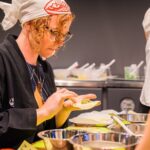
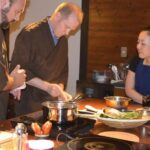
Tempura adds a different kind of kitchen lesson. The guide and chef demonstrate the basic steps, then you dip ingredients and fry them until golden. It is a quick, lively part of the meal, and the contrast with the slow kneading of udon keeps the two-hour format from feeling repetitive.
For a beginner, tempura is useful because the result is easy to understand. You can see the coating change in the hot oil, and you get to eat the pieces soon after cooking. The class provides the ingredients, so you do not need to shop for special produce or bring supplies.
The preparation may be simpler than you expect. One account reported that the tempura batter was not made from scratch. Instead, the batter was already prepared, and the participant dipped the ingredients before frying them. That still teaches the basic frying process, but it is not a full lesson in mixing and seasoning tempura batter.
I would treat this as an introduction to tempura rather than a professional cooking course. You will learn the general method and take part in the frying, but the depth of instruction can depend on the session. The value is in handling the food yourself and eating it fresh, not in mastering every technical detail.
Eating what you made, with two drinks
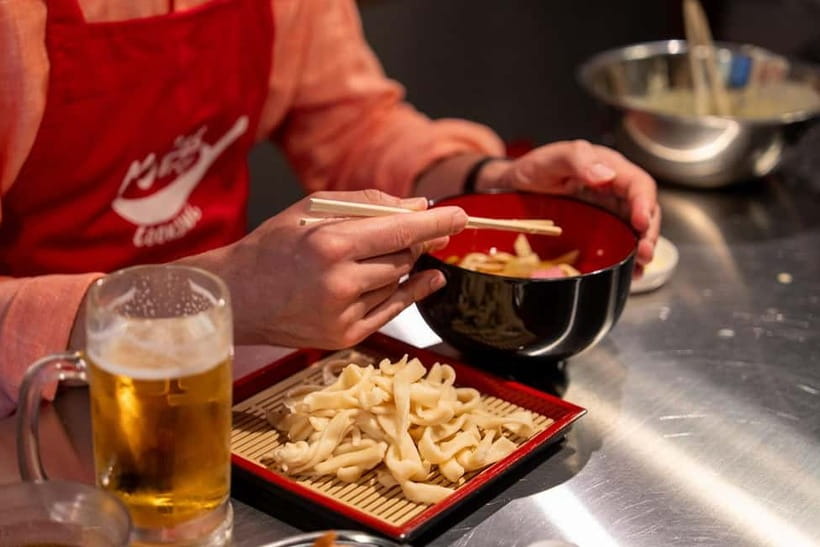
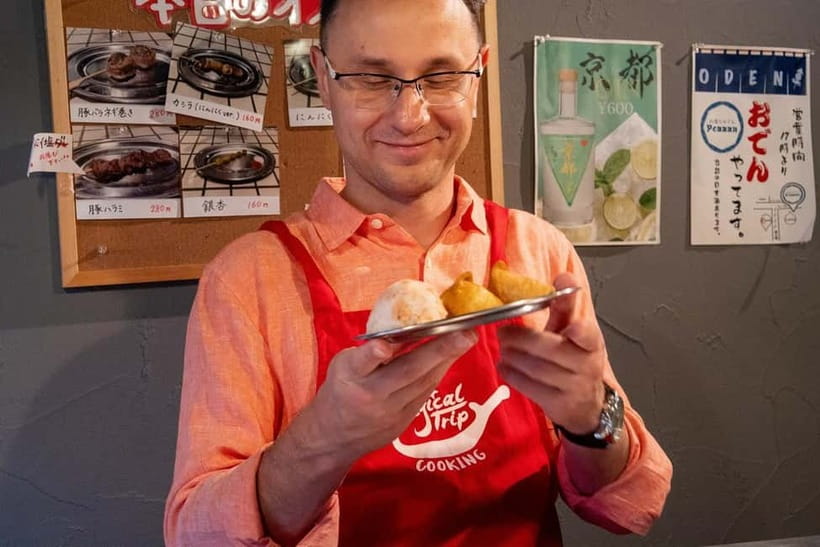
The final part is the meal. You sit down with the udon, rice dishes, and tempura included in the session and eat what you prepared. That matters because the cooking has a clear payoff. You are not simply practicing techniques and then leaving hungry.
A mini sake tasting is also part of the experience, and two drinks are included. This adds a small cultural element without making the activity a dedicated alcohol tour. You can compare the sake with the food and see how a Japanese drink fits into a casual meal.
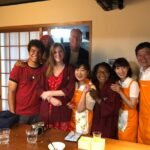
The activity information describes a friendly atmosphere, and that suits the format. Small cooking classes often work best when the mood is relaxed. You can ask questions, watch how other people handle the dough, and enjoy the meal without the pressure of a formal restaurant service.
The amount of food may be generous. One participant said the class provided a lot to eat and offered a little more insight into udon. That is good news if you want a substantial lunch or early dinner, but it may feel like more than you need if you prefer a short tasting.
A real restaurant setting and a small group
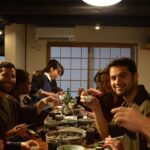
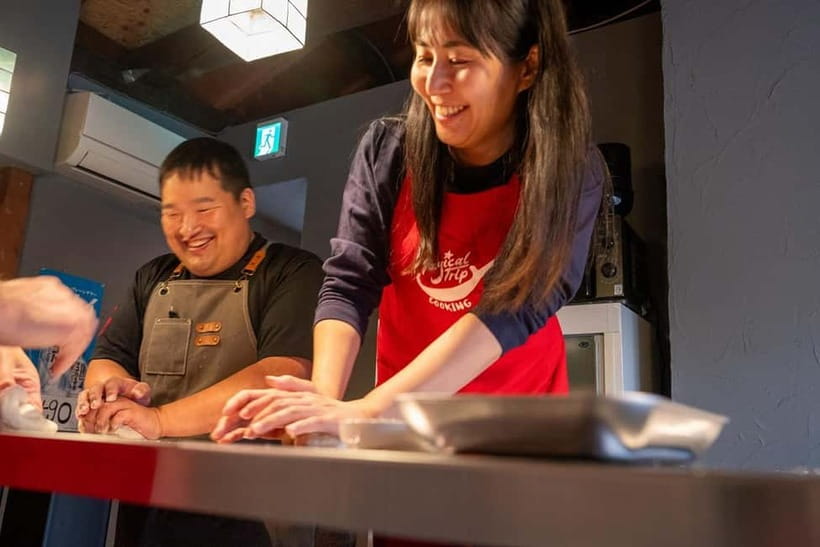
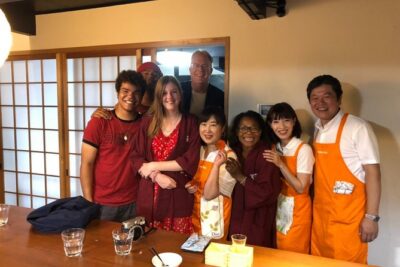
The class takes place in a real restaurant, which gives it a practical feel. You are learning in a working food environment rather than in a hotel meeting room or a large teaching kitchen. The setting can help connect the lesson to the way Japanese food is actually served and enjoyed.
The group limit is eight people. That is small enough for the instructor to watch your technique and answer questions, while still giving the class a social feel. The experience may work well for solo visitors, couples, families, and friends who want an activity with more participation than a standard food tour.
The class is suitable for all ages, and no prior cooking experience is required. Children and first-time cooks can take part, although the adults in a group will need to judge what works best for their own children. The supplied information does not give a specific minimum age or details about special dietary arrangements, so ask the provider directly if you have food allergies or dietary restrictions.
The English instruction is another practical advantage. The guide handles communication in English, while the udon master provides the cooking expertise. No individual guide names are provided, so you should not expect to choose a particular instructor.
Other cooking classes in Kyoto
Getting to the meeting point in central Kyoto
You meet at the 7-Eleven at Kyoto Kawaramachi-Takoyakushi. From Exit B3 of Kyoto-Kawaramachi Station on the Keihan Kyoto Line, the walk takes about three minutes. From Exit 3 of Gion-Shijo Station on the Keihan Main Line, allow about nine minutes.
That central location is convenient if you are already exploring Kawaramachi, Gion, or the shopping streets nearby. I would arrive a little early, especially if you are navigating Kyoto’s station exits for the first time. The meeting point is a convenience store, not the cooking venue itself, so you need to be ready to identify the correct place before the class begins.
The location also makes this easy to fit into a day of sightseeing. You can schedule it between visits around central Kyoto instead of losing time traveling to a distant suburb. The supplied details do not state how far the class venue is from the meeting point, so follow the guide from the designated meeting spot.
Is $83 a fair price?
At $83 per person, the price is not cheap for a two-hour meal, but it covers more than food. You are paying for an English-speaking guide, an udon master, ingredients, instruction, two drinks, a mini sake tasting, recipes, and tour photos. For someone who wants a social activity and a practical lesson, that package can make sense.
The strongest value comes from the personal participation. You handle the dough, prepare the planned rice dishes, fry tempura, and eat the results. A restaurant meal would give you the food, but not the process or the English recipe set for repeating it at home.
The value drops if the session is much shorter than advertised or if several listed dishes are omitted. A reported duration of about one hour and 20 minutes is notably shorter than the current two-hour listing, and the earlier description referenced 2.5 hours. I would not ignore that difference. Before booking, confirm the expected length and which dishes will actually be prepared.
The included recipes help protect the value after you return home. They are written in English and designed around ingredients you can find at home. That makes the class more than a one-off meal, though your local ingredients may not produce exactly the same result.
Timing, cancellation, and what to expect
The listed duration is two hours, and starting times vary by availability. Plan for a focused session rather than a slow half-day cooking school. The class moves from dough preparation to the other dishes and then to eating, so you should arrive ready to take part from the start.
The activity offers free cancellation up to 24 hours in advance for a full refund. You can also reserve now and pay later, which is useful when you are arranging several Kyoto activities and do not want to commit all your money at once.
Ingredients are provided. You do not need prior cooking experience or special supplies. The class is conducted in English, and the group is limited to eight participants.
I would wear clothes you can cook in and avoid arriving with a packed schedule immediately afterward. The provider does not state how much time is spent eating, and the actual length has varied according to the available account. Leave some breathing room rather than booking a temple visit at the exact end time.
Who will enjoy this Kyoto cooking class?
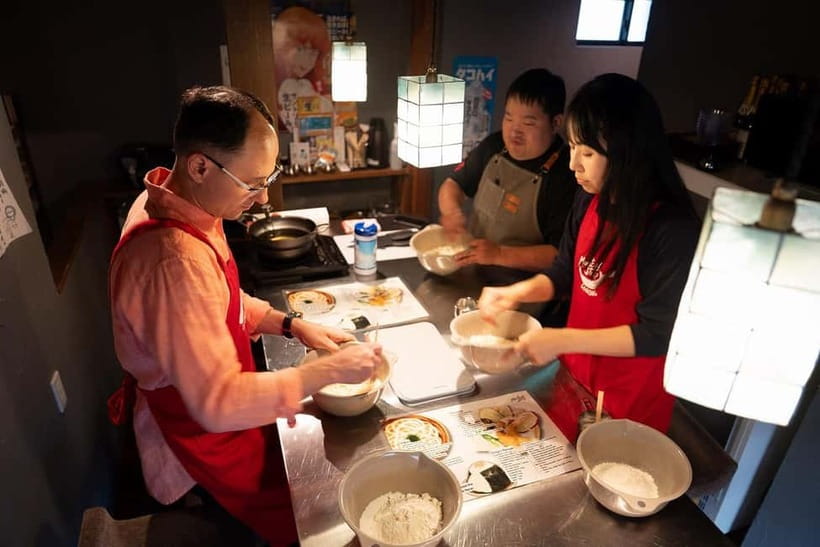
I would recommend it most strongly if you like participating in your meals. The class suits you if kneading dough, shaping rice, and frying food sounds more appealing than simply watching a chef work.
It is also a good fit for families and small groups who want a shared activity. The all-ages format and lack of required experience make the class approachable, while the meal gives everyone a clear reward at the end.
You may want a different experience if you are a serious home cook seeking advanced instruction. The udon dough work is the most clearly hands-on part, while the tempura batter may already be prepared and the udon cooking and broth may not be covered. This is a friendly introduction, not a full professional course.
I would also think twice if you have a strict food requirement. The available details do not explain substitutions, allergens, or vegetarian options. Ask before reserving rather than hoping the menu can be changed on the day.
Should you book it?
Book this class if you want a central Kyoto activity that combines hands-on udon making, a generous meal, English guidance, and a small social group. The attentive instruction, real restaurant setting, included drinks, and take-home recipes give it real appeal.
Approach it with flexible expectations. The menu and duration may not be delivered exactly as written, and one session focused mainly on dough rather than the complete udon bowl, sushi, and tempura process. Confirm the schedule and dishes before booking, especially at $83 per person.
If you do that, this can be a pleasant way to spend part of a Kyoto day and gain a skill you can try at home. If your priority is detailed instruction in every listed dish, choose it only after the provider confirms the full menu.
FAQ
How long does the Kyoto cooking class last?
The activity is currently listed as two hours. One verified account reported that the full session, including the meal, lasted about one hour and 20 minutes, so the actual timing may vary.
What dishes are included?
The planned menu includes udon, inari sushi, and tempura. The experience also describes seasoning rice and shaping onigiri and inari sushi.
Will I make udon from scratch?
Yes. You begin with flour and water, then mix, knead, and roll the dough by hand. The available information does not guarantee that you will also cook the noodles or prepare the broth.
Is the class taught in English?
Yes. An English-speaking local guide leads the communication, together with an udon master.
Do I need cooking experience?
No. The class is designed for beginners, and no previous cooking experience is required.
How many people can join the class?
The group is limited to eight participants.
Are drinks included?
Yes. The package includes two drinks and a mini sake tasting experience.
Where do I meet the guide?
Meet at the 7-Eleven at Kyoto Kawaramachi-Takoyakushi. It is about a three-minute walk from Exit B3 of Kyoto-Kawaramachi Station or a nine-minute walk from Exit 3 of Gion-Shijo Station.
More Workshops & Classes in Kyoto
More Cooking Classes in Kyoto
More Cooking Classes in Kyoto
More tours in Kyoto we've reviewed











Cooking Classes, compared.
 ★ 5.0Ramen Cooking Class at Ramen Factory in KyotoFrom $131
 ★ 4.9Kyoto: Ramen Cooking Class at a Ramen Factory with SouvenirFrom $1271h 30m
 ★ 5.0Kyoto: Ramen, Gyoza, and Onigiri Cooking ClassFrom $901h 30m
 ★ 5.0Kyoto: Japanese Washoku Bento Small Group Cooking ClassFrom $582h 30m
 ★ 4.9Kyoto: Afternoon Japanese Izakaya Cooking ClassFrom $673 hours
 ★ 5.0Izakaya Style Cooking ClassFrom $71