
Reviewed · 1-DAY TOURS
Osaka Day Trip from Kyoto with a Local: Private & Personalized
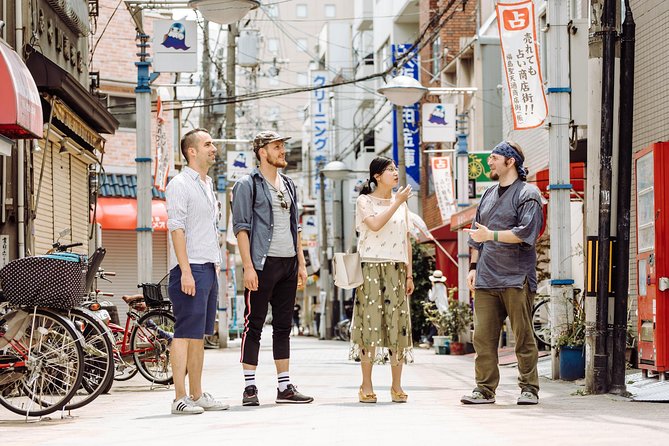
Osaka is close enough to Kyoto for an easy day trip, yet different enough to feel like a new chapter. This private outing lets your host shape the day around you, from Osaka Castle and Namba to anime shops, youth districts, old-fashioned Shinsekai, and the neon spectacle of Dotonbori.
I like the one-group format, which gives you room to change pace and ask for a different focus. I also like the personal guide match. Pam, Tiana, and Maria have each been praised for warmth, planning, photography, or simply making Osaka easy to enjoy.
The main catch is value. At $330.15 per person, before food, admission fees, and transport, this makes more sense for a small group that wants help than for independent visitors happy to follow a map and train signs.
In This Review
- Key points to know before you book
- From Kyoto Station to a very different Osaka
- Osaka Castle, the classic first stop
- Denden Town for anime, games, and electronics
- Shopping along a 600-meter arcade
- Amerikamura, Osaka’s youth-culture quarter
- The lion-headed shrine in Namba
- Shinsekai and the Tsutenkaku view
- Dotonbori after dark or in the late afternoon
- What the guide adds to the day
- Is $330.15 per person fair?
- Who should choose this Osaka day?
- Should you book it?
- FAQ
- Where does the tour begin?
- Where does the tour end?
- How long does the experience last?
- Is this a private tour?
- Is the route fixed?
- Can the tour include Osaka Castle?
- Is hotel pickup in Kyoto available?
- Are transport costs included?
- Are food and drinks included?
- Are attraction tickets included?
- Can I bring a service animal?
- Can most people participate?
- What is the cancellation policy?
Key points to know before you book
- A private Osaka day from Kyoto: You spend about eight hours with your own host rather than joining a large group.
- Your route is flexible: The listed districts are examples, not guaranteed stops. Your host chooses the final plan with your interests in mind.
- Several Osakas in one day: The experience can link castle grounds, anime culture, shopping, youth fashion, shrine architecture, old Osaka, and Dotonbori.
- Transport is organized from Kyoto Station: Your host arranges the journey from the meeting point, but transport costs are normally extra.
- Food is not included: You pay for meals, drinks, and attraction tickets separately, so budget beyond the tour price.
- Best for travelers who value company and local guidance: It suits first-time visitors, families, and small groups who want a tailored day rather than a fixed bus route.
From Kyoto Station to a very different Osaka
The day begins at Mister Donut in the JR Kyoto Station Building. That is a sensible meeting point, but give yourself time to find it inside the large station complex. The tour ends back at the same meeting point, so you are not left to solve the return journey on your own.
Your host organizes the transport from Kyoto Station. This is useful because a day trip can lose its shine when you are staring at train platforms, fares, and timetables. Still, do not mistake organized transport for included transport. The cost of getting around is extra unless you have a Japan Rail Pass, in which case transport will be covered according to the stated terms.
The ride between Kyoto and Osaka changes the mood quickly. Kyoto is known for temples and traditional streets. Osaka is more direct, more commercial, and more playful. The point of this tour is not simply to tick off Osaka’s famous sights. It is to help you decide which side of the city fits your interests.
Tell your host early if you care most about history, shopping, anime, architecture, food, photography, or nightlife. The experience is strongest when you give the day a clear direction. If you want a little of everything, say so, but remember that eight hours still has limits.
Other private tours in Kyoto
Osaka Castle, the classic first stop
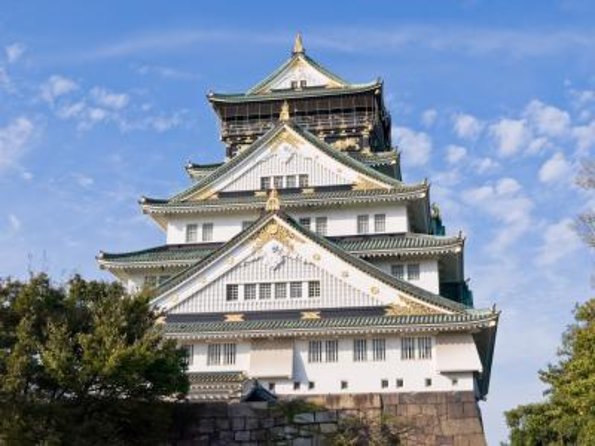
Osaka Castle is the most obvious anchor for the day, and for good reason. It gives you a major landmark and a sense of Osaka’s past before the route moves into shopping streets and entertainment districts.
The castle was the favorite stop for Maria’s group, and that makes sense even for visitors who are not castle enthusiasts. It is a visually strong place to begin, with broad grounds and a memorable exterior. Your host can help put the visit into the wider shape of the day rather than leaving you to wander without context.
There is one practical point to watch. Admission tickets are not included. If you want to enter any paid part of the castle complex, you will pay separately. Since the exact route depends on your host, ask in advance if the interior is part of your plan or if the visit will focus on the grounds and exterior.
Do not let the castle create the wrong expectation. Osaka is not only a historic city. The most successful day here usually shifts between old landmarks and present-day districts. If you prefer temples and formal gardens at every stop, this may not be your ideal excursion from Kyoto.
Denden Town for anime, games, and electronics
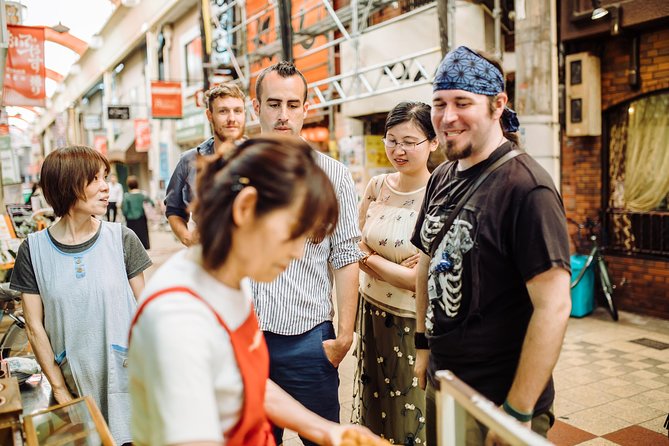
Denden Town, also called Den Den Town, gives you a very different view of Osaka. The area is known for electronics shops and stores focused on anime, manga, and games. It is especially well suited to anyone with a serious interest in Japanese pop culture.
You do not need to be an otaku to enjoy the district. Browsing the shop windows and watching the local rhythm can be enough. The area works well as a change of pace after a castle visit, particularly if your group includes teenagers or adults who want something far removed from shrine and temple sightseeing.
The limitation is obvious: if electronics, character goods, and games do not interest you, this stop may feel less rewarding than the castle or Dotonbori. That is exactly why the private format matters. You can ask your host to shorten this part, replace it, or skip it altogether.
The listing gives no promise that Denden Town will appear on every route. It is one of the possible areas, not a fixed guarantee. Treat the examples as a menu of ideas and discuss them before the day begins.
Shopping along a 600-meter arcade
The large shopping arcade is another possible stop. It stretches for more than 600 meters and lines the route with clothing shops, character goods, cafés, and restaurants.
This is a useful option if you want souvenirs that go beyond the usual temple gift shop. You may find Osaka-themed items, fashion, food-related purchases, and character products in one long walk. The length also makes it easy for each person in a private group to browse at their own speed.
Keep your luggage in mind. A shopping district can quietly eat up an hour or more, and the tour already includes transport and walking. If you have a fixed evening plan in Kyoto, tell your host before the route develops around shopping.
Food and drinks are not included. That gives you freedom, but it also means the final cost can rise. You pay for anything you eat, along with admissions and ordinary transport if you do not have a Japan Rail Pass.
Amerikamura, Osaka’s youth-culture quarter
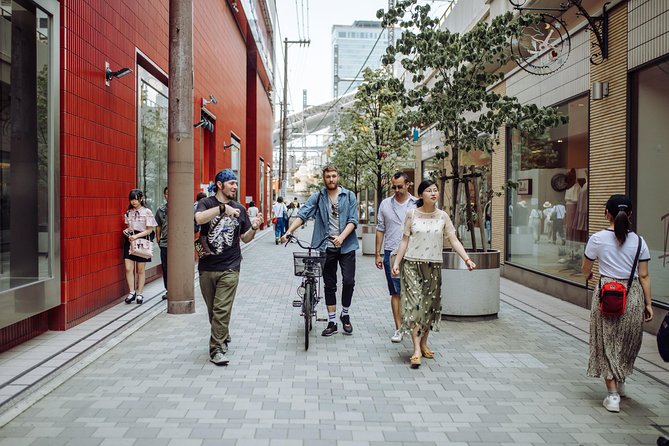
Amerikamura offers a different kind of city walk. Cafés, galleries, shops, thrift stores, indie music, and American-inspired youth culture shape the area.
I would choose this stop if you like street fashion, secondhand shopping, unusual art, and the less polished side of a city. It is also a good fit for a group that wants to see where younger locals spend time rather than moving from one formal sight to another.
The district is described as a maze, so a host can be useful here. A private guide may help you make sense of the mix of small shops and side streets without turning the visit into a shopping assignment.
Still, Amerikamura is not a must-see for every visitor. If you have limited time and want Osaka’s strongest landmarks, you may prefer Osaka Castle, Shinsekai, and Dotonbori. Use the personalized route to make that choice rather than trying to force every suggested area into one day.
A few more Kyoto tours and experiences worth a look
The lion-headed shrine in Namba
In the middle of Namba, the shrine with the enormous lion’s head offers one of the day’s most unusual photo stops. The lion’s mouth encloses an entrance stage, and local belief says it swallows bad spirits and brings good luck.
This is the kind of place that benefits from a guide’s timing and explanation. It is compact, distinctive, and easy to pair with a walk through Namba. You get a traditional religious site without leaving the city’s entertainment core.
The stop also shows why a personal route can work better than a simple list of major attractions. You are not only seeing the famous Osaka image. You are adding smaller, stranger details that make the city easier to remember.
Do not assume the shrine is always included. Your host selects stops based on your preferences, and the day may differ from the examples. If you want this shrine specifically, request it when planning your route.
Shinsekai and the Tsutenkaku view
Shinsekai was designed with Paris and New York in mind, and its art deco buildings give the neighborhood a look unlike the rest of Osaka. After falling into disrepair after World War II, the area is now seeing new bars and restaurants alongside older attractions.
That contrast is the appeal. Shinsekai does not feel polished in the same way as a modern shopping complex. It has an older entertainment character, colorful streets, and a sense of a district being renewed without losing all of its past.
The Tsutenkaku Tower is often called the Eiffel Tower of Osaka. Going up can give you broad city views, but tower admission is not included. Ask your host about the ticket before you commit, especially if you are watching the budget.
Shinsekai is a good choice for travelers who want atmosphere and architecture rather than another shopping stop. It may be less rewarding if your group has little interest in older neighborhoods, bars, or city views.
Dotonbori after dark or in the late afternoon
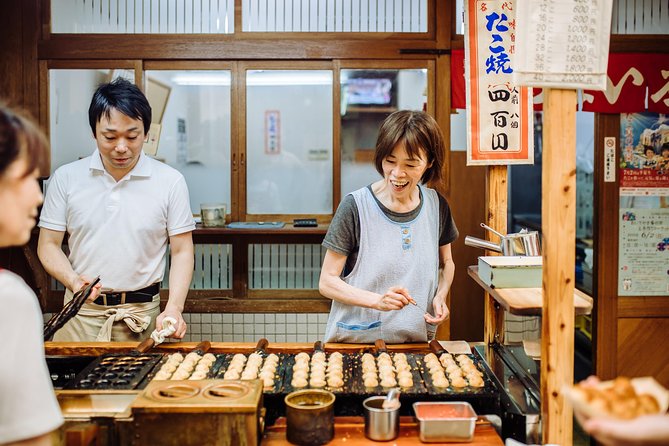
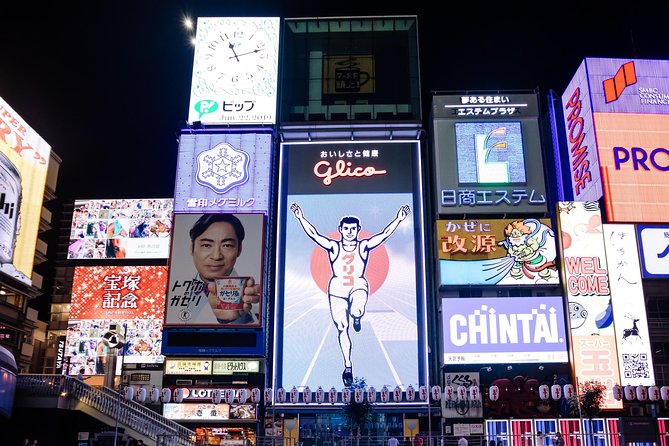
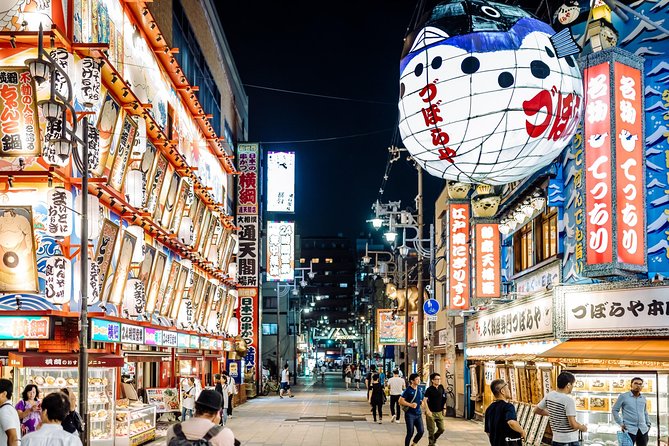
Dotonbori is the great visual payoff. The canal is lined with neon-covered buildings, dramatic signs, restaurants, and shops. From the water, you get a different view of the entertainment district, then you can walk through the arcade and take in the famously flashy streets.
This is the part of Osaka most likely to deliver the pictures you expect. It is also the place where the city’s food reputation feels most present, even though your meal is not part of the tour price. Your host can help you decide how much time to give the canal, the arcade, and a meal break.
Tiana’s afternoon and evening route is a useful example of the format. With only part of a final day available, she built a plan mixing attractions, street food, and nightlife, and also took photographs. That suggests you should tell your host if you want pictures of your group, though photography is not listed as a guaranteed service.
Dotonbori can be visually loud and crowded. If you prefer quiet streets, it may be tiring after several hours on foot. The private arrangement lets you adjust the pace, but it cannot change the character of the district.
What the guide adds to the day
The biggest benefit here is not a special ticket or a private vehicle. It is having one person shape a complicated city day around your group.
Pam has been praised for adapting the route to her group’s recommendations, keeping the mood warm, and making sure everyone returned safely. Tiana put together a short afternoon and evening that balanced sights, food, and nightlife, with photography as an extra strength. Maria made Osaka Castle the center of a day her group enjoyed.
These examples point to the experience’s strongest quality: the host matters a great deal. City Unscripted matches a host to your tastes and personality, but a match can never be guaranteed perfectly. The more clearly you explain what you want, the more useful the planning conversation becomes.
You should also be comfortable speaking up. A private tour is not automatically a perfect tour. If you need a rest, want more time for lunch, or have no interest in anime shops, say so. The flexible format gives you that option.
The tour is described as a walking experience. Wear comfortable shoes and expect to spend much of the day moving through stations, streets, arcades, and districts. No private vehicle is included.
Is $330.15 per person fair?
The listed price is $330.15 per person. That is a serious sum for an eight-hour walking experience, especially because food, drinks, admission tickets, and most transportation are extra.
The price becomes easier to justify for a small private group. You are paying for a host, planning help, route changes, and the ability to focus on your own interests. A family with limited time, a couple celebrating a special occasion, or first-time visitors uneasy about handling a Kyoto to Osaka day may find that convenience worth the premium.
It is harder to justify for independent visitors who already understand Japanese rail travel and know exactly which Osaka sights they want. Those visitors may prefer to buy their own train tickets, choose free public areas, and spend the difference on food or admission fees.
Group discounts are available, which may improve the calculation for larger parties. Check the final booking price carefully, since the per-person figure and the extras can affect the total.
The overall score is 4.2 from six ratings. That is a solid but not flawless signal. The strongest praise centers on friendly hosts, personal planning, photography, and a good mix of activities. The clearest criticism is also useful: one person found the city beyond Osaka Castle too focused on shopping and eating. That is less a verdict on Osaka than a warning to set your priorities before the tour.
Who should choose this Osaka day?
I would point this tour toward:
- First-time visitors who want help handling the Kyoto to Osaka connection
- Small groups with different interests
- Families who need a flexible pace
- Shoppers, anime fans, and people interested in youth culture
- Visitors who want Osaka Castle, Dotonbori, and other districts in one planned day
- Anyone who values a friendly host and does not want to manage every detail
I would hesitate if you want a low-cost day, dislike walking, or already have a precise Osaka plan. I would also think twice if your main interest is traditional Kyoto-style sightseeing. Osaka offers that famous castle, but the possible route leans heavily toward shops, entertainment, modern culture, and street scenes.
You can cancel for a full refund up to 24 hours before the start time. Changes made within 24 hours are not accepted, so keep that deadline in mind.
Should you book it?
Book this experience if you want Osaka to feel personal rather than self-directed. The strongest version of the day combines two or three major areas, such as Osaka Castle, Shinsekai, and Dotonbori, with one interest-based district such as Denden Town or Amerikamura.
Before booking, decide what you want your Osaka to be. Tell your host if the day should center on history, shopping, anime, architecture, food, photography, or nightlife. Also budget for transport, meals, drinks, and entrance fees.
Skip it if the price feels high for an eight-hour walk or if you are comfortable using public transport on your own. Osaka is easy to explore independently when you have a clear plan. This tour earns its keep through the human help, not through included attractions.
FAQ
Where does the tour begin?
It begins at Mister Donut in the JR Kyoto Station Building, at 901 Higashishiokōjichō, Shimogyo Ward, Kyoto.
Where does the tour end?
The activity ends back at the meeting point at Kyoto Station.
How long does the experience last?
The tour lasts approximately eight hours.
Is this a private tour?
Yes. Only your group participates in the activity.
Is the route fixed?
No. The host creates a personalized route, and the places visited may differ from the suggested areas.
Can the tour include Osaka Castle?
Osaka Castle is one of the possible highlights, but the final route is chosen according to your interests and preferences.
Is hotel pickup in Kyoto available?
Hassle-free Kyoto hotel pickup is available, although the stated meeting point is Mister Donut at the JR Kyoto Station Building.
Are transport costs included?
Transportation costs are not normally included. Transport will be covered if you have a Japan Rail Pass, according to the stated tour terms.
Are food and drinks included?
No. You pay separately for all food and drinks.
Are attraction tickets included?
No. Tickets to attractions are not included.
Can I bring a service animal?
Yes. Service animals are allowed.
Can most people participate?
Yes. Most travelers can participate, and the activity is near public transportation.
What is the cancellation policy?
You can cancel at least 24 hours before the start time for a full refund. Cancellations or changes made less than 24 hours before the start time are not accepted for a refund.
More 1-Day Tours in Kyoto
More Private Tours in Kyoto
More tours in Kyoto we've reviewed

1-Day Tours, compared.
 ★ 5.0PERFECT KYOTO 1-Day Bus TourFrom $129
 ★ 4.8Kyoto: Fushimi Inari, Kinkakuji, Bamboo Grove 1 Day Bus TourFrom $122510 minutes - 9 hours
 ★ 5.010 Must-see Spots in Kyoto One Day Private Tour (up to 7 people)From $179
 ★ 4.0Kyoto 1 Day Tour from KyotoFrom $168
 ★ 4.5Kyoto and Nara Day Trip from KyotoFrom $194
 ★ 4.0From Tokyo 1-Day Kyoto English-guided Tour by Bullet TrainFrom $452