
Reviewed · ARASHIYAMA & BAMBOO TOURS
Osaka/Kyoto: Katsuoji, Kinkakuji, Arashiyama 1-Day Bus Tour
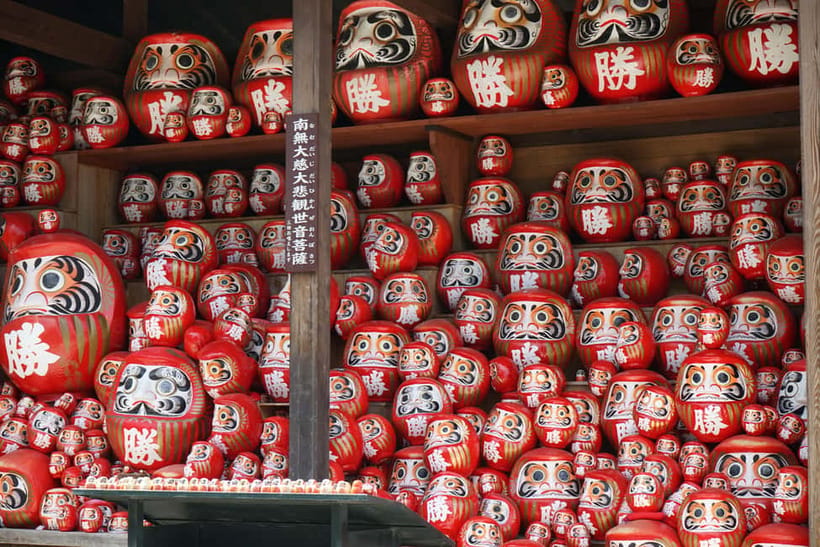
Katsuoji’s hillside temple, covered with bright red Daruma dolls, gives this day trip its most unusual opening. You can make a wish, dot a Daruma’s eye, then spend the rest of the day moving through bamboo, river views, old shrines, and the gold-leafed Kinkakuji.
I like the well-planned mix of culture and nature, and I like having bus transport between Osaka and Kyoto sights that are spread across a wide area. Guides such as Willa, Theodore, Amanda, Steven, and Eve have been praised for clear directions, history, humor, and keeping the day on time. The main catch is limited time, especially at Katsuoji, where one hour may not cover every corner or a long entrance line.
In This Review
- Key points at a glance
- Why this day trip works
- Katsuoji and the Daruma tradition
- Arashiyama gives you room to choose
- Togetsukyo Bridge and the old Kyoto view
- Kimono Forest and Nonomiya Shrine
- Kinkakuji closes the day in gold
- What the bus adds to the day
- Guides and the pace of the day
- Meeting points, timing, and what to bring
- Is $56 a fair price?
- Who should book this day?
- Should you book it?
- FAQ
- How long does the tour last?
- Where can I start the tour?
- Where does the tour finish?
- Which languages are available?
- Are Katsuoji and Kinkakuji admission fees included?
- Are meals and drinks included?
- Is transportation included?
- Can I cancel the booking?
- Is the tour suitable for wheelchair users?
Key points at a glance
- Daruma wishes at Katsuoji: See thousands of good-luck dolls and learn the temple’s eye-dotting custom.
- Two and a half hours in Arashiyama: Use your free time for the Bamboo Grove, Kimono Forest, Togetsukyo Bridge, and Nonomiya Shrine.
- Kinkakuji in a short visit: Allow about 40 minutes to view the Golden Pavilion and its reflecting pond.
- Bus travel saves energy: Toll fees, parking, fuel, and return transport are included.
- English and Chinese support: The guide sends vehicle and meeting details by email before the trip.
- Good value at $56: Admission, food, drinks, insurance, and personal purchases are extra.
Why this day trip works
This is a sightseeing day built around contrast. Katsuoji feels devotional and playful, with red Daruma dolls scattered across the grounds. Arashiyama slows the pace with bamboo, water, shrines, and traditional design. Kinkakuji closes the day with one of Japan’s most recognizable views.
I like that the stops do not all ask the same thing of you. At Katsuoji, you take part in a small ritual. In Arashiyama, you walk and choose your own route. At Kinkakuji, you pause for a famous view and a short visit.
The tour is especially useful if you are staying in Osaka and want to see Kyoto without planning several train connections and local buses. It also works from Kyoto if you prefer organized transport and a guide to keep the day moving.
This is not a slow temple tour. The day lasts about nine to ten hours, and the schedule has to cover a lot of ground. You will get free time at the sights, but you will also need to watch the meeting times carefully.
A few more Kyoto tours and experiences worth a look

Katsuoji and the Daruma tradition
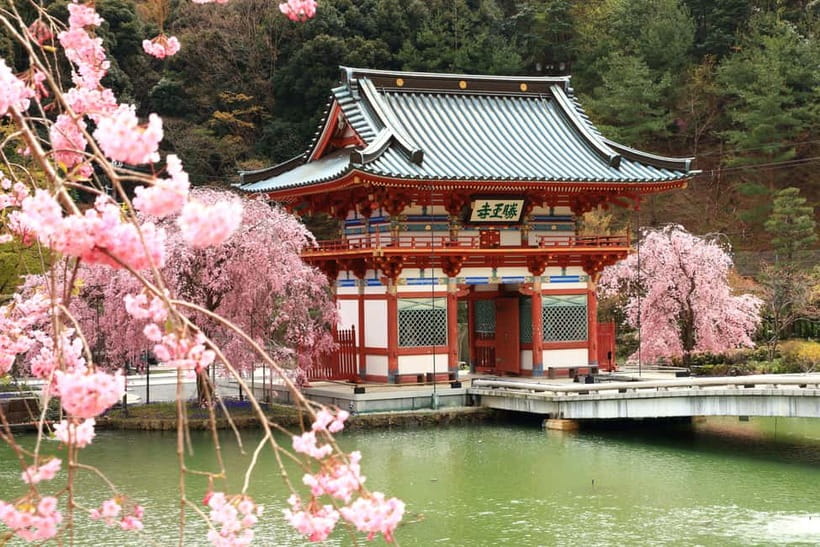
Katsuoji is the most distinctive stop on the schedule. The temple has more than 1,300 years of history and is known as the Temple of Victory. That idea of victory is linked to good fortune and success, so the grounds are filled with Daruma dolls.
Daruma are rounded Japanese good-luck figures. The usual custom is to fill in one eye while making a wish, then complete the second eye after the wish comes true. At Katsuoji, this tradition becomes part of the setting rather than a display behind glass. You see Daruma in many places around the temple grounds, creating a memorable visual scene.
The tour allows about one hour here. That is enough to see the main areas, take photographs, and spend a little time with the prayer custom. It may feel short if you want to examine every detail, wait in a long line, or move at a very gentle pace. One direct piece of advice: if Katsuoji is your main reason for booking, keep your visit focused and check the return time as soon as you arrive.
Admission to Katsuoji is not included, and the price is not specified in the tour details. Bring cash or a payment method suitable for the temple, but do not assume the $56 covers entry.
Arashiyama gives you room to choose
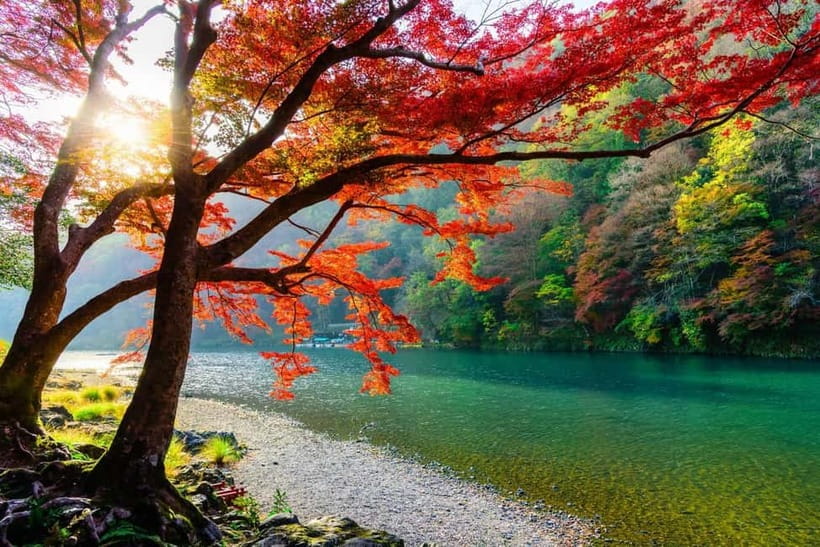
Arashiyama receives about two and a half hours, making it the most flexible part of the day. The area is known for its river, distant mountains, bamboo paths, shrines, and traditional sights. The schedule names several stops, but the time is yours to divide among them.
That freedom matters. You might spend most of your time on the Bamboo Grove and Togetsukyo Bridge, or move quickly through both to make room for Nonomiya Shrine and Kimono Forest. You will not have time for every possible Arashiyama attraction, so decide your priority before leaving the bus.
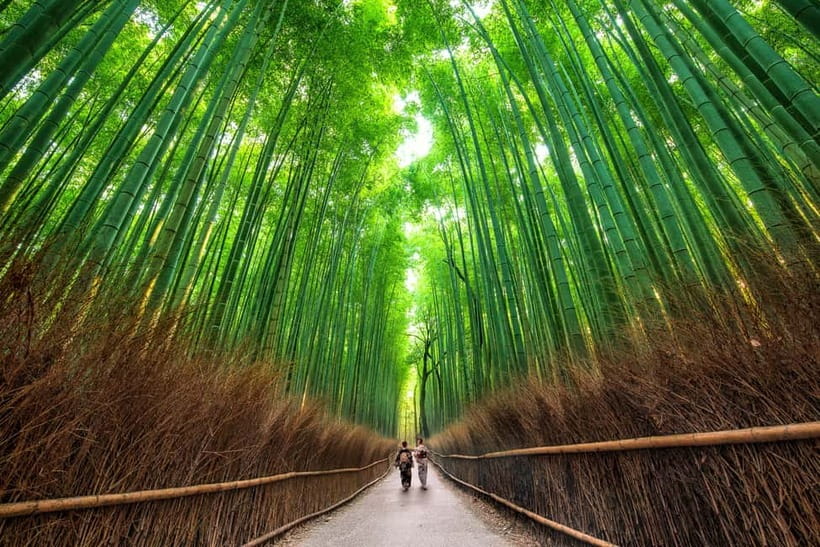
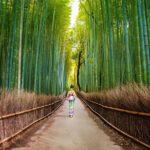
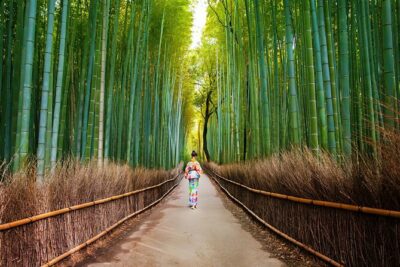
The Bamboo Grove is the stop most people picture when they hear Arashiyama. Tall bamboo rises on both sides of the path, and the sound of leaves shifting in the wind gives the walk a calm feel. Sunlight may filter through the stalks, though the mood changes with the weather and the number of people on the path.
I suggest walking at a steady pace rather than stopping at every few steps for photographs. The path is not long enough to justify losing track of the group, and the tour has another meeting time to protect.
Togetsukyo Bridge and the old Kyoto view
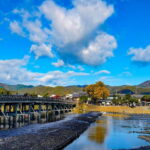
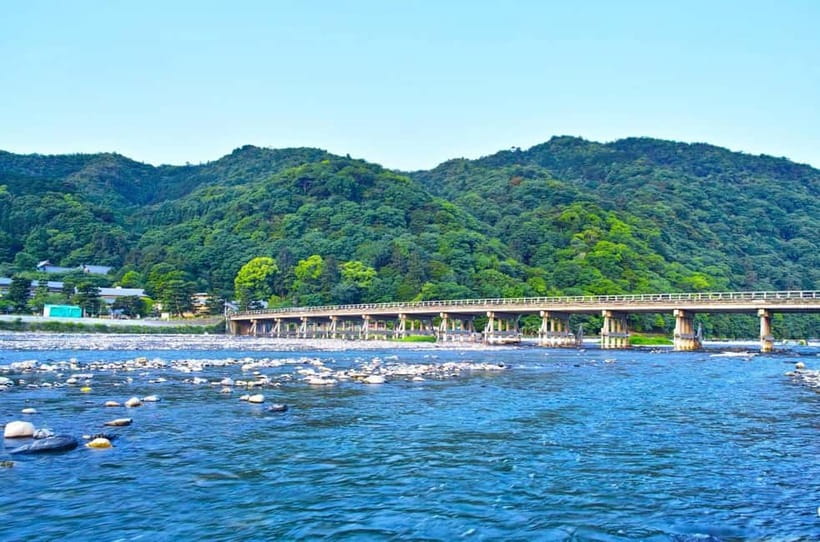
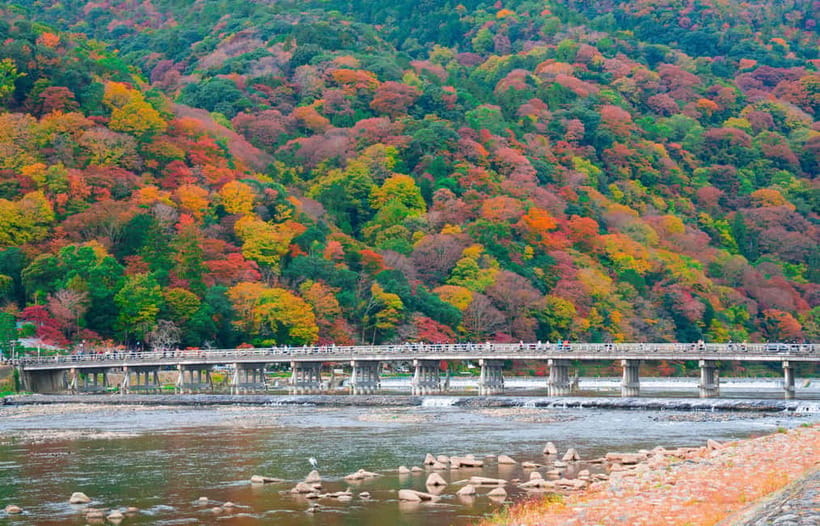
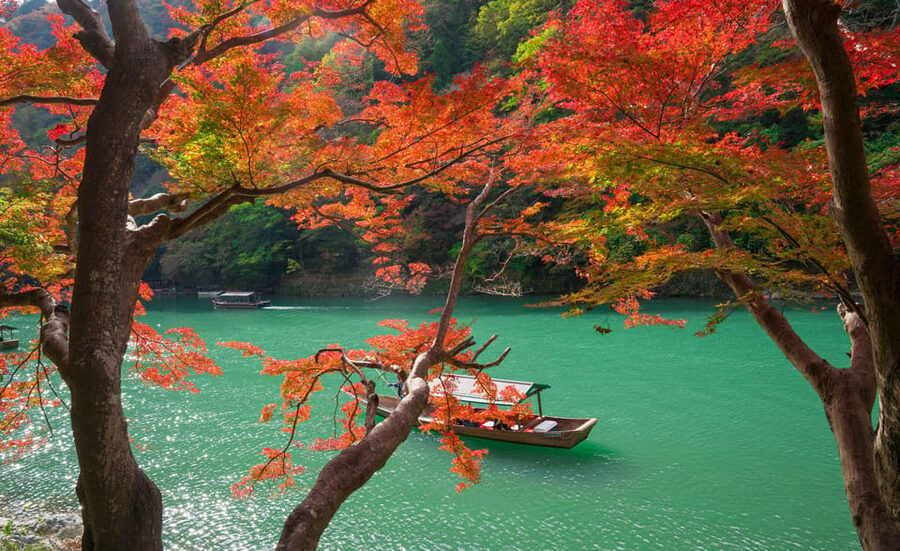
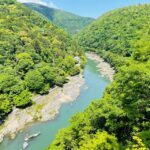
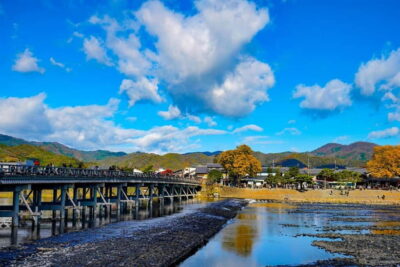
Togetsukyo Bridge crosses the Oi River and provides one of Arashiyama’s best-known views. From the bridge, you can look along the water toward the surrounding mountains and get a sense of why this area has long been tied to scenic pleasure and seasonal outings.
The bridge itself is a short stop, but it gives the day a welcome change from temple courtyards and narrow paths. Take a moment in the middle or at the side of the bridge for the broadest view. You will also find useful photo angles near the riverbanks, though the tour does not promise extra time for extended photography.
This is a good place to slow down for five minutes, breathe, and look beyond the camera screen. The charm is not complicated: river below, hills ahead, and a traditional bridge connecting the two.
Kimono Forest and Nonomiya Shrine
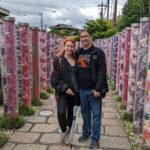
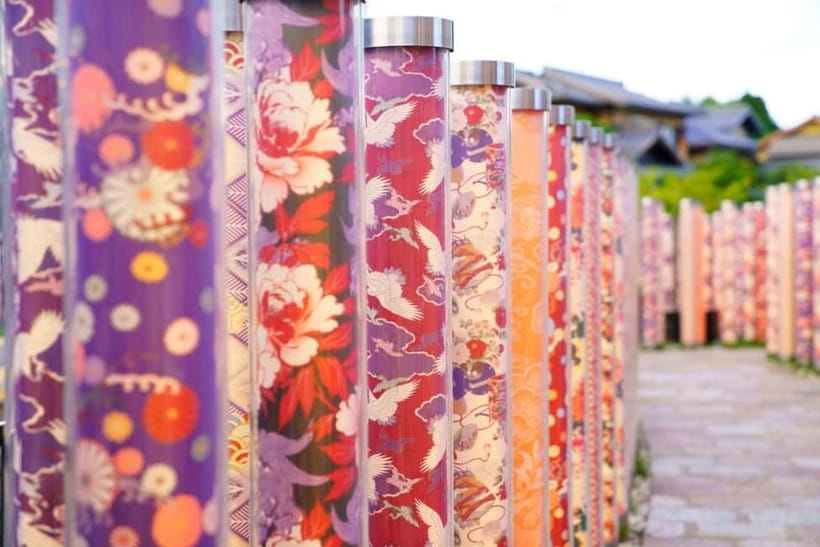
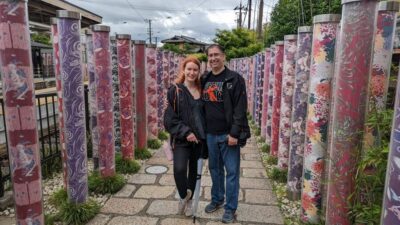
Kimono Forest is located near the Arashiyama station area. It consists of hundreds of transparent columns displaying colorful kimono fabrics. The columns form a decorative corridor, with light passing through the patterned cloth.
This is a quick but worthwhile contrast to the Bamboo Grove. Bamboo gives you a natural setting, while Kimono Forest presents Japanese textile design in a modern public space. If you are looking for a compact photo stop, this is one of the easiest places to fit into your Arashiyama time.
Nonomiya Shrine offers a more personal kind of visit. It is associated with prayers for love, health, and happiness. You can write a wish, hang a painted wooden plaque, and take a quiet pause before returning to the group.
The shrine is smaller than Kinkakuji or Katsuoji, so do not expect a long visit. Its value comes from the chance to take part in a simple local prayer custom. If you are traveling with a partner, this may be the most meaningful Arashiyama stop. If you are short on time, see the Bamboo Grove and bridge first, then fit in the shrine and Kimono Forest.
A few more Kyoto tours and experiences worth a look

Kinkakuji closes the day in gold
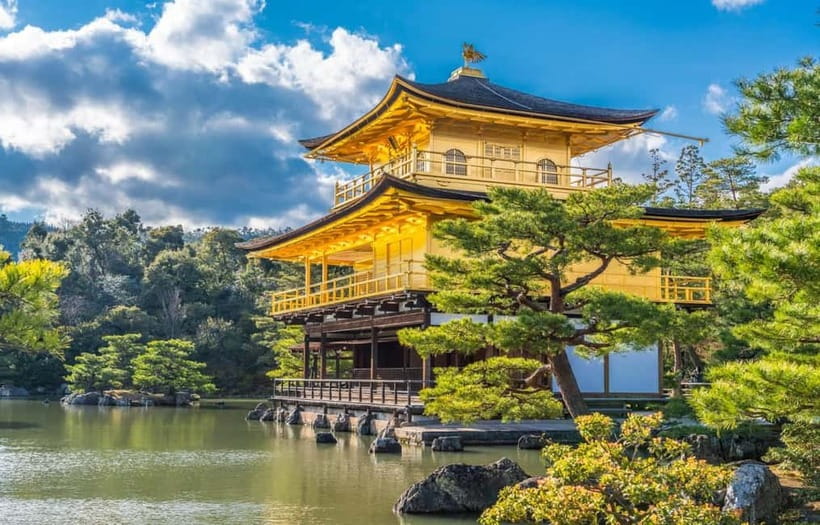
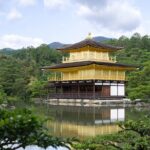
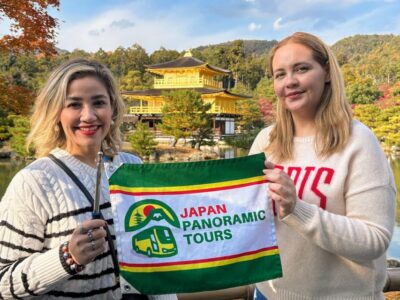
Kinkakuji, also called the Golden Pavilion, is the final major sight. The upper exterior is covered in gold leaf and reflected in the pond beside the temple. The view is polished, formal, and instantly recognizable.
You have about 40 minutes here. That is enough to follow the main viewing route, photograph the pavilion across the water, and look at the surrounding gardens. It is not enough for a slow examination of every path or a long stop at the souvenir areas.
Kinkakuji is a place where expectations can work against you. The pavilion is genuinely striking, but the visit is organized around one main sight and a defined walking route. You are not entering a quiet, empty retreat. You are seeing an important cultural site with a large number of other people and a firm schedule.
Admission to Kinkakuji is not included. The tour description also does not provide the current entrance price, so check before departure and budget separately for both temple admissions.
What the bus adds to the day
The practical strength of this experience is transport. The sights sit in different parts of Osaka and Kyoto, and moving between them independently would require planning train routes, local connections, walking time, and parking alternatives. The bus handles tolls, parking, fuel, and the return trip from the selected drop-off point.
The bus also gives you a place to rest between visits. This matters after walking through Arashiyama and temple grounds. The transport has been described as clean and comfortable, though one account noted an older vehicle with visible wear around seats and seatbelts. I would treat the bus as useful rather than luxurious.
Japanese law does not allow eating on the bus, so plan meals around the stops. Food and drinks are not included. Carry water, since the schedule is long and the walking portions can add up.
Traffic can affect the return time. If the guide and driver work overtime because of congestion, the company covers that cost, but delays can still happen. Avoid booking a tightly timed evening reservation immediately after the tour.
Guides and the pace of the day
The guide is important here because much of the experience is self-directed once you reach each stop. Guides named Willa, Theodore, Amanda, Steven, Chan San, and Eve have been praised for clear explanations, friendly energy, humor, and useful advice on using free time.
Willa’s communication before the day and her directions at each stop were particularly helpful for keeping the group together. Theodore was described as engaging and funny while also explaining history. Amanda was praised for explaining things clearly. Those details matter because a large sightseeing day can become confusing if meeting points are vague.
You should still expect to walk independently rather than follow a guide through every minute. This format suits you if you like choosing your own photographs, prayer time, and route. It is less suitable if you want a slow lecture at every temple or a fully guided cultural lesson from start to finish.
The company sends the guide and vehicle information by email before 9 p.m. the night before. Check your inbox, including spam folders, and save the details before going to bed. The meeting point depends on the option you book.
Meeting points, timing, and what to bring
There are two stated starting points:
- Harimaya Nippombashi 1-chome
- Kyoto Station Hachijo Entrance Square Sunken Garden
The same two places are used for drop-off. Select carefully, especially if you are staying in Osaka and returning to Kyoto, or the reverse.
Wear comfortable shoes. You will walk through temple grounds, bridge areas, shrine paths, and the Bamboo Grove. Sunscreen and water are sensible additions, and a camera will be useful at Katsuoji, Kimono Forest, Togetsukyo Bridge, and Kinkakuji.
The tour is not suitable for people with mobility impairments or wheelchair users. If you are bringing luggage or a child under three, note it when booking. Smoking is not allowed.
Is $56 a fair price?
At $56 per person, the tour offers solid value if your priority is seeing several major sights in one day. The price includes round-trip transfers, tolls, parking, fuel, and an English or Chinese-speaking guide. Those transport costs can add up when you cross between Osaka and Kyoto.
The value is weaker if you already know the rail system well, want long visits at each temple, or plan to eat and shop at leisure. You will pay admission separately at Katsuoji and Kinkakuji, and you will need to buy your own meals and drinks.
I see this as a transport-and-orientation bargain rather than a luxury guided tour. You are paying to cover distance efficiently, receive basic cultural context, and avoid handling the day’s road logistics yourself. At a listed rating of 4.6 out of 5 from 33 ratings, the experience has a strong overall record, with the clearest praise directed toward the guides and transport.
Who should book this day?
I would recommend it to a first-time visitor who wants a broad introduction to Kyoto sights while staying in Osaka or Kyoto. It also suits couples and families who value easy transportation, free time at each stop, and help with meeting points.
It is a good choice if you want:
- A single day covering Katsuoji, Arashiyama, and Kinkakuji
- English or Chinese guidance
- Bus travel with parking and tolls handled
- A blend of prayer, scenery, architecture, and photography
- The option to reserve now and pay later
- Free cancellation up to 24 hours before departure
I would hesitate if you use a wheelchair, have difficulty walking, need a slow schedule, or want to spend several hours at one temple. The tightest parts are the one-hour Katsuoji visit and the 40-minute Kinkakuji visit. Arashiyama gives you the most control, but you still need to return on time.
Should you book it?
Book this tour if you want a high-value sightseeing sweep with the hard transport work removed. Katsuoji gives the day a memorable spiritual beginning, Arashiyama supplies the walking and scenery, and Kinkakuji provides the famous final view.
Skip it if independent train travel feels easy to you and you would rather give one place a full day. For most visitors with limited time, though, the combination is sensible. Wear good shoes, budget for temple admissions and food, check the meeting email the night before, and keep your watch handy at every stop.
FAQ
How long does the tour last?
The experience lasts about nine to ten hours.
Where can I start the tour?
The available starting points are Harimaya Nippombashi 1-chome and Kyoto Station Hachijo Entrance Square Sunken Garden. The meeting point depends on the option booked.
Where does the tour finish?
The listed drop-off points are Kyoto Station Hachijo Entrance Square Sunken Garden and Harimaya Nippombashi 1-chome.
Which languages are available?
The tour provides a live guide in English or Chinese.
Are Katsuoji and Kinkakuji admission fees included?
No. Admission to both Katsuoji Temple and Kinkakuji Temple is not included.
Are meals and drinks included?
No. Meals and beverages are not included in the tour price.
Is transportation included?
Yes. Round-trip transfers from the selected meeting point are included, along with toll fees, parking fees, and fuel fees.
Can I cancel the booking?
You can cancel up to 24 hours in advance for a full refund. The tour also offers a reserve-now, pay-later option.
Is the tour suitable for wheelchair users?
No. The experience is not suitable for wheelchair users or people with mobility impairments.
More Kyoto Bus Tours in Kyoto
More Golden Pavilion & Temple Tours in Kyoto
More Arashiyama & Bamboo Tours in Kyoto
More tours in Kyoto we've reviewed



Arashiyama & Bamboo Tours, compared.
 ★ 4.8Kyoto: Fushimi Inari, Kinkakuji, Bamboo Grove 1 Day Bus TourFrom $122510 minutes - 9 hours
 ★ 4.1Osaka/Kyoto:Kinkakuji,Arashiyama,FushimiInariShrine,NaraParkFrom $66
 ★ 4.7Kyoto/Osaka: Nara, Fushimi Inari Taisha, Arashiyama Bus TourFrom $529 - 10 hours
 ★ 5.0Kyoto Arashiyama Walking Tour: Bamboo, Monkeys, Gardens & SecretsFrom $65
 ★ 4.8Arashiyama Bamboo, Temple, Monkeys, or Secret Sake BreweryFrom $875 hours - 330 minutes
 ★ 4.4Osaka/Kyoto: Arashiyama, Nara & Fushimi Inari Shrine w/LunchFrom $61