
Reviewed · WORKSHOPS
Private Art Sushi Roll Class in Kyoto
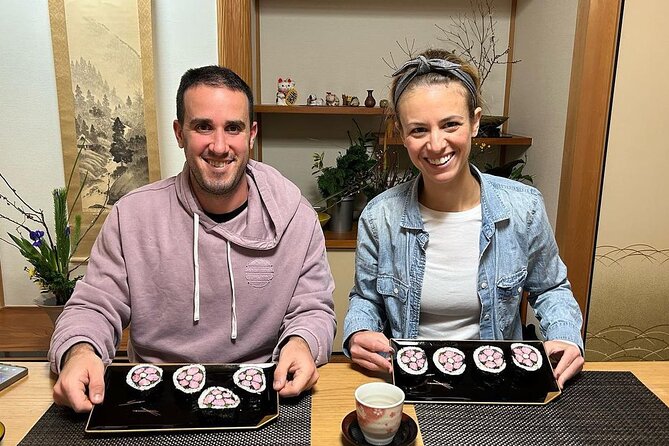
A sushi roll can be lunch, but in this Kyoto class it becomes a peach-flower design made from rice, seaweed, and natural food coloring. In about an hour, your private instructor Aya guides you through the careful assembly, then you slice the roll to reveal the picture inside.
I like the one-group-only format, which gives you room to ask questions and work at your own pace. I also like the traditional-home setting, tea or coffee, and the chance to wear a kimono or other Japanese clothing. The main consideration is timing: this is a compact class, and arriving more than 15 minutes late means you cannot join.
In This Review
- Key points at a glance
- What makes kazarimaki different from ordinary sushi
- Meeting Aya at a Kyoto home
- The 60-minute peach-flower sushi lesson
- Wearing a kimono on tatami
- What is included for the $93.32 price
- Why the private format suits families
- English instruction and the pace of the class
- Food choices and the final tasting
- Take-home skills, photos, and souvenirs
- Cancellation and practical planning
- Who should book this Kyoto sushi class?
- Should you book the Private Art Sushi Roll Class?
- FAQ
- How long does the sushi class last?
- Where does the activity start and finish?
- What time does the class begin?
- Do I need to bring socks?
- Is the class private?
- Are vegan and vegetarian options available?
Key points at a glance
- Make a peach-flower sushi roll: Build the internal pattern piece by piece, then cut the finished roll to reveal the design.
- Private instruction from Aya: Your group receives direct guidance in English, with time for questions and practical tips.
- Traditional clothing included: Women can wear a kimono, while men and children receive other traditional garments.
- Natural and flexible ingredients: The class uses plant-based edible colors and offers vegan and vegetarian options.
- A Kyoto home setting: The class takes place at SAKURA Experience Japanese Culture Nijo Home, not in a large cooking school.
- Bring socks: Shoes come off for the tatami room, and socks are required under Japanese custom.
What makes kazarimaki different from ordinary sushi
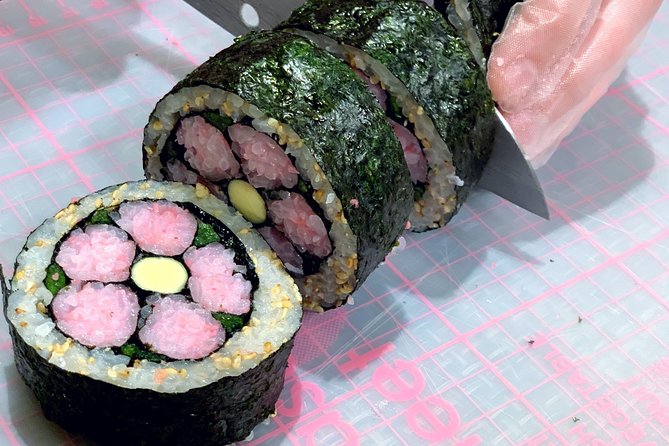
Kazarimaki means decorative sushi roll. Instead of placing fillings in the center and rolling everything into a simple cylinder, you arrange separate portions of rice and ingredients so they form an image inside the roll.
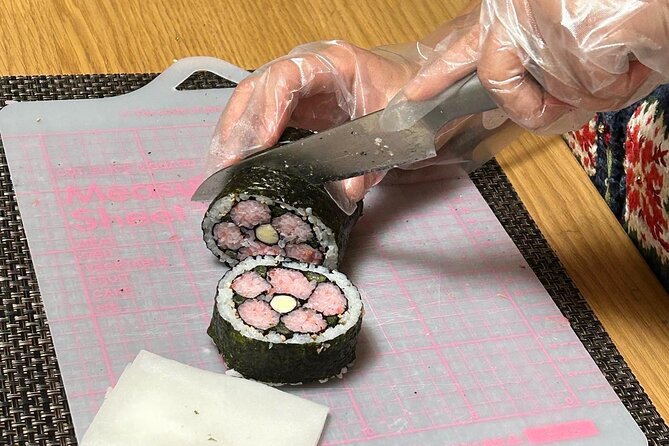
The design only appears when you cut through it. That moment gives the class its little piece of theater. Before slicing, your roll may look like a tightly wrapped bundle of rice and seaweed. After slicing, the peach-flower pattern appears in cross-section.
This style of sushi takes more planning than a standard maki roll. The colored rice and fillings must be placed in the right order, and the finished roll needs to hold together as you shape it. The class is designed to make that process manageable for beginners, but you still need to follow instructions closely.
I like that the activity teaches a real Japanese food craft without turning the lesson into a long lecture. You learn by handling the ingredients, shaping the rice, and watching the pattern develop. The result is both a meal and a small design project you can try again at home.
Other private tours in Kyoto


Meeting Aya at a Kyoto home
The meeting point is SAKURA Experience Japanese Culture Nijo Home at 660 Izumicho in Nakagyo Ward. The activity starts at 4:30 pm and ends at the same location, so you do not need to arrange a second pickup point after class.
The setting matters. A class in a private Japanese home feels more personal than a large commercial kitchen. You will sit on tatami, follow Japanese customs, and have a chance to see how a hands-on cultural lesson works in a domestic setting.
Aya leads the class in English. The experience also includes commentary from the instructor, so you can ask about the sushi-making process as you work. Aya’s husband, Manabu Ito, may help with photographs and cleanup. That is a useful touch for families and couples who want pictures of the finished roll without stopping the class to manage a phone or camera.
The tone is friendly and informal. The home setting can be a plus if you like direct contact with your hosts. If you prefer a polished cooking studio with several workstations and a professional restaurant feel, this may seem more modest. The tradeoff is a closer connection with the people teaching you.
The 60-minute peach-flower sushi lesson
The class is short, focused, and hands-on. In roughly one hour, you work toward one clear goal: a peach-flower patterned roll.
You begin by learning how the design will be formed. The instructor explains the role of the rice, seaweed, fillings, and edible colors. Rather than simply watching a demonstration, you assemble the parts yourself.
The color comes from edible pigments extracted from plants. This gives the roll its decorative look without relying on the bright artificial colors you might see in novelty food. The class also includes vegan and vegetarian options, which makes it easier to plan for different diets within a private group.
The main skill is placement. Decorative sushi depends on the arrangement of each section before the roll is closed. You may need to shape rice into separate portions, line up the pieces, and use the nori to hold the form together. It is a good lesson in why picture sushi is more demanding than it first appears.
The instructor’s patience matters here. One class participant described Aya as patient but suggested the activity may suit people with at least a little sushi-making experience. I would read that as a gentle warning rather than a barrier. Beginners can take part, but you should pay attention to each step and not rush the shaping.
At the end, you cut the roll and see the peach-flower pattern. This is the payoff, especially for children and families. If the design is not perfectly symmetrical, that is part of the fun. You are learning a specialized food craft, not operating a sushi factory.
Wearing a kimono on tatami
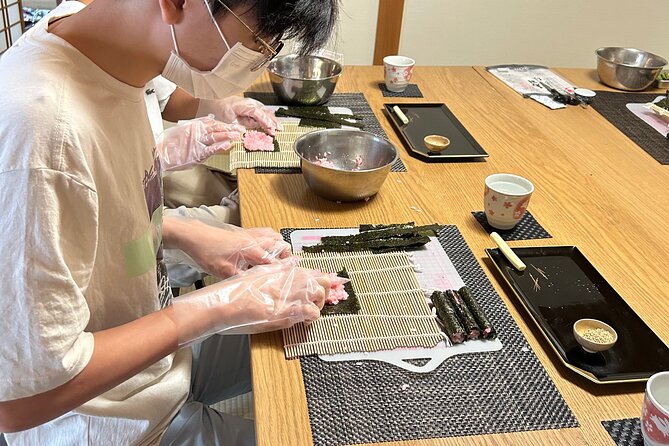
Traditional clothing is included as part of the experience. Women can wear a kimono, while men and children receive other traditional garments. This gives the class a stronger Japanese cultural setting than a cooking lesson alone.
You should bring socks. Shoes are not worn in the tatami room, and the host requires socks in keeping with Japanese custom. This is an easy detail to miss, so pack a pair even if you are wearing sandals.
Babies and toddlers can sit or sleep on the tatami mat. That makes the private format more useful for families with very young children, although the activity itself is built around the people making sushi. Anyone under 18 must attend with a parent or guardian aged over 21.
The clothing may also affect your expectations. You are dressing for a cultural activity, not receiving a full kimono fitting or a long formal ceremony. The important point is that the garments help set the scene and make the class feel distinct from a cooking lesson at home.
What is included for the $93.32 price
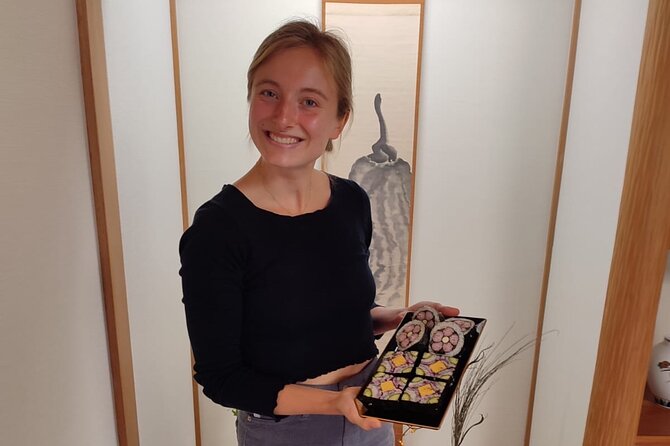
The listed cost is $93.32 per person. For a one-hour activity, that is not the cheapest food class in Kyoto. The value comes from the combination of private instruction, traditional clothing, ingredients, refreshments, and take-home materials.
You receive all sushi ingredients, bottled water, and tea or coffee. You also receive a booklet and a certificate at the end. The booklet gives the class more lasting value because it can help you remember the steps after returning home. The certificate is a small souvenir, but it may be especially appealing to children or anyone building a collection of cooking experiences.
The private format is the strongest part of the price calculation. Only your group participates, so you are not sharing the instructor with a room full of unrelated participants. A family, couple, or small group can ask specific questions and work together without worrying about a stranger’s pace.
Group discounts are available, though the exact discount is not specified. If you are booking for several people, check the total before deciding. For one person, the private arrangement may feel expensive. For a family or group splitting the cost of direct instruction, traditional clothing, food, and refreshments, it becomes easier to justify.
The class also gives you something you can repeat. The goal is not only to eat the finished roll in Kyoto. You learn a method for making decorative sushi at home, and the booklet supports that. Do not expect professional chef training in 60 minutes, but you should leave with a practical introduction to one specialized sushi style.
A few more Kyoto tours and experiences worth a look

Why the private format suits families
This is a good match for families who want to do one activity together rather than divide up for separate sightseeing. Parents, teenagers, and grandparents can all take part in the same project, with younger children able to sit or sleep on the tatami.
The private setting also helps mixed-skill groups. A confident home cook can ask detailed questions, while a beginner can receive extra help with shaping and rolling. There is less pressure than in a large class where everyone must move at exactly the same time.
Teenagers may enjoy the visual result and the chance to photograph the finished sushi. Grandparents may appreciate the slower cultural setting and the chance to spend time with family in a traditional home. Couples can treat it as a shared creative activity rather than another restaurant meal.
I would be more cautious about booking this for someone who wants a long, technical culinary course. The class lasts about an hour and centers on one design. It is best understood as a memorable introduction to decorative sushi, not a full study of Japanese cuisine.
English instruction and the pace of the class
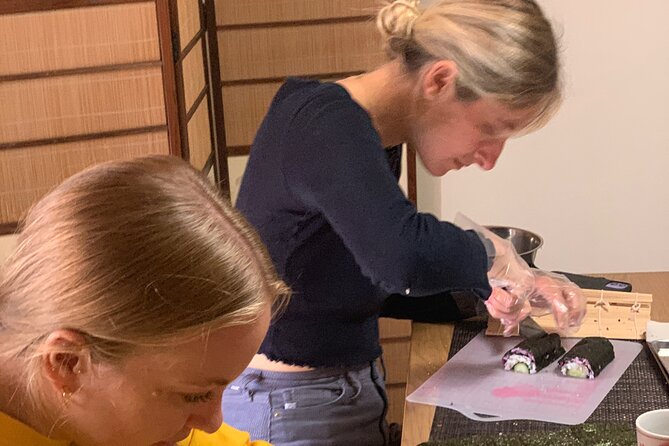
The activity is operated by an English speaker, and Aya leads the lesson in English. Clear instruction is important because kazarimaki depends on sequence and proportion. If you miss one step, the flower pattern may not line up when you cut the roll.
The short duration keeps the activity easy to fit into a Kyoto itinerary. At 4:30 pm, it can work after daytime sightseeing and before an evening meal. Since the class ends at the meeting point, you can continue your evening from the same area.
The downside is that the timing leaves little room for a late start. If you arrive more than 15 minutes after the start, you cannot join. Plan extra time for finding the address and reaching the home. The meeting point is near public transportation, but the supplied details do not specify a particular station or walking route.
Arrive ready to begin. Wear comfortable clothing under the provided garment, bring socks, and avoid treating the start time as flexible. A private class may feel relaxed, but the ingredients and instructor are prepared for a set appointment.
Food choices and the final tasting
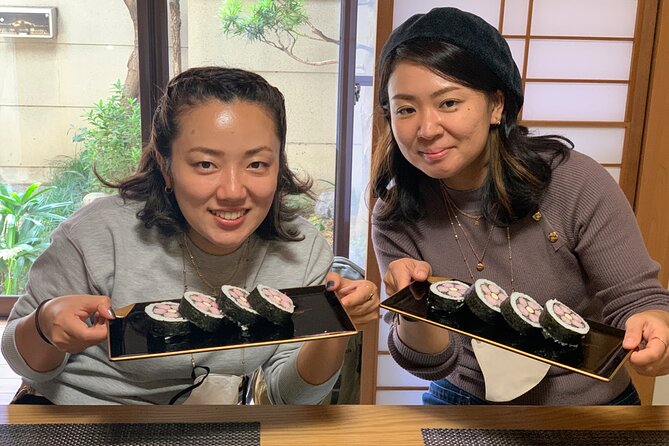
The ingredients are included, so you do not need to bring food for the lesson. The class uses traditional sushi ingredients along with natural plant-based colors to create the flower design.
Vegan and vegetarian options are available. If that matters to you, make sure your requirements are clear when booking or before the lesson. The information provided confirms those options but does not list every ingredient or promise accommodation for every allergy.
The finished sushi is meant to be both attractive and edible. The class lets you see how Japanese food can be arranged as a visual design while still remaining practical to eat. That balance is part of the appeal: the roll is not simply a decoration, and it is not just an ordinary snack.
You may find that the first roll takes concentration. The design has to survive the final cut, and small differences in rice placement can change the look. That makes the tasting more satisfying. You are eating something you built, not just watching a chef prepare it.
Take-home skills, photos, and souvenirs
The booklet is useful if you want to repeat the activity. Decorative sushi often looks mysterious when you see it already sliced, but the lesson breaks the pattern into manageable parts. At home, you can use the same general approach with patience and careful assembly.
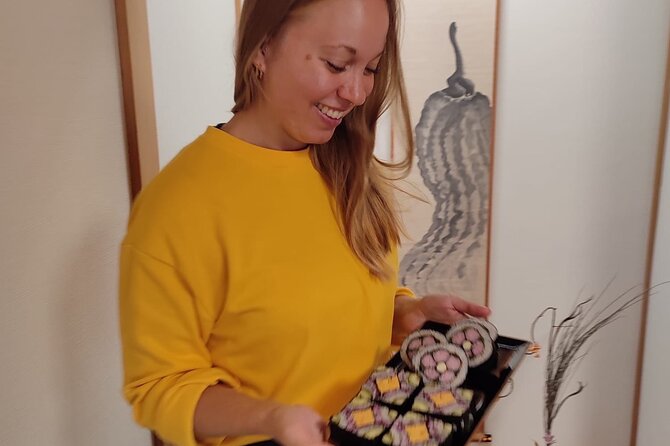
The certificate marks the occasion, while photographs preserve the more important souvenir: you in traditional clothing with your finished sushi. Manabu may assist with taking pictures and cleanup, allowing you to focus on the lesson. One of the particularly nice details of the experience is that the hosts handle the dishes and photographs, rather than leaving you to clean up during the limited class time.
Do not expect to leave with a large quantity of food or several different sushi styles. The focus is one peach-flower roll. That narrow goal is helpful because you can finish a complete project in 60 minutes, but it may feel limited if you want a broad cooking menu.
Cancellation and practical planning
You can cancel for a full refund up to 24 hours before the local start time. Cancellations or changes made less than 24 hours before the class are not accepted for a refund.
The activity is near public transportation and confirmation is provided when you book. The start time is 4:30 pm, and the class returns to the meeting point. Remember three practical details: bring socks, arrive early, and bring any dietary information you need to communicate.
The private format means only your group participates. That is useful for families, couples, and friends who want a shared activity without strangers at the table. It also means the appointment is less forgiving if one member of your group is delayed.
Who should book this Kyoto sushi class?
Book it if you want a short cultural activity with a clear result. It suits families, first-time cooks, sushi fans, and anyone who likes hands-on souvenirs better than passive sightseeing.
I especially recommend it for groups who value personal attention. Aya’s English instruction, patient teaching style, and welcoming home setting are central to the experience. The garments, tatami room, booklet, and certificate add context without making the class feel formal.
Think twice if your main goal is a large meal, advanced knife work, or a long tour of Japanese cuisine. This is a focused lesson in one decorative roll, and the price reflects the private setting and extras.
At $93.32 per person, it is a moderate-to-high price for one hour. For a private group that wants photos, traditional clothing, refreshments, ingredients, and a skill to try at home, I find the package reasonable. For a solo visitor watching every yen, a cheaper group cooking class may offer better value.
Should you book the Private Art Sushi Roll Class?
I would book this class if you want to make something unusual in Kyoto and share the process with people close to you. The peach-flower roll gives the lesson a specific goal, while the private home setting and traditional clothing make it feel more personal than a standard cooking demonstration.
Bring socks, arrive well before 4:30 pm, and keep your expectations realistic. You are not becoming a sushi chef in an hour. You are learning a charming and specialized Japanese food craft, guided by Aya, with a finished design, a booklet, and a certificate to remember it by.
FAQ
How long does the sushi class last?
The class lasts approximately one hour, or 60 minutes.
Where does the activity start and finish?
It starts and ends at SAKURA Experience Japanese Culture Nijo Home, 660 Izumicho, Nakagyo Ward, Kyoto, Japan.
What time does the class begin?
The scheduled start time is 4:30 pm.
Do I need to bring socks?
Yes. You must wear socks to enter the tatami room, so bring a pair with you.
Is the class private?
Yes. Only your group participates in the activity.
Are vegan and vegetarian options available?
Yes. The class provides vegan and vegetarian options.
More Workshops & Classes in Kyoto
More Private Tours in Kyoto


More tours in Kyoto we've reviewed




Workshops, compared.
 ★ 4.3Kyoto: 45-Minute Tea Ceremony Lesson ExperienceFrom $2245 min
 ★ 5.0Ramen Cooking Class at Ramen Factory in KyotoFrom $131
 ★ 4.9Kyoto: Ramen Cooking Class at a Ramen Factory with SouvenirFrom $1271h 30m
 ★ 4.9Kyoto: Samurai Class, Become a Samurai WarriorFrom $70
 ★ 5.0Ninja 1-hour Hands-on Lesson by Japanese master in Kyoto -EntryFrom $80
 ★ 5.0Kyoto: Ramen, Gyoza, and Onigiri Cooking ClassFrom $901h 30m