
Reviewed · FUSHIMI INARI TOURS
Private eBike Tour Exploring Fushimi with Torii Red Gate Ride
The best part of this tour is that you reach Fushimi Inari’s red torii gates by bicycle, using quieter Kyoto streets instead of spending the whole outing in traffic or on crowded trains. You also visit Sanjusangen-do, with its thousand Buddha statues, and Tofuku-ji before returning beside the Kamo River.
I like the private format, with only your group and a guide, and the balance between famous sights and calm local routes. I also like the guides’ personal touch: Kaz, Yuichi, Tibor, and JJ are praised for history, humor, patience, family-friendly explanations, and even taking photos.
The main consideration is the pace and riding requirement. Three and a half hours includes cycling between stops, and children must be at least 10 years old, 145 centimeters tall, and able to ride safely on roads without help. The tour operates in rain, too.
In This Review
- Key points to know before you book
- Why a bicycle makes sense for Fushimi Inari
- The Nintendo building is a quick but fun opening
- Sanjusangen-do gives the tour its strongest indoor visit
- Tofuku-ji adds a quieter Zen stop
- Entering Fushimi Inari’s thousand-gate paths
- The Kamo River makes a calm ride home
- What the private format changes
- Price and what you receive for $111.05
- Who will enjoy this ride most
- Rain, timing, and small practical points
- Should you book the Fushimi eBike tour?
- FAQ
- Where does the tour start and finish?
- How long does the eBike tour last?
- Is the tour private?
- Can larger groups join?
- What is included in the price?
- Are food and snacks included?
- Can children join the tour?
- Does the tour operate in bad weather?
Key points to know before you book
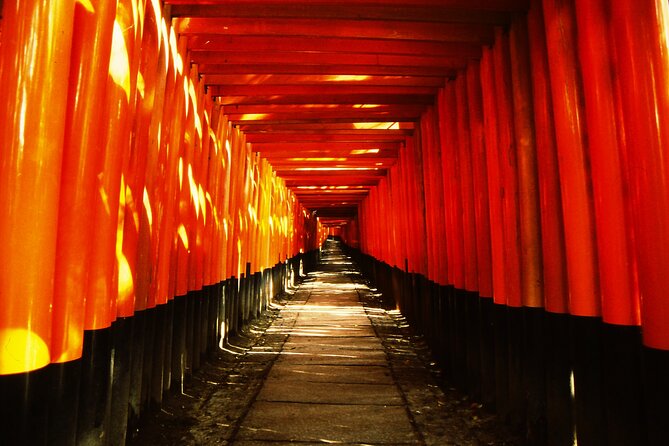
- Fushimi Inari without a long train ride: Cycle from Kyoto Station through quieter streets to the shrine and its famous torii paths.
- Two major temple visits: Sanjusangen-do receives about an hour, while Tofuku-ji offers a shorter photo stop.
- A private group of up to six: One guide handles two to six people, with another guide added for groups of seven to twelve at no extra fee.
- Guides add warmth and humor: Kaz, Yuichi, Tibor, JJ, and Yagyu are praised for clear explanations, patience, local insight, and help with photos.
- A gentle finish by the Kamo River: The return ride follows the river embankment, with nature and wildlife along the way.
- Good practical support: Bicycle, helmet, rain poncho, cycling map, accident insurance, and an English-speaking guide are included.
Why a bicycle makes sense for Fushimi Inari
Fushimi Inari is one of Kyoto’s best-known sights, but the trip there can feel less special when reduced to a crowded train and a quick walk from the station. This route gives you time to notice the city between the headline sights.
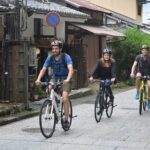
You start at the Kyoto Cycling Tour Project’s Kyoto Station Cycle Terminal at 552-13 Higashiaburanokōjichō. From there, the route uses Kyoto’s alleys and side streets, where a bicycle can be more useful than a car. The tour is on an eBike, so you get assistance while still moving at a human pace.
That matters in Kyoto. You are not sealed inside a vehicle, and you are not rushing from one station platform to another. You can see ordinary streets, low traffic routes, and the shift from central Kyoto toward Fushimi.
The tour is private, so your guide can keep the pace suited to your group. That is especially helpful if one person wants more time for photos or if children need a short pause. The published duration is about three hours and 30 minutes, though remember that this includes all riding time.
A few more Kyoto tours and experiences worth a look

The Nintendo building is a quick but fun opening
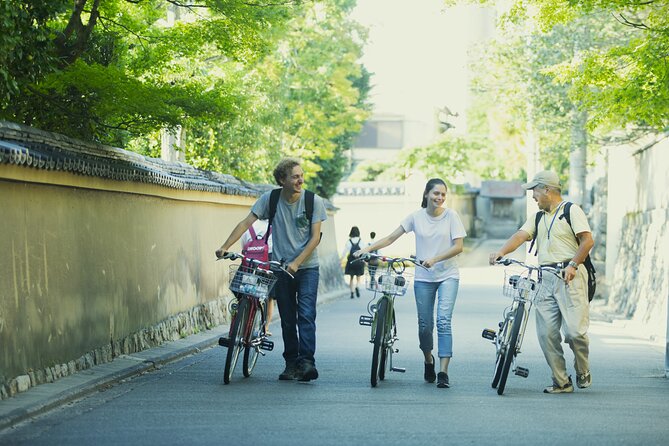
One of the first stops is the former building used by Nintendo, one of Kyoto’s most famous companies. You only spend about 10 minutes here, and there is no admission charge.
This is not a museum visit, and you should not expect an indoor tour. Instead, it is a quick point of interest that links modern Kyoto with the city’s older temples and shrines. It also gives your group an easy early photo stop before the main visits begin.
I like this sort of short stop on a bicycle tour. It breaks up the ride without taking time away from Sanjusangen-do or Fushimi Inari. If Nintendo is a major reason you want to book, keep your expectations modest, since the listed activity is to cycle past the former offices.
Sanjusangen-do gives the tour its strongest indoor visit
Sanjusangen-do is the most substantial temple visit on the route, with about an hour set aside and admission included. Your guide accompanies you inside and explains the temple’s history and meaning.
The main sight is the remarkable line of one thousand Buddha statues. The long corridors and repeated figures create a quiet, powerful setting, and the indoor visit offers a useful change after cycling through the city.
This is one of the places where the guide matters most. A good explanation helps you understand what you are seeing instead of treating the temple as a quick photo stop. The guides are praised for bringing Kyoto’s past to life with humor and clear information, while one guide was also praised for finding a peaceful place where the group could sit and enjoy the moment.
Allow yourself to slow down here. The one-hour allocation is generous compared with the brief Tofuku-ji stop, and it gives you time to take in the scale of the hall and the statues. Admission is included, so you do not need to budget an extra entrance fee for this part.
Tofuku-ji adds a quieter Zen stop
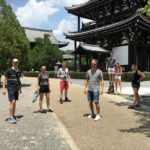
Next comes Tofuku-ji, where the listed stop lasts about 15 minutes. The purpose here is mainly to take photos at the quiet, imposing Zen temple.
That short visit gives you a taste of the temple without turning the tour into a full day of religious sites. It is a useful middle point before Fushimi Inari, but you should not expect a long guided exploration of the grounds.
The contrast with Sanjusangen-do is part of the appeal. Sanjusangen-do is known for its interior rows of statues, while Tofuku-ji gives you an exterior view and a chance to pause in a calmer setting. If you want extensive time at Tofuku-ji, this tour may feel brief. If you want several different sights in one half-day ride, the 15-minute stop keeps the schedule moving.
Entering Fushimi Inari’s thousand-gate paths
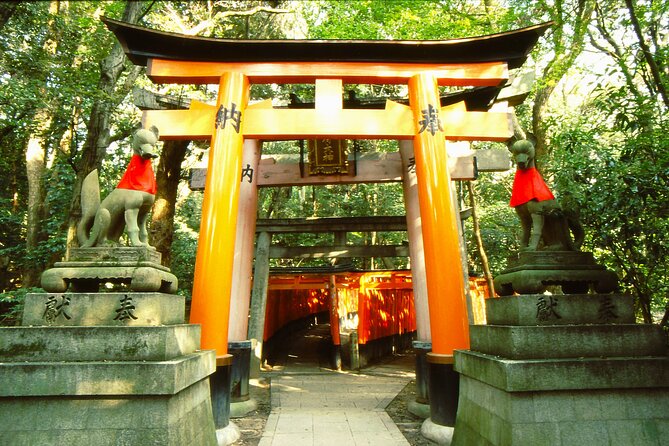
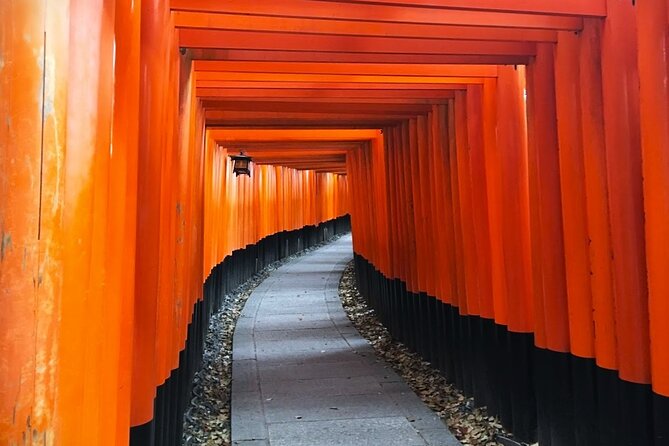
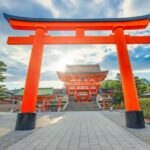
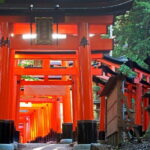
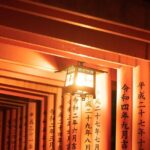
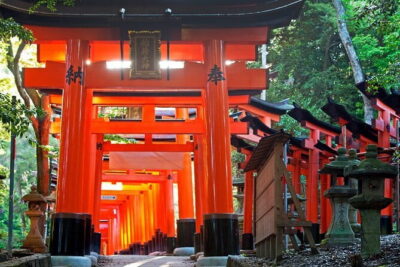
Fushimi Inari-taisha is the main event, and the tour allows about an hour here. Your guide takes you along the paths lined with red torii gates and explains the shrine as you walk.
The famous gates are striking because they repeat along the route, creating a tunnel-like passage through the wooded shrine grounds. You do not simply arrive, snap one photo, and leave. The walking portion lets you see the torii paths from inside the complex.
An hour is enough for a strong introduction, but not for every path or the full mountain climb. That is an important point when planning your day. The tour gives you a focused visit to the most recognizable area, then returns you to the bicycles. If you want to walk for several hours at Fushimi Inari, you would need to arrange a separate visit.
The guide’s explanations also help here. Fushimi Inari is a Shinto site, and the torii are more meaningful when you understand that the gates mark donations and connections to the shrine. The tour is designed to make the famous setting easier to read, not just easier to photograph.
Afterward, you can wander among the shops and stalls around the shrine. Snacks are not included, so bring some spending money if you want to try local specialties. This is a pleasant chance to add your own food stop, though keep an eye on the time so the group can stay on schedule.
Other cycling tours in Kyoto
The Kamo River makes a calm ride home
The return route follows the embankment beside the Kamo River. This is one of the most appealing parts of the tour for anyone who wants a break from temple courtyards and city streets.
The route is described as peaceful, with nature and wildlife along the river. You are still close to Kyoto, but the ride feels more open and relaxed. After the crowds and visual repetition of Fushimi Inari, the river provides a quieter final stretch.
I also like the way this ending gives the tour a clear rhythm. You begin with city riding, move into two temples and a major shrine, then finish with a slower ride back to Kyoto Station. The route is not only a list of attractions. It has a beginning, a busy middle, and a restful finish.
The activity ends back at the same cycle terminal where you started. That makes it easy to continue sightseeing from Kyoto Station afterward, though the supplied information does not give a precise end time beyond the approximate three-and-a-half-hour duration.
What the private format changes
This is not a large bike group moving in a tight line. The standard arrangement is two to six people per guide, and the activity is private, meaning only your own group participates.
That setup is valuable in Kyoto because cycling confidence can vary. A guide can explain the route, adjust the pace, and answer questions without trying to keep a large crowd together. It also makes the tour a better fit for families and small groups who want to share one outing.
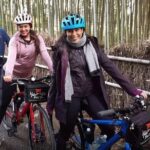
The guide personalities are a real part of the appeal. Kaz is praised for combining local knowledge, history, energy, and humor. Yuichi is praised for a relaxed pace, photos, and finding a quiet place to rest. Tibor is noted for being patient and kind with children, while JJ and Yagyu are praised for local information and a friendly manner.
One especially helpful detail concerns an unexpected medical problem. JJ spent two hours of personal time helping one group navigate the local health-care system. That is not something you should book a tour expecting, but it shows the sort of personal support a private guide may offer when plans go wrong.
For a group of seven to twelve, an extra guide can be arranged at no additional fee. The standard limit remains six people per guide, so larger parties are split between guides rather than packed into one oversized group.
Price and what you receive for $111.05
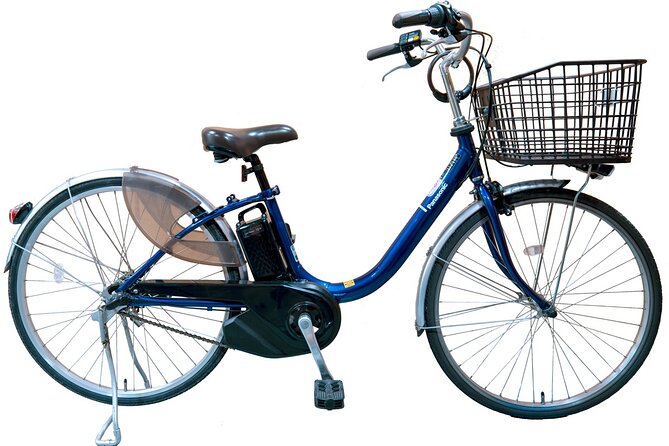
At $111.05 per person, this is not the cheapest way to see Fushimi Inari. You are paying for more than bicycle hire, though. The fee includes the eBike, helmet, rain poncho, accident insurance, an original cycling map, a certified or licensed English-speaking guide, and entry to Sanjusangen-do.
The private structure is the biggest value factor. A public group tour may cost less, but here you are not sharing the outing with strangers, and the guide can keep the ride suited to your party. For a couple, family, or small group that values ease and personal attention, the price is easier to justify.
The tour also combines transportation and sightseeing. You would otherwise need to arrange a bicycle, work out the route, navigate city streets, reach three separate sights, and pay for temple admission where required. The included map is useful beyond this ride, too, though the information does not specify whether you can keep it.
Snacks are not included. That is a small extra cost, but it is worth remembering if you want to sample food near Fushimi Inari. The tour does not list additional admissions for Tofuku-ji or Fushimi Inari, while Sanjusangen-do admission is included.
Who will enjoy this ride most
I would choose this tour if you want to see major Kyoto sights without spending the whole day walking. The eBike makes the route more manageable, while the private guide adds structure and context.
It suits couples, families with older children, and small groups that want a shared activity. Children must be at least 10 years old and at least 145 centimeters tall. They must also be able to ride safely on the road without help, so age alone is not enough.
You should also be comfortable cycling for several hours with stops. The route is described as leisurely and follows quieter streets where possible, but it is still a road-based bicycle tour. If you do not ride confidently in city conditions, a walking or vehicle-based tour may suit you better.
The tour is also a good choice for first-time visitors who want an introduction to several parts of Kyoto. You see a modern local landmark, an important Buddhist temple, a Zen temple, a major Shinto shrine, and the Kamo River in one outing.
Rain, timing, and small practical points
The tour operates in rain, and a rain poncho is provided. That is useful in Kyoto, where weather can change, but you should still dress for wet conditions and protect anything you carry.
Confirmation is sent within 48 hours of booking, subject to availability. The tour is near public transportation, and most people can participate, but the cycling requirements still matter.
The cancellation information supplied for this activity needs careful checking. One set of terms says you should notify the operator by 18:00 Japan time at least three days before the tour for a refund, while another says the experience is non-refundable and cannot be changed. Confirm the current policy before paying, especially if your Kyoto schedule may shift.
The tour starts and ends at the Kyoto Cycling Tour Project terminal near Kyoto Station. Since the activity is mobile-ticket based, keep access to your booking details on your phone.
Should you book the Fushimi eBike tour?
Book it if you want Fushimi Inari plus several contrasting Kyoto sights in one private half-day, and if your group is comfortable on bicycles. The combination of Sanjusangen-do, Tofuku-ji, Fushimi Inari, and the Kamo River is well judged, while the English-speaking guides add humor, context, photos, and practical help.
Skip it if you want a long, unhurried climb through all of Fushimi Inari, a full visit to Tofuku-ji, or a completely weather-proof activity. The schedule gives you highlights rather than exhaustive visits.
For most small groups, the strongest reason to book is the mix of movement and meaning. You see famous Kyoto sights, but you also travel between them through quieter streets and along the river. At $111.05, it is a premium outing, but the private guide, bicycle, safety gear, insurance, and included Sanjusangen-do entry make it a fair choice for people who value a relaxed route and personal attention.
FAQ
Where does the tour start and finish?
It starts and ends at the Kyoto Cycling Tour Project Kyoto Station Cycle Terminal, located at 552-13 Higashiaburanokōjichō, Shimogyo Ward, Kyoto, 600-8235, Japan.
How long does the eBike tour last?
The tour lasts approximately three hours and 30 minutes. This time includes cycling between the stops.
Is the tour private?
Yes. Only your group participates. The usual group size is two to six people per guide.
Can larger groups join?
Groups of seven to twelve can be accepted if an extra guide is arranged. No additional guide fee is required.
What is included in the price?
The price includes use of the bicycle, helmet, rain poncho, accident insurance, an original cycling map, a licensed or certified English-speaking guide, and admission to Sanjusangen-do Temple.
Are food and snacks included?
No. Snacks are not included, though you can explore the shops and stalls around Fushimi Inari after visiting the shrine.
Can children join the tour?
Children must be at least 10 years old, at least 145 centimeters tall, and able to ride a bicycle safely on the road without assistance.
Does the tour operate in bad weather?
Yes. The tour operates in rain, and a rain poncho is provided.
More Private Tours in Kyoto
More Cycling Tours in Kyoto
More Fushimi Inari Tours in Kyoto
More tours in Kyoto we've reviewed

Fushimi Inari Tours, compared.
 ★ 4.8Kyoto: Fushimi Inari, Kinkakuji, Bamboo Grove 1 Day Bus TourFrom $122510 minutes - 9 hours
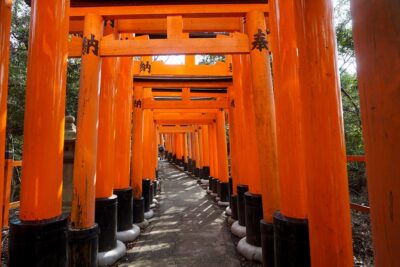 ★ 5.0Fushimi Inari Hidden Hiking Tour (Private Option Available)From $63
 ★ 4.7Kyoto/Osaka: Nara, Fushimi Inari Taisha, Arashiyama Bus TourFrom $529 - 10 hours
 ★ 4.4Osaka/Kyoto: Arashiyama, Nara & Fushimi Inari Shrine w/LunchFrom $61
 ★ 5.0Kyoto: Nijo, Kinkaku-ji, Arashiyama, Kiyomizu & Fushimi InariFrom $51
 ★ 5.0Kyoto Fushimi-Inari Night Walking TourFrom $43