
Reviewed · GUIDED
Private Kyoto Customizable Day Tour With English Guide
Kyoto can feel like several cities at once: a wooded temple town, a busy food market, a former imperial capital, and a living center of Japanese craft. This private day tour lets you choose which side of Kyoto gets your time, with an English-speaking driver-guide and a vehicle for up to six people. Arashiyama’s bamboo paths and Fushimi Inari’s red torii gates make a strong first-time outline.
I like the freedom to swap stops or ask for recommendations, and I like that traffic delays may bring extra time at no added charge. Guides named Khan and Charith have been singled out for being polite, helpful, and well informed. The main drawback is the packed wish list: eight or ten hours is not enough for every stop at a relaxed pace, and admission fees at several temples cost extra.
In This Review
- Key points at a glance
- What this private Kyoto day is really good at
- Arashiyama starts with bridge views and bamboo
- Fushimi Inari follows the red gates uphill
- Kinkaku-ji gives you Kyoto’s polished postcard view
- Kiyomizu-dera pairs a famous stage with hillside views
- Gion shows Kyoto’s older street face
- Sanjusangendo brings you face to face with 1,001 Kannon figures
- Ginkaku-ji rewards attention to gardens and restraint
- Nishiki Market turns sightseeing into lunch
- How to build a sensible eight-hour route
- Who gets the best value from this tour
- Practical details before you reserve
- Should you book this private Kyoto day?
- FAQ
- How long does the private Kyoto tour last?
- What time does the tour start?
- How many people can join the private tour?
- Is hotel pickup available?
- Is the guide English-speaking?
- What is included in the price?
- Are temple entrance fees included?
- Can I cancel for a full refund?
Key points at a glance
- Private vehicle for up to six people: You avoid a large group and can shape the day around your own pace and interests.
- Eight to ten hours in Kyoto: This is a full sightseeing day, useful when your time in the city is short.
- English-speaking driver-guide: You receive explanations about Kyoto’s culture and past while moving between sights.
- Flexible sightseeing plan: Temples, Japanese history, shopping, culture, and even a possible Nara extension can be discussed.
- Several major entrance fees are extra: Kinkaku-ji costs 500 yen per person, and Sanjusangen-do costs 500 yen per person.
- Strong praise for Khan and Charith: If one of these guides is assigned, you have a name to request when confirming your booking.
What this private Kyoto day is really good at
The greatest strength here is control. A standard group tour gives you a fixed route and a fixed clock. This one lets you say that gardens matter more than shopping, or that you would rather spend time at Fushimi Inari than rush through one more temple.
That matters in Kyoto, where major sights sit across the city. Arashiyama is in the west, Fushimi Inari and Kiyomizu-dera are in the southeast, and Kinkaku-ji is in the north. A private vehicle cannot erase traffic or walking time, but it makes a multi-part day easier to manage.
The tour costs $557.45 per group, with up to six people. For one or two people, that is a serious expense. Split six ways, the price becomes more reasonable, especially if you value door-to-door transport, a private guide, and a full day without strangers in your group. You still pay some entrance fees and your own food and drinks, so include those costs before booking.
Other guided tours in Kyoto
Arashiyama starts with bridge views and bamboo
Arashiyama is an excellent opening stop because it gives you Kyoto scenery right away. The Togetsukyo Bridge crosses the river with wooded hills behind it, and the setting is especially attractive when seasonal trees add color to the riverbank.
The bridge has a long story. Its first form dates to the Heian period, from 794 to 1185, and the current structure was rebuilt in the 1930s. You do not need to be a history specialist to appreciate its simple shape against the wooded slope.
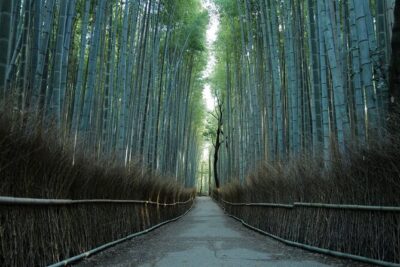
The bamboo grove offers a different mood. Walking routes pass through tall bamboo, and even a light breeze can make the stalks sway above you. Bamboo has long served local workshops, where it becomes mats, cups, boxes, baskets, and other useful goods.
The scheduled time is about 90 minutes, which is enough for the main sights but not a slow exploration of every corner. Ask your guide at the start how much of that time you want to give to the bridge, the grove, and nearby streets. If bamboo is your main reason for choosing Arashiyama, protect that walking time.
Fushimi Inari follows the red gates uphill
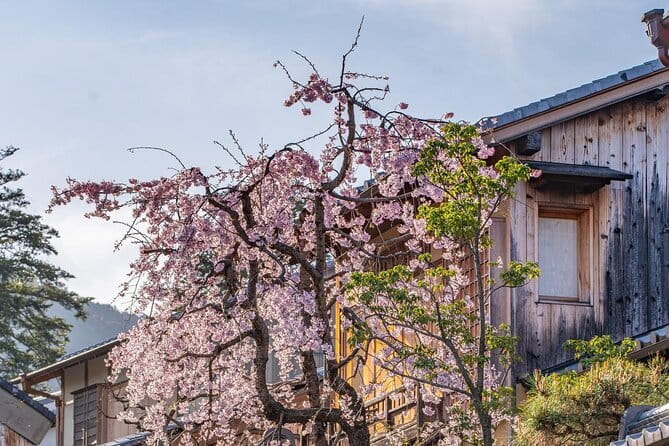
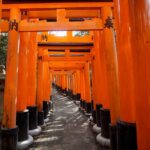
Fushimi Inari-taisha is one of Kyoto’s most recognizable religious sites. Behind the main shrine buildings, thousands of red torii gates form paths into the forested slopes of Mount Inari, which rises 233 meters.
The shrine honors Inari, the Shinto deity linked with rice. Fox statues appear around the grounds because foxes are regarded as Inari’s messengers. The shrine predates Kyoto’s time as the capital, giving the place a long connection to the region.
You have one hour here. That is enough to see the main approach and walk into the torii-lined paths, but it is not enough to treat the mountain trail as a full hike. The gates become more peaceful as you go farther uphill, but the time limit means you should decide how far you want to walk before setting off.
This is one place where a private guide helps with choices. You can focus on the shrine’s symbols and history, or simply use the hour for photographs and a short walk. Admission is free.
Kinkaku-ji gives you Kyoto’s polished postcard view
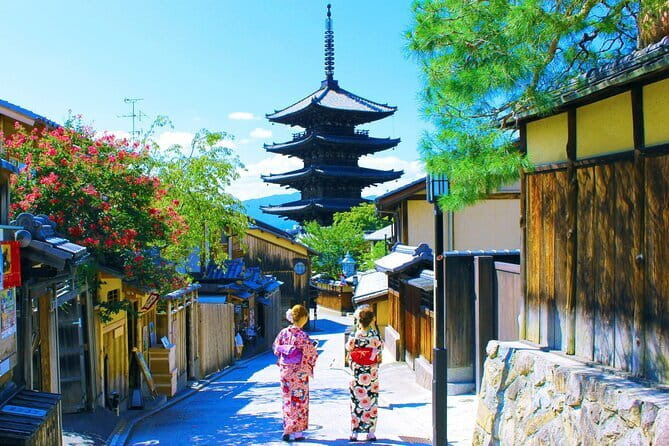
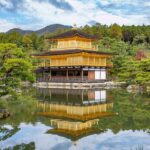
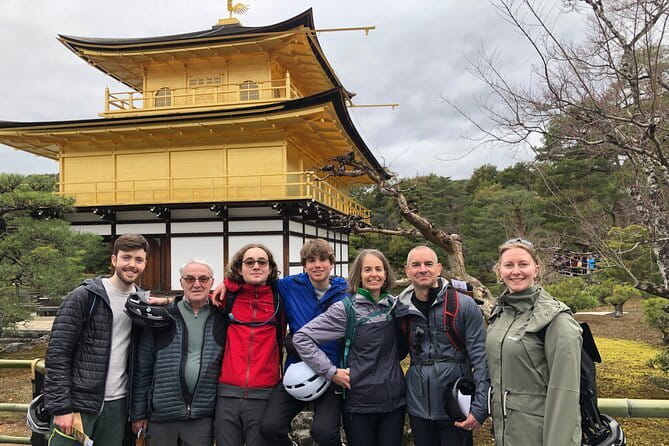
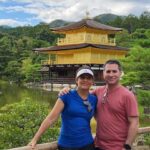
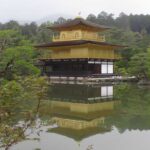
Kinkaku-ji, the Golden Pavilion, is built beside a large pond in northern Kyoto. Gold leaf covers the upper two floors, making the temple’s reflection one of the city’s classic views.
The temple began as the retirement residence of shogun Ashikaga Yoshimitsu. After his death in 1408, it became a Zen temple of the Rinzai sect. Its influence can be seen in Ginkaku-ji, the Silver Pavilion, which Yoshimitsu’s grandson later built on the opposite side of Kyoto.
Your time here is listed as one hour, with the entrance fee not included. The fee is 500 yen per person. Kinkaku-ji is a visual stop more than a place for a long, quiet interior visit. The route around the pond lets you see the pavilion from several angles, but expect the area to feel structured around the famous view.
If your group prefers gardens, architecture, and famous landmarks, keep it. If you want less time at well-known sights and more time in ordinary neighborhoods, this is an easy stop to shorten or replace.
Kiyomizu-dera pairs a famous stage with hillside views
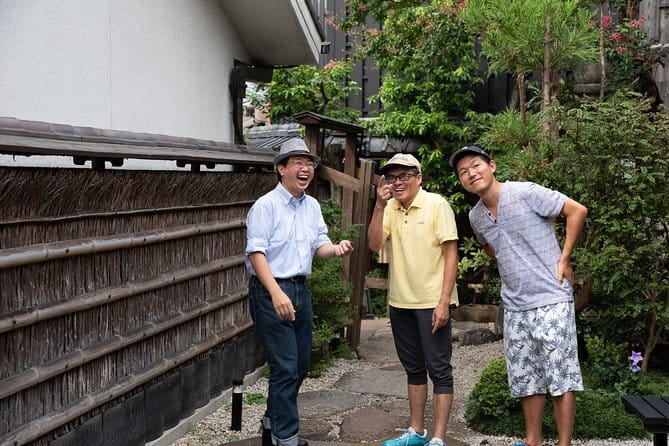
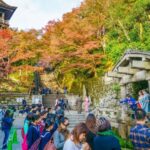
Kiyomizu-dera means Pure Water Temple, named for the Otowa Waterfall on the wooded hills east of Kyoto. The temple was founded in 780 and became a UNESCO World Heritage Site in 1994.
Its most famous feature is the wooden stage projecting 13 meters from the main hall. From there, you look over trees on the hillside. Cherry trees and maple trees make the view especially appealing in their seasons, though the setting is worth seeing at other times as well.
The tour allows about an hour. The temple entrance is not included, so you should budget separately for admission. The surrounding approach is also part of the experience, but the schedule may leave little room for a long wander through the nearby streets.
I would put Kiyomizu-dera high on the list for a first Kyoto visit. It combines a striking building, a religious setting, and a broad view without requiring a mountain hike. Tell your guide if your group needs a slower walking pace, since the temple is on a hillside.
Other private tours in Kyoto
Gion shows Kyoto’s older street face
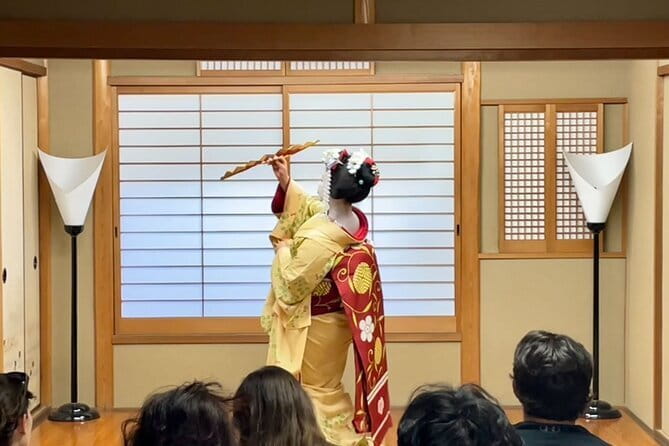
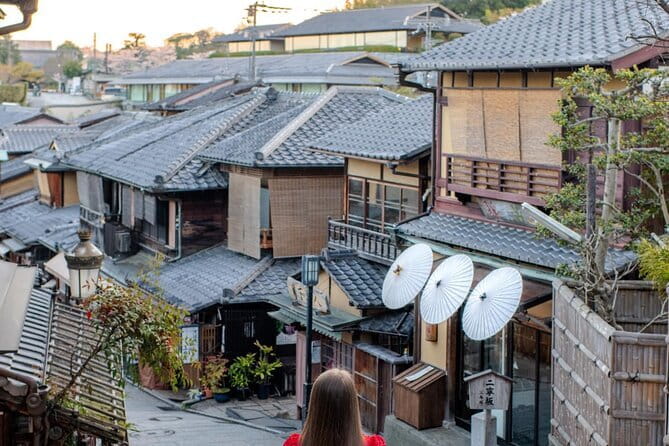
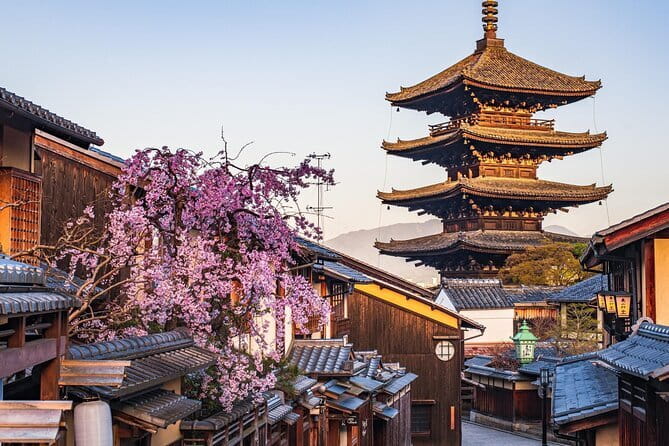
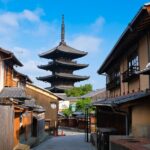
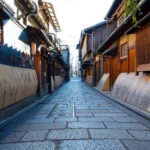
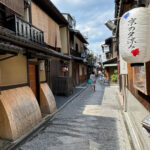
Gion stretches along Shijo Avenue between the Kamo River and Yasaka Shrine. Its wooden machiya houses, narrow fronts, shops, restaurants, and teahouses give you a sense of Kyoto’s traditional commercial districts.
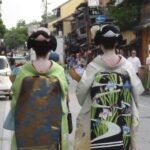
The area is associated with geiko, Kyoto’s term for geisha, and maiko, their apprentices. That does not mean a guaranteed performance or a guaranteed sighting. The value of Gion is in its streets, buildings, and the way old-style architecture still forms part of a working district.
Hanami-koji Street is one of the best-known routes through the area. Traditional houses often have narrow street fronts because property taxes were once based on frontage, even when a building extended far back from the street.
One hour works well for a first look. You can walk, take in the architecture, and ask your guide about the district’s customs. Keep your camera respectful around people and private properties. Gion is not a stage set, and treating it as a neighborhood makes the visit more rewarding.
Sanjusangendo brings you face to face with 1,001 Kannon figures
Sanjusangendo, formally Rengeo-in, is a Buddhist temple in eastern Kyoto. Its main hall contains 1,001 statues of Kannon, the bodhisattva associated with compassion. The scale of the collection gives this stop a very different feel from the open views at Kinkaku-ji or Kiyomizu-dera.
The hall stretches 120 meters, making it Japan’s longest wooden structure. The name Sanjusangendo refers to the 33 intervals between the building’s rear columns, a traditional way of measuring its size.
The planned visit lasts one hour, and admission costs 500 yen per person. Photography rules and interior conditions are not provided here, so follow the instructions at the temple.
I would choose this stop for anyone interested in Buddhist art, religious practice, or architecture. If your group mainly wants outdoor scenery, you may prefer to use the hour at another site.
Ginkaku-ji rewards attention to gardens and restraint
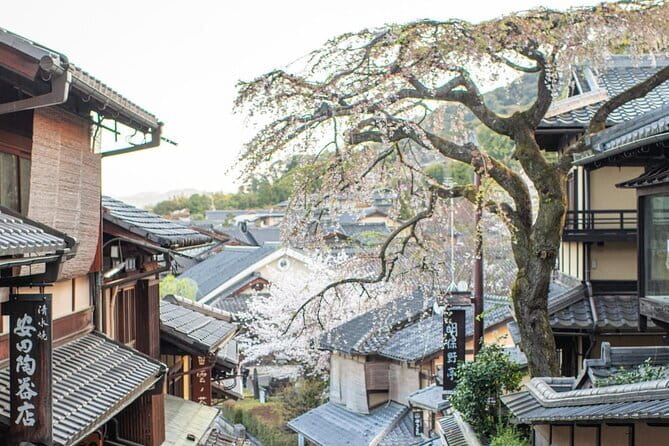
Ginkaku-ji, the Silver Pavilion, sits along Kyoto’s eastern Higashiyama mountains. Shogun Ashikaga Yoshimasa built the retirement estate in 1482, modeling it after his grandfather’s Golden Pavilion. After Yoshimasa died in 1490, the estate became a Zen temple.
Despite its name, Ginkaku-ji is not covered in silver. Its appeal comes from the setting, the temple design, and the garden. The site became a center of the Higashiyama Culture, a period linked with refined arts and aesthetics.
The visit is planned for one hour, with no admission fee listed in the tour details. This stop suits you if you prefer quiet design, gardens, and cultural context over a single spectacular building.
The practical issue is distance. With Ginkaku-ji, Kinkaku-ji, Arashiyama, and the southern shrines all on one day, traffic can eat into your time. Since the route is customizable, you do not need to force both pavilions into the same day unless they are priorities for your group.
Nishiki Market turns sightseeing into lunch
Nishiki Market is a narrow, five-block shopping street known as Kyoto’s Kitchen. More than 100 shops and restaurants sell food and cooking-related goods, including seafood, produce, knives, cookware, Japanese sweets, pickles, dried seafood, and sushi.
The market is useful because it gives you a taste of Kyoto’s food culture without requiring a formal meal plan. Shops range from tiny stalls to larger two-story businesses, and many focus on one type of product.
You have about an hour here. That is enough to sample a few foods and browse, but the narrow passage can make a large group move slowly. Decide in advance if you want to eat, shop for gifts, or simply look around.
Food and drinks are not included. That is a limitation, but it also means you can spend according to your appetite. If you are interested in Japanese kitchen tools or local snacks, Nishiki may offer more personal value than another temple.
How to build a sensible eight-hour route
The full list contains eight possible stops, each allotted roughly one hour, with 90 minutes in Arashiyama. Add driving, parking, walking, meals, and temple admissions, and you can see the problem: the standard outline is ambitious.
I would not try to give every stop equal attention. Pick three or four main priorities, then let your guide fit in extras if traffic and energy allow. A first-time culture route could pair Arashiyama, Fushimi Inari, Kiyomizu-dera, and Gion. A garden and food route might use Arashiyama, one pavilion, Nishiki Market, and Gion.
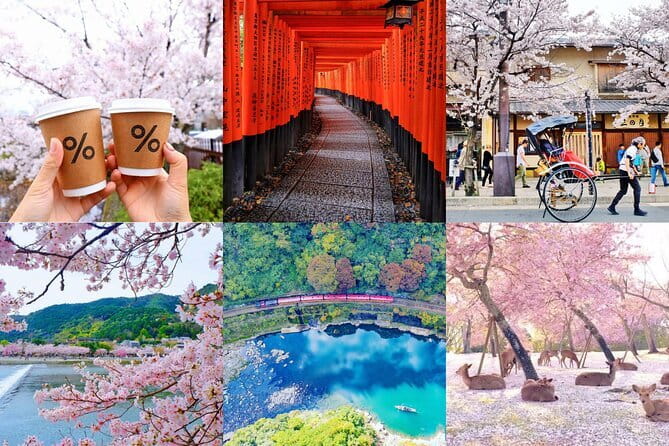
The private format also allows a different kind of day. You might focus on temples, Japanese history, culture, shopping, or a mix. One booking experience included a trip to Nara Park to see the deer, showing that the day can sometimes stretch beyond the listed Kyoto stops. Treat that as a request to discuss, not as a guaranteed part of the standard plan.
The start time is 8:00 a.m. An early beginning gives you the best chance of protecting the day from later delays. If traffic adds time, the tour provides extra time at no charge, which is a useful safeguard on a city route with several widely separated sights.
Who gets the best value from this tour
This works best for a family, two couples, or a small group of friends who want one vehicle and one shared plan. Six people can divide the group price in a way that makes the cost easier to justify.
It also suits you if this is your first day in Kyoto and you want an overview before exploring on your own. The guide can explain what you are seeing, while the vehicle handles the long jumps between districts.
I would think twice if you prefer long temple visits, unhurried meals, or independent train travel. Kyoto’s public transportation can be a better fit for visitors who enjoy setting their own pace and do not mind changing plans around stations and walking routes.
The English-speaking guides are a key part of the value. Khan is described as polite and accommodating, while Charith is praised for a strong grasp of Kyoto’s activities and sights. You cannot assume which guide you will receive, so ask when booking if one of them is available.
Practical details before you reserve
The package includes a comfortable private vehicle, an English-speaking driver-guide, and a Wi-Fi hotspot. Pickup is offered, and you receive a mobile ticket. The tour is private, so only your group participates.
Food, drinks, entry tickets, and special rides or cruises are not included. The stated fees are 500 yen per person for Kinkaku-ji and 500 yen per person for Sanjusangen-do. Kiyomizu-dera and any other paid attraction should also be checked before you go, since the package does not cover admission generally.
Confirmation arrives at booking. Service animals are allowed, the tour is near public transportation, and most people can participate. Free cancellation is available until 24 hours before the local start time. After that point, the payment is not refunded, and late changes are not accepted.
Should you book this private Kyoto day?
Book it if you want Kyoto arranged around your interests, especially if you have a group of four to six and want a guide rather than a fixed coach route. The strongest reasons are the private vehicle, the English explanations, and the ability to replace or shorten stops when your priorities change.
Do not book it expecting a slow, contemplative visit to all eight places. The route covers a lot of ground, and the best day will come from choosing a few must-sees before 8:00 a.m. If your group can agree on those priorities, this is a practical way to see Kyoto’s major contrasts in one day.
FAQ
How long does the private Kyoto tour last?
The tour lasts approximately 8 to 10 hours.
What time does the tour start?
The stated start time is 8:00 a.m.
How many people can join the private tour?
The price covers one private group of up to six people.
Is hotel pickup available?
Pickup is offered, though the provided details do not specify the exact pickup locations.
Is the guide English-speaking?
Yes. The tour includes an English-speaking driver-guide.
What is included in the price?
The price includes a comfortable private vehicle, an English-speaking driver-guide, and a Wi-Fi hotspot.
Are temple entrance fees included?
No. Kinkaku-ji admission costs 500 yen per person, and Sanjusangen-do admission costs 500 yen per person. Entry tickets generally are not included.
Can I cancel for a full refund?
Yes. You can cancel at least 24 hours before the local start time for a full refund. Cancellations or changes made within 24 hours are not refunded or accepted.
More Private Tours in Kyoto
More Guided Tours in Kyoto
More tours in Kyoto we've reviewed
Guided, compared.
 ★ 5.0Kyoto Early Morning Tour with English-Speaking GuideFrom $68
 ★ 5.0Kyoto 6hr Private Tour with Government-Licensed GuideFrom $155
★ 4.9Kyoto: Early Morning Tour with English-Speaking GuideFrom $1015h 30m
★ 5.0Kyoto 6hr Private Tour with Government-Licensed GuideFrom $155
★ 4.9Kyoto: Early Morning Tour with English-Speaking GuideFrom $1015h 30m
 ★ 4.7Kyoto: Nijo-jo Castle and Ninomaru Palace Guided TourFrom $161 hour
 ★ 4.9Kyoto: Izakaya Bars Guided Walking TourFrom $253 hours
 ★ 5.0Kyoto Gion Night Walk & Geisha District Guided TourFrom $18