
Reviewed · PRIVATE
Private Kyoto Tour: Explore the Most Iconic Sights
Kyoto’s famous sights are spread across the city, and this private tour tackles four of the biggest in one long day: Kinkaku-ji, Kiyomizu-dera, Fushimi Inari, and Arashiyama. You get a guide for your group alone, taxi and public transport when useful, and room to shape the day around your interests.
I like the flexible format and the practical transport plan. You are not paying for a private car sitting idle while you visit a temple, and a good guide, such as Riku, can adjust the pace and explain what you are seeing. The main drawback is the sheer size of the day: four major sights in 8 to 10 hours means a lot of movement and plenty of walking.
- Four major Kyoto sights in one day: Kinkaku-ji, Kiyomizu-dera, Fushimi Inari, and Arashiyama are all part of the planned route.
- Private touring: Only your group participates, so you can ask questions and request changes.
- Taxi-based transport: Taxis and public transportation are used as needed instead of charging for a dedicated car.
- English-language guiding: Guides may come from Japan, the United States, or Spanish-speaking countries. Other languages can be arranged for an extra fee.
- Long but useful schedule: Each main stop is planned for about two hours, with travel time already counted in the total.
- Check the fee details: The information gives conflicting details about Fushimi Inari and temple admission, so confirm what is covered before booking.
In This Review
- Four Kyoto icons, one demanding day
- Kinkaku-ji, the Golden Pavilion
- Arashiyama’s bamboo and river scenery
- Kiyomizu-dera and Kyoto’s eastern hills
- Fushimi Inari’s torii gate trails
- Why the private format can be worth $200
- A guide makes or breaks this experience
- How to handle the long schedule
- Group size and booking caution
- Who should book this Kyoto day tour?
- FAQ
- How long does the private Kyoto tour last?
- Which sights are included in the planned route?
- Is transportation included?
- Is the tour private?
- Is hotel pickup available?
- Is lunch included?
- Are entrance fees included?
- Can I request a guide who speaks another language?
- What is the cancellation policy?
Four Kyoto icons, one demanding day
This tour is built for first-time visitors who want to see Kyoto’s headline sights without piecing together several train routes and taxi rides on their own. You spend roughly two hours at each major stop, but the day is not four separate mini-tours. It is one long circuit through a city where the sights sit far apart.
That matters. Kinkaku-ji is in northern Kyoto, Arashiyama is to the west, Kiyomizu-dera is in the eastern hills, and Fushimi Inari is south of the central area. The route covers a lot of ground. Travel time is included in the stated 8 to 10 hours, so you should not expect eight full hours inside temple grounds.
The private format helps. You can ask why a shrine uses a particular color, stop for a question, or request a change if your group has a strong preference. The guide can also help you decide how much time to spend at each site, though the advertised plan suggests about two hours apiece.
Kinkaku-ji, the Golden Pavilion
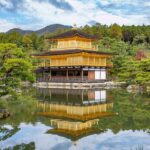
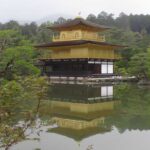
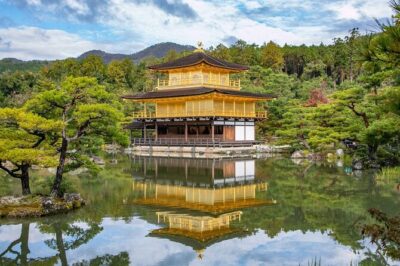
Your first major sight is Kinkaku-ji, officially Rokuon-ji and widely called the Golden Pavilion. Its upper two floors are covered in gold leaf, which gives the building its familiar bright appearance beside the pond.
The appeal is immediate. The pavilion is compact, highly polished, and easy to recognize, but the setting matters as much as the building. You view it from paths around the garden, with the structure reflected in the water when conditions cooperate. It is a place where a guide can add useful context instead of simply pointing at the gold.
The planned two-hour visit gives you time for more than a quick photograph. You can look at the pavilion, walk through the surrounding grounds, and hear about its Zen Buddhist setting. Admission is listed as included for this stop.
One practical point: Kinkaku-ji is one of Kyoto’s most photographed places, so the experience can feel more like a busy sightseeing stop than a quiet temple visit. Your private guide does not control the crowds, but can help you use your time well and explain what deserves attention beyond the main view.
Other private tours in Kyoto
Arashiyama’s bamboo and river scenery
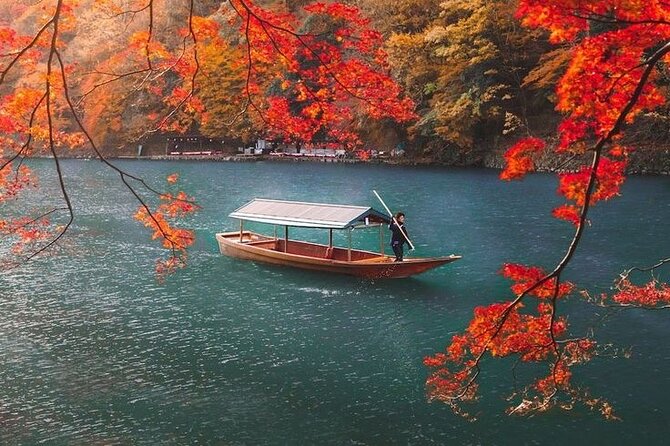
Arashiyama brings a different mood and a change of scenery. The route includes the well-known bamboo forest, Togetsukyo Bridge, and a boat ride across the lake. These are three separate parts of the area, so your two hours will pass quickly.
The bamboo path is the headline attraction. Tall bamboo stalks rise on both sides of the walkway, creating a narrow corridor that feels unlike the open temple gardens elsewhere in Kyoto. The path is short enough to visit within a busy day, but you should not mistake it for a full day in Arashiyama. The area has much more to see than this schedule can cover.
Crossing Togetsukyo Bridge adds a broader view of the river and surrounding hills. The boat ride offers a slower stretch after the walking portions, though the available information does not specify its exact length or operating details. Ask your guide how the boat portion fits into the day before you set expectations.
The entrance fee for the bamboo forest is listed as included. Since the tour also mentions a boat ride, confirm whether any boat charge is included before you arrive. The published details do not clearly separate that cost.
I like Arashiyama’s place in this itinerary because it breaks up the temple-heavy route. You get bamboo, water, a bridge, and a chance to see a more open side of Kyoto. The tradeoff is timing. If you want a leisurely walk, a long boat trip, and extra sights in the district, you will probably need a separate visit.
Kiyomizu-dera and Kyoto’s eastern hills
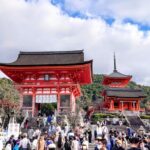
Kiyomizu-dera is a Buddhist temple with a history spanning 1,200 years and UNESCO World Heritage status. It is one of Kyoto’s signature sights, and its location in the eastern hills gives the visit a strong sense of place.
The temple is known for its broad wooden stage and views toward Kyoto. The grounds include several structures and paths, so two hours lets you see the main areas without making this a rushed photo stop. Your guide can help explain the religious role of the temple and the customs you encounter.
This is also one of the more physically demanding sections of the day. The approach and temple grounds involve walking, slopes, and steps. The tour information says most people can participate, but the schedule still suits you best if you are comfortable being on your feet for much of the day.
Admission details need attention. The itinerary says your admission fee covers the visit, while the general cost information says a temple entrance fee of roughly $8 to $10 is not included. Do not assume every temple charge is covered. Ask the provider to clarify which entrance fees are included in your booking and which you should pay locally.
Fushimi Inari’s torii gate trails
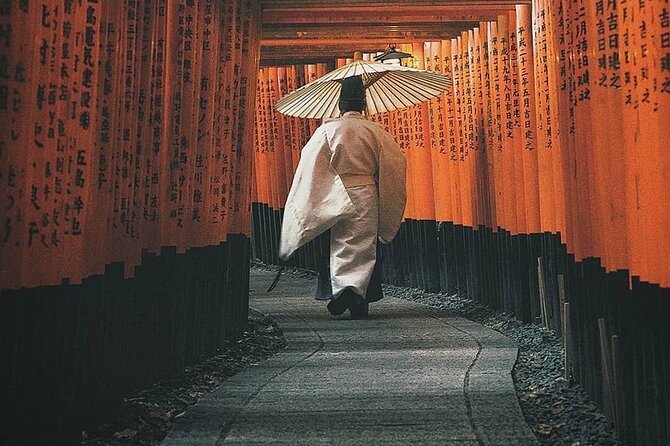
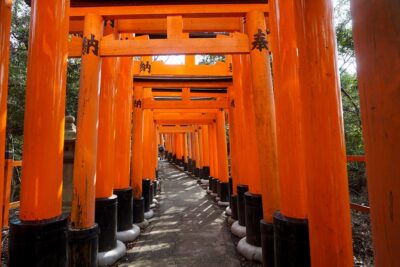
Fushimi Inari Taisha is dedicated to Inari, the Shinto deity associated with rice. It is famous for its long lines of vermilion torii gates that climb Mount Inari, creating one of Kyoto’s most recognizable walks.
The good news is flexibility. You do not need to walk the entire mountain to understand why the shrine matters. A two-hour stop allows you to pass through the lower gate paths and decide with your guide how far your group wants to go. If you continue uphill, the walk becomes more strenuous and the time passes quickly.
This stop differs from the others because it is a Shinto shrine rather than a Buddhist temple. That gives the day useful variety. You can compare the shrine gates and fox imagery associated with Inari with the temple architecture at Kinkaku-ji and Kiyomizu-dera.
The admission information is contradictory here as well. One section says the Fushimi Inari entrance fee is not included, while another says it is included. Confirm this before the tour. The practical issue is not likely to be a large charge, but clear information helps you avoid carrying the wrong expectations.
Fushimi Inari can also be the most tiring stop if you walk far up the mountain after already spending hours on your feet. Tell your guide if your group prefers a shorter visit. A private tour should make that kind of adjustment easier than a fixed group excursion.
Why the private format can be worth $200
The listed price is $200 per person. That is not a bargain-basement Kyoto tour, but price alone does not tell you much here. You are paying for a private guide, a full day of planning, transport between widely separated sights, and the ability to keep your group together rather than follow a fixed public itinerary.
The value improves with group size. A private tour for two people costs much more per person than a private tour for six, assuming the booking terms remain the same. It can make better sense for families or groups who want one guide, one plan, and help with the city’s complex geography.
Transport is handled in a practical way. The provider says taxis and public transportation are used as needed, with no separate charge for a dedicated car. You pay for the actual transportation used. An air-conditioned vehicle and parking fees are listed among the inclusions, but the wording does not mean you will have a private vehicle waiting at every stop.
This arrangement has a useful advantage. Kyoto traffic can make a private car slow, while public transportation may be quicker for some sections. On the other hand, taxi costs can add up, and the exact total depends on the route and your group’s needs. If keeping transport costs low matters to you, ask how the day is normally handled.

A guide makes or breaks this experience
The strongest part of this tour is likely to be the person guiding it. One guide named Riku is described as pleasant, highly capable in English, and ready to answer questions. Another account describes a fun guide who showed the group all the places they wanted to see, drove carefully, and used a clean, reliable car.
Those details point to what you should want from the guide: clear English, flexible planning, safe transport, and a willingness to explain rather than rush. The tour is not just a ride between four photo stops. Kyoto’s temples and shrines become more meaningful when someone helps you understand the difference between Buddhist and Shinto sites, the purpose of the gates, and the way each place fits into the city.
English is the usual language. Guides may be Japanese, American, or from Spanish-speaking countries. A guide in another language can be arranged for an extra fee, but that request should be made before the day of the tour.
The provider is listed as Nas. The available information does not guarantee that Riku will lead your particular tour, so treat his name as an example of the guide style you may receive, not a promise of assignment.
How to handle the long schedule
Start the day ready to walk. The plan allows about two hours at each stop, and that time includes movement between sites. Add the approach roads, temple paths, shrine trails, and transfers, and you have a full day rather than a casual outing.
Lunch is not included. That gives you freedom, but it also means you should discuss the meal plan at the start. A private guide can help you decide when to stop, but you should not assume a restaurant booking or meal is part of the price.
I would also tell the guide early if your group has priorities. You might care most about photography at Kinkaku-ji, want more time at Kiyomizu-dera, or prefer a shorter Fushimi Inari walk. The tour is sold as tailored to your interests, so speak up rather than quietly following the default schedule.
The day works best when you accept that you cannot see every corner of Kyoto. You are choosing four major sights and a broad look at the city. If you want a slow cultural day, cut one or two stops. If you want a first-pass tour that covers the classics, keep the full plan.
Group size and booking caution
This is a private activity, and only your group participates. That is a major benefit for families, couples, and friends who want to move at their own speed.
There is one important capacity concern. A booking issue involved a party of 10 that had been told it could be accommodated and could ride together in one vehicle, but the available details do not show how that problem was resolved. If your group is larger than the stated capacity or you need everyone in one vehicle, get written confirmation directly from the provider before paying.
The tour offers pickup, but the supplied information only identifies Kyoto, Japan, as the start point and says the activity ends back at the meeting point. Confirm the exact pickup location and return arrangement when you book.
Confirmation is normally received at booking. If you book within five hours of departure, confirmation comes as soon as possible and depends on availability. Free cancellation is available up to 24 hours before the start time. Changes or cancellations inside that 24-hour window are not accepted for a refund.
Who should book this Kyoto day tour?
I would choose this tour if you have limited time in Kyoto and want the major sights handled in one private day. It suits groups that value personal attention, taxi help, flexible pacing, and the chance to ask a guide questions along the way.
It is also a sensible choice for families or friends who do not want to manage four separate destinations on their own. The private setup means your group can request adjustments, and the guide can help with the practical side of moving around Kyoto.
I would hesitate if you want long, quiet visits at each site. Four major attractions plus transportation is a lot. I would also hesitate if the price feels high for your group, or if you require a large single vehicle without first confirming availability.
Before booking, ask two direct questions: Which entrance fees are included, especially at Fushimi Inari and the temples? And how will transportation work for your group size? Clear answers will tell you more about the tour’s value than the headline price.
FAQ
How long does the private Kyoto tour last?
The tour lasts approximately 8 to 10 hours, including travel time between locations.
Which sights are included in the planned route?
The planned route includes Kinkaku-ji, also called the Golden Pavilion, Kiyomizu-dera Temple, Fushimi Inari Taisha Shrine, and the Arashiyama Bamboo Forest.
Is transportation included?
Private transportation is included in the form of taxis and public transportation as needed. An air-conditioned vehicle and parking fees are also listed, but the provider says you pay for the actual transportation used.
Is the tour private?
Yes. Only your group participates in the activity.
Is hotel pickup available?
Pickup is offered. The stated starting location is Kyoto, Japan, so confirm the exact pickup point when booking.
Is lunch included?
No. Lunch is not included in the tour price.
Are entrance fees included?
The provided details are not fully consistent. Kinkaku-ji and Kiyomizu-dera are described as including admission in the itinerary, while a general note says temple entrance fees of about $8 to $10 are not included. Fushimi Inari is also described as both included and not included in different sections. Confirm the current fee coverage before booking.
Can I request a guide who speaks another language?
Tours are typically conducted in English. A guide who speaks your preferred language may be arranged for an additional fee.
What is the cancellation policy?
You can cancel up to 24 hours before the experience start time for a full refund. Cancellations or changes made less than 24 hours before the start time are not accepted for a refund.
More Private Tours in Kyoto
More tours in Kyoto we've reviewed




Private, compared.
 ★ 5.0Fushimi Inari Hidden Hiking Tour (Private Option Available)From $63
 ★ 5.0Private Kyoto Tour with a Local, Highlights & Hidden Gems, PersonalisedFrom $102
 ★ 5.0Kyoto 6hr Private Tour with Government-Licensed GuideFrom $155
 ★ 5.010 Must-see Spots in Kyoto One Day Private Tour (up to 7 people)From $179
 ★ 5.0Kyoto 4hr Private Tour with Government-Licensed GuideFrom $109
 ★ 4.8Kyoto: Private Tour with Local Licensed GuideFrom $1064 - 8 hours