
Reviewed · SAMURAI & KENDO EXPERIENCES
Samurai Performance and Casual Experience: Kyoto Ticket
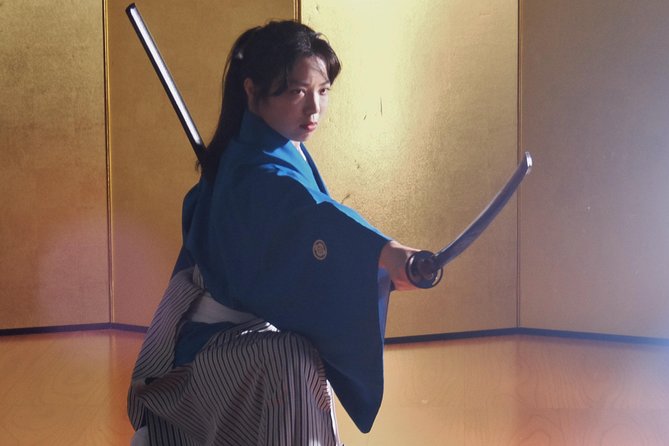
Kyoto’s Samurai Kembu Theater presents more than a sword show. You’ll see performers wield blades with controlled, graceful movements while reciting poems once associated with samurai before battle. The program also explains the meaning behind the gestures, fan work, courage, focus, and even seppuku.
I like the small theater setting, which keeps the performers close and makes the short show feel personal. I also like the practical finish: you get to hold a sword and fan, try a few movements, and take photos with the performers. The main consideration is expectation. This is theatrical cultural education, not a long battle scene or a serious lesson in fighting technique.
In This Review
- Key points to know before booking
- What Kembu is, and what you are really seeing
- Entering the Samurai Kembu Theater in central Kyoto
- The introduction makes the sword movements easier to follow
- Watching traditional and new-style Kembu
- Why this is not a sword-fighting lesson
- The mini experience with a sword and fan
- How the timing works for a Kyoto evening
- Is $33.03 a fair price?
- Who will enjoy this most
- Small details that can improve your visit
- Cancellation and booking basics
- Should you book the Kyoto Samurai Kembu experience?
- FAQ
- How long does the Samurai Kembu experience last?
- What time does the experience start?
- Where does the performance take place?
- Do I need to remove my shoes?
- What type of seating is available?
- Is the performance in English?
- Can I take photos with a sword?
- Are food and drinks included?
- What is the cancellation policy?
Key points to know before booking
- About 40 minutes of performance: The remaining time is used for a short sword and fan activity and photos.
- Traditional shoes-off setting: You remove your shoes before taking your seat, with both low and regular chairs available.
- Samurai culture comes before swordplay: Short explanations introduce each performance and its historical meaning.
- Two showtimes help with sightseeing plans: The listed start time is 4:15 pm, making it a useful late-afternoon or early-evening stop.
- Photo session included: You can pose with a performer while holding a sword and fan.
- Best for families and first-time visitors: The presentation is entertaining, light, and accessible, though experts in Japanese culture may want more depth.
What Kembu is, and what you are really seeing
Kembu is a traditional Japanese sword performance linked with the samurai class. It combines sword movements, poetry, fan gestures, costume, and controlled stage action. The word samurai often brings movie images of clashing blades, but this experience takes a different route.
Here, the sword is part of a formal art. The performer’s movements are deliberate rather than frantic. A slash, turn, or raised blade has a visual and emotional purpose. The performance shows how samurai ideals could be expressed through posture, concentration, ritual, and poetry.
The presentation reaches back to Japan’s feudal period, described here as more than 700 years of samurai tradition. You’ll hear that Kembu was practiced to help build courage and sharpen the mind before the demands of battle.
That context matters. Without it, the movements could look like stylish choreography. With it, you can watch for the focus, restraint, and symbolic gestures that give the performance its meaning.
A few more Kyoto tours and experiences worth a look

Entering the Samurai Kembu Theater in central Kyoto
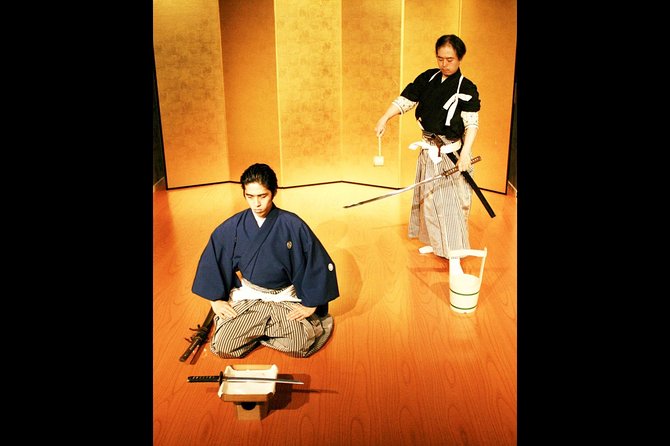
The theater is in downtown Kyoto, near public transportation and within reach of the Gion area. That makes the performance easy to pair with an afternoon of sightseeing, a walk through Gion, or an evening meal afterward.
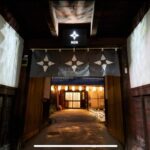
Plan to arrive 15 to 5 minutes before the start time. The directions are a little more specific than simply finding a theater: go down the stairs on the right side toward the GOZAN building and continue to the reception desk.
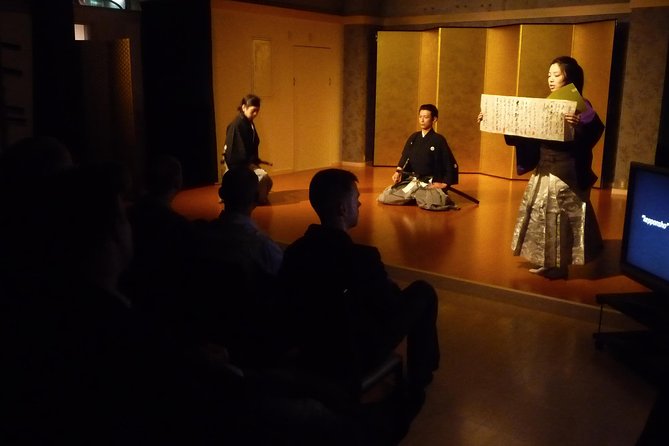
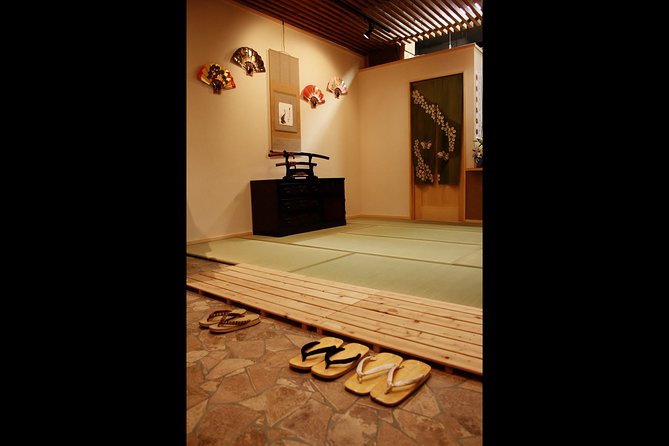
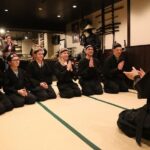
At the entrance, you remove your shoes in traditional Japanese fashion. Seating includes low-to-the-ground chairs and regular chairs, so you should have a choice that suits your comfort. The room is small, which helps you see the performers clearly, although the setting is not designed like a large theater production.
The listed start time is 4:15 pm. The experience lasts about an hour, so it fits neatly into a day when you have already visited temples, shrines, or markets and want something indoors before dinner.
The introduction makes the sword movements easier to follow
The show begins with narration from a performer who introduces Kembu, samurai customs, and the techniques you are about to see. The explanations are given in English, and the presentation uses short background talks before each demonstration.
This format is helpful because the show is not built around a single continuous plot. Instead, you watch a series of short traditional and modern-style Kembu performances. Each section has its own setting, gestures, or lesson.
The English is generally enough to follow the main points, but pronunciation may be difficult for some people who are not comfortable listening to English. If you want every detail, sit where you can see the speaker clearly and pay close attention during the introductions. The information is an important part of the experience, so this is not a show to attend only for the flashing swords.
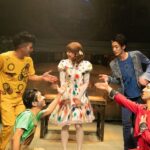
The tone is also lighter than the word samurai may suggest. Expect humor along with formal movement and historical explanation. That mixture works well for families and for visitors who want a cultural activity without a very solemn presentation.
Watching traditional and new-style Kembu
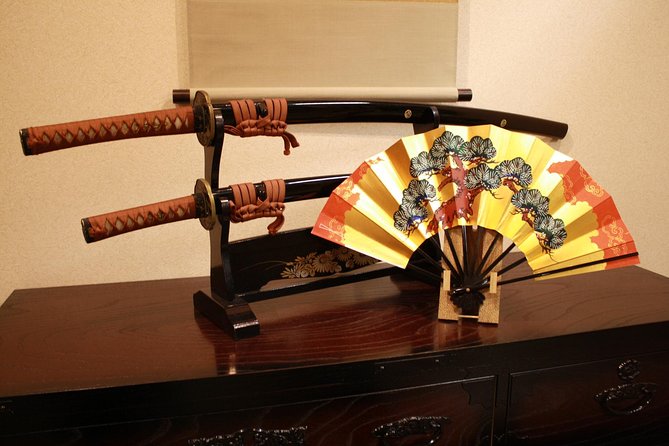
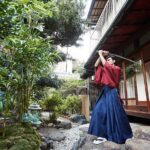
The central portion features trained performers using swords in a sequence of precise movements. They also recite short Japanese poems associated with samurai preparing for battle.
The contrast between the spoken poetry and the sword work is one of the most memorable parts. The blade does not simply represent combat. It helps express determination, emotion, discipline, and the mental preparation linked with the samurai way of life.
You’ll see both traditional and new-style Kembu. The exact balance of demonstrations can vary, but the basic approach remains the same: a short explanation, followed by a focused performance.
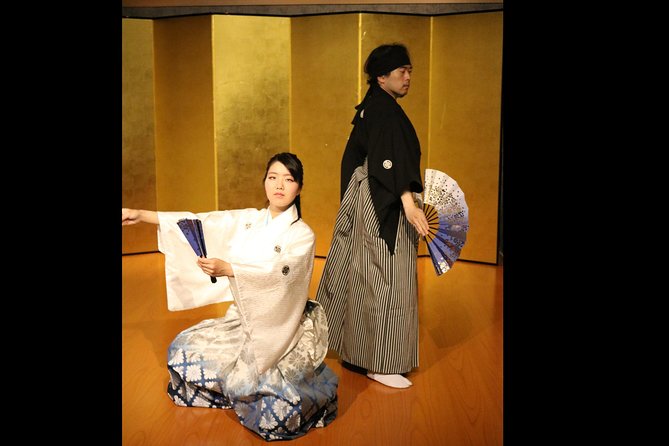
Some sections use the folding fan, which may seem surprising in a sword show. The fan has its own gestures and meanings, and learning about it gives you a better sense of how Japanese performance arts use small movements to communicate.
You’ll also hear an explanation of seppuku, sometimes called hara-kiri. This is serious subject matter, but it is presented as part of samurai custom and ceremony rather than as a graphic scene. The show uses history and stagecraft to explain the idea, so parents may want to decide in advance if that topic is suitable for younger children.
Why this is not a sword-fighting lesson
The most important booking tip is to set the right expectations. This is not a hands-on martial arts class, and it is not a full-length sword battle show. The performances contain theatrical action, but the focus is on form, story, symbolism, and samurai culture.
If you want to study actual combat methods or training in depth, you may find the show too short and too focused on presentation. The program includes a fair amount of narration, and some people may wish there were more performance sections.
I see that as a reasonable tradeoff for a one-hour activity. The explanations give meaning to what you are seeing, and the short format makes it easy to fit into a busy Kyoto schedule. You get a cultural introduction rather than a technical course.
The performers also use humor and audience interaction. That can be a pleasant surprise if you are attending with children, but it may disappoint you if you expect a dark, highly serious drama.
A few more Kyoto tours and experiences worth a look



The mini experience with a sword and fan
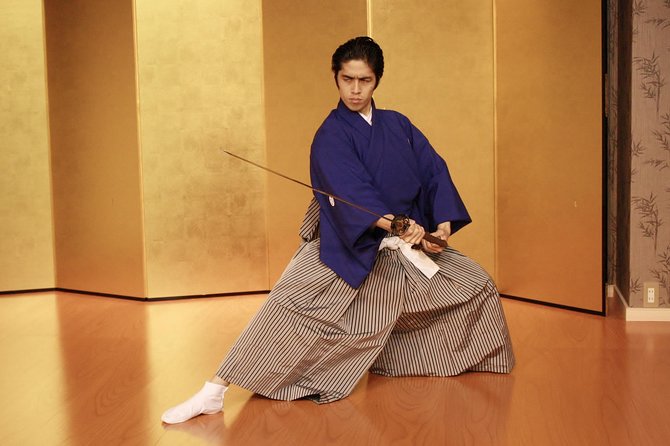
After roughly 40 minutes of show time, the program shifts to a short hands-on activity. You get to try simple sword and fan movements, then take photos with the performers.
This is the point where the experience becomes more than a seated demonstration. You are not asked to perform a complex routine or handle the sword as a trained martial artist. Instead, you get a brief taste of the posture and gestures you have just watched on stage.
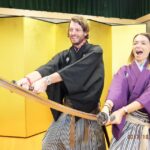
The photo session is a strong feature for families and groups of friends. You can pose while holding a sword and fan, and the performers help make the pictures feel playful rather than stiff. Several people particularly enjoyed getting photos with their families, and the activity gives children a clear moment to look forward to after the explanations.
If you are interested in the mini experience, wear clothing that lets you move comfortably. You should also remember that shoes are removed at the entrance. One useful detail from the experience is that some people wished they had known dressing up for the practice might be possible, so ask the theater about current options when you arrive or book.
How the timing works for a Kyoto evening
The one-hour length is one of the best practical features. Kyoto days can become crowded with temples and walking, and this activity offers a fixed, indoor break without taking up an entire evening.
The 4:15 pm start is especially useful. You can spend the morning and early afternoon outdoors, then head to the theater for a cultural performance. Afterward, you are near central Kyoto and the Gion area, so you can continue walking or find dinner.
The description also refers to two showtimes, which gives you some scheduling flexibility. Check the available time when booking, since the supplied meeting information specifically lists 4:15 pm.
There is no hotel pickup or drop-off, and food and drinks are not included. That is not a serious drawback for this type of city activity, but you should include transport to the downtown theater and dinner in your plans.
Is $33.03 a fair price?
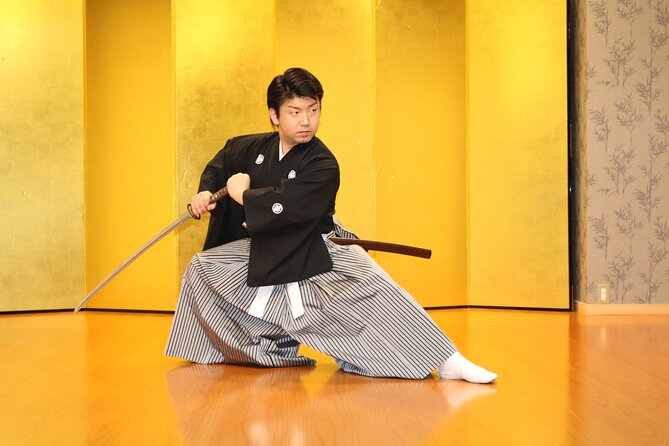
At $33.03 per person, the value depends on what you want from an evening show. You are paying for a short theater performance, English narration, demonstrations by trained performers, and a brief interactive session with photos.
For a one-hour attraction, it is not the cheapest way to spend an evening. If you judge it only by minutes of stage action, you may find the price high. About 40 minutes is the formal show, with the rest devoted to the mini experience and photos.
I think the price makes more sense if you value cultural explanation and a participatory finish. You are not just watching sword movements from a distance. You learn why the movements matter, see poetry and fan work used in the performance, then get a chance to handle the props yourself.
It is also a useful choice on a rainy evening. The theater gives you a planned indoor activity when outdoor sightseeing is less pleasant. The small venue, personal photo session, and family-friendly tone add value that a larger, more distant stage show might not provide.
Who will enjoy this most
I would recommend the experience to families, first-time visitors to Japan, and anyone who wants a break from temples and shrines. Children often respond well to the swords, costumes, and chance to try a few movements, while adults get the cultural background.
It also suits visitors who like theater, dance, martial arts, or Japanese history. The show offers a compact introduction to a tradition that many visitors would not encounter during ordinary sightseeing.
You may want to choose something else if you are looking for a serious study of samurai warfare, advanced sword technique, or a long action sequence. People with a strong background in Japanese culture may also find the material introductory.
The performance is suitable for most participants, but the shoe removal and low seating options are worth noting. Regular chairs are available, which should help if sitting close to the floor is uncomfortable.
Small details that can improve your visit
Arrive early enough to find the stairs and reception desk without rushing. The instruction is to arrive 15 to 5 minutes before the start, and that window is worth respecting because the program begins at a fixed time.
Keep your phone ready for the final photo session, but do not expect the entire show to be an open photography period. The performance depends on concentration and stage movement, so save your best camera moments for the interactive section.
Listen closely to the introductions. The show is easier to appreciate when you understand the purpose of a gesture or poem. If English is not your first language, the spoken material may require extra attention.
Give yourself time afterward to walk toward Gion or central Kyoto. The location makes this a good part of a larger evening rather than an isolated excursion.
The provider is Ginbu Co., LTD., formerly known as Samurai Kenbu Co., LTD. Your booking confirmation is issued at the time of booking, and the ticket is mobile, so you do not need a printed voucher.
Cancellation and booking basics
Free cancellation is available if you cancel at least 24 hours before the experience start time. Changes or cancellations made less than 24 hours before the start are not accepted for a refund, and the cut-off follows Kyoto local time.
You handle cancellation yourself through Viator. Most people can participate, and the theater is near public transportation. Hotel transfers, food, and drinks are not part of the ticket.
Should you book the Kyoto Samurai Kembu experience?
Book it if you want a short, accessible look at samurai culture with a real stage performance and a playful hands-on ending. The strongest reasons are the close theater setting, clear cultural explanations, impressive sword control, and the chance to pose with a sword and fan.
Skip it if your main goal is a long battle spectacle or detailed combat training. The show contains talking, comedy, and symbolism alongside the action.
For most visitors, I see it as a good late-afternoon Kyoto choice, especially for families or a rainy day. It gives you something different from temple visits, teaches you what you are watching, and ends with a memorable photo rather than simply sending you back onto the street.
FAQ
How long does the Samurai Kembu experience last?
The full experience lasts approximately one hour. About 40 minutes is the formal show, followed by a short mini experience with a sword and photos.
What time does the experience start?
The listed start time is 4:15 pm. The experience also advertises a choice of two showtimes, so check the available option when booking.
Where does the performance take place?
It takes place at the Samurai Kembu Theater in downtown Kyoto, near public transportation and within reach of the Gion district.
Do I need to remove my shoes?
Yes. You remove your shoes before entering the performance area and taking your seat.
What type of seating is available?
The theater has both low-to-the-ground chairs and regular chairs.
Is the performance in English?
The introduction and explanations are given in English. Some people may find the pronunciation difficult to follow, particularly if English is not their first language.
Can I take photos with a sword?
Yes. After the show, you can hold a sword and fan, try a few movements, and take photos with the performers.
Are food and drinks included?
No. Food and drinks are not included in the ticket.
What is the cancellation policy?
You can cancel for a full refund at least 24 hours before the experience start time. Cancellations or changes made less than 24 hours before the start are not accepted for a refund.
More Tickets in Kyoto
More Samurai & Kendo Experiences in Kyoto
More tours in Kyoto we've reviewed











Samurai & Kendo Experiences, compared.
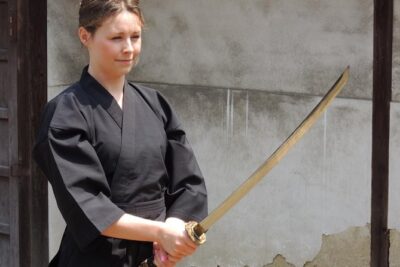 ★ 5.0Kyoto Samurai ExperienceFrom $119
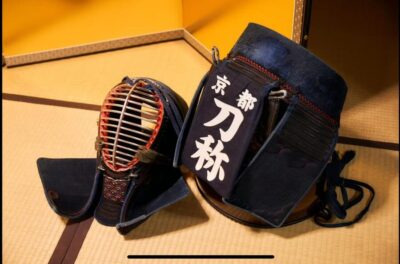 ★ 4.9Kyoto: Kendo and Samurai Experience with Uniform and GearFrom $1032 hours
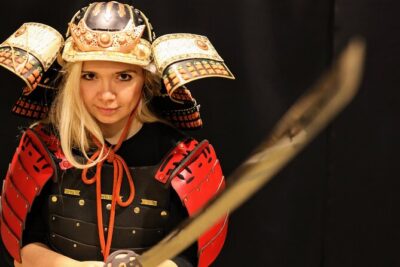 ★ 4.5Skip the lines Basic Ticket at SAMURAI NINJA MUSEUM KYOTOFrom $28
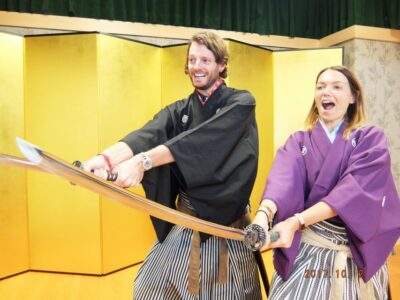 ★ 4.9Kyoto: Samurai Class, Become a Samurai WarriorFrom $70
 ★ 5.0Ninja 1-hour Hands-on Lesson by Japanese master in Kyoto -EntryFrom $80
 ★ 4.8Kyoto: Ninja Weapon Forging ExperienceFrom $1482h 30m